

P0108 on 2008-2012 Ford Escape 3.0L V6: MAP Sensor Circuit High Causes and Fixes
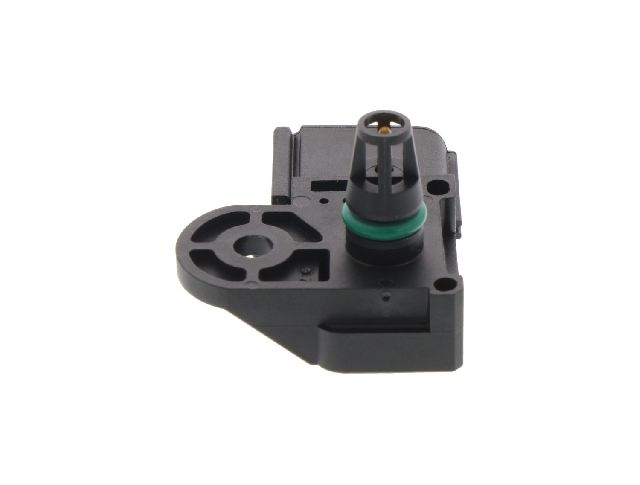
P0108 on a 2008-2012 Ford Escape 3.0L V6 almost always means the Manifold Absolute Pressure (MAP) sensor has failed due to an internal short. It's an easy-to-access part on the rear of the intake manifold, making for a quick DIY fix costing between $30 and $70 for a new sensor. Replacement is the most common and effective repair.
- P0108 means the MAP sensor circuit is sending a constant high signal.
- The most likely cause on this vehicle is a failed MAP sensor itself.
- It is a very easy and inexpensive DIY repair located on top of the engine.
- This platform has several well-documented, unrelated issues like transmission failure and rear shock tower rust that owners should be aware of.
What's Unique About the 2008-2012 Ford Escape
For the second-generation Ford Escape with the 3.0L V6, the P0108 code is a very common and straightforward issue. The engine uses a conventional, naturally aspirated intake system, so diagnosis isn't complicated by turbochargers or complex electronics found on newer models. The primary culprit is almost always the MAP sensor itself, which is conveniently located at the top rear of the intake manifold, making it one of the easier sensors to replace on this engine. Unlike some other platforms where vacuum leaks or wiring are common causes for MAP codes, on this specific vehicle, the sensor itself is the most frequent point of failure.
Symptoms You May Notice
- Check Engine Light is on
- Rough or unstable idle
- Poor acceleration and hesitation
- Reduced fuel economy
- Engine may stall, especially when coming to a stop
- Black smoke from the exhaust (due to a rich fuel mixture)
- Hard starting
- Strong smell of gasoline at idle
- Replacing the Mass Airflow (MAF) sensor. This engine has both a MAF and a MAP sensor. P0108 specifically points to the MAP sensor circuit, not the MAF.
Most Likely Causes
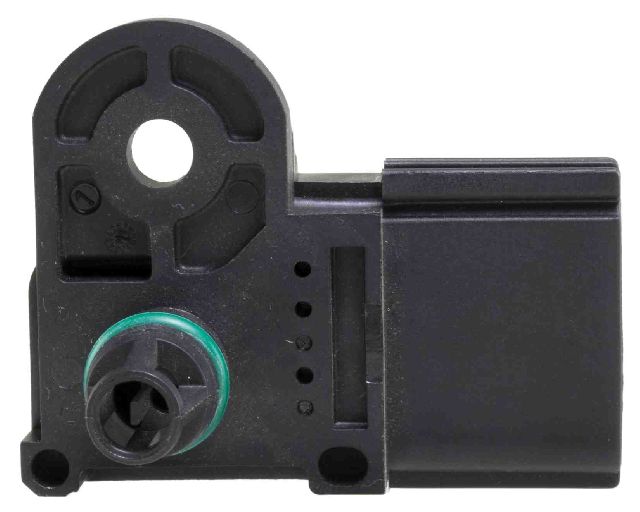
- Faulty Manifold Absolute Pressure (MAP) Sensor 🔴 High Probability → Shop Manifold Absolute Pressure Sensor The sensor is a common failure item due to age and heat cycles from the engine, leading to an internal short that sends a constant high signal.
How to confirm: With the Key On, Engine Off (KOEO), check the sensor's output on a scan tool. The reading should be close to barometric pressure (around 158 Hz for Ford frequency-based sensors). When the engine is started, the reading should drop significantly (to around 100-110 Hz at idle). If the reading is stuck high and does not change, the sensor has failed. 🎬 See how to test and replace a faulty MAP sensor. Alternatively, using a multimeter, the signal wire should read ~4.5-5.0V at KOEO and drop to 1.0-1.5V at idle; if it's stuck high, the sensor is bad.
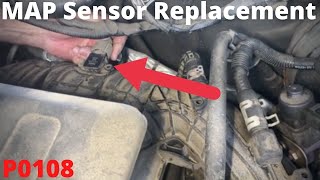
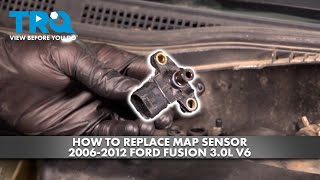
Typical fix: Replace the MAP sensor. It is located on the rear of the intake manifold and secured by a single 8mm bolt. 🎬 Watch: Step-by-step guide to replacing the Escape MAP sensor. Disconnect the electrical connector, remove the bolt, and swap the sensor.
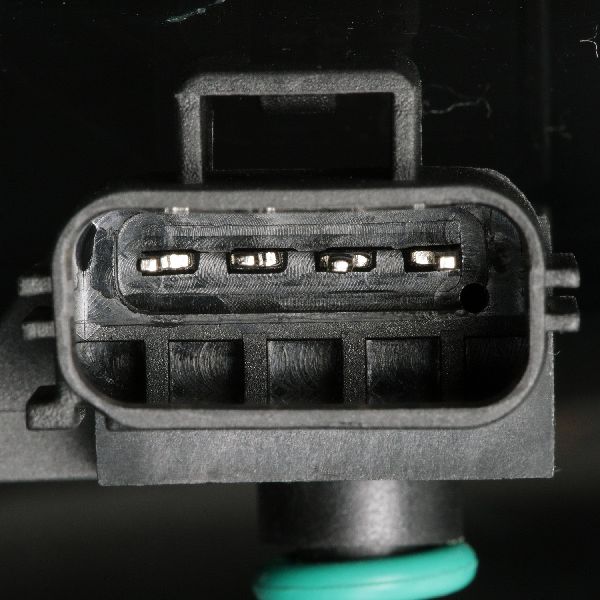
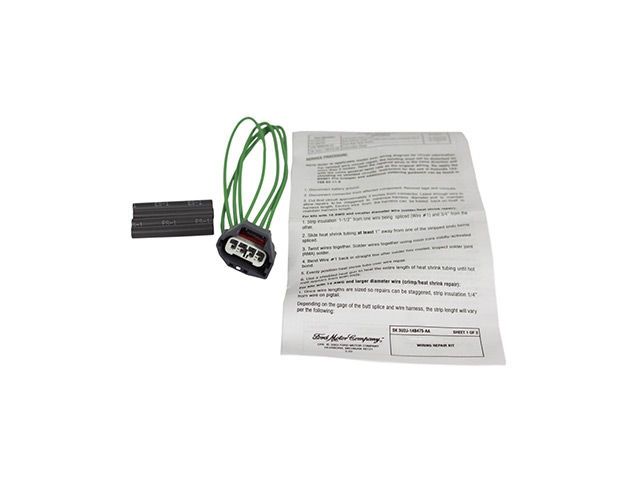
Est. part cost: $30-$70 - MAP Sensor Wiring or Connector Issue 🟡 Medium Probability → Shop Manifold Absolute Pressure Sensor The wiring harness is exposed to engine heat, which can make wires brittle or damage the connector over time. The connector's locking tab can also become brittle and break.
How to confirm: Visually inspect the connector and wiring going to the MAP sensor for any signs of corrosion, damage, or loose pins. With the engine running, gently wiggle the connector and harness to see if it affects the engine idle or the MAP sensor reading on a scan tool. Check for 5V reference, good ground, and signal continuity at the connector with a multimeter.
Typical fix: Repair the damaged section of wiring or replace the connector pigtail. Ensure the connector is fully seated and the lock engages.
Est. part cost: $15-$30 - Vacuum Leak ⚪ Low Probability While less likely to cause a P0108 (high input) than a P0106 (performance) or P0171/P0174 (lean) code, a significant vacuum leak can affect pressure readings. Rubber vacuum hoses and intake gaskets become brittle and crack with age.
How to confirm: Inspect all vacuum hoses connected to the intake manifold for cracks or disconnection. Listen for a hissing sound at idle. A smoke test is the most effective way to find a leak.
Typical fix: Replace the cracked vacuum hose or leaking intake gasket.
Est. part cost: $10-$100
Rare But Worth Checking
- Clogged Catalytic Converter: A severe exhaust restriction can cause abnormal pressure in the intake manifold, potentially leading to a P0108 code. This would typically be accompanied by a significant loss of power, especially at higher RPMs, a rotten egg smell, and possibly other exhaust-related codes.
- Faulty Powertrain Control Module (PCM): → Shop Engine Control Module (ECM) This is very rare. The PCM's internal circuit for the MAP sensor can fail, but all other possibilities, including the sensor, wiring, and for vacuum/exhaust restrictions, should be exhausted before condemning the PCM.
Diagnosis Steps
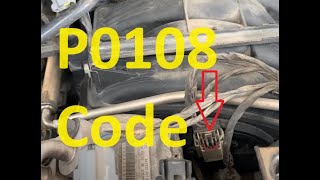
- Scan for Codes: Use an OBD-II scanner to confirm P0108 and check for any other stored codes. 🎬 Watch: Understanding the causes and fixes for the P0108 code.
- Inspect Wiring: Visually inspect the MAP sensor's electrical connector and wiring harness for obvious damage, corrosion, or loose connections. Pay close attention to the area where the harness is exposed to heat.
- Check Live Data (KOEO): With the Key On, Engine Off, view the MAP sensor data on your scanner. For this Ford, the reading is often in Hertz (Hz). It should read approximately 158 Hz at sea level, which should be close to the Barometric Pressure (BARO) reading.
- Start the Engine (KOER): Observe the MAP sensor reading at idle. The pressure should drop significantly (vacuum increases), with the frequency dropping to around 100-110 Hz. If the reading remains high (near 158 Hz) and unchanged, the sensor has almost certainly failed.
- Test the Circuit: Disconnect the sensor. The connector should have three wires: a 5-volt reference, a ground, and a signal wire. Use a multimeter to confirm you have ~5 volts and a good ground.
- Test the Sensor (Confirm Failure): If the circuit tests good, the sensor is the culprit. Given the high failure rate of the sensor itself for this code, replacement is the most logical next step.
- Check for Restrictions: If a new sensor does not fix the issue, check for a severely clogged catalytic converter, which can increase manifold pressure. This would be accompanied by a severe lack of engine power. An infrared thermometer can be used; if the inlet of the converter is hotter than the outlet after warmup, it is clogged.
- Clear Code and Test Drive: After performing repairs, clear the code and drive the vehicle to ensure the fix was successful.
Parts You'll Likely Need
- Manifold Absolute Pressure (MAP) Sensor
(OEM #8L3Z-9F479-A or 5L8Z-9F479-AA (Motorcraft DY-1163))— This is the most common component to fail and cause a P0108 code. An internal short causes it to send a continuously high voltage/frequency signal.
Trusted brands: Motorcraft, Standard Motor Products, Bosch, NGK/NTK
OEM price range: $60-$90
Aftermarket price range: $30-$70
Related Codes That Often Appear With This One
- P0107 — If there is an intermittent wiring problem or a failing sensor, the voltage could fluctuate between high (P0108) and low (P0107).
- P0171 / P0174 — If a massive vacuum leak were the underlying cause of the abnormal MAP reading (less common for P0108), the engine will run lean, triggering System Too Lean codes.
Mechanic-Grade Diagnostic Values
- MAP Sensor Signal (Frequency) — expected: KOEO: ~158 Hz at sea level. Idle: ~100-110 Hz.. Failure: Reading is stuck high (near 158 Hz) and does not drop when the engine is started.
- MAP Sensor Signal (Voltage) — expected: KOEO: ~4.5V - 5.0V. Idle: ~1.0V - 1.5V.. Failure: Voltage is stuck high (above 4.5V) at idle and does not drop by at least 1.5V from KOEO to idle.
- Catalytic Converter Temperature Differential — expected: The outlet temperature should be significantly hotter than the inlet temperature after the engine is at operating temperature.. Failure: The inlet temperature is equal to or hotter than the outlet temperature, indicating a blockage.
Scan Tool Commands That Help
- Ford IDS (Integrated Diagnostic System): Datalogger PID Comparison — To simultaneously monitor and graph the MAP and BARO sensor PIDs during KOEO and KOER tests. This is a definitive way to see if the MAP sensor reading is stuck high and not responding to engine vacuum, confirming a sensor or circuit fault.
Wiring & Ground Locations
- MAP Sensor Connector — On the MAP sensor, located at the top rear of the intake manifold.. This 3-pin connector provides the sensor with its 5V reference, ground, and returns the signal to the PCM. Corrosion or damage here can directly cause a P0108.
- G108 — On the firewall, at the rear of the engine compartment.. This is a primary engine-related ground point. A loose or corroded connection here can affect the ground reference for multiple sensors, including the MAP sensor, potentially causing erratic or high signal readings.
- G105 / G106 — Located at the left and right front of the engine compartment, respectively.. These are additional chassis and engine ground points. While less direct, a poor ground at any major engine point can introduce electrical noise and voltage offsets that may impact sensor readings.
OEM Part Supersession History
5L8Z-9F479-AA→8L3Z-9F479-A (Motorcraft DY-1163)— Part has been updated by the manufacturer over time.
Model Year Variations Within This Range
- 2008-2012: While a facelift occurred in 2009, the 3.0L V6 engine and the MAP sensor's design and location remained consistent for this code's diagnosis and repair throughout this period.
Diagnostic Flowchart
Other Known Issues on This Vehicle
Issues unrelated to this code that are worth knowing about as an owner of this generation:
- 6F35 Transmission Failures 🔴 High — Common, especially in 2009+ models. Can manifest as harsh shifts, slipping, torque converter shudder, or complete failure. A class action lawsuit was filed in March 2024 regarding these issues. (Ref: Multiple TSBs exist, such as TSB 16-0043 for leaking axle seals and TSB 10-1-7 for harsh shifts/DTCs.)
- Rear Shock Tower Rust 🔴 High — Very common in 'salt belt' regions. The upper rear shock mount rusts through the wheel well, causing the shock to detach from the body. (Ref: No recall for this generation, though earlier models were recalled for subframe rust. This is a widely documented safety concern among owners.)
- Electronic Power Steering (EPAS) Failure 🔴 High — Widespread issue causing sudden loss of power steering assist, making the vehicle difficult to steer at low speeds. (Ref: Recall 14S05 (NHTSA 14V-284000) was issued to reprogram the PSCM and replace the torque sensor if needed, but many owners report issues persist.)
- Throttle Body Malfunction 🟠 Medium — Commonly occurs around 70,000 miles, causing the vehicle to enter 'limp mode' with poor throttle response. Often related to contamination or electronic failure within the throttle body. (Ref: TSB CSP-13N03 was issued for other Ford models with similar issues, indicating a known problem with the component design.)
- Leaking Driver's Side Axle Seal 🟡 Low — A common issue on 2009-2012 models with the 6F35 transmission, causing a transmission fluid leak. (Ref: TSB 16-0043 addresses this specific leak, which is caused by wear on the transmission case bushing.)
Used vs. New Parts: Buying Guide for This Vehicle
When a used part is the smart pick: A used OEM sensor from a junkyard is not recommended for a permanent repair. However, due to the part's easy access and low cost, it could be considered for a quick, temporary swap to confirm a diagnosis if a new part is not immediately available.
Donor-vehicle mileage cap: roughly under 80000 miles for the part to have meaningful remaining life.
What to inspect on the donor part:
- No visible cracks or damage to the plastic housing.
- Electrical pins are straight and free of green or white corrosion.
- The rubber O-ring is present, pliable, and not cracked or flattened.
OEM-only on this vehicle (don't cheap out):
- Catalytic Converter - If this is the rare cause, aftermarket converters for this platform may not have the correct precious metal loading, leading to recurring efficiency codes (P0420/P0430) even if the P0108 is resolved.
Aftermarket brands forum-validated for this vehicle:
- Bosch
- Standard Motor Products (SMP)
- NGK/NTK
- Delphi
Brands owners have reported issues with on this vehicle:
- Unbranded, low-cost sensors from online marketplaces are a gamble and may fail prematurely or have incorrect calibration.
Real Owner Stories
Aggregated from forums and TSBs cited above. Mileages and costs reflect what owners reported in those sources.
2010 Ford Escape XLT 3.0L
Symptoms: Check engine light with a P0108 code.
What fixed it: The owner attempted to clean the MAP sensor with electrical cleaner to see if the code would clear before opting for replacement.
Cost: $30-$40
Source hint: The Auto Teacher YouTube comment
2009 Ford Escape 3.0L V6
Symptoms: Harsh shifts and transmission fluid leaks from the driver's side.
What fixed it: Repairing the transmission case bushing and replacing the driver's side axle seal as per TSB 16-0043.
Source hint: TSB 16-0043
Related OBD-II Codes
Frequently Asked Questions
Where is the MAP sensor located on my 2008-2012 Ford Escape 3.0L V6?
Is there a TSB for the transmission issues I'm feeling alongside this code on my 2009 Escape?
My Escape is stalling and has a P0108; could this be related to the Electronic Power Steering recall?
What should the MAP sensor frequency reading be on a scan tool for this Ford engine?
Can I just clean the MAP sensor on my 3.0L V6 instead of replacing it?
Is the throttle body 'limp mode' issue related to my P0108 code?
Helpful Videos

We Have This Part in Stock


The information in this article is provided for general reference and educational purposes only. Vehicle specifications, procedures, and part compatibility can vary by production date, trim level, and region. Always consult your vehicle's factory service manual and verify part numbers before purchasing or performing repairs. Safety-critical components such as airbags, seat belts, and braking systems should be installed by a qualified professional.
- Ford Escape:
- 🧭 Diagnostic Flowchart
- 🎬 Helpful Videos
- 🛍️ Shop This Part
- What's Unique About the 2008-2012 Ford Escape
- Symptoms You May Notice
- Most Likely Causes
- Rare But Worth Checking
- Diagnosis Steps
- Parts You'll Likely Need
- Related Codes That Often Appear With This One
- Mechanic-Grade Diagnostic Values
- Scan Tool Commands That Help
- Wiring & Ground Locations
- OEM Part Supersession History
- Model Year Variations Within This Range
- Other Known Issues on This Vehicle
- Used vs. New Parts: Buying Guide for This Vehicle
- Real Owner Stories
- 2010 Ford Escape XLT 3.0L
- 2009 Ford Escape 3.0L V6
- Related OBD-II Codes
- Frequently Asked Questions
- 🎟️ Get 5% Off