

P0108 on 2005-2010 Ford Mustang 4.0L V6: EGR/MAP Sensor Causes and Fixes
On the 2005-2010 Mustang 4.0L V6, P0108 is almost always caused by a failed MAP sensor that is integrated into the EGR valve. You cannot buy the sensor separately. The most likely fix is to replace the entire EGR valve assembly, which costs about $75-$150 for the part. Before replacing, check for cracked vacuum lines, a common and cheaper issue.
- For a P0108 on a 2005-2010 Mustang V6, do not look for a standalone MAP sensor; it is part of the EGR valve assembly.
- The most probable fix is replacing the entire EGR valve assembly.
- Before buying parts, always inspect the vacuum hoses connected to the EGR valve for cracks or leaks, as this is a simple and cheap potential fix.
- Do not waste money replacing the MAF sensor; it is unrelated to this specific trouble code on this engine.
What's Unique About the 2005-2010 Ford Mustang
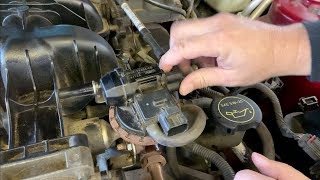
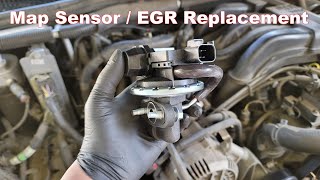
On this specific 4.0L SOHC V6 engine, there is no standalone MAP sensor that you can unplug and replace. Ford integrated the MAP sensor directly into the Exhaust Gas Recirculation (EGR) valve assembly. The MAP sensor's primary role here is to monitor EGR system operation by detecting pressure changes when the valve opens. This unique design means a P0108 code almost always points to the EGR valve assembly itself, not a separate, easy-to-swap sensor.
Symptoms You May Notice
- Check Engine Light is on
- Rough or unstable idle
- Poor acceleration and engine hesitation
- Reduced fuel economy
- Engine may stall when coming to a stop
- Black smoke from the exhaust in some cases
- Fluctuating idle
- Replacing the Mass Airflow (MAF) sensor. Owners see a code related to air/pressure measurement and mistakenly replace the MAF sensor. The P0108 code on this engine is not related to the MAF sensor. 🎬 Watch: Understanding the causes and fixes for the P0108 code.
- Replacing the Fuel Rail Pressure (FRP) sensor. The FRP sensor on the fuel rail also has a vacuum line, causing some to mistake it for a MAP sensor. Replacing it will not fix a P0108.
Most Likely Causes
- Failed EGR Valve / Integrated MAP Sensor 🔴 High Probability → Shop Manifold Absolute Pressure Sensor The MAP sensor is integrated into the EGR valve, a component that handles hot exhaust gases and is subject to wear, carbon buildup, and electronic failure over time. This is the most common failure point for a P0108 on this engine.
How to confirm: Use a scan tool to monitor MAP sensor data. With Key On, Engine Off (KOEO), the MAP reading should be close to the Barometric Pressure (BARO) reading (e.g., MAP at 100 kPa and BARO at 100 kPa at sea level). If the MAP reading is stuck high (e.g., over 4.5 volts or showing a pressure value significantly different from BARO), the integrated sensor has failed. At idle, a healthy engine should show 1.1V to 1.5V.
Typical fix: Replace the entire EGR valve assembly. 🎬 See this step-by-step walkthrough for replacing the EGR valve. The MAP sensor is not sold separately for this application.
Est. part cost: $75-$150 - Damaged or Leaking Vacuum Lines 🟡 Medium Probability The vacuum hoses connected to the EGR valve assembly are made of plastic and rubber that can become brittle and crack from age and engine heat, causing leaks. This is a very common issue on the S197 platform.
How to confirm: Visually inspect all vacuum lines running to and from the EGR valve for cracks, breaks, or loose connections. Listen for a hissing sound near the EGR valve at idle. A smoke test is the most definitive way to find a small leak, which is highly recommended before replacing parts. 🎬 Watch: How to fix P0108 by replacing the integrated sensor.
Typical fix: Replace the cracked or broken vacuum hose. This is often a very inexpensive fix.
Est. part cost: $5-$20 - Wiring Harness or Connector Issue ⚪ Low Probability The wiring harness connector at the EGR valve is in a high-heat area and can become brittle or corroded over time.
How to confirm: Inspect the electrical connector and wiring going to the EGR valve. Check for loose pins, corrosion, or wires that are frayed or shorted together. With a multimeter, you can check for the 5-volt reference (VREF should be 4.0-6.0V), a good ground, and the signal wire's integrity back to the PCM.
Typical fix: Repair the damaged section of the wiring harness or replace the connector pigtail.
Est. part cost: $15-$40
Rare But Worth Checking
- Clogged Catalytic Converter: A severely clogged catalytic converter can increase exhaust backpressure, which might affect manifold pressure readings. This would typically be accompanied by other codes like P0420 and a more severe loss of power, especially at high RPMs.
- Faulty Powertrain Control Module (PCM): → Shop Engine Control Module (ECM) This is extremely rare. The PCM's internal circuits that read the sensor data can fail. This should only be considered after all other possibilities, including the sensor, wiring, and vacuum systems, have been thoroughly ruled out.
Diagnosis Steps
- Scan for Codes: Confirm P0108 is present and check for any other related codes, such as P0106 or P0401.
- Visual Inspection: Carefully inspect the vacuum lines connected to the EGR valve assembly, located on the driver's side of the engine near the firewall. Look for any visible cracks, breaks, or disconnections. These are a common failure point.
- Inspect Electrical Connector: Check the electrical plug on the EGR valve. Ensure it is securely connected and free of corrosion or damage.
- Live Data Scan (KOEO): Use an OBD-II scanner with live data. With the Key On, Engine Off (KOEO), compare the MAP sensor reading to the BARO reading. They should be nearly identical. If the MAP reading is stuck high (e.g., MAP at 115 kPa vs BARO at 93 kPa), the sensor is faulty.
- Live Data Scan (Engine Idling): At idle, a healthy MAP sensor should read between 1.1V and 1.5V. A high reading indicates a problem.
- Check for Vacuum Leaks: With the engine running, listen for hissing sounds. A smoke test is the most effective method to definitively rule out a vacuum leak before spending money on parts.
- Test Wiring: If the sensor seems to test okay but the problem persists, check the wiring harness for a 5V reference, good ground, and signal continuity back to the PCM. A short to voltage on the signal wire will cause a P0108.
- Replace Part: If the integrated sensor is confirmed bad via live data or all other tests pass, replace the entire EGR valve assembly.
Parts You'll Likely Need
- EGR Valve Assembly
(OEM #5R3Z-9D475-DA)— This assembly contains the integrated MAP sensor that is the primary cause of code P0108 on this vehicle. It is not sold as a separate component. The OEM part number 5R3Z-9D475-DA supersedes part number 5R3Z-9D475-CA.
Trusted brands: Motorcraft (OEM), Standard Motor Products (SMP), Delphi, Duralast
OEM price range: $120-$180
Aftermarket price range: $75-$120
Related Codes That Often Appear With This One
- P0106 — P0106 is 'MAP/Barometric Pressure Circuit Range/Performance'. Since both codes relate to implausible MAP sensor readings from the same integrated component, they often appear together or point to the same root cause.
- P0401 — P0401 is 'EGR Flow Insufficient'. Since the MAP sensor on this engine is used to monitor EGR flow, a malfunction in the EGR valve (which contains the MAP) can trigger both a MAP sensor code and an EGR flow code.
Technical Service Bulletins (TSBs) & Recalls
- TSB 19-2183: While for a different engine (3.5L EcoBoost), this TSB for P0108 describes a diagnostic procedure relevant to any P0108 code, instructing technicians to compare MAP, BARO, and other pressure sensor readings at KOEO to identify a faulty sensor. A MAP reading that is not within 1.5 psi (10.35 kPa) of the others indicates a failure.
Platform-Specific Known Issues
- The integration of the MAP sensor into the EGR valve is the most significant vehicle-specific issue. This design choice means that a simple sensor code often requires the replacement of a more expensive and slightly more complex emissions component.
- A user on AutoZone's review site confirmed that replacing the Duralast EGR Valve EGR4420 resolved their P0108 code on a 2006 Ford Mustang.
Mechanic-Grade Diagnostic Values
- MAP Sensor VREF (Reference Voltage) — expected: 4.0 to 6.0 volts (typically ~5.0V). Failure: Voltage below 4.0V or above 6.0V points to a PCM or wiring issue, not the sensor itself.
- MAP Sensor Signal Voltage (Key On, Engine Off) — expected: ~3.9V to 4.5V (should correlate with BARO PID on scan tool). Failure: A voltage significantly outside this range, or one that is stuck and doesn't match the BARO reading, indicates a failed sensor.
- MAP Sensor Signal Voltage (Engine Idling, fully warm) — expected: 1.1V to 1.5V (corresponds to ~20-21 inHg of vacuum). Failure: Voltage significantly higher than 1.5V at idle suggests a major vacuum leak or a faulty sensor that is not responding to engine vacuum.
- MAP Sensor Ground Circuit Voltage Drop — expected: Less than 100mV (0.1V). Failure: Voltage higher than 100mV indicates a poor ground connection, which can cause inaccurate sensor readings.
Hidden / Shadow Codes Worth Checking
- Mode 6, Test ID $81: On many Ford CAN-bus systems, Test ID $81 relates to MAP sensor rationality and performance checks. This test monitors the sensor for intermittent issues or values that are out of the expected range during specific monitor cycles. (see via An advanced DIY scanner (like FORScan) or a professional scan tool with Mode 6 capabilities.)
Scan Tool Commands That Help
- Ford IDS (or FORScan): EGR Test / Output State Control for EVR Solenoid — This bidirectional command allows a technician to manually cycle the EGR valve at idle. If commanding the valve open causes the engine to stumble or stall, it confirms the mechanical part of the EGR valve and its passages are working. If the idle doesn't change, it points to a problem with the valve itself, the control solenoid, or the vacuum supply.
Wiring & Ground Locations
- G102 / G104 — Located at the front of the engine compartment, near the radiator support on the right (passenger) and left (driver) sides respectively.. These are primary engine compartment grounds. A corroded or loose connection at these points can cause floating grounds and erratic voltage readings for multiple sensors, including the integrated MAP sensor.
- G101 — Located on the left front corner of the engine compartment, near the battery and fender apron.. This is a critical chassis and battery ground. The PCM and its sensor network rely on a solid ground path back to the battery, and a fault here can introduce noise and voltage offsets into sensitive sensor circuits.
- EGR/MAP Connector (C168) — The electrical connector on the EGR valve assembly, located on the driver's side of the engine near the firewall.. This is the direct connection point. Check for 5V reference, signal, and ground at this connector's pins to isolate a problem between the sensor and the PCM.
Real Owner Repair Stories
- YouTube video by 'Backyard Chevy' (2007 Ford Explorer 4.0L V6 (same engine and EGR/MAP system)) — Check Engine Light with codes P0108 and P0109, lack of power, and hesitation.
❌ Tried (didn't work) The diagnosis was direct, no other parts were replaced.
✅ What actually fixed it The technician used a scan tool to observe live data with the Key On, Engine Off. The BARO reading was 93.14 kPa, while the MAP sensor was stuck at 115 kPa. This significant difference immediately confirmed the integrated MAP sensor had failed. Replacing the entire EGR valve assembly resolved the issue, and the check engine light remained off three weeks later.
OEM Part Supersession History
5R3Z-9D475-CA→5R3Z-9D475-DA— Standard part revision by the manufacturer for improvements or supplier changes.
Heads up: The parts are interchangeable. 5R3Z-9D475-DA is the current service part for the entire 2005-2010 range.
Model Year Variations Within This Range
- 2010: The 2010 model year was a transition year. While it uses the same 4.0L V6 engine and drivetrain (including the EGR/MAP assembly) as the 2005-2009 models, it has the updated body, chassis, and suspension of the 2011-2014 cars. This is important when sourcing parts; engine components are '05-'09 compatible, but body and chassis parts are not.
- 2007-2010: While the core engine long block is the same, there were mid-cycle changes to the automatic transmission's torque converter and flexplate design around 2007. This does not directly affect the P0108 code but is a critical detail for anyone doing a complete engine or transmission swap.
Diagnostic Flowchart
Other Known Issues on This Vehicle
Issues unrelated to this code that are worth knowing about as an owner of this generation:
- 4.0L SOHC V6 Timing Chain Rattle 🔴 High — Commonly referred to as the 'death rattle'. Caused by worn plastic guides and tensioners. Often manifests as a rattle on cold startups. One chain is on the rear of the engine, making replacement an engine-out, labor-intensive job. (Ref: Early TSBs were issued, but the problem is a well-known design flaw across many model years.)
- Cracked Plastic Thermostat Housing 🟠 Medium — The OEM thermostat housing is made of plastic and is notorious for developing cracks or leaking at the seams, causing coolant loss. It's a very common failure point.
- 5R55S Automatic Transmission Failure 🔴 High — This transmission is prone to several issues, including solenoid pack failure, shift flares, and worn servo bores in the case, leading to harsh shifting, a flashing O/D light, or complete loss of gears.
- Water Leaks into Passenger Footwell 🟡 Low — The cowl vents below the windshield can become clogged with leaves and debris, causing rainwater to overflow and leak into the cabin on the passenger side.
- Fuel Tank Filling Issue 🟡 Low — Some owners report that the gas pump nozzle frequently shuts off prematurely while refueling, making it difficult to fill the tank completely.
Used vs. New Parts: Buying Guide for This Vehicle
When a used part is the smart pick: A used EGR/MAP assembly is generally NOT recommended. The part is a combination of a mechanical valve exposed to hot, carbon-filled exhaust gases and a sensitive electronic pressure sensor. The failure rate is high due to heat and wear, so a used part from a junkyard has an unknown and likely limited lifespan. Given the relatively low cost of a new aftermarket part ($75-$120), buying new is a much safer investment to avoid doing the job twice.
Donor-vehicle mileage cap: roughly under 50000 miles for the part to have meaningful remaining life.
What to inspect on the donor part:
- If buying used is unavoidable, look for a donor vehicle with the lowest possible mileage.
- Visually inspect the electrical connector for any signs of melting, corrosion, or brittle plastic.
- Check the valve's pintle (if visible) for excessive carbon buildup, which could indicate it's already sticking.
OEM-only on this vehicle (don't cheap out):
- While not strictly 'OEM-only', using a Motorcraft (Ford's OEM brand) part provides the highest assurance of correct calibration and longevity for this specific component.
Aftermarket brands forum-validated for this vehicle:
- Standard Motor Products (SMP)
- Delphi
- Motorcraft (OEM)
Brands owners have reported issues with on this vehicle:
- There are no specific forum trends indicating widespread failure of a particular budget brand, but extreme low-cost, no-name parts from online marketplaces carry a higher risk of poor calibration or premature failure.
Real Owner Stories
Aggregated from forums and TSBs cited above. Mileages and costs reflect what owners reported in those sources.
2007 Mustang V6 — 175000 miles
Symptoms: Car was running great with no changes, but the Check Engine light came on for a Manifold Absolute Pressure / BARO Sensor High Input.
What fixed it: The owner was advised to check the EGR valve and its associated vacuum lines and wiring, as the MAP sensor is built into the valve.
Source hint: MustangForums.com
2006 Ford Mustang V6
Symptoms: Check engine light was on with a P0108 code.
What fixed it: Replacing the EGR valve assembly (Duralast Part No. EGR4420).
Source hint: AutoZone.com Reviews
2005 Mustang V6
Symptoms: P0108 code present.
What fixed it: Replacing the EGR valve, because the MAP sensor is built into it.
Source hint: r/Cartalk on Reddit
Related OBD-II Codes
Frequently Asked Questions
Can I just replace the MAP sensor on my 2005-2010 Mustang 4.0L?
Does TSB 19-2183 apply to my 4.0L Mustang?
Where is the MAP sensor/EGR valve located on the 4.0L Cologne V6?
What should the MAP sensor voltage be at idle on a healthy 2005-2010 Mustang V6?
Are there any common vacuum issues on the S197 platform that cause P0108?
What is the 'death rattle' I keep hearing about regarding this engine?
Helpful Videos
![HOW to Change/Replace EGR Valve [Mustang 05-09]](https://img.youtube.com/vi/aj3hUl4XiPs/mqdefault.jpg)
We Have This Part in Stock


The information in this article is provided for general reference and educational purposes only. Vehicle specifications, procedures, and part compatibility can vary by production date, trim level, and region. Always consult your vehicle's factory service manual and verify part numbers before purchasing or performing repairs. Safety-critical components such as airbags, seat belts, and braking systems should be installed by a qualified professional.
- Ford Mustang:
- 🧭 Diagnostic Flowchart
- 🎬 Helpful Videos
- 🛍️ Shop This Part
- What's Unique About the 2005-2010 Ford Mustang
- Symptoms You May Notice
- Most Likely Causes
- Rare But Worth Checking
- Diagnosis Steps
- Parts You'll Likely Need
- Related Codes That Often Appear With This One
- Technical Service Bulletins (TSBs) & Recalls
- Platform-Specific Known Issues
- Mechanic-Grade Diagnostic Values
- Hidden / Shadow Codes Worth Checking
- Scan Tool Commands That Help
- Wiring & Ground Locations
- Real Owner Repair Stories
- OEM Part Supersession History
- Model Year Variations Within This Range
- Other Known Issues on This Vehicle
- Used vs. New Parts: Buying Guide for This Vehicle
- Real Owner Stories
- 2007 Mustang V6 — 175000 miles
- 2006 Ford Mustang V6
- 2005 Mustang V6
- Related OBD-II Codes
- Frequently Asked Questions
- 🎟️ Get 5% Off