

P0108 on 2017-2022 Honda CR-V: MAP Sensor Circuit High Causes and Fixes
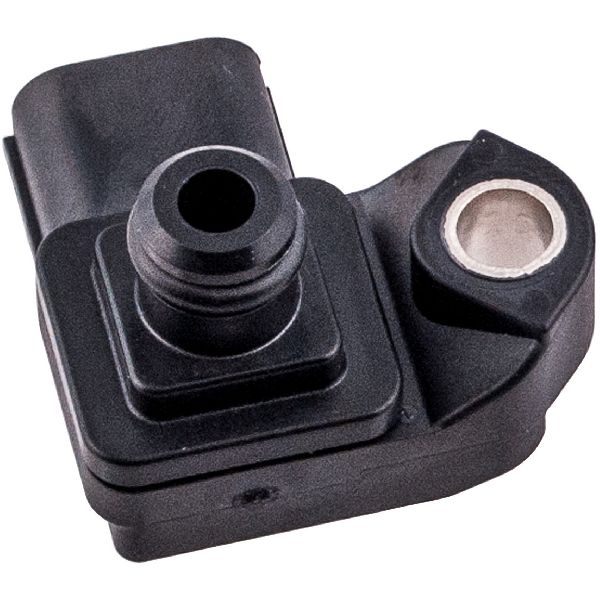
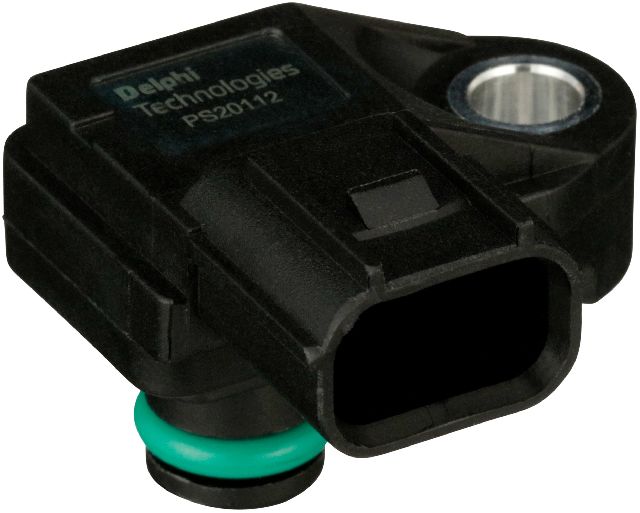
On a 2017-2022 Honda CR-V, code P0108 is most often caused by a failed Manifold Absolute Pressure (MAP) sensor. This is a critical sensor, especially on the 1.5L Turbo engine. Replacing the sensor is a common DIY fix, with the genuine OEM part (37830-5AA-A02) being relatively affordable and the most recommended solution.
- P0108 on your CR-V means the MAP sensor circuit has a high voltage fault, which usually points directly to a bad MAP sensor.
- Symptoms will be very noticeable, including rough idle, poor acceleration, and bad gas mileage.
- Before buying parts, perform a quick check of the sensor's wiring and connector for any visible damage, especially bent pins.
- Replacing the MAP sensor is a straightforward DIY job for most owners, typically requiring only an 8mm socket. The OEM part is recommended and affordable.
- If a new sensor doesn't fix the issue, a more thorough diagnosis of the wiring harness and PCM is necessary, but also consider the possibility the new part was faulty.
What's Unique About the 2017-2022 Honda CR-V
The 2017-2022 CR-V primarily uses a 1.5L turbocharged L15B7 engine. On this engine, the MAP sensor's role is especially critical because it provides the main data for managing intake manifold pressure, which includes turbocharger boost. An incorrect high reading can cause the engine to run excessively rich, thinking there is high engine load, which negatively impacts performance and fuel economy more significantly than on a naturally aspirated engine like the 2.4L K24W also found in this generation. The 1.5T engine actually uses two MAP sensors; one on the intake manifold and one on the throttle body.
Symptoms You May Notice
- Check Engine Light is on
- Rough or unstable idle.
- Poor acceleration and engine hesitation.
- Increased fuel consumption.
- Black smoke from the exhaust.
- Engine may stall, especially at low speeds or when stopping.
- Difficulty starting the engine, particularly when cold.
- Replacing spark plugs or fuel injectors without diagnosing the MAP sensor circuit first. While a rich condition can foul plugs, the root cause is the incorrect data from the MAP sensor circuit.
- Mistaking the Intake Air Temperature (IAT) sensor for the MAP sensor. On some vehicles, the connectors can be similar.
- Replacing the MAP sensor with a faulty new part. A forum user on Honda-Tech reported that their first 'new' MAP sensor was also bad, and the problem was only resolved after exchanging it for another one.
Most Likely Causes
- Faulty Manifold Absolute Pressure (MAP) Sensor 🔴 High Probability → Shop Manifold Absolute Pressure Sensor The sensor can fail internally from heat and vibration over time, causing it to short and send a constant high voltage signal. This is the most common reason for a P0108 code. 🎬 Watch: A detailed breakdown of the P0108 code on this CR-V.
How to confirm: With the ignition on and engine off (KOEO), use a scan tool to view MAP sensor live data. If the voltage is stuck at or near 5 volts (Honda's threshold is often >4.49V), the sensor is likely faulty. You can also back-probe the sensor's signal wire with a multimeter; a reading above 4.5V with KOEO points to a bad sensor. 🎬 See this step-by-step guide on how to test any MAP sensor. A properly functioning sensor should read around 1.3V at idle.
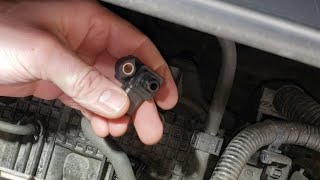
Typical fix: Replace the MAP sensor. On the 1.5L Turbo engine, there are two sensors, but the one on the intake manifold is the primary one for this code. It is mounted directly on the intake manifold and secured by a single 8mm bolt, making it accessible for replacement. 🎬 Watch: How to replace the MAP sensor on your Honda. Ensure the old O-ring comes out with the old sensor.
Est. part cost: $25-$180 - Wiring or Connector Issue 🟡 Medium Probability Engine vibration and heat can cause wires to fray or chafe over time. The connector pins can also become corroded, bent, or loose, disrupting the signal. A user on Honda-Tech forums reported fixing a P0108 code by straightening a bent pin in the connector.
How to confirm: Visually inspect the wiring harness leading to the MAP sensor for any signs of damage, melting, or rodent chew marks. Disconnect the sensor and check the 3-pin connector for corrosion or bent/damaged pins. With the key on, use a multimeter to check for a 5-volt reference and a good ground at the connector. A short to power on the signal wire will also cause this code.
Typical fix: Repair the damaged section of the wiring harness. Clean the connector terminals with electrical contact cleaner or replace the connector pigtail if it's damaged.
Est. part cost: $10-$50
Rare But Worth Checking
- Faulty Powertrain Control Module (PCM): → Shop Engine Control Module (ECM) This is uncommon, but if the MAP sensor and wiring have been tested and are known to be good, the PCM's internal circuit for processing the MAP signal may have failed. This should be the last item to consider after exhausting all other possibilities.
- Clogged Catalytic Converter: A severely restricted exhaust, such as from a clogged catalytic converter, can cause intake manifold pressure to be abnormally high, which the MAP sensor will report. This can sometimes trigger a P0108 code, though it's less common than a sensor or wiring failure.
Diagnosis Steps
- Connect an OBD-II scanner to confirm the P0108 code and check for any other related codes.
- View live data on the scanner. With the Key On, Engine Off (KOEO), observe the MAP sensor voltage. It should be near 5 volts if the fault is active. The pressure reading will be abnormally high.
- Visually inspect the MAP sensor, its connector, and the wiring harness for any obvious damage, corrosion, or loose connections. Pay close attention to the pins inside the connector for any bending or damage.
- Disconnect the MAP sensor. With the key on, use a multimeter to test the connector terminals. You should find a 5-volt reference wire, a ground wire (near 0 volts), and the signal wire.
- If the 5-volt reference or ground is missing, there is a wiring issue between the PCM and the sensor that needs to be traced and repaired.
- If power and ground are present, the issue is highly likely the sensor itself. Replacing the MAP sensor is the most common fix.
- After replacing the sensor, clear the code using the scanner and perform a test drive, including varied load conditions, to ensure the problem is resolved and the Check Engine Light does not return.
Parts You'll Likely Need
- Manifold Absolute Pressure (MAP) Sensor
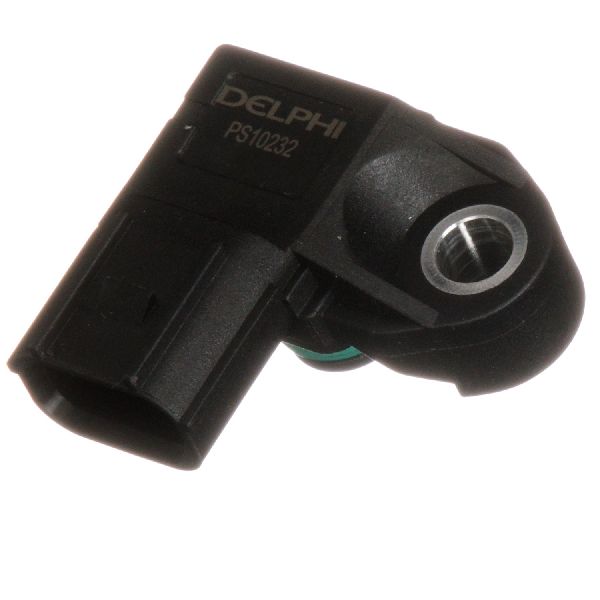
(OEM #37830-5AA-A02)— This sensor is the most common failure point for a P0108 code, as an internal short will cause the high voltage reading that triggers the fault. This part number fits the 1.5L Turbo engine.
Trusted brands: Honda (Genuine OEM), Denso, Bosch, Standard Motor Products (SMP), NGK
OEM price range: $26-$40
Aftermarket price range: $20-$80
Platform-Specific Known Issues
- Dual MAP Sensors on 1.5T Engine: → Shop Manifold Absolute Pressure Sensor The 1.5L Turbo (L15B7) engine is equipped with two MAP sensors. One is located on the top of the intake manifold, and a second one is on the throttle body assembly. While both measure pressure, the P0108 code typically relates to the primary sensor on the intake manifold. It's important to identify the correct sensor before replacement.
Mechanic-Grade Diagnostic Values
- MAP Sensor Signal Voltage (KOEO) — expected: Should be between 0.5V and 4.5V. At idle, voltage should drop to around 0.9V - 1.3V.. Failure: A reading greater than 4.49V indicates a fault.
- MAP Sensor Connector 5V Reference — expected: Approximately 5.0V with ignition ON.. Failure: Significantly lower or no voltage points to a wiring issue or a fault in the PCM's power supply.
- MAP Sensor Connector Ground Wire Resistance — expected: Less than 1 ohm when tested to a known good chassis ground.. Failure: A reading higher than 5 ohms indicates a poor ground connection that needs to be located and cleaned.
Scan Tool Commands That Help
- Honda HDS (or equivalent): ECM/PCM RESET (in CLEAR MENU) — This function should be performed after replacing the MAP sensor or repairing wiring to clear learned values and force the PCM to re-adapt to the new, correct sensor signals.
Wiring & Ground Locations
- MAP Sensor Connector (1.5T Intake Manifold) — A 3-pin connector on the MAP sensor, which is located on the top of the intake manifold.. This is the primary connection point to check for 5V reference, ground, and signal voltage. Corrosion or bent pins here are a common cause of the fault.
- PCM Connector C (49P) - Pin 24 — This is one of the main connectors for the Powertrain Control Module (PCM).. Pin 24 (Gray wire) is the ground circuit (SG1) for the MAP sensor. A continuity check between this pin and Pin 1 of the MAP sensor connector is required if a bad ground is suspected.
- G101 Ground — Typically located on the vehicle chassis near the battery or under the dashboard.. This is a major engine and chassis ground point. While not exclusively for the MAP sensor, a loose or corroded G101 can cause a variety of sensor and module communication issues, including erratic voltage readings that could potentially trigger a P0108.
Real Owner Repair Stories
- iCarsoft US Case Study (2015 Honda Civic (similar engine architecture)) — P0108 code, stalling at stoplights.
✅ What actually fixed it The MAP sensor was clogged with oil residue and carbon buildup from a minor valve cover leak. Cleaning the sensor resolved the issue. - NHTSA ODI #11361702 (Honda Accord - Cross-Manufacturer Reference) — An owner reported that while accelerating, the vehicle would not move. Upon inspection, the check engine light revealed codes P0401 and P0108, which the owner addressed by installing a new MAP sensor.
OEM Part Supersession History
37830-5AA-A01→37830-5AA-A02— Standard part revision by the manufacturer for improvements or supplier changes.
Heads up: The parts are interchangeable; 37830-5AA-A02 is the current replacement for the older part number.
Diagnostic Flowchart
Real Owner Stories
Aggregated from forums and TSBs cited above. Mileages and costs reflect what owners reported in those sources.
2018 Honda CR-V
Symptoms: Experienced a P0108 code accompanied by engine stalling and a rough idle.
What fixed it: Replaced the MAP sensor, noting it was an easy DIY repair.
Source hint: hondacrvclub.com thread titled 'P0108 map sensor circuit high voltage'
1998 Honda CR-V
Symptoms: Diagnosing a persistent P0108 code.
What fixed it: Discovered that the brand new replacement MAP sensor was faulty out of the box, highlighting a key diagnostic pitfall.
Source hint: honda-tech.com thread '1998-crv-obd-code-p0108'
Honda CR-V
Symptoms: Triggered a P0108 code due to a disrupted signal.
What fixed it: Straightened a bent pin inside the MAP sensor connector.
Source hint: Honda-Tech forums (mentioned in common causes)
Related OBD-II Codes
Frequently Asked Questions
I have a 1.5L Turbo CR-V. Which MAP sensor usually causes the P0108 code?
How much does it cost to fix a P0108 code on my 2017-2022 CR-V?
Can I replace the MAP sensor on my CR-V myself?
I replaced the MAP sensor on my CR-V but the P0108 code came back. What else could it be?
How can I test if the MAP sensor on my CR-V is actually bad before buying a new one?
Does the P0108 code affect other Honda models with the 1.5T engine?
Helpful Videos

We Have This Part in Stock


The information in this article is provided for general reference and educational purposes only. Vehicle specifications, procedures, and part compatibility can vary by production date, trim level, and region. Always consult your vehicle's factory service manual and verify part numbers before purchasing or performing repairs. Safety-critical components such as airbags, seat belts, and braking systems should be installed by a qualified professional.
- Honda CR-V:
- 🧭 Diagnostic Flowchart
- 🎬 Helpful Videos
- 🛍️ Shop This Part
- What's Unique About the 2017-2022 Honda CR-V
- Symptoms You May Notice
- Most Likely Causes
- Rare But Worth Checking
- Diagnosis Steps
- Parts You'll Likely Need
- Platform-Specific Known Issues
- Mechanic-Grade Diagnostic Values
- Scan Tool Commands That Help
- Wiring & Ground Locations
- Real Owner Repair Stories
- OEM Part Supersession History
- Real Owner Stories
- 2018 Honda CR-V
- 1998 Honda CR-V
- Honda CR-V
- Related OBD-II Codes
- Frequently Asked Questions
- 🎟️ Get 5% Off