

P0108 on 1998-2004 Isuzu Rodeo 3.5L V6: MAP Sensor Circuit High Causes and Fixes
P0108 on your Isuzu Rodeo usually means the Manifold Absolute Pressure (MAP) sensor has failed or there's a significant vacuum leak. A new MAP sensor costs about $25-$70 for an aftermarket part and is a simple 30-minute DIY replacement. Before replacing, always check the small vacuum hose attached to it for cracks.
- P0108 on your Rodeo points to a problem with the MAP sensor circuit, most often the sensor itself.
- Before buying a new sensor, carefully inspect the vacuum hose going to it for cracks or disconnection, as this is a common and cheap fix.
- Symptoms include a rough idle, poor acceleration, bad gas mileage, and black exhaust smoke.
- This issue is also common on the Honda Passport, Isuzu Trooper, and Acura SLX, which share the same engine and parts.
What's Unique About the 1998-2004 Isuzu Rodeo
While some Isuzu service documentation mentions a barometric pressure sensor located inside the main computer (ECM), the common cause for P0108 on the 3.5L V6 Rodeo is a fault with the separate, physical MAP sensor located on the engine's intake manifold. For this vehicle, diagnosis should focus on this external sensor, its vacuum hose, and its electrical connector. The code is triggered when the sensor's reading is illogical for the given engine state, such as reporting high pressure (low vacuum) when the engine is idling at a stop.
Symptoms You May Notice
- Check Engine Light is on
- Rough or erratic idle
- Poor engine performance and sluggish acceleration
- Hesitation or stumbling during acceleration 🎬 Watch this video to understand the common causes of the P0108 code.
- Significantly decreased fuel economy
- Black smoke from the exhaust (due to a rich fuel mixture)
- Engine may be hard to start or stall unexpectedly
- Strong smell of gasoline at idle
- Replacing spark plugs and ignition coils without checking MAP sensor data first.
- Replacing the throttle position sensor (TPS), as symptoms can sometimes overlap.
- Replacing the oxygen sensors, as black smoke and poor fuel economy are also symptoms of a failed O2 sensor.
Most Likely Causes
- Faulty Manifold Absolute Pressure (MAP) Sensor 🔴 High Probability → Shop Manifold Absolute Pressure Sensor After many years and heat cycles, the internal electronics of the sensor can fail, causing it to send a constant high voltage signal regardless of actual manifold pressure. Its location at the rear of the intake manifold subjects it to significant heat.
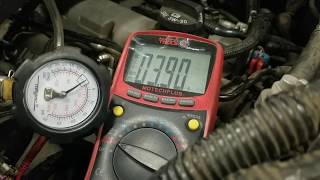
How to confirm: With the key on and engine off, the MAP sensor signal wire should read around 4.7 volts. With the engine idling, voltage should drop to between 1.1V and 1.8V. If the voltage is stuck high (e.g., above 4.4V) at idle, the sensor is bad or has no vacuum source. Applying vacuum with a hand pump should cause a smooth voltage drop.
Typical fix: Replace the MAP sensor.
Est. part cost: $25-$70 - Vacuum Leak 🟡 Medium Probability Rubber vacuum hoses become brittle and crack with age. A disconnected, broken, or clogged vacuum hose leading to the MAP sensor will cause it to read atmospheric pressure (a high value) instead of engine vacuum. The small elbow connectors are particularly prone to failure.
How to confirm: Visually inspect all vacuum lines connected to the intake manifold for cracks, brittleness, or disconnection. Pay close attention to the small hose that attaches directly to the MAP sensor nipple. You can also spray brake cleaner or starter fluid around vacuum lines with the engine running; a change in idle RPM indicates a leak.
Typical fix: Replace the cracked or broken vacuum hose(s).
Est. part cost: $5-$20 - Wiring or Connector Issue ⚪ Low Probability The wiring harness in the engine bay is exposed to heat and vibration, which can lead to chafed wires or loose pins in the connector over time. The connector itself can become brittle and fail to make a secure connection.
How to confirm: Inspect the MAP sensor connector for corrosion, damage, or a loose fit. With the key on, check the 3-wire connector: one wire should have 5 volts (reference), one should have a good ground, and the third is the signal wire. Wiggle the harness while monitoring voltage on a scan tool to check for intermittent shorts or opens.
Typical fix: Repair the damaged wire or clean/replace the connector pigtail.
Est. part cost: $10-$30
Rare But Worth Checking
- Clogged Catalytic Converter: A severely restricted exhaust can increase pressure in the intake manifold, which a functioning MAP sensor will correctly report as a high reading. This would typically be accompanied by a severe loss of power, especially at higher RPMs, and possibly other exhaust-related codes.
- Extremely Dirty Throttle Body: In some cases, heavy carbon buildup around the throttle plate can disrupt airflow and pressure dynamics within the intake manifold at idle, potentially contributing to an illogical MAP sensor reading.
- Faulty Engine Control Module (ECM): → Shop Engine Control Module (ECM) This is very rare. If the MAP sensor, wiring, and vacuum system all test perfectly, the ECM's internal circuit for reading the sensor may have failed. This should be the absolute last item to consider after all other possibilities are exhausted.
Diagnosis Steps
- Verify the P0108 code is present using an OBD-II scanner.
- Visually inspect the MAP sensor, its electrical connector, and the vacuum hose attached to it for obvious damage, cracks, or disconnection. The sensor is located on the rear of the upper intake manifold.
- With the engine off and key on, use a scanner to observe the live MAP sensor data. 🎬 Watch: How to test a MAP sensor using a multimeter or scanner. It should read close to atmospheric pressure for your altitude (approx. 4.7V).
- Start the engine and let it idle. The MAP sensor voltage should drop significantly, typically to a range of 1.1V to 1.8V. If the voltage stays high (above 4.4V), you have confirmed the fault condition.
- If voltage stays high, disconnect the vacuum line from the sensor and connect a handheld vacuum pump. Apply 15-20 inHg of vacuum. The voltage should drop smoothly to around 1.1V. If it does, the sensor is likely good and the issue is a vacuum leak or clogged hose. If the voltage does not drop, the sensor is defective.
- If the sensor tests good, thoroughly inspect all vacuum hoses connected to the intake manifold for leaks.
- Test the sensor's electrical connector. Confirm you have a 5-volt reference and a solid ground connection using a multimeter.
- If the sensor, wiring, and vacuum system all test good, investigate potential for a major vacuum leak, a restricted exhaust, or in rare cases, a faulty ECM.
Parts You'll Likely Need
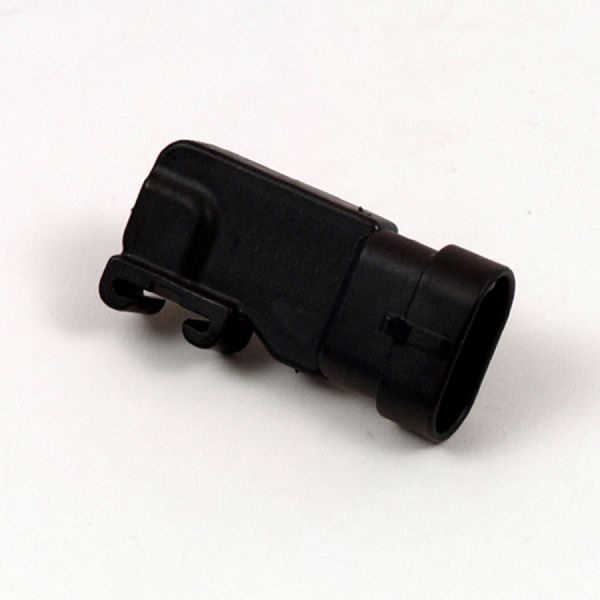
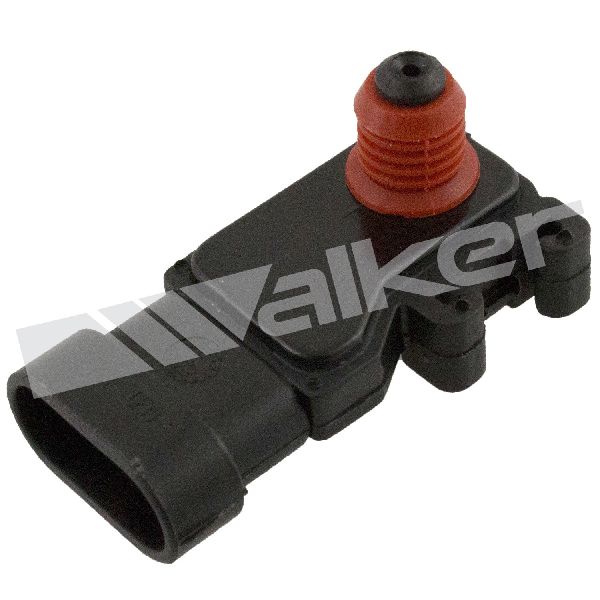
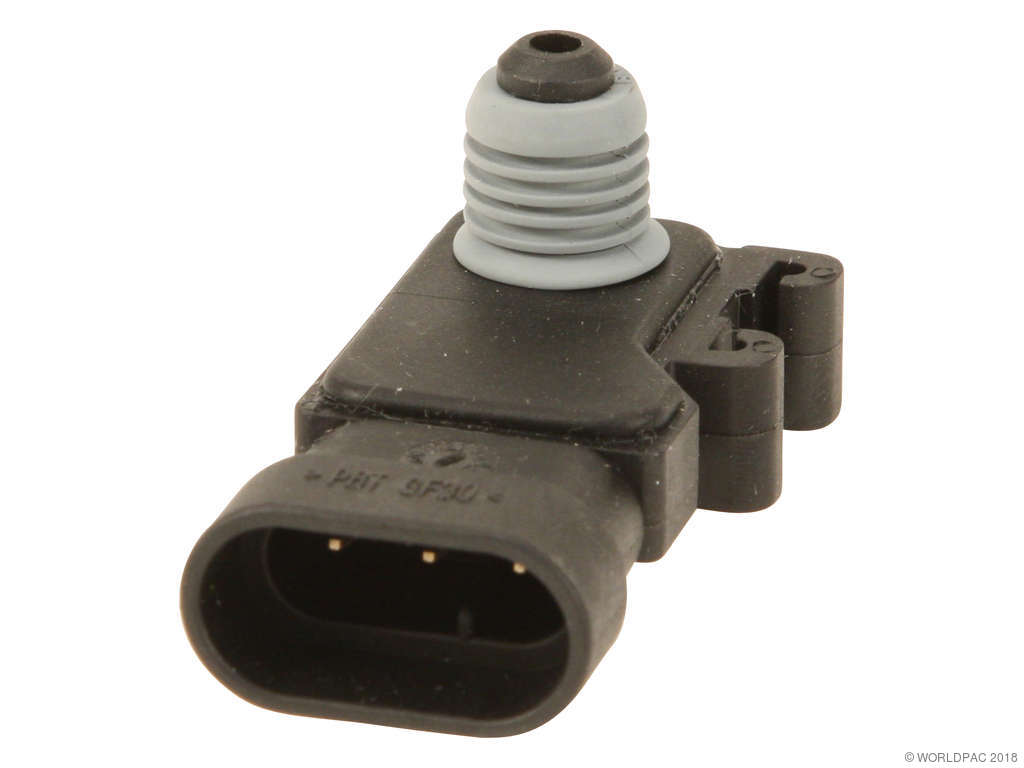
- Manifold Absolute Pressure (MAP) Sensor
(OEM #8-16212-460-0 (Isuzu), 16212460 (GM/ACDelco))— This sensor is the most frequent point of failure for this code due to age and heat exposure.
Trusted brands: Delphi, ACDelco, Standard Motor Products (SMP), Bosch, Denso
OEM price range: $80-$120
Aftermarket price range: $25-$70
Related Codes That Often Appear With This One
- P0106 — Indicates a MAP/Barometric Pressure Circuit Range/Performance problem. This can be set along with P0108 if the sensor's signal is erratic or doesn't correlate with other sensor inputs like TPS and engine RPM.
- P0107 — Indicates MAP/Barometric Pressure Circuit Low Input. While the opposite of P0108, seeing them together or intermittently could point to a severe wiring issue causing shorts to both ground and power.
Platform-Specific Known Issues
- The MAP sensor on the 3.5L 6VE1 engine is located on the top rear of the intake manifold, near the firewall. Access can be slightly tight but does not require removal of major components.
- Owners frequently report that cheap, unbranded MAP sensors from online marketplaces may fail quickly or be dead-on-arrival. Sticking to reputable brands is recommended for this part.
Mechanic-Grade Diagnostic Values
- MAP Sensor Ground Circuit Voltage — expected: Less than 100 millivolts (0.10V). Failure: A reading higher than 100mV indicates a poor ground connection, which can skew the sensor's signal voltage and cause incorrect readings.
Scan Tool Commands That Help
- Isuzu Tech 2: Clear Info — This is the manufacturer-specific function to clear DTCs and their associated freeze-frame data after a repair has been completed.
Wiring & Ground Locations
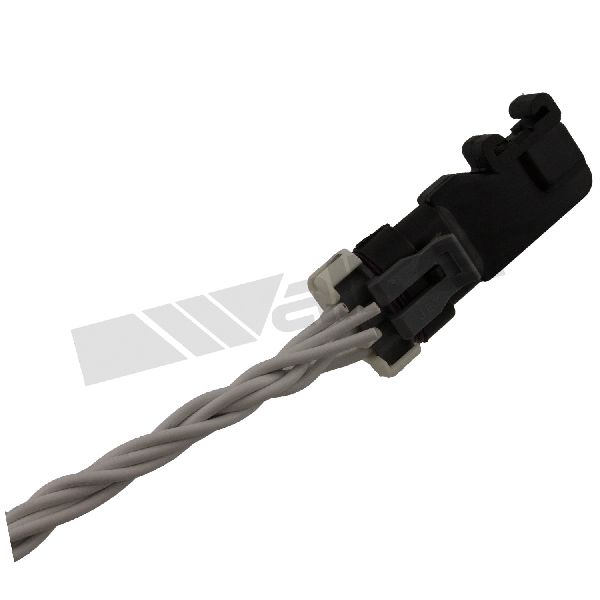
- MAP Sensor Connector Pinout — On the MAP sensor harness connector.. Knowing the specific function of each pin is critical for accurate electrical testing. Pin 1 is the 5-volt reference from the ECM, Pin 2 is the signal wire back to the ECM, and Pin 3 is the sensor ground provided by the ECM.
Model Year Variations Within This Range
- 2002-2004: Engines from 2002-onward use a Drive-by-Wire (DBW) throttle system instead of a mechanical throttle cable. While the MAP sensor's role is the same, the ECM logic that correlates MAP readings with throttle position and engine load is more complex.
- 2004 only: A version of the 3.5L V6 with Gasoline Direct Injection (GDI) was offered for the 2004 model year only. This engine has a different fuel system, higher compression, and unique ECM tuning, which could affect diagnostic strategies for fuel-related codes like P0108.
Diagnostic Flowchart
Real Owner Stories
Aggregated from forums and TSBs cited above. Mileages and costs reflect what owners reported in those sources.
2000 Isuzu Rodeo 3.2L
Symptoms: Triggered a P0108 code, experienced terrible gas mileage, and engine stalling.
What fixed it: Confirmed the vacuum line was intact, then replaced the original MAP sensor, which immediately cleared the code and restored normal engine performance and fuel economy.
Source hint: PlanetIsuzoo.com - Thread Title: 'P0108 MAP sensor high input'
Related OBD-II Codes
Frequently Asked Questions
Where is the MAP sensor located on my 1998-2004 Isuzu Rodeo 3.5L 6VE1?
I have a P0108 code and terrible gas mileage. Could a vacuum leak cause this on my Rodeo?
How can I test the MAP sensor on my 3.5L V6 before buying a replacement?
Are there any specific brands of MAP sensors I should avoid for my Isuzu?
What should the voltage be on the MAP sensor connector wires?
Does the P0108 code affect other vehicles related to the Rodeo?
Helpful Videos

We Have This Part in Stock


The information in this article is provided for general reference and educational purposes only. Vehicle specifications, procedures, and part compatibility can vary by production date, trim level, and region. Always consult your vehicle's factory service manual and verify part numbers before purchasing or performing repairs. Safety-critical components such as airbags, seat belts, and braking systems should be installed by a qualified professional.
- Isuzu Rodeo:
- 🧭 Diagnostic Flowchart
- 🎬 Helpful Videos
- 🛍️ Shop This Part
- What's Unique About the 1998-2004 Isuzu Rodeo
- Symptoms You May Notice
- Most Likely Causes
- Rare But Worth Checking
- Diagnosis Steps
- Parts You'll Likely Need
- Related Codes That Often Appear With This One
- Platform-Specific Known Issues
- Mechanic-Grade Diagnostic Values
- Scan Tool Commands That Help
- Wiring & Ground Locations
- Model Year Variations Within This Range
- Real Owner Stories
- 2000 Isuzu Rodeo 3.2L
- Related OBD-II Codes
- Frequently Asked Questions
- 🎟️ Get 5% Off