

P0108 on 2010-2015 Kia Optima: Manifold Pressure Sensor High Causes and Fixes
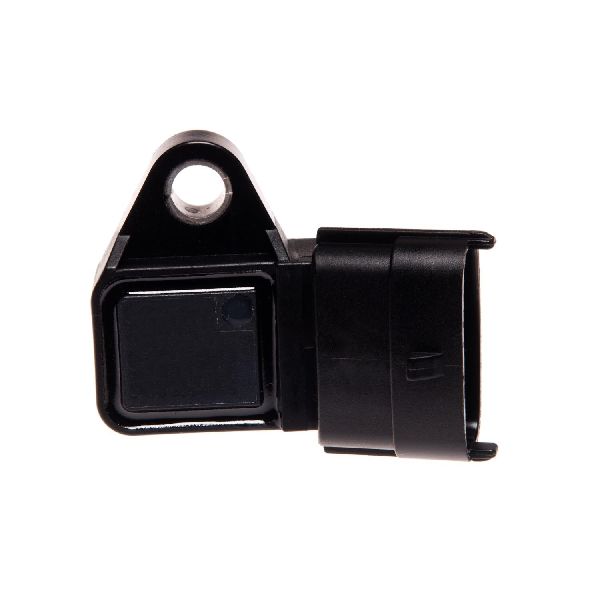
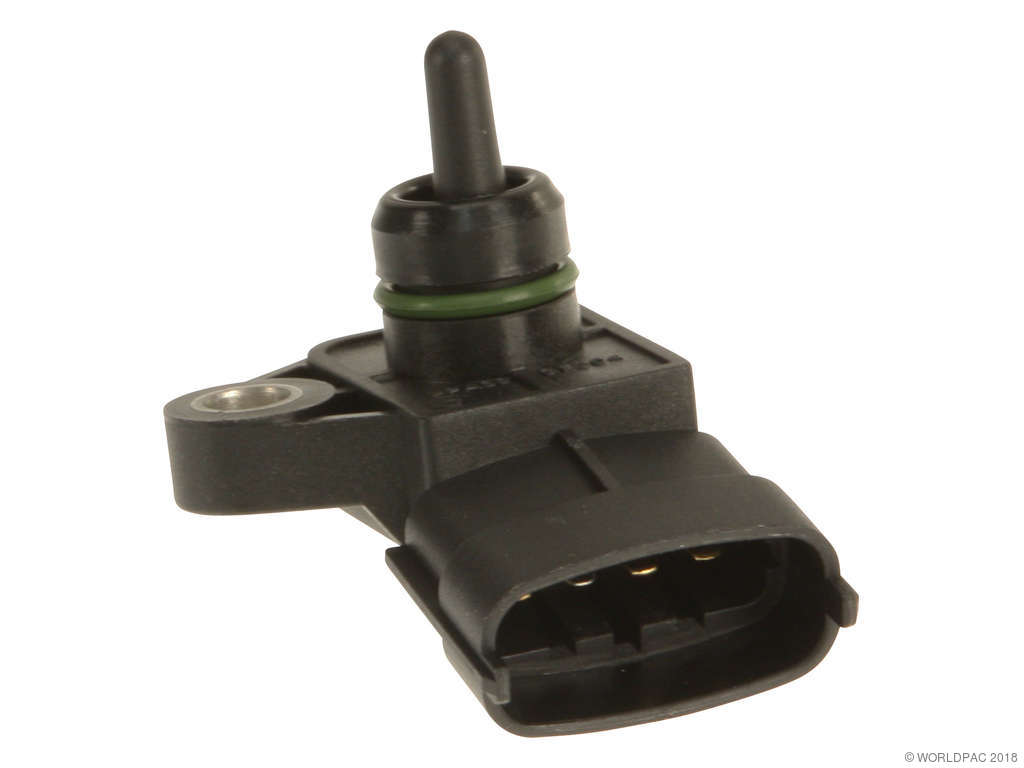
P0108 on a 2010-2015 Kia Optima most commonly indicates a failed Manifold Absolute Pressure (MAP) sensor. The ECU triggers this code when it detects a voltage signal from the sensor that is higher than the specified range, typically above 4.5 volts. Replacing the sensor is a simple DIY fix, with aftermarket parts costing between $20 and $60.
- P0108 on your Kia Optima points directly to a problem in the MAP sensor circuit, most often a failed sensor sending a voltage signal over 4.5V to the ECU.
- Symptoms include a rough idle, poor gas mileage, and hesitation. Ignoring the code can lead to more expensive catalytic converter damage.
- This is a very DIY-friendly repair. The MAP sensor is easy to access on the intake manifold and can be replaced in under 15 minutes with a single 10mm bolt.
- An aftermarket sensor costs around $20-$60, while an OEM sensor is closer to $100. Be sure to get the correct part number, as 2.0L Turbo models use a different, more expensive sensor.
What's Unique About the 2010-2015 Kia Optima
The 2010-2015 Kia Optima spans two distinct generations (the 2010 MG and 2011-2015 TF), with the TF generation introducing the more modern 2.4L GDI and 2.0L Turbo Theta II engines. While P0108 is a straightforward sensor code, these Theta II engines have been subject to recalls and warranty extensions for connecting rod bearing wear, which can lead to catastrophic engine failure. A TSB (PI1802) was also issued to update the ECU logic for the Knock Sensor Detection System (KSDS) on many of these engines. While unrelated to the MAP sensor itself, any drivability issue on these engines warrants careful diagnosis. The P0108 code, however, is almost always a simple fix related to the sensor or its wiring.
Generation note: Yes, this range covers two generations. The 2010 model year is the last of the second generation (MG). The 2011-2015 models are the third generation (TF), which feature different styling and engine options, including the 2.4L GDI and 2.0L Turbo. However, the cause and fix for a P0108 code are consistent across both generations as the MAP sensor function and location are similar.
Symptoms You May Notice
- Check Engine Light is illuminated
- Rough or unstable idle
- Poor fuel economy
- Hesitation or stumbling during acceleration
- Engine stalling, especially at idle
- Black smoke from the exhaust
- Engine runs rich
- Replacing the throttle body when the issue is a simple vacuum leak or bad sensor.
- Replacing spark plugs or ignition coils, as misfires can be a symptom but are not the root cause of P0108.
- Replacing the wrong sensor, such as the Mass Air Flow (MAF) sensor, which is located closer to the air filter box.
Most Likely Causes
- Faulty Manifold Absolute Pressure (MAP) Sensor 🔴 High Probability → Shop Manifold Absolute Pressure Sensor Sensors can fail over time due to heat cycles and exposure. It's the most common point of failure for this code. The internal piezoelectric element can fail or the diaphragm can rupture.
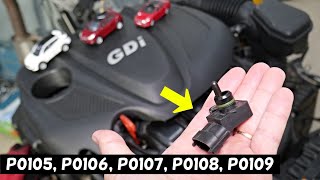
How to confirm: With the key on and engine off (KOEO), use a scan tool to check the MAP sensor reading; it should match the barometric pressure (BARO) reading. With the engine idling, the voltage should be around 1-1.8 volts. If the voltage is stuck high (near 5 volts) regardless of engine RPM, the sensor is bad. You can also test the sensor with a multimeter by back-probing the signal wire. 🎬 See how to test and replace the sensor yourself.
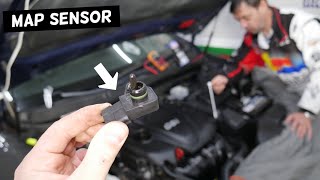
Typical fix: Replace the MAP sensor. It is located on the intake manifold, typically just past the throttle body, and secured with a single 10mm bolt. 🎬 Watch: This quick video shows exactly where the sensor is located.
Est. part cost: $20-$60 - Damaged Wiring or Connector 🟡 Medium Probability The wiring harness can become brittle from engine heat, or the connector can become corroded, loose, or contaminated with oil, causing a short to power. The harness clip can break, allowing the wires to contact the radiator fan.
How to confirm: Visually inspect the wiring harness leading to the MAP sensor for any signs of damage, melting, or corrosion. Check for a stable 5-volt reference, a good ground, and a signal wire at the connector with a multimeter. Wiggle the harness while monitoring the live data to see if the reading fluctuates.
Typical fix: Repair the damaged section of wiring or replace the connector pigtail. A replacement connector is available.
Est. part cost: $10-$30 - Vacuum Leak ⚪ Low Probability While less common for a 'high input' code which indicates low vacuum, a significant vacuum leak from a cracked hose or bad intake gasket can cause erratic sensor readings that the PCM may interpret as a fault. A stuck-open PCV valve has also been reported as a cause.
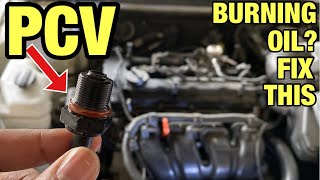
How to confirm: With the engine running, listen for hissing sounds around the intake manifold. You can also carefully spray brake cleaner or a propane torch (unlit) around suspected areas; a change in engine idle indicates a leak. Check the PCV valve for proper operation. 🎬 Watch: How to change the PCV valve if you're burning oil.
Typical fix: Replace the leaking vacuum hose, gasket, or PCV valve.
Est. part cost: $5-$50
Rare But Worth Checking
- Clogged Catalytic Converter: A severe exhaust restriction can increase pressure in the cylinders on the exhaust stroke, which can translate to increased pressure in the intake manifold at valve overlap. This can cause an abnormally high MAP sensor reading. This would typically be accompanied by a significant loss of power, especially at higher RPMs, and potentially a rotten egg smell from the exhaust.
- Faulty Powertrain Control Module (PCM): → Shop Engine Control Module (ECM) This is extremely rare. The PCM's internal voltage regulator or processing circuits can fail, but all other possibilities should be exhausted before condemning the PCM.
Diagnosis Steps
- Connect an OBD-II scanner to verify the P0108 code and check for any other pending or stored codes.
- Observe the live data stream for the MAP sensor with the Key On, Engine Off (KOEO). The reading should be close to the Barometric Pressure (BARO) reading. A difference of more than 0.5 volts suggests a problem.
- Start the engine and observe the MAP reading at idle. It should drop significantly to 1.0-1.8 volts, indicating vacuum. Rev the engine; the voltage should increase with RPM.
- Visually inspect the MAP sensor connector and wiring harness for any signs of damage, corrosion, loose connections, or oil contamination. Ensure the harness is properly secured and not near moving parts like the radiator fan.
- Inspect all vacuum hoses connected to the intake manifold for cracks, brittleness, or loose fittings.
- If the sensor reading is stuck high (above 4.5V) or does not change with engine RPM, the sensor is likely faulty.
- To confirm, disconnect the sensor and test the wiring. With the key on, use a multimeter to verify a 5-volt reference wire, a good ground wire (check for continuity to the battery negative), and the signal wire.
- If wiring and the sensor check out, investigate less common causes. Check for a severely clogged engine air filter or restrictions in the throttle body.
- Test for a clogged catalytic converter by using an exhaust back-pressure gauge or by checking the temperature difference between the inlet and outlet with an infrared thermometer (outlet should be hotter).
- If all other possibilities are exhausted, the issue may be with the Powertrain Control Module (PCM).
Parts You'll Likely Need
- Manifold Absolute Pressure (MAP) Sensor
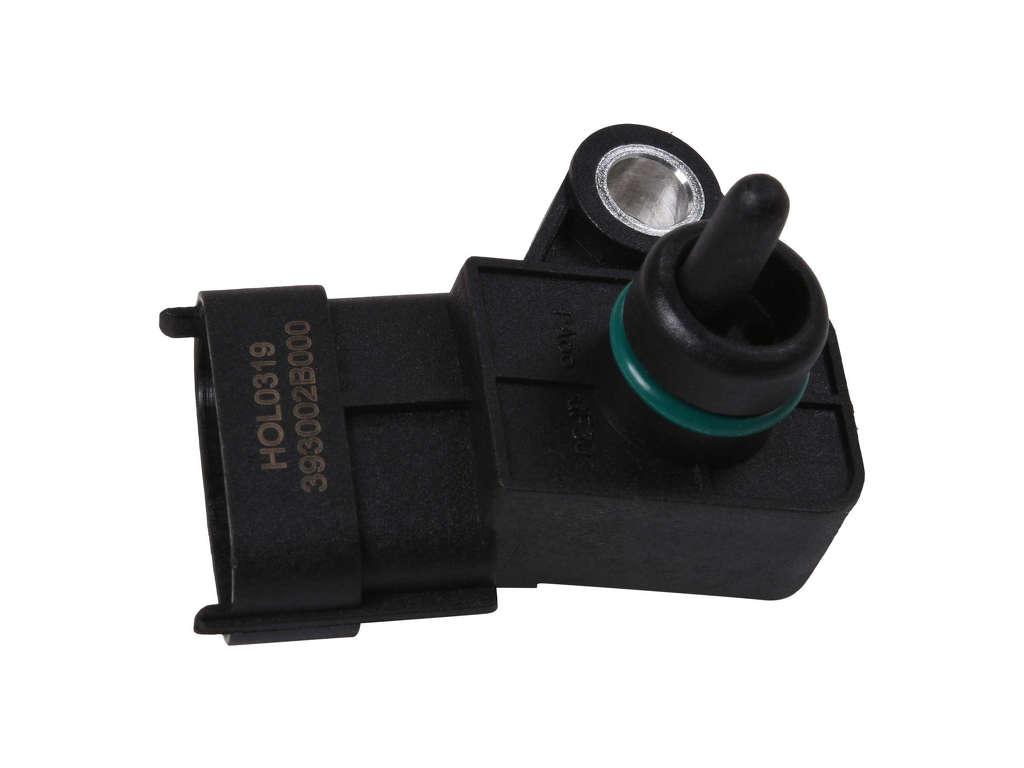
(OEM #39300-2B000)— This is the most common failure point for code P0108. The sensor's internal components fail, causing it to send an incorrect, high-voltage signal to the ECU.
Trusted brands: Kia/Hyundai (OEM), Bosch, Delphi, NGK, Standard Motor Products
OEM price range: $70-$110
Aftermarket price range: $20-$60 - MAP Sensor (for 2.0L Turbo models)
(OEM #39300-84400 (supersedes 39300-2G000))— The 2.0L Turbo engine uses a different boost pressure sensor. While it performs a similar function, it is designed to read boost pressure as well as vacuum. Failure modes are similar.
Trusted brands: Hyundai/Kia (OEM)
OEM price range: $150-$220
Aftermarket price range: $50-$100
Related Codes That Often Appear With This One
- P0106 — This code indicates a 'Range/Performance' problem with the MAP sensor, which can be triggered by the same underlying faults as P0108, such as an intermittent wiring issue or a failing sensor.
- P0107 — This is the opposite of P0108, indicating a 'Low Input'. It's uncommon to see both simultaneously, but seeing them on subsequent key cycles could point to an intermittent wiring short to ground and then to power, or a completely failed sensor.
Technical Service Bulletins (TSBs) & Recalls
- PI1802: While not directly for P0108, this TSB involves an ECU logic update for the Knock Sensor Detection System (KSDS) for 2011-2018 Optimas with Theta II engines. It's an important piece of context for the overall health and management of these engines.
Platform-Specific Known Issues
- Oil Contamination from PCV System: On some higher mileage Theta II engines, a failing or stuck-open PCV valve can allow excessive oil vapor into the intake manifold. This oil can contaminate and foul the MAP sensor, leading to erratic readings and codes P0107/P0108. A user on Reddit reported fixing their codes by replacing the PCV valve and cleaning oil out of the intake manifold where the sensor sits.
- Carbon Buildup on Intake Valves (GDI Engines): The 2011-2015 models with Gasoline Direct Injection (GDI) engines are prone to carbon buildup on the intake valves. This is because fuel is injected directly into the cylinder, so it no longer washes over and cleans the valves. Severe carbon buildup can restrict airflow, potentially affecting manifold pressure and causing erratic sensor readings or drivability issues that could be misdiagnosed as a bad MAP sensor. This typically occurs at higher mileage (80k+ miles).
Mechanic-Grade Diagnostic Values
- MAP Sensor Signal Voltage at Idle — expected: 1.4V - 1.8V. Failure: A reading at or above 4.4V - 4.5V indicates a 'High Input' fault (P0108).
- MAP Sensor Signal Voltage (KOEO) — expected: Should be close to Barometric Pressure (BARO) sensor reading. A difference > 0.5V is a fault indicator.. Failure: A reading stuck near 4.5V - 5.0V indicates a sensor or circuit fault.
- MAP Sensor Resistance — expected: Approximately 2.4 kΩ (kilo-ohms). Failure: A reading that is significantly higher or shows no continuity (OL) indicates a bad sensor.
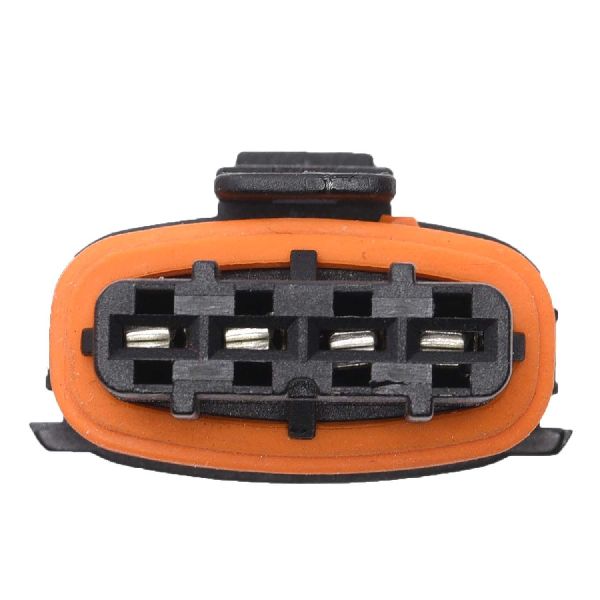
- MAP Sensor Connector Pin Voltages (KOEO) — expected: Pin 1 (Power): 5V Reference; Pin 2 (Ground): < 0.1V; Pin 3 (Signal): ~4.5V (unplugged) or BARO reading (plugged in).. Failure: No 5V reference or poor ground indicates a wiring/PCM issue, not a sensor failure.
Scan Tool Commands That Help
- Kia GDS (Global Diagnostic System): Trigger Module (Flight Record) — For diagnosing intermittent P0108 codes. This function allows for recording sensor data during a drive cycle when the fault occurs. The recorded data can then be downloaded and analyzed to see if the MAP sensor voltage spiked, or if another component's reading is correlated, which is useful for tracking down intermittent wiring shorts or other elusive issues.
Wiring & Ground Locations
- MAP Sensor Connector (2.0L Engine) — On the intake manifold, just past the throttle body.. Knowing the wire functions is critical for testing. On some models, the pinout is: Pink wire = 5V Power, Black wire = Ground, Blue wire = Signal to ECU. This allows a technician to quickly test for reference voltage, ground integrity, and signal output directly at the connector.
Real Owner Repair Stories
- Kia-Forums.com user (2012 Kia Optima EX 2.4L GDI) — Check engine light with code P0108, car running fine otherwise.
❌ Tried (didn't work) Initially just cleared the code, but it returned.
✅ What actually fixed it The user removed the MAP sensor and found it was coated in oil. After cleaning the sensor with MAF cleaner and reinstalling it, the code did not return. The user later replaced the sensor with a new one as a precaution. The underlying cause was suspected to be oil blow-by from the PCV system. - NHTSA ODI #11390539 — An owner of a related Kia model reported a rough idle and a check engine light pulling codes P0108 and P0068. Despite being driven to a dealer, the technician could not find the issue during the initial visit.
OEM Part Supersession History
39300-2B000→39300-2B100— Standard part revision/update. The parts are generally interchangeable.
Heads up: Aftermarket part SU13349 is listed as a cross-reference for both 39300-2B000 and 39300-2B100, indicating high compatibility.39300-2G000→39300-84400— Standard part revision for the turbo boost pressure sensor.
Heads up: This part is for 2.0L Turbo models only and is not interchangeable with the non-turbo MAP sensor.
Model Year Variations Within This Range
- 2011-2015: Models with GDI engines (2.4L and 2.0L Turbo) are susceptible to intake valve carbon buildup, which can cause drivability symptoms and potentially affect MAP sensor readings. This is not a concern for the 2010 model with the 2.4L MPI engine, as its port injectors continuously clean the intake valves.
Diagnostic Flowchart
Real Owner Stories
Aggregated from forums and TSBs cited above. Mileages and costs reflect what owners reported in those sources.
2010 Kia Optima — 205000 miles
Symptoms: P0107/P0108 codes caused by an internal vacuum leak and oil in the intake manifold fouling the sensor.
What fixed it: Replaced the PCV valve and cleaned the oil out of the intake manifold and sensor.
Source hint: Reddit r/MechanicAdvice - "2010, 205K miles, P0107/P0108 Codes Fixed"
2011-2015 Kia Optima GDI — ~85000 miles
Symptoms: Erratic sensor readings and drivability issues misdiagnosed as a bad MAP sensor due to restricted airflow.
What fixed it: Cleaning severe carbon buildup from the intake valves.
Source hint: Vehicle-Specific Issues: Carbon Buildup on Intake Valves (GDI Engines)
Related OBD-II Codes
Frequently Asked Questions
I have a high-mileage Theta II engine and code P0108. Could oil be causing this?
Can carbon buildup on my 2011-2015 Optima GDI cause a P0108 code?
Does TSB PI1802 apply to my P0108 code?
Where should I check the wiring harness for the MAP sensor on my Optima?
What is the MAP sensor part number for the 2.4L engine, and is it the same as other Kias/Hyundais?
How can I test the MAP sensor on my Optima using a multimeter?
Helpful Videos

Used OEM Parts in Stock
New Aftermarket Parts Available


The information in this article is provided for general reference and educational purposes only. Vehicle specifications, procedures, and part compatibility can vary by production date, trim level, and region. Always consult your vehicle's factory service manual and verify part numbers before purchasing or performing repairs. Safety-critical components such as airbags, seat belts, and braking systems should be installed by a qualified professional.
- Kia Optima:
- 🧭 Diagnostic Flowchart
- 🎬 Helpful Videos
- 🛍️ Shop This Part
- What's Unique About the 2010-2015 Kia Optima
- Symptoms You May Notice
- Most Likely Causes
- Rare But Worth Checking
- Diagnosis Steps
- Parts You'll Likely Need
- Related Codes That Often Appear With This One
- Technical Service Bulletins (TSBs) & Recalls
- Platform-Specific Known Issues
- Mechanic-Grade Diagnostic Values
- Scan Tool Commands That Help
- Wiring & Ground Locations
- Real Owner Repair Stories
- OEM Part Supersession History
- Model Year Variations Within This Range
- Real Owner Stories
- 2010 Kia Optima — 205000 miles
- 2011-2015 Kia Optima GDI — ~85000 miles
- Related OBD-II Codes
- Frequently Asked Questions
- 🎟️ Get 5% Off