

P0108 on 2004-2009 Mazda 3: Causes, Symptoms, and Fixes for MAP Sensor Circuit High Input
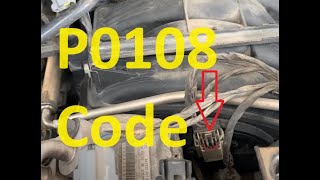
This code almost always points to a failed Manifold Absolute Pressure (MAP) sensor. It's a relatively easy and inexpensive DIY replacement, typically costing $30-$80 for an aftermarket part. Before replacing, inspect the sensor's connector for corrosion and test the wiring, as a short to power can also trigger this code.
- P0108 on a 2004-2009 Mazda 3 means the MAP sensor circuit is reading a higher voltage than expected, typically over 4.5V.
- The most likely cause is a failed MAP sensor, which is an easy and affordable part to replace yourself.
- Before buying a new sensor, always check the wiring and connector for visible damage, corrosion, or a short to power.
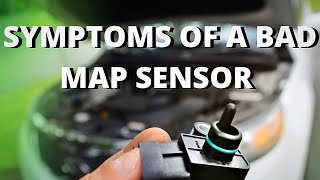
- Symptoms include a rough idle, poor acceleration, stalling, and bad fuel economy.
- The MAP sensor is located on the plastic intake manifold and is held in by a single screw, making replacement a beginner-level task.
What's Unique About the 2004-2009 Mazda 3
For the first-generation Mazda 3 (2004-2009), the P0108 code is a straightforward issue almost always tied directly to the MAP sensor or its immediate wiring. Unlike some vehicles where this code can be triggered by complex vacuum leaks or other system failures, on this platform, owner and technician experiences consistently point to a faulty sensor as the primary culprit. The sensor is conveniently located on the plastic intake manifold, making it more accessible than on many other vehicles. The MZR engine family used in this platform is also shared with other Ford and Volvo models, which exhibit similar failure patterns.
Symptoms You May Notice
- Check Engine Light is on
- Rough or unstable idle, sometimes with RPMs bouncing
- Poor acceleration or hesitation
- Engine stalling, especially when coming to a stop or at idle
- Decreased fuel economy
- Black smoke from the exhaust, indicating a rich fuel mixture
- Difficulty starting the engine
- Strong smell of gasoline, especially at idle
- Replacing the Mass Airflow (MAF) sensor. While both sensors are part of the fuel management system, P0108 specifically points to the MAP sensor circuit. Owners sometimes confuse the two sensors.
Most Likely Causes
- Faulty MAP Sensor 🔴 High Probability → Shop Manifold Absolute Pressure Sensor Sensors can fail over time due to heat cycles, vibration, and internal electronic failure. It's the most frequently reported fix for this code on Mazda 3 forums, where owners describe an immediate resolution after replacement. The sensor's internal diaphragm can fail or its circuitry can short, causing it to send a constant high voltage signal.
How to confirm: With the key on and engine off, use a scan tool to compare the MAP sensor reading to the BARO (barometric pressure) reading. They should be nearly identical. If they differ significantly, or if the MAP sensor voltage is stuck high (near 5 volts) regardless of engine vacuum, the sensor is bad. At idle, the voltage should be around 1.4-1.8V; if it's stuck at or above 4.5V, the sensor has failed.
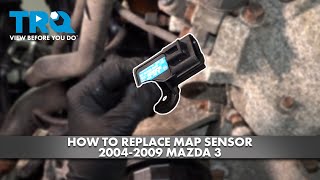
Typical fix: Replace the MAP sensor. It is mounted on the intake manifold with one screw and an electrical connector, making it a 10-15 minute job. 🎬 Watch: Step-by-step MAP sensor replacement for your Mazda 3
Est. part cost: $30-$80 - Damaged Wiring or Connector 🟡 Medium Probability The wiring harness in the engine bay is exposed to heat and vibration, which can cause wires to become brittle, frayed, or shorted over time. Corrosion (green crust) on the connector pins can also bridge the 5V reference and signal wires, causing a constant high signal.
How to confirm: Visually inspect the wiring harness and connector going to the MAP sensor for any signs of damage, corrosion, or loose pins. Unplug the sensor and, with the key on, use a multimeter to check the connector pigtail. You should find a 5-volt reference wire, a ground wire (0V), and a signal wire. If the signal wire shows voltage when disconnected, it's shorted to a power source somewhere in the harness.
Typical fix: Repair the damaged section of wire or replace the connector pigtail. Clean corroded terminals with electrical contact cleaner and apply dielectric grease to prevent future moisture intrusion.
Est. part cost: $5-$25 - Vacuum Leaks ⚪ Low Probability While less common for causing a 'high input' code (which usually indicates an electrical fault), a very large vacuum leak from a cracked hose or bad intake manifold gasket could theoretically reduce manifold vacuum enough to raise the sensor's voltage reading. A user on mazdas247.com noted they had a completely ripped intake pipe which caused the code.
How to confirm: With the engine running, listen for hissing sounds around the intake manifold. You can also spray brake cleaner or starter fluid in small amounts around suspected leak areas; if the engine RPM changes, you've found a leak. A professional would use a smoke machine.
Typical fix: Replace the leaking vacuum hose or gasket.
Est. part cost: $10-$50
Rare But Worth Checking
- Clogged Catalytic Converter: A severely clogged catalytic converter can increase pressure in the intake manifold by restricting exhaust flow, leading to a P0108 code. This would typically be accompanied by other codes (like P0420) and severe performance loss, especially at higher RPMs.
- Faulty Powertrain Control Module (PCM): → Shop Engine Control Module (ECM) This is extremely rare. The PCM itself could be malfunctioning 🎬 See this guide on the causes and fixes for P0108, but all other possibilities must be exhausted before considering PCM replacement. A Reddit user with a Mazdaspeed3 discovered bent pins on the ECU connector were the root cause after replacing multiple sensors.
Diagnosis Steps
- Read the code with an OBD-II scanner to confirm P0108 is present and note any other codes.
- Visually inspect the MAP sensor, its connector, and wiring for any obvious damage, corrosion, loose connections, or signs of melting.
- With the key on, engine off (KOEO), use a scan tool to view live data. Compare the MAP sensor pressure reading to the Barometric Pressure (BARO) reading. They should be very close. A significant difference points to a faulty sensor.
- Check the MAP sensor voltage with the scan tool or a multimeter. KOEO, it should be near 4.5V (matching atmospheric pressure). Start the engine. At idle, the voltage should drop to between 1.4V and 1.8V. If the voltage stays high (above 4.5V), the sensor is likely bad or there is a short in the signal wire.
- To test the wiring, unplug the sensor connector. With the key on, use a multimeter to probe the terminals on the harness side. You should find: one pin with a 5V reference signal, one with a good ground (<1 ohm to chassis ground), and the signal wire (should have 0V).
- If the wiring checks out and the sensor provides incorrect voltage readings, replace the MAP sensor.
- If the sensor and wiring test good, check for major vacuum leaks using a smoke machine or by carefully spraying carb cleaner around the intake manifold gaskets and vacuum hoses.
- If all else fails, the issue could be a clogged catalytic converter (check for other codes and poor exhaust flow) or a faulty PCM, though this is highly unlikely.
Parts You'll Likely Need
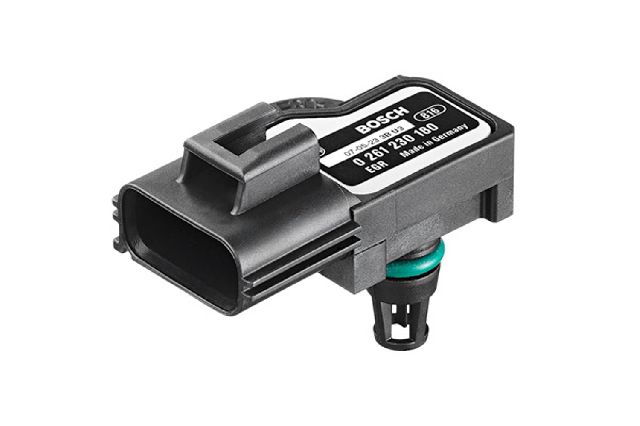
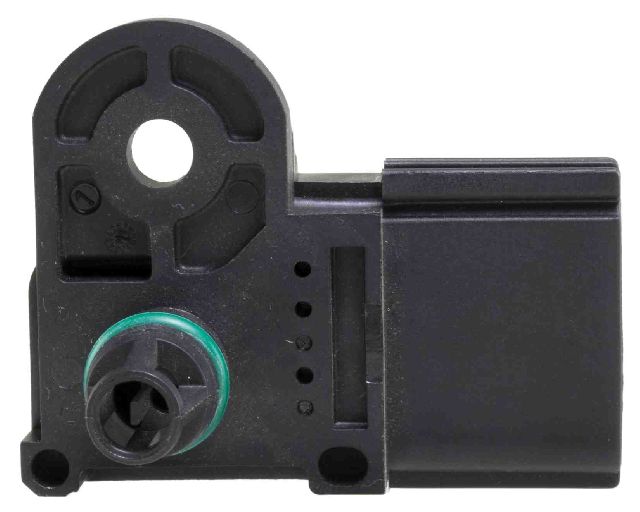
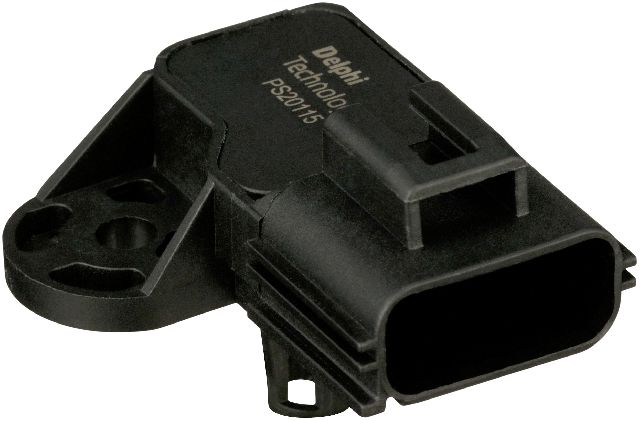
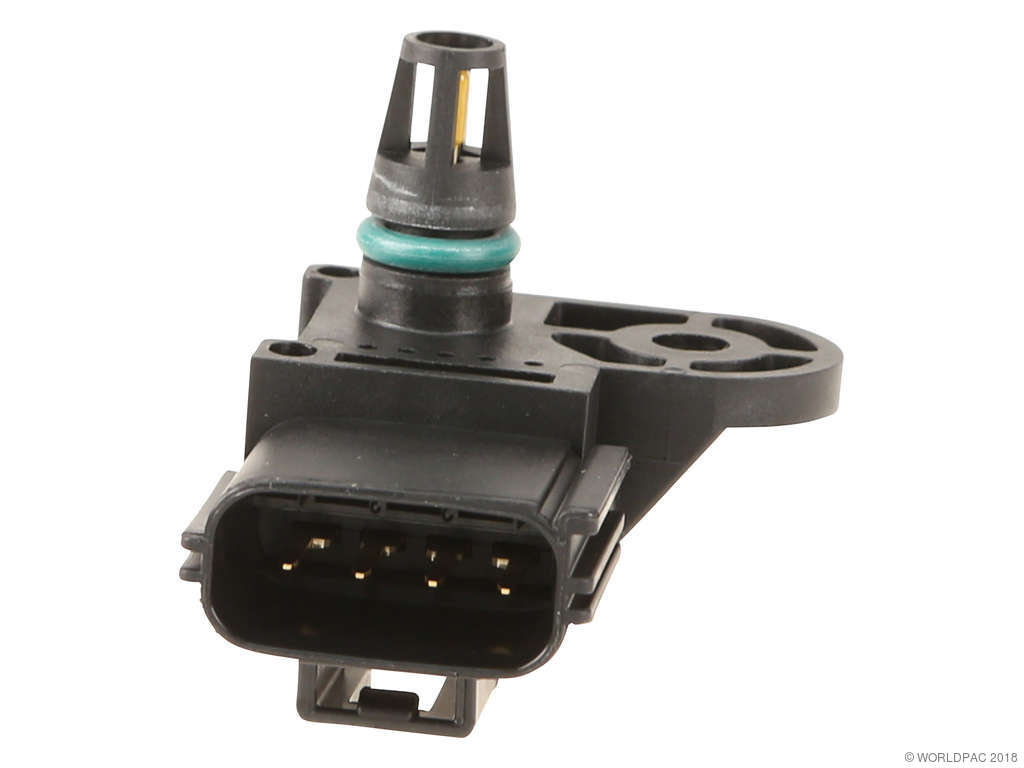
- Manifold Absolute Pressure (MAP) Sensor
(OEM #LF01-18-211)— This is the most common failure point for a P0108 code on this vehicle. The original sensor's electronics fail, causing a persistent high voltage signal.
Trusted brands: Bosch (0261230044), Denso, Hitachi, NTK
OEM price range: $100-$150
Aftermarket price range: $30-$80
Related Codes That Often Appear With This One
- P0107 (MAP Sensor Circuit Low Input): If the sensor is failing erratically, it may send both abnormally high and low signals, triggering both codes.
- P0234 (Engine Overboost Condition): On turbocharged models like the Mazdaspeed3, a faulty MAP sensor can cause incorrect boost readings and trigger overboost codes.
Mechanic-Grade Diagnostic Values
- MAP Sensor Signal Voltage at Idle — expected: 1.4V - 1.8V. Failure: Voltage is stuck at or above 4.4V.
- PCM Fault Trigger Threshold (Newer Skyactiv Engines) — expected: Voltage below 4.89V. Failure: Input voltage at PCM terminal is above 4.89V for 5 seconds.
- MAP Sensor Internal Resistance Check (Sensor Unplugged) — expected: High resistance between signal and 5V reference pins.. Failure: Very low resistance or a dead short between pin D (Signal) and pin C (5V Reference) on the sensor itself indicates internal failure.
Scan Tool Commands That Help
- Bidirectional Scanner (e.g., XTOOL, Autel): Active Test on Related Components — If the MAP sensor and wiring test good, a technician can command other vacuum-controlled components (like an EGR valve or turbo wastegate actuator) to open or close while monitoring the MAP sensor's live data. A lack of change in MAP pressure/voltage when a component is actuated can help pinpoint a vacuum leak or a faulty actuator elsewhere in the system.
Wiring & Ground Locations
- MAP Sensor Connector (Harness Side) — Plugged into the MAP sensor on the intake manifold.. This is the primary test point. For the MZR engine family (including Mazdaspeed3), the pinout is typically: Pin A = Sensor Ground, Pin C = 5V Reference, Pin D = Signal to PCM.
- PCM Connector Pins (Mazdaspeed3) — At the Powertrain Control Module (PCM), typically located in the engine bay near the battery.. The MAP sensor wires terminate here. The signal wire (Pin D on sensor) goes to PCM pin 2AG. The ground wire (Pin A on sensor) goes to PCM pin 2AV. An open or short on these wires between the sensor and PCM will cause the code.
Real Owner Repair Stories
- mazdaspeedforums.org user (Mazdaspeed 3 (year not specified, but 2007-2009 range)) — P0108 code present after replacing both MAP sensors.
❌ Tried (didn't work) Replacing upstream MAP sensor, Replacing downstream MAP sensor
✅ What actually fixed it The user found that an intercooler boot clamp had loosened and the boot had slid partially off the horn side, creating a boost leak. Tightening the clamp and properly seating the boot resolved the P0108 code. - Reddit user Flaming-Wreck7986 in r/mazdaspeed3 (2008 Mazdaspeed 3) — P0108 and P0234 (overboost), Accessport not reading boost.
❌ Tried (didn't work) Initial voltage tests seemed okay, Visual check of grounds
✅ What actually fixed it The user provided a master-tech level diagnostic procedure instead of a final fix: Unplug sensor, check resistance between pins D and C on the sensor (low resistance = bad sensor). If sensor is good, check continuity from harness pin A to chassis ground (no continuity = broken ground wire). If ground is good, disconnect PCM and check for continuity between pins D and C on the harness connector (continuity = short in harness). This systematic electrical test isolates the fault between the sensor, harness, or PCM.
"I Checked Everything" — The Actual Cause
- On turbocharged Mazdaspeed3 models, a P0108 can be caused by a boost leak from a loose intercooler pipe or boot that occurs after the throttle body. A standard smoke test performed at the intake manifold might not reveal this type of leak, as it's part of the pressurized charge piping. A technician chasing an electrical fault might miss this mechanical cause. One owner fixed their P0108 code, after replacing sensors, by finding and tightening a loose intercooler boot clamp.
OEM Part Supersession History
LF01-18-211→LF01-18-211A— Minor revision or change in manufacturer.
Heads up: This part is also cross-referenced to Ford part numbers 1S7A9F479AB and 1S7A9F479AC, as it is used on the shared Duratec/MZR engine platform. Do not confuse with Mazda part SH01-18-211, which is for newer diesel engines and is incompatible.
Model Year Variations Within This Range
- 2007-2009 (Mazdaspeed3 trim): The turbocharged 2.3L DISI MZR engine in the Mazdaspeed3 adds a layer of complexity. While the base causes (bad sensor, wiring) are the same, this code can also be triggered by boost-related issues that do not affect the naturally aspirated 2.0L and 2.3L engines. Issues like a loose intercooler boot or other boost leaks can cause erratic pressure readings that may result in a P0108 code, often accompanied by an overboost code (P0234).
Diagnostic Flowchart
Real Owner Stories
Aggregated from forums and TSBs cited above. Mileages and costs reflect what owners reported in those sources.
2008 Mazdaspeed 3
Symptoms: CEL with P0108 and P0234 (overboosting). Car runs good until boost. Accessport boost level reading is stuck at -5. PCM makes a clicking sound with key on, engine off.
What fixed it: Traced the issue to a bad PCM after testing the sensor and wiring.
Source hint: reddit.com/r/mazdaspeed3 - Thread 'P0108 on a 08 speed 3'
Mazdaspeed 3
Symptoms: Persistent P0108 code and boost issues that remained even after replacing nearly every related sensor.
What fixed it: Discovered bent pins on the ECU from a previous repair. Fixing the pins resolved the issue.
Source hint: reddit.com/r/mazdaspeed3 - Thread '[Solved] MAP sensor, Boost Issues'
Mazda 3
Symptoms: Check Engine Light illuminated with code P0108.
What fixed it: Replaced a completely ripped intake pipe (major vacuum leak) that was causing the code.
Source hint: mazdas247.com - Thread from 2008 titled 'Code: P0108'
Mazda 3
Symptoms: Replaced MAP sensor, Check Engine Light went out, but still getting P0108 code on the scanner.
What fixed it: Completed several drive cycles or performed a manual clear, as the code was stored in the computer's 'history'.
Source hint: gmforum.com - 'Replaced MAP Sensor, Light went out but still getting P0108 code?'
Related OBD-II Codes
Frequently Asked Questions
Is the MAP sensor hard to replace on my 2004-2009 Mazda 3?
I replaced the MAP sensor on my Mazda 3, but the P0108 code is still showing. What's wrong?
Can a vacuum leak cause a P0108 code on the Mazda 3's MZR engine?
What should the MAP sensor voltage be at idle on my Mazda 3?
My Mazdaspeed 3 has a P0108 code and a P0234 overboost code. What could be the cause?
Are there other vehicles that share this MAP sensor issue with the Mazda 3?
Helpful Videos

We Have This Part in Stock


The information in this article is provided for general reference and educational purposes only. Vehicle specifications, procedures, and part compatibility can vary by production date, trim level, and region. Always consult your vehicle's factory service manual and verify part numbers before purchasing or performing repairs. Safety-critical components such as airbags, seat belts, and braking systems should be installed by a qualified professional.
- Mazda 3:
- 🧭 Diagnostic Flowchart
- 🎬 Helpful Videos
- 🛍️ Shop This Part
- What's Unique About the 2004-2009 Mazda 3
- Symptoms You May Notice
- Most Likely Causes
- Rare But Worth Checking
- Diagnosis Steps
- Parts You'll Likely Need
- Related Codes That Often Appear With This One
- Mechanic-Grade Diagnostic Values
- Scan Tool Commands That Help
- Wiring & Ground Locations
- Real Owner Repair Stories
- "I Checked Everything" — The Actual Cause
- OEM Part Supersession History
- Model Year Variations Within This Range
- Real Owner Stories
- 2008 Mazdaspeed 3
- Mazdaspeed 3
- Mazda 3
- Mazda 3
- Related OBD-II Codes
- Frequently Asked Questions
- 🎟️ Get 5% Off