

P0108 on 2007-2012 Mazda CX-7 2.3L Turbo: Causes and Fixes for MAP Sensor High Input
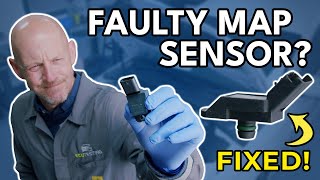
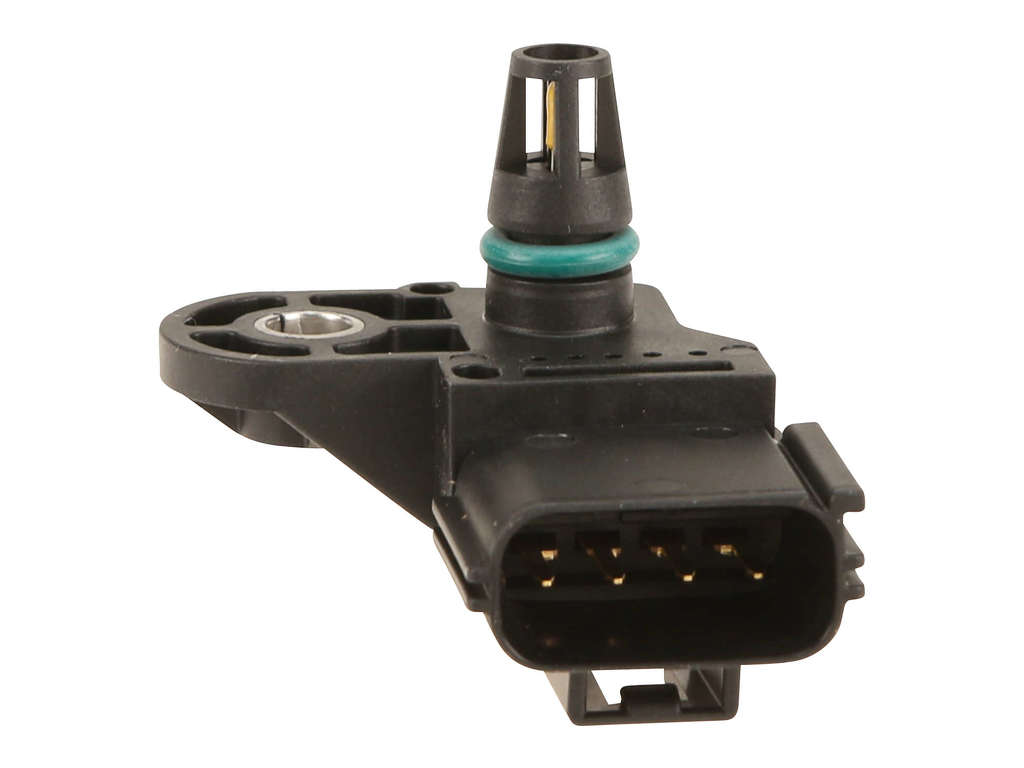
On the 2007-2012 Mazda CX-7, code P0108 is almost always caused by a failed Manifold Absolute Pressure (MAP) sensor. This is a common failure item, often due to oil contamination from the PCV system. The sensor, also called a boost sensor on this turbo engine, is made by Bosch. Expect to pay $140-$200 for a genuine Mazda sensor (Part No. L3K9-18-211A) or around $40-$80 for the identical Bosch OEM part (No. 0261230128), with labor being under one hour.
- P0108 on your CX-7 almost always points to the MAP sensor.
- Before replacing the sensor, use a scanner to check live data. The voltage should drop from ~4.5V (engine off) to ~1.5V (idling). If it's stuck high, the sensor is bad.
- The OEM sensor is made by Bosch (part 0261230128). Buying this part is cheaper than the Mazda-branded box and is the recommended fix.
- Check for oil contamination on the old sensor; this is a sign of PCV system issues common to this engine.
What's Unique About the 2007-2012 Mazda CX-7
The 2.3L DISI Turbo engine in the CX-7 is also used in the Mazdaspeed3 and Mazdaspeed6, and it has a specific vulnerability. The Positive Crankcase Ventilation (PCV) system can allow oil vapor to contaminate the intake manifold, fouling the MAP sensor and causing it to fail prematurely. Because this is a turbocharged engine, the symptoms of a bad MAP sensor can be more dramatic than on a naturally aspirated car, often including black smoke (rich running condition) and an inoperative or erratic boost gauge as the PCM struggles to manage boost and fuel based on the faulty high-pressure signal. Some owners install an oil catch can to mitigate this oil blow-by issue.
Symptoms You May Notice
- Check Engine Light is on
- Rough or unstable idle
- Hesitation or loss of power during acceleration
- Black smoke from the exhaust
- Strong smell of fuel
- Decreased fuel economy
- Intermittent stalling, especially when coming to a stop
- Hard starting or failure to start
- Boost gauge on dash is inoperative or reads incorrectly
- Replacing the Mass Airflow (MAF) sensor. While MAF sensor issues can cause similar drivability problems, P0108 specifically points to a fault in the MAP sensor circuit.
Most Likely Causes
- Faulty Manifold Absolute Pressure (MAP) Sensor 🔴 High Probability → Shop Manifold Absolute Pressure Sensor The MAP sensor on the 2.3L DISI Turbo engine is susceptible to contamination from oil vapor coming from the PCV system, which can cause the sensor's internal components to fail. It is the most common point of failure for this code on this platform.
How to confirm: Use an OBD-II scanner to monitor live data. With the Key On, Engine Off (KOEO), the MAP sensor voltage should be high (around 4.5V), corresponding to atmospheric pressure. When the engine is started and idling, the voltage should drop significantly to around 1.4-1.8V. If the voltage remains stuck high (e.g., >4.5V) at idle, the sensor has likely failed internally.
Typical fix: Replace the MAP sensor. It is located on the intake manifold, held in by a single T25 Torx bolt, making for a quick replacement. Using the OEM Bosch sensor is highly recommended over cheaper, unbranded aftermarket parts which are known to fail quickly.
Est. part cost: $140-$200 - Damaged Wiring or Connector 🟡 Medium Probability The wiring harness runs in a hot, tight engine bay. Wires can become brittle and break, or the connector pins can corrode or become damaged, especially during other maintenance like a turbo swap.
How to confirm: Visually inspect the MAP sensor's electrical connector and wiring harness for any signs of corrosion, frayed wires, or damage. With the sensor unplugged and key on, use a multimeter to verify a 5-volt reference signal on one pin and a good ground on another. A detailed guide from a Mazdaspeed3 owner suggests checking for shorts between the signal and voltage reference wires in the harness.
Typical fix: Repair the damaged section of the wiring harness or replace the pigtail connector.
Est. part cost: $15-$40 - Major Boost or Vacuum Leak ⚪ Low Probability On this turbocharged engine, leaks can develop in the charge pipes (intercooler piping) or at the intake manifold gaskets. A large enough leak can prevent the manifold from achieving vacuum at idle.
How to confirm: A significant vacuum leak would prevent the intake manifold from developing a strong vacuum at idle. This would cause the MAP sensor to read a higher pressure (and higher voltage), but it would likely be accompanied by a loud hissing sound and other drivability issues. A forum user on mazdaspeedforums.org reported a P0108 was caused by a loose intercooler boot. A smoke test is the most effective way to find a leak.
Typical fix: Repair the source of the leak, which is often a cracked vacuum hose, a bad intake manifold gasket, or a loose intercooler pipe clamp.
Est. part cost: $5-$100
Rare But Worth Checking
- Clogged Catalytic Converter: A severely restricted exhaust can cause pressure to build up in the intake manifold, leading to a higher-than-normal MAP sensor reading. This is usually accompanied by a significant loss of power, especially at higher RPMs, and is less common than a sensor or wiring fault.
- Faulty Powertrain Control Module (PCM): → Shop Engine Control Module (ECM) In very rare cases, the PCM itself can fail. A Mazdaspeed3 owner with P0108 and P0096 found the root cause to be bent pins on the ECU connector from a previous turbo swap, which required a new ECU to fix. This should only be considered after all other possibilities, including the sensor and its entire circuit, have been thoroughly tested and ruled out.
Diagnosis Steps
- Scan for Codes: Use an OBD-II scanner to confirm P0108 is the primary code and check for any other stored codes like P0098 or P0234.
- Analyze Live Data (KOEO): With the key on and engine off, view the MAP sensor live data. The reading should be high, corresponding to atmospheric pressure (around 4.5-5.0 volts). Compare it to the BARO reading if available; they should be nearly identical.
- Analyze Live Data (Engine Idling): Start the engine. At idle, the MAP sensor voltage should drop significantly to a low voltage (typically 1.4-1.8 volts), indicating engine vacuum. If the voltage stays high (stuck at 4.5V or higher), the sensor is bad, its port is clogged, or there is a massive vacuum leak.
- Inspect Sensor and Connector: Turn off the engine. Visually inspect the MAP sensor and its electrical connector for physical damage, corrosion, oil contamination, or bent pins.
- Test the Circuit: Disconnect the MAP sensor. With the key on, use a multimeter to test the connector's terminals. You should find a 5-volt reference wire, a ground wire (check for continuity to chassis ground), and a signal wire. Check for a short to power on the signal wire.
- Check for Vacuum: If the sensor and wiring test good, remove the sensor and ensure its port in the intake manifold is not clogged with carbon or debris, which would prevent it from reading the engine's vacuum.
- Check for Restrictions/Leaks: If all else fails, perform a smoke test to check for major vacuum or boost leaks. Also consider inspecting for a major restriction in the exhaust system, such as a clogged catalytic converter.
Parts You'll Likely Need
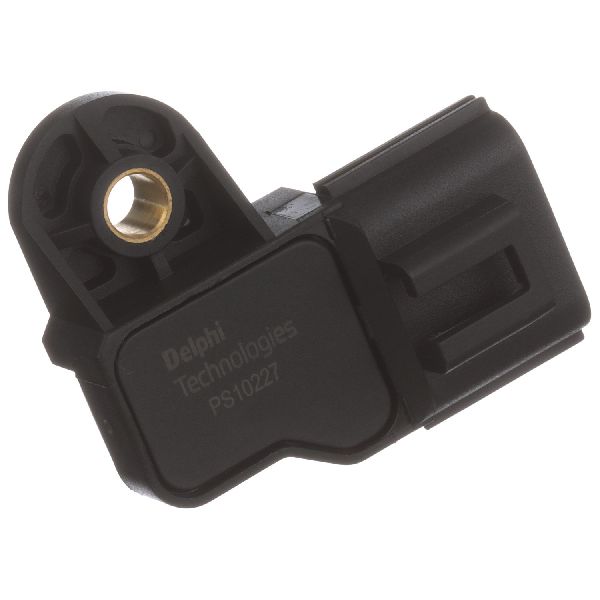
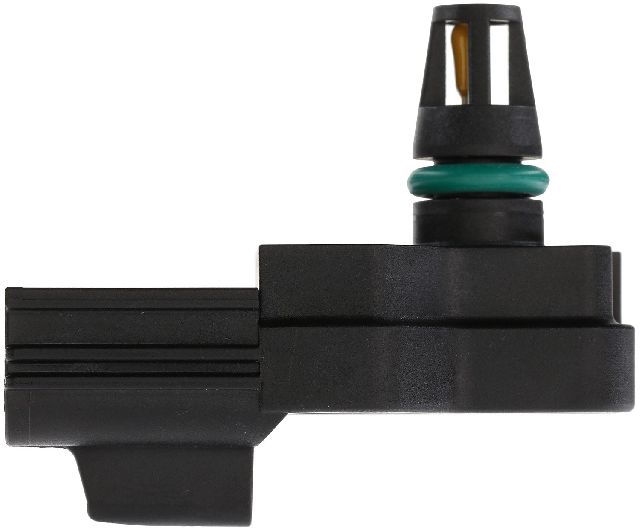
- Manifold Absolute Pressure (MAP) Sensor
(OEM #L3K9-18-211A)— This is the most common failure point for code P0108 on this engine, often due to internal failure or oil contamination. It is also referred to as a Boost Sensor.
Trusted brands: Bosch (OEM Supplier), Delphi, NGK
OEM price range: $140-$200
Aftermarket price range: $20-$85
Related Codes That Often Appear With This One
- P0098 — This code for 'Intake Air Temperature Sensor 2 Circuit High' can sometimes appear with P0108. On some vehicles, the MAP sensor incorporates an IAT sensor, or the wiring harnesses are routed together. A forum post noted this combination on a 2009 CX-7.
- P0234 — This code for 'Turbocharger Overboost Condition' can appear if the faulty MAP sensor fails to report the correct boost pressure to the PCM, causing the system to over-boost. A Mazdaspeed3 owner reported this combination when their MAP sensor circuit failed.
Technical Service Bulletins (TSBs) & Recalls
- Emission Recall 7113L: While not directly for P0108, Mazda issued a recall for certain 2007-2012 CX-7 vehicles to reprogram the PCM software for evaporative emissions. Ensuring the PCM software is up-to-date is a good practice when diagnosing electronic faults.
- SSP 86: Mazda issued a Warranty Extension Program for heavy white exhaust smoke on 2007-2009 CX-7s, caused by oil leaking from the turbocharger. While not directly related to P0108, it highlights the oiling system issues common to this engine.
- TSB 01-012/12 (supersedes earlier versions): Addresses VVT actuator and timing chain noise on 2007-2010 CX-7s. This is a critical, well-known issue on the L3-VDT engine.
Platform-Specific Known Issues
- The 2.3L DISI Turbo engine is known for potential oil blow-by from the PCV system, which can coat the intake tract and foul the MAP sensor, leading to premature failure. Some owners proactively install an oil catch can to reduce the amount of oil vapor entering the intake manifold.
- A user on mazdaspeedforums.org with a P0108 code ultimately found the cause to be a loose intercooler boot clamp, which created a boost leak post-throttle body.
Mechanic-Grade Diagnostic Values
- MAP Sensor Signal Voltage at Idle — expected: 1.4V - 1.8V. Failure: A voltage at or above 4.4V - 4.5V indicates a 'high input' fault and will trigger P0108.
- MAP Sensor Signal Voltage (Key On, Engine Off) — expected: 4.5V - 5.0V. Failure: The KOEO voltage should be nearly identical to the Barometric Pressure (BARO) sensor reading if available on the scan tool. A difference greater than 0.5V suggests a faulty sensor.
- MAP Sensor Connector - 5V Reference Supply — expected: 4.5V - 5.5V. Failure: No voltage or low voltage indicates a wiring issue or a problem with the PCM's 5V reference circuit.
- MAP Sensor Connector - Ground Circuit — expected: ~0.0V - 0.1V. Failure: Voltage significantly above 0.1V indicates a poor ground connection, which can cause floating sensor readings.
- Wiring Harness Resistance (Sensor to ECM) — expected: Below 1.0 Ω. Failure: Resistance higher than 1.0 Ω indicates corrosion or a break in the wire. A reading of OL (Open Loop) confirms a broken wire.
Wiring & Ground Locations
- MAP Sensor Connector (Generic 3-Pin) — On the intake manifold, passenger side.. Provides power, ground, and signal path. Pin A: Sensor Ground (Black/White wire), Pin B: MAP Signal (Yellow wire), Pin C: +5V Supply (Orange wire). These are generic colors and should be verified with a vehicle-specific diagram.
- Engine Ground Points — Key grounds are on the passenger motor mount, on top of the transmission, two on the front of the transmission, and a main ground on the driver's side fender.. A loose or corroded ground, especially at the passenger motor mount or transmission, can create a floating ground for sensors like the MAP, leading to incorrect voltage readings and triggering P0108.
Real Owner Repair Stories
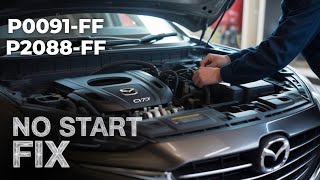
- JL's Auto Solution on YouTube (2007 Mazda CX-7 2.3L Turbo) — Crank no-start condition. Stored codes P0091 (Fuel Pressure Regulator 1 Control Circuit Low) and P2088 (A' Camshaft Position Actuator Control Circuit Low).
❌ Tried (didn't work) Initial diagnosis pointed towards camshaft actuator or fuel pressure regulator issues based on codes.
✅ What actually fixed it The root cause was a short-to-ground in the EVAP system leak detection pump, which is on the same fused circuit ('Engine Bar One' 15A fuse) as the camshaft actuator and fuel pressure regulator. Unplugging the shorted leak detection pump removed the ground from the shared power circuit, allowing the car to start and run. The P0108 code is related as a faulty power circuit can affect multiple sensors.
OEM Part Supersession History
L3K9-18-211→L3K9-18-211A— Standard part revision by the manufacturer.Bosch 0 261 230 128→Bosch 0 261 230 129— Bosch part revision. The 129 part is noted as fully interchangeable with the 128.
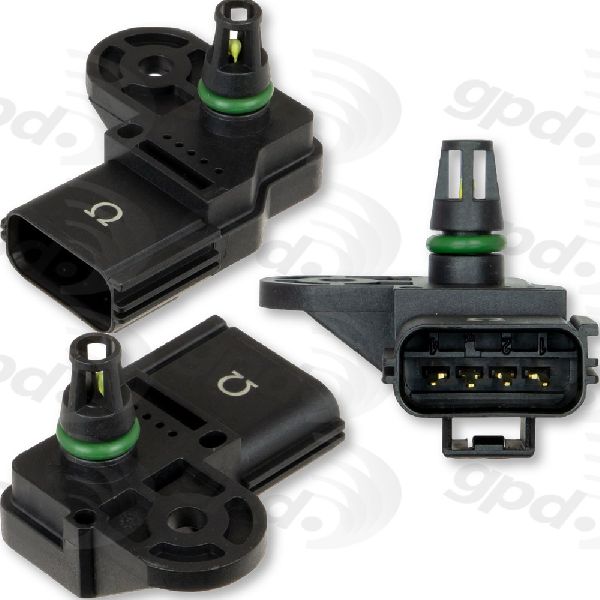
Heads up: The Bosch 0 261 230 129 is a 4-pin sensor that integrates an air temperature sensor, while the original L3K9-18-211A / Bosch 0 261 230 128 is a 3-pin sensor. They are NOT directly interchangeable on the CX-7 without harness modification.
Diagnostic Flowchart
Other Known Issues on This Vehicle
Issues unrelated to this code that are worth knowing about as an owner of this generation:
- Variable Valve Timing (VVT) Actuator Failure 🔴 High — Very common, especially on 2007-2010 models. Often presents as a loud rattling or ticking noise from the engine on cold starts for a few seconds. (Ref: Mazda TSB 01-012/12 and Warranty Extension SSP 87 address this. Failure to repair can lead to timing chain failure and catastrophic engine damage.)
- Timing Chain Stretching 🔴 High — Common, often occurs along with or as a result of a failed VVT actuator. Symptoms include a persistent rattling noise below 2,000 RPM. (Ref: Addressed by Mazda Warranty Extension SSP 87, which notes the issue can be caused by excessive stretching. Poor oil maintenance accelerates wear.)
- Turbocharger Failure ('Smoking Turbo Syndrome') 🔴 High → Shop Turbocharger — A well-documented, common failure. Symptoms include heavy blue/white smoke from the exhaust, especially after idling, high oil consumption, and a whining noise. (Ref: Mazda Warranty Extension SSP 86 was issued for this. The primary cause is often a clogged banjo bolt oil feed line, which starves the turbo of oil.)
- Engine Oil Sludge Buildup 🟠 Medium — Common in engines with neglected maintenance. The DISI turbo engine runs hot and is hard on oil, leading to sludge that can block oil passages, including the critical turbo feed line.
Used vs. New Parts: Buying Guide for This Vehicle
When a used part is the smart pick: A used part is generally not recommended for this specific repair. The MAP sensor is a sensitive electronic component prone to failure from oil contamination, a common issue on this engine. The risk of a used sensor failing shortly after installation is high.
Donor-vehicle mileage cap: roughly under 50000 miles for the part to have meaningful remaining life.
What to inspect on the donor part:
- If considering a used sensor, inspect the sensor port for any signs of oil residue or heavy carbon buildup.
- Check the plastic housing for cracks or heat damage.
- Ensure the connector pins are clean, straight, and free of corrosion.
OEM-only on this vehicle (don't cheap out):
- While not strictly 'OEM-only', using the OEM supplier (Bosch) is highly recommended. Cheap, unbranded aftermarket MAP sensors for this vehicle have a very high failure rate according to forum consensus.
Aftermarket brands forum-validated for this vehicle:
- Bosch (OEM supplier, part no. 0 261 230 128)
Brands owners have reported issues with on this vehicle:
- Unbranded, 'white-box' sensors from online marketplaces are frequently cited as failing quickly or being dead-on-arrival.
Real Owner Stories
Aggregated from forums and TSBs cited above. Mileages and costs reflect what owners reported in those sources.
2008 Mazda CX-7 2.3L DISI Turbo
Symptoms: P0108 code present; symptoms included either a failed sensor or a vacuum leak.
What fixed it: Replacement of the MAP sensor.
Source hint: Mazdas247.com thread titled 'code-p0108'
2009 Mazda CX-7 2.3L DISI Turbo
Symptoms: Persistent P0108 and P0098 codes.
What fixed it: The context indicates the codes persisted even after initial attempts, suggesting deeper circuit or sensor issues.
Source hint: Mazda-Forums.com report
Mazdaspeed3 (Platform Mate) 2.3L DISI Turbo
Symptoms: P0108 code triggered by a leak in the intake system post-throttle body.
What fixed it: Tightening a loose intercooler boot clamp.
Source hint: mazdaspeedforums.org cited in vehicle_specific_issues
Related OBD-II Codes
Frequently Asked Questions
Is there a recall for the P0108 code on my 2007-2012 Mazda CX-7?
Why does the 2.3L DISI Turbo engine keep fouling the MAP sensor?
Which replacement MAP sensor should I use for my CX-7?
Can a boost leak cause a P0108 code on this vehicle?
How do I confirm if my MAP sensor is bad using a scanner?
Does the VVT actuator issue on the 2007-2010 CX-7 cause P0108?
Helpful Videos

We Have This Part in Stock


The information in this article is provided for general reference and educational purposes only. Vehicle specifications, procedures, and part compatibility can vary by production date, trim level, and region. Always consult your vehicle's factory service manual and verify part numbers before purchasing or performing repairs. Safety-critical components such as airbags, seat belts, and braking systems should be installed by a qualified professional.
- Mazda CX-7:
- 🧭 Diagnostic Flowchart
- 🎬 Helpful Videos
- 🛍️ Shop This Part
- What's Unique About the 2007-2012 Mazda CX-7
- Symptoms You May Notice
- Most Likely Causes
- Rare But Worth Checking
- Diagnosis Steps
- Parts You'll Likely Need
- Related Codes That Often Appear With This One
- Technical Service Bulletins (TSBs) & Recalls
- Platform-Specific Known Issues
- Mechanic-Grade Diagnostic Values
- Wiring & Ground Locations
- Real Owner Repair Stories
- OEM Part Supersession History
- Other Known Issues on This Vehicle
- Used vs. New Parts: Buying Guide for This Vehicle
- Real Owner Stories
- 2008 Mazda CX-7 2.3L DISI Turbo
- 2009 Mazda CX-7 2.3L DISI Turbo
- Mazdaspeed3 (Platform Mate) 2.3L DISI Turbo
- Related OBD-II Codes
- Frequently Asked Questions
- 🎟️ Get 5% Off