

P0108 on 2008-2015 Mitsubishi Lancer Evolution: MAP Sensor Circuit High Causes and Fixes
For a stock 2008-2015 Evo X, P0108 almost always means the Manifold Absolute Pressure (MAP) sensor has failed. A replacement OEM sensor is the most common fix. For modified cars, this code can mean your boost levels are exceeding the stock sensor's limits, requiring an upgraded sensor and ECU tune.
- P0108 on an Evo X points directly to a problem with the MAP sensor or its circuit.
- For a stock car, the most likely fix is replacing the MAP sensor (OEM Part # 1865A052).
- Before replacing the sensor, always check its connector and wiring for damage, as a simple wiring repair can save you money.
- If your Evo is tuned to run high boost (over ~29 psi), this code is a sign that you need to upgrade your MAP sensor to a 4-bar or 5-bar unit and retune the ECU.
What's Unique About the 2008-2015 Mitsubishi Lancer Evolution
The Lancer Evolution X is a high-performance, turbocharged vehicle from the factory. Its engine management relies heavily on accurate pressure readings for both performance and safety. While the P0108 code on a stock Evo X is typically a straightforward sensor failure, this platform is frequently modified. In the tuning community, P0108 often appears when owners increase boost pressure beyond the range of the stock 3-bar MAP sensor, forcing an upgrade to a 4-bar or 5-bar sensor and a corresponding ECU retune to prevent the code and ensure correct fueling.
Symptoms You May Notice
- Check Engine Light is on
- Rough or unstable idle
- Hesitation or stumbling during acceleration
- Noticeable loss of engine power
- Black smoke from the exhaust, indicating a rich fuel mixture
- Decreased fuel economy
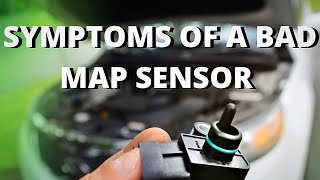
- Engine may stall intermittently, especially when coming to a stop 🎬 See more: 10 common symptoms of a failing MAP sensor.
- Replacing the Mass Airflow (MAF) sensor. While both sensors are part of the air/fuel calculation, P0108 specifically points to the MAP sensor circuit.
- Replacing the throttle body. While a very dirty throttle body can cause performance issues, it will not directly cause a 'circuit high' code for the MAP sensor.
Most Likely Causes
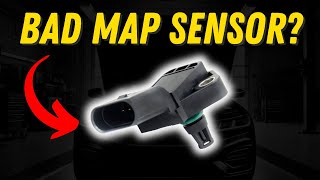
- Failed Manifold Absolute Pressure (MAP) Sensor 🔴 High Probability → Shop Manifold Absolute Pressure Sensor The MAP sensor is the most common failure point for this code according to Mitsubishi's own service documentation and extensive owner reports. Internal electronics can fail due to heat and vibration, causing the sensor to send a constant high voltage signal regardless of actual manifold pressure.
How to confirm: With a scan tool, observe the live MAP sensor data. With Key On, Engine Off (KOEO), the voltage should be near 4.5V at sea level and the pressure should match barometric pressure. If the voltage is stuck at or above 4.6V, the sensor has failed. At idle, voltage should drop to 1.0-1.5V. You can also backprobe the signal wire at the sensor to check the voltage directly.
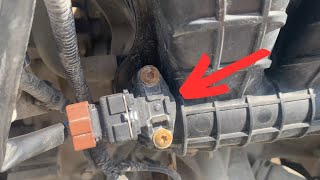
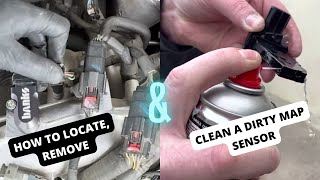
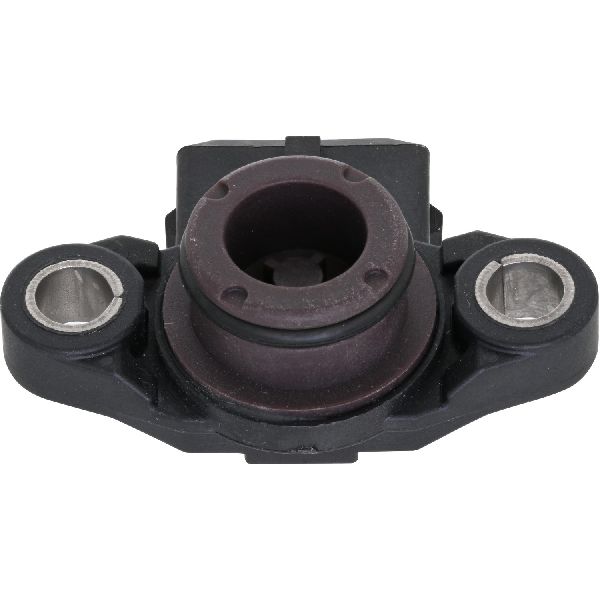
Typical fix: Replace the MAP sensor. It is located on the intake manifold and secured with two bolts. 🎬 Watch: How to locate and replace your MAP sensor.
Est. part cost: $220-$315 - Wiring or Connector Issue 🟡 Medium Probability Engine vibration and heat can cause wiring to chafe or connectors to corrode over time. A short in the signal wire to the 5V reference or another power source will cause a constant high voltage reading. This can happen where the harness routes near the intake manifold.
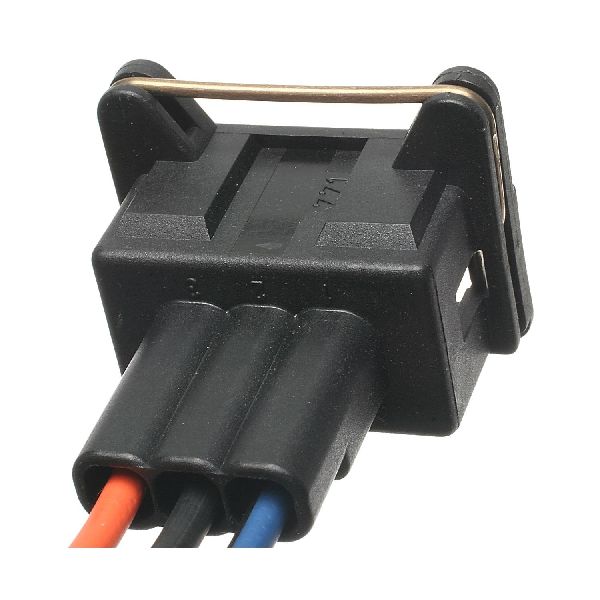
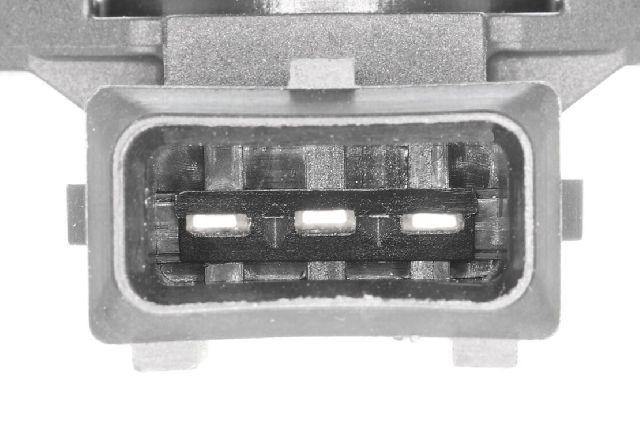
How to confirm: Visually inspect the wiring harness and connector for the MAP sensor. Look for any signs of damage, melting, or corrosion. Check for continuity on the ground wire and for a stable 5V reference at the connector. Check for a short between the signal wire and the power/ground wires. The connector pinout is: Pin 1 - Signal, Pin 2 - Ground, Pin 3 - 5V Reference.
Typical fix: Repair the damaged section of the wiring harness or replace the connector pigtail. Ensure all connections are clean and secure.
Est. part cost: $5-$30 - Boost Level Exceeds Stock Sensor Limit (Modified Vehicles) 🟡 Medium Probability The stock MAP sensor is a 3-bar sensor, capable of reading up to approximately 29 psi of boost (absolute pressure of ~44psi). Many tunes for the 4B11T push boost levels higher than this, 'pegging' the sensor at its maximum voltage and triggering P0108.
How to confirm: This cause is only relevant if the vehicle is tuned and running higher than stock boost. Check your tune's target boost pressure. If it exceeds ~29 psi, this is the likely cause.
Typical fix: Install a higher-range MAP sensor (e.g., 4-bar or 5-bar from a brand like Omni Power) and have the ECU retuned to scale for the new sensor's readings.
Est. part cost: $130-$150
Rare But Worth Checking
- Failed Engine Control Module (ECM): → Shop Engine Control Module (ECM) This is the least likely cause. Mitsubishi lists it as a possibility, but you should exhaust all other diagnostic options before considering ECM replacement. An ECM failure would typically present with multiple, unrelated fault codes.
Diagnosis Steps
- Connect a scan tool and verify P0108 is the primary code. Record the freeze frame data to see the engine conditions when the code was set.
- With the key on and engine off (KOEO), view the live data from the MAP sensor. The pressure reading should be close to the atmospheric (barometric) pressure for your altitude. The voltage should be around 4.5V, not pegged at or near 5V.
- Start the engine. At idle, the MAP sensor should read a high vacuum (low pressure value), specifically between 16-36 kPa (4.7-10.6 in. Hg). The voltage should drop to approximately 1.0-1.5V. If the reading does not change or remains high, the sensor or its circuit is faulty.
- Turn the engine off. Locate the MAP sensor on the intake manifold. Inspect the connector and wiring for any visible damage, corrosion, or loose pins.
- Disconnect the sensor. With the key on, use a multimeter to test the connector terminals. You should find a 5V reference on Pin 3, a good ground (near 0V) on Pin 2, and the signal wire on Pin 1.
- If power and ground are correct, the issue is likely the sensor itself. If power or ground is missing, you have a wiring issue that needs to be traced back to the ECM.
- If all wiring checks out and the vehicle is stock, replace the MAP sensor.
- If the vehicle is modified with higher boost, confirm if the installed MAP sensor is adequate for the boost levels. If not, an upgraded sensor and ECU tune are required.
- After repairs, clear the code and perform a test drive to ensure the fix was successful.
Parts You'll Likely Need
- Manifold Absolute Pressure (MAP) Sensor
(OEM #1865A052)— This is the most common cause of P0108 on a stock vehicle, as confirmed by Mitsubishi service documents and numerous owner forums.
Trusted brands: Mitsubishi Genuine, Omni Power (for modified vehicles), Tridon (Aftermarket)
OEM price range: $210-$315
Aftermarket price range: $130-$180
Platform-Specific Known Issues
- Owner Experience: Intermittent P0108 due to wiring: On the EvolutionM.net forums, a user reported chasing an intermittent P0108 code that would appear and disappear. After replacing the MAP sensor did not solve the issue, a thorough inspection of the wiring harness revealed a section near the intake manifold that had rubbed through and was intermittently shorting the signal wire to the 5V reference wire, causing the high voltage reading. Repairing the damaged wires permanently resolved the code.
Mechanic-Grade Diagnostic Values
- MAP Sensor Signal Voltage (DTC Trigger) — expected: < 4.6V. Failure: Voltage is > 4.6V for more than 2 seconds.
- MAP Sensor Pressure at Idle — expected: 16 - 36 kPa (4.7 - 10.6 in. Hg). Failure: Pressure reading is significantly higher or does not change from KOEO value.
- MAP Sensor Ground Wire Voltage (Backprobed at connector) — expected: < 0.5V. Failure: Voltage is > 0.5V, indicating a poor ground connection from the ECM.
- MAP Sensor Signal Voltage at Idle — expected: Approx. 1.0V - 1.5V. Failure: Voltage remains high (near 4.5V), indicating no response to engine vacuum.
Wiring & Ground Locations
- MAP Sensor Connector (B-14 or B-117 in service manuals) — On the intake manifold.. This is the primary connection point to test. The pinout is critical for diagnosis. Pin 1 is the signal wire to ECM pin 45. Pin 2 is the ground wire from ECM pin 46. Pin 3 is the 5V reference from ECM pin 44. The ground is provided by the ECM, not a chassis ground.
Real Owner Repair Stories
- EvolutionM.net forum user 'MalibuJack' (Evo (thread from 2004, but concept applies to piggyback ECUs)) — Intermittent P0108 code.
❌ Tried (didn't work) Initial diagnosis was unclear.
✅ What actually fixed it The issue was caused by an aftermarket UTEC piggyback ECU. If the car was started before the UTEC fully initialized, it would throw the P0108 code. The fix was to wait for the UTEC to fully boot (e.g., wait for CEL blink to stop) before cranking the engine.
OEM Part Supersession History
1865A052→N/A— This part number appears to be stable and was used for the entire 2008-2015 production run for the Lancer Evolution.
Model Year Variations Within This Range
- 2008-2015: While the physical MAP sensor (1865A052) and its wiring are consistent across all model years, tuners should be aware that the ECU ROM ID can differ by year and model (GSR/MR). When upgrading to an aftermarket MAP sensor, the specific patch or scaling data applied to the tune may depend on the ROM ID being used.
Diagnostic Flowchart
Other Known Issues on This Vehicle
Issues unrelated to this code that are worth knowing about as an owner of this generation:
- Active Yaw Control (AYC/ACD) Pump Failure 🔴 High — Very common, especially on vehicles in regions with road salt. Corrosion causes the pump assembly to fail, leading to an 'AWD Service Required' light. Can occur at any mileage but is more frequent on older models. (Ref: No specific recall, but a widely known failure.)
- Timing Chain Stretch 🔴 High — Can occur on higher mileage (60k+ miles) or poorly maintained engines. The ECU can detect stretch and will post a 'Timing Chain Service Required' warning. If ignored, it can lead to jumped timing and catastrophic engine damage. (Ref: TSB-11-11-004 Rev. B addresses procedures for checking chain elongation and reprogramming the ECU to adjust detection parameters.)
- Clutch Master Cylinder (CMC) Failure 🟠 Medium — Common across 2008-2013 models. The original plastic CMC can fail, leading to a loss of clutch pressure, inability to shift, and a soft pedal. (Ref: NHTSA Recall #13V446000 was issued for dealers to replace the faulty CMC with an updated part.)
- Failing Fuel Pump Relay 🔴 High — Common on earlier models (2008-2012). The original black relay fails, causing the fuel pump to not switch to its high-flow mode under load. This leads to a dangerously lean air-fuel mixture and can cause engine damage. (Ref: This was a service campaign, not a formal recall. Mitsubishi provided updated blue (8627A024) or green relays to replace the faulty black ones.)
Used vs. New Parts: Buying Guide for This Vehicle
When a used part is the smart pick: For this specific repair, buying a used MAP sensor is NOT recommended. It is a sensitive electronic component exposed to significant heat and vibration. The risk of getting a part that is already failing or has a reduced lifespan is high, and the cost savings do not justify the potential for continued diagnostic headaches.
What to inspect on the donor part:
- Not applicable as used purchase is not recommended.
OEM-only on this vehicle (don't cheap out):
- Engine Control Module (ECM) - If the ECM is determined to be the fault, a new or professionally refurbished unit with a warranty is the only reliable option.
Aftermarket brands forum-validated for this vehicle:
- Omni Power: This is the most widely accepted and used brand for upgraded 4-bar or 5-bar MAP sensors in the Evo X tuning community.
Brands owners have reported issues with on this vehicle:
- Unnamed or generic 'white box' sensors from online marketplaces. While cheap, their accuracy, scaling, and durability are often poor, leading to tuning difficulties and unreliable engine performance.
Real Owner Stories
Aggregated from forums and TSBs cited above. Mileages and costs reflect what owners reported in those sources.
2008-2015 Mitsubishi Lancer Evolution 4B11T
Symptoms: Intermittent P0108 code that would appear and disappear.
What fixed it: A thorough inspection of the wiring harness revealed a section near the intake manifold that had rubbed through and was intermittently shorting the signal wire to the 5V reference wire. Repairing the damaged wires resolved the code.
Source hint: EvolutionM.net forum user report cited in 'Owner Experience: Intermittent P0108 due to wiring'
2004 Mitsubishi Lancer
Symptoms: P0108 code triggered upon starting the vehicle.
What fixed it: Ensuring the aftermarket piggyback ECU (UTEC) was fully initialized before starting the car, as starting too early caused the code.
Source hint: EvolutionM.net - 'p0108' thread
Mitsubishi Lancer (non-Evo)
Symptoms: P0108 code persisted even after the MAP sensor was replaced.
What fixed it: Diagnostic troubleshooting of the circuit between the sensor and the ECU, as replacing the sensor alone did not fix the issue.
Source hint: EvolutionM.net - 'Need Help With this error code P0108'
Related OBD-II Codes
Frequently Asked Questions
Is there a TSB for the timing chain stretch issue on my 2008-2015 Mitsubishi Lancer Evolution?
My Evo X is pushing over 30 psi of boost and throwing P0108. Is the stock sensor the problem?
Is there a recall for the Clutch Master Cylinder (CMC) on 2008-2013 models?
What is the correct pinout for the MAP sensor connector if I need to check for a short?
Should I replace my black fuel pump relay on my 2010 Evo?
Can I use a used MAP sensor from a donor car to fix my P0108 code?
Helpful Videos
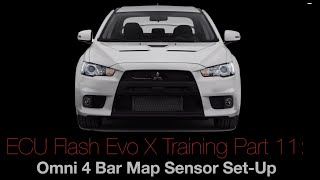
We Have This Part in Stock


The information in this article is provided for general reference and educational purposes only. Vehicle specifications, procedures, and part compatibility can vary by production date, trim level, and region. Always consult your vehicle's factory service manual and verify part numbers before purchasing or performing repairs. Safety-critical components such as airbags, seat belts, and braking systems should be installed by a qualified professional.
- Mitsubishi Lancer Evolution:
- 🧭 Diagnostic Flowchart
- 🎬 Helpful Videos
- 🛍️ Shop This Part
- What's Unique About the 2008-2015 Mitsubishi Lancer Evolution
- Symptoms You May Notice
- Most Likely Causes
- Rare But Worth Checking
- Diagnosis Steps
- Parts You'll Likely Need
- Platform-Specific Known Issues
- Mechanic-Grade Diagnostic Values
- Wiring & Ground Locations
- Real Owner Repair Stories
- OEM Part Supersession History
- Model Year Variations Within This Range
- Other Known Issues on This Vehicle
- Used vs. New Parts: Buying Guide for This Vehicle
- Real Owner Stories
- 2008-2015 Mitsubishi Lancer Evolution 4B11T
- 2004 Mitsubishi Lancer
- Mitsubishi Lancer (non-Evo)
- Related OBD-II Codes
- Frequently Asked Questions
- 🎟️ Get 5% Off