

P0108 on 2007-2010 Saturn Sky 2.0L Turbo: MAP Sensor Circuit High Causes and Fixes
On the 2.0L Turbo Saturn Sky and its platform mates (Solstice GXP, Cobalt SS, HHR SS), P0108 almost always points to a faulty Manifold Absolute Pressure (MAP) sensor. This engine has two identical MAP sensors, and they often fail from oil contamination from the PCV system. The easiest DIY diagnostic is to swap the two sensors and see if the problem changes. A new OEM-quality sensor costs about $45-$70.
- P0108 on this car means a MAP sensor circuit has a high voltage fault.
- The most likely cause is one of the two MAP sensors failing due to oil contamination from the PCV system.
- Diagnose before buying parts: Use a scan tool to check live data from both sensors or swap their positions to confirm which one is bad.
- Replacing the faulty sensor is a simple DIY job that requires basic tools.
- Consider installing an oil catch can as a long-term preventative measure to protect the new sensors.
What's Unique About the 2007-2010 Saturn Sky
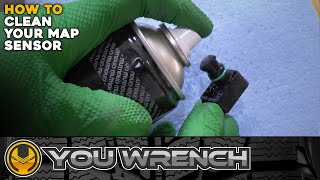
The Saturn Sky's 2.0L LNF turbo engine is unique because it uses two identical 3-bar MAP sensors, not just one. One sensor is located on top of the plastic intake manifold (measuring vacuum/pressure), and the other is on the metal charge pipe before the throttle body (measuring boost pressure). A very common failure point on this platform is oil contamination from the PCV (Positive Crankcase Ventilation) system, which allows oil vapor to coat the sensors, fouling the sensing element and causing them to fail electrically. 🎬 Learn how to clean a fouled MAP sensor Because there are two identical sensors, a crucial diagnostic step is to swap their locations to confirm which one has failed before replacing it.
Symptoms You May Notice
- Check Engine Light is on
- Rough or unstable idle
- Poor or hesitant acceleration, significant loss of power
- Reduced fuel economy
- Black smoke from the exhaust
- Engine may stall when coming to a stop
- Difficulty starting the engine
- Jerky or surging boost delivery
- Replacing only one MAP sensor without diagnosing which of the two has failed.
- Replacing the Mass Airflow (MAF) sensor, which is a different part and measures airflow, not pressure.
- Assuming the cause is a vacuum leak when the 'Circuit High' designation strongly suggests an electrical or sensor-internal fault.
- Replacing a MAP sensor without checking the wiring harness for a short, which can cause the new sensor to report the same fault.
Most Likely Causes
- Faulty Manifold Absolute Pressure (MAP) Sensor 🔴 High Probability → Shop Manifold Absolute Pressure Sensor The LNF engine's PCV system is known to allow oil vapor into the intake tract, which contaminates and damages the MAP sensors over time. Since there are two sensors, the probability of one failing is increased. The sensor on the intake manifold is often the first to fail due to its location.
How to confirm: Use a scan tool to view live data for 'MAP Sensor 1' and 'MAP Sensor 2'. With the Key On, Engine Off (KOEO), their pressure/voltage readings should be nearly identical and match the local barometric pressure. If one is stuck high (reading >4.5V or >103 kPa), it has failed. The definitive test is to swap the physical locations of the two sensors (they are the same part), clear the codes, and drive the vehicle. If the P0108 code returns but is now associated with the other sensor's circuit, the sensor you moved is confirmed to be bad.
Typical fix: Replace the faulty MAP sensor. Both sensors are held in by a single bolt and are easy to access. The intake manifold sensor is on top of the manifold, and the charge pipe sensor is on the pipe before the throttle body. Cleaning the sensor with electrical cleaner may provide a temporary fix but replacement is recommended for reliability. 🎬 Watch: How to test and replace your MAP sensor
Est. part cost: $25-$70 - Wiring or Connector Issue 🟡 Medium Probability The engine bay is compact, and wiring can become brittle over time. Oil contamination from the PCV system can also degrade the connector and wiring insulation, leading to shorts or poor connections.
How to confirm: Visually inspect the wiring harness and connector for both MAP sensors. Look for chafed or broken wires, corrosion in the connector pins, or oil saturation. With a multimeter, check for a stable 5-volt reference on the correct pin, a good ground (less than 5 ohms to chassis ground), and test the signal wire for a short to voltage. A P0108 code can be set if the signal wire is shorted to the 5V reference wire.
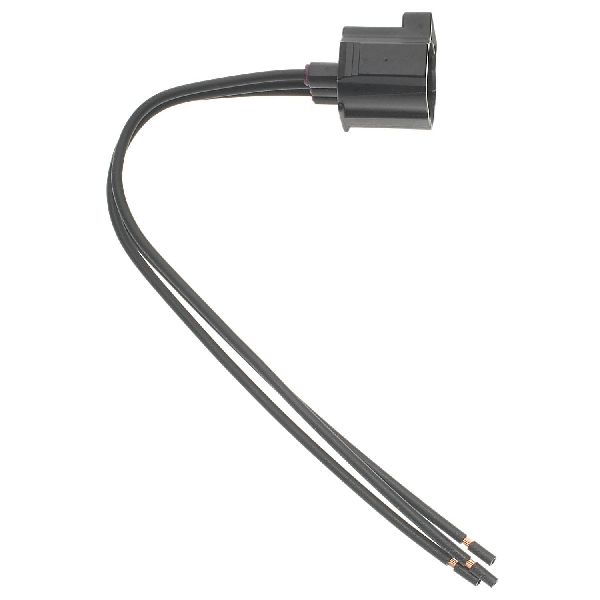
Typical fix: Repair the damaged section of the wiring harness or replace the connector pigtail. The common pigtail connector is ACDelco PT2649 or equivalent.
Est. part cost: $15-$40 - Major Boost or Vacuum Leak ⚪ Low Probability The factory plastic charge pipes can crack with age and heat cycles, creating boost leaks. While a leak typically causes a performance code (like P0299 or P0106), a very large, specific leak could theoretically affect sensor readings, though it's less likely to cause a 'Circuit High' code.
How to confirm: A 'circuit high' code points more strongly to an electrical fault or a failed sensor. However, if other codes are present, a smoke test of the entire intake and charge pipe system is the best way to identify physical leaks.
Typical fix: Replace the cracked charge pipe or leaking gasket/seal.
Est. part cost: $50-$300
Rare But Worth Checking
- Faulty Engine Control Module (ECM): → Shop Engine Control Module (ECM) This is very rare. The internal circuit in the ECM that reads the sensor can fail. All other possibilities, especially the sensors and wiring, should be exhaustively ruled out before considering ECM replacement, as it is expensive and requires programming.
Diagnosis Steps
- Connect an OBD-II scanner and confirm P0108 is the active code. Check for any other codes like P0106, P0107, or P0068.
- Access the live data stream on the scanner. Monitor the PIDs for 'MAP Sensor 1' and 'MAP Sensor 2'.
- With the Key On, Engine Off (KOEO), both MAP sensor readings should be nearly identical and correspond to your local atmospheric (barometric) pressure (approx. 100 kPa at sea level). A sensor reading a significantly higher value (often stuck near 4.8V or >120 kPa) is faulty.
- Identify the faulty sensor's physical location. The LNF engine has one sensor on the intake manifold (top, rear) and one on the charge pipe near the throttle body (front, driver's side).
- Visually inspect the faulty sensor and its connector for physical damage, corrosion, or heavy oil coating.
- To definitively confirm a bad sensor, swap the positions of the two identical MAP sensors. They are interchangeable. Clear the codes and run the engine. If the P0108 fault returns but is now associated with the other sensor's circuit, you have confirmed the sensor itself is bad. This is the most common and effective diagnostic step for this platform.
- If the problem persists at the same location after the swap, the issue is in the wiring. Disconnect the connector and test the harness. You should find a 5V reference wire, a ground wire, and a signal wire. Check for 4.8-5.2V at the reference pin, continuity to ground on the ground pin, and ensure the signal wire is not shorted to the 5V reference.
- If the sensor and wiring are confirmed to be good, the issue may be a rare ECM fault.
Parts You'll Likely Need
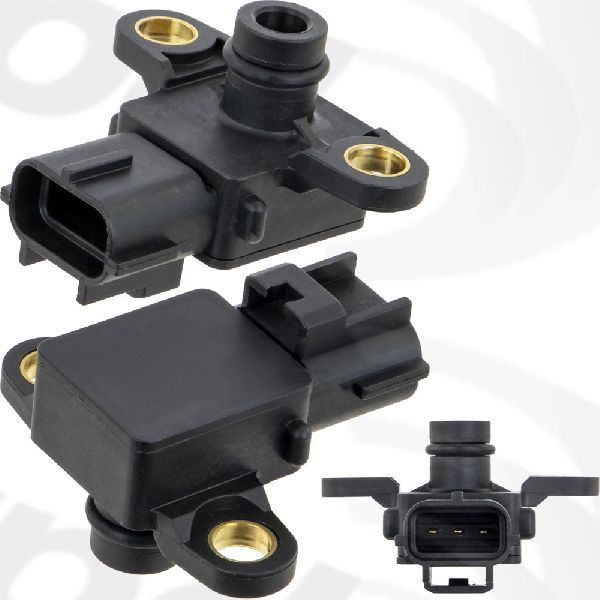
- Manifold Absolute Pressure (MAP) Sensor
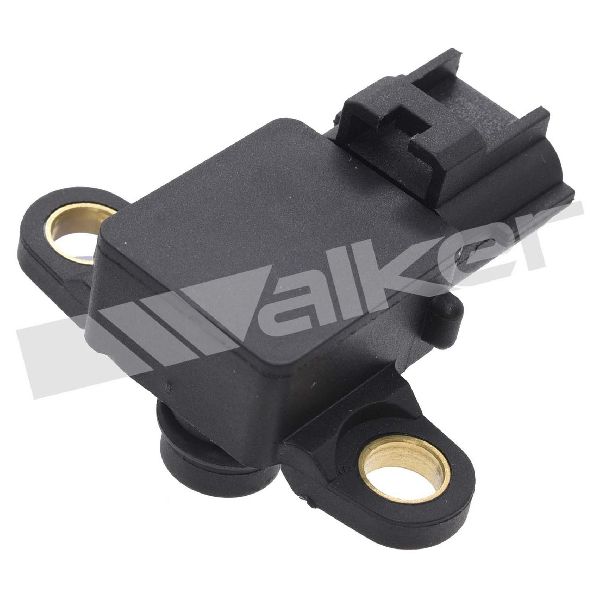
(OEM #12591290)— This is the most common failure part for P0108 on the LNF engine, often due to oil contamination. The engine uses two of these identical sensors. The ACDelco service part number is 213-3629.
Trusted brands: ACDelco, Bosch, Delphi
OEM price range: $45-$70
Aftermarket price range: $25-$50 - MAP Sensor Connector Pigtail
(OEM #ACDelco PT2649)— If the wiring inspection reveals a damaged, corroded, or oil-saturated connector, replacing the pigtail is the most reliable repair. 🎬 See this walkthrough on replacing the sensor connector pigtail
Trusted brands: ACDelco, Dorman
OEM price range: $25-$40
Aftermarket price range: $15-$25
Related Codes That Often Appear With This One
- P0106 — Manifold Absolute Pressure/Barometric Pressure Sensor Range/Performance. This code can appear if the sensor's signal is erratic or doesn't correlate with other sensors, which can be a precursor or companion to a complete failure that causes P0108.
- P0107 — Manifold Absolute Pressure/Barometric Pressure Circuit Low Input. If there is an intermittent short or wiring problem, you could see both high and low circuit codes logged at different times.
- P0068 — MAP/MAF - Throttle Position Correlation. This may be set if the ECM sees a high MAP reading (indicating high load) that doesn't match what the MAF and throttle position sensors are reporting.
Technical Service Bulletins (TSBs) & Recalls
- No Technical Service Bulletins (TSBs) were found specifically addressing the P0108 code for this vehicle. The issue is so common and well-understood in the owner community that it is typically handled as a standard diagnosis and repair without a specific bulletin. Several unrelated safety recalls exist for the 2007-2010 Saturn Sky, including for the ignition switch (NHTSA 14V171000) and passenger airbag sensor (NHTSA 17V061000).
Platform-Specific Known Issues
- The PCV system can allow oil to coat the MAP sensors, leading to premature failure. Some owners proactively install an aftermarket oil catch can to reduce the amount of oil vapor entering the intake tract and prolong sensor life.
- The two MAP sensors are identical and interchangeable, which is a key feature for easy diagnosis via the 'sensor swap' method described in forums and repair guides.
Mechanic-Grade Diagnostic Values
- MAP Sensor Signal Voltage (Key On, Engine Off) — expected: ~4.7 V (Corresponds to atmospheric pressure). Failure: A reading significantly different from the other sensor, or a value that doesn't match local barometric pressure. A stuck high reading >4.8V sets the code.
- MAP Sensor Signal Voltage (Engine Idling) — expected: 1.0 V to 1.8 V (Corresponds to high engine vacuum). Failure: Voltage remains high (e.g., >4.5V), indicating the sensor is not reading engine vacuum.
- MAP Sensor 5V Reference Wire Voltage — expected: ~5.0 V (with key on). Failure: No voltage or significantly lower voltage indicates a wiring or ECM problem, not a sensor problem.
- MAP Sensor Ground Wire Continuity — expected: < 1.0 ohm to chassis ground. Failure: High resistance indicates a poor ground connection, which can cause incorrect sensor readings.
Wiring & Ground Locations
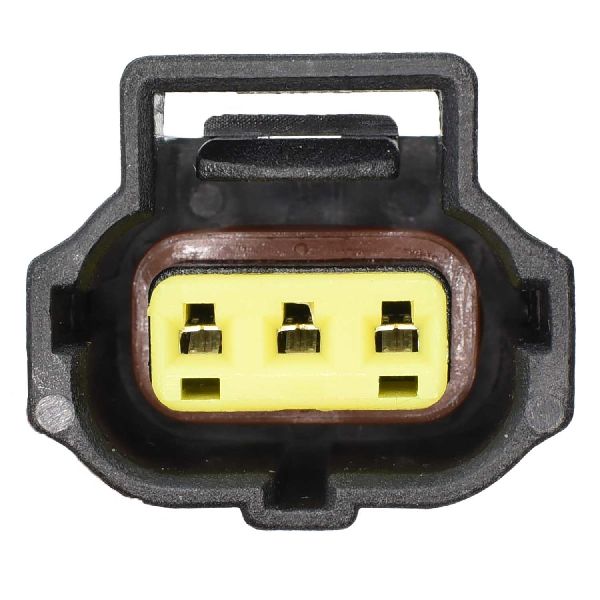
- MAP Sensor Connector — On each of the two MAP sensors (one on the intake manifold, one on the charge pipe).. This 3-pin connector provides power, ground, and signal. Pin A: Ground, Pin B: Signal, Pin C: 5V Reference. A short between pins B and C will cause a P0108.
- G105 — On the frame rail at the left front of the engine compartment, forward of the underhood fuse block.. This is a major engine harness ground point. A loose or corroded connection here can cause erratic behavior in multiple sensors, including the MAP sensors.
- G102 — At the right front corner of the engine compartment, mounted on the frame rail.. Another critical engine harness ground. Verifying the integrity of G102 and G105 is a key step when diagnosing persistent or intermittent electrical faults.
Real Owner Repair Stories
- Cobalt SS Network Forum (Cobalt SS with LNF engine (same as Saturn Sky 2.0T)) — Check Engine Light with code P0108 after installing a tune and GM Stage 1 sensors.
❌ Tried (didn't work) Ensuring the sensor was seated properly.
✅ What actually fixed it The user suspected the aftermarket wiring harness adapters (pigtails) were faulty. The underlying issue for a P0108 is almost always a bad sensor or a wiring fault causing the signal voltage to be stuck high (>4.8V). The final fix is replacing the faulty sensor or repairing the wiring harness/connector.
OEM Part Supersession History
12591290→The part number 12591290 is still the primary OEM number for this sensor. The ACDelco service part number is 213-3629. Some sources list alternate numbers like 55573248 or 93192107 for European (Opel) equivalents, but 12591290 is the correct one for North American LNF engines.— N/A
Heads up: Be cautious of aftermarket sensors. While many work, some may have slightly different voltage scaling that can cause performance issues even without setting a code. Sticking with OEM GM or ACDelco is the safest bet.
Model Year Variations Within This Range
- 2007-2010: There are no significant variations in the MAP sensor system or the P0108 diagnostic procedure for the LNF engine within this model year range. The LDK engine was a later replacement for the LNF in other GM vehicles but requires modification (swapping the cylinder head) to be used in a Saturn Sky.
Diagnostic Flowchart
Other Known Issues on This Vehicle
Issues unrelated to this code that are worth knowing about as an owner of this generation:
- Timing Chain Stretch / Tensioner Failure 🔴 High — Common on engines approaching 100,000 miles, but can occur earlier. Often preceded by a rattling noise on cold starts. (Ref: No specific recall, but updated tensioner parts were released by GM.)
- High-Pressure Fuel Pump (HPFP) Failure 🔴 High — Can fail without warning, causing sudden loss of power and codes like P0087. The failure can sometimes send metal debris into the fuel system.
- Intake Valve Carbon Buildup 🟠 Medium — A common issue for all early direct-injection engines. Over time, carbon deposits build up on the back of the intake valves, restricting airflow and causing misfires or reduced performance. Typically requires manual cleaning (walnut blasting) every 60,000-80,000 miles.
- Turbocharger Wastegate or Bypass Valve Issues 🟠 Medium → Shop Turbocharger — Failures of the wastegate actuator or the electronic bypass (diverter) valve are common, leading to underboost (P0299) or overboost conditions. (Ref: TSB #PIP4520 addresses a cracked vacuum nipple on the wastegate solenoid.)
- Rear Axle Pinion Seal Leak 🟡 Low — A very common issue where the rear differential's pinion seal fails, causing gear oil to leak. It's often a slow leak but requires repair to prevent damage to the differential.
Used vs. New Parts: Buying Guide for This Vehicle
When a used part is the smart pick: Never. Given the low cost of a new, high-quality aftermarket or OEM sensor (typically $45-$70) and the common failure mode of internal electrical faults from oil contamination, buying a used MAP sensor is not recommended. The risk of receiving a part that has already failed or is near failure is too high.
What to inspect on the donor part:
- Not applicable as buying used is not advised for this part.
OEM-only on this vehicle (don't cheap out):
- While not strictly 'OEM-only', using a genuine GM (12591290) or ACDelco (213-3629) MAP sensor is highly recommended for guaranteed compatibility and correct voltage scaling.
Aftermarket brands forum-validated for this vehicle:
- Bosch (The OEM sensor is often a Bosch unit)
- Delphi
Brands owners have reported issues with on this vehicle:
- Unnamed, no-brand sensors from online marketplaces should be avoided, as their quality control and voltage accuracy can be highly inconsistent, leading to persistent performance problems or premature failure.
Real Owner Stories
Aggregated from forums and TSBs cited above. Mileages and costs reflect what owners reported in those sources.
2008 Saturn Sky Redline 2.0L LNF
Symptoms: Check engine light with jerky or surging boost delivery and a rough idle.
What fixed it: Swapped the two identical MAP sensors to confirm the fault moved, then replaced the faulty sensor located on the intake manifold.
Source hint: skyroadster.com / solsticeforum.com
2009 Chevrolet Cobalt SS 2.0L LNF
Symptoms: P0108 code triggered by the MAP sensor signal wire shorting to the 5V reference wire due to brittle wiring in the compact engine bay.
What fixed it: Repaired the damaged section of the wiring harness.
Source hint: CobaltSS.net
2008 Saturn Sky Redline 2.0L LNF — ~100000 miles
Symptoms: Rattling noise on cold starts followed by performance issues.
What fixed it: Replacement of the timing chain and updated tensioner parts released by GM.
Source hint: known_issues
Related OBD-II Codes
Frequently Asked Questions
Is there a TSB for the P0108 code on my 2007-2010 Saturn Sky LNF?
Why does my Saturn Sky LNF have two MAP sensors, and which one is causing the P0108?
Can I swap the two MAP sensors to see if the code changes?
How does the PCV system on the 2.0L Turbo engine affect the MAP sensors?
What is the recommended long-term fix to prevent MAP sensor oil contamination?
What wiring connector should I look for if my Saturn Sky's MAP sensor harness is damaged?
Helpful Videos




We Have This Part in Stock


The information in this article is provided for general reference and educational purposes only. Vehicle specifications, procedures, and part compatibility can vary by production date, trim level, and region. Always consult your vehicle's factory service manual and verify part numbers before purchasing or performing repairs. Safety-critical components such as airbags, seat belts, and braking systems should be installed by a qualified professional.
- Saturn Sky:
- 🧭 Diagnostic Flowchart
- 🎬 Helpful Videos
- 🛍️ Shop This Part
- What's Unique About the 2007-2010 Saturn Sky
- Symptoms You May Notice
- Most Likely Causes
- Rare But Worth Checking
- Diagnosis Steps
- Parts You'll Likely Need
- Related Codes That Often Appear With This One
- Technical Service Bulletins (TSBs) & Recalls
- Platform-Specific Known Issues
- Mechanic-Grade Diagnostic Values
- Wiring & Ground Locations
- Real Owner Repair Stories
- OEM Part Supersession History
- Model Year Variations Within This Range
- Other Known Issues on This Vehicle
- Used vs. New Parts: Buying Guide for This Vehicle
- Real Owner Stories
- 2008 Saturn Sky Redline 2.0L LNF
- 2009 Chevrolet Cobalt SS 2.0L LNF
- 2008 Saturn Sky Redline 2.0L LNF — ~100000 miles
- Related OBD-II Codes
- Frequently Asked Questions
- 🎟️ Get 5% Off