

P0108 on 2009-2013 Subaru Forester 2.5L: MAP Sensor Circuit High Input Causes and Fixes
On a 2009-2013 Subaru Forester, code P0108 is most often caused by a failed Manifold Absolute Pressure (MAP) sensor. It's an easy DIY replacement located on top of the intake manifold, with the part costing between $40 for an aftermarket and $150 for an OEM sensor. Before replacing, check the wiring harness for rodent damage, a common issue.
- P0108 on your Forester almost always points to a problem with the MAP sensor or its wiring.
- The most likely fix is replacing the MAP sensor itself, which is an easy 15-minute job for a DIYer. Using an OEM Denso part is highly recommended.
- The sensor is located on top of the intake manifold, held in by a single 8mm bolt.
- Always inspect the wiring for damage (especially from rodents) before buying parts. This is a very common cause on Subarus.
- Don't be alarmed by the flashing cruise control and VSC lights; this is standard Subaru behavior for a check engine code and will resolve when the P0108 code is fixed.
What's Unique About the 2009-2013 Subaru Forester
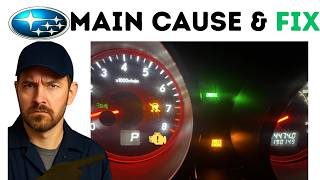
For the third-generation (SH) Forester with the naturally-aspirated EJ25 engine, the MAP sensor is exceptionally easy to access, located directly on top of the black plastic intake manifold near the throttle body, held by a single 8mm bolt. The most common failure is the sensor itself, making for a straightforward diagnosis and repair. Unlike some vehicles where the sensor is buried, on this Forester it's a common 15-minute DIY fix. Owners should be aware that a P0108 code will almost always be accompanied by a flashing cruise control light and disabled stability control, which is normal for Subarus when a Check Engine Light is triggered. Rodent damage to the 🎬 Watch: Why your cruise control light is flashing and how to fix it. MAP sensor wiring is also a frequently reported cause for this specific code on Subarus.
Symptoms You May Notice
- Check Engine Light is on
- Flashing 'CRUISE' light on the dashboard
- Vehicle Stability Control (VSC) light is on
- Rough or unstable idle, engine speed may oscillate
- Engine hesitates, stumbles, or lurches during acceleration
- Noticeable loss of power
- Poor fuel economy
- Engine may stall, especially when coming to a stop
- Black smoke from the exhaust (due to a rich fuel condition)
- Engine surging or boost cutting, even on non-turbo models as the ECU reacts to erratic readings
- Replacing the Mass Airflow (MAF) sensor instead of the MAP sensor. The MAF sensor is located on the air intake tube after the air filter, while the MAP sensor is on the intake manifold itself.
Most Likely Causes
- Faulty MAP Sensor 🔴 High Probability → Shop Manifold Absolute Pressure Sensor The sensor is a common failure point due to age and heat cycles on top of the engine. Internal failure can cause a short, leading to a constant high voltage signal.
How to confirm: With the Key On, Engine Off (KOEO), use a scan tool to compare the MAP sensor reading to the BARO (Barometric) reading. They should be nearly identical. If the MAP reading is stuck high (e.g., over 4.5V or 119.5 kPa), the sensor is bad. The sensor is located on top of the intake manifold, held by one 8mm bolt.
Typical fix: Replace the MAP sensor. It is highly recommended to use an OEM Denso sensor, as some aftermarket sensors are known to cause performance issues or fail prematurely.
Est. part cost: $40-$150 - Wiring or Connector Issue 🟡 Medium Probability Rodents are notoriously common in Subaru engine bays and are known to chew on the MAP sensor wiring harness, causing a short or open circuit. Corrosion in the connector can also bridge pins, causing a short to power. Additionally, manufacturer service bulletin TSB #07-96-15 notes that a P0108 can be set in error due to a wiring harness design where the ground junction point is affected by engine movement.
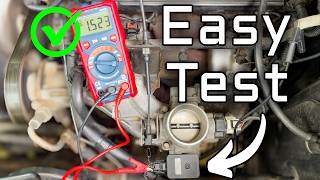
How to confirm: Visually inspect the wiring harness and connector going to the MAP sensor for any signs of chewing, fraying, or green/white corrosion. A disconnected harness will also cause a P0108. With a multimeter, check for 5V reference and a good ground at the connector with 🎬 See this guide on testing a MAP sensor with a multimeter. the key on. If the signal wire shows 5V even with the sensor unplugged, there is a short to power in the harness.
Typical fix: Repair the damaged section of wiring using solder and heat shrink, or clean the connector with electrical contact cleaner and apply dielectric grease. In some cases, as described in TSB #07-96-15, the fix involves repositioning the sensor and actuator wiring ground junction point.
Est. part cost: $5-$50 - Clogged Catalytic Converter ⚪ Low Probability While not specific to this vehicle, a history of misfires or burning oil (a known issue with these engines) can lead to premature catalytic converter failure and blockage.
How to confirm: A symptom would be a severe loss of power that gets worse at higher RPMs, sometimes described as hitting a wall. An exhaust backpressure test is the definitive diagnostic method. A clogged converter can increase manifold pressure, potentially triggering a P0108.
Typical fix: Replace the clogged catalytic converter.
Est. part cost: $500-$1500 - Major Vacuum Leak ⚪ Low Probability
Rare But Worth Checking
- Faulty Engine Control Module (ECM): → Shop Engine Control Module (ECM) This is extremely rare. All other possibilities, especially the MAP sensor and its wiring, should be exhaustively ruled out before considering the ECM as the cause. A failure of the internal 5V reference circuit regulator could theoretically cause this code.
Diagnosis Steps
- Connect an OBD-II scanner and confirm P0108 is the primary code. Note any other codes.
- Observe the live data for the MAP sensor. With the Key On, Engine Off (KOEO), the MAP sensor reading in volts or kPa should be close to the Barometric Pressure (BARO) reading. If it's stuck high (above 4.5V or 119.5 kPa), the sensor or wiring is likely faulty.
- Visually inspect the MAP sensor connector and wiring harness for any obvious damage, corrosion, or loose connections. Pay close attention to signs of rodent damage, which is common.
- If wiring looks good, disconnect the MAP sensor. With the key on, check the live data again. If the code changes to P0107 (Low Input), the wiring is likely okay and the sensor itself has failed. If the reading remains high, you have a short to power in the wiring harness.
- To be thorough, test the circuit. Disconnect the sensor and turn the key to KOEO. Use a multimeter to verify a 5-volt reference on one wire and a good ground on another. The third wire is the signal wire.
- If the sensor and wiring are confirmed to be good, investigate less likely causes such as a major vacuum leak or a clogged catalytic converter (which would typically have other symptoms like severe power loss).
- After any repair, clear the codes and perform a test drive to ensure the issue is resolved.
Parts You'll Likely Need
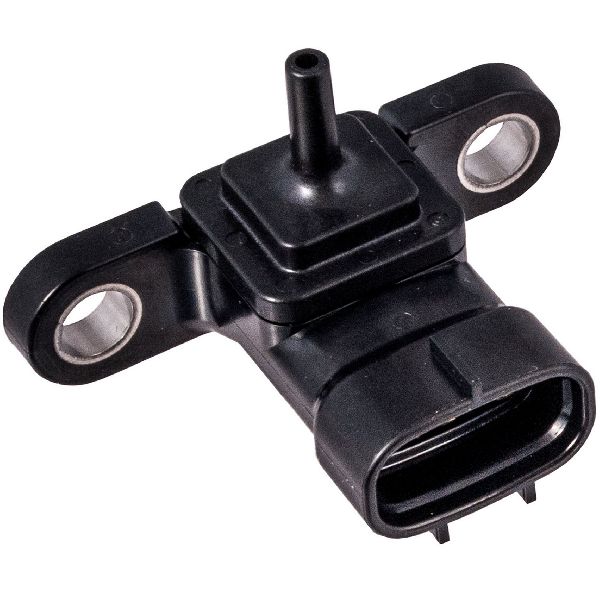
- Manifold Absolute Pressure (MAP) Sensor
(OEM #22627AA210)— This is the most common failure component for a P0108 code on this vehicle. Note: Part number 22627AA210 is listed for earlier EJ25 engines (around 2004-2005) and may have been superseded. A newer part number for this generation is 22627AA470, but always confirm with VIN.
Trusted brands: Denso (OEM), Bosch, NTK, Subaru (Genuine)
OEM price range: $120-$180
Aftermarket price range: $40-$90
Related Codes That Often Appear With This One
- P0107 — This code is for 'MAP Sensor Circuit Low Input.' Seeing it alongside P0108 might indicate an intermittent wiring problem where the signal is fluctuating wildly between open and shorted conditions, or a sensor that is failing erratically.
Technical Service Bulletins (TSBs) & Recalls
- TSB 02-157-14R: While not directly related to P0108, this TSB addresses the excessive oil consumption on FB25 engines, which can be a root cause for other issues like catalytic converter failure.
- TSB Bulletin #07-96-15: This bulletin notes that P0108, along with other codes like P0068 and P0300, can be set in error due to a harness design. The manufacturer recommends repositioning the sensor and actuator wiring ground junction point to a location unaffected by engine movement.
Platform-Specific Known Issues
- Rodent Damage to Wiring: The soy-based wiring insulation used in many modern cars, including Subarus, can attract rodents. The MAP sensor harness is in an accessible location in the engine bay and is a common target, leading directly to P0108 or P0107 codes.
- Aftermarket Sensor Incompatibility: Numerous forum discussions among Subaru owners caution against using cheap, non-OEM MAP sensors. Many have reported that only Denso (the original equipment manufacturer) or genuine Subaru parts resolve the issue permanently, while aftermarket sensors may fail quickly or provide inaccurate readings.
Mechanic-Grade Diagnostic Values
- MAP Sensor Signal Voltage (Key On, Engine Off) — expected: ~4.5 - 5.0 Volts (should match BARO reading). Failure: Voltage is stuck high (at or above 4.4V) and does not match BARO. A reading of 0V would indicate a P0107 (low input) fault.
- MAP Sensor Signal Voltage (Engine at Idle) — expected: ~1.0 - 2.0 Volts. Failure: Voltage remains high (near 4.5V) and does not drop when the engine starts, indicating the sensor is not reading engine vacuum.
- MAP Sensor Connector - 5V Reference Wire — expected: 5V ± 0.5V (with key on, connector unplugged). Failure: Significantly lower or no voltage indicates a problem with the ECM or the wiring between the ECM and sensor.
- MAP Sensor Connector - Ground Wire Continuity — expected: < 5 ohms to chassis ground. Failure: High resistance or an open circuit (OL) indicates a bad ground connection, which can cause incorrect sensor readings.
- MAP Sensor Internal Resistance (Sensor Unplugged) — expected: ~2.5 kΩ or less (for non-turbo 2.5L). Failure: An open circuit (OL) or significantly higher resistance reading across the outer two pins suggests internal sensor failure.
Wiring & Ground Locations
- Main Engine Ground — Bolts to the top of the transmission bell housing, near the starter.. A poor main engine ground can affect the entire engine management system, causing erratic behavior from various sensors. While not a direct cause, it can create electrical noise and voltage offsets that may contribute to sensor circuit codes.
- Intake Manifold Ground — The ECU grounds are sourced from the top of the intake manifold.. Since the MAP sensor is mounted directly to the intake manifold and the ECU relies on the manifold for its ground reference, a poor ground connection here is critical. Corrosion or looseness can directly cause sensor signal faults like P0108.
- MAP Sensor Connector (E21) — A 3-wire plug connected directly to the MAP sensor on top of the intake manifold.. This is the primary point of failure for wiring issues. The pins are: 5V reference, signal, and ground. Testing voltages and continuity at this connector is the main diagnostic step.
Real Owner Repair Stories
- YouTube channel 'Last Garage' (2011 Subaru Outback 2.5L (FB25 engine, but diagnosis is analogous)) — Rough idle, Check Engine Light with code P0108 and misfire codes.
❌ Tried (didn't work) Fixing a large vacuum leak at the MAP sensor O-ring., Replacing the MAP sensor with a new OEM unit., Diagnosing a short-to-power on the signal wire, which incorrectly pointed to a faulty ECM., Replacing the ECM (the problem persisted).
✅ What actually fixed it Replacing the entire engine wiring harness due to an untraceable, intermittent internal short circuit that kept sending 5V down the signal wire.
When the Usual Fixes Don't Work
- In one documented case on a similar Subaru 2.5L engine, a persistent P0108 was not resolved by replacing the sensor or even the ECM. The final repair required replacing the entire engine wiring harness due to an internal short that was not visible externally. This contradicts the common assumption that if the sensor and its connector are good, the ECM must be the culprit.
OEM Part Supersession History
22627AA210→22627AA470— Part update/revision by Subaru over the years for reliability and compatibility with newer models.
Heads up: While 22627AA210 is for older EJ engines, the correct part for the 2009-2013 Forester generation is generally 22627AA470. Using the wrong sensor can lead to incorrect readings even if it physically fits. Always verify by VIN.
Model Year Variations Within This Range
- 2011-2013: These model years use the newer FB25 engine, while 2009-2010 models use the EJ25. However, for the P0108 code, the MAP sensor location (top of intake manifold) and diagnostic principles remain the same across this entire 2009-2013 range.
Diagnostic Flowchart
Other Known Issues on This Vehicle
Issues unrelated to this code that are worth knowing about as an owner of this generation:
- Head Gasket Failure 🔴 High — Common on the EJ25 engine (2009-2010 models) typically after 100,000 miles. Less common but still possible on the FB25. Results in external oil or coolant leaks, or internal mixing.
- Excessive Oil Consumption 🟠 Medium — Particularly prevalent in the 2011-2013 models with the new FB25 engine. Caused by issues with piston rings. Can require frequent oil top-offs. (Ref: A class-action lawsuit was settled regarding this issue. Subaru issued TSB 02-157-14R related to oil consumption testing and repair.)
- Failed Catalytic Converter 🟠 Medium — Can fail prematurely, often as a consequence of the oil consumption issue fouling the converter. Symptoms include a check engine light for catalyst efficiency (P0420) and power loss.
- Takata Airbag Recall 🔴 High — Widespread across many manufacturers, including this generation of Forester. The inflators can rupture, sending metal fragments into the cabin. (Ref: Multiple NHTSA recalls. Owners should verify their VIN for recall status.)
Used vs. New Parts: Buying Guide for This Vehicle
When a used part is the smart pick: A used OEM (Denso) MAP sensor from a low-mileage donor vehicle is a reasonable choice if on a tight budget, as they are generally reliable. A used wiring harness pigtail is also a good option for repairing a damaged connector.
Donor-vehicle mileage cap: roughly under 80000 miles for the part to have meaningful remaining life.
What to inspect on the donor part:
- Check the plastic housing for cracks or heat damage.
- Ensure the connector pins are clean, straight, and free of corrosion.
- Verify the O-ring is present and pliable, not brittle or flattened.
- If possible, ask for the VIN of the donor car to check for compatibility.
OEM-only on this vehicle (don't cheap out):
- Manifold Absolute Pressure (MAP) Sensor
Aftermarket brands forum-validated for this vehicle:
- Denso (OEM supplier)
- NTK
- Bosch
Brands owners have reported issues with on this vehicle:
- Unbranded, low-cost sensors from online marketplaces are frequently reported on forums to be inaccurate, fail quickly, or not resolve the code.
Real Owner Stories
Aggregated from forums and TSBs cited above. Mileages and costs reflect what owners reported in those sources.
2009-2013 Subaru Forester
Symptoms: Lack of power, lurching, surging, and poor idle.
What fixed it: Repairing the MAP sensor wiring harness that had been chewed through by a mouse.
Source hint: r/SubaruForester on Reddit - 'Mouse got into my MAP sensor wiring a while back. P0108'
2004 Subaru WRX (EJ engine)
Symptoms: Intermittent P0108 code that would return even after replacing the sensor, sometimes alternating with P0107.
What fixed it: Troubleshooting an intermittent short in the wiring or connector.
Source hint: MNSubaru Forum - 'MAP (manifold absolute pressure) sensor issues P0108'
2009-2010 Subaru Forester EJ25 — ~110000 miles
Symptoms: External oil or coolant leaks, or internal mixing.
What fixed it: Head gasket replacement (common failure for EJ25 models typically after 100,000 miles).
Source hint: Known Issues section - Head Gasket Failure
Related OBD-II Codes
Frequently Asked Questions
My 2012 Forester is burning a lot of oil; could this be related to my P0108 code?
I found chewed wires near my MAP sensor. Is this a common issue for the Forester?
Can I use a cheap aftermarket MAP sensor from a local parts store to fix P0108?
Where exactly is the MAP sensor located on my EJ25 engine?
My dashboard is a Christmas tree with the Check Engine, Cruise, and VSC lights on. Is this normal for a P0108?
How can I tell if the P0108 is a bad sensor or a wiring short using a scan tool?
Helpful Videos

We Have This Part in Stock


The information in this article is provided for general reference and educational purposes only. Vehicle specifications, procedures, and part compatibility can vary by production date, trim level, and region. Always consult your vehicle's factory service manual and verify part numbers before purchasing or performing repairs. Safety-critical components such as airbags, seat belts, and braking systems should be installed by a qualified professional.
- Subaru Forester:
- 🧭 Diagnostic Flowchart
- 🎬 Helpful Videos
- 🛍️ Shop This Part
- What's Unique About the 2009-2013 Subaru Forester
- Symptoms You May Notice
- Most Likely Causes
- Rare But Worth Checking
- Diagnosis Steps
- Parts You'll Likely Need
- Related Codes That Often Appear With This One
- Technical Service Bulletins (TSBs) & Recalls
- Platform-Specific Known Issues
- Mechanic-Grade Diagnostic Values
- Wiring & Ground Locations
- Real Owner Repair Stories
- When the Usual Fixes Don't Work
- OEM Part Supersession History
- Model Year Variations Within This Range
- Other Known Issues on This Vehicle
- Used vs. New Parts: Buying Guide for This Vehicle
- Real Owner Stories
- 2009-2013 Subaru Forester
- 2004 Subaru WRX (EJ engine)
- 2009-2010 Subaru Forester EJ25 — ~110000 miles
- Related OBD-II Codes
- Frequently Asked Questions
- 🎟️ Get 5% Off