

P0108 on 2011-2018 Subaru Forester: MAP Sensor Circuit High Causes and Fixes
On a 2011-2018 Forester, P0108 is almost always a failed Manifold Absolute Pressure (MAP) sensor or a damaged wiring harness. The MAP sensor is the most likely fix, is easy to replace, and costs about $80-$150 for an aftermarket part or up to $250 for an OEM Denso sensor. A key diagnostic step is to unplug the sensor with the key on; if the code changes to P0107, the sensor is likely bad, but if P0108 persists, the fault is in the wiring.
- P0108 on your Forester indicates the MAP sensor circuit is sending a high voltage signal, usually causing a rich fuel condition.
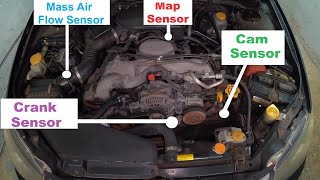
- The most likely cause is a failed MAP sensor, which is an easy and inexpensive DIY replacement located on top of the engine.
- Before buying a new sensor, always inspect the wiring harness for rodent damage, a known issue on these vehicles.
- A simple diagnostic test is to unplug the sensor with the key on; if the code changes to P0107, the sensor is bad. If P0108 stays, the wiring is shorted.
- The flashing cruise control and VSC lights are a normal, expected symptom for this engine code on a Subaru and will resolve when the fault is fixed.
What's Unique About the 2011-2018 Subaru Forester
For the FB25 engine in this Forester, P0108 is a very common and straightforward code. While the MAP sensor itself is the top suspect, these Subarus are notably prone to rodent damage in the engine bay. The soy-based insulation on the wiring harness can attract mice, which may chew the MAP sensor wires and cause a short circuit that triggers this specific code. It's also standard for Subaru to disable cruise control and Vehicle Dynamics Control (VSC) when this check engine code appears, which can be alarming but is normal behavior designed to get the driver's attention.
Generation note: This range covers two Forester generations: the late third generation (SH, 2011-2013) and the fourth generation (SJ, 2014-2018). Both use the FB25 engine and the same MAP sensor, which is located in an easy-to-access spot on top of the intake manifold. However, the engine wiring harness and intake manifold designs differ slightly, and the 2014+ models switched to electric power steering, changing some engine bracketry. A wiring diagram for the specific model year is needed for an accurate electrical diagnosis.
Symptoms You May Notice
- Check Engine Light is on
- Flashing 'CRUISE' light on the dashboard
- Vehicle Dynamics Control (VDC) or traction control light is on
- Rough or unstable idle
- Engine stalling, especially when coming to a stop
- Hesitation, surging, or poor acceleration
- Reduced fuel economy
- Black smoke from the exhaust (in some cases)
- Excessive cranking to start the engine
- Replacing the ECM when the actual fault is a short in the engine wiring harness.
- Replacing the Mass Airflow (MAF) sensor instead of the Manifold Absolute Pressure (MAP) sensor. They are different parts with different functions.
Most Likely Causes
- Failed Manifold Absolute Pressure (MAP) Sensor 🔴 High Probability → Shop Manifold Absolute Pressure Sensor This is the most common failure part for this code on this platform. The sensor can fail internally, creating a short that sends a constant high voltage signal to the ECM. Owners report that cheap, unbranded aftermarket sensors are prone to premature failure or inaccuracy, and using an OEM Denso part is highly recommended.
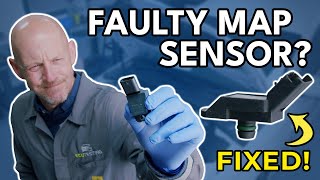
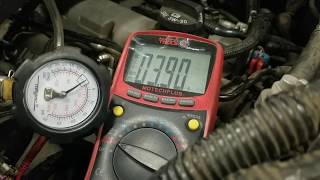
How to confirm: With a scan tool, observe the MAP sensor voltage with the Key On, Engine Off. It should read near atmospheric pressure. At warm idle, it should be around 30-32 kPa. If the reading is stuck high (near 5V or over 119.5 kPa), the sensor is likely bad. A user on the MNSubaru forum noted their faulty sensor would show intermittent spikes to ~75 inHg on the scan tool before failing completely.
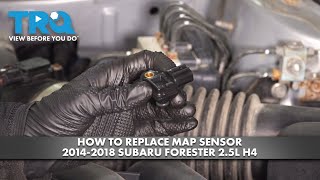
Typical fix: Replace the MAP sensor. It is located on top of the intake manifold and secured with a single 8mm or 10mm bolt, making it a very simple DIY job.
Est. part cost: $80-$250 - Wiring Harness or Connector Issue 🟡 Medium Probability Subaru's use of soy-based wire insulation can attract rodents, which chew the wires and cause a short-to-power. In one documented case, a loose main engine harness connector (F61) near the battery was the culprit, causing intermittent voltage spikes that were difficult to diagnose.
How to confirm: Visually inspect the wiring harness leading to the MAP sensor for any signs of chewing, fraying, or melting. A key test is to unplug the sensor with the key on. If code P0108 remains active, you have a short to power in the harness. If it changes to P0107 (low circuit), the wiring is likely okay. With a multimeter, check for 5V reference, good ground, and the signal wire at the connector. If the signal wire shows 5V with the sensor unplugged, a short to power is confirmed.
Typical fix: Repair the damaged section of the wiring harness. In cases of rodent damage, some owners use capsaicin-infused anti-rodent tape for the repair to deter future issues. If the connector is damaged, a new pigtail can be spliced in; iWire sells a compatible pigtail connector kit (Manifold Absolute Pressure Sensor Plug C). Check and secure main harness connectors like the F61 connector.
Est. part cost: $15-$50 - Damaged or Missing MAP Sensor O-Ring ⚪ Low Probability → Shop Manifold Absolute Pressure Sensor The small rubber O-ring that seals the sensor to the intake manifold can become brittle, crack, or be forgotten during reinstallation, creating a significant vacuum leak.
How to confirm: Remove the MAP sensor and inspect the O-ring for damage or to see if it's missing. A significant vacuum leak right at the sensor can cause incorrect readings and may be audible or found with a smoke test. While a vacuum leak usually causes a lean code (P0171), a massive leak right at the sensor can disrupt readings enough to trigger P0108.
Typical fix: Replace the O-ring. Often a new sensor will come with one. A light coat of oil on the new O-ring can help it seat properly without damage.
Est. part cost: $1-$10
Rare But Worth Checking
- Clogged Catalytic Converter: This is uncommon, but a severely clogged catalytic converter can increase pressure in the intake manifold. This is more likely on earlier (2011-2014) models known for excessive oil consumption (TSB 02-157-14R), as the burning oil can foul the converter.
- Faulty Engine Control Module (ECM): → Shop Engine Control Module (ECM) This is extremely rare and should only be considered after all other possibilities, especially complex wiring faults, have been exhaustively ruled out. An ECM is often misdiagnosed when the real problem is a hard-to-find short in the wiring harness.
Diagnosis Steps
- Connect an OBD-II scanner and confirm P0108 is the active code. Note the accompanying flashing cruise and VSC lights, which is normal for Subaru.
- With the scanner, view live data for the MAP sensor. With the Key On, Engine Off, the reading should be close to barometric pressure. At warm idle, it should be low (around 30-32 kPa). A reading stuck high (e.g., over 119 kPa or ~5V) points to the problem.
- Turn the vehicle off. Visually inspect the MAP sensor wiring harness for obvious signs of damage, especially chewing from rodents. Check for looseness on main harness connectors like the F61 connector near the battery.
- Disconnect the MAP sensor electrical connector. Turn the key to the 'On' position without starting the engine.
- Check the scanner again. If the code has changed to P0107 (Circuit Low), the wiring harness is most likely good, and the MAP sensor itself has failed.
- If the P0108 code remains even with the sensor unplugged, there is a short-to-power in the wiring harness that must be found and repaired.
- If the sensor is the suspected cause, remove the single bolt holding it to the intake manifold and replace it. Using an OEM Denso sensor is highly recommended.
- After the repair, clear the codes with the scanner and perform a test drive to ensure the code does not return.
Parts You'll Likely Need
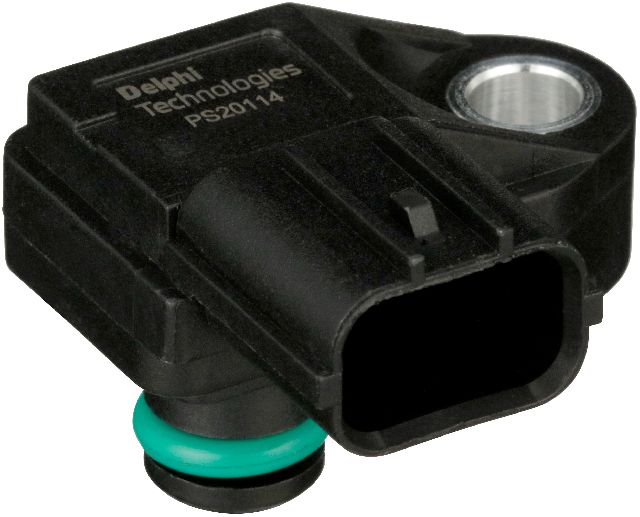
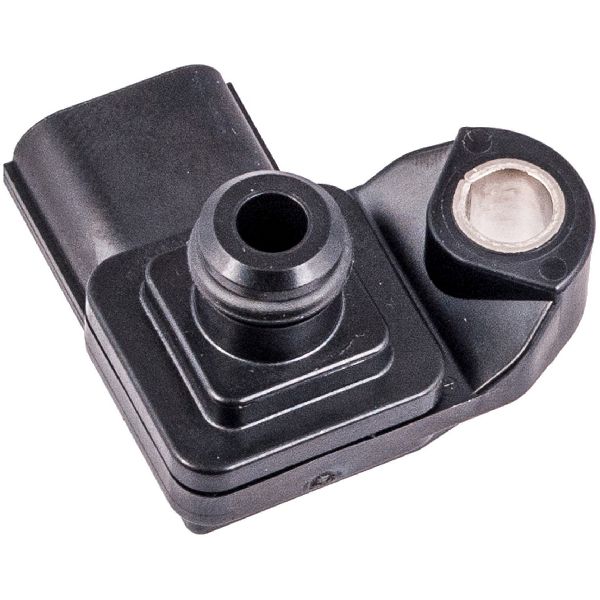
- Manifold Absolute Pressure (MAP) Sensor
(OEM #22627AA510)— This is the most common component to fail and cause a P0108 code on this vehicle.
Trusted brands: Denso (OEM Supplier), Delphi, Standard Motor Products (SMP), NTK
OEM price range: $200-$275
Aftermarket price range: $80-$150 - MAP Sensor Connector Pigtail
(OEM #N/A (aftermarket))— Needed if the connector itself is damaged by heat, vibration, or rodents. Companies like iWire sell specific pigtails for this repair.
Trusted brands: iWire (P/N: Manifold Absolute Pressure Sensor Plug C), Various aftermarket on eBay/Amazon (e.g., MAP-Connector-5665)
OEM price range: N/A
Aftermarket price range: $15-$35
Related Codes That Often Appear With This One
- P0107 — If you unplug the MAP sensor to test it, the code will often change from P0108 (Circuit High) to P0107 (Circuit Low). This is a good diagnostic sign that the wiring is likely intact.
- P0172 — System Too Rich. This can appear because the ECM injects excess fuel based on the false high-load signal from the faulty MAP sensor.
- P0300, P0301, etc. — Random or specific cylinder misfire codes can be triggered by the unstable air-fuel mixture, rough idle, and engine hesitation caused by the bad MAP sensor signal.
Technical Service Bulletins (TSBs) & Recalls
- TSB 02-157-14R: Addresses excessive oil consumption on early FB25 engines due to faulty piston rings. The fix involves an oil consumption test and potential replacement of the engine short block. This is relevant as heavy oil burning can lead to catalytic converter failure, a rare cause of P0108.
Platform-Specific Known Issues
- Rodent Damage: The soy-based insulation used for the wiring harness is known to attract rodents, making a chewed MAP sensor harness a distinct possibility for this code.
- Excessive Oil Consumption: Particularly on 2011-2014 models, the FB25 engine can suffer from high oil consumption due to piston ring issues (addressed in TSB 02-157-14R), which can lead to a fouled catalytic converter, a rare cause of P0108.
Mechanic-Grade Diagnostic Values
- MAP Sensor Signal Voltage (Code Trigger Condition) — expected: < 4.4 Volts. Failure: A signal voltage greater than 4.4V for more than a few seconds will trigger P0108.
- MAP Sensor Pressure (Code Trigger Condition) — expected: < 119.5 kPa. Failure: A pressure reading greater than 119.5 kPa will trigger P0108.
- MAP Sensor Connector - Pin 3 (5V Reference) — expected: 4.75 - 5.25 Volts (Key On, Engine Off). Failure: Voltage outside this range indicates an ECM or wiring fault.
- MAP Sensor Connector - Pin 2 (Ground) — expected: < 0.1 Volts (Key On, Engine Off). Failure: Voltage significantly above 0V indicates a bad ground connection.
- MAP Sensor Connector - Pin 1 (Signal Wire) — expected: ~1.0 - 2.0 Volts at warm idle, ~4.5V at Key On, Engine Off.. Failure: Voltage stuck near 5V at idle confirms a sensor or wiring short-to-power fault.
Wiring & Ground Locations
- MAP Sensor Connector (F43) — On the MAP sensor itself, located on the top center of the intake manifold.. This 3-pin connector is the primary point of failure for wiring issues, either from rodent damage, corrosion, or harness chafe. Pin 1 is Signal, Pin 2 is Ground, Pin 3 is 5V Reference.
- ECM Connector B136 — At the Engine Control Module (ECM), typically located in the passenger footwell area.. The MAP sensor signal wire terminates at a specific pin on this connector (pin assignments can vary by year, but have been noted on pin 26 or similar on some diagrams). Testing here can confirm if a wiring short exists between the sensor and the ECM.
- Primary Engine/ECU Ground — Bolted to the top of the intake manifold.. The ECU's main ground reference is on the intake manifold. If these ground bolts are loose or corroded (e.g., after other engine work), it can create a floating ground, causing erratic voltage readings from sensors like the MAP and potentially triggering a false P0108.
Real Owner Repair Stories
- subaruforester.org forum user (2015 Subaru Forester 2.5i) — P0108 code, rough idle, stalling.
❌ Tried (didn't work) Initial diagnosis pointed to a bad MAP sensor.
✅ What actually fixed it The owner confirmed 5V on the signal wire with the sensor unplugged, proving a short-to-power. The fault was traced to a section of the MAP sensor wiring harness that had rubbed through its insulation on a sharp metal engine bracket near the firewall, causing the signal wire to short to the 5V reference wire. Repairing the chafed wires resolved the code permanently.
OEM Part Supersession History
22627AA510→22627AA510 (current)— This part number has remained consistent for the specified vehicle range.
Heads up: The OEM supplier is Denso, and their equivalent part number is 079800-9430. Ensure any replacement matches this 3-pin connector style.
Model Year Variations Within This Range
- 2014-2018 (SJ Generation): The engine bay layout was revised compared to the 2011-2013 (SH) models, including the move to electric power steering. While the MAP sensor part and location are the same, the engine wiring harness routing differs. This can create different potential chafe points, reinforcing the need for a visual inspection of the entire harness path during diagnosis.
Diagnostic Flowchart
Other Known Issues on This Vehicle
Issues unrelated to this code that are worth knowing about as an owner of this generation:
- Excessive Oil Consumption 🔴 High — Very common on 2011-2014 models with the FB25 engine, typically noticeable before 100,000 miles. Led to a class-action lawsuit. (Ref: TSB 02-157-14R)
- CVT Transmission Failure/Shudder 🔴 High — Common on 2014-2018 models, with symptoms like shuddering, hesitation, and noise often appearing between 60,000 and 100,000 miles. Can lead to a full replacement costing $5,800-$7,500. (Ref: TSB 16-103-15R (for shudder); Subaru also extended the CVT warranty to 10 years/100,000 miles for certain model years.)
- Failing A/C Condenser 🟠 Medium — Common on 2017-2018 models, where the condenser is prone to corrosion and refrigerant leaks, causing the A/C to stop working. (Ref: Subaru Service Program WRB-21 and a warranty extension to 5 years/unlimited miles.)
- Rear Coil Spring Failure 🟠 Medium — Reported on 2014-2018 models, where the rear coil springs can break. More prevalent on the 2014 model year. (Ref: A recall was issued for faulty rear suspension springs on some models.)
- Premature Wheel Bearing Failure 🟡 Low — Owners report wheel bearings failing earlier than expected, often resulting in a droning or humming noise that increases with speed.
Used vs. New Parts: Buying Guide for This Vehicle
When a used part is the smart pick: A used OEM Denso MAP sensor from a reputable salvage yard with a low-mileage donor vehicle is a reasonable choice if on a tight budget, as it is often more reliable than a new, cheap aftermarket sensor. It is a simple electronic part with no moving components, but failure is common.
Donor-vehicle mileage cap: roughly under 80000 miles for the part to have meaningful remaining life.
What to inspect on the donor part:
- Check the donor vehicle's VIN to confirm it's from a non-recalled engine batch.
- Inspect the connector pins on the used sensor for any signs of corrosion or damage.
- Ensure the O-ring is present and not flattened or cracked, though replacing it is always recommended.
OEM-only on this vehicle (don't cheap out):
- Manifold Absolute Pressure (MAP) Sensor
Aftermarket brands forum-validated for this vehicle:
- Denso (OEM supplier)
- NTK
- Delphi
Brands owners have reported issues with on this vehicle:
- Unbranded, 'white-box' sensors from online marketplaces are frequently reported on forums as being inaccurate out of the box or failing prematurely.
Real Owner Stories
Aggregated from forums and TSBs cited above. Mileages and costs reflect what owners reported in those sources.
2010 Subaru Forester
Symptoms: P0108 code accompanied by excessive cranking to start the engine (sometimes).
What fixed it: The owner reported the code and symptoms were linked to the MAP sensor circuit high condition.
Source hint: Reddit r/MechanicAdvice - 'excessive cranking to start (sometimes) DTC P0108...'
Subaru WRX (FB Platform Mate)
Symptoms: Intermittent P0108 code. The scan tool showed intermittent voltage spikes to ~75 inHg before the sensor failed completely.
What fixed it: After replacing the sensor and checking for vacuum leaks, the final fix was securing a loose main harness connector (F61) by the battery that was causing voltage spikes.
Source hint: MNSubaru - 'MAP (manifold absolute pressure) sensor issues P0108'
2011-2014 Subaru Forester FB25 — ~95000 miles
Symptoms: High oil consumption and eventually a P0108 code.
What fixed it: Address excessive oil consumption via TSB 02-157-14R (potential short block replacement) to prevent catalytic converter fouling which can trigger the code.
Source hint: TSB 02-157-14R
Related OBD-II Codes
Frequently Asked Questions
Why are my Cruise Control and VDC lights flashing along with the Check Engine light?
Does TSB 02-157-14R regarding oil consumption relate to my P0108 code?
Can I use an aftermarket MAP sensor to fix this code?
Is there a specific wiring issue I should look for on my Forester?
How can I tell if the MAP sensor itself is bad versus a wiring problem?
Where is the MAP sensor located on the FB25 engine?
Helpful Videos


We Have This Part in Stock


The information in this article is provided for general reference and educational purposes only. Vehicle specifications, procedures, and part compatibility can vary by production date, trim level, and region. Always consult your vehicle's factory service manual and verify part numbers before purchasing or performing repairs. Safety-critical components such as airbags, seat belts, and braking systems should be installed by a qualified professional.
- Subaru Forester:
- 🧭 Diagnostic Flowchart
- 🎬 Helpful Videos
- 🛍️ Shop This Part
- What's Unique About the 2011-2018 Subaru Forester
- Symptoms You May Notice
- Most Likely Causes
- Rare But Worth Checking
- Diagnosis Steps
- Parts You'll Likely Need
- Related Codes That Often Appear With This One
- Technical Service Bulletins (TSBs) & Recalls
- Platform-Specific Known Issues
- Mechanic-Grade Diagnostic Values
- Wiring & Ground Locations
- Real Owner Repair Stories
- OEM Part Supersession History
- Model Year Variations Within This Range
- Other Known Issues on This Vehicle
- Used vs. New Parts: Buying Guide for This Vehicle
- Real Owner Stories
- 2010 Subaru Forester
- Subaru WRX (FB Platform Mate)
- 2011-2014 Subaru Forester FB25 — ~95000 miles
- Related OBD-II Codes
- Frequently Asked Questions
- 🎟️ Get 5% Off