

P0108 on 2012-2016 Subaru Impreza 2.0L: MAP Sensor Circuit High Causes and Fixes
P0108 on a 2012-2016 Impreza most often points to a failed Manifold Absolute Pressure (MAP) sensor. A faulty sensor, a wiring short to the 5V reference, or a bad ground are the most common culprits. Before replacing the expensive OEM sensor, thoroughly test the wiring harness. Expect to pay $150-$250 for an OEM sensor, with aftermarket options being cheaper but less reliable. DIY difficulty is 2/5.
- P0108 on your Impreza means the MAP sensor circuit is sending an abnormally high voltage signal to the computer.
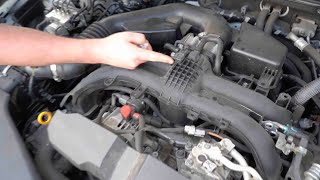
- The most likely cause is a failed MAP sensor, which is located on the throttle body and is straightforward to replace.
- Before replacing the sensor, inspect the wiring and connector for damage, as a short circuit can cause the same code.
- Use a scan tool to watch live data; if the MAP reading is stuck high (around 100 kPa or 4.5V+) even at idle, it strongly points to a sensor or wiring fault.
- The correct OEM part number for the MAP sensor is likely 22627AA510.
What's Unique About the 2012-2016 Subaru Impreza
On the FB20B engine, the MAP sensor is conveniently located directly on the throttle body, making it relatively easy to access. While sensor failure is common, Subarus can be sensitive to electrical issues. A P0108 code may be triggered by a simple bad sensor, but it's also frequently caused by a damaged wiring harness or a poor connection at the sensor, which can mimic sensor failure. A key diagnostic clue is that disconnecting the MAP sensor harness on a Subaru can also trigger a P0108, indicating a wiring or ECM issue rather than a sensor fault. When this code appears, Subaru's system typically illuminates the Check Engine Light, disables cruise control (causing it to flash), and turns off the vehicle stability control (VSC) light as a safety precaution.
Symptoms You May Notice
- Check Engine Light is on
- Flashing cruise control light
- Vehicle Stability Control (VSC) light is on
- Rough or unstable idle, sometimes very low (around 400rpm)
- Engine hesitation or stumbling during acceleration
- Stalling, especially when coming to a stop
- Reduced fuel economy
- Black smoke from the exhaust (due to a rich fuel mixture)
- Engine surging
- Replacing the ECM when the actual fault is in the wiring harness. A wiring fault can mimic an internal ECM problem, so thorough testing of the harness is critical. 🎬 Watch: A deep dive into diagnosing Subaru MAP wiring and ECM issues.
- Replacing the MAP sensor without first testing the wiring. An intermittent short in the harness can cause the same symptoms as a failed sensor.
Most Likely Causes
- Faulty Manifold Absolute Pressure (MAP) Sensor 🔴 High Probability → Shop Manifold Absolute Pressure Sensor Sensors can fail internally over time, sending a constant high voltage signal regardless of actual manifold pressure. Some owners report that using non-OEM sensors can cause the code to return, suggesting OEM (Denso) is preferred for reliability.
How to confirm: With a scan tool, check the MAP sensor reading with the Key On, Engine Off (KOEO). It should match the barometric pressure (BARO) reading. At idle, the reading should be low (high vacuum, e.g., 30-40 kPa or ~1.4-1.8V). If the reading is stuck high (e.g., over 4.5V or near atmospheric pressure at all times), the sensor is likely bad.
Typical fix: Replace the MAP sensor. It is located on the throttle body and typically held by one or two small screws. Ensure the mating surface is clean before installing the new sensor. 🎬 See this walkthrough on how to test and replace the sensor.
Est. part cost: $150-$250 - Wiring or Connector Issue 🟡 Medium Probability Engine vibration and heat can cause wires to fray or break over time. The connector pins can also corrode or become loose, causing a short to the 5V reference wire or an open ground. This is a common point of failure.
How to confirm: Visually inspect the wiring harness leading to the MAP sensor for any signs of damage, melting, or corrosion. Unplug the connector and check for clean, tight-fitting pins. With a multimeter, check for a 5-volt reference and a good ground at the connector with the key on. Wiggling the harness while monitoring the live data on a scan tool can help identify an intermittent short, which often presents as sudden voltage spikes.
Typical fix: Repair the damaged section of the wiring harness or replace the connector pigtail. Ensure the connection is secure and apply dielectric grease to the connector to prevent moisture intrusion.
Est. part cost: $10-$50 - Large Vacuum Leak ⚪ Low Probability While vacuum leaks more commonly cause lean codes (P0171) or low input codes (P0107), a very large leak near the sensor can sometimes confuse the ECM and trigger a P0108. This can happen if a vacuum hose becomes disconnected or an intake manifold gasket fails catastrophically.
How to confirm: Listen for hissing sounds around the intake manifold with the engine running. A smoke test is the most effective way to find the source of a vacuum leak. Pay attention to the intake manifold gaskets and any vacuum hoses connected to it.
Typical fix: Replace the leaking gasket or hose.
Est. part cost: $5-$100 - Dirty Throttle Body ⚪ Low Probability Carbon and oil vapor buildup around the throttle plate can disrupt airflow, especially at idle. While less common to cause a 'high input' code, severe buildup can affect the pressure readings within the intake manifold where the MAP sensor is located.
How to confirm: Visually inspect the throttle body for heavy carbon deposits. If it's dirty, the idle may also be erratic.
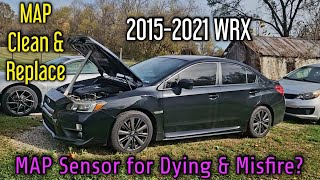
Typical fix: Clean the throttle body with a dedicated throttle body cleaner and a soft brush. An idle relearn procedure may be necessary after cleaning. 🎬 Watch: How to clean your MAP sensor to fix stalling.
Est. part cost: $5-$15
Rare But Worth Checking
- Clogged Catalytic Converter: A severely restricted exhaust can increase pressure in the intake manifold, causing the MAP sensor to read higher than normal. This is usually accompanied by other symptoms like a significant loss of power, especially at higher RPMs, and potentially a sulfur smell from the exhaust.
- Faulty Engine Control Module (ECM): → Shop Engine Control Module (ECM) This is very rare. The internal circuit for the MAP sensor in the ECM can fail, but all other possibilities, especially wiring, should be exhaustively ruled out before condemning the ECM. A key test is to check for voltage on the signal wire at the ECM connector with the sensor unplugged; if voltage is present, the short is in the harness, not the ECM.
Diagnosis Steps
- Connect an OBD-II scanner and confirm P0108 is the primary code. Note any other codes.
- Using the scanner's live data function, observe the MAP sensor reading in kPa or volts. Record the value with the Key On, Engine Off (KOEO). It should be close to the BARO reading.
- Start the engine and observe the reading at idle. A healthy engine should pull a strong vacuum, resulting in a low MAP reading (e.g., 30-40 kPa or ~1.4-1.8V).
- If the reading is stuck high (near atmospheric pressure, ~100 kPa or >4.4V) at all times, the sensor or its circuit is faulty.
- Turn the engine off. Disconnect the MAP sensor. With the key on, check the live data again. On many Subarus, a P0108 will remain even with the sensor disconnected, which points towards a circuit issue rather than a sensor-only fault.
- Visually inspect the MAP sensor's electrical connector and nearby wiring for damage, corrosion, or loose pins.
- With the connector unplugged and the key on, use a multimeter to verify the connector has a 5V reference wire, a ground wire (check for continuity to the battery negative), and a signal wire.
- If wiring seems okay, the MAP sensor itself is the most likely culprit. Replace the sensor, preferably with an OEM Denso part.
- If the problem persists after replacing the sensor, perform a smoke test to check for significant vacuum leaks.
- If no vacuum leaks are found, a more in-depth diagnosis of the wiring harness for intermittent shorts or an ECM fault may be required. This can involve checking for continuity and shorts between the MAP sensor connector and the ECM connector.
Technical Service Bulletins (TSBs) & Recalls
Manufacturer service bulletins for related Subaru models highlight how wiring harness design can lead to false sensor readings. For instance, TSB Bulletin #07-96-15 notes that a P0108 code can be set in error due to the positioning of the sensor and actuator wiring ground junction point. The bulletin describes a fix involving repositioning this junction to a location unaffected by engine movement to prevent circuit issues.
Parts You'll Likely Need
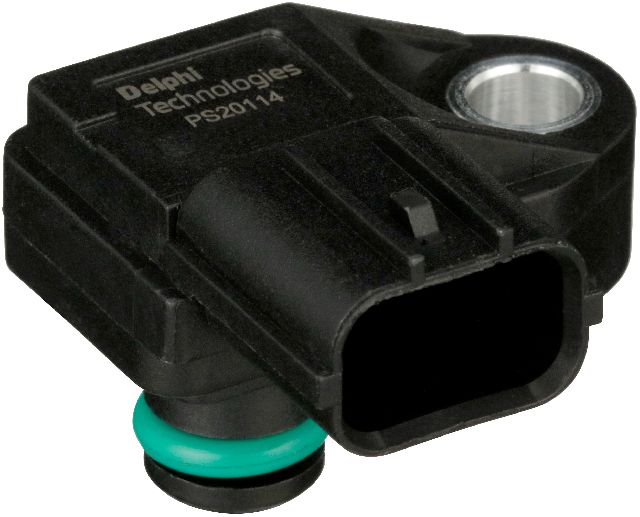
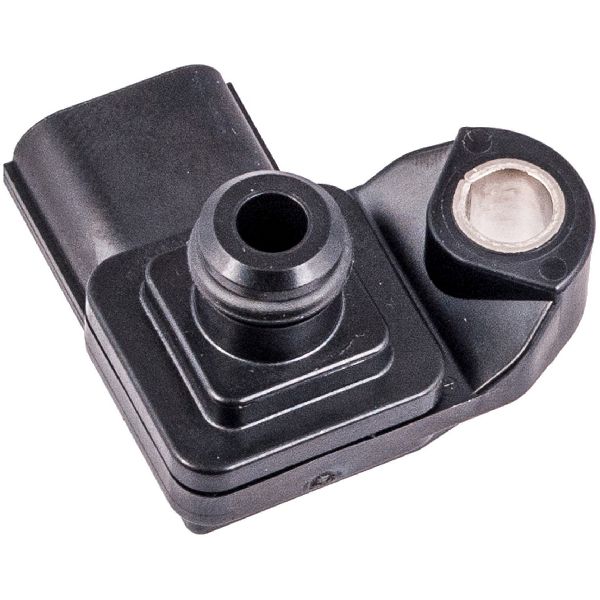
- Manifold Absolute Pressure (MAP) Sensor
(OEM #22627AA510)— This is the most common component to fail and directly cause a P0108 code.
Trusted brands: Subaru (Genuine), Denso
OEM price range: $200-$250
Aftermarket price range: $40-$120
Related Codes That Often Appear With This One
- P0107 — Manifold Absolute Pressure/Barometric Pressure Circuit Low Input. Seeing both P0107 and P0108 can indicate an intermittent wiring problem or a sensor that is failing erratically.
Mechanic-Grade Diagnostic Values
- MAP Sensor Signal Voltage at Idle — expected: 1.4V - 1.8V. Failure: A voltage at or above 4.4V indicates a 'Circuit High' condition (P0108).
- MAP Sensor Signal Pressure at Idle (Scan Tool) — expected: 30-40 kPa. Failure: A pressure reading at or above 119.5 kPa (or near atmospheric pressure) indicates a fault.
- MAP Sensor Connector - Reference Voltage — expected: 5.0V. Failure: No voltage or significantly lower voltage indicates a wiring or ECM issue.
- MAP Sensor Connector - Ground Pin Continuity — expected: Continuity to chassis ground (audible beep on multimeter).. Failure: No continuity indicates a broken ground wire.
Scan Tool Commands That Help
- Subaru Select Monitor (SSM) or compatible advanced scanner: Current Data Display / Live Data — Used to monitor the 'Manifold Absolute Pressure' PID in real-time (in kPa or Volts) to see if it's stuck high, which is the primary confirmation of the P0108 fault condition.
Wiring & Ground Locations
- Main Engine Ground Strap — Typically a braided strap connecting the engine block to the chassis. On many Subarus, a key ground point bolts to the top starter bolt.. A poor or corroded main engine ground can cause floating voltages and erratic sensor readings across the engine, including the MAP sensor, potentially triggering a P0108 code.
- MAP Sensor Connector Pins — On the 3-pin connector at the MAP sensor on the throttle body.. Technicians must identify the 5V reference, ground, and signal wires to perform accurate voltage and continuity tests. On many Subarus, the red wire is power, the middle wire is ground, and the remaining wire is signal.
Real Owner Repair Stories
- YouTube channel 'EPIC-DIY' (2011 Subaru 2.5L (similar diagnostic principles)) — P0108 code present.
❌ Tried (didn't work) Fixing a large vacuum leak near the sensor (code returned)., Replacing the MAP sensor with a new OEM part., Sending the ECM for testing (was told it was bad, but this was a misdiagnosis by the testing company).
✅ What actually fixed it The owner was informed by the eventual repair shop that a complete engine wiring harness replacement was required to finally resolve the short circuit causing the P0108 code.
Diagnostic Flowchart
Other Known Issues on This Vehicle
Issues unrelated to this code that are worth knowing about as an owner of this generation:
- Excessive Engine Oil Consumption 🔴 High — Common in early FB20 engines (2012-2014). Caused by faulty piston rings. Many vehicles had short blocks replaced under warranty or TSBs. (Ref: Multiple TSBs issued, including 02-157-14R, which updated the repair from piston ring replacement to a full short block assembly replacement.)
- CVT (Continuously Variable Transmission) Problems 🔴 High — Widespread enough that Subaru extended the CVT warranty to 10 years/100,000 miles for many vehicles, including the 2012-2015 Impreza. Symptoms include shuddering, hesitation, stalling, and noise. (Ref: Warranty Extension Program. Common failures include the torque converter or valve body solenoids.)
- Premature Wheel Bearing Failure 🟠 Medium — A well-known Subaru issue across many models and years. Rear wheel bearings are particularly susceptible to failure, often before 100,000 miles, causing a humming or grinding noise that changes with speed. (Ref: Subaru has issued multiple TSBs over the years for various models (e.g., 03-58-08, 03-96-25) to introduce improved bearing designs and replacement procedures due to issues with water intrusion.)
Used vs. New Parts: Buying Guide for This Vehicle
When a used part is the smart pick: A used OEM MAP sensor from a low-mileage donor vehicle can be a cost-effective alternative to a new aftermarket part, as forum users often report issues with non-OEM sensor reliability. It is generally not a primary wear item.
Donor-vehicle mileage cap: roughly under 80000 miles for the part to have meaningful remaining life.
What to inspect on the donor part:
- Check for a clean donor vehicle with no signs of front-end damage or engine fires.
- Inspect the sensor's plastic housing for cracks or heat damage.
- Ensure the electrical connector pins are clean, straight, and free of corrosion.
OEM-only on this vehicle (don't cheap out):
- Manifold Absolute Pressure (MAP) Sensor
Aftermarket brands forum-validated for this vehicle:
- Denso (OEM supplier)
Brands owners have reported issues with on this vehicle:
- Unbranded, no-name sensors from online marketplaces are frequently cited as unreliable or failing shortly after installation.
Real Owner Stories
Aggregated from forums and TSBs cited above. Mileages and costs reflect what owners reported in those sources.
2014 Subaru Impreza 2.0L
Symptoms: Very low, rough idle (around 400rpm) and stalling when coming to a stop after an engine reseal.
What fixed it: The owner noted that replacing the sensor doesn't always fix the issue and suggested checking for vacuum leaks.
Source hint: r/subaru
2012-2016 Subaru Impreza 2.0L
Symptoms: Intermittent voltage spikes on a scan tool jumping to 75.3 inHg.
What fixed it: Identified as an electrical short to the 5V reference wire rather than a faulty sensor.
Source hint: MNSubaru - https://www.mnsubaru.com/threads/map-manifold-absolute-pressure-sensor-issues-p0108.52353/
2012-2016 Subaru Impreza 2.0L
Symptoms: Check Engine Light (CEL) returned shortly after installing an aftermarket MAP sensor.
What fixed it: Replaced the aftermarket sensor with a stock OEM unit.
Source hint: r/WRX - Reddit
Related OBD-II Codes
Frequently Asked Questions
Can I use an aftermarket MAP sensor on my 2012-2016 Impreza to fix P0108?
My 2014 Impreza has a P0108 and a very low idle after an engine reseal; is the sensor definitely bad?
Does the CVT warranty extension apply to my 2012-2015 Impreza if I'm seeing stalling and hesitation?
Is there a TSB for the high oil consumption I'm noticing alongside my P0108 code?
What should the MAP sensor voltage be at idle on a 2.0L FB20B engine?
Could a dirty throttle body be causing the P0108 'High Input' code?
Helpful Videos


We Have This Part in Stock


The information in this article is provided for general reference and educational purposes only. Vehicle specifications, procedures, and part compatibility can vary by production date, trim level, and region. Always consult your vehicle's factory service manual and verify part numbers before purchasing or performing repairs. Safety-critical components such as airbags, seat belts, and braking systems should be installed by a qualified professional.
- Subaru Impreza:
- 🧭 Diagnostic Flowchart
- 🎬 Helpful Videos
- 🛍️ Shop This Part
- What's Unique About the 2012-2016 Subaru Impreza
- Symptoms You May Notice
- Most Likely Causes
- Rare But Worth Checking
- Diagnosis Steps
- Technical Service Bulletins (TSBs) & Recalls
- Parts You'll Likely Need
- Related Codes That Often Appear With This One
- Mechanic-Grade Diagnostic Values
- Scan Tool Commands That Help
- Wiring & Ground Locations
- Real Owner Repair Stories
- Other Known Issues on This Vehicle
- Used vs. New Parts: Buying Guide for This Vehicle
- Real Owner Stories
- 2014 Subaru Impreza 2.0L
- 2012-2016 Subaru Impreza 2.0L
- 2012-2016 Subaru Impreza 2.0L
- Related OBD-II Codes
- Frequently Asked Questions
- 🎟️ Get 5% Off