

P0108 on 2010-2012 Subaru Outback 2.5L: MAP Sensor Circuit High Causes and Fixes
P0108 on a 2010-2012 Outback most often means the Manifold Absolute Pressure (MAP) sensor has failed or its wiring is damaged. A replacement OEM sensor costs between $60 and $250, and the repair is straightforward for a DIYer with basic tools. Before replacing the sensor, check for vacuum leaks, as a missing O-ring on the sensor itself can cause the code.
- P0108 on your Outback means the MAP sensor signal is stuck high, usually causing a rich fuel condition and poor performance.
- The most likely cause is a failed MAP sensor. It's recommended to use a genuine Subaru or OEM Denso replacement part.
- Before replacing the sensor, always check its electrical connector and wiring for damage, as a short circuit can mimic a failed sensor.
- The MAP sensor is located on the throttle body and is easily accessible, making this a good DIY repair for most home mechanics.
- Do not rush to replace the ECM; it is very rarely the cause of this code.
What's Unique About the 2010-2012 Subaru Outback
For the fourth-generation Outback with the EJ253 engine, the P0108 code is a common and typically straightforward issue. The MAP sensor is conveniently located on the throttle body, making access easy for diagnosis and replacement. However, this platform can be sensitive to aftermarket sensors, and using a non-OEM part can sometimes cause the code to return or persist. In some documented cases, a complex wiring harness issue has been the root cause, which was initially misdiagnosed as a faulty ECM, so a thorough diagnosis of the wiring is crucial before replacing expensive components. Additionally, a simple missing O-ring on the MAP sensor itself has been found to cause a significant vacuum leak right at the sensor, triggering the P0108 code.
Symptoms You May Notice
- Check Engine Light is on
- Flashing cruise control light and disabled vehicle stability control (VSC)
- Rough or unstable idle
- Engine hesitation or stumbling on acceleration
- Reduced fuel economy
- Black smoke from the exhaust
- Engine may be hard to start or stall at stops
- Engine surging
- Replacing the ECM when the actual fault is in the wiring harness.
- Replacing the MAP sensor when the issue is a poor connection or a short in the harness.
- Replacing the MAP sensor when the root cause is a large vacuum leak, such as a missing O-ring on the sensor itself.
Most Likely Causes
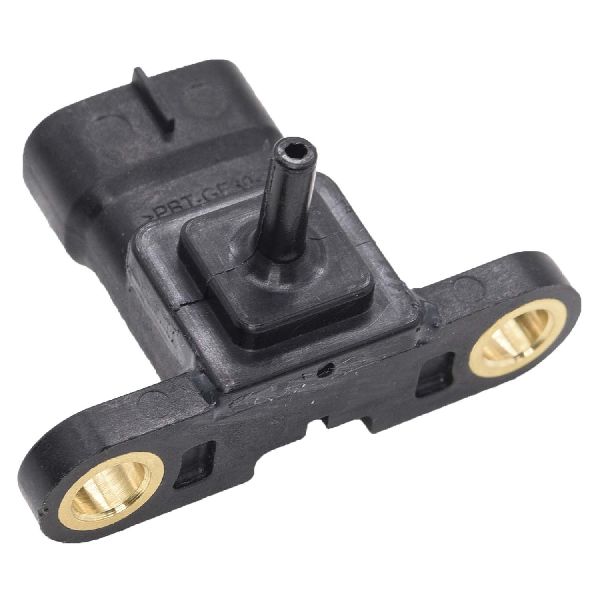
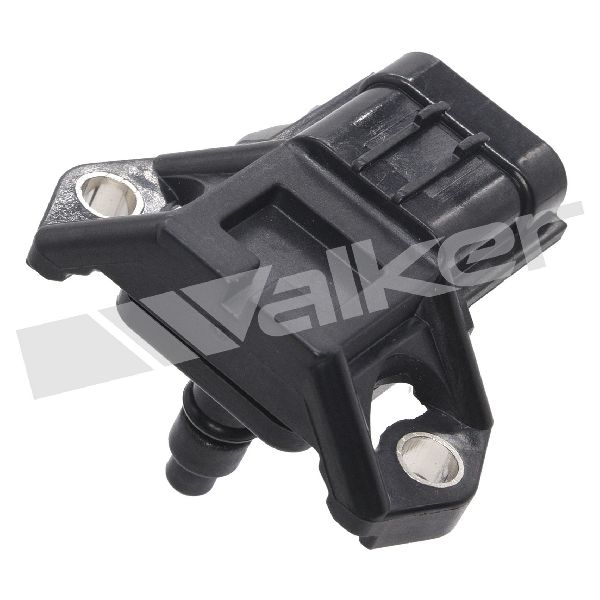
- Faulty Manifold Absolute Pressure (MAP) Sensor 🔴 High Probability → Shop Manifold Absolute Pressure Sensor The sensor can fail internally from age and heat cycles, causing it to send a continuous high voltage signal. Using a non-OEM sensor can also trigger this code on Subarus, as they are known to be sensitive to aftermarket electronics.
How to confirm: With a scan tool, observe the MAP sensor voltage with the Key On, Engine Off (KOEO). It should be near 5 volts and read atmospheric pressure (approx. 101 kPa at sea level). At idle, the voltage should drop significantly to around 1-1.5 volts (30-40 kPa). If the voltage is stuck high (above 4.5V or over 119 kPa) when the engine is running, the sensor is likely bad.
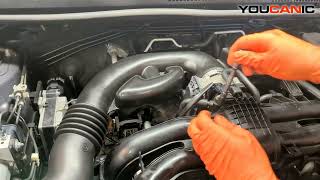
Typical fix: Replace the MAP sensor. It is located on the throttle body and is held by two Phillips head screws. 🎬 Watch: How to test and replace the MAP sensor Always ensure the new sensor has a new, properly seated O-ring.
Est. part cost: $60-$260 - Wiring or Connector Issue 🟡 Medium Probability The engine bay environment can cause wiring to become brittle or connectors to corrode. A short circuit between the signal wire and the 5V reference wire will cause a constant high signal. This can happen intermittently, causing the code to appear and disappear.
How to confirm: Visually inspect the wiring harness and connector for damage, corrosion, or loose pins. Disconnect the sensor and test the harness-side connector with a multimeter. You should find a 5V reference wire, a ground wire, and a signal wire. Check for a short to power on the signal wire; if it shows voltage with the sensor disconnected, the harness is faulty.
Typical fix: Repair the damaged section of the wiring harness or clean/replace the connector. Ensure the connector clicks securely into place.
Est. part cost: $5-$50 - Major Vacuum Leak 🟡 Medium Probability A large vacuum leak, especially from a disconnected or broken hose at the intake manifold, can cause manifold pressure to be higher than expected. A common failure point on the EJ253 is a missing O-ring on the MAP sensor itself, creating a leak right at the measurement source. The PCV hose is also known to become brittle and crack.
How to confirm: Visually inspect all vacuum hoses connected to the intake manifold for cracks, breaks, or loose connections. Specifically check the MAP sensor's O-ring. A smoke test is the most effective way to find hidden leaks. High short-term fuel trims (e.g., +35%) can also indicate a large vacuum leak.
Typical fix: Replace the cracked or broken vacuum hose or install a new O-ring on the MAP sensor.
Est. part cost: $10-$30
Rare But Worth Checking
- Clogged Catalytic Converter: A severely restricted exhaust can cause backpressure to build up into the intake manifold, leading to an abnormally high MAP sensor reading. This would typically be accompanied by other symptoms like a severe loss of power and potentially a P0420 code.
- Faulty Engine Control Module (ECM): → Shop Engine Control Module (ECM) This is extremely rare. The internal circuit for the MAP sensor in the ECM can fail. This should only be considered after all other possibilities, including the sensor and wiring, have been definitively ruled out.
Diagnosis Steps
- Connect an OBD-II scanner and confirm P0108 is the primary code. Note any other codes, like misfires.
- View live data. With the Key On, Engine Off (KOEO), the MAP sensor reading should match the Barometric Pressure (BARO) reading, reflecting local atmospheric pressure (approx. 101 kPa or 29.9 inHg at sea level).
- Start the engine and observe the MAP reading at idle. It should drop to a low value (e.g., 30-40 kPa or ~1V). If it remains high, near the KOEO reading (above 119 kPa), proceed with diagnosis.
- Turn the engine off. Visually inspect the MAP sensor's electrical connector for corrosion, damage, or loose pins. Ensure it is seated securely and 'clicks' into place.
- Remove the MAP sensor and inspect its O-ring. A missing, cracked, or improperly seated O-ring can cause a major vacuum leak right at the sensor.
- Inspect the vacuum port for the MAP sensor on the throttle body to ensure it is not clogged.
- Disconnect the MAP sensor. Test the electrical harness connector with a multimeter: verify one pin has 5V reference, one has a solid ground, and the signal wire has close to 0V.
- If the signal wire shows 5V with the sensor disconnected, there is a short to power in the wiring harness that must be located and repaired.
- If the power, ground, and signal wire test good, the MAP sensor itself is the most likely cause of the problem.
- If a new OEM sensor does not fix the issue, perform a thorough inspection for other vacuum leaks (like a cracked PCV hose) using a smoke machine.
- As a final, rare step, the ECM itself would be considered as the potential point of failure.
Parts You'll Likely Need
- Manifold Absolute Pressure (MAP) Sensor
(OEM #22627AA48A)— This is the most common failure point for a P0108 code. The sensor's internal electronics fail, causing it to send a constant high-voltage signal.
Trusted brands: Subaru (Genuine), Denso (198-0004)
OEM price range: $60-$90
Aftermarket price range: $40-$150
Related Codes That Often Appear With This One
- P030x (e.g., P0301, P0302) — Misfire codes can occur because the incorrect MAP sensor reading leads to a very rich air-fuel mixture, causing poor combustion.
- P0107 (MAP/BARO Circuit Low Input) — If the fault is intermittent due to a wiring issue, the signal might fluctuate between being shorted to ground (P0107) and shorted to power (P0108).
Platform-Specific Known Issues
- A documented case on a 2011 Outback with P0108 involved a complex diagnostic path that started with a vacuum leak from a missing sensor O-ring, led to a misdiagnosis of a bad ECM, and was ultimately resolved by replacing the engine wiring harness due to an internal short.
- Using non-OEM (aftermarket) MAP sensors can sometimes cause the P0108 code to persist or return on this platform. It is highly recommended to use a genuine Subaru or Denso part.
- A user on the MNSubaru forum reported intermittent P0108 caused by the MAP signal spiking, suggesting a short to the 5V reference or a bad connector. The issue would come and go, with the MAP reading jumping to its maximum value (75.3 inHg) before returning to normal.
Technical Service Bulletins (TSBs) & Recalls
- TSB Bulletin #07-96-15: While specifically noting the Forester, this manufacturer bulletin highlights that a P0108 can be set in error due to the positioning of the sensor and actuator wiring ground junction point. The bulletin notes that engine movement can affect this junction, and the recommended change involves repositioning the ground to a location unaffected by such movement.
Mechanic-Grade Diagnostic Values
- MAP Sensor Signal Voltage at Idle — expected: 1.4V - 1.8V. Failure: A reading at or above 4.4V indicates a fault triggering P0108. A reading below 0.6V would trigger P0107.
- MAP Sensor Signal Voltage (Key On, Engine Off) — expected: Approx. 4.5V - 5.0V. Failure: The KOEO voltage should be compared to the BARO sensor reading; a difference greater than 0.5V suggests a faulty MAP sensor. A reading of nearly 5V is normal as it reflects atmospheric pressure.
- MAP Sensor Internal Resistance — expected: Approx. 2.5 kΩ or less. Failure: An out-of-range or infinite resistance reading indicates a failed sensor. This test is performed on the sensor itself, between the two outer pins.
- Harness 5V Reference Wire Voltage — expected: Approx. 5.0V. Failure: No voltage or low voltage indicates a problem with the ECM or the wiring between the ECM and the sensor connector.
Wiring & Ground Locations
- MAP Sensor Connector — On the throttle body, part of the engine wiring harness.. This 3-pin connector provides power, ground, and signal return for the sensor. Corrosion or a poor pin fit can cause intermittent high resistance or shorts, triggering P0108. The three wires are typically a 5V reference, a ground, and the signal wire.
- GV (Ground) — Listed in wiring diagrams as being on the right side of the engine.. A poor engine ground can cause sensor readings to float or become erratic. Ensuring this ground point is clean and tight is a critical diagnostic step for any electrical fault.
- GB-5 and GB-6 (Ground) — Located in the right and left kick panels, respectively.. These are primary chassis ground points. While less likely to be the direct cause for an engine sensor, they are part of the overall ground distribution system that can affect module behavior.
- Engine Harness Ground Splice — Inside the main engine harness on the passenger side of the vehicle.. Subaru has known issues with poorly soldered ground splices inside the harness. Over time, engine movement can cause these joints to fail, leading to multiple, difficult-to-diagnose sensor codes, including potential MAP sensor issues. This is often missed as it requires unwrapping the harness to inspect.
- ECM (Engine Control Module) — Located behind the dashboard on the right (passenger) side.. All sensor wiring terminates here. In rare cases of a suspected bad ECM, knowing its location is necessary for final testing of the wiring harness continuity from the sensor connector to the ECM pins.
Real Owner Repair Stories
- MNSubaru Forum User (2004 Subaru WRX (EJ20 engine, but same sensor principle and failure mode)) — Intermittent P0108 code, primarily appearing after startup or at idle.
❌ Tried (didn't work) Replacing the MAP sensor with a used unit did not resolve the issue permanently.
✅ What actually fixed it The user monitored live data and saw the MAP reading spike to its maximum value (75.3 inHg) for a fraction of a second, causing the CEL. This strongly indicated an intermittent electrical short to the 5V reference or a bad connector, not a continuously failed sensor. The user cleaned the connector contacts and applied dielectric grease, which is the correct procedure for addressing a suspected poor connection. The fact that running with the sensor unplugged produced the same maximum reading confirmed the nature of the fault signal.
"I Checked Everything" — The Actual Cause
- An intermittent short in the MAP sensor wiring harness or connector can cause the P0108 code to appear without any vacuum leaks present. A smoke test would come back clean, but the signal voltage would intermittently spike to 5V, tricking the ECM. This is often caused by a corroded connector or a wire rubbing on a metal component.
OEM Part Supersession History
22627AA350→22627AA470— Part revision by manufacturer.
Heads up: While this specific supersession may not apply to the 2010-2012 Outback, it highlights that Subaru frequently revises these sensors. The correct part for this specific Outback is 22627AA48A. Using a sensor from a different model year or engine, even if it physically fits, can result in incorrect voltage scaling and persistent codes.
Model Year Variations Within This Range
- 2010-2012: For the P0108 code, the EJ253 engine and its associated MAP sensor system were consistent across the 2010, 2011, and 2012 Subaru Outback. No significant variations in parts, diagnosis, or common failures have been documented within this specific model year range. The major change occurred in 2013 with the introduction of the FB25 engine.
Diagnostic Flowchart
Other Known Issues on This Vehicle
Issues unrelated to this code that are worth knowing about as an owner of this generation:
- Head Gasket Failure 🔴 High — Common after 100,000-150,000 miles. The EJ253 in the 2010-2012 models uses an MLS gasket, which is an improvement, but is still prone to internal breaches (coolant into combustion chamber) rather than the external leaks of older EJs.
- CVT Torque Converter Shudder/Stall 🟠 Medium — A widespread issue on early Lineartronic CVTs, causing shuddering or stalling when coming to a stop. Often occurs between 60k-120k miles. (Ref: TSB 16-90-13R; Subaru also issued a warranty extension for the CVT to 10 years/100,000 miles.)
- Excessive Oil Consumption 🟠 Medium — While more prominent in the later FB-series engine, some EJ253 owners report higher than normal oil consumption (e.g., 1 quart per 1000-2000 miles), often linked to aging piston rings or PCV system issues.
- Squeaking Noise While Cranking 🟡 Low — A squeaking sound during engine cranking can be caused by the starter ring gear on the torque converter. (Ref: TSB 16-101-16)
- Brittle PCV Hose 🟡 Low — The PCV hose located on the top rear of the engine becomes brittle over time and can crack, causing a significant vacuum leak that can lead to various driveability issues and codes like P0300.
Used vs. New Parts: Buying Guide for This Vehicle
When a used part is the smart pick: A used OEM MAP sensor or engine wiring harness from a reputable salvage yard can be a smart choice. For the sensor, it avoids the risk of a faulty aftermarket part. For the harness, it is often the only economical way to replace a harness that is damaged beyond simple repair.
Donor-vehicle mileage cap: roughly under 80000 miles for the part to have meaningful remaining life.
What to inspect on the donor part:
- For a MAP sensor, verify it comes from a vehicle that was not in a front-end collision.
- For a wiring harness, inspect thoroughly for any signs of oil saturation, brittle corrugated loom, previous repairs (look for non-factory tape or connectors), or rodent damage.
- Ask for the donor vehicle's VIN to confirm the exact model year and engine type.
- Prefer parts from sellers who offer a short warranty or return period.
OEM-only on this vehicle (don't cheap out):
- Manifold Absolute Pressure (MAP) Sensor: Subarus are notoriously sensitive to the voltage scaling of electronic sensors. Aftermarket MAP sensors are a common cause of persistent P0108 codes even after replacement. Stick with a Genuine Subaru part or the original OEM supplier, Denso.
Aftermarket brands forum-validated for this vehicle:
- Denso (OEM supplier for many Subaru parts)
Brands owners have reported issues with on this vehicle:
- Unbranded or generic 'white-box' sensors from online marketplaces are highly likely to be improperly calibrated and fail quickly.
Real Owner Stories
Aggregated from forums and TSBs cited above. Mileages and costs reflect what owners reported in those sources.
2011 Subaru Outback 2.5L
Symptoms: The vehicle had a P0108 code. Initial diagnosis found a missing MAP sensor O-ring causing a vacuum leak. Later, the MAP signal remained high, leading to a misdiagnosis of a bad ECM.
What fixed it: Replacing the engine wiring harness due to an internal short circuit.
Source hint: YouTube (Last Chance Auto Repair) - Provided a detailed, vehicle-specific diagnostic case for a 2011 Outback 2.5L with P0108
2010 Subaru Forester 2.5X — 220000 miles
Symptoms: The owner experienced a P0108 code accompanied by excessive cranking during startup.
What fixed it: Diagnosis pointed to the MAP sensor/circuit issues common to the EJ253 engine family.
Source hint: Reddit (r/subaru) - A user with a 2010 Forester (same engine family) experienced a P0108 with excessive cranking
Subaru Outback 2.5L
Symptoms: Intermittent P0108 code caused by the MAP signal spiking to its maximum value (75.3 inHg) before returning to normal.
What fixed it: The issue was identified as a short to the 5V reference or a bad electrical connector.
Source hint: MNSubaru (mnsubaru.com) - Corroborated that intermittent spikes in MAP sensor readings can trigger the code
Related OBD-II Codes
Frequently Asked Questions
Can I use an aftermarket MAP sensor to fix the P0108 code on my 2011 Outback?
My 2010 Outback is stalling at stops and the cruise control light is flashing. Is this related to P0108?
Where is the MAP sensor located on the EJ253 2.5L engine?
Is there a specific TSB for the CVT stalling issue mentioned in the common problems?
Could a simple O-ring cause a P0108 high voltage code on my Subaru?
What should the MAP sensor voltage be on my Outback when the engine is idling?
Helpful Videos

We Have This Part in Stock


The information in this article is provided for general reference and educational purposes only. Vehicle specifications, procedures, and part compatibility can vary by production date, trim level, and region. Always consult your vehicle's factory service manual and verify part numbers before purchasing or performing repairs. Safety-critical components such as airbags, seat belts, and braking systems should be installed by a qualified professional.
- Subaru Outback:
- 🧭 Diagnostic Flowchart
- 🎬 Helpful Videos
- 🛍️ Shop This Part
- What's Unique About the 2010-2012 Subaru Outback
- Symptoms You May Notice
- Most Likely Causes
- Rare But Worth Checking
- Diagnosis Steps
- Parts You'll Likely Need
- Related Codes That Often Appear With This One
- Platform-Specific Known Issues
- Technical Service Bulletins (TSBs) & Recalls
- Mechanic-Grade Diagnostic Values
- Wiring & Ground Locations
- Real Owner Repair Stories
- "I Checked Everything" — The Actual Cause
- OEM Part Supersession History
- Model Year Variations Within This Range
- Other Known Issues on This Vehicle
- Used vs. New Parts: Buying Guide for This Vehicle
- Real Owner Stories
- 2011 Subaru Outback 2.5L
- 2010 Subaru Forester 2.5X — 220000 miles
- Subaru Outback 2.5L
- Related OBD-II Codes
- Frequently Asked Questions
- 🎟️ Get 5% Off