

P0108 on 2013-2019 Subaru Outback 2.5L: MAP Sensor Circuit High Input Causes and Fixes
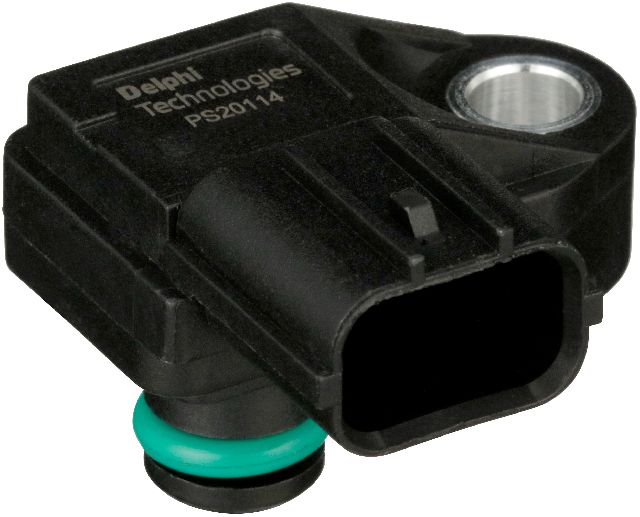
P0108 on a 2013-2019 Subaru Outback most often points to a failed Manifold Absolute Pressure (MAP) sensor. This code means the sensor is sending an abnormally high voltage signal, tricking the ECU into thinking the engine is under high load. It's a straightforward DIY replacement, with the part costing about $40-$80 for an aftermarket brand or up to $150 for a genuine Subaru part (often made by Denso).
- P0108 on your Outback is almost always caused by a bad MAP sensor.
- It's a DIY-friendly repair that usually takes less than 15 minutes.
- Be aware of your vehicle's generation (4th or 5th) as the sensor location is different.
- Always check the wiring and connector for damage before buying a new sensor.
- Using a Denso-branded sensor is recommended as they are the Original Equipment supplier for Subaru.
What's Unique About the 2013-2019 Subaru Outback
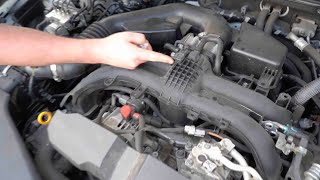
For the 2013-2019 Outback, the key difference is the MAP sensor's location between generations. On the 4th Gen (2013-2014), it's on the throttle body, while on the 5th Gen (2015-2019), it's mounted directly on top of the intake manifold, making it slightly easier to access. While the cause is usually the sensor itself, these FB25 engines can be sensitive to vacuum leaks, which should always be checked. A notable issue for Subarus in general is wiring damage from rodents, which can cause this code. A severe wiring issue, though less common, was documented in one case to require a full harness replacement to resolve a persistent P0108.
Generation note: This range covers two generations of the Subaru Outback. The 4th generation (2013-2014) and the 5th generation (2015-2019). The primary difference for this code is the location and mounting of the MAP sensor. On the 4th gen, it is on the throttle body and secured with two Phillips screws. On the 5th gen, it is on top of the intake manifold and secured with a single 8mm bolt.
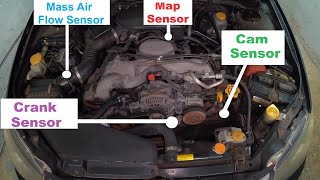
🎬 See this video for every sensor location on your engineSymptoms You May Notice
- Check Engine Light is on
- Cruise control light flashing and system disabled
- Vehicle Dynamics Control (VDC) / traction control light is on
- Rough or unstable idle
- Engine hesitates or stumbles during acceleration
- Poor fuel economy
- Engine may stall when coming to a stop
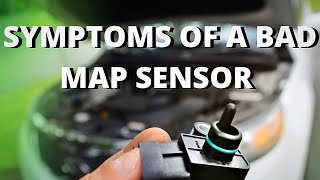
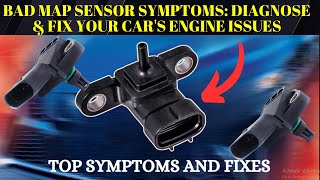
- Black smoke from the exhaust 🎬 Watch this breakdown of common bad MAP sensor symptoms
- Engine surging
- Hard starting or extended cranking
- Replacing the Mass Airflow (MAF) sensor. The MAF and MAP sensors work together but have different functions. P0108 is specific to the MAP sensor circuit.
Most Likely Causes
- Faulty MAP Sensor 🔴 High Probability → Shop Manifold Absolute Pressure Sensor Sensors are wear items and can fail electronically over time, sending a constant high voltage signal regardless of actual manifold pressure. This is the most frequent cause reported by owners.
How to confirm: With the key on and engine off, use a scan tool to compare the MAP sensor reading to the Barometric Pressure (BARO) reading. They should be nearly identical. If the MAP reading is stuck high (e.g., over 119 kPa or 35 inHg), the sensor is likely bad. You can also test the signal wire with a multimeter; it should not be stuck above 4.5 volts 🎬 Watch: How to test and replace your Subaru MAP sensor with the engine running at idle.
Typical fix: Replace the MAP sensor. This is a simple procedure involving disconnecting the electrical connector and removing one or two screws. Using a small amount of silicone grease on the new sensor's O-ring can help it seat properly.
Est. part cost: $40-$150 - Wiring or Connector Issue 🟡 Medium Probability Engine vibration and heat can cause wires to fray or insulation to crack. A common issue on Subarus is rodent damage to the soy-based wiring insulation, leading to shorts. The connector pins can also become corroded or loose.
How to confirm: Visually inspect the wiring harness leading to the MAP sensor for any signs of damage, chafing, melting, or chewing. Unplug the connector and check for corrosion or bent pins. With the sensor unplugged and key on, test the signal wire for a short to power by seeing if voltage is present when it shouldn't be. A user on MNSubaru forums documented intermittent high readings caused by a bad connection.
Typical fix: Repair the damaged section of wiring or replace the connector pigtail. Ensure connections are secure and protected with electrical tape or loom.
Est. part cost: $10-$50 - Large Vacuum Leak ⚪ Low Probability Vacuum hoses, particularly the PCV hose, can become brittle and crack with age. Intake manifold gaskets can also fail, creating unmetered air leaks that disrupt manifold pressure and can trick the sensor.
How to confirm: Listen for hissing sounds around the intake manifold with the engine running. A smoke test is the most effective way to find the source of a vacuum leak. Spraying brake cleaner or starter fluid around suspected areas and listening for a change in engine RPM can also pinpoint a leak, but this should be done with caution due to fire risk.
Typical fix: Replace the cracked vacuum hose or leaking gasket.
Est. part cost: $5-$100
Rare But Worth Checking
- Clogged Catalytic Converter: A severe exhaust restriction creates backpressure that can affect the intake manifold pressure reading. This would typically be accompanied by other codes (like P0420) and a significant loss of power, especially at high RPM.
- Faulty Engine Control Module (ECM): → Shop Engine Control Module (ECM) This is very rare. The ECM itself could have an internal fault on the MAP sensor circuit. This should only be considered after all other possibilities, including wiring, have been exhaustively ruled out. One documented case required a full wiring harness replacement after an incorrect ECM diagnosis.
Diagnosis Steps
- Read the code with an OBD-II scanner and note any other codes present. Freeze frame data can show engine conditions when the code was set.
- Using the scanner's live data function, observe the MAP sensor reading (kPa or inHg) with the Key On, Engine Off (KOEO). It should be close to the Barometric Pressure (BARO) reading, which reflects your current altitude.
- Start the engine. At idle, the MAP sensor reading should drop significantly (indicating vacuum, typically 10-16 inHg). If the reading remains high (near BARO) and does not change with engine RPM, the sensor is likely faulty or there is a circuit issue.
- Visually inspect the MAP sensor's wiring harness and connector for any obvious damage, corrosion, or loose connections. Pay close attention to signs of rodent activity.
- If wiring looks good, disconnect the sensor. Test the harness connector with a multimeter: you should find a 5-volt reference wire, a ground wire (check for continuity to chassis ground), and the signal wire.
- Test the signal wire. If it shows high voltage (short to power) even with the sensor disconnected, there is a wiring harness fault that must be traced and repaired.
- If the circuit tests good, the MAP sensor itself is the most likely culprit. Replacing it is the next logical step.
- As a secondary check, perform a smoke test to rule out any large vacuum leaks from hoses connected to the intake manifold or the intake gaskets themselves.
Parts You'll Likely Need
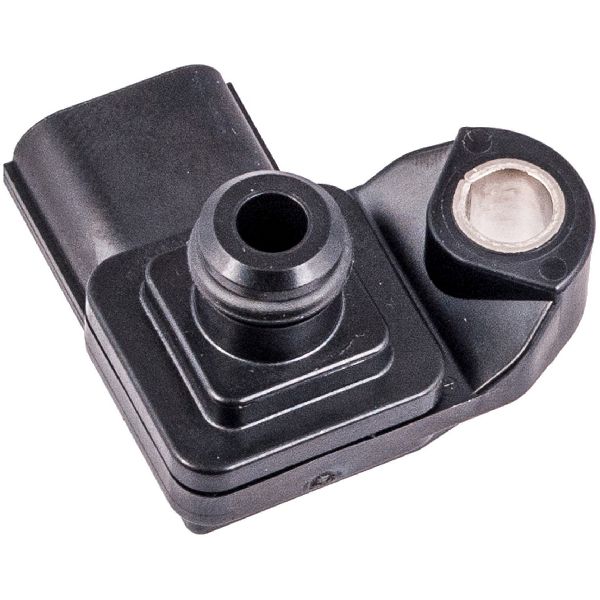
- Manifold Absolute Pressure (MAP) Sensor
(OEM #22627AA510)— This sensor is the most common failure point for code P0108, as it can fail internally and send a continuous high voltage signal. This part number is widely listed for many Subarus from 2011-2020, including the Outback.
Trusted brands: Denso (OEM Manufacturer), Standard Motor Products, NTK, Walker Products
OEM price range: $100-$150
Aftermarket price range: $40-$80
Related Codes That Often Appear With This One
- P0107 — If there is an intermittent short or open in the wiring, you might see both 'Circuit High' (P0108) and 'Circuit Low' (P0107) codes logged at different times.
- P0300-P0304 — Random or specific cylinder misfire codes can occur because the incorrect MAP sensor reading leads to an improper air-fuel mixture, causing combustion instability.
Platform-Specific Known Issues
- The location of the MAP sensor changes between the 4th Gen (2013-2014) and 5th Gen (2015-2019) models. Ensure you are looking in the correct place: on the throttle body for 4th Gen, and on top of the intake manifold for 5th Gen.
- Rodent damage to the engine wiring harness is a frequently reported issue on various Subaru forums and can be a direct cause of circuit-related codes like P0108.
Technical Service Bulletins (TSBs) & Recalls
- TSB Bulletin #07-96-15 — While originally issued for the Forester, this bulletin notes that a harness change involving the repositioning of the sensor and actuator wiring ground junction point to a location unaffected by engine movement was implemented to prevent codes like P0108 from setting in error.
Mechanic-Grade Diagnostic Values
- MAP Sensor Signal Voltage (KOEO - Key On, Engine Off) — expected: ~4.5 - 5.0 Volts. Failure: Voltage significantly lower than BARO equivalent, or 0V.
- MAP Sensor Signal Voltage (Engine Idling) — expected: ~1.0 - 2.0 Volts. Failure: Voltage remains high (near 4.5V) and does not drop when the engine starts, indicating no vacuum is being measured.
- MAP Sensor Live Data (Scan Tool, Engine Idling) — expected: 30-32 kPa (approx. 8-10 inHg). Failure: Reading is stuck high, near 119.5 kPa (35.29 inHg) or higher.
- MAP Sensor Connector - 5V Reference Wire — expected: 5V ± 0.5V (with key on, connector unplugged). Failure: Voltage is significantly lower than 4.5V or absent, indicating a problem with the ECM or the wiring from the ECM.
- MAP Sensor Connector - Ground Wire Continuity — expected: < 5 ohms to chassis ground. Failure: High resistance or an open loop (O.L.) indicates a bad ground connection, which can cause floating or incorrect sensor readings.
Scan Tool Commands That Help
- OBD-II Scan Tool (Generic or Subaru Select Monitor): Clear/Reset DTCs or ECU Reset — After replacing the MAP sensor or repairing a wiring fault, the diagnostic trouble codes must be cleared. Some sources also recommend disconnecting the battery for 10-15 minutes to force the ECU to relearn sensor values and idle trims.
Wiring & Ground Locations
- MAP Sensor Connector (B22 on some diagrams) — On the MAP sensor itself, located on the throttle body (2013-2014) or top of the intake manifold (2015-2019).. This 3-pin connector provides power, ground, and signal path. Pin 1 is often Signal, Pin 2 is Ground, and Pin 3 is 5V Reference, though this should be confirmed with a multimeter. A video by CarsNToys demonstrates testing these pins: power wire should have 5V, ground wire should have continuity to ground, and the third is the signal wire.
- Engine Harness Grounds — There are two main engine harness ground points bolted directly to the top of the intake manifold on the FB25 engine.. These ground points are responsible for grounding the entire engine wiring loom, which includes the sensors. Corrosion or a loose connection at these 12mm bolts can cause intermittent and difficult-to-diagnose electrical issues, including sensor circuit codes like P0108.
- Main Engine Connector (e.g., F61) — Large harness-to-harness connectors are located in the engine bay, often near the battery or fuse box.. A loose or poorly seated main connector can interrupt the MAP sensor circuit between the sensor and the ECM. This is a rare but possible cause, especially if the engine has been recently removed or major work has been performed.
Real Owner Repair Stories
- MNSubaru Forum user 'pbedroske' (2004 Subaru WRX (EJ engine, but same code and similar diagnostic principles)) — P0108 code returned after replacing MAP sensor. Scan tool showed intermittent spikes to ~75 inHg at idle, then getting stuck at that high reading, causing a very rough and low idle.
❌ Tried (didn't work) Replacing the MAP sensor with a used unit., Cleaning contacts and adding dielectric grease., Checking for vacuum leaks with propane.
✅ What actually fixed it The final cause was a loose main engine harness connector (identified as F61) located by the battery. The user noted they had missed it during a recent engine re-installation. - YouTube channel 'Last Chance Garage' (2011 Subaru Outback 2.5L (Similar FB engine family)) — Persistent P0108 with misfire codes, rough idle.
❌ Tried (didn't work) Replacing the MAP sensor with a new OEM part., Diagnosing and replacing the ECM (which was a misdiagnosis from another shop)., Checking for vacuum leaks.
✅ What actually fixed it A complete engine wiring harness replacement was required to finally resolve the code, suggesting an untraceable internal short or break in the original harness.
When the Usual Fixes Don't Work
- While the most common fix is replacing the MAP sensor, there are documented cases where this did not solve the problem. In one instance involving a similar Subaru engine, a persistent P0108 was only resolved after replacing the entire engine wiring harness due to an untraceable internal short. In another case, the root cause was not the sensor or its direct wiring, but a loose main engine harness connector that was overlooked after prior engine work. These examples highlight the importance of verifying the entire circuit, including main connectors and grounds, before condemning the ECM, especially if a new OEM sensor does not fix the issue.
OEM Part Supersession History
22627AA510→This part number appears to be stable for the specified vehicle range.— N/A
Heads up: The OEM sensor is made by Denso, and its part number is 079800-9430. Using non-OEM sensors can sometimes cause persistent issues even if the part is new. One technician noted that if you can't solve a P0108, it might be because a non-OEM MAP sensor was used.
Model Year Variations Within This Range
- 2013-2014 (Gen 4): The MAP sensor is located on the throttle body and is typically secured with two Phillips head screws.
- 2015-2019 (Gen 5): The MAP sensor is located on the top of the intake manifold and is secured with a single 8mm bolt, making access slightly different.
Diagnostic Flowchart
Other Known Issues on This Vehicle
Issues unrelated to this code that are worth knowing about as an owner of this generation:
- Excessive Oil Consumption 🔴 High — Common on early FB25 engines (especially 2011-2014), caused by defective piston rings. Can lead to catalytic converter damage or engine failure if oil levels are not monitored closely. (Ref: Subaru issued TSB 02-157-14R, which revised the repair from piston ring replacement to a complete short block replacement for verified cases within the warranty period.)
- CVT Transmission Failure/Shudder 🔴 High — Issues with the TR580/TR690 CVT, including torque converter lock-up failure causing stalling, shuddering, or complete failure. Most common in earlier years of the generation. (Ref: Subaru extended the CVT warranty to 10 years/100,000 miles for many models, including those in this generation, due to widespread issues.)
- Infotainment System Failure (Starlink) 🟠 Medium — Very common on 2015-2019 models. Symptoms include a non-responsive touchscreen, 'ghost touches', screen delamination/bubbling, and constant rebooting. (Ref: Multiple TSBs were issued for software updates, but hardware failure (head unit) is common. A class-action lawsuit was filed regarding these issues.)
- Premature Wheel Bearing Failure 🟠 Medium — Owners report a loud humming or grinding noise that increases with speed, often requiring wheel bearing replacement earlier than expected. Rear bearings are particularly noted for failure due to water intrusion. (Ref: TSB 03-96-25 and others were released acknowledging design flaws and updating the rear hub parts for better sealing on 2015+ models.)
- Spontaneously Cracking Windshields 🟡 Low — A significant number of owners have reported windshields cracking or chipping with no obvious impact, leading to a class-action lawsuit. (Ref: No recall, but a lawsuit alleged that the windshields used were defectively thin or improperly installed.)
Used vs. New Parts: Buying Guide for This Vehicle
When a used part is the smart pick: A used OEM (Denso) MAP sensor from a reputable salvage yard can be a cost-effective option, as they are not a high-failure-rate item due to mechanical wear. It is a good choice if you are on a budget and can source a part from a lower-mileage donor vehicle.
Donor-vehicle mileage cap: roughly under 100000 miles for the part to have meaningful remaining life.
What to inspect on the donor part:
- Check for physical integrity: no cracks in the plastic housing or connector.
- Ensure the O-ring is present and not flattened or brittle.
- Look for a clean donor vehicle without signs of engine fire or flood damage.
- If possible, get the VIN of the donor car to verify its year and model compatibility.
OEM-only on this vehicle (don't cheap out):
- While not strictly 'OEM-only', it is strongly recommended to use an OEM Denso sensor for this repair. Some technicians and forum users report that aftermarket MAP sensors can be poorly calibrated and may not resolve the P0108 code, or may fail prematurely.
Aftermarket brands forum-validated for this vehicle:
- Denso (OEM supplier)
- NTK
- Standard Motor Products (SMP)
Brands owners have reported issues with on this vehicle:
- Unnamed or 'white-box' ultra-cheap sensors from online marketplaces should be avoided, as their quality and calibration are often questionable.
Real Owner Stories
Aggregated from forums and TSBs cited above. Mileages and costs reflect what owners reported in those sources.
2010-2014 Subaru Forester 2.5L (FB25) — 136701 miles
Symptoms: Extended cranking and hard starting issues along with the P0108 code.
What fixed it: The user corroborated symptoms related to the MAP sensor circuit, though the specific final fix was part of a diagnostic discussion regarding the FB engine family.
Source hint: Reddit r/AskMechanics - '2010 Subaru Forester...DTC P0108'
2013-2019 Subaru Outback 2.5L
Symptoms: Intermittent high voltage spikes on a scan tool and circuit-related fault codes.
What fixed it: The diagnostic process pointed toward a bad connection or a short in the MAP sensor connector/harness.
Source hint: MNSubaru Forum - 'MAP (manifold absolute pressure) sensor issues P0108'
2013-2019 Subaru Outback 2.5L
Symptoms: Check engine light with P0108 code.
What fixed it: Replacement of the MAP sensor was the most frequent and successful fix reported by multiple owners.
Source hint: subaruoutback.org
Related OBD-II Codes
Frequently Asked Questions
Where is the MAP sensor located on my 2013-2019 Subaru Outback with the 2.5L engine?
Why is my traction control light and flashing cruise control light on along with the P0108 code?
Is there a specific wiring issue I should look for on my Outback for this code?
Could my Outback's oil consumption issue be related to the P0108 code?
Can I use a scan tool to verify if the MAP sensor is actually bad before replacing it?
Is there a TSB for the P0108 code on the 2013-2019 Outback?
Helpful Videos

We Have This Part in Stock


The information in this article is provided for general reference and educational purposes only. Vehicle specifications, procedures, and part compatibility can vary by production date, trim level, and region. Always consult your vehicle's factory service manual and verify part numbers before purchasing or performing repairs. Safety-critical components such as airbags, seat belts, and braking systems should be installed by a qualified professional.
- Subaru Outback:
- 🧭 Diagnostic Flowchart
- 🎬 Helpful Videos
- 🛍️ Shop This Part
- What's Unique About the 2013-2019 Subaru Outback
- Symptoms You May Notice
- Most Likely Causes
- Rare But Worth Checking
- Diagnosis Steps
- Parts You'll Likely Need
- Related Codes That Often Appear With This One
- Platform-Specific Known Issues
- Technical Service Bulletins (TSBs) & Recalls
- Mechanic-Grade Diagnostic Values
- Scan Tool Commands That Help
- Wiring & Ground Locations
- Real Owner Repair Stories
- When the Usual Fixes Don't Work
- OEM Part Supersession History
- Model Year Variations Within This Range
- Other Known Issues on This Vehicle
- Used vs. New Parts: Buying Guide for This Vehicle
- Real Owner Stories
- 2010-2014 Subaru Forester 2.5L (FB25) — 136701 miles
- 2013-2019 Subaru Outback 2.5L
- 2013-2019 Subaru Outback 2.5L
- Related OBD-II Codes
- Frequently Asked Questions
- 🎟️ Get 5% Off