

P0108 on 2018-2022 Toyota Corolla: MAP Sensor Circuit High Causes & Fixes
For a 2018-2022 Toyota Corolla, code P0108 most often points to a faulty Manifold Absolute Pressure (MAP) sensor. Other common causes include vacuum leaks or wiring issues. A replacement MAP sensor is relatively inexpensive and easy to install for a DIYer.
- P0108 on a Toyota Corolla means the MAP sensor circuit is sending a high voltage signal to the computer.
- The most common fix is replacing the MAP sensor, but always check for vacuum leaks and wiring issues first.
- Symptoms include rough idle, poor acceleration, and bad gas mileage.
- Driving with this code is possible but not recommended long-term, as it can harm your catalytic converter.
- This is a DIY-friendly repair for most home mechanics with basic tools and a multimeter.
What's Unique About the 2018-2022 Toyota Corolla
The 2018-2022 Corolla range spans two different generations with different engines, which can affect diagnosis. A 2018 or 2019 sedan is likely the 11th generation (E170) with the 1.8L 2ZR-FAE engine, while 2019+ hatchbacks and 2020+ sedans are the 12th generation (E210) with newer engines like the 2.0L M20A-FKS. While the P0108 code's meaning is the same, the physical location of the MAP sensor and vacuum lines will differ. On the M20A-FKS, the MAP sensor is typically located on the intake manifold. On these modern Toyota engines, the MAP sensor is a highly reliable part, so wiring and vacuum leaks should be carefully checked before replacing the sensor.
Generation note: The 2018-2022 range covers the end of the 11th generation (E170, 2018-2019 sedans) and the start of the 12th generation (E210, 2019+ hatchback, 2020+ sedan). While the causes for P0108 are similar, the MAP sensor location and design may vary slightly between the 1.8L (2ZR-FAE) engine in the 11th gen and the 2.0L (M20A-FKS) in the 12th gen. The correct OEM part number will vary based on the specific engine and model year.
Symptoms You May Notice
- Check Engine Light is on
- Rough or unstable idle
- Poor acceleration or hesitation
- Reduced fuel economy
- Engine stalling, especially when coming to a stop
- Black smoke from the exhaust due to a rich fuel mixture
- Engine may fail to start
- Replacing the MAP sensor without checking for vacuum leaks or wiring issues first. A vacuum leak or a short in the wiring can mimic the symptoms of a bad sensor.
Most Likely Causes
- Faulty Manifold Absolute Pressure (MAP) Sensor 🔴 High Probability → Shop Manifold Absolute Pressure Sensor While generally reliable, sensors can fail over time due to heat cycles, internal electronic faults, or contamination from oil vapors.
How to confirm: With the key on and engine off, use a scan tool to check the MAP sensor reading. It should match the barometric pressure (BARO) reading. A difference of more than 0.5 volts can indicate a faulty sensor. With the engine idling, the voltage should drop significantly (typically to 1-1.8V, a user on Reddit reported an ideal idle voltage of around 1.3V). If the voltage is stuck high (near 5V), the sensor is likely faulty.
Typical fix: Replace the MAP sensor. This is usually a simple process involving removing one or two bolts and an electrical connector.
Est. part cost: $40-$120 - Vacuum Leak 🟡 Medium Probability Vacuum hoses can become brittle, cracked, or disconnected over time, especially those connected to the intake manifold.
How to confirm: Visually inspect all vacuum hoses connected to the intake manifold for cracks or loose connections. A smoke test is the most effective method to find hard-to-see leaks. Listen for hissing sounds around the intake area while the engine is running.
Typical fix: Replace the cracked or leaking vacuum hose or intake gasket.
Est. part cost: $5-$30 - Wiring or Connector Issue ⚪ Low Probability Wires can be damaged by heat, vibration, or improper repairs. The connector pins can also become corroded or loose, causing a short to power.
How to confirm: Inspect the MAP sensor connector and wiring harness for any visible damage, corrosion, or loose pins. Use a multimeter to check for 5V reference voltage and a good ground at the connector with the key on. Check for continuity on the signal wire back to the ECM and ensure it is not shorted to a power source.
Typical fix: Repair the damaged wire or replace the connector pigtail.
Est. part cost: $15-$50
Rare But Worth Checking
- Clogged Catalytic Converter: A severe exhaust restriction can increase pressure in the intake manifold, causing the MAP sensor to read high. This will usually be accompanied by other symptoms like a severe loss of power and possibly other exhaust-related codes.
- Dirty Throttle Body: A throttle body heavily coated in carbon or grime can disrupt airflow and potentially affect pressure readings, contributing to the code. Cleaning the throttle body is a possible, though less common, fix.
- Faulty Powertrain Control Module (PCM): → Shop Engine Control Module (ECM) This is extremely rare. The PCM's internal circuit for the MAP sensor could fail, causing it to misinterpret the signal. All other possibilities should be exhausted before considering PCM replacement.
Diagnosis Steps
- Read the codes: Use an OBD-II scanner to confirm P0108 and check for any other stored codes.
- Live Data Check (Key On, Engine Off): View live data on your scanner. The MAP sensor reading should be close to the Barometric Pressure (BARO) reading, typically around 4.5V. A significant difference or a reading pegged at 5V points to a sensor or circuit issue.
- Visual Inspection: Inspect the MAP sensor, its connector, and all vacuum lines connected to the intake manifold for obvious damage, cracks, loose connections, or corrosion.
- Live Data Check (Engine Running): Start the engine. The MAP sensor reading should drop to a low voltage/pressure at idle (around 1.0-1.8V). If it remains high, it confirms a problem with the sensor, circuit, or a major vacuum leak.
- Test the Circuit: If the sensor reading is suspect, disconnect the sensor. Use a multimeter to verify you have a 5-volt reference and a good ground at the connector with the key on. Check the signal wire for a short to voltage.
- Check for Vacuum Leaks: With the engine running, listen for hissing sounds. A smoke test is the most reliable way to find a vacuum leak if one is not immediately visible.
- Test or Replace the Sensor: If the circuit and vacuum system are good, the sensor itself is the most likely culprit. Given the relatively low cost, replacement is a common and effective step.
- Check for Restrictions: If a new sensor doesn't fix the issue, consider a restricted exhaust system, such as a clogged catalytic converter, which can affect manifold pressure.
Parts You'll Likely Need
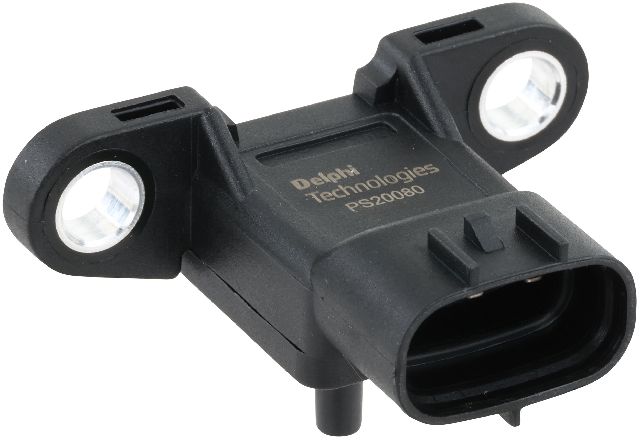
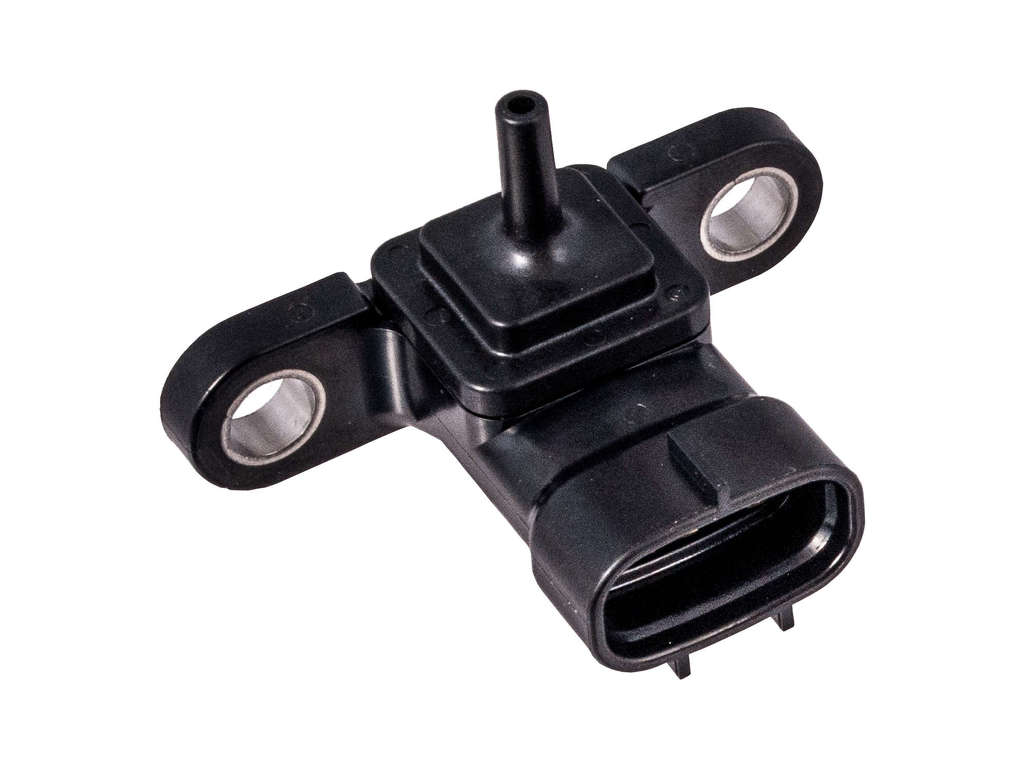
- Manifold Absolute Pressure (MAP) Sensor
(OEM #89421-26030 (fits some 1.8L models), 89421-06020 (supersedes 89421-33010 for some 2.0L models))— This is the most common component to fail and directly cause the P0108 code.
Trusted brands: Denso, Bosch, Hitachi, Standard Motor Products
OEM price range: $80-$250
Aftermarket price range: $25-$100
Platform-Specific Known Issues
- The specific OEM MAP sensor part number for a 2018-2022 Corolla is highly dependent on the engine (1.8L 2ZR-FAE vs. 2.0L M20A-FKS) and manufacturing date. For 1.8L E170 models, part number 89421-26030 is listed. For 12th gen E210 models, part number 89421-33010 (superseded by 89421-06020) is listed for some applications. Always verify with VIN.
- On the 2.0L M20A-FKS engine, the MAP sensor is located on the intake manifold, making it accessible for inspection and replacement.
Mechanic-Grade Diagnostic Values
- MAP Sensor Signal Voltage (Key On, Engine Off) — expected: ~4.5V (should match BARO reading). Failure: Voltage is stuck near 5V, or differs from BARO by more than 0.5V.
- MAP Sensor Signal Voltage (Engine at Idle) — expected: 1.0V - 1.8V. Failure: Voltage remains high (above 2.0V, approaching 4.5V) at idle.
- MAP Sensor Signal Voltage (Wide Open Throttle) — expected: ~4.5V - 5.0V. Failure: Voltage does not increase when the throttle is opened.
- MAP Sensor Connector Ground Pin Voltage — expected: Less than 100mV (0.10V). Failure: Voltage significantly higher than 0.10V indicates a poor ground connection, which can cause an artificially high signal voltage.
- MAP Sensor Connector Reference Voltage — expected: 5.0V. Failure: Voltage is significantly lower or higher than 5.0V, indicating a problem with the ECM or wiring.
Wiring & Ground Locations
- Engine Harness Ground (2.0L M20A-FKS) — On the 2.0L engine, a primary engine harness ground point attaches to the front of the cylinder head, near the throttle body.. A loose or corroded main engine harness ground can cause floating or incorrect voltage readings on multiple sensors, including the MAP sensor, leading to a P0108 code even if the sensor itself is good.
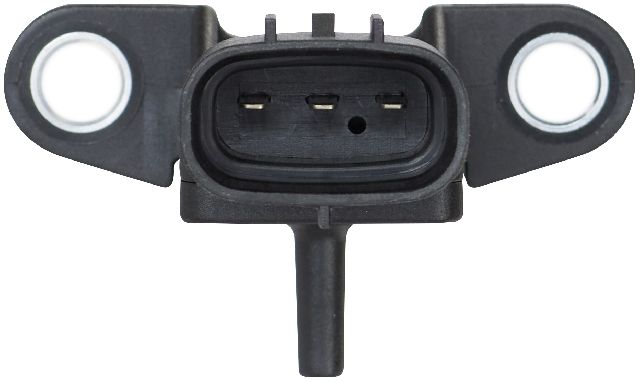
- MAP Sensor Connector (Typical 3-wire) — On the MAP sensor itself, located on the intake manifold.. The three pins are typically: Pin 1: 5V Reference from ECM. Pin 2: Ground provided by the ECM. Pin 3: Signal wire sending variable voltage back to the ECM. Testing these specific pins is crucial for diagnosing a circuit fault.
Real Owner Repair Stories
- MNSubaru forum user 'pbedroske' (Subaru WRX (similar 3-wire MAP sensor logic)) — P0108 code returned after replacing the MAP sensor. Live data showed the MAP reading was mostly normal at idle but would occasionally spike to its maximum value for a fraction of a second, triggering the CEL.
❌ Tried (didn't work) Replacing the MAP sensor with a used unit.
✅ What actually fixed it The user suspected a short to the 5V reference wire or a bad connector. Cleaning the connector contacts and adding dielectric grease resolved the issue, indicating the problem was a poor connection at the sensor harness, not the sensor itself.
OEM Part Supersession History
89421-33010→89421-06020— Standard part number update by Toyota. The new part is a direct replacement.
Heads up: No known incompatibility. 89421-06020 is the correct service part for vehicles originally equipped with 89421-33010.
Model Year Variations Within This Range
- 2018-2019 (Sedan E170): These models primarily use the 1.8L 2ZR-FAE engine. The MAP sensor is located on the intake manifold but may have a different part number (e.g., 89421-26030) and slightly different vacuum hose routing compared to the later 2.0L engine.
- 2019-2022 (Hatchback/Sedan E210): These models primarily use the 2.0L M20A-FKS engine. The MAP sensor is part number 89421-06020 (which supersedes 89421-33010) and is located on the top of the plastic intake manifold, making it very accessible.
Diagnostic Flowchart
Other Known Issues on This Vehicle
Issues unrelated to this code that are worth knowing about as an owner of this generation:
- Faulty Low-Pressure Fuel Pump 🔴 High — Subject to a major safety recall (e.g., 20V-682). Affects a large number of 2018-2020 models. Can cause engine stalling while driving. (Ref: Recall 20V-682 / NHTSA Campaign 20V682000)
- CVT Transmission Issues (Early 12th Gen) 🟠 Medium — A recall was issued for some early 2019 models for a faulty torque converter that could fail and cause a loss of power. Less common on later models. (Ref: Recall 19V-034 / NHTSA Campaign 19V034000)
- Weak 12V Battery (Hybrid Models) 🟡 Low — Common complaint on hybrid models where the small 12V auxiliary battery drains prematurely, especially with short trips or extended accessory use, leading to no-start conditions.
- Infotainment System Glitches 🟡 Low — Some owners report the infotainment screen freezing, rebooting, or becoming unresponsive. Often fixable with a software update from the dealer. (Ref: Example: T-SB-0066-20)
- EVAP System Check Engine Light 🟡 Low — Some models, particularly the 1.8L hybrid, may throw a check engine light related to the evaporative emissions (EVAP) system.
Used vs. New Parts: Buying Guide for This Vehicle
When a used part is the smart pick: A used MAP sensor from a reputable salvage yard can be a cost-effective option, especially if it's a genuine OEM (Denso) part from a low-mileage donor vehicle. Since the failure is electronic, a used part is a gamble, but can work if you are on a tight budget and can verify the donor vehicle's history.
Donor-vehicle mileage cap: roughly under 60000 miles for the part to have meaningful remaining life.
What to inspect on the donor part:
- Check for a clean donor vehicle, avoiding those with signs of engine fires, floods, or major front-end damage.
- Inspect the sensor's plastic housing for cracks or heat damage.
- Ensure the electrical connector pins are straight, clean, and free of corrosion.
- Ask for the VIN of the donor car to verify the engine type and model year compatibility.
OEM-only on this vehicle (don't cheap out):
- While not strictly 'OEM-only', using a genuine Denso (OEM supplier) sensor is highly recommended. Cheaper, no-name aftermarket sensors have a higher rate of premature failure or out-of-spec readings that can cause persistent issues.
Aftermarket brands forum-validated for this vehicle:
- Denso (OEM)
- Bosch
- Hitachi
- Standard Motor Products (SMP)
Brands owners have reported issues with on this vehicle:
- Unbranded, low-cost sensors from online marketplaces are often poorly calibrated and should be avoided.
Real Owner Stories
Aggregated from forums and TSBs cited above. Mileages and costs reflect what owners reported in those sources.
2018-2022 Toyota Corolla
Symptoms: The MAP sensor reading was stuck near 4.95V, which is out of the normal operating range.
What fixed it: The discussion suggested the issue was either a bad sensor or a ground issue, as the voltage should have been ~4.5V with the engine off and ~1.3V at idle.
Source hint: Reddit r/MechanicAdvice
2018-2022 Toyota Corolla
Symptoms: The vehicle reported a P0108 code, but the sensor had not necessarily failed; the voltage was simply out of range.
What fixed it: Investigation into underlying causes like low vacuum rather than just replacing the sensor.
Source hint: Car Talk Community
Related OBD-II Codes
Frequently Asked Questions
Which MAP sensor part number do I need for my 12th generation (E210) Corolla?
Where is the MAP sensor located on the 2.0L M20A-FKS engine?
I have a 2019 Corolla with power loss; could this be related to a recall instead of the MAP sensor?
My Corolla is stalling when I come to a stop; is this a P0108 symptom?
What voltage should I see from the MAP sensor at idle on my Corolla?
Can a bad PCV valve cause the P0108 code on my Toyota?
Helpful Videos

We Have This Part in Stock


The information in this article is provided for general reference and educational purposes only. Vehicle specifications, procedures, and part compatibility can vary by production date, trim level, and region. Always consult your vehicle's factory service manual and verify part numbers before purchasing or performing repairs. Safety-critical components such as airbags, seat belts, and braking systems should be installed by a qualified professional.
- Toyota Corolla:
- 🧭 Diagnostic Flowchart
- 🎬 Helpful Videos
- 🛍️ Shop This Part
- What's Unique About the 2018-2022 Toyota Corolla
- Symptoms You May Notice
- Most Likely Causes
- Rare But Worth Checking
- Diagnosis Steps
- Parts You'll Likely Need
- Platform-Specific Known Issues
- Mechanic-Grade Diagnostic Values
- Wiring & Ground Locations
- Real Owner Repair Stories
- OEM Part Supersession History
- Model Year Variations Within This Range
- Other Known Issues on This Vehicle
- Used vs. New Parts: Buying Guide for This Vehicle
- Real Owner Stories
- 2018-2022 Toyota Corolla
- 2018-2022 Toyota Corolla
- Related OBD-II Codes
- Frequently Asked Questions
- 🎟️ Get 5% Off