

P0108 on 2000-2005 Toyota RAV4: Manifold Pressure Circuit High Causes and Fixes
For a 2000-2005 RAV4, code P0108 almost always means the Manifold Absolute Pressure (MAP) sensor has failed. The engine computer is seeing a voltage that is stuck high (above 4.5V), incorrectly signaling high engine load and causing poor performance, rough idle, and black smoke. A new sensor is the typical fix, costing between $30 for an aftermarket part and $150+ for an OEM Denso unit.
- P0108 on this RAV4 points directly to a problem with the Manifold Absolute Pressure (MAP) sensor circuit, not the Mass Air Flow (MAF) sensor.
- The most likely cause by far is a failed MAP sensor, which is a simple and inexpensive part to replace for a DIYer.
- Diagnosis is straightforward: check the MAP sensor's voltage with a scan tool at idle. If it's stuck high (above 4.0V), the sensor is almost certainly bad.
- The correct replacement part number is very likely 89421-20190. Denso is the original equipment manufacturer.
- Before replacing the sensor, perform a quick visual check of its wiring, connector, and vacuum line for obvious damage.
What's Unique About the 2000-2005 Toyota RAV4
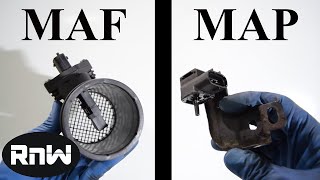
The 1AZ-FE and 2AZ-FE engines in this second-generation RAV4 use a fuel injection system that relies on both a Mass Air Flow (MAF) sensor and a Manifold Absolute Pressure (MAP) sensor. Some owners may get confused between the two. However, the P0108 code specifically points to a fault in the MAP sensor circuit, not the MAF sensor. The failure pattern on this platform is straightforward, typically involving the sensor itself rather than a more complex systemic issue. A known issue with the ECM on 2001-2003 models can cause transmission problems, but is less commonly associated with a standalone P0108 code.
Symptoms You May Notice
- Check Engine Light is on
- Rough or unstable idle
- Hesitation or sluggish acceleration
- Increased fuel consumption
- Black smoke from the exhaust
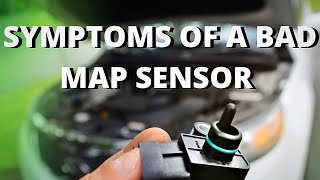
- Engine stalling, especially at idle or when coming to a stop 🎬 Watch: A visual guide to common bad MAP sensor symptoms
- Replacing the Mass Air Flow (MAF) sensor. These engines have both a MAF and a MAP sensor. P0108 is specific to the MAP sensor circuit, so replacing the MAF sensor will not fix the issue.
Most Likely Causes
- Faulty Manifold Absolute Pressure (MAP) Sensor 🔴 High Probability → Shop Manifold Absolute Pressure Sensor The sensor is an electronic component that operates in a high-heat engine bay and can fail over time due to heat cycles and internal diaphragm wear. This is the most common failure for P0108.
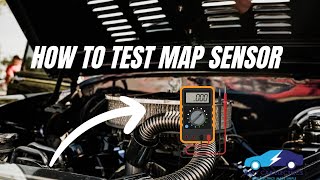
How to confirm: Use a scan tool to monitor live data. With the Key On, Engine Off (KOEO), the MAP sensor voltage should be high (approx. 4.5V-5.0V), matching the barometric pressure. When the engine is started and idling, the voltage should drop significantly (to approx. 1.0-1.5V) due to engine vacuum. If the voltage remains high at idle, the sensor has likely failed. 🎬 See how to test your MAP sensor using a scanner
Typical fix: Replace the MAP sensor. It is located on the intake manifold and is typically held by a single bolt. 🎬 Watch: How to test and replace a faulty MAP sensor
Est. part cost: $30-$180 - Damaged Wiring or Connector 🟡 Medium Probability Engine vibration and heat can cause wiring to become brittle, frayed, or shorted over time. The connector pins can also corrode, causing a poor connection.
How to confirm: Visually inspect the wiring harness leading to the MAP sensor for any signs of damage. Disconnect the connector and check for corrosion or bent pins. Use a multimeter to verify a 5V reference signal and a good ground at the connector with the key on. If the 5V reference wire is shorted to power, it will cause a constant high signal.
Typical fix: Repair the damaged section of the wiring harness or clean/replace the electrical connector.
Est. part cost: $5-$50 - Vacuum Leak ⚪ Low Probability Rubber vacuum hoses can crack and harden with age, creating leaks. A significant leak would prevent manifold pressure from dropping correctly at idle.
How to confirm: A large vacuum leak would prevent the manifold pressure from dropping correctly at idle. Listen for hissing sounds around the intake manifold. You can also spray brake cleaner or starter fluid in small bursts around vacuum lines and gaskets with the engine running; a change in idle RPM indicates a leak.
Typical fix: Replace the cracked or broken vacuum hose(s).
Est. part cost: $5-$20 - Dirty or Clogged Throttle Body ⚪ Low Probability Over time, carbon and oil vapor from the PCV system can build up around the throttle plate, restricting airflow at idle. This can slightly alter manifold pressure and potentially contribute to erratic sensor readings.
How to confirm: Visually inspect the inside of the throttle body for heavy carbon buildup. A very dirty throttle body can prevent the plate from closing properly, affecting idle vacuum.
Typical fix: Clean the throttle body with a dedicated throttle body cleaner and a soft brush. Be careful not to damage any coatings on the throttle plate.
Est. part cost: $5-$15
Rare But Worth Checking
- Clogged Catalytic Converter: A severely clogged catalytic converter can increase backpressure in the exhaust, which in turn affects the pressure readings in the intake manifold. This will usually be accompanied by other codes (like P0420) and a severe loss of power, especially at higher RPMs.
- Faulty Engine Control Module (ECM): → Shop Engine Control Module (ECM) This is very rare for a standalone P0108 code. However, 2001-2003 RAV4s are known to have ECMs that can fail and cause severe automatic transmission issues. While not a direct cause for P0108, an internal ECM fault in the 5V reference circuit could theoretically trigger this code. All other possibilities must be exhaustively ruled out before condemning the ECM.
Diagnosis Steps
- Connect an OBD-II scanner and confirm that P0108 is the primary code. Note any other codes present.
- Access the scanner's live data stream. With the Key On, Engine Off (KOEO), observe the MAP sensor voltage. It should read high, approximately 4.5 to 5.0 volts, reflecting atmospheric pressure.
- Start the engine and let it idle. The MAP sensor voltage should drop to between 1.0 and 1.5 volts due to engine vacuum.
- If the voltage remains high (e.g., above 4.0V) at idle, the sensor, its wiring, or its vacuum source is faulty.
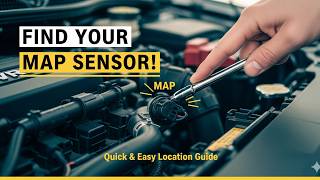
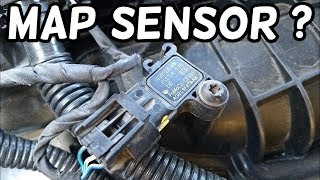
- Turn off the engine. Locate the MAP sensor on the intake manifold, near the throttle body.
- Visually inspect the sensor's vacuum port and the hose connected to it for any blockages, cracks, or disconnections.
- Inspect the electrical connector and wiring harness for damage, corrosion, or loose pins. A poor connection is a common point of failure.
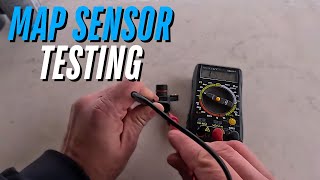
- If the visual inspection is clear, disconnect the sensor and test the connector's terminals with a multimeter. With the key on, you should find a 5-volt reference wire, a ground wire, and the signal wire.
- If voltage and ground are correct and the sensor fails the live data test (Step 3), the MAP sensor is faulty and should be replaced.
- If the 5V reference or ground is missing, the problem lies in the wiring harness or the ECM itself, and further circuit tracing is required.
- As a final check, inspect the throttle body for heavy carbon buildup that could restrict airflow and affect pressure readings.
Parts You'll Likely Need
- Manifold Absolute Pressure (MAP) Sensor
(OEM #89421-20190)— This is the most common failure point for a P0108 code. The sensor's internal electronics fail, causing it to send a continuously high voltage signal to the ECM.
Trusted brands: Denso (OEM, also cross-references to 079800-4410), Standard Motor Products (SMP), Walker Products, NGK/NTK
OEM price range: $150-$230
Aftermarket price range: $30-$90
Related Codes That Often Appear With This One
- P0107 — This code is for 'MAP Sensor Circuit Low Input'. Seeing both P0107 and P0108 can indicate an intermittent wiring problem or a sensor that is failing erratically.
- P0106 — This code for 'MAP/Barometric Pressure Circuit Range/Performance' can appear when the sensor's readings are illogical or don't correlate correctly with throttle position, suggesting the sensor is failing but not completely stuck high or low.
Platform-Specific Known Issues
- On the RAV4World forums, a user with a 2002 RAV4 reported a P0108 code along with poor running conditions. After confirming the wiring was good, they replaced the MAP sensor, which completely resolved the issue. They noted the job took less than 15 minutes.
- Another owner on RAV4World with a 2005 model experienced the same code and symptoms. They opted for an OEM Denso sensor, citing concerns about the longevity of cheaper aftermarket parts, and reported a successful fix.
Mechanic-Grade Diagnostic Values
- MAP Sensor 5V Reference Wire Voltage — expected: 4.5 to 5.5 V (with ignition ON). Failure: Voltage below 4.5V or above 5.5V indicates a fault in the ECM or wiring.
- MAP Sensor Signal Wire Voltage (Engine at Idle) — expected: 1.0 - 1.5 V. Failure: Voltage remaining high (near 4.5V) at idle points to a failed sensor, loss of vacuum, or a short to power.
- ECM Ground Pin to Body Ground Resistance — expected: Below 1 Ω. Failure: Resistance above 1 Ω indicates a poor ground connection, which can cause various sensor errors.
Scan Tool Commands That Help
- Toyota Techstream: Data List -> All Data -> MAP — This is the primary function used to monitor the live MAP sensor value in kPa or volts. It should be compared against the 'Atmosphere Pressure' PID with the key on, engine off; the values should be nearly identical.
Wiring & Ground Locations
- E1 (or E01) — This is a primary sensor ground pin on the Engine Control Module (ECM), which is located behind the right side of the dashboard.. The MAP sensor relies on a clean ground reference provided by the ECM. A poor connection at this pin (B30-104 on some connectors) can cause floating voltage readings and trigger a P0108. Resistance between this pin and the chassis should be less than 1 ohm.
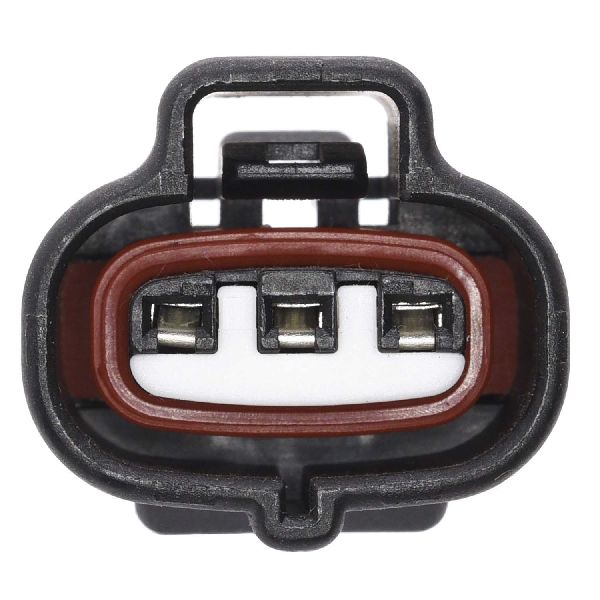
- MAP Sensor Connector — On the intake manifold, near the throttle body.. This 3-wire connector provides the 5V reference, ground, and signal return for the sensor. The terminals are: Pin 1 (VCC/5V Reference), Pin 2 (PIM/Signal), Pin 3 (E2/Ground). A short between Pin 1 and Pin 2 will cause a constant high signal.
OEM Part Supersession History
89421-20190→89421-20190 (current)— This part number remains current for this application.
Heads up: The Denso OEM equivalent part number is 079800-4410. These two numbers are interchangeable for this vehicle.
Model Year Variations Within This Range
- 2001-2003: Models from these years are subject to a known ECM manufacturing defect that primarily causes automatic transmission shifting problems and related codes (P0750, P0753, P0755, P0758, P1760). While a standalone P0108 is not the primary symptom, an internal ECM fault could theoretically cause it, making ECM failure a slightly higher, though still rare, possibility on these specific years.
Diagnostic Flowchart
Other Known Issues on This Vehicle
Issues unrelated to this code that are worth knowing about as an owner of this generation:
- Excessive Oil Consumption 🔴 High — Extremely common on 2006-2011 2AZ-FE engines, but can affect earlier models. Caused by defective piston ring design. Consumption can exceed 1 quart per 1,200 miles. (Ref: TSB T-SB-0094-11 (describes repair) and Warranty Enhancement Program ZE7 extended coverage for this issue.)
- ECM Failure Causing Harsh Shifting / Transmission Damage 🔴 High — A well-documented problem specifically on 2001-2003 RAV4 models where a faulty Engine Control Module (ECM) can fail, leading to harsh shifting, hesitation, and eventual automatic transmission failure. (Ref: Toyota issued a warranty extension for this specific ECM issue, but not a formal recall. Replacement of the ECM is the only fix.)
- Stripped Cylinder Head Bolts 🟠 Medium — The 2AZ-FE engine is known for its cylinder head bolt threads stripping out of the engine block, particularly during repairs like head gasket replacement. This can lead to coolant leaks and overheating. It is often discovered upon disassembly.
Used vs. New Parts: Buying Guide for This Vehicle
When a used part is the smart pick: A used MAP sensor from a reputable auto recycler can be a cost-effective option, as it is a simple electronic component without complex mechanical parts. It is a good choice if you are on a tight budget and the donor vehicle information is available.
Donor-vehicle mileage cap: roughly under 80000 miles for the part to have meaningful remaining life.
What to inspect on the donor part:
- Check for any physical damage to the sensor housing or connector.
- Ensure the vacuum port is clean and free of oil or carbon buildup.
- Ask for the donor vehicle's mileage; lower is always better.
- If possible, test the part on your vehicle before finalizing the purchase or ensure there is a return policy.
OEM-only on this vehicle (don't cheap out):
- Engine Control Module (ECM) - Due to the specific programming and the known failure issues on 2001-2003 models, a new or professionally remanufactured and updated OEM unit is highly recommended over a used one which may have the same latent defect.
Aftermarket brands forum-validated for this vehicle:
- Denso (OEM supplier)
- Standard Motor Products (SMP)
- NGK/NTK
Brands owners have reported issues with on this vehicle:
- No-name, unbranded sensors from online marketplaces should be avoided, as their calibration and longevity can be questionable, potentially causing performance issues or premature failure.
Real Owner Stories
Aggregated from forums and TSBs cited above. Mileages and costs reflect what owners reported in those sources.
2002 Toyota RAV4
Symptoms: P0108 code along with poor running conditions.
What fixed it: Replaced the MAP sensor after confirming the wiring was good. The repair took less than 15 minutes.
Source hint: RAV4World Forums thread titled "P0108 code on 2002 RAV4"
2005 Toyota RAV4
Symptoms: P0108 code and associated engine symptoms.
What fixed it: Replaced the faulty component with an OEM Denso sensor to ensure longevity.
Source hint: RAV4World Forums thread titled "Check Engine P0108"
Related OBD-II Codes
Frequently Asked Questions
Where is the MAP sensor located on my 2000-2005 RAV4?
What should the MAP sensor voltage read on my RAV4 when the engine is off?
My 2002 RAV4 has P0108 and is shifting harshly; are these related?
Can I use an aftermarket MAP sensor to fix the P0108 code?
Is there a TSB for oil consumption on my 2AZ-FE engine?
Could a dirty throttle body cause my P0108 code?
Helpful Videos

We Have This Part in Stock


The information in this article is provided for general reference and educational purposes only. Vehicle specifications, procedures, and part compatibility can vary by production date, trim level, and region. Always consult your vehicle's factory service manual and verify part numbers before purchasing or performing repairs. Safety-critical components such as airbags, seat belts, and braking systems should be installed by a qualified professional.
- Toyota RAV4:
- 🧭 Diagnostic Flowchart
- 🎬 Helpful Videos
- 🛍️ Shop This Part
- What's Unique About the 2000-2005 Toyota RAV4
- Symptoms You May Notice
- Most Likely Causes
- Rare But Worth Checking
- Diagnosis Steps
- Parts You'll Likely Need
- Related Codes That Often Appear With This One
- Platform-Specific Known Issues
- Mechanic-Grade Diagnostic Values
- Scan Tool Commands That Help
- Wiring & Ground Locations
- OEM Part Supersession History
- Model Year Variations Within This Range
- Other Known Issues on This Vehicle
- Used vs. New Parts: Buying Guide for This Vehicle
- Real Owner Stories
- 2002 Toyota RAV4
- 2005 Toyota RAV4
- Related OBD-II Codes
- Frequently Asked Questions
- 🎟️ Get 5% Off