

P0111 on 2019-2023 Chrysler 300: IAT Sensor Performance Causes & Fixes
P0111 on a Chrysler 300 usually means the Intake Air Temperature (IAT) sensor is faulty or its wiring is damaged. The sensor itself is the most common failure point. It's an easy, inexpensive DIY fix, with the part costing around $20-$50. The sensor is a separate, twist-in component located in the intake air tube, making it simple to access.
- P0111 means the Intake Air Temperature (IAT) sensor's readings are illogical.
- The most likely cause is a failed IAT sensor, which is an easy and inexpensive part to replace yourself.
- The sensor is located in the black plastic air intake tube and can be replaced in about 10 minutes with no special tools.
- Always check the sensor's wiring and connector for damage before buying parts.
- A Chrysler TSB exists for this code, so if a new sensor doesn't fix it, a PCM software update at the dealership may be required. [⭐ MANUFACTURER TSB — highest authority]
What's Unique About the 2019-2023 Chrysler 300
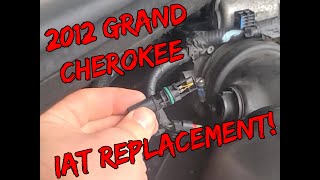
On the 2019-2023 Chrysler 300 with either the 3.6L V6 or 5.7L V8 engine, 🎬 Watch: 5.7L Hemi IAT sensor replacement walkthrough the IAT sensor is a simple, separate two-wire thermistor located in the air intake tube, not integrated into the Mass Airflow (MAF) or MAP sensor as on some other vehicles. This makes diagnosis and replacement particularly straightforward. A known TSB (#18-044-26) also links this code with P0071 (Ambient Air Temperature Sensor Performance), suggesting the PCM is sensitive to discrepancies between these two sensors and may require a software update in some cases to correct the logic. [⭐ MANUFACTURER TSB — highest authority] This specific IAT sensor (Part No. 05149182AB) is a twist-lock type, making removal and installation easy.
Diagnostic Flowchart
Tap your situation to follow the diagnostic path that matches what you're seeing on this vehicle.
Symptoms You May Notice
- Check Engine Light is on
- Reduced fuel economy
- Engine hesitation or stumbling on acceleration
- Rough idle
- Hard starting, especially in cold weather
- Incorrect A/C operation (may not blow cold)
- Replacing the Ambient Air Temperature (AAT) sensor instead of the Intake Air Temperature (IAT) sensor. They are separate sensors with different functions, though they often show similar temperature readings when the engine is cold. The AAT sensor is typically located near the front grille or bumper.
Most Likely Causes
- Faulty Intake Air Temperature (IAT) Sensor 🔴 High Probability → Shop Fuel Injection Air Flow Meter The sensor is a simple thermistor that can degrade over time due to constant heat cycles and exposure to engine bay elements, causing its resistance readings to become inaccurate or 'drift' out of the expected range.
How to confirm: Use a scan tool to compare the IAT reading to the Ambient Air Temperature reading with the engine cold after sitting for several hours. They should be within 2-5 degrees of each other. If the IAT reading is stuck (e.g., at -40°F or 250°F) or doesn't change as the engine warms, the sensor is bad. A forum user on Turbo Diesel Register refers to this as a 'rationality' check performed by the PCM.
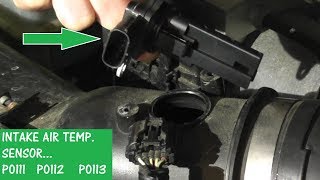
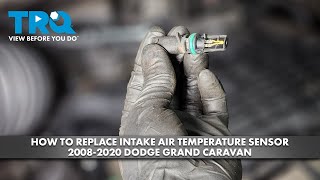
Typical fix: Replace the IAT sensor. It is located in the main air intake tube between the air filter box and the throttle body. It unplugs and twists out with a quarter-turn.
Est. part cost: $20-$50 - Damaged Wiring or Connector 🟡 Medium Probability The wiring harness and two-pin connector can become brittle from heat or damaged during other engine service, leading to a poor connection, a short, or an open circuit. The plastic locking tab on the connector is known to break easily.
How to confirm: Visually inspect the IAT sensor's two-wire connector and harness for any signs of corrosion, frayed wires, or loose pins. Wiggle the connector while observing the live IAT data on a scan tool; if the reading jumps around, the connection is faulty. Use a multimeter to check for a 5-volt reference signal on one wire and continuity to ground on the other with the key on, engine off.
Typical fix: Clean the connector terminals. If the connector or wiring pigtail is damaged, it will need to be replaced. A replacement pigtail is readily available (e.g., Mopar P/N 3U2Z14S411HYB).
Est. part cost: $15-$40 for a pigtail connector - PCM Software Update Needed ⚪ Low Probability A Technical Service Bulletin (TSB #18-044-26) exists for the 2019 model year that involves this code. This indicates that in some cases, the PCM's logic for comparing the IAT and AAT sensor data is too sensitive and requires an update to widen the acceptable parameters. [⭐ MANUFACTURER TSB — highest authority]
How to confirm: This can only be confirmed by a Chrysler dealership or a qualified shop with access to FCA's wiTECH software, which can check if your vehicle's VIN has the TSB applied or if a software update is available.
Typical fix: A dealership will reprogram (flash) the Powertrain Control Module with the latest software version. This is a non-invasive procedure.
Est. part cost: $0 if under warranty, otherwise $100-$250 for labor
Rare But Worth Checking
- Faulty Powertrain Control Module (PCM): → Shop Engine Control Module (ECM) This is very rare. Before suspecting the PCM, all other possibilities, especially the sensor and its wiring, must be exhaustively ruled out. A failure of the internal PCM circuit that processes the IAT signal can trigger this code.
- Dirty or Clogged Air Filter: → Shop Air Cleaner Assembly While less common, a severely clogged engine air filter can restrict airflow to the point that it causes abnormal temperature readings around the IAT sensor, potentially triggering a performance code. This is more likely if the vehicle is operated in very dusty environments.
Diagnosis Steps
- Connect an OBD-II scanner and confirm P0111 is the active code. Note any other codes, especially P0071, P0112, or P0113.
- Using the scanner's live data function, view the readings for the 'Intake Air Temp Sensor' and 'Ambient Air Temp Sensor' with the engine off and cold (after sitting for at least 4-5 hours). The readings should be within a few degrees of each other and the actual outside temperature.
- Start the engine. The IAT reading should slowly and smoothly increase as the engine bay heats up. If it is stuck, erratic, or reads an illogical value (like -40°F or over 250°F), the sensor is the primary suspect.
- Locate the IAT sensor in the plastic intake tube between the air filter housing and the engine. It's a small, two-wire sensor that twists into the duct.
- Inspect the sensor's electrical connector and wiring for any visible damage, corrosion, or looseness. Pay close attention to the plastic locking tab, which can become brittle and break.
- If the wiring looks good, disconnect the sensor. With the key on, engine off, use a multimeter to verify one pin of the connector has ~5V reference voltage and the other has good continuity to ground.
- If wiring and voltage are confirmed good, the most straightforward step is to replace the sensor, as it is an inexpensive and common failure point.
- After replacement, clear the codes with the scanner and take a test drive to ensure the code does not return.
Parts You'll Likely Need
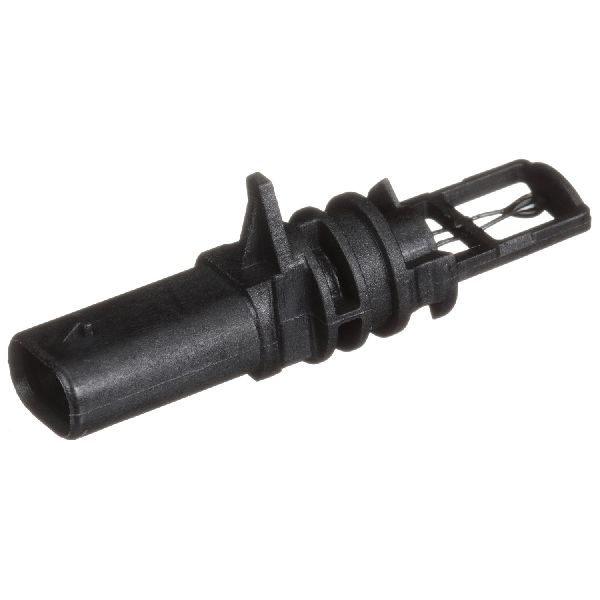
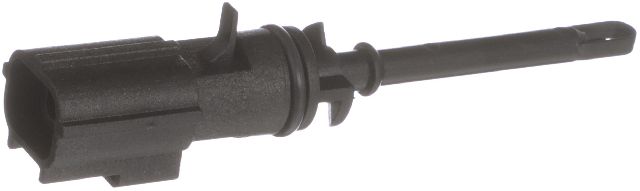
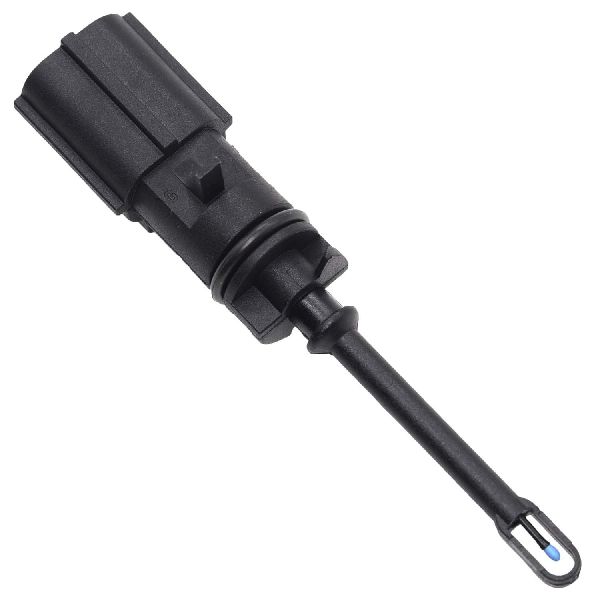
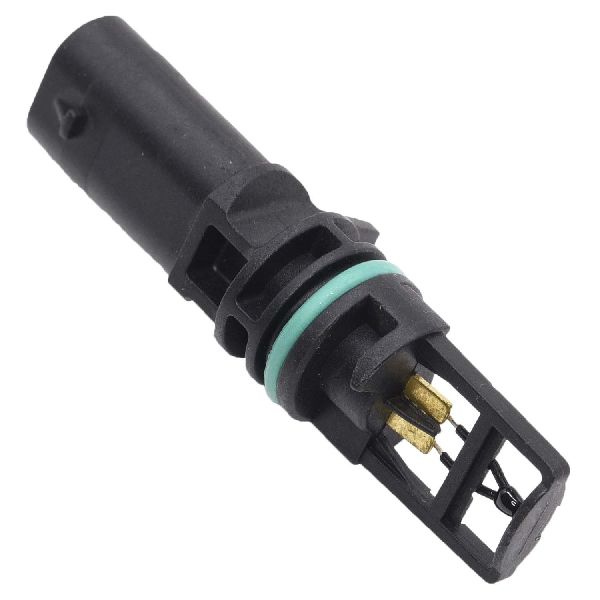
- Intake Air Temperature Sensor
(OEM #05149182AB)— This sensor is the most common cause for the P0111 code due to its simple thermistor design and exposure to constant heat cycles. It is a twist-lock style sensor.
Trusted brands: Mopar, NTK, Delphi
OEM price range: $30-$50
Aftermarket price range: $15-$30 - IAT Sensor Connector Pigtail
(OEM #3U2Z14S411HYB, S-2081)— Needed if the original connector or its wiring is found to be corroded, melted, or if the locking tab has broken off, preventing a secure connection.
Trusted brands: Mopar, Dorman
OEM price range: $25-$40
Aftermarket price range: $15-$25
Related Codes That Often Appear With This One
- P0071 — This code is for 'Ambient Air Temperature Sensor Performance'. A Chrysler TSB specifically links P0111 and P0071, as the PCM compares the inputs from both sensors to check for rationality. A fault in one can easily trigger a performance code for the other. [⭐ MANUFACTURER TSB — highest authority, 24]
- P0112 — This code indicates the IAT sensor circuit is low (shorted to ground). A damaged wire or faulty sensor can cause this, which the PCM may also interpret as a performance issue, logging both codes.
- P0113 — This code indicates the IAT sensor circuit is high (open circuit). This often points to an unplugged sensor or a break in the wire. An intermittent open circuit can cause the signal to be erratic, 🎬 See how to test and replace the IAT sensor triggering a P0111 performance code.
Technical Service Bulletins (TSBs) & Recalls
- 18-044-26: Addresses MIL illumination for DTCs P0111-00 (Intake Air Temperature Sensor 1 Circuit Range Performance) and P0071-00 (Ambient Air Temperature Sensor Performance), often recommending a PCM software update. [⭐ MANUFACTURER TSB — highest authority]
Platform-Specific Known Issues
- A Technical Service Bulletin (TSB #18-044-26) was issued for some 2019 models where the check engine light would illuminate with P0111 and/or P0071. The prescribed fix often involves a PCM software update to adjust sensor rationality checks. [⭐ MANUFACTURER TSB — highest authority]
- The plastic locking tab on the IAT sensor's electrical connector can become very brittle due to engine heat and may break during removal. Be prepared to replace the connector pigtail if this happens.
Mechanic-Grade Diagnostic Values
- IAT Sensor Resistance vs. Temperature — expected: Resistance changes with temperature. Example Mopar values: ~100,700 Ohms at 0°C (32°F), ~37,300 Ohms at 20°C (68°F), ~7,960 Ohms at 60°C (140°F), ~2,240 Ohms at 100°C (212°F). A common reading is 2.0-3.0 kOhms at room temperature (68°F/20°C).. Failure: If the resistance is infinite (open circuit), near zero (shorted), or does not change when temperature is varied (e.g., with a heat gun), the sensor is faulty.
- IAT Sensor Connector Voltage (Key On, Engine Off) — expected: One wire should have a ~5V reference signal from the PCM. The other wire is the sensor ground return to the PCM and will show near 0V.. Failure: No voltage or significantly low voltage on the reference wire points to a wiring or PCM issue. Voltage on the ground wire indicates a bad ground.
Scan Tool Commands That Help
- Chrysler wiTECH 2.0: Live Data / Data Display — To perform the critical 'cold soak' rationality test. After the vehicle has sat for 8+ hours, use wiTECH to simultaneously graph the Intake Air Temperature, Ambient Air Temperature, and Engine Coolant Temperature sensors. All three readings should be within a few degrees of each other. A significant deviation in the IAT reading confirms a performance fault.
- Chrysler wiTECH 2.0: View Calibrations / Flashes — To check if the PCM software update mentioned in TSB 18-044-26 is available or has been applied to the vehicle. This is a primary diagnostic step for 2019 models presenting with both P0111 and P0071.
Wiring & Ground Locations
- IAT Sensor Signal Wire — For the 3.6L V6, this is typically a Dark Blue/Green wire that runs from Pin 1 of the IAT sensor connector to Pin 17 of the PCM C2 connector.. This is the wire that carries the temperature signal back to the PCM. It must be tested for continuity and shorts to ground or power if the sensor itself tests good.
- IAT Sensor Ground — The IAT sensor ground is not a direct chassis ground. It is a dedicated sensor return wire that runs from Pin 2 of the IAT sensor connector back to a specific pin on the PCM. The PCM itself is then grounded to the chassis/engine block at main grounding points.. Technicians should not look for continuity to the chassis from the sensor's ground pin. A fault in this specific return wire to the PCM will cause the code, even if the main PCM grounds are good.
OEM Part Supersession History
5149182aa→05149182AB— Standard part revision/update by the manufacturer.
Model Year Variations Within This Range
- 2019: This model year is specifically mentioned in TSB #18-044-26, which addresses overly sensitive PCM logic for the IAT/AAT rationality check. For this year, checking for an available PCM software update is a critical diagnostic step that may not be relevant for later years. [⭐ MANUFACTURER TSB — highest authority]
Helpful Videos
We Have This Part in Stock

The information in this article is provided for general reference and educational purposes only. Vehicle specifications, procedures, and part compatibility can vary by production date, trim level, and region. Always consult your vehicle's factory service manual and verify part numbers before purchasing or performing repairs. Safety-critical components such as airbags, seat belts, and braking systems should be installed by a qualified professional.
- Chrysler 300:
- 🧭 Diagnostic Flowchart
- 🎬 Helpful Videos
- 🛍️ Shop This Part
- What's Unique About the 2019-2023 Chrysler 300
- Symptoms You May Notice
- Most Likely Causes
- Rare But Worth Checking
- Diagnosis Steps
- Parts You'll Likely Need
- Related Codes That Often Appear With This One
- Technical Service Bulletins (TSBs) & Recalls
- Platform-Specific Known Issues
- Mechanic-Grade Diagnostic Values
- Scan Tool Commands That Help
- Wiring & Ground Locations
- OEM Part Supersession History
- Model Year Variations Within This Range
- 🎟️ Get 5% Off