

P0113 on 2011-2018 BMW X5 N55: Intake Air Temp Sensor Causes and Fixes
On a 2011-2018 BMW X5 with the N55 engine, code P0113 is almost always caused by a failed Intake Air Temperature (IAT) sensor, which is integrated into the TMAP sensor on the charge pipe. Replacement is straightforward and the part costs between $40 (aftermarket) and $130 (OEM).
- P0113 on your N55 X5 points to a problem with the intake air temperature reading, which comes from the TMAP sensor on the charge pipe.
- The most likely cause is a failed TMAP sensor, which is a relatively inexpensive and easy part to replace yourself (DIY difficulty 1/5).
- Before buying parts, double-check that the sensor's electrical connector is fully seated and the wiring isn't damaged, especially if the charge pipe was recently replaced or serviced.
What's Unique About the 2011-2018 BMW X5
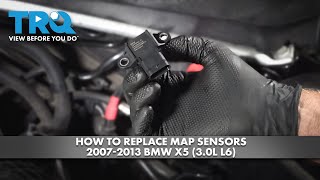
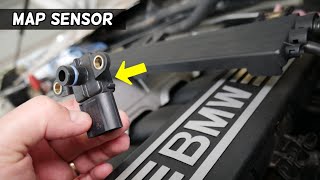
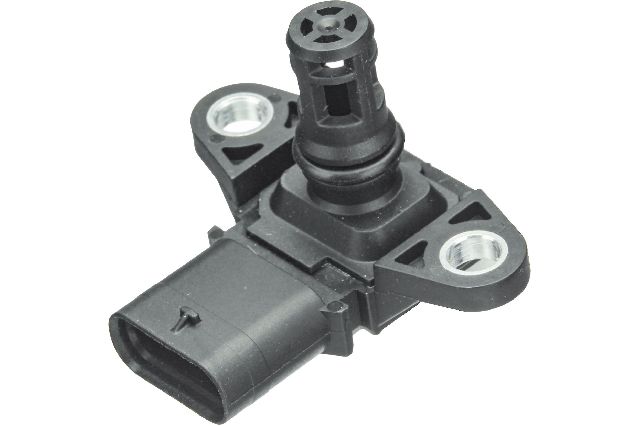
On the turbocharged N55 engine, BMW combines the Intake Air Temperature (IAT) and Manifold Absolute Pressure (MAP) sensors into a single unit called a TMAP sensor, located on the charge pipe. This is different from many naturally aspirated engines where the IAT sensor might be part of the Mass Airflow (MAF) sensor or a standalone unit. The location on the charge pipe makes it susceptible to damage or disconnection during related work, such as replacing the notoriously fragile factory plastic charge pipe.
Generation note: The 2011-2018 range covers two generations of the BMW X5: the E70 (2011-2013) and the F15 (2014-2018). Both generations used the N55 engine and share the same TMAP sensor design and location for this issue. However, part numbers for sensors can be revised, so it's always best to verify with your vehicle's VIN.
Symptoms You May Notice
- Check Engine Light is on
- Rough or unstable idle
- Reduced engine power and poor acceleration
- Decreased fuel economy
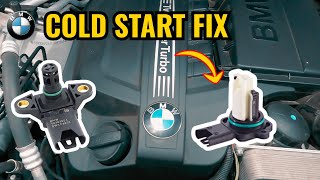
- Difficulty starting the engine, especially when cold 🎬 See how cleaning your sensors can resolve cold start issues
- In some cases, a 'drivetrain malfunction' message on the iDrive screen
- Engine may run rich, potentially causing black smoke from the exhaust
- Replacing the Mass Airflow (MAF) sensor. While some vehicles integrate the IAT into the MAF, the N55 engine does not; the relevant sensor is the TMAP on the charge pipe.
- Replacing the MAP sensor on the intake manifold. The N55 has two pressure sensors. The one associated with P0113 is the TMAP on the charge pipe, which also reads temperature. The sensor on the intake manifold does not read temperature and has a different function.
Most Likely Causes
- Failed TMAP Sensor 🔴 High Probability → Shop Manifold Absolute Pressure Sensor The sensor is a sensitive electronic component located in a high-heat, high-vibration area of the engine bay. It's the most common failure point for this code.
How to confirm: Using an OBD-II scanner, check the live data for the Intake Air Temperature. If it shows a static, extremely low value (e.g., -40°F/-40°C) regardless of the actual engine temperature, the sensor or its circuit is faulty. Given the high failure rate, replacing the sensor is often the quickest diagnostic step.
Typical fix: Replace the TMAP sensor on the charge pipe. Bosch is a common OEM supplier for this part.
Est. part cost: $40-$130 - Damaged Wiring or Loose Connector 🟡 Medium Probability The wiring harness to the TMAP sensor can become brittle from heat cycles. The connector can also be damaged or not fully seated during maintenance, like a charge pipe replacement.
How to confirm: Visually inspect the connector and wiring for any signs of cracking, melting, or physical damage. Wiggle the connector with the engine running to see if the idle quality changes. With the ignition on (engine off), unplug the sensor and use a multimeter to test the connector pins: you should find a 5V reference wire, a ground wire (0V), and a signal wire. An open circuit on any of these will cause the code.
Typical fix: Repair the damaged section of the wiring harness or replace the connector pigtail.
Est. part cost: $15-$50
Rare But Worth Checking
- Failed DME (Engine Computer): This is extremely rare. Before condemning the DME, all other possibilities, including sensor and wiring issues, must be exhaustively ruled out. A faulty DME will typically present with multiple, often unrelated, error codes. A common cause of DME failure is water ingress or damage from short circuits during other repairs.
Diagnosis Steps
- Read the fault codes with a BMW-compatible OBD-II scanner. Look for the generic P0113 and any BMW-specific shadow codes like 108001.
- View live data for 'Intake Air Temperature'. A reading of -40°F or -40°C strongly indicates an open circuit, which is what triggers P0113.
- Turn off the engine and locate the TMAP sensor. It is on the charge pipe, just before the pipe connects to the throttle body.
- Inspect the sensor's electrical connector. Ensure it is securely plugged in. Check for any bent pins, corrosion, or signs of damage.
- Inspect the wiring harness leading to the sensor for any visible damage, such as cracks, melting, or fraying.
- Electrical Test (Optional but recommended): Turn the ignition ON (engine OFF). Disconnect the TMAP sensor. Using a multimeter, probe the terminals on the harness-side connector. You should find: one pin with ~5V (reference), one pin with ~0V (ground), and the signal wire. If 5V or ground is missing, you have a wiring issue going back to the DME.
- If the wiring and connector appear intact and electrical tests pass, the most probable cause is a failed TMAP sensor. Replace the sensor.
- After replacement, clear the fault codes and drive the vehicle to see if the code returns.
- If the code persists, a more in-depth electrical diagnosis is needed to check for continuity and shorts in the wiring between the sensor and the DME.
Parts You'll Likely Need
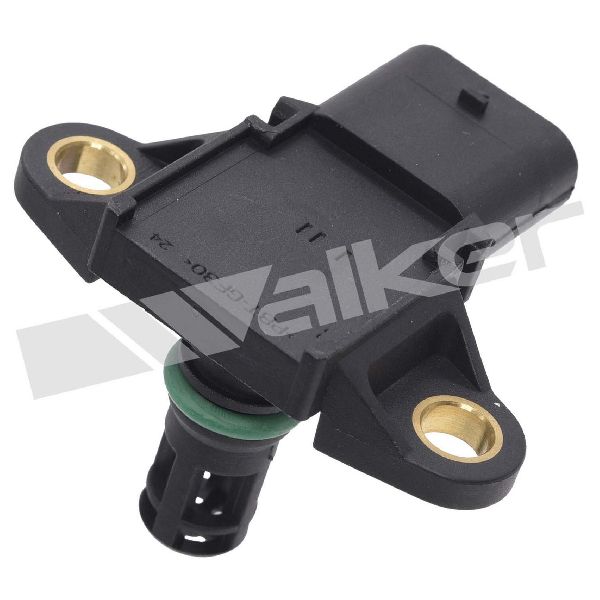
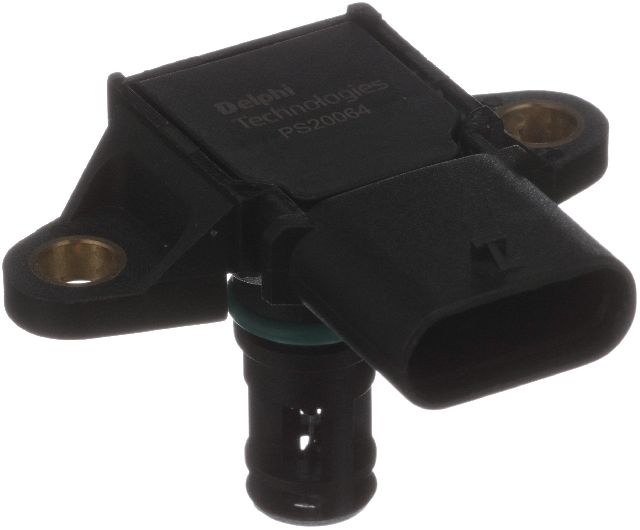
- TMAP Sensor (Boost Pressure and Temperature Sensor)
(OEM #13627599042)— This is the sensor that fails and directly causes the P0113 code on the N55 engine. It measures both boost pressure and intake air temperature. This part number has been superseded by 13628644432.
Trusted brands: Bosch, Vitesco (formerly VDO/Continental), Genuine BMW
OEM price range: $100-$130
Aftermarket price range: $40-$80
Platform-Specific Known Issues
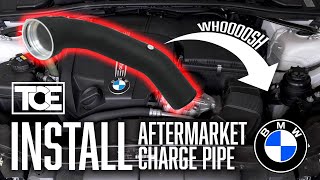
- The factory plastic charge pipe on the N55 engine is known to become brittle and fail, especially on tuned vehicles. When it fails, it can sometimes damage the TMAP sensor. Often, the P0113 code appears after a charge pipe has been replaced because the sensor was either damaged during the swap or its connector wasn't fully seated.
Mechanic-Grade Diagnostic Values
- IAT Sensor Resistance — expected: Approximately 5.17 kΩ at 20°C (68°F) and 0.374 kΩ (374 Ω) at 100°C (212°F). Resistance decreases as temperature increases.. Failure: An infinite resistance (open circuit) or a value that does not change with temperature indicates a faulty sensor.
- TMAP Connector Pin Voltages (Key On, Engine Off) — expected: Pin 4: ~5V (DME Reference Voltage), Pin 1: ~0V (DME Ground), Pin 2: Signal (Varies with pressure), Pin 3: Signal (Varies with temperature).. Failure: Missing 5V reference or ground indicates a wiring problem between the connector and the DME.
Hidden / Shadow Codes Worth Checking
- 108001: Intake air temperature sensor, electrical: Short circuit to B+ (see via BMW-specific diagnostic software like ISTA or advanced scanners (e.g., BimmerLink).)
- 108932: Intake air temperature sensor, plausibility: Group error (see via BMW-specific diagnostic software like ISTA or advanced scanners.)
- 281A: Absolute pressure sensor, intake pipe, electrical: Short circuit to B+. This is for the pressure circuit but often appears with IAT faults in the same TMAP sensor. (see via BMW-specific diagnostic software like ISTA or professional scan tools like Snap-On Solus.)
Scan Tool Commands That Help
- ISTA (Integrated Service Technical Application): ABL (Test Plan) for Intake Air Temperature Sensor — After confirming the P0113 code, ISTA can run a guided diagnostic test. It will prompt the technician to check live data, inspect wiring, and perform voltage/resistance tests at specific pins, comparing the results against target values stored in the software.
- ISTA (Integrated Service Technical Application): Clear adaptations — While not strictly required for a simple sensor replacement, clearing engine adaptations after the repair can help the DME relearn fuel trims and other values with the new, correct sensor data more quickly.
Wiring & Ground Locations
- Main Engine Ground Strap (E70 X5) — On the driver's side of the engine, connected between the engine mount and the chassis. It is a braided metal strap. Access is typically gained by removing the driver's side front wheel and inner fender liner.. A corroded or loose main engine ground can cause a variety of erratic electrical issues and sensor faults, including incorrect reference voltages for sensors like the TMAP. While not a direct cause, it's a critical check if multiple, seemingly unrelated electrical faults are present.
- DME (Engine Computer) Location (E70/F15 X5) — Located in the engine bay, typically under the intake manifold (E70) or in a water-resistant box on the passenger side near the firewall.. If wiring tests fail (e.g., no 5V reference at the sensor), the next step is to test for continuity directly at the DME connector pins. Knowing the DME's location is essential for this advanced diagnosis.
- TMAP Sensor Connector Pinout (N55) — On the TMAP sensor at the charge pipe.. Pin 1: Ground, Pin 2: Pressure Signal, Pin 3: Temperature Signal, Pin 4: 5V Reference. This pinout is crucial for performing accurate voltage and resistance tests at the connector.
Real Owner Repair Stories
- Reddit r/BmwTech (2015 BMW M235i (N55 Engine)) — Check Engine Light came on after installing an aftermarket (VRSF) charge pipe. A Bosch code reader showed a 'permanent' P0113 code. The car was running fine otherwise.
❌ Tried (didn't work) Ensuring the TMAP connector was plugged in correctly., Removing and visually inspecting the TMAP sensor, which showed no obvious damage.
✅ What actually fixed it The owner suspected the sensor was damaged during the charge pipe installation, even without visible signs. The implied fix, after confirming the connection was secure, was to replace the TMAP sensor. This highlights how sensitive the sensor is to being handled during a charge pipe swap.
OEM Part Supersession History
13627551429→13627585493, then 13627599042, and finally 13628644432.— Standard part revisions by BMW for improved reliability or manufacturing changes.
Heads up: All listed part numbers are generally interchangeable for this application. However, there are different connector types ('Type A' vs 'Type B') on some N55 platforms, though this is less of an issue for the X5. Always verify the correct part number for your specific VIN before ordering.
Model Year Variations Within This Range
- 2011-2013 (E70) vs 2014-2018 (F15): While the N55 engine and the TMAP sensor function are the same, the main engine ground strap location and routing can differ slightly between the E70 and F15 chassis. The DME is also located in different physical positions between generations, affecting advanced wiring diagnostics.
Diagnostic Flowchart
Other Known Issues on This Vehicle
Issues unrelated to this code that are worth knowing about as an owner of this generation:
- Electric Water Pump Failure 🔴 High — Commonly fails between 60,000 and 100,000 miles, often without warning. Some owners replace it preventatively.
- Oil Filter Housing Gasket (OFHG) Leak 🔴 High — Extremely common. The gasket hardens and leaks oil, often onto the serpentine belt, which can cause the belt to slip off and be ingested by the front main seal, leading to catastrophic engine damage.
- Valve Cover & Gasket Leak 🟠 Medium — Very common. The gasket becomes brittle and leaks oil, typically onto the hot exhaust manifold/downpipe, causing a burning oil smell. The plastic valve cover itself can warp or the integrated PCV valve can fail, necessitating replacement of the entire cover.
- VANOS Solenoid and Bolt Issues 🔴 High — The bolts securing the VANOS units can loosen or break, potentially causing the engine to enter limp mode or stall. (Ref: NHTSA Campaign Number: 14V176000, later expanded and covered by Safety Recall 23V-707.)
- Plastic Charge Pipe Failure 🟠 Medium — The factory plastic charge pipe connecting the intercooler to the throttle body can become brittle and crack under boost, causing a sudden loss of power. This is more frequent on tuned vehicles but also happens on stock cars.
- High-Pressure Fuel Pump (HPFP) Failure 🟠 Medium — While more notorious on the earlier N54 engine, the N55 can also experience HPFP failures, leading to long crank times, rough idle, and loss of power.
Used vs. New Parts: Buying Guide for This Vehicle
When a used part is the smart pick: A used part is generally not recommended for electronic sensors like the TMAP. The cost savings are minimal compared to a new aftermarket part, and the risk of getting a part that is already near the end of its service life is high. A used part only makes sense in an emergency to get the vehicle running while waiting for a new part to arrive.
Donor-vehicle mileage cap: roughly under 40000 miles for the part to have meaningful remaining life.
What to inspect on the donor part:
- Ensure the donor vehicle was not in a front-end collision.
- Inspect the sensor's plastic housing for any cracks or signs of heat stress.
- Check the electrical pins inside the connector to ensure they are straight, clean, and free of corrosion.
OEM-only on this vehicle (don't cheap out):
- While not strictly 'OEM-only', using a Genuine BMW or OEM supplier (like Bosch) TMAP sensor is highly recommended for reliability and accurate readings.
Aftermarket brands forum-validated for this vehicle:
- Bosch (often the original OEM supplier)
- Vitesco (Continental/VDO)
Brands owners have reported issues with on this vehicle:
- Unnamed, no-brand sensors from online marketplaces are frequently cited on forums as being inaccurate or failing prematurely.
Real Owner Stories
Aggregated from forums and TSBs cited above. Mileages and costs reflect what owners reported in those sources.
2014 BMW M235i N55
Symptoms: Got a permanent P0113 code immediately after installing an aftermarket charge pipe.
What fixed it: Ensuring the TMAP sensor and connection were properly handled and seated during the upgrade.
Source hint: Reddit r/BmwTech
2011 BMW 335i N55
Symptoms: Massive oil leak immediately after replacing only the valve cover gasket.
What fixed it: Replacing the entire plastic valve cover as a unit because the original cover had warped.
Source hint: Bimmerpost (E90POST)
Related OBD-II Codes
Frequently Asked Questions
Where is the TMAP sensor located on my N55 BMW X5?
I just installed an aftermarket charge pipe on my X5 and now have a P0113 code. What happened?
My scanner shows -40°F for the Intake Air Temperature. Does this mean the sensor is definitely bad?
Are there any recalls for the N55 engine that might be related to engine stalling or limp mode?
Can a P0113 code cause a 'Drivetrain Malfunction' message on my iDrive screen?
Who is the original equipment manufacturer for the TMAP sensor if I want to avoid dealership prices?
Helpful Videos
We Have This Part in Stock


The information in this article is provided for general reference and educational purposes only. Vehicle specifications, procedures, and part compatibility can vary by production date, trim level, and region. Always consult your vehicle's factory service manual and verify part numbers before purchasing or performing repairs. Safety-critical components such as airbags, seat belts, and braking systems should be installed by a qualified professional.
- BMW X5:
- 🧭 Diagnostic Flowchart
- 🎬 Helpful Videos
- 🛍️ Shop This Part
- What's Unique About the 2011-2018 BMW X5
- Symptoms You May Notice
- Most Likely Causes
- Rare But Worth Checking
- Diagnosis Steps
- Parts You'll Likely Need
- Platform-Specific Known Issues
- Mechanic-Grade Diagnostic Values
- Hidden / Shadow Codes Worth Checking
- Scan Tool Commands That Help
- Wiring & Ground Locations
- Real Owner Repair Stories
- OEM Part Supersession History
- Model Year Variations Within This Range
- Other Known Issues on This Vehicle
- Used vs. New Parts: Buying Guide for This Vehicle
- Real Owner Stories
- 2014 BMW M235i N55
- 2011 BMW 335i N55
- Related OBD-II Codes
- Frequently Asked Questions
- 🎟️ Get 5% Off