

P0113 on 2017-2024 Chrysler Pacifica Hybrid: IAT Sensor Circuit High Causes & Fixes
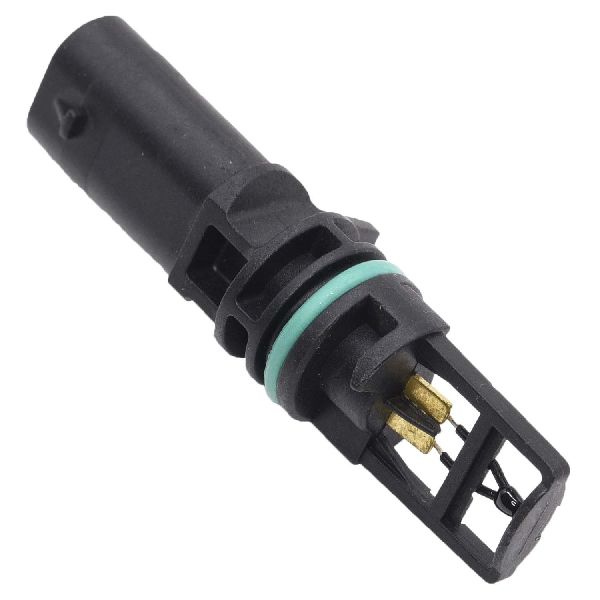
On a 2017-2024 Pacifica Hybrid, code P0113 almost always points to a faulty Intake Air Temperature (IAT) sensor. It's an inexpensive part, located on the main air intake duct, and is a very simple 15-minute DIY replacement. The PCM detects a high voltage (over 4.9V) from the sensor circuit, which it interprets as an impossibly cold temperature like -40°F.
- P0113 on this Pacifica is an electrical fault, not an overheating issue.
- The most likely culprit is a bad IAT sensor, which is an easy and inexpensive DIY fix.
- Before buying parts, always check the engine air filter first, then inspect the sensor's wiring for visible damage.
- Use a scan tool to check live data; a reading of -40°F is a dead giveaway that the sensor circuit is open.
- The correct replacement part is a standalone sensor, Mopar part number 5149182AB.
What's Unique About the 2017-2024 Chrysler Pacifica
On the 2017-2024 Pacifica, including the hybrid model, Chrysler uses a standalone, two-wire 'twist-lock' IAT sensor located in the air intake duct between the air filter box and the throttle body. This is a key distinction, as some earlier Chrysler/Dodge vehicles with the 3.6L Pentastar engine (approx. 2011-2014) integrated the IAT sensor into the Manifold Absolute Pressure (MAP) sensor. Technicians or DIYers familiar with older models might look in the wrong place. For this specific vehicle, the fix is straightforward because the sensor is separate and easily accessible with a simple quarter-turn.
🎬 Watch: 2017-2023 Pacifica IAT sensor replacement walkthroughSymptoms You May Notice
- Check Engine Light is on
- Reduced fuel economy
- Rough or uneven idle
- Engine hesitation or reduced power during acceleration
- Difficulty starting the engine, especially when cold
- Engine may run rich, potentially causing a gasoline smell
- Replacing the MAP (Manifold Absolute Pressure) sensor. On this vehicle, the IAT is a separate component, not integrated into the MAP sensor as on some older Chrysler models with the 3.6L engine.
- Replacing the Ambient Air Temperature (AAT) sensor. This sensor is different and located elsewhere (usually behind the front grille) and will typically set a P0071 code, though sometimes a PCM software issue can link the two.
Most Likely Causes
- Faulty Intake Air Temperature (IAT) Sensor 🔴 High Probability → Shop Fuel Injection Air Flow Meter The sensor is a simple thermistor that can fail over time due to heat cycles and vibration, causing an internal open circuit. It's the most common point of failure for this code.
How to confirm: With a scan tool, observe the live data for the IAT sensor. If it reads a static, extremely low temperature (like -40°F) even when the engine is warm, the sensor circuit is open. Alternatively, test the sensor's resistance with a multimeter; it should be around 37,300 Ohms at 20°C (68°F). A reading of infinite resistance (OL) indicates a failed, open sensor.
Typical fix: Replace the IAT sensor. It is a simple twist-in component on the air intake duct that can be replaced in minutes.
Est. part cost: $25-$65 - Damaged Wiring or Connector 🟡 Medium Probability Engine bay wiring can be susceptible to damage from heat, vibration, or rodents chewing on the harness. The wires leading to the IAT sensor are thin and can become brittle.
How to confirm: Visually inspect the wiring harness and the two-pin connector leading to the IAT sensor. Look for any signs of frayed or chewed wires, corrosion on the pins, or loose connections. Use a multimeter to check for a 5V reference and a good ground at the sensor connector with the ignition on. An open circuit on either wire will cause P0113. 🎬 Watch: How to diagnose Chrysler P0113 circuit high codes
Typical fix: Repair the damaged section of wire or replace the connector pigtail. In cases of rodent damage, soldering in a new section of wire is a common fix.
Est. part cost: $15-$40 - Dirty or Clogged Engine Air Filter ⚪ Low Probability While a dirty filter itself won't cause a circuit-high code, it's a basic maintenance item that should always be checked first. A severely clogged filter can disrupt airflow and indirectly lead to other issues, and mechanics recommend checking it before any sensor diagnosis.
How to confirm: Visually inspect the engine air filter. If it is visibly dirty, it should be replaced.
Typical fix: Replace the engine air filter. This should be done as a first step before diagnosing the sensor itself.
Est. part cost: $20-$40
Rare But Worth Checking
- Faulty Powertrain Control Module (PCM): → Shop Engine Control Module (ECM) This is extremely rare. The PCM should only be considered after all other possibilities, including sensor and wiring issues, have been exhaustively ruled out. A faulty PCM will typically cause multiple other codes and more severe drivability problems.
Diagnosis Steps
- Check the engine air filter. If it's dirty, replace it before proceeding.
- Connect an OBD-II scanner and read the live data for the Intake Air Temperature sensor. A reading of -40°F or a similarly low, unchanging value is a strong indication of an open circuit.
- Visually inspect the IAT sensor connector and wiring for any obvious damage, corrosion, or loose connections. Pay close attention to signs of rodent activity. The sensor is located on the large plastic air duct between the air filter box and the engine throttle body.
- If the wiring appears intact, disconnect the sensor.
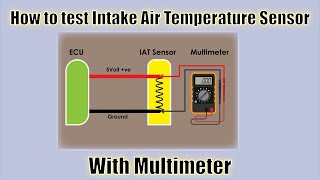
- To test the sensor, use a multimeter set to Ohms. Probe the two terminals on the sensor. At room temperature (approx. 68°F/20°C), you should see a resistance of around 37,300 Ohms. A reading of 'OL' or infinite resistance means the sensor is internally open and faulty. 🎬 Watch: Easy guide to testing IAT sensors with a multimeter
- To test the wiring, turn the ignition on (engine off). Use a multimeter to check the connector terminals. One should have a 5-volt reference signal from the PCM, and the other should be a ground.
- If the sensor fails the resistance test or the live data is stuck at -40°F, it is faulty and should be replaced. The replacement involves a simple counter-clockwise quarter-turn to remove.
Parts You'll Likely Need
- Intake Air Temperature Sensor
(OEM #5149182AB)— This is the most common cause of a P0113 code. The sensor fails internally, creating an open circuit that the PCM reads as a high voltage signal.
Trusted brands: Mopar, Standard Motor Products, Delphi, NTK
OEM price range: $35-$65
Aftermarket price range: $25-$45
Related Codes That Often Appear With This One
- P0112 — This code for 'IAT Sensor Circuit Low' can appear if the wiring issue is intermittent, causing the signal to short to ground at times and be open at other times.
- P0111 — This code for 'IAT Sensor Circuit Range/Performance' can be set if the PCM sees a signal that is irrational but not completely open or shorted. Sometimes a failing sensor can trigger this code first.
Technical Service Bulletins (TSBs) & Recalls
- TSB #18-044-16: While this TSB is for codes P0111 and P0071, it is relevant as it points to potential software logic issues in the PCM's temperature rationality checks for this vehicle platform. The bulletin involves reprogramming the PCM with updated software to address overly sensitive diagnostics. While less likely to be the primary cause for a hard-fault like P0113 (circuit high), it's worth noting if other temperature-related codes are present.
Mechanic-Grade Diagnostic Values
- IAT Sensor Resistance vs. Temperature — expected: Approximately 37,300 Ohms at 20°C (68°F), 7,960 Ohms at 60°C (140°F), and 2,240 Ohms at 100°C (212°F).. Failure: A reading of infinite resistance (OL) indicates an open/failed sensor. A reading that doesn't change with temperature is also a failure.
- IAT Sensor Connector Voltage (Key On, Engine Off) — expected: One wire (Violet/Light Blue) should have a ~5V reference signal from the PCM. The other wire (Violet/Dark Blue) is the sensor ground return to the PCM and will show near 0V.. Failure: No voltage or significantly low voltage on the reference wire points to an open in the harness or a PCM fault. No ground continuity points to an open in the ground return wire.
- Scan Tool Live Data (KOEO, cold soak) — expected: The IAT reading should be within 5°F (3°C) of the Ambient Air Temperature (AAT) and Engine Coolant Temperature (ECT) readings after the vehicle has sat for several hours.. Failure: A significant deviation from other temperature sensors at cold soak, or a static reading of -40°F, confirms a circuit or sensor fault.
Scan Tool Commands That Help
- wiTECH (Chrysler Dealer Tool): Viewing IAT Sensor Voltage and Temperature Data Stream — This is the primary function used for diagnosis. It allows a technician to see the raw voltage the PCM is receiving from the sensor circuit. For P0113, the voltage will be stuck high (approx. 4.7-5.0V), which the PCM translates to a -40°F reading. This instantly confirms an open circuit.
Wiring & Ground Locations
- IAT Sensor Connector (C1) — On the air intake tube, between the air filter box and the throttle body.. This is the primary point of failure for wiring issues. Pin 1 (VT/LB - Violet/Light Blue wire) is the 5V reference from the PCM. Pin 2 (VT/DB - Violet/Dark Blue wire) is the sensor ground. An open on either wire will cause P0113.
- PCM Connector C2 — On the Powertrain Control Module, which is typically located in the engine bay near the firewall or fender.. The IAT sensor signal wire (VT/LB) runs to a specific pin on this connector. If testing at the sensor connector shows no 5V reference, the next step is to check for continuity between the sensor connector pin and the corresponding pin at the PCM connector to find the location of the open circuit.
- Engine/Chassis Ground — Multiple ground points (G-points) exist on the engine block and chassis. The PCM relies on a solid main ground connection.. While less common for a single sensor code, a poor main PCM ground can cause floating voltages and erratic behavior across multiple sensor circuits, potentially including the IAT sensor.
OEM Part Supersession History
5149182AA→5149182AB— Standard part revision by the manufacturer. The new part is a direct replacement.
Heads up: None. The parts are fully interchangeable.
Diagnostic Flowchart
Other Known Issues on This Vehicle
Issues unrelated to this code that are worth knowing about as an owner of this generation:
- Sudden Engine Shutdown (Hybrid) 🔴 High — Affects 2017-2023 Hybrid models. Widespread enough to trigger a major recall. (Ref: Recall for 67,118 vehicles (2017-2023 MY) due to an internal transmission wiring connector short-circuiting. The fix involves a software update, but the recall's effectiveness has been questioned by the NHTSA.)
- High-Voltage Battery Fire Risk (Hybrid) 🔴 High — Affects 2017-2018 models. Multiple recalls were issued. (Ref: Recalls were issued for 2017-2018 models due to risk of battery fires, even when parked and off. Chrysler advised owners to avoid charging and park outdoors.)
- Parasitic 12V Battery Drain 🟠 Medium — Common across 2017-2024 models, both hybrid and gas. Owners report dead batteries after a few days of sitting. (Ref: Multiple TSBs have been issued to address software issues in the Uconnect system and other modules that fail to enter sleep mode. Reddit forums for the Pacifica Hybrid have numerous threads on this topic.)
- Rough Shifting / Transmission Problems 🟠 Medium — Particularly noted on 2017 models, but complaints exist for others. Symptoms include jerking, hesitation, and sometimes premature failure. (Ref: While related to the engine shutdown recall in hybrids, the 9-speed automatic in non-hybrids has also received complaints.)
- Uconnect Infotainment System Glitches 🟡 Low — A frequent complaint across all model years, involving screen freezes, reboots, and connectivity issues. (Ref: Software updates are periodically released to address these bugs.)
Used vs. New Parts: Buying Guide for This Vehicle
When a used part is the smart pick: For this repair, buying a used part is generally not recommended. The IAT sensor is an inexpensive electronic component, and the cost savings of a used part from a junkyard are minimal compared to the risk of getting a part that is near the end of its service life. A used wiring connector pigtail could be a sensible choice if only the connector is damaged and a new pigtail is unavailable or expensive.
Donor-vehicle mileage cap: roughly under 50000 miles for the part to have meaningful remaining life.
What to inspect on the donor part:
- For a connector pigtail, ensure the plastic is not brittle or cracked.
- Check for any signs of corrosion on the electrical terminals inside the connector.
- Ensure there is at least 6 inches of flexible, undamaged wire attached.
OEM-only on this vehicle (don't cheap out):
- None. For this code, high-quality aftermarket sensors are widely considered reliable.
Aftermarket brands forum-validated for this vehicle:
- Standard Motor Products (SMP)
- NTK
- Delphi
Brands owners have reported issues with on this vehicle:
- No-name, unbranded sensors from online marketplaces should be avoided due to inconsistent quality control.
Real Owner Stories
Aggregated from forums and TSBs cited above. Mileages and costs reflect what owners reported in those sources.
2023 Chrysler Pacifica Hybrid 3.6L
Symptoms: Check engine light illuminated; the owner demonstrated the location and symptoms of a bad Intake Air Temperature sensor.
What fixed it: Replacement of the IAT sensor using a simple counter-clockwise quarter-turn procedure.
Source hint: YouTube video titled '2017-2023 CHRYSLER PACIFICA HYBRID 3.6L - Bad Intake Air Temperature (IAT) Sensor'
2011 Dodge Grand Caravan 3.6L Pentastar
Symptoms: P0113 error code present; inspection revealed wiring issues.
What fixed it: Soldering in new wire sections to repair harness damage caused by a rodent.
Source hint: YouTube video titled 'P0113 Dodge/Chrysler Error Code - Air Intake Temperature Sensor/Wires'
Related OBD-II Codes
Frequently Asked Questions
I have a 2017 Pacifica Hybrid; could TSB #18-044-16 be the reason for my P0113 code?
Where is the IAT sensor located on the 3.6L Pentastar Hybrid engine?
Could the hybrid-specific transmission recall cause this air temperature code?
My Pacifica has a gasoline smell and a P0113 code; are they connected?
Can I test the IAT sensor on my Chrysler 300 or Dodge Grand Caravan using the same steps?
Is it true that a weak 12V battery can cause electronic issues in the Pacifica?
Helpful Videos
We Have This Part in Stock

The information in this article is provided for general reference and educational purposes only. Vehicle specifications, procedures, and part compatibility can vary by production date, trim level, and region. Always consult your vehicle's factory service manual and verify part numbers before purchasing or performing repairs. Safety-critical components such as airbags, seat belts, and braking systems should be installed by a qualified professional.
- Chrysler Pacifica:
- 🧭 Diagnostic Flowchart
- 🎬 Helpful Videos
- 🛍️ Shop This Part
- What's Unique About the 2017-2024 Chrysler Pacifica
- Symptoms You May Notice
- Most Likely Causes
- Rare But Worth Checking
- Diagnosis Steps
- Parts You'll Likely Need
- Related Codes That Often Appear With This One
- Technical Service Bulletins (TSBs) & Recalls
- Mechanic-Grade Diagnostic Values
- Scan Tool Commands That Help
- Wiring & Ground Locations
- OEM Part Supersession History
- Other Known Issues on This Vehicle
- Used vs. New Parts: Buying Guide for This Vehicle
- Real Owner Stories
- 2023 Chrysler Pacifica Hybrid 3.6L
- 2011 Dodge Grand Caravan 3.6L Pentastar
- Related OBD-II Codes
- Frequently Asked Questions
- 🎟️ Get 5% Off