

P0113 on 2011-2019 Ford Explorer 3.5L: IAT Circuit High Causes and Fixes
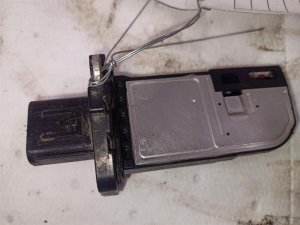
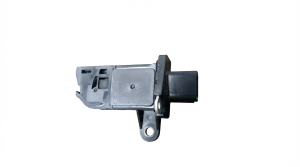
On a 2011-2019 Ford Explorer with the 3.5L V6, code P0113 is almost always caused by a failed Mass Airflow (MAF) sensor, which contains the Intake Air Temperature (IAT) sensor. The fix is to replace the entire MAF sensor assembly. Expect to pay $70-$140 for an aftermarket part or around $190 for an OEM Motorcraft part. It's a simple DIY job that involves removing two T20 Torx screws.
- P0113 on this Explorer points to a problem with the Intake Air Temperature (IAT) sensor circuit.
- The IAT sensor is built into the Mass Airflow (MAF) sensor; you must replace the entire MAF assembly to fix a bad IAT.
- The most likely fix is replacing the MAF sensor (Motorcraft part #AFLS-165).
- Before replacing the part, check the live data on a scan tool for a -40° reading and inspect the sensor's wiring and connector for damage.
- This is a very simple DIY repair that usually requires only a screwdriver or a small Torx driver and takes less than 15 minutes.
What's Unique About the 2011-2019 Ford Explorer
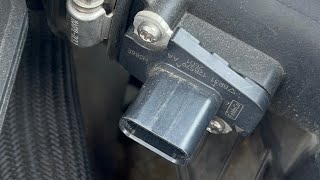
On the 5th generation Ford Explorer with the 3.5L V6 engine (and its platform mates), the Intake Air Temperature (IAT) sensor is not a separate, standalone part. Instead, it is integrated into the Mass Airflow (MAF) sensor assembly located on the air filter housing. This means that if the IAT sensor element fails and causes a P0113 code, you cannot replace just the IAT sensor; you must replace the entire MAF sensor unit. This design simplifies the intake tract but means a failure of either the MAF or IAT component requires replacing the whole assembly.
Generation note: The 2011-2019 model years cover the entire fifth generation of the Ford Explorer (U502 platform). The information provided is consistent for all 3.5L V6 (naturally aspirated) engines within this generation.
Symptoms You May Notice
- Check Engine Light is on
- Reduced fuel economy
- Rough or unstable idle
- Hesitation or stumbling during acceleration
- Difficulty starting the engine, especially when cold
- Increased emissions leading to a failed smog test
- Black smoke from the exhaust on startup due to a rich fuel mixture.
- No-start condition with a strong smell of gasoline, particularly on a cold morning.
- Replacing only the oxygen sensors when lean codes (P0171/P0174) are also present, without first checking for vacuum leaks or MAF/IAT issues.
- Searching for a separate, standalone IAT sensor to purchase, not realizing it is part of the MAF assembly on this vehicle.
Most Likely Causes
- Failed MAF/IAT Sensor Assembly 🔴 High Probability The IAT sensor is integrated with the MAF sensor; failure of the internal thermistor is common over time and requires replacement of the entire unit. The sensor is a common failure point across many Ford models using this part.
How to confirm: With a scan tool, check live data for the IAT sensor. If it reads a fixed, extremely low temperature (like -40°F or -40°C) regardless of the actual engine temperature, the sensor has failed internally. If wiring checks out, the sensor is the cause.
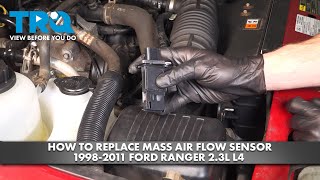
Typical fix: Replace the entire Mass Airflow (MAF) sensor assembly. This is held in by two T20 Torx screws and is a 10-minute job. 🎬 Watch: How to clean or replace the 3.5L Ford MAF sensor
Est. part cost: $70-$190 - Damaged Wiring or Connector 🟡 Medium Probability Wires in the engine bay are exposed to heat and vibration, which can lead to chafing, breaks, or corrosion over time. The connector pins can also become loose or corroded, causing an open circuit.
How to confirm: Visually inspect the wiring harness leading to the MAF sensor for any signs of damage. Unplug the connector and check for corrosion or bent/loose pins. Use a multimeter to check for a 5-volt reference signal and a good ground at the connector with the key on, engine off. An open in the signal or ground wire will cause the P0113 code.
Typical fix: Repair the broken or shorted wire. Clean or replace the electrical connector pigtail if corroded or damaged.
Est. part cost: $5-$30 - Dirty or Contaminated Sensor Element ⚪ Low Probability Using an over-oiled aftermarket air filter can cause oil to coat the sensor elements, leading to incorrect readings. A very dirty air filter can also allow contaminants to pass through. While this more commonly causes MAF performance codes (like P0101), it can occasionally contribute to circuit faults.
How to confirm: Remove the MAF sensor and visually inspect the small wires and thermistor inside. If they are coated with dirt, oil, or debris, they need cleaning.
Typical fix: Clean the sensor elements carefully using only a dedicated Mass Airflow Sensor cleaner spray. Do not touch the internal components. Let it dry completely before reinstalling. Often, this is a temporary fix if the sensor is already failing.
Est. part cost: $10-$15
Rare But Worth Checking
- Failed Powertrain Control Module (PCM): → Shop Engine Control Module (ECM) This is extremely rare. The PCM should only be considered after all other possibilities, including the sensor and all wiring, have been thoroughly tested and ruled out. A faulty PCM will usually present with multiple other unrelated codes.
Diagnosis Steps
- Connect an OBD-II scanner and confirm that P0113 is the primary code. Note any other codes present.
- Access the live data stream on the scanner and view the parameter for 'Intake Air Temperature' (IAT). If the engine is cold, it should be close to the ambient air temperature. If it is stuck at -40°F or -40°C, this confirms the fault the PCM is seeing.
- Visually inspect the MAF sensor connector and its wiring harness. Look for obvious signs of damage, such as frayed wires, rodent damage, or corrosion on the connector pins. Pay close attention to the harness right at the connector where it flexes.
- Disconnect the MAF sensor. With the key on and engine off, use a multimeter to test the electrical connector. You should find a 5-volt reference wire, a ground wire, and one or more signal wires. Confirm the presence of power and ground. A lack of either points to a wiring issue upstream.
- If power and ground are good, the issue is almost certainly the MAF/IAT sensor assembly itself. A user on 2CarPros forum experienced a persistent P0113 even after replacing the sensor and pigtail, indicating the importance of checking the full length of the wiring for an open.
- If the sensor looks dirty, you can try cleaning it with dedicated MAF sensor cleaner as a first step. Let it air dry completely before reinstalling. Do not touch the sensor elements.
- If cleaning does not resolve the issue, or if the wiring is confirmed to be good, replace the entire MAF sensor assembly. It is secured with two T20 Torx screws.
- After replacement, clear the codes with the scanner and perform a test drive to ensure the code does not return.
Parts You'll Likely Need
- Mass Air Flow (MAF) Sensor Assembly
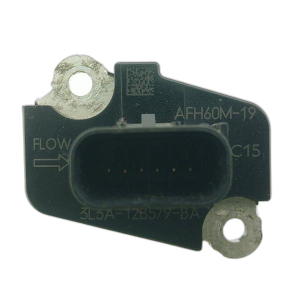
(OEM #Motorcraft AFLS-165 (Service P/N), AA5Z-12B579-A / BR3Z-12B579-A (Engineering P/N))— This assembly contains the integrated IAT sensor that is the most common cause of a P0113 code on this vehicle.
Trusted brands: Motorcraft (OEM), Delphi, Walker Products, Standard Motor Products
OEM price range: $104-$190
Aftermarket price range: $70-$140
Related Codes That Often Appear With This One
- P0102 — P0102 is 'MAF Circuit Low Input'. Since the IAT and MAF sensors are in the same housing and share a connector, a fault in the unit or its wiring can trigger both codes simultaneously.
- P0171 / P0174 — These are 'System Too Lean' codes. An incorrect (cold) temperature reading from the P0113 fault can cause the PCM to inject too much fuel (running rich), but a failing MAF sensor can also mis-report airflow, leading to lean conditions. These codes often appear if there's also a vacuum leak after the MAF sensor.
Platform-Specific Known Issues
- Some owners have reported that aftermarket MAF sensors, particularly budget brands, may not seal correctly in the airbox, causing unmetered air leaks and additional trouble codes. It is highly recommended to use an OEM Motorcraft part or a reputable Tier 1 aftermarket brand.
Mechanic-Grade Diagnostic Values
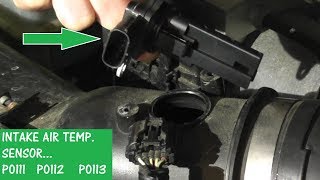
- IAT Sensor Resistance vs. Temperature — expected: Resistance changes with temperature. Example values: ~100,700 Ohms at -40°F (-40°C), ~37,300 Ohms at 32°F (0°C), ~2,500 Ohms at 77°F (25°C), ~332 Ohms at 212°F (100°C).. Failure: An open circuit (infinite resistance) or a resistance value that does not change with temperature indicates a failed sensor. A reading of 100.7 K Ohms or higher corresponds to the -40°F default and points to an internal open. 🎬 See this guide on how to test and replace the IAT sensor
- MAF/IAT Connector Voltage (Key On, Engine Off, Connector Unplugged) — expected: One pin should show a 5V reference signal from the PCM. Another pin should have a good ground (near 0V).. Failure: Absence of the 5V reference or ground indicates a wiring problem between the connector and the PCM, not a faulty sensor.
- MAF/IAT Connector Voltage (Key On, Engine Off, Connector Plugged In) — expected: The IAT signal wire voltage should vary with temperature but typically sits between 0.5V and 4.5V during normal operation. The P0113 code triggers when this signal voltage exceeds the maximum threshold, usually around 4.7V-4.9V.. Failure: A constant 5V on the signal wire indicates an open in the circuit (either in the sensor itself or the wiring).
Scan Tool Commands That Help
- Ford IDS (Integrated Diagnostic System): Pinpoint Test DA: Intake Air Temperature (IAT) Sensor — This is the Ford-specific guided diagnostic procedure. It should be used when simple checks don't reveal the cause. It provides a step-by-step workflow for testing the sensor, wiring, and PCM based on expected values and known issues.
- Ford IDS (Integrated Diagnostic System): Reset KAM (Keep Alive Memory) — After replacing the MAF/IAT sensor, resetting the KAM is recommended. This clears the long-term fuel trims and other adaptive learning tables in the PCM, forcing it to re-learn with the data from the new sensor immediately.
Wiring & Ground Locations
- MAF/IAT Connector (C134) — On the air filter housing, plugged into the MAF sensor.. This is the primary connection point for the IAT sensor. All voltage and signal tests for the sensor circuit are performed here. The pins for IAT are typically the IAT Signal and SIGRTN (Signal Return/Ground).
- G104 / G108 / G109 — These are common engine compartment ground points. For the 2011-2019 Explorer platform (and its relatives like the Edge), G108 is often located on the right rear of the engine compartment, and G109 is at the front of the engine.. The IAT sensor's ground circuit (Signal Return) eventually terminates at a chassis ground. A corroded or loose ground at one of these points can cause a floating voltage and trigger a P0113 code. While the sensor has a dedicated return wire to the PCM, that PCM ground path relies on these main chassis grounds.
- S119 / S120 / S122 — These are splice points within the dash panel to headlight junction wiring harness, near the breakout to the PCM.. A corroded or failed splice at one of these locations can cause an open in the IAT circuit. This is a rare but difficult-to-diagnose cause of the P0113 code, as the wiring will appear fine at both the sensor and the PCM connector, but the connection is broken mid-harness.
OEM Part Supersession History
AA5Z-12B579-A→BR3Z-12B579-A— Part revision and consolidation by Ford.
Heads up: The service part number is Motorcraft AFLS-165, which corresponds to the latest revision. Using the older engineering numbers may result in sourcing old stock. It is best to order by the service part number.
Diagnostic Flowchart
Other Known Issues on This Vehicle
Issues unrelated to this code that are worth knowing about as an owner of this generation:
- Internal Water Pump Failure 🔴 High — Common after 80,000-120,000 miles. A weep hole is designed to leak coolant externally near the A/C compressor as an early warning, but if it fails internally, coolant mixes with engine oil, leading to catastrophic engine damage. (Ref: No recall, but a widely known issue. A class-action lawsuit was filed regarding this design.)
- Power Transfer Unit (PTU) Overheating and Failure 🔴 High — Common on AWD models. The PTU fluid is specified as 'lifetime' by Ford but can overheat and break down, causing leaks and eventual failure of the unit, which is expensive to replace. (Ref: No recall, but frequent owner complaints. Preventative fluid changes every 30,000 miles are recommended by independent shops.)
- Exhaust Odor / Carbon Monoxide Intrusion into Cabin 🔴 High — More common on 2011-2017 models, especially during hard acceleration or with the A/C in recirculation mode. Caused by unsealed seams and grommets in the rear of the vehicle. (Ref: Multiple TSBs issued (e.g., TSB 12-12-4, 16-0166, 17-0029, 17-0044) to address sealing the rear of the vehicle. Ford also initiated a complimentary service program.)
- Electronic Throttle Body Malfunction 🟠 Medium — Can occur at various mileages, causing the vehicle to suddenly enter 'limp mode' with a loss of power. (Ref: No specific recall for the Explorer, but a known issue across many Ford models of this era. Often triggers codes P2111 or P2112.)
- Cracked A-Pillar Trim / Interior Rattles 🟡 Low — Very common on early 5th generation models (2011-2013). The exterior black plastic trim on the A-pillars can crack or warp, causing rattling or buzzing noises at highway speeds. (Ref: No recall, but replacement parts are available.)
Used vs. New Parts: Buying Guide for This Vehicle
When a used part is the smart pick: A used OEM Motorcraft MAF sensor from a low-mileage, late-model donor vehicle can be a cost-effective and reliable alternative to a new aftermarket part. Given the high failure rate of cheap aftermarket sensors, a used OEM part is often a better gamble.
Donor-vehicle mileage cap: roughly under 50000 miles for the part to have meaningful remaining life.
What to inspect on the donor part:
- Check for a clean, intact connector with no corrosion on the pins.
- Inspect the internal sensing elements; they should be clean and free of oil or debris.
- Ask for the donor vehicle's VIN to verify it's from a compatible year and model.
- Avoid parts from vehicles that show signs of a major front-end collision or engine fire.
OEM-only on this vehicle (don't cheap out):
- While not strictly 'OEM-only', the MAF/IAT sensor is a critical input for engine management. Many forum users and mechanics strongly advise against budget or no-name aftermarket brands due to poor sealing, inaccurate readings, and premature failure. Sticking with OEM Motorcraft is the safest bet.
Aftermarket brands forum-validated for this vehicle:
- Delphi
- Hitachi
Brands owners have reported issues with on this vehicle:
- Unbranded or 'white-box' sensors from online marketplaces.
- Some users have reported issues with store brands like Duralast not sealing correctly in the airbox, leading to other codes.
Real Owner Stories
Aggregated from forums and TSBs cited above. Mileages and costs reflect what owners reported in those sources.
2006 Ford Explorer
Symptoms: Persistent P0113 code that remained even after the owner replaced both the MAF sensor and the electrical connector pigtail.
What fixed it: Repairing an open circuit in the wiring harness between the connector and the PCM.
Source hint: 2CarPros.com - Thread '2006 Ford Explorer Code P0113'
2013 Ford Explorer 3.5L
Symptoms: The owner attempted to use a Duralast aftermarket MAF sensor which failed to seal correctly in the airbox.
What fixed it: Replacing the budget aftermarket sensor with an OEM part to ensure a proper seal and prevent EVAP leaks.
Source hint: YouTube - 'Clean or replace Mass Air Flow Sensor 2013 3.5 Ford' by channel 'T Squared'
Related OBD-II Codes
Frequently Asked Questions
Can I use an aftermarket MAF sensor from a brand like Duralast on my 2013 Ford Explorer 3.5L?
My 2011-2017 Explorer has a P0113 code and I also smell exhaust in the cabin. Are these related?
I replaced the MAF sensor on my Explorer but the P0113 code won't go away. What else should I check?
How do I confirm if the IAT sensor inside the MAF assembly has failed on my 3.5L V6?
Is the P0113 code common on other Ford vehicles similar to the Explorer?
Can a dirty air filter cause a P0113 code on my Ford Explorer?
Helpful Videos
We Have This Part in Stock

The information in this article is provided for general reference and educational purposes only. Vehicle specifications, procedures, and part compatibility can vary by production date, trim level, and region. Always consult your vehicle's factory service manual and verify part numbers before purchasing or performing repairs. Safety-critical components such as airbags, seat belts, and braking systems should be installed by a qualified professional.
- Ford Explorer:
- 🧭 Diagnostic Flowchart
- 🎬 Helpful Videos
- 🛍️ Shop This Part
- What's Unique About the 2011-2019 Ford Explorer
- Symptoms You May Notice
- Most Likely Causes
- Rare But Worth Checking
- Diagnosis Steps
- Parts You'll Likely Need
- Related Codes That Often Appear With This One
- Platform-Specific Known Issues
- Mechanic-Grade Diagnostic Values
- Scan Tool Commands That Help
- Wiring & Ground Locations
- OEM Part Supersession History
- Other Known Issues on This Vehicle
- Used vs. New Parts: Buying Guide for This Vehicle
- Real Owner Stories
- 2006 Ford Explorer
- 2013 Ford Explorer 3.5L
- Related OBD-II Codes
- Frequently Asked Questions
- 🎟️ Get 5% Off