

P0113 on 2015-2023 Ford Mustang: IAT Sensor Circuit High Causes and Fixes
On a 2015-2023 Mustang, P0113 is most often a failed sensor. For EcoBoost models, it's the standalone IAT sensor (~$25-$40 OEM). For 5.0L GT models, it's the entire MAF sensor assembly (~$120-$140 OEM). Both are very easy DIY fixes. Before replacing, check the wiring and connector, especially after installing a cold air intake.
- P0113 means the computer sees an open circuit for the Intake Air Temperature sensor, usually showing a -40°F reading.
- For EcoBoost Mustangs, you need to replace the small, inexpensive IAT sensor in the intake tube.
- For 5.0L GT Mustangs, you need to replace the entire Mass Airflow (MAF) sensor assembly.
- Before buying parts, always check the sensor's electrical connector and nearby wiring for damage, as this is a common and cheaper fix, especially after installing a cold air intake.
- This is a very DIY-friendly repair that can be done in minutes with basic tools.
What's Unique About the 2015-2023 Ford Mustang
The key difference on the S550 Mustang platform is how the IAT sensor is implemented based on the engine. EcoBoost models use a small, separate, and inexpensive IAT sensor located directly in the intake tubing between the air filter box and the throttle body. In contrast, the 5.0L V8 GT models integrate the IAT sensor's function into the larger, more expensive Mass Airflow (MAF) sensor assembly located at the outlet of the air filter box. Therefore, diagnosing and fixing a P0113 code requires a different part depending on which engine the Mustang has.
Symptoms You May Notice
- Check Engine Light is on
- Scan tool shows IAT reading of -40°F or similar default low value
- Reduced fuel economy
- Engine hesitates or stumbles on acceleration
- Rough or unstable idle
- Hard starting, especially in cold weather
- Active exhaust modes become disabled or unavailable (on equipped models)
- Replacing the wrong sensor (e.g., replacing a MAF on an EcoBoost when it has a separate IAT).
- Replacing the sensor when the actual problem is a broken wire or a corroded pin in the connector.
- Blaming the sensor for a problem caused by a newly installed aftermarket cold air intake that was installed incorrectly or requires a tune.
Most Likely Causes
- Failed IAT Sensor (EcoBoost) or MAF/IAT Sensor Assembly (5.0L GT) 🔴 High Probability Sensors can fail over time due to heat cycles and contamination from oil vapor or dirt. Using an aftermarket oiled air filter and applying too much oil can contaminate the sensor element, leading to failure.
How to confirm: Use a scan tool to monitor IAT live data. If it's stuck at -40°F, the circuit is open. Disconnect the sensor; if the reading doesn't change, the sensor is the most likely culprit. You can also test the sensor's internal resistance with a multimeter; it should not read as an open circuit.
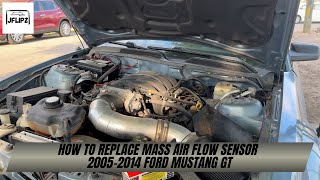
Typical fix: Replace the faulty sensor. For EcoBoost, it's the standalone IAT sensor. For the 5.0L GT, the entire MAF sensor assembly must be replaced. 🎬 See this Ford MAF sensor replacement walkthrough Sometimes, cleaning the sensor element with CRC Mass Airflow Cleaner or electronics cleaner can resolve the issue if it's just contaminated.
Est. part cost: $20-$140 - Damaged Wiring or Electrical Connector 🟡 Medium Probability The wiring harness or connector is often disturbed or damaged during air filter changes or cold air intake installation. Pins can become corroded, bent, or pushed out, creating an open circuit.
How to confirm: Visually inspect the sensor's electrical connector and the wiring leading to it for any signs of damage, corrosion, or loose connections. Perform a 'wiggle test' on the harness while watching live data to see if the reading changes. Use a multimeter to check for the 5-volt reference signal and a good ground at the connector with the key on, engine off.
Typical fix: Repair the damaged section of wiring or clean/replace the connector pigtail.
Est. part cost: $10-$30 - Improperly Installed Cold Air Intake (CAI) ⚪ Low Probability This is a very common scenario for this code. The MAF sensor on a GT may be installed backward, or the wiring harness extension included with the CAI kit may be faulty or poorly connected. Some CAIs also require a specific PCM tune to work correctly, and running without one can cause various codes, including P0113.
How to confirm: If the code appeared immediately after installing a CAI, this is the most likely cause. Check the MAF sensor orientation (it is directional). Reinstall the factory intake system; if the code disappears, the issue is with the CAI or its required tune.
Typical fix: Correctly orient the MAF sensor, check all connections on the harness extension, or install the required tune for the CAI. If the problem persists, contact the CAI manufacturer.
Est. part cost: $0-$100
Rare But Worth Checking
- Faulty Powertrain Control Module (PCM): → Shop Engine Control Module (ECM) This is extremely rare. The PCM should only be considered after all other possibilities, including the sensor and its entire circuit, have been exhaustively tested and ruled out.
Diagnosis Steps
- Connect an OBD-II scanner and confirm P0113 is the active code.
- View live data on the scanner. Look at the 'Intake Air Temperature' (IAT) PID. A reading of -40°F or -40°C strongly indicates an open circuit, which is the cause of a P0113 code.
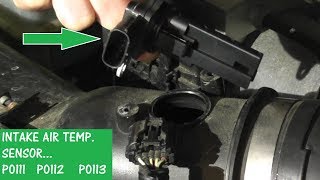
- Turn the engine off. Locate the IAT sensor. On EcoBoost models, it's a small sensor plugged into the intake tube after the airbox. On 5.0L GT models, you will be inspecting the larger Mass Airflow (MAF) sensor connector in the same location.
- Visually inspect the sensor's electrical connector for loose fitment, corrosion, or damaged pins. Inspect the visible wiring for any cuts, fraying, or heat damage. This is especially important if an aftermarket CAI has been installed.
- Try cleaning the sensor first. On an EcoBoost, remove the sensor (a quarter-turn counter-clockwise) and spray the element with CRC Electronics Cleaner or MAF Sensor Cleaner. On a GT, clean the MAF sensor elements inside the housing. Let it dry completely before reinstalling.
- Disconnect the sensor. With the key on and engine off, use a multimeter to check the electrical connector. You should have a 5-volt reference on one wire and a good ground on the other. If 5V or ground is missing, the problem is in the wiring harness or PCM.
- If the wiring checks out, the sensor itself is the most likely cause of failure.
- For a final confirmation, you can use a jumper wire to connect the signal and ground terminals on the harness connector (do NOT do this on the sensor itself). The IAT reading on the scan tool should change from -40°F to a very high temperature, triggering a P0112 (Circuit Low) code. This confirms the wiring and PCM are good, isolating the fault to the sensor. 🎬 Watch: How to test and replace an IAT sensor
Parts You'll Likely Need
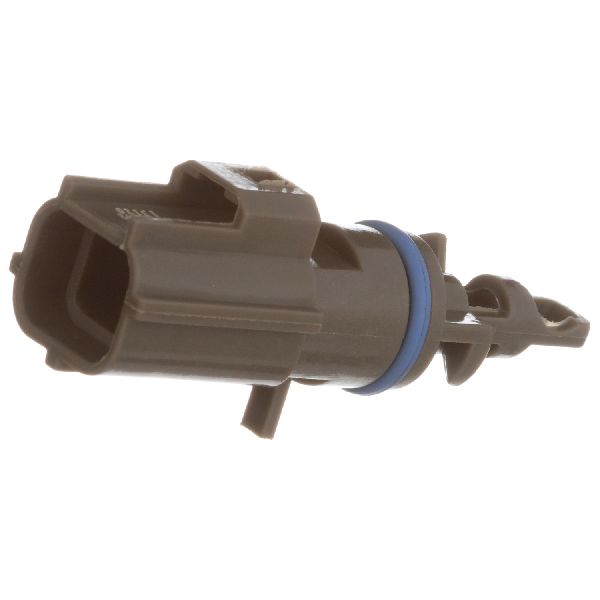
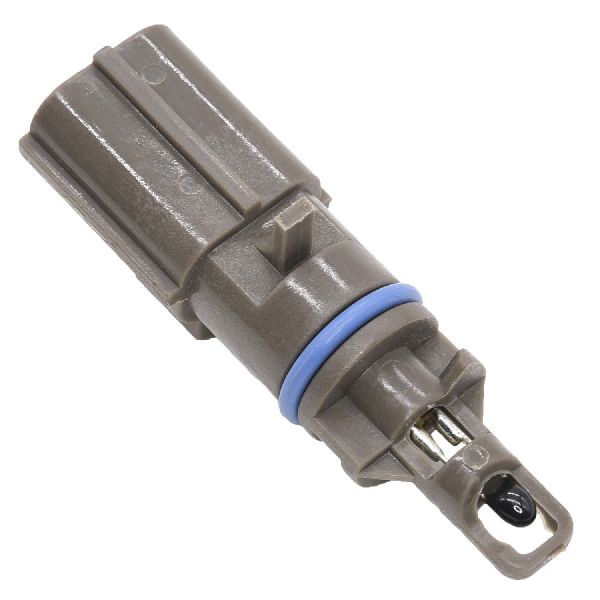
- Intake Air Temperature Sensor (EcoBoost Models)
(OEM #DS7Z-12A697-A)— This is the standalone sensor used on EcoBoost engines. It is the most common failure point for this code on these models.
Trusted brands: Motorcraft (DY-1267, which replaces DS7Z-12A697-A), Bosch, Standard Motor Products (AX422)
OEM price range: $25-$40
Aftermarket price range: $15-$30 - Mass Airflow (MAF) Sensor (5.0L GT Models)
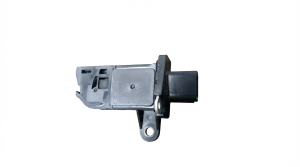
(OEM #8V2Z-12B579-A)— On the 5.0L V8, the IAT sensor is integrated into the MAF sensor assembly. If the IAT portion fails, the entire unit must be replaced.
Trusted brands: Motorcraft (AFLS-195), Hitachi, Duralast
OEM price range: $120-$140
Aftermarket price range: $40-$100
Related Codes That Often Appear With This One
- P0102 — Mass Air Flow (MAF) Circuit Low. On a 5.0L GT, since the IAT is part of the MAF, a failure of the unit or forgetting to plug in the connector can trigger multiple codes related to its functions.
- P0112 — Intake Air Temperature Sensor 1 Circuit Low. This is the opposite code, indicating a short circuit. Seeing one code flip to the other during a wiggle test can help pinpoint a wiring issue.
- P0171/P0174 — System Too Lean (Banks 1 and 2). While P0113 causes a rich condition, a faulty MAF/IAT sensor can provide incorrect airflow readings that may also lead to lean codes under certain circumstances, pointing to a complex sensor failure.
Platform-Specific Known Issues
- Issues with aftermarket Cold Air Intakes (CAIs) are a frequent cause of P0113. This can be from a damaged wiring harness extension, installing the MAF sensor housing backward, or contamination of the sensor element. Some CAIs require a specific tune, and failure to install it will cause this and other codes.
Mechanic-Grade Diagnostic Values
- IAT Sensor Resistance vs. Temperature — expected: Approx. 58.75 kΩ at 50°F (10°C), 37.30 kΩ at 68°F (20°C), 24.27 kΩ at 86°F (30°C), 16.15 kΩ at 104°F (40°C).. Failure: An infinite resistance (open circuit) or a reading that doesn't change with temperature indicates a failed sensor.
- IAT/MAF Connector Voltage (Key On, Engine Off) — expected: Approximately 5 volts on the reference wire and a solid connection to ground on the ground wire.. Failure: Absence of the 5V reference or a poor ground points to a wiring or PCM issue, not the sensor itself.
- Scan Tool IAT Voltage PID — expected: Voltage should vary with temperature, typically between 0.2V (hot) and 4.8V (cold).. Failure: A reading stuck at or near 5.0V indicates an open circuit, triggering P0113.
Scan Tool Commands That Help
- Ford IDS (Integrated Diagnostic System): Datalogger for Powertrain PIDs — Use the datalogger to monitor the IAT voltage (IAT V) and temperature (IAT) PIDs in real-time. This allows a technician to perform a 'wiggle test' on the harness and watch for any voltage dropouts or spikes that would indicate an intermittent wiring fault.
- Ford IDS (Integrated Diagnostic System): KOEO (Key-On-Engine-Off) Self-Test — Running the KOEO self-test can help confirm if P0113 is a hard fault. The system will check the integrity of the IAT circuit along with other key sensors before the engine is even started.
Wiring & Ground Locations
- Primary Engine Ground — On S550 models, a primary engine ground strap runs from the back of the cylinder head on the driver's side to the firewall.. A loose or corroded main engine ground can cause a floating ground for various sensors, including the IAT/MAF, leading to erratic readings and fault codes.
- IAT/MAF Sensor Connector (5.0L GT) — The IAT sensor signal is integrated into the 6-pin MAF sensor connector. The IAT function uses two of these pins for its signal and return.. When testing, it's crucial to have the correct pinout for the MAF connector to differentiate between the MAF and IAT circuits. An open on one of the IAT pins will cause P0113.
- Secondary Ground Point — A factory ground point is located in the trunk, behind the rearmost interior panel, which can be used as a reference for testing chassis ground integrity.. While not directly related to the engine harness, it provides a known-good chassis ground location for running continuity tests on the sensor's ground wire back to the PCM.
Real Owner Repair Stories
- Mustang6G.com forum user (2015-2017 Ford Mustang GT with an aftermarket Cold Air Intake) — Check Engine Light with P0113 code, scan tool reading -40°F for IAT.
❌ Tried (didn't work) Replacing the MAF/IAT sensor assembly with a new OEM part., Cleaning the original sensor and reinstalling it.
✅ What actually fixed it The problem was a faulty wiring harness extension that came with the cold air intake kit. The pins inside the extension connector were not making proper contact. Replacing the extension harness with a new one or reinstalling the stock intake resolved the code.
OEM Part Supersession History
8V2Z-12B579-A→AFLS-195— This is the service part number for the MAF sensor assembly on 5.0L GT models. AFLS-195 is the Motorcraft part number that replaces the original Ford engineering number.DS7Z-12A697-A→DY-1267— This is the service part number for the standalone IAT sensor on EcoBoost models. DY-1267 is the current Motorcraft part number.
Diagnostic Flowchart
Other Known Issues on This Vehicle
Issues unrelated to this code that are worth knowing about as an owner of this generation:
- Coyote "BBQ Tick" or "Typewriter Tick" 🟡 Low — Very common across all 5.0L Coyote engines (2011+). It's a light, rhythmic ticking noise most noticeable at idle when the engine is warm. Often reported after an oil change. (Ref: Ford has issued a Special Service Message (SSM 49761) stating the noise is a normal characteristic of the engine and does not affect performance or reliability.)
- 10R80 Automatic Transmission Issues 🟠 Medium — Reported by a significant number of owners of 2018+ models with the 10-speed automatic. Symptoms include harsh/erratic shifting, hesitation, and sometimes a metallic grinding sound. (Ref: Multiple TSBs exist, including TSB 19-2358 for a grinding noise caused by torque converter studs contacting a spacer plate on some 2018-2019 models.)
- A/C Evaporator Drain Tube Leak 🟠 Medium — Affects some 2018-2020 models, causing water from A/C condensation to leak onto the front passenger floorboard, potentially damaging carpet and electronics. (Ref: TSB 19-2345 instructs technicians to install a new elbow (Part No. 4M2Z-6A614-AA) on the drain tube to direct water away from the firewall seal.)
- Failed Oil Pump Gears (OPG) / Crank Sprocket 🔴 High — This is not a common failure under normal use but is a critical weak point for vehicles with increased power (superchargers, turbos) or those frequently driven at high RPM. The stock powdered metal gears can fracture, leading to a catastrophic loss of oil pressure and engine failure.
Used vs. New Parts: Buying Guide for This Vehicle
When a used part is the smart pick: For the 5.0L GT, buying a complete used factory airbox assembly from a low-mileage car can be a smart move. It often includes the MAF/IAT sensor and can be cheaper than a new OEM sensor alone. This is a common practice for owners who installed a cold air intake and want to revert to stock.
Donor-vehicle mileage cap: roughly under 50000 miles for the part to have meaningful remaining life.
What to inspect on the donor part:
- Check for the OEM Ford/Motorcraft logo on the sensor body.
- Inspect the connector pins for any signs of corrosion, bending, or moisture.
- Look at the sensor elements inside the housing; they should be clean and free of oil or physical damage.
- If buying a complete airbox, ensure all mounting tabs and clips are intact.
OEM-only on this vehicle (don't cheap out):
- While not strictly OEM-only, electronic sensors like the MAF/IAT are critical. Using a reputable OEM (Motorcraft) or high-quality aftermarket brand (Hitachi) is strongly recommended over no-name online parts to avoid performance issues.
Aftermarket brands forum-validated for this vehicle:
- Motorcraft (OEM)
- Hitachi
Brands owners have reported issues with on this vehicle:
- Unbranded, low-cost sensors from online marketplaces are frequently cited on forums as being poorly calibrated or failing prematurely.
Real Owner Stories
Aggregated from forums and TSBs cited above. Mileages and costs reflect what owners reported in those sources.
2021 Ford Mustang GT 5.0L
Symptoms: The owner received a P0113 code and observed a -40 degree temperature reading on a scan tool immediately after a shop visit involving a Cold Air Intake.
What fixed it: The community suggested performing a 'wiggle test' on the MAF harness and checking for damaged pins or a backward-installed MAF sensor.
Source hint: Mustang6G.com: Thread 'P0113 Code' (2021)
2011 Ford Mustang GT 5.0L
Symptoms: Owner triggered P0102 and P0113 codes simultaneously after performing radiator work.
What fixed it: The owner realized they had forgotten to plug the MAF sensor back in; reconnecting the sensor resolved the codes.
Source hint: S197Forum.com: Thread 'WTF did I do? P0102 and P0113' (2011)
2017 Ford Mustang GT 5.0L
Symptoms: Immediately after installing a JLT cold air intake, the Check Engine Light came on with code P0113.
What fixed it: Installing a required PCM tune because the specific aftermarket intake used a different MAF housing size.
Source hint: Reddit r/Mustang: Thread 'Check engine P0113' (2017)
Related OBD-II Codes
Frequently Asked Questions
Where is the IAT sensor located on my 2015-2023 Mustang EcoBoost versus the 5.0L GT?
Why did my Mustang's active exhaust stop working when the P0113 code appeared?
Can I just clean the sensor on my Mustang GT to fix P0113?
I just installed a JLT Cold Air Intake and now have a P0113 code; what is wrong?
Is the 'BBQ Tick' noise related to my P0113 intake air temperature code?
How can I confirm if the sensor or the wiring is bad on my Mustang?
Helpful Videos

Used OEM Parts in Stock
New Aftermarket Parts Available

The information in this article is provided for general reference and educational purposes only. Vehicle specifications, procedures, and part compatibility can vary by production date, trim level, and region. Always consult your vehicle's factory service manual and verify part numbers before purchasing or performing repairs. Safety-critical components such as airbags, seat belts, and braking systems should be installed by a qualified professional.
- Ford Mustang:
- 🧭 Diagnostic Flowchart
- 🎬 Helpful Videos
- 🛍️ Shop This Part
- What's Unique About the 2015-2023 Ford Mustang
- Symptoms You May Notice
- Most Likely Causes
- Rare But Worth Checking
- Diagnosis Steps
- Parts You'll Likely Need
- Related Codes That Often Appear With This One
- Platform-Specific Known Issues
- Mechanic-Grade Diagnostic Values
- Scan Tool Commands That Help
- Wiring & Ground Locations
- Real Owner Repair Stories
- OEM Part Supersession History
- Other Known Issues on This Vehicle
- Used vs. New Parts: Buying Guide for This Vehicle
- Real Owner Stories
- 2021 Ford Mustang GT 5.0L
- 2011 Ford Mustang GT 5.0L
- 2017 Ford Mustang GT 5.0L
- Related OBD-II Codes
- Frequently Asked Questions
- 🎟️ Get 5% Off