

P0113 on 1998-2001 Ford Ranger 2.5L: IAT Sensor Circuit High Causes and Fixes
On a 1998-2001 Ranger 2.5L, P0113 almost always points to a failed Intake Air Temperature (IAT) sensor or a break in its wiring. The PCM sees a high voltage, interprets it as an impossibly cold temperature (like -40°F), and triggers the code. This is a simple DIY fix, with a replacement sensor costing around $20-$50.
- P0113 on your Ranger means the computer thinks the intake air is extremely cold (-40°F), which is almost always caused by a bad IAT sensor or a wiring problem.
- The most likely fix is replacing the IAT sensor, which is an inexpensive part (Motorcraft DY-735) and very easy to access in the air intake tube.
- Before buying parts, check that the sensor is plugged in and the wires aren't broken. A quick voltage or resistance test with a multimeter can confirm the problem in minutes.
- Do not replace the Mass Airflow (MAF) sensor; the IAT sensor is a separate component on your 2.5L engine.
What's Unique About the 1998-2001 Ford Ranger
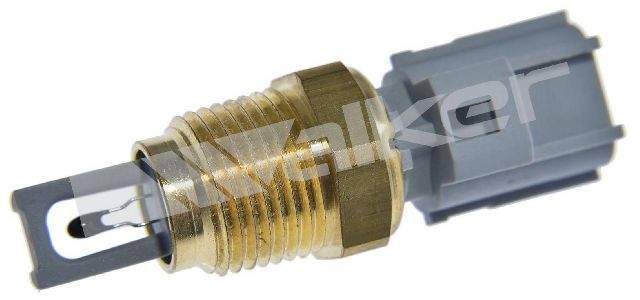
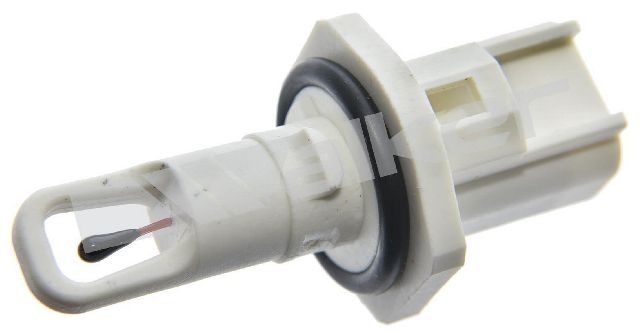
On the 1998-2001 Ford Ranger with the 2.5L Lima engine, the Intake Air Temperature (IAT) sensor is a separate, two-wire component located in the air intake ducting between the air filter box and the throttle body. This is different from many other Ford vehicles of different eras where the IAT is integrated into the Mass Airflow (MAF) sensor. This separation makes diagnosis and replacement simpler and less expensive, as you only need to address the small, standalone IAT sensor.
Symptoms You May Notice
- Check Engine Light is on
- Difficulty starting the engine, particularly when cold
- Reduced fuel economy
- Rough idling or stalling
- Poor acceleration or engine hesitation
- Increased vehicle emissions / failed emissions test
- Black smoke from the exhaust (running rich) in some conditions
- Replacing the Mass Airflow (MAF) sensor. On this specific vehicle and engine, the IAT is a separate part, so replacing the MAF will not solve a P0113 code.
Most Likely Causes
- Failed Intake Air Temperature (IAT) Sensor 🔴 High Probability → Shop Fuel Injection Air Flow Meter The sensor is a simple thermistor that can fail over time due to age, heat cycles, and moisture, causing an internal open circuit. It's the most common point of failure for this code.
How to confirm: Disconnect the sensor and test its resistance with a multimeter. A healthy sensor will show a specific resistance value that changes with temperature (e.g., around 37,000 ohms at 68°F), while a failed one will show infinite resistance (an open circuit). You can also use a hairdryer to gently warm the sensor and verify the resistance drops as temperature increases.
Typical fix: Replace the IAT sensor. It typically twists and locks into the air intake duct.
Est. part cost: $20-$50 - Damaged Wiring or Connector 🟡 Medium Probability Wires in the engine bay are exposed to heat, vibration, and flexing, which can cause them to become brittle and break over time. The connector pins can also corrode (often showing a green crust) or become loose, creating an open circuit.
How to confirm: Visually inspect the wiring harness leading to the IAT sensor for breaks, fraying, or melting. Check that the connector is plugged in securely and that the pins inside are clean. With the key on and sensor unplugged, check for a 5-volt reference signal at one pin and ground at the other using a multimeter. Absence of voltage points to a wiring issue upstream toward the PCM.
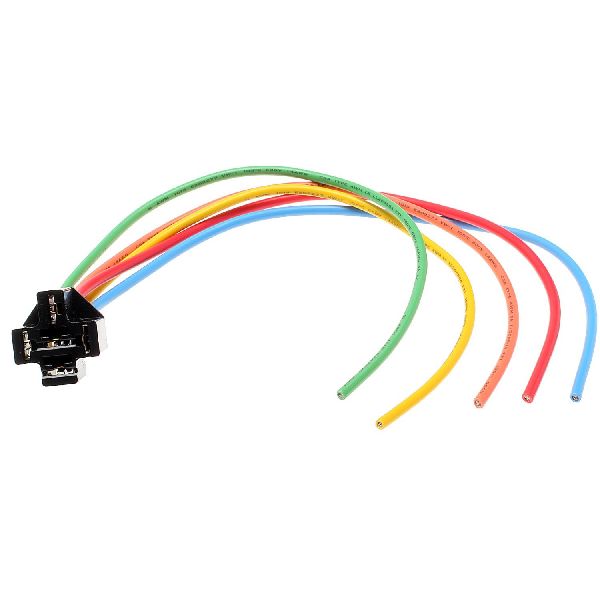
Typical fix: Repair the broken wire or replace the damaged connector pigtail. The pigtail connector is commonly available as a replacement part (e.g., Motorcraft WPT-322).
Est. part cost: $15-$35
Rare But Worth Checking
- Faulty Powertrain Control Module (PCM): → Shop Engine Control Module (ECM) This is extremely unlikely and should only be considered after all other possibilities, including the sensor and wiring, have been thoroughly ruled out. A faulty PCM typically causes multiple other trouble codes and more erratic behavior.
Diagnosis Steps
- Connect an OBD-II scanner to confirm the P0113 code is present and check for any other codes.
- Use the scanner's live data function to view the IAT sensor reading. A reading of -40°F or a similarly low, static temperature strongly suggests an open circuit.
- Locate the IAT sensor. On the 2.5L Ranger, it's a two-wire sensor plugged into the rubber air intake tube, between the air filter housing and the throttle body.
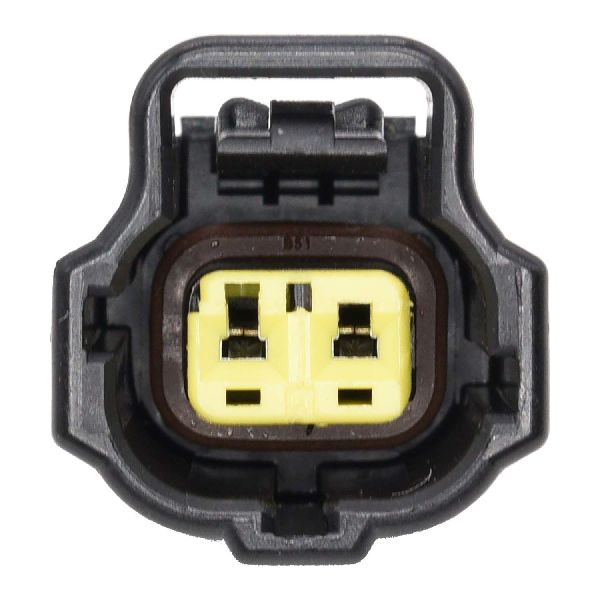
- Visually inspect the sensor's electrical connector and wiring for any obvious signs of damage, corrosion (green crust), or disconnection. Ensure the connector is seated firmly.
- Disconnect the sensor. With the ignition on (engine off), use a multimeter to test for a reference voltage of approximately 5 volts at the harness connector. If voltage is absent, there is a problem in the wiring leading back to the PCM.
- If reference voltage is present, test the sensor itself. Set your multimeter to measure resistance (Ohms) and connect the probes to the two pins on the IAT sensor.
- A reading of infinite resistance (OL) means the sensor has failed open and must be replaced. If it shows a resistance value, compare it to specifications (e.g., approx. 37.3k Ohms at 68°F/20°C). The resistance should decrease smoothly as the sensor warms up.
- If the sensor and reference voltage test good, the fault may be an intermittent connection. Wiggle the harness while observing live data on the scanner to see if the reading changes, which would indicate a break in the wire.
Parts You'll Likely Need
- Intake Air Temperature (IAT) Sensor
(OEM #DY-735)— This sensor is the most common failure point for a P0113 code, as it can fail internally and create an open circuit.
Trusted brands: Motorcraft, Bosch, Delphi, Standard Motor Products
OEM price range: $40-$60
Aftermarket price range: $20-$40 - IAT Sensor Connector Pigtail
(OEM #WPT-322)— If the connector itself is damaged, corroded, or the wires are broken right at the connector, replacing the pigtail is the standard repair.
Trusted brands: Motorcraft, Dorman, Standard Motor Products
OEM price range: $25-$35
Aftermarket price range: $15-$25
Mechanic-Grade Diagnostic Values
- IAT Sensor Signal Voltage (KOEO, backprobed at sensor) — expected: Between 3.5V (at ~50°F) and 1.0V (at ~160°F).. Failure: A reading of 4.6V or higher indicates an open circuit, triggering P0113.
- IAT Sensor Resistance — expected: Resistance changes with temperature. For example, approximately 37,000 Ohms at 68°F (20°C).. Failure: Infinite resistance (OL on multimeter) indicates an internally open sensor.
- IAT Sensor Connector Voltage (KOEO, sensor unplugged) — expected: One pin should have ~5V (VREF from PCM) and the other should have a good ground.. Failure: Absence of 5V on the signal wire (Grey) points to an open in the harness back to the PCM.
Wiring & Ground Locations
- IAT Sensor Signal Wire — This is a Grey (GRY) wire that runs from the IAT sensor connector to pin 39 on the 104-pin PCM connector.. An open or break anywhere along this wire will cause the PCM to see a high voltage (over 4.6V) and set the P0113 code. Technicians can check for continuity between the sensor connector and PCM pin 39 to verify the wire's integrity.
- IAT Sensor Ground Reference Wire — This is a Grey with Red stripe (GRY/RED) wire that provides the ground reference for the sensor. This wire is shared with other sensors and connects to the PCM.. While a bad ground is more likely to cause other codes or erratic readings, a break in this wire specific to the IAT sensor branch could contribute to a high voltage reading.
- PCM Connector Pin 39 — Pin 39 on the 104-pin Powertrain Control Module (PCM) connector.. This is the specific terminal where the PCM receives the temperature signal from the IAT sensor. All voltage and continuity tests for the signal wire terminate here.
Real Owner Repair Stories
- Ranger-Forums user 'SJM' (1999 Mazda B3000 (platform mate to Ranger)) — Check Engine Light with code P0113 immediately after replacing an idler pulley and serpentine belt.
❌ Tried (didn't work) Initially suspected a sensor failure due to overheating when the belt came off.
✅ What actually fixed it The user realized they had forgotten to plug the IAT sensor connector back into the intake hose after completing the other repairs. Plugging the sensor back in and clearing the code resolved the issue.
OEM Part Supersession History
F57Z-12A697-A→DY-735 (Motorcraft)— Standard part number update and replacement.
Heads up: The original Ford engineering number may appear as F57F-12A697-AA or F57F-12A697-AB on the physical part, but the service part number is DY-735.
Diagnostic Flowchart
Other Known Issues on This Vehicle
Issues unrelated to this code that are worth knowing about as an owner of this generation:
- Frame Rust 🔴 High — Very common, especially in the salt belt. Problem areas include the rear spring hangers/shackles and the frame section above the fuel tank. (Ref: No official recall, unlike similar Toyota issues, but widely documented by owners.)
- Idle Air Control (IAC) Valve Failure 🟠 Medium — Common issue causing erratic high idle, stalling, or RPMs hanging between shifts. Aftermarket replacements are known to be problematic; Motorcraft or Hitachi parts are recommended.
- Recessed Exhaust Valve Seats 🟠 Medium — A well-documented issue on the 2.5L Lima dual-plug head, causing a rough idle, stalling after acceleration, and eventually a dead cylinder.
- Camshaft Position Sensor Failure (2.5L I4) 🟡 Low — While less common than on the V6 models, the 2.5L's cam sensor can fail, causing rough running, stalling, and code P0340. On the 2.5L, it is a simple sensor replacement and does not involve a synchronizer assembly like the V6 engines.
- Weak Connecting Rods (2.5L Specific) 🟡 Low — The 2.5L is a stroked version of the 2.3L Lima, and to achieve this, it uses longer but weaker connecting rods. This makes the engine less durable and less tolerant of abuse or high RPMs compared to the 2.3L.
Used vs. New Parts: Buying Guide for This Vehicle
When a used part is the smart pick: A used IAT sensor from a junkyard is a reasonable choice for this repair. The part is simple, not a major wear item, and can be easily tested for functionality with a multimeter before purchase. Given the low cost of a new aftermarket part ($20-$40), a used part is only logical if it's extremely cheap (under $10) or immediately available.
Donor-vehicle mileage cap: roughly under 150000 miles for the part to have meaningful remaining life.
What to inspect on the donor part:
- Inspect the plastic housing for cracks or brittleness.
- Check the electrical connector pins to ensure they are straight and free of corrosion (no green or white powder).
- If possible, bring a multimeter to the junkyard. A good sensor should show some resistance value (not infinite/OL) between the two pins.
- Ensure the donor vehicle is from the same approximate year range (1995-2001) and has the separate IAT sensor, not one integrated into the MAF.
OEM-only on this vehicle (don't cheap out):
- For this specific P0113 repair, there are no parts that absolutely must be OEM. The sensor and connector are simple components.
Aftermarket brands forum-validated for this vehicle:
- Motorcraft (OEM)
- Standard Motor Products (SMP)
- Bosch
- Delphi
Brands owners have reported issues with on this vehicle:
- No-name, unbranded sensors from online marketplaces should be avoided as their thermistor accuracy and longevity can be questionable, potentially causing minor fuel trim issues even if they clear the code.
Real Owner Stories
Aggregated from forums and TSBs cited above. Mileages and costs reflect what owners reported in those sources.
1998 Ford Ranger XLT 2.5L
Symptoms: Sudden terrible idle that rocks the car, almost cuts the engine. No power when accelerating; holding the accelerator causes the engine to rev and drop out repeatedly. Also had a P0135 code.
What fixed it: The user noted that unplugging the MAF sensor made the car driveable, though the engine would get hot. They had unsuccessfully replaced the IAC and O2 sensor.
Source hint: Ranger-Forums.com thread titled 'Sudden hard stumbling at idle with throbbing acceleration - Ranger-Forums'
2000 Ford Ranger 2.5L
Symptoms: Check engine light on with code P0113 (Air induction temp high).
What fixed it: The owner was advised that the 'high input' indicates an open circuit and to check for corrosion on the terminals or a break in the wiring.
Source hint: Ford Truck Enthusiasts Forums: Code P0113: The Infamous "Fail Smog" Code
Related OBD-II Codes
Frequently Asked Questions
Where is the IAT sensor located on my 2.5L Ranger?
Is the IAT sensor part of the Mass Air Flow (MAF) sensor on the 1998-2001 2.5L Ranger?
My scanner shows -40°F for the intake temperature. Does this mean the sensor is definitely bad?
What specific replacement connector should I use if my IAT plug is corroded?
Can I use an aftermarket Idle Air Control (IAC) valve if I'm also having idling issues?
Why does the P0113 code cause my Ranger to fail emissions?
Used OEM Parts in Stock
New Aftermarket Parts Available


The information in this article is provided for general reference and educational purposes only. Vehicle specifications, procedures, and part compatibility can vary by production date, trim level, and region. Always consult your vehicle's factory service manual and verify part numbers before purchasing or performing repairs. Safety-critical components such as airbags, seat belts, and braking systems should be installed by a qualified professional.
- Ford Ranger:
- 🧭 Diagnostic Flowchart
- 🛍️ Shop This Part
- What's Unique About the 1998-2001 Ford Ranger
- Symptoms You May Notice
- Most Likely Causes
- Rare But Worth Checking
- Diagnosis Steps
- Parts You'll Likely Need
- Mechanic-Grade Diagnostic Values
- Wiring & Ground Locations
- Real Owner Repair Stories
- OEM Part Supersession History
- Other Known Issues on This Vehicle
- Used vs. New Parts: Buying Guide for This Vehicle
- Real Owner Stories
- 1998 Ford Ranger XLT 2.5L
- 2000 Ford Ranger 2.5L
- Related OBD-II Codes
- Frequently Asked Questions
- 🎟️ Get 5% Off