

P0113 on 2011-2016 Honda CR-V: IAT Sensor Circuit High Causes and Fixes
On a 2011-2016 Honda CR-V, code P0113 is almost always caused by a failed Intake Air Temperature (IAT) sensor, which is integrated into the Mass Airflow (MAF) sensor assembly. The PCM sees a high voltage signal, interprets it as an impossibly cold temperature like -40°F, and triggers the Check Engine Light. Replacing the entire MAF sensor assembly is the most common fix, with parts costing between $70 and $270.
- P0113 means the computer sees a fault in the Intake Air Temperature sensor circuit, reading an impossibly cold
What's Unique About the 2011-2016 Honda CR-V
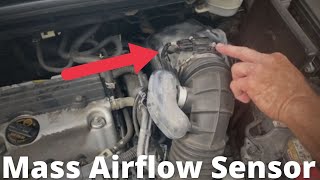
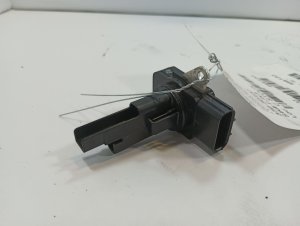
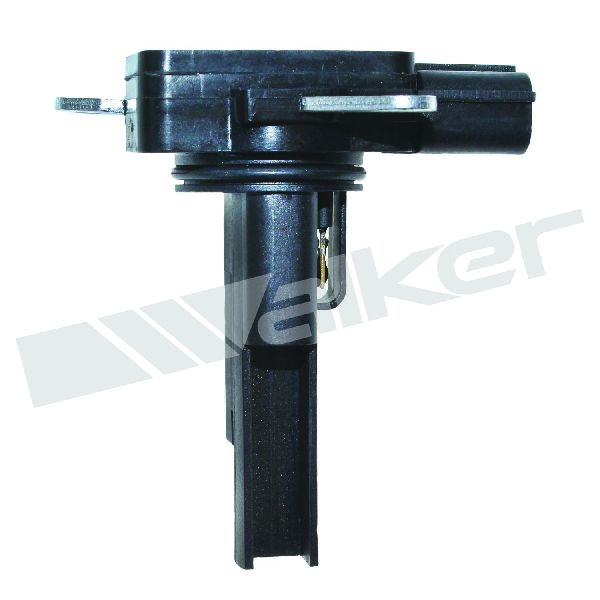
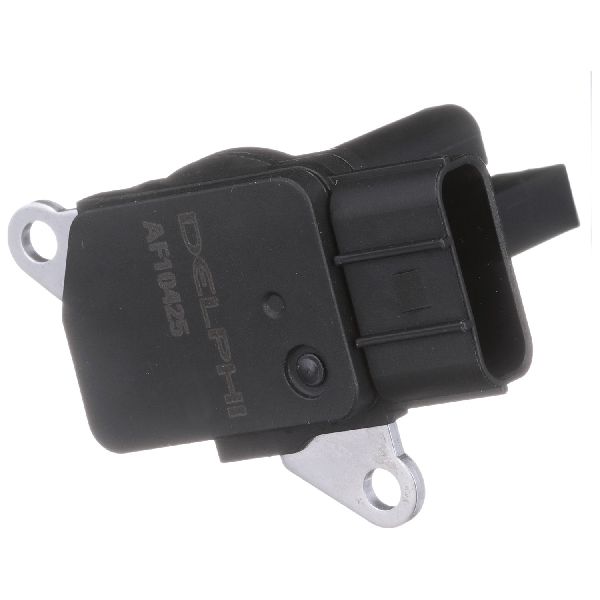
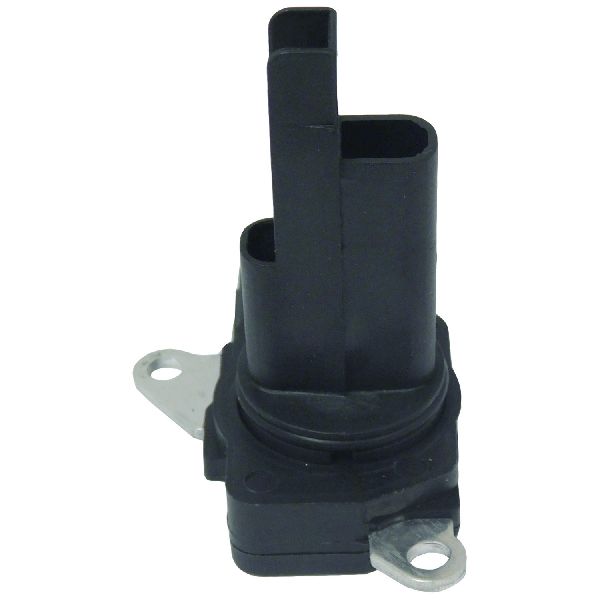
For the 2011-2016 Honda CR-V, the IAT sensor is not a standalone part. It is integrated directly into the Mass Airflow (MAF) sensor assembly, which is located on the air intake tube right after the air filter box. This design is common on many Honda vehicles from this era, including the Accord and Civic. This means that if the IAT sensor fails, the entire MAF sensor unit must be replaced.
Generation note: The 2011-2016 range covers the end of the 3rd generation (2011) and the entire 4th generation (2012-2016). The 4th generation received a major update for 2015, including a new direct-injected 'Earth Dreams' engine (K24W) and CVT transmission. However, for this specific code, the diagnosis and repair are consistent across all 2011-2016 models as they all use a 2.4L engine and integrate the IAT into the MAF sensor.
Symptoms You May Notice
- Check Engine Light is on
- Reduced fuel economy
- Engine hesitation or stumbling during acceleration
- Rough idle
- Difficulty starting the engine
- Black smoke from exhaust (less common)
- Failed emissions test
- Replacing only the IAT sensor, which is not possible on this vehicle as it is integrated into the MAF sensor assembly.
- Replacing the MAF sensor without first checking for simple wiring or connector issues.
Most Likely Causes
- Failed IAT Sensor (within the MAF Assembly) 🔴 High Probability The sensor is the most common point of failure for this code due to internal electronics failing over time, creating an open circuit. 🎬 Watch: Diagnostic walkthrough for P0113 on this CR-V generation.
How to confirm: Use a scan tool to view live data. If the IAT reading is stuck at -40°F or a similarly low number, and the wiring/connector are confirmed to be good, the sensor has failed. Advanced diagnostics involve using a jumper wire on the connector terminals; if the voltage reading changes, it confirms the sensor is the issue.
Typical fix: Replace the entire Mass Airflow (MAF) sensor assembly. It is located on the air intake duct after the air filter box and is typically held in by two Phillips head screws. 🎬 Watch this video for a quick MAF sensor replacement guide.
Est. part cost: $70-$270 - Damaged Wiring or Connector 🟡 Medium Probability Wires in the engine bay are exposed to heat and vibration, which can cause them to become brittle, frayed, or broken over time. The connector pins can also corrode or get bent during maintenance. Rodents are also known to chew on the soy-based wiring insulation used in this era of Honda vehicles.
How to confirm: Visually inspect the wiring harness leading to the MAF sensor for any signs of damage, fraying, or breaks. Unplug the connector and check for corrosion, moisture, or bent/broken pins. A multimeter can be used to check for continuity between the PCM connector and the sensor connector.
Typical fix: Repair the damaged section of wire or replace the pigtail connector if it is corroded or broken.
Est. part cost: $15-$40 - Dirty MAF/IAT Sensor Element ⚪ Low Probability A severely clogged or improperly installed engine air filter can allow debris or oil to contaminate the sensor elements, causing erratic readings.
How to confirm: Remove the MAF/IAT assembly and visually inspect the small wires and thermistor inside. If they are coated in dirt or oil, they require cleaning.
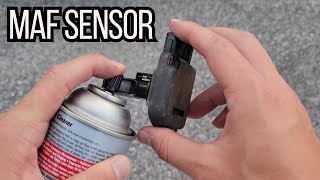
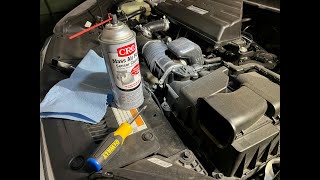
Typical fix: Clean the sensor elements carefully using a dedicated Mass Airflow Sensor cleaner spray. Do not touch the internal wires. 🎬 See how to safely clean your sensor elements. Let it dry completely before reinstalling.
Est. part cost: $10-$15 for cleaner spray
Rare But Worth Checking
- Failed Powertrain Control Module (PCM): → Shop Engine Control Module (ECM) This is extremely rare. Before suspecting the PCM, all other possibilities, especially the sensor and wiring, must be exhaustively ruled out. A faulty PCM will usually cause multiple other seemingly unrelated error codes.
Diagnosis Steps
- Connect an OBD-II scanner and confirm the P0113 code is present. Check for any other codes, especially P0102.
- View the live data stream on the scanner. Check the value for the Intake Air Temperature (IAT). If it reads -40°F or another fixed, extremely low value, it confirms the 'Circuit High' fault.
- Turn the ignition off. Locate the MAF/IAT sensor on the air intake tube, just after the air filter housing.
- Inspect the electrical connector and wiring harness going to the sensor. Look for loose connections, corrosion on the pins, or any visible damage to the wires (chafing, breaks).
- If wiring and connector appear intact, try cleaning the sensor. Remove the sensor and spray the internal elements with dedicated MAF sensor cleaner. Allow it to dry completely before reinstalling.
- If cleaning does not resolve the code, the most likely cause is a failed sensor. Replacing the MAF sensor assembly is the next step.
- For advanced diagnosis, if a new sensor doesn't fix the issue, use a multimeter to perform circuit tests. Check for 5V reference voltage and test for continuity on the signal and ground wires between the sensor connector and the PCM.
- If the wiring and sensor are confirmed to be good, the issue may be with the PCM, but this is very unlikely.
Parts You'll Likely Need
- Mass Airflow (MAF) Sensor Assembly
(OEM #37980-R40-A01)— This assembly contains the integrated IAT sensor, which is the most common failure point for a P0113 code on this vehicle. This part number may be superseded by 37980-RLF-013.
Trusted brands: Denso (OEM Supplier), Hitachi, Bosch, Spectra Premium
OEM price range: $260-$270
Aftermarket price range: $70-$180 - MAF Sensor Cleaner — A useful first step before part replacement. Cleaning a dirty sensor can sometimes resolve the fault for minimal cost.
Trusted brands: CRC, WD-40 Specialist
Aftermarket price range: $10-$15
Related Codes That Often Appear With This One
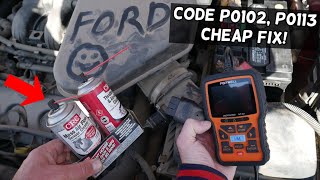
- P0102 — This code indicates 'Mass Air Flow (MAF) Circuit Low Input.' Since the IAT and MAF sensors are in the same housing and share the same connector, a problem with the unit, its connector, or wiring can trigger both codes simultaneously.
- P0171 or P0172 — These codes indicate a lean (P0171) or rich (P0172) fuel mixture. A bad IAT reading causes the PCM to calculate the air-fuel ratio incorrectly, leading to these codes.
Mechanic-Grade Diagnostic Values
- IAT Sensor Resistance — expected: Approximately 2.0-3.0 kΩ at 68°F (20°C), 0.9-1.3 kΩ at 104°F (40°C), and ~0.3 kΩ at 176°F (80°C). Resistance decreases as temperature increases.. Failure: Infinite resistance (open circuit) or a reading that does not change when the sensor is heated with a hairdryer.
- IAT Sensor Signal Voltage at Connector (Key On, Engine Off) — expected: Approximately 5.0 volts between the power wire (often Red/Yellow) and body ground.. Failure: Voltage significantly below 5.0V indicates a wiring issue or PCM fault. No voltage suggests a broken wire or blown fuse.
- Scan Tool IAT Voltage (HDS) — expected: Should be less than 4.92 volts during normal operation.. Failure: A reading at or above 4.92V will trigger DTC P0113.
- Jumper Wire Test (Scan Tool Live Data) — expected: When a jumper wire is connected between the IAT signal and ground terminals on the harness connector, the scan tool's IAT reading should drop to a very high temperature, like 284°F (140°C) or higher.. Failure: If the reading does not change, it indicates an open in the signal or ground wire between the connector and the PCM.
Scan Tool Commands That Help
- Honda Diagnostic System (HDS): Reset PCM — After replacing the MAF/IAT sensor or repairing wiring, the PCM must be reset to clear learned values.
- Honda Diagnostic System (HDS): PCM Idle Learn Procedure — This must be performed after a PCM reset to allow the engine control module to relearn idle characteristics with the new sensor data.
Wiring & Ground Locations
- MAF/IAT Sensor Connector (5-Pin) — On the MAF sensor, located on the air intake tube right after the air filter box.. This is the primary connection point for the IAT sensor. P0113 is an open circuit code, often caused by a bad connection here. The IAT signal wire is Pin 1 (often Red) and the sensor ground is Pin 2 (often Gray).
- PCM Connector B (49-Pin) — At the Powertrain Control Module (PCM), typically located in the engine bay or under the dashboard.. This is the termination point for the IAT sensor circuit. For advanced diagnostics, you must check for continuity from the sensor connector to these pins. The IAT signal wire (TA) goes to a specific pin, and the sensor ground (SG2) goes to pin B44 (Gray wire).
- G101 Ground — Main ECU and sensor ground, typically located on the thermostat housing or on the chassis near the battery.. A loose or corroded G101 ground can cause a floating ground condition, leading to incorrect voltage readings for multiple sensors, including the IAT. This can cause intermittent and hard-to-diagnose electrical codes like P0113.
Real Owner Repair Stories
- Reddit r/crv (2012 Honda CR-V) — Vehicle would not start.
✅ What actually fixed it The owner discovered that rodents had chewed through the G101 ground wire coming off the fuel injection harness. Repairing this single ground wire resolved the no-start condition, which was likely accompanied by multiple sensor circuit codes like P0113.
OEM Part Supersession History
37980-R40-A01→37980-RLF-013— Standard part revision by Honda. The newer part is a direct replacement.
Heads up: No incompatibility is noted; 37980-RLF-013 is the correct replacement for 37980-R40-A01.
Model Year Variations Within This Range
- 2015-2016: These models feature the direct-injected K24W 'Earth Dreams' engine. While the IAT is still integrated into the MAF sensor, the sensor itself and surrounding components may have slight design differences from the earlier K24Z engine (2011-2014). However, the P0113 diagnostic procedure remains fundamentally the same.
Diagnostic Flowchart
Other Known Issues on This Vehicle
Issues unrelated to this code that are worth knowing about as an owner of this generation:
- VTC Actuator Rattle on Cold Start 🟠 Medium — Common on 2.4L engines, especially 2012-2015 models. A loud rattle for 1-2 seconds at startup. (Ref: Honda TSB 16-012 (and earlier versions) addresses this issue, recommending replacement of the VTC actuator.)
- Engine Vibration (2015 'Earth Dreams' models) 🟡 Low — Specific to the 2015 model year with the new direct-injection engine and CVT. Vibrations can be felt at idle, during low-speed acceleration, or at highway speeds. (Ref: Honda TSB 15-046 provides a set of countermeasures including new mounts, software updates, and dampers.)
- Intermittent No-Start / Starter Motor Failure 🟠 Medium — Affects 2012-2016 models. The engine may fail to crank intermittently, eventually leading to complete starter failure. Sometimes misdiagnosed as a battery issue. (Ref: No specific recall, but a well-documented owner complaint. The starter cut relay is a common point of failure to check first.)
- A/C Compressor Failure 🟠 Medium — More common in earlier years of the generation (2012-2014) and in warmer climates. The compressor or clutch fails, resulting in no cold air.
- Transmission Shudder/Harsh Shifts (Pre-2015 Automatic) 🟡 Low — Affects the 5-speed automatic in 2012-2014 models. A vibration or shudder may be felt during light acceleration. Often resolved with a transmission fluid change and software update per TSB 12-086. (Ref: TSB 12-086)
Used vs. New Parts: Buying Guide for This Vehicle
When a used part is the smart pick: A used OEM MAF sensor from a reputable salvage yard can be a cost-effective option, as this is not a high-wear mechanical part. It is a good choice if the budget is tight and you can verify the donor vehicle's history.
Donor-vehicle mileage cap: roughly under 80000 miles for the part to have meaningful remaining life.
What to inspect on the donor part:
- Look for a donor vehicle with low mileage and no front-end collision damage.
- Inspect the sensor's electrical connector pins for any signs of corrosion or moisture.
- Ensure the fine sensor wires inside the housing are intact and not physically broken or coated in oil.
- Ask for a short warranty (e.g., 30-90 days) from the salvage yard.
Aftermarket brands forum-validated for this vehicle:
- Denso (Original Equipment Manufacturer)
- Hitachi
Brands owners have reported issues with on this vehicle:
- Unnamed, no-brand sensors from online marketplaces are frequently reported to fail quickly or be dead-on-arrival, sometimes causing new or different trouble codes.
Real Owner Stories
Aggregated from forums and TSBs cited above. Mileages and costs reflect what owners reported in those sources.
2012 CR-V Diesel Automatic
Symptoms: Check engine light with code P2199, and occasionally P0113.
What fixed it: The owner cleaned the MAF/IAT sensor and tested resistance with a multimeter; another user suggested disconnecting the battery to reset the computer memory after cleaning.
Source hint: hondakarma.com
2010 Honda Fit (Related Honda System)
Symptoms: Engine crank, no start with codes P0113 and P0102.
What fixed it: The issue was found to be a rusted-through cable and a disconnected engine ground strap.
Source hint: Reddit.com/r/Honda - '2010 Honda fit p0113 + p0102 - engine crank, no start'
Honda Accord (Shared Platform Reference)
Symptoms: The vehicle displayed DTCs P0100, P0113, and P023D.
What fixed it: NHTSA ODI #11705551 notes these codes indicate severe air/fuel metering and boost pressure correlation failures, which may be consequential to unaddressed safety recalls.
Source hint: NHTSA ODI #11705551
Related OBD-II Codes
Frequently Asked Questions
Where is the IAT sensor located on my 2011-2016 Honda CR-V?
Why does my Honda CR-V have P0113 and P0102 codes at the same time?
Is it true that rodents might be causing my P0113 code?
Can I just clean the sensor on my CR-V instead of replacing the whole MAF assembly?
Does the VTC actuator rattle on my 2.4L engine have anything to do with the P0113 code?
My 2015 CR-V has a vibration at idle; is this related to the IAT sensor?
Helpful Videos

Used OEM Parts in Stock
New Aftermarket Parts Available


The information in this article is provided for general reference and educational purposes only. Vehicle specifications, procedures, and part compatibility can vary by production date, trim level, and region. Always consult your vehicle's factory service manual and verify part numbers before purchasing or performing repairs. Safety-critical components such as airbags, seat belts, and braking systems should be installed by a qualified professional.
- Honda CR-V:
- 🧭 Diagnostic Flowchart
- 🎬 Helpful Videos
- 🛍️ Shop This Part
- What's Unique About the 2011-2016 Honda CR-V
- Symptoms You May Notice
- Most Likely Causes
- Rare But Worth Checking
- Diagnosis Steps
- Parts You'll Likely Need
- Related Codes That Often Appear With This One
- Mechanic-Grade Diagnostic Values
- Scan Tool Commands That Help
- Wiring & Ground Locations
- Real Owner Repair Stories
- OEM Part Supersession History
- Model Year Variations Within This Range
- Other Known Issues on This Vehicle
- Used vs. New Parts: Buying Guide for This Vehicle
- Real Owner Stories
- 2012 CR-V Diesel Automatic
- 2010 Honda Fit (Related Honda System)
- Honda Accord (Shared Platform Reference)
- Related OBD-II Codes
- Frequently Asked Questions
- 🎟️ Get 5% Off