

P0113 on 2017-2022 Honda CR-V: IAT Sensor Circuit High Causes and Fixes
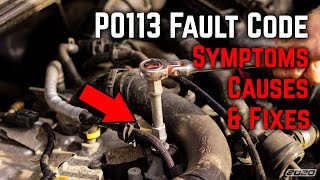
P0113 on a 2017-2022 Honda CR-V indicates a high voltage signal from the Intake Air Temperature (IAT) sensor, usually due to a faulty sensor or wiring issue. The most common fix is replacing the IAT sensor, which is integrated with the Mass Airflow (MAF) sensor on the 1.5L Turbo engine. The correct OEM part is 37980-5BA-A01, with a DIY cost of around $80-$120.
- P0113 means the computer sees a wiring problem in the Intake Air Temperature sensor circuit, not necessarily a hot engine.
- The most likely cause on a 2017-2022 CR-V is a failed IAT sensor, which is part of the MAF sensor assembly.
- This is a simple DIY fix for most owners, requiring only basic tools to replace the sensor.
- Before buying parts, check the sensor's wiring and connector for obvious damage, and check the live data with a scanner if possible.
- Ignoring the code can lead to poor fuel mileage and drivability issues.
What's Unique About the 2017-2022 Honda CR-V
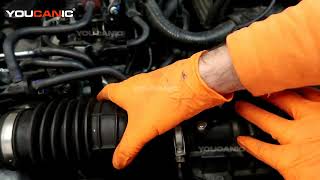
For the 2017-2022 Honda CR-V equipped with the common 1.5L L15BE turbo engine, the Intake Air Temperature (IAT) sensor is integrated into the Mass Airflow (MAF) sensor assembly. This means that if the IAT sensor fails and triggers a P0113, the entire MAF/IAT sensor unit must be replaced. 🎬 Watch this video for a specific P0113 diagnostic walkthrough on this CR-V. This design is shared across many modern Honda vehicles with the 1.5T engine, including the Civic and Accord, making it a common repair pattern for the platform. The base LX trim for 2017-2019 could have a 2.4L engine, but the 1.5T became standard on all trims from 2020 onward in the US.
Symptoms You May Notice
- Check Engine Light is on
- Reduced fuel economy
- Rough idle or stalling
- Engine hesitation or poor acceleration
- Difficulty starting the engine, especially when cold
- Replacing the oxygen sensor. The symptoms of poor fuel economy can sometimes be misattributed to an O2 sensor, but P0113 points specifically to the IAT circuit.
Most Likely Causes
- Faulty IAT/MAF Sensor Assembly 🔴 High Probability → Shop Fuel Injection Air Flow Meter The sensor is the most common point of failure for this code. Internal failure of the thermistor or its circuit board creates an open, resulting in the high voltage reading.
How to confirm: Use an OBD-II scanner to check live data. If the IAT reading is stuck at a very low temperature (like -40°F/-40°C) regardless of the actual engine temperature, the sensor is likely bad. You can also test the sensor's resistance with a multimeter; the resistance should change with temperature.
Typical fix: Replace the entire Mass Airflow (MAF) sensor assembly, which includes the integrated IAT sensor.
Est. part cost: $80-$180 - Damaged Wiring or Connector 🟡 Medium Probability Wires in the engine bay are exposed to heat, vibration, and potential rodent damage, which can lead to breaks, shorts, or corrosion over time. The pins inside the connector can also become loose or corroded.
How to confirm: Visually inspect the wiring harness and connector going to the MAF/IAT sensor for any signs of damage, fraying, melting, or rodent chew marks. Check for corrosion inside the connector pins. Use a multimeter to check for continuity and proper voltage (typically a 5V reference) at the connector.
Typical fix: Repair the broken or corroded section of wire or replace the damaged connector pigtail.
Est. part cost: $10-$30 - Dirty or Clogged Air Filter ⚪ Low Probability A severely clogged air filter can restrict airflow and allow contaminants to build up on the sensor element, potentially causing erratic readings, though this is less likely to cause a 'circuit high' fault than a performance code.
How to confirm: Inspect the engine air filter. If it is visibly dirty or clogged, it needs replacement.
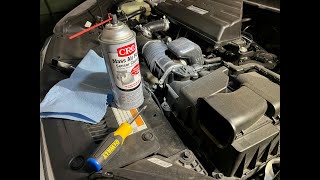
Typical fix: Replace the engine air filter. This is a basic maintenance item that should be checked first. 🎬 See how to properly clean the MAF sensor before buying new parts.
Est. part cost: $20-$40
Rare But Worth Checking
- Faulty Powertrain Control Module (PCM): → Shop Engine Control Module (ECM) This is extremely rare. The PCM is the last component to suspect. All other possibilities, including the sensor and wiring, should be exhaustively tested before considering a PCM issue. A faulty PCM will usually present with multiple other unrelated codes.
Diagnosis Steps
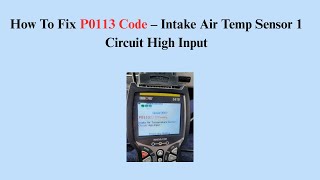
- Connect an OBD-II scanner to the vehicle and confirm that P0113 is the primary code. 🎬 Watch this quick breakdown of what the P0113 code actually means. Check for any other codes.
- View the live data stream on the scanner. Look at the Intake Air Temperature (IAT) reading. If it shows an extremely low value (e.g., -40°F) that doesn't change, it confirms the open circuit fault.
- Turn off the engine and locate the MAF/IAT sensor. On the 1.5L engine, it's on the air intake duct, just after the air filter box, held by two screws.
- Inspect the sensor's electrical connector for loose connections, corrosion, or pushed-out pins. Check the wiring harness for any visible signs of damage, fraying, melting, or rodent damage.
- If the wiring looks good, disconnect the sensor. With the key in the 'ON' position (engine off), use a multimeter to check for a 5-volt reference signal at the connector.
- If the 5V reference is present, the wiring is likely okay, and the MAF/IAT sensor assembly is the most probable cause of the problem.
- If the 5V reference is missing, there is an open circuit in the wiring between the PCM and the sensor that needs to be traced and repaired.
- After replacing the part or repairing the wiring, clear the code with the scanner and take the vehicle for a test drive to ensure the Check Engine Light does not return.
Parts You'll Likely Need
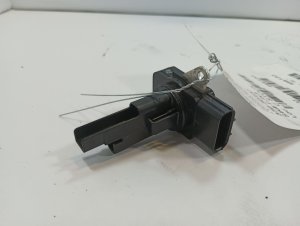
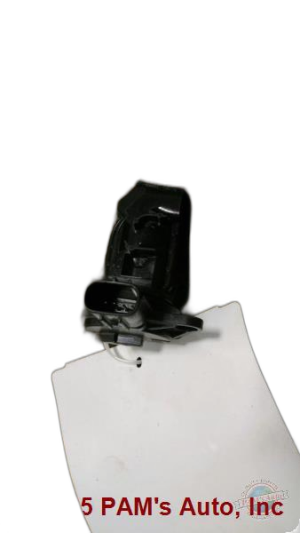
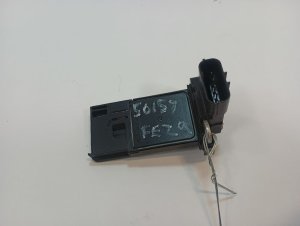
- Intake Air Temperature Sensor / Mass Airflow Sensor Assembly
(OEM #37980-5BA-A01)— This is the most common cause for P0113. On this CR-V, the IAT is integrated with the MAF sensor, so the whole assembly is replaced.
Trusted brands: Honda (Genuine), Denso, Walker Products (245-1386), Autopart Premium
OEM price range: $110-$150
Aftermarket price range: $70-$120
Related Codes That Often Appear With This One
- P0102 — Mass Air Flow (MAF) Circuit Low Input. Since the IAT is integrated with the MAF sensor on the CR-V, a fault in the shared unit, its connector, or wiring can trigger codes for both.
- P0171 or P0172 — System Too Lean or Too Rich. An incorrect (impossibly cold) temperature reading from the IAT sensor causes the PCM to command an overly rich fuel mixture, which can lead to a P0172 code.
- P0101 — Mass Air Flow (MAF) Circuit Range/Performance. An erratic signal from the combined MAF/IAT unit can trigger this performance code. Honda has a TSB (22-015) for some 1.5T models to update software for P0101 sensitivity.
Technical Service Bulletins (TSBs) & Recalls
- { "id": "TSB 22-015", "description": "While not for P0113 directly, this TSB addresses a related code, P0101 (MAF Performance), on the 1.5T engine by providing a software update. It acknowledges the sensitivity of the MAF sensor system on this platform, which is relevant as the IAT is integrated into the same unit." }
Mechanic-Grade Diagnostic Values
- IAT Sensor Internal Resistance — expected: Approximately 2.0 kΩ at 68°F (20°C), decreasing to around 0.4 kΩ at 176°F (80°C).. Failure: A reading of infinite ohms (open circuit) or near-zero ohms (short circuit) indicates a faulty sensor. P0113 is caused by an open circuit.
- IAT Sensor Signal Voltage (Key On, Engine Off, Sensor Unplugged) — expected: Approximately 5.0V on the reference wire.. Failure: Significantly less than 5.0V points to a wiring problem or an issue with the PCM's 5V supply.
- IAT Sensor Live Data (Scan Tool) — expected: Should be close to ambient air temperature on a cold engine. Voltage should vary between approx. 0.5V (hot) and 4.5V (cold) when running.. Failure: A reading stuck at -40°F/-40°C, or a voltage that is fixed at or above 4.9V, confirms the 'Circuit High' fault condition.
Scan Tool Commands That Help
- Honda Diagnostic System (HDS): Jump SCS Line — This is a software command used in official Honda diagnostic procedures to prepare the system for certain continuity and voltage tests without using a physical jumper wire.
- Honda Diagnostic System (HDS): PCM RESET — After replacing the MAF/IAT sensor or repairing wiring, the PCM should be reset to clear learned values and ensure it recalibrates with the new, functioning component.
Wiring & Ground Locations
- MAF/IAT Sensor 5-Pin Connector — On the air intake duct, immediately after the air filter housing.. This is the central connection point for the sensor. P0113 is an open circuit fault, often caused by a bad connection here or a fault in the sensor itself. The key pins for P0113 are Pin 1 (IAT Signal) and Pin 2 (Sensor Ground).
- MAF/IAT Connector - Pin 1 (TA wire) — Pin 1 on the sensor connector. This is the IAT signal wire that goes to the PCM.. An open circuit (break) in this wire between the sensor and the PCM will cause a P0113 code. It connects to Pin 51 on PCM connector B (51P).
- MAF/IAT Connector - Pin 2 (SG2 wire) — Pin 2 on the sensor connector. This is the sensor ground wire.. A break in the ground wire will also cause an open circuit, leading to a P0113 code. It connects to Pin 31 on PCM connector C (51P).
- Fuse B2 (10A) — In the under-dash fuse box, located on the driver's side.. This fuse provides power to the MAF/IAT sensor circuit. While a blown fuse typically causes a 'low voltage' code (P0112), checking it is a fundamental step in electrical diagnosis.
Real Owner Repair Stories
- Honda-Tech Forum Member (2005 Honda Civic (Similar IAT circuit principles)) — P0113 code that would come back immediately after being cleared, even without starting the car.
❌ Tried (didn't work) Replacing the IAT sensor multiple times (user went through 4 sensors).
✅ What actually fixed it The user discovered a cracked wire in the pigtail connector leading to the IAT sensor. The intermittent connection caused the scan tool to read -40 degrees, confirming an open circuit. Repairing the broken wire resolved the code. - NHTSA Owner Report (Honda Accord with 1.5T engine) — NHTSA ODI #11705551 describes a vehicle displaying DTCs P0100, P0113, and P023D. The report notes these indicate severe air/fuel metering and boost pressure correlation failures, which were linked to a consequential failure related to a high-priority federal safety recall.
OEM Part Supersession History
37980-5BA-A01→No supersession found. This part number appears to be current for the entire 2017-2022 CR-V range and other Honda models.— N/A
Diagnostic Flowchart
Other Known Issues on This Vehicle
Issues unrelated to this code that are worth knowing about as an owner of this generation:
- Engine Oil Dilution 🔴 High — Widespread, especially in 2017-2018 models and vehicles used for short trips in cold climates. Unburnt fuel mixes with engine oil, reducing lubrication and potentially causing premature engine wear. (Ref: Honda issued product updates and a warranty extension (TSB 18-114) to address the issue with software updates for the ECU, TCU, and A/C control unit to help the engine warm up faster.)
- Sticky Steering 🔴 High — Increasingly common on 2022+ models, but reported on the generation. Drivers report a momentary 'sticking' or notchiness in the steering at highway speeds, requiring extra effort to correct, which can lead to overcorrection. (Ref: NHTSA has investigated this issue, and Honda issued TSB 23-037, instructing dealers to replace the electronic power steering gearbox. A recall was issued for some models.)
- Fuel Injector Failure 🟠 Medium — Reported to cause cold start misfires and rough running. The direct injection system's injectors can fail or leak, leading to drivability issues and, in severe cases, detonation that can damage engine internals.
- Premature Battery Failure / Parasitic Drain 🟡 Low — Common in 2017-2019 models. Owners report batteries dying unexpectedly, sometimes due to a software glitch that fails to shut down all systems after the car is turned off. (Ref: Honda addressed a software problem that could cause a parasitic draw; dealers were instructed to update the control software.)
- A/C System Failures 🟠 Medium — Owners report issues with A/C compressors or defective seals, leading to the system not cooling effectively. (Ref: Some reports mention a recall for defective A/C compressor seals, depending on the vehicle's mileage and age.)
Used vs. New Parts: Buying Guide for This Vehicle
When a used part is the smart pick: A used OEM MAF/IAT sensor from a low-mileage (under 50,000 miles) donor vehicle can be a cost-effective option if purchased from a reputable salvage yard with a warranty or return policy. Given the high failure rate, it's a slight gamble, but OEM electronics are often more reliable than cheap aftermarket alternatives.
Donor-vehicle mileage cap: roughly under 50000 miles for the part to have meaningful remaining life.
What to inspect on the donor part:
- Check the connector pins for any signs of corrosion or damage.
- Ensure the plastic housing is free of cracks.
- Look for a date code on the part if possible; newer is better.
- Ask for the VIN of the donor car to verify it's from a compatible year and engine type.
Aftermarket brands forum-validated for this vehicle:
- Denso (Often the original equipment manufacturer for Honda)
- Hitachi
Brands owners have reported issues with on this vehicle:
- Unnamed, no-brand sensors from online marketplaces. These often use lower-quality thermistors and electronics, leading to inaccurate readings, premature failure, and other engine performance codes.
Real Owner Stories
Aggregated from forums and TSBs cited above. Mileages and costs reflect what owners reported in those sources.
2018 Honda CR-V 1.5L Turbo
Symptoms: Check engine light with codes P0113 and P0102. Replacing the MAF/IAT sensor did not resolve the issue.
What fixed it: Repairing a broken wire found inside the harness connector itself.
Source hint: CR-V Owners Club - "P0113 and P0102"
2017 Honda CR-V 1.5L Turbo
Symptoms: Check engine light on with code P0113.
What fixed it: Replacement of the integrated MAF/IAT sensor assembly.
Source hint: Reddit r/CRV - "Check engine light P0113"
Related OBD-II Codes
Frequently Asked Questions
Where is the IAT sensor located on my 2017-2022 Honda CR-V with the 1.5L engine?
Does TSB 22-015 apply to my P0113 code?
Can I just replace the IAT sensor, or do I need the whole MAF assembly?
My scanner shows -40°F for the intake air temperature. Does this mean the sensor is definitely broken?
Is the P0113 code related to the oil dilution issues common in 2017-2018 CR-Vs?
Could a dirty air filter be causing my P0113 'Circuit High' code?
Helpful Videos
Used OEM Parts in Stock
New Aftermarket Parts Available


The information in this article is provided for general reference and educational purposes only. Vehicle specifications, procedures, and part compatibility can vary by production date, trim level, and region. Always consult your vehicle's factory service manual and verify part numbers before purchasing or performing repairs. Safety-critical components such as airbags, seat belts, and braking systems should be installed by a qualified professional.
- Honda CR-V:
- 🧭 Diagnostic Flowchart
- 🎬 Helpful Videos
- 🛍️ Shop This Part
- What's Unique About the 2017-2022 Honda CR-V
- Symptoms You May Notice
- Most Likely Causes
- Rare But Worth Checking
- Diagnosis Steps
- Parts You'll Likely Need
- Related Codes That Often Appear With This One
- Technical Service Bulletins (TSBs) & Recalls
- Mechanic-Grade Diagnostic Values
- Scan Tool Commands That Help
- Wiring & Ground Locations
- Real Owner Repair Stories
- OEM Part Supersession History
- Other Known Issues on This Vehicle
- Used vs. New Parts: Buying Guide for This Vehicle
- Real Owner Stories
- 2018 Honda CR-V 1.5L Turbo
- 2017 Honda CR-V 1.5L Turbo
- Related OBD-II Codes
- Frequently Asked Questions
- 🎟️ Get 5% Off