

P0113 on 2014-2018 Jaguar F-TYPE: Intake Air Temperature Sensor Causes and Fixes
On a 2014-2018 Jaguar F-TYPE, code P0113 most often indicates a failed Intake Air Temperature (IAT) sensor or a wiring issue in its circuit. This sensor is critical for fuel mixture calculations. A high voltage signal is sent to the car's computer, which interprets it as an impossibly cold air temperature (like -40°F). The fix is often a simple and affordable DIY replacement of the sensor, which costs between $20 and $100.
- P0113 on your F-TYPE means the IAT sensor circuit is open, most likely due to a failed sensor.
- Check live data on a scanner for a -40° temperature reading to quickly confirm the issue.
- The most probable fix is replacing the standalone IAT sensor (OEM part C2Z17977), which is an inexpensive part and relatively easy to access on the intake/supercharger.
- Always check the sensor's wiring and connector for damage before replacing the part, especially if other engine work was recently performed.
What's Unique About the 2014-2018 Jaguar F-TYPE
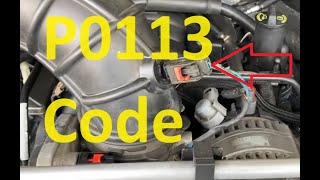
On the Jaguar F-TYPE with the supercharged AJ126 (V6) and AJ133 (V8) engines, there are multiple temperature and pressure sensors. The P0113 code specifically refers to IAT Sensor 1 on Bank 1. 🎬 Watch: Understanding P0113 causes and common fixes. On these supercharged engines, this is typically a standalone sensor, often called a 'Supercharger temp sensor' or 'Manifold sensor', rather than being integrated into the Mass Airflow (MAF) sensor. It is crucial to identify the correct sensor for your specific engine before attempting a repair. The part number C2Z17977 is commonly listed for this application.
Diagnostic Flowchart
Tap your situation to follow the diagnostic path that matches what you're seeing on this vehicle.
Symptoms You May Notice
- Check Engine Light is on
- Reduced fuel economy
- Engine hesitation or stumbling, especially on a cold start
- Rough idle
- Hard starting
- Increased emissions / failing an emissions test
- Sluggish performance and jerking during acceleration.
- Engine running rich, which may be noticeable by a gasoline smell.
- Replacing the Mass Airflow (MAF) sensor when the IAT is a separate, standalone sensor on the supercharged F-TYPE engines.
- Replacing the wrong temperature sensor (e.g., coolant temperature or a different charge air sensor if the vehicle has more than one).
- Assuming the sensor is bad when the actual fault is a broken wire or corroded connector pin.
Most Likely Causes
- Failed Intake Air Temperature (IAT) Sensor 🔴 High Probability → Shop Fuel Injection Air Flow Meter Sensors are electronic components that can fail over time due to extreme heat cycles and engine vibration. The IAT is a simple thermistor that can develop an internal open circuit, causing it to fail.
How to confirm: Use an OBD-II scanner to view live data. If the IAT reading shows a fixed, extremely low temperature (like -40°F/-40°C) regardless of the actual engine temperature, the sensor or its circuit is open. You can also test the sensor's internal resistance with a multimeter; it should change with temperature when heat is applied from a hairdryer. Infinite resistance indicates a failed sensor.
Typical fix: Replace the IAT sensor. On the F-TYPE, this is typically the standalone sensor with part number C2Z17977.
Est. part cost: $20-$100 - Wiring or Connector Issue 🟡 Medium Probability Engine bay wiring can become brittle from heat, and connectors can be damaged during other maintenance or become corroded. The wiring to the IAT can get twisted or pulled during air filter changes.
How to confirm: Visually inspect the wiring harness and connector for the IAT sensor. Look for frayed wires, loose pins, or corrosion. With the key on, use a multimeter to check for a 5-volt reference signal and a good ground at the connector. A user on a Land Rover forum with a similar engine noted that after doing other repairs, this code appeared, suggesting a connector may have been missed during reassembly.
Typical fix: Repair the damaged section of wiring or clean/replace the connector. Ensure the connector is fully seated.
Est. part cost: $5-$50 - Dirty or Contaminated Sensor ⚪ Low Probability If the vehicle has an over-oiled aftermarket air filter or a faulty PCV system, oil vapor can coat the sensor, insulating it and causing incorrect readings or outright failure.
How to confirm: Remove the sensor and inspect its tip for oil, dirt, or other contamination.
Typical fix: Clean the sensor tip carefully with a dedicated MAF or electronics cleaner. Do not touch the sensing element with tools or cloths. If cleaning doesn't resolve the issue, the sensor has likely failed internally and needs replacement.
Est. part cost: $10-$15 for cleaner
Rare But Worth Checking
- Faulty Powertrain Control Module (PCM): → Shop Engine Control Module (ECM) This is extremely rare. The PCM is the last component to suspect. All other possibilities, including the sensor and wiring, must be exhaustively tested and ruled out before considering a PCM issue.
Diagnosis Steps
- Connect an OBD-II scanner and confirm P0113 is the active code. Note any other codes present, such as P0111, P2178, or P0172.
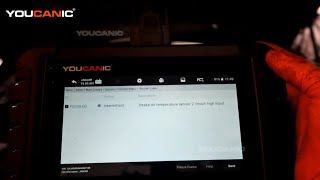
- View the live data stream for IAT Sensor 1. A reading of -40°F or -40°C is a clear sign of an open circuit and strongly points to the sensor or wiring.
- Turn the vehicle off. Locate the IAT sensor. On the supercharged F-TYPE engines, this is typically a standalone sensor (Part C2Z17977) screwed into the intake manifold or supercharger housing.
- Inspect the sensor's connector for looseness, corrosion, or damage. Check the surrounding wires for any signs of fraying, melting, or breaks.
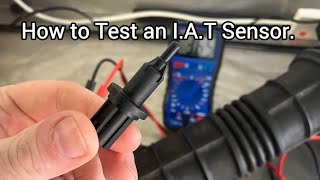
- If the wiring looks good, disconnect the sensor. Test the sensor's resistance with a multimeter set to Ohms (Ω). It should not be an open circuit (infinite resistance). You can also gently heat the sensor with a hairdryer and watch for the resistance value to change, confirming the thermistor is working.
- With the connector unplugged and the key in the 'On' position, test the connector's terminals. You should find a 5-volt reference from the PCM on one pin and a good ground on another.
- If the 5V reference and ground are present, and the sensor fails the resistance test, the IAT sensor itself is the culprit and should be replaced.
- If the 5V reference or ground is missing, there is a wiring issue between the connector and the PCM that needs to be traced and repaired.
Parts You'll Likely Need
- Intake Air Temperature Sensor
(OEM #C2Z17977)— This is the most common cause of a P0113 code. The sensor's internal thermistor fails, creating an open circuit. This part is listed as a 'Supercharger temp sensor' or 'Manifold sensor' for the F-Type.
Trusted brands: Jaguar (OEM), Standard Motor Products, Bosch, Denso
OEM price range: $60-$100
Aftermarket price range: $20-$50
Related Codes That Often Appear With This One
- P0111 — P0111 indicates a range/performance issue with the IAT sensor. It can appear alongside P0113 if the sensor is failing intermittently before failing completely open. The TSB SSM73671 specifically links these codes.
- P2178 — P2178 means 'System Too Rich Off Idle Bank 1'. This code can be triggered by P0113 because the PCM sees an extremely cold air temperature and injects excess fuel, creating a rich condition. This is also mentioned in TSB SSM73671.
- P0102 — P0102 is a Mass Airflow (MAF) Circuit Low code. While the IAT is often separate on the F-Type, a wiring issue in a shared harness could potentially trigger codes for both systems.
- P0172 — P0172 indicates 'System Too Rich (Bank 1)'. This is a direct consequence of the PCM over-fueling based on the false, extremely cold temperature reading from the faulty IAT sensor circuit.
Technical Service Bulletins (TSBs) & Recalls
- SSM73671: Mentions P0113 in a list of diagnostic trouble codes related to incorrect sensor signals, specifically linking it to rich running conditions (P2178). The full context of this TSB may also relate to air leaks on other engine types.
Platform-Specific Known Issues
- Technical Service Bulletin SSM73671 notes that P0113 can appear with codes P0111 (IAT Sensor Range/Performance) and P2178 (System Too Rich Off Idle), pointing to a faulty IAT sensor causing a rich running condition. However, the public summary of this TSB also refers to air leaks on Ingenium engines, so its direct relevance might be mixed.
- A forum member on JaguarForums with a 2014 F-Type S experienced a P007B code (Charge Air Cooler Temp Sensor Circuit Range/Performance) along with other codes, indicating that the various temperature sensors in the intake path can be a source of issues.
Mechanic-Grade Diagnostic Values
- IAT Sensor Resistance vs. Temperature — expected: Resistance should decrease as temperature increases. One source suggests approx. 3750 Ohms at 68°F (20°C) and 2400 Ohms at 86°F (30°C). Another source suggests much higher values (e.g., 37 kOhms at 20°C), so comparing to a new part is advisable.. Failure: Infinite resistance (open circuit) or readings that do not change with temperature.
- IAT Sensor Connector Voltage (Key On, Engine Off) — expected: One pin should have a 5-volt reference signal from the PCM, and the other pin should have a solid ground (near 0 volts).. Failure: Absence of the 5V reference or a ground reading significantly above 0 volts indicates a wiring or PCM issue.
- Engine Ground Point Voltage Drop (During Cranking) — expected: Less than 0.5V (500mV) between the negative battery terminal and various engine ground points while the engine is being cranked (with fuel pump disabled).. Failure: A reading significantly higher than 0.5V indicates a poor ground connection that needs to be cleaned or repaired.
Hidden / Shadow Codes Worth Checking
- P0113-00: This is the full code as listed in Jaguar's Technical Service Bulletin SSM73671. The '-00' suffix indicates 'no sub type information', meaning it's the generic high circuit fault without further detail. (see via A professional-grade scanner capable of reading manufacturer-specific codes, such as the Jaguar SDD (Symptom Driven Diagnostics) system.)
Wiring & Ground Locations
- G1D131E — Located on the top of the left front suspension turret in the engine compartment.. This is a primary engine bay ground point. A poor connection here could cause erratic behavior or fault codes for various sensors, including the IAT.
- Engine Grounding Strap — Connects the engine to the frame, located directly under the starter motor on the right side lower frame of the car.. This is the main ground path for the engine block. Corrosion or looseness here can create a voltage potential difference, leading to sensor ground reference issues and triggering codes like P0113.
- Jump-Start Ground Stud — A dedicated ground stud located in the engine bay behind the right front (passenger side in US) headlight, used for jump-starting.. While primarily for jump-starting, it serves as an accessible and known-good ground point in the engine bay for diagnostic purposes, such as testing sensor ground circuits with a multimeter.
OEM Part Supersession History
C2Z17977→C2Z17977— No supersession found, part number appears current.
Heads up: High risk of parts confusion. OEM parts catalogs list C2Z17977 with multiple 'Other Names' including 'Supercharger temp sensor', 'Manifold sensor', 'Coolant Temp Sensor', and 'Knock Sensor'. Ordering this part number for a coolant or knock sensor issue by mistake could occur. It is critical to verify the part is being ordered for the IAT/Charge Air Temperature application.
Helpful Videos


We Have This Part in Stock


The information in this article is provided for general reference and educational purposes only. Vehicle specifications, procedures, and part compatibility can vary by production date, trim level, and region. Always consult your vehicle's factory service manual and verify part numbers before purchasing or performing repairs. Safety-critical components such as airbags, seat belts, and braking systems should be installed by a qualified professional.
- Jaguar F-TYPE:
- 🧭 Diagnostic Flowchart
- 🎬 Helpful Videos
- 🛍️ Shop This Part
- What's Unique About the 2014-2018 Jaguar F-TYPE
- Symptoms You May Notice
- Most Likely Causes
- Rare But Worth Checking
- Diagnosis Steps
- Parts You'll Likely Need
- Related Codes That Often Appear With This One
- Technical Service Bulletins (TSBs) & Recalls
- Platform-Specific Known Issues
- Mechanic-Grade Diagnostic Values
- Hidden / Shadow Codes Worth Checking
- Wiring & Ground Locations
- OEM Part Supersession History
- 🎟️ Get 5% Off