

Mazda MX-5 P0113 (2016-2024): Intake Air Temp Sensor Circuit High Causes and Fixes
For a 2016-2024 Mazda MX-5, code P0113 almost always means the entire Mass Airflow (MAF) sensor assembly needs to be replaced because the Intake Air Temperature (IAT) sensor is built into it. This is a very easy 10-minute DIY fix. Expect to pay $150-$250 for the OEM part.
- P0113 on this car means you need to replace the whole Mass Airflow (MAF) sensor, not a separate IAT sensor.
- This is a very simple DIY repair that takes less than 15 minutes with only a Phillips head screwdriver.
- Be sure to buy the correct part number: use PE01-13-215 for 2016-2018 models and PYFS-13-215 for 2019-2024 models.
- Before buying the part, always check the electrical connector first for corrosion or a loose fit, as this can also cause the code.
- Using a cheap aftermarket sensor is not recommended; OEM or Denso parts are advised for long-term reliability.
What's Unique About the 2016-2024 Mazda MX-5
The key detail for the 2016-2024 Mazda MX-5 (ND generation) is that the IAT Sensor 1 is not a separate, replaceable part. It is integrated directly into the larger Mass Airflow (MAF) sensor located on the air filter housing. This means a failure of the IAT sensor requires replacing the entire MAF unit. It is crucial not to confuse IAT Sensor #1 with IAT Sensor #2, which is integrated into the Manifold Absolute Pressure (MAP) sensor on the intake manifold and is not related to code P0113. The vehicle range also spans two sub-generations (ND1 and ND2) which use different MAF sensor part numbers.
Generation note: The 2016-2024 range covers the entire fourth generation (ND) of the MX-5, but it includes two versions: the ND1 (2016-2018) and the ND2 (2019-2024), which has a revised engine. The cause and diagnostic procedure for P0113 are the same for both, but they use different Mass Airflow (MAF) sensor part numbers.
Symptoms You May Notice
- Check Engine Light is on
- Slightly decreased fuel economy
- Potential for minor hesitation during acceleration
- Rough idle in some cases
- Hard starting in cold weather, as the PCM cannot calculate the correct cold-start fuel mixture
- Replacing only a standalone IAT sensor (this vehicle does not have one for IAT #1).
- Replacing the wrong temperature sensor, such as the ambient air temp sensor for the climate control or the IAT #2 sensor located in the MAP sensor.
- Assuming a dirty air filter is the cause. While a dirty filter can cause MAF performance codes like P0101, it will not cause a circuit-high code like P0113.
Most Likely Causes
- Internal failure of the IAT sensor 🔴 High Probability The IAT sensor is an electronic component with a finite lifespan and is integrated into the MAF sensor, making it the most common point of failure for this code. This is a well-documented failure path across all Mazda models using the SKYACTIV-G engine.
How to confirm: Using a scan tool, observe the live data for 'IAT Sensor 1'. If the reading is stuck at -40°F or -40°C and does not change with engine temperature, the sensor has failed. 🎬 See: How to test and diagnose an IAT sensor The entire MAF sensor assembly must be replaced.
Typical fix: Replace the Mass Airflow (MAF) sensor assembly.
Est. part cost: $90-$280 - Poor connection at the MAF sensor 🟡 Medium Probability → Shop Fuel Injection Air Flow Meter The connector is exposed to engine bay heat and vibration, which can lead to corrosion or loose pins over time. Debris can also accumulate in the connector.
How to confirm: Visually inspect the MAF sensor's electrical connector for corrosion, pushed-out pins, or damage. Disconnect and reconnect the sensor, clear the code, and see if it returns.
Typical fix: Clean the connector terminals with an electrical contact cleaner or repair the connector if damaged.
Est. part cost: $0-$25 - Damaged wiring harness ⚪ Low Probability Wiring can be damaged by rodents, improper servicing, or abrasion against other components. This is less common than sensor failure but should be checked before replacing expensive parts.
How to confirm: Perform a continuity test on the wires between the MAF sensor connector and the PCM. Check for an open circuit or a short to power between MAF sensor terminal A and PCM terminal 2U, and between MAF terminal B and PCM terminal 2AY.
Typical fix: Repair the specific broken or shorted wire in the harness.
Est. part cost: $5-$50
Rare But Worth Checking
- Faulty Powertrain Control Module (PCM): → Shop Engine Control Module (ECM) This is extremely rare. All other possibilities, especially the MAF sensor and its wiring, should be exhaustively ruled out before considering the PCM as the cause.
Diagnosis Steps
- Connect an OBD-II scanner and confirm the presence of code P0113.
- View live data on the scanner. Check the parameter for 'Intake Air Temp Sensor 1'.
- If the temperature is locked at a very low value (e.g., -40°F / -40°C), it confirms the 'circuit high' condition.
- Turn the engine off. Locate the MAF sensor on the air filter box.
- Inspect the electrical connector on the MAF sensor. Check for looseness, corrosion on the pins, or any visible damage to the wires.
- If the connector looks good, disconnect it and spray the pins on both the sensor and the connector with electrical contact cleaner. Reconnect securely.
- Clear the code and drive the vehicle to see if the code returns. If it does not, the issue was a poor connection.
- If the code returns, the MAF/IAT sensor assembly is almost certainly faulty.
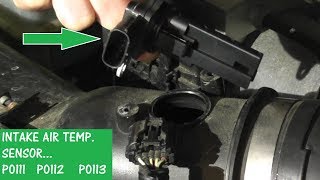
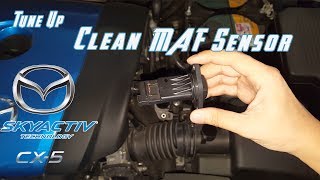
- Replace the MAF sensor assembly. This is typically held in by two Phillips head screws. 🎬 Watch: How to replace your ND Miata MAF sensor Disconnect the electrical plug, unscrew the old sensor, install the new one, and reconnect the plug. Disconnecting the battery during this process is recommended.
Parts You'll Likely Need
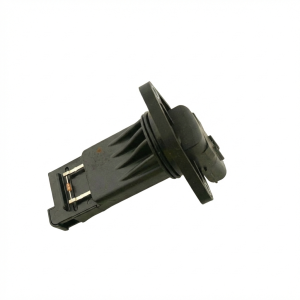
- Mass Airflow (MAF) Sensor Assembly (2016-2018 Models)
(OEM #PE01-13-215)— For the 2016-2018 (ND1) MX-5, this assembly contains the integrated IAT sensor that fails and causes code P0113. This part is also used on many other Mazda models from the same era.
Trusted brands: Mazda (OEM), Denso (OEM Manufacturer), Walker, Delphi
OEM price range: $200-$280
Aftermarket price range: $90-$150 - Mass Airflow (MAF) Sensor Assembly (2019-2024 Models)
(OEM #PYFS-13-215)— For the 2019-2024 (ND2) MX-5, this is the correct OEM part number for the MAF assembly which contains the integrated IAT sensor.
Trusted brands: Mazda (OEM)
OEM price range: $150-$250
Aftermarket price range: $100-$160
Related Codes That Often Appear With This One
- P0101 — This code relates to MAF Sensor Performance. Since the IAT sensor is in the same housing, a bad connection or faulty unit can trigger both codes.
- P0102 — This code is for MAF Circuit Low Input. Wiring or connector issues affecting the MAF/IAT assembly can cause multiple related codes to appear.
- P0300 — A Random Misfire code can sometimes accompany P0113 because the incorrect air temperature reading leads to an improper air/fuel mixture, causing combustion instability.
Technical Service Bulletins (TSBs) & Recalls
- TSB 05-001/17: While not for P0113, this TSB addresses grinding noises and hard shifting in early ND1 manual transmissions by replacing gears or the entire transmission. It is relevant context for owners of 2016-2017 models.
Platform-Specific Known Issues
- Owner experiences on forums strongly caution against using cheap, non-OEM MAF sensors. Many report these aftermarket parts are dead-on-arrival or fail within a few months, causing the P0113 code to return. Sticking with Mazda OEM or the OEM manufacturer (Denso) is highly recommended for reliability.
Diagnostic Flowchart
Other Known Issues on This Vehicle
Issues unrelated to this code that are worth knowing about as an owner of this generation:
- Manual Transmission Failures (ND1) 🔴 High — Common in early 2016-2017 models, especially those driven aggressively. Failures can occur early in the vehicle's life. Mazda issued a revised transmission design. (Ref: TSB 05-001/17)
- Thin Paint / Prone to Chipping 🟡 Low — A widely reported cosmetic issue across all years, particularly on the front bumper and hood.
- Soft Top Fabric Wear 🟠 Medium — Commonly reported issue where the soft top fabric rubs against the roll hoop covers, causing scuff marks.
- SKYACTIV-G Carbon Buildup 🟠 Medium — A long-term consequence of direct injection engines. While Mazda's design mitigates it better than some brands, buildup on intake valves can occur at higher mileages (70k-100k+ miles), potentially reducing performance.
- Automatic Transmission Unexpected Downshift 🔴 High — Affected 2016-2019 models with automatic transmissions. A software issue could cause an abrupt downshift. (Ref: Recall NHTSA 19V074000)
Real Owner Stories
Aggregated from forums and TSBs cited above. Mileages and costs reflect what owners reported in those sources.
2011 Mazda 3 SKYACTIV-G
Symptoms: The car experienced a no-start condition and threw code P0113.
What fixed it: Replacing the MAF sensor assembly resolved the issue completely; the car started right up afterward.
Source hint: Reddit - 2011 Mazda 3 won't start OBD II: P0113
2016-2024 Mazda MX-5 SKYACTIV-G 2.0L
Symptoms: A P0113 code appeared alongside a P0300 random misfire code, resulting in poor engine performance.
What fixed it: Replacing the entire MAF sensor assembly as the IAT sensor is integrated into it.
Source hint: MX-5 Owners Club Forum - Random misfire
2016-2024 Mazda MX-5 SKYACTIV-G 2.0L
Symptoms: Check engine light with P0113; diagnostic scan showed IAT live data locked at -40°F.
What fixed it: Cleaning the connector terminals with electrical contact cleaner or replacing the MAF sensor assembly (PE01-13-215).
Source hint: Miata.net Forums - General Discussion
Related OBD-II Codes
Frequently Asked Questions
Does TSB 05-001/17 for the 2016-2017 Mazda MX-5 address the P0113 code?
Can I use an aftermarket MAF sensor to fix the P0113 code on my MX-5?
Where is the IAT sensor located on the SKYACTIV-G 2.0L engine?
Is there a recall for the 2016-2019 MX-5 that might cause engine performance issues similar to P0113?
What specific pins should I check on the MAF/IAT connector for a P0113 code?
Will a P0113 code affect my MX-5's ability to start in the winter?
Helpful Videos



We Have This Part in Stock

The information in this article is provided for general reference and educational purposes only. Vehicle specifications, procedures, and part compatibility can vary by production date, trim level, and region. Always consult your vehicle's factory service manual and verify part numbers before purchasing or performing repairs. Safety-critical components such as airbags, seat belts, and braking systems should be installed by a qualified professional.
- Mazda MX-5:
- 🧭 Diagnostic Flowchart
- 🎬 Helpful Videos
- 🛍️ Shop This Part
- What's Unique About the 2016-2024 Mazda MX-5
- Symptoms You May Notice
- Most Likely Causes
- Rare But Worth Checking
- Diagnosis Steps
- Parts You'll Likely Need
- Related Codes That Often Appear With This One
- Technical Service Bulletins (TSBs) & Recalls
- Platform-Specific Known Issues
- Other Known Issues on This Vehicle
- Real Owner Stories
- 2011 Mazda 3 SKYACTIV-G
- 2016-2024 Mazda MX-5 SKYACTIV-G 2.0L
- 2016-2024 Mazda MX-5 SKYACTIV-G 2.0L
- Related OBD-II Codes
- Frequently Asked Questions
- 🎟️ Get 5% Off