

P0113 on 2010-2014 Subaru Legacy 2.5L: IAT Circuit High Causes and Fixes
On a 2010-2014 Subaru Legacy, code P0113 is almost always caused by a faulty Mass Airflow (MAF) sensor, which contains the Intake Air Temperature (IAT) sensor. The most likely fix is replacing the entire MAF sensor assembly, which costs about $150-$250 for an OEM-quality part and is a simple 10-minute DIY job. A disconnected connector or damaged wiring are also common culprits.
- P0113 on this Legacy means there is an electrical problem with the Intake Air Temperature sensor circuit.
- The IAT sensor is built into the Mass Airflow (MAF) sensor, so you will be inspecting or replacing the MAF assembly.
- First, check that the MAF sensor is plugged in securely. If it is, try cleaning it with dedicated MAF sensor cleaner.
- If cleaning doesn't work, the most common fix is to replace the entire MAF sensor assembly, which is a very easy DIY task.
- The correct OEM part number is 22680AA380. Denso is a trusted OEM-quality brand for this part.
What's Unique About the 2010-2014 Subaru Legacy
On this specific Subaru Legacy with the EJ253 engine, there is no separate, standalone IAT sensor. Instead, the IAT sensor is integrated into the Mass Airflow (MAF) sensor assembly, located on the engine's air intake tube right after the air filter box. This is a common design on many Subarus of this era. This means that any diagnosis or replacement for a P0113 code involves inspecting, cleaning, or replacing the entire MAF sensor unit, not a separate part.
Symptoms You May Notice
- Check Engine Light is on
- Flashing Cruise Control light (a common Subaru trait when the Check Engine Light is on)
- Rough or unstable idle, potentially stalling at low RPMs
- Hesitation or poor acceleration
- Hard starting, especially when the engine is cold
- Noticeably worse fuel economy
- Black smoke from the exhaust if the engine runs excessively rich
- Replacing a standalone IAT sensor (this vehicle does not have one)
- Replacing the MAP (Manifold Absolute Pressure) sensor, which is a different sensor entirely, though wiring issues can sometimes cause codes for both to appear.
- Replacing the air filter; while a dirty filter should be replaced, it will not cause a 'Circuit High' electrical fault code.
Most Likely Causes
- Failed Mass Airflow (MAF) / IAT Sensor Assembly 🔴 High Probability → Shop Fuel Injection Air Flow Meter The sensor operates in the direct path of incoming air and its delicate internal components, like the thermistor or hot wire, can fail over time, creating an internal open circuit.
How to confirm: After confirming the wiring is intact, check the IAT live data on a scan tool. A reading of -40°F or -40°C is a definitive sign of an open circuit, pointing to a failed sensor. Replacing the sensor is the final confirmation.
Typical fix: Replace the entire MAF sensor assembly. This is a very simple repair involving two screws and one electrical connector.
Est. part cost: $60-$250 - Disconnected or Loose Electrical Connector 🟡 Medium Probability Vibrations or previous repairs (like changing an air filter or replacing a coil pack) can cause the connector on the MAF sensor to become loose or disconnected, which immediately creates an open circuit and triggers P0113.
How to confirm: Visually inspect the MAF sensor on the intake tube. Ensure the electrical connector is fully seated and the locking tab is engaged. A disconnected plug is the direct cause.
Typical fix: Securely reconnect the electrical connector and clear the trouble code.
Est. part cost: $0 - Dirty MAF/IAT Sensor Element ⚪ Low Probability Oil vapors from the PCV system or fine dust that gets past the air filter can coat the sensor's delicate wires. While this more commonly causes performance codes (like P0101 or P0171), a heavy buildup can potentially interfere with the circuit or cause erratic readings.
How to confirm: Remove the sensor and visually inspect the small wires inside the housing. If they are visibly coated in grime, cleaning is a worthwhile step.
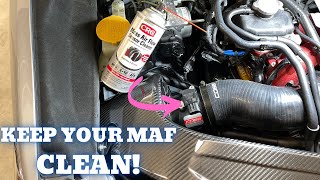
Typical fix: Carefully spray the sensor elements with a dedicated Mass Airflow Sensor cleaner. Do not touch the wires. Allow it to dry completely before reinstalling. 🎬 Watch: Step-by-step guide to cleaning your Legacy's MAF sensor
Est. part cost: $10-$15 for a can of cleaner
Rare But Worth Checking
- Damaged Wiring Harness: A wire leading to the MAF sensor could be broken, frayed, or corroded. This can happen from rodent damage or from being disturbed during other engine repairs. One owner on a Reddit forum reported that MAF/IAT codes (P0102, P0113, P0107, P0108) appeared immediately after replacing an ignition coil, suggesting the harness was inadvertently damaged in the process.
- Faulty Engine Control Module (ECM): → Shop Engine Control Module (ECM) This is very rare. The ECM's internal circuit for the IAT sensor could fail. This should only be considered after a new, known-good sensor and verified wiring fail to resolve the code.
Diagnosis Steps
- Connect an OBD-II scanner and confirm P0113 is the active code. Check for any other codes like P0102, P0107, etc., as they can point to a wiring issue.
- View the live data stream for the Intake Air Temperature (IAT). A reading of -40°F or -40°C strongly indicates an open circuit.
- Locate the MAF sensor on the air intake tube, just after the air filter housing.
- Inspect the electrical connector. Ensure it is plugged in securely. Check for any bent, corroded, or backed-out pins inside the connector.
- Inspect the visible wiring going to the sensor for any signs of damage, fraying, or melting. Pay close attention to areas where the harness might have been disturbed during previous repairs.
- If wiring appears intact, remove the two screws holding the MAF sensor in place and carefully take it out.
- Spray the internal sensor wires with dedicated MAF Sensor Cleaner. Do not touch the wires. Let it air dry completely. 🎬 Watch: How to safely spray and clean a Subaru MAF sensor
- Reinstall the sensor, clear the code, and perform a test drive. If the code returns, the sensor itself has likely failed internally.
- Replace the MAF sensor assembly with a new part. Using an OEM or OE-equivalent brand like Denso is highly recommended.
- If a new sensor does not resolve the code, a more thorough diagnosis of the wiring harness for continuity between the sensor and the ECM is required. A multimeter will be needed to check for breaks in the signal and ground wires.
Parts You'll Likely Need
- Mass Airflow (MAF) Sensor
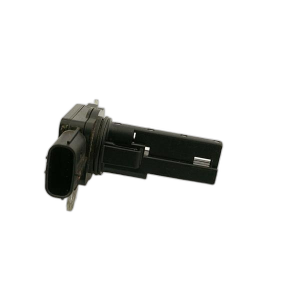
(OEM #22680AA380)— This assembly contains the integrated IAT sensor. An internal failure of the IAT circuit is the most common cause of P0113, requiring the replacement of the entire unit. Denso is the Original Equipment (OE) supplier for this part.
Trusted brands: Denso (OE Manufacturer), Hitachi, Delphi, Walker Products
OEM price range: $180-$250
Aftermarket price range: $60-$150 - Mass Airflow Sensor Cleaner — This is a low-cost first step. Cleaning a dirty sensor element can sometimes restore function and resolve the code without needing to replace the part.
Trusted brands: CRC, Liqui Moly
Aftermarket price range: $10-$15
Related Codes That Often Appear With This One
- P0102 — This code for 'MAF Circuit Low Input' can appear with P0113 if there is a general wiring harness issue, a bad ground, or a complete failure of the MAF/IAT sensor assembly.
- P0107 / P0108 — These codes relate to the Manifold Absolute Pressure (MAP) sensor. If they appear alongside P0113, it strongly suggests a shared wiring harness or ground problem, as it's unlikely for two separate sensors to fail simultaneously. This was reported by a user after a separate engine repair.
Technical Service Bulletins (TSBs) & Recalls
- No TSBs specifically addressing code P0113 on this platform were identified during research. Other TSBs for this generation, like 07-84-14, address unrelated issues such as the Occupant Detection System.
Mechanic-Grade Diagnostic Values
- IAT Sensor Resistance — expected: Approximately 2.0 to 6.0 kΩ at 25°C (77°F), dropping to around 0.3 kΩ at 80°C (176°F).. Failure: Infinite resistance (open circuit) or a reading that doesn't change with temperature indicates a faulty sensor.
- IAT Sensor Signal Voltage at Connector — expected: Approximately 2.0V at 68°F (20°C) with the key on, engine off. This is measured between the signal wire and ground.. Failure: A reading of 5.0V indicates an open circuit 🎬 See how to diagnose and fix P0113 circuit high codes (the cause of P0113). A reading of 0V could indicate a short to ground.
- Reference Voltage at Connector — expected: Approximately 5.0V between the reference wire and ground with the key on, engine off.. Failure: Voltage significantly below 5.0V or 0V points to a wiring issue or a problem with the ECM's 5V reference circuit.
Scan Tool Commands That Help
- Subaru Select Monitor (SSM): Current Data Display / Data Display — This is the dealer-level tool used to view live data parameters like 'Intake Air Temp' and 'Mass Air Flow' to confirm the sensor's readings. While any generic OBD-II scanner can read this, the SSM is the official tool.
Wiring & Ground Locations
- MAF/IAT Sensor Connector (B20) — On the air intake tube, immediately following the air filter housing.. This is the primary connection point. A loose, corroded, or damaged connector here is a common cause of the P0113 open circuit fault.
- ECM Connectors (B134, B135, B136, B137) — Located on the right side of the dashboard, typically accessible by removing the glove box or right kick panel.. The IAT signal wire terminates here. Verifying continuity from the sensor to the correct ECM pin is the final step in diagnosing a wiring break.
- IAT Signal Pin at ECM — Pin 14 on ECM connector B136.. This is the specific pin where the ECM receives the temperature signal. A technician would backprobe this pin to confirm if the ~5V 'high' signal is reaching the ECM, confirming the issue is not within the ECM itself.
- Engine Ground Points — Key grounds are located on the intake manifold and attached to the chassis on the fenders. A primary ground strap often runs from the battery negative terminal to the chassis and engine block.. While a bad ground for the IAT sensor circuit would more likely cause a P0112 (Circuit Low) code, poor overall engine grounding can cause unpredictable electrical issues and noise, potentially affecting multiple sensors.
- MAF/IAT Connector Pinout — On the 5-wire connector at the sensor.. Knowing the function of each pin is essential for testing. A common pinout is: Pin 1 (Power, ~12V), Pin 2 (Ground), Pin 3 (MAF Signal, 0-5V), Pin 4 (IAT Signal, 0-5V), Pin 5 (Sensor Ground).
Real Owner Repair Stories
- LegacyGT.com forum user (2002 Subaru Legacy GT (earlier generation, but similar EJ engine and MAF/IAT design)) — P0113 code appeared twice in two months.
❌ Tried (didn't work) Initial diagnosis pointed towards replacing the IAT sensor.
✅ What actually fixed it The user replaced the entire MAP (Manifold Absolute Pressure) sensor assembly, which on that specific model year also contained the IAT sensor, and the code did not return. This highlights how integrated sensors can be confusing across model years. - LegacyGT.com forum user (3rd Gen Subaru Legacy (1999-2004)) — P0113 code with loss of power.
❌ Tried (didn't work) Initial troubleshooting focused on the IAT sensor.
✅ What actually fixed it The problem was ultimately a failing Idle Air Control (IAC) valve. After replacing the IAC valve assembly, the P0113 code and power loss issues were resolved. This is an unusual case where a mechanical failure likely caused electrical noise or a condition that the ECU misinterpreted as an IAT fault. - NHTSA ODI #11523727 (Subaru Outback - Cross-Manufacturer Reference) — An owner reported diagnosing their vehicle with an OBD reader and retrieving codes P0177, P0174, P0102, and P0113.
✅ What actually fixed it The dealer diagnosed that both the fuel pump and the mass airflow sensor had failed.
OEM Part Supersession History
22680AA38A→22680AA380— Standard part revision by the manufacturer.
Heads up: The parts are interchangeable. 22680AA380 is the current replacement for 22680AA38A.
Diagnostic Flowchart
Other Known Issues on This Vehicle
Issues unrelated to this code that are worth knowing about as an owner of this generation:
- CVT Transmission Failure/Shudder 🔴 High — Common in 2010-2014 models, especially early in the generation. Can manifest as shuddering, hesitation, or complete failure, sometimes before 100,000 miles. (Ref: Subaru extended the CVT warranty to 10 years/100,000 miles for many affected vehicles due to these issues.)
- Excessive Oil Consumption 🔴 High — Widespread enough to trigger a class-action lawsuit, particularly affecting 2013 models. Caused by piston ring design, leading to frequent need for top-ups and potential engine damage. (Ref: A lawsuit was settled in January 2016 regarding this issue.)
- Head Gasket Failure (Internal Leak) 🟠 Medium — While the EJ253 in this generation uses improved Multi-Layer Steel (MLS) gaskets, they are still prone to failure. Unlike older Subarus that leaked externally, these tend to leak internally (coolant into the cylinder), which can be harder to detect initially.
- Prematurely Burnt-Out Headlights 🟡 Low — A very common and annoying, though not mechanically severe, issue reported on 2010-2011 models, requiring frequent bulb replacement.
Used vs. New Parts: Buying Guide for This Vehicle
When a used part is the smart pick: A used OEM (Denso) MAF sensor from a low-mileage, reputable junkyard can be a cost-effective option if the budget is tight. Since it's an external, easily-swapped part, the labor risk is minimal if the used part is faulty.
Donor-vehicle mileage cap: roughly under 80000 miles for the part to have meaningful remaining life.
What to inspect on the donor part:
- Ask for the VIN of the donor car to verify mileage and ensure it wasn't from a front-end collision.
- Visually inspect the sensor's internal wires. They should be clean and free of any oil, debris, or physical damage.
- Ensure the plastic housing and connector are not cracked or brittle.
- Confirm it is a genuine OEM part, usually marked with 'DENSO' and the part number.
OEM-only on this vehicle (don't cheap out):
- Mass Airflow (MAF) Sensor
Aftermarket brands forum-validated for this vehicle:
- Denso (is the OEM, so it's the best choice)
- Hitachi
Brands owners have reported issues with on this vehicle:
- Unnamed, no-brand, or exceptionally cheap MAF sensors from online marketplaces are notorious for being poorly calibrated out of the box, often causing performance issues or failing quickly.
Real Owner Stories
Aggregated from forums and TSBs cited above. Mileages and costs reflect what owners reported in those sources.
2014 Subaru Legacy 2.5L
Symptoms: The car experienced a low idle (under 1K RPM) and threw multiple codes including P0113, P0102, P0107, and P0108 immediately after a coil pack replacement.
What fixed it: The owner suspected a common wiring issue or shared circuit problem after cleaning both the MAF and MAP sensors did not resolve the multiple circuit codes.
Source hint: Reddit r/subaru - 'Subaru Legacy 2014 Codes P0102,P0113,P0107,P0108'
2006 Subaru Forester 2.5L SOHC
Symptoms: The vehicle would stall whenever the RPMs dropped below 1,000.
What fixed it: The owner identified both P0102 and P0113 codes, which are related to the shared MAF/IAT sensor assembly.
Source hint: Reddit r/subaru - 'P0102 and P0113 car stalls at low RPMs'
2012 Subaru Legacy 2.5L SOHC — ~110000 miles
Symptoms: Internal coolant leak into the cylinder (head gasket failure).
What fixed it: Replacement of the head gaskets; owners of this generation noted that while they use Multi-Layer Steel gaskets, they still fail internally around this mileage.
Source hint: LegacyGT.com - 'Head Gaskets - Fifth Generation Legacy (2010 - 2014)'
Related OBD-II Codes
Frequently Asked Questions
Does TSB 07-84-14 for the 2010-2014 Subaru Legacy address my P0113 code?
Is there a specific brand of MAF/IAT sensor recommended for the EJ253 engine?
Why did my cruise control light start flashing along with the Check Engine Light?
Can I just clean the sensor on my Legacy instead of spending $60-$250 on a new one?
I just replaced my coil pack and now I have P0113. Is this common?
Does the CVT warranty extension cover repairs for the P0113 code?
Helpful Videos


We Have This Part in Stock

The information in this article is provided for general reference and educational purposes only. Vehicle specifications, procedures, and part compatibility can vary by production date, trim level, and region. Always consult your vehicle's factory service manual and verify part numbers before purchasing or performing repairs. Safety-critical components such as airbags, seat belts, and braking systems should be installed by a qualified professional.
- Subaru Legacy:
- 🧭 Diagnostic Flowchart
- 🎬 Helpful Videos
- 🛍️ Shop This Part
- What's Unique About the 2010-2014 Subaru Legacy
- Symptoms You May Notice
- Most Likely Causes
- Rare But Worth Checking
- Diagnosis Steps
- Parts You'll Likely Need
- Related Codes That Often Appear With This One
- Technical Service Bulletins (TSBs) & Recalls
- Mechanic-Grade Diagnostic Values
- Scan Tool Commands That Help
- Wiring & Ground Locations
- Real Owner Repair Stories
- OEM Part Supersession History
- Other Known Issues on This Vehicle
- Used vs. New Parts: Buying Guide for This Vehicle
- Real Owner Stories
- 2014 Subaru Legacy 2.5L
- 2006 Subaru Forester 2.5L SOHC
- 2012 Subaru Legacy 2.5L SOHC — ~110000 miles
- Related OBD-II Codes
- Frequently Asked Questions
- 🎟️ Get 5% Off