

P0113 on 2009-2013 Toyota Corolla 1.8L: IAT Circuit High Causes and Fixes
On a 2009-2013 Corolla, code P0113 almost always means the Mass Air Flow (MAF) sensor, which contains the Intake Air Temperature (IAT) sensor, has failed. The 'Circuit High' code indicates an open circuit, not a dirty sensor. Replacing the entire MAF sensor assembly with an OEM Denso part (197-6110) or Toyota part (22204-37010 or its successor 22204-28010) is the correct fix. It's a 10-minute DIY job costing around $125.
- P0113 on this Corolla means you need a new Mass Air Flow (MAF) sensor, not a separate IAT sensor.
- The most probable cause is an internal open circuit in the sensor assembly itself, which cannot be fixed by cleaning.
- This is a very simple DIY repair that takes about 10 minutes with a Phillips head screwdriver.
- Always use a quality OEM brand like Denso (197-6110) or a genuine Toyota part (22204-37010) to ensure reliability.
- Before buying any parts, check the live data on a scan tool to confirm the IAT reading is stuck at -40°F.
What's Unique About the 2009-2013 Toyota Corolla
On the 2009-2013 Corolla with the 1.8L 2ZR-FE engine, the Intake Air Temperature (IAT) sensor is not a separate part. It is an integrated thermistor within the Mass Air Flow (MAF) sensor assembly, located on the air filter box. This is a common design for Toyota, and it means you cannot replace just the IAT sensor; you must replace the entire MAF sensor unit. The most common cause for P0113 on this vehicle is the internal failure of this combined sensor, creating an open circuit.
Symptoms You May Notice
- Check Engine Light is on
- Slight decrease in fuel economy
- Possible hesitation or rough idle, especially during extreme weather
- Potential difficulty starting in very cold or hot conditions
- In some cases, a no-start condition accompanied by a strong fuel smell after repeated cranking attempts.
- Sudden stalling while the vehicle is in motion.
- Replacing only the engine air filter. A dirty filter will not cause a 'Circuit High' electrical fault code.
- Looking for a separate, standalone IAT sensor. On this engine, it is part of the MAF sensor.
- Attempting to clean the MAF sensor to fix the P0113 code. While cleaning can sometimes resolve MAF-related performance codes (P0101), it cannot fix an internal open circuit in the IAT thermistor which causes P0113.
Most Likely Causes
- Failed Mass Air Flow (MAF) / IAT Sensor Assembly 🔴 High Probability The IAT sensor is integrated into the MAF sensor, making the entire unit the single point of failure. Denso is the OEM supplier, and internal failure of the thermistor circuit is the most common fault, resulting in an open circuit that the ECU reads as 'High Input'.
How to confirm: With a scan tool, observe the IAT temperature reading. If it is stuck at a very low value (e.g., -40°F) regardless of the actual engine temperature, the sensor has failed. You can also use a multimeter to check for an open circuit (infinite resistance) across the IAT pins (pins 4 and 5) on the sensor itself.
Typical fix: Replace the entire Mass Air Flow (MAF) sensor assembly. Do not attempt to clean it to fix this specific electrical fault; cleaning is for MAF performance issues (like P0101), not an IAT circuit fault.
Est. part cost: $120-$200 - Damaged Wiring or Loose Connector ⚪ Low Probability Wiring can become brittle over time, or damage can occur from previous repairs or rodent activity. The connector itself can become loose, causing an open circuit.
How to confirm: Visually inspect the wiring harness leading to the MAF sensor for any breaks, chafing, or corrosion. Unplug and re-plug the connector to ensure it is seated securely. Check for corrosion on the connector pins. A forum user noted that on some Toyota platforms, accidentally swapping the IAT connector with a nearby, identical-looking connector (like for the Purge Valve) can cause this code.
Typical fix: Repair the damaged section of wire or clean/replace the connector pigtail.
Est. part cost: $5-$30
Rare But Worth Checking
- Faulty Engine Control Module (ECM): → Shop Engine Control Module (ECM) This is extremely rare. Before condemning the ECM, all other possibilities, especially the MAF sensor and its wiring, must be exhaustively ruled out. A faulty ECM will typically set other codes as well.
Diagnosis Steps
- Read the code with an OBD-II scanner to confirm P0113 is present.
- Using the scanner's live data function, view the 'Intake Air Temperature'. If it reads an illogical, static low temperature like -40°F, the sensor has failed or is disconnected.
- Turn the engine off. Locate the MAF sensor on the air filter housing, right after the air filter.
- Inspect the electrical connector and wiring harness for any visible damage, corrosion, or loose connections. Ensure it is plugged in securely.
- For advanced diagnosis: Disconnect the MAF sensor. On the harness-side connector (with the key on, engine off), use a multimeter to check for ~5V reference and ground. On the 2ZR-FE, the IAT circuit is on pins 4 and 5. You should find a 5V reference on one and ground on the other.
- To test the sensor itself: With the sensor disconnected, set a multimeter to measure resistance (Ohms) and probe pins 4 and 5 of the sensor. At room temperature (~68°F/20°C), it should read approximately 2.2-2.7 kΩ. If it reads open/infinite resistance, the sensor's internal thermistor is broken and the sensor must be replaced.
- Replace the MAF sensor assembly. It is held in by two Phillips head screws.
- Clear the code with the scanner and go for a short drive to confirm the fix.
Parts You'll Likely Need
- Mass Air Flow (MAF) Sensor
(OEM #22204-37010)— This assembly contains the integrated IAT sensor, which is the component that fails and triggers the P0113 code on this vehicle. The Toyota OEM part number is 22204-37010. The OEM supplier is Denso, and their part number is 197-6110, which cross-references to the Toyota number.
Trusted brands: Denso (OEM), Toyota (Genuine)
OEM price range: $125-$200
Aftermarket price range: $80-$150
Related Codes That Often Appear With This One
- P0101 — Mass Air Flow (MAF) Circuit Range/Performance. Since the IAT is integrated into the MAF sensor, a single failing component can sometimes trigger faults for both functions.
- P0102 — Mass Air Flow Circuit Low Input. NHTSA ODI #11296751 notes that on similar Toyota platforms, P0113 and P0102 can appear simultaneously alongside check engine and malfunction warnings when starting the vehicle.
Platform-Specific Known Issues
- Pontiac Vibe Crank-No-Start with P0113: A 2009 Pontiac Vibe (platform mate) owner reported a crank-no-start condition. After replacing spark plugs and coils without success, a P0113 code was found. This highlights how a failed IAT sensor can lead to more severe symptoms like a no-start, likely due to the ECM delivering a grossly incorrect fuel mixture for starting.
Mechanic-Grade Diagnostic Values
- IAT Sensor Resistance vs. Temperature — expected: Approx. 13.5 kΩ @ -4°F (-20°C), 2.45 kΩ @ 68°F (20°C), 0.32 kΩ @ 176°F (80°C). A reading of 100 kΩ or higher corresponds to the -40°F fault condition.. Failure: Infinite resistance (Open Line) indicates a broken internal thermistor, confirming the cause of P0113. A resistance value that doesn't change with temperature also indicates failure.
- IAT Sensor Circuit Voltage at ECM — expected: Voltage should vary based on temperature, typically between 0.2V (hot) and 4.8V (cold).. Failure: A sustained voltage of 4.9V or higher for more than 0.5 seconds will trigger DTC P0113.
Scan Tool Commands That Help
- Toyota Techstream: Utility -> All Readiness — After a repair attempt (like replacing the MAF sensor), this function is used to check the status of the onboard diagnostic monitors. You can specifically input DTC P0113 to see if the system's self-test has passed, confirming the fix without needing a long drive cycle.
Wiring & Ground Locations
- MAF Sensor Connector (Harness Side) — Plug connecting to the MAF sensor on the air filter housing.. The IAT circuit uses two of the five pins. On the 2ZR-FE, the IAT signal is typically a Pink wire (THA), and the sensor ground is a Brown/White wire (ETHA). Verifying voltage and ground on these specific wires is key to diagnosing a wiring issue.
- E2G (Sensor Ground) — Forum data suggests this is Pin 116 on the Engine Control Module (ECM).. The IAT sensor (and other sensors) require a solid ground path back to the ECM. If this ground path is compromised, it can cause high resistance in the circuit, mimicking the P0113 fault. A technician might chase a sensor fault when the real issue is the ground connection at the ECM or in the harness.
Real Owner Repair Stories
- ToyotaNation Forums (2009 Toyota Corolla) — P0103 (MAF Circuit High) and P0113 (IAT Circuit High) after the MAF sensor connector was accidentally cut off and a new pigtail was spliced on.
❌ Tried (didn't work) Replacing the MAF sensor with a new one., Checking for voltage at the connector (found 4.9V on both IAT pins, leading to a misdiagnosis of a bad PCM).
✅ What actually fixed it The user experimentally grounded the main sensor ground wire (E2G) to the chassis. This cleared the P0103 code, indicating the original problem was a compromised ground path between the sensor connector and the ECM. The P0113 remained, likely due to an issue with the pigtail splice for the IAT-specific wires, but the experiment proved the issue was in the wiring/grounding, not the PCM or the sensor itself. - NHTSA ODI #11139909 — An owner reported that their vehicle stalled while driving. Upon inspection, the car threw multiple diagnostic trouble codes including P0113, P0013, P1603, and P1605.
OEM Part Supersession History
22204-37010→22204-28010— Standard part update/revision by Toyota.
Heads up: The new part number is a direct replacement and fully compatible.
Model Year Variations Within This Range
- 2009-2013: Corollas of this generation were manufactured in different plants (e.g., NUMMI in USA, TMC in Japan). Service manuals sometimes show slightly different wiring diagrams for vehicles from different plants. While no specific difference for the P0113 circuit has been noted, a technician should be aware that minor variations in wire color or routing could exist.
Diagnostic Flowchart
Other Known Issues on This Vehicle
Issues unrelated to this code that are worth knowing about as an owner of this generation:
- Premature Water Pump Failure 🟠 Medium — Commonly reported between 30,000 and 80,000 miles. It is a known weak point for this generation. (Ref: No recall, but it is a widely documented issue. An updated pump design exists.)
- Excessive Oil Consumption 🟡 Low — Typically occurs at higher mileage (over 100,000 miles) and is less severe than in the previous 1ZZ-FE engine. Often linked to piston ring design.
- Cold Start Camshaft Rattle (VVT Gear) 🟡 Low — A brief rattle for 1-2 seconds on a cold start. While alarming, it is not typically known to cause catastrophic failure. (Ref: T-SB-0087-09)
- Timing Chain Cover Oil Leak 🟡 Low — A common oil leak point as the vehicle ages. The resealing process is labor-intensive.
Used vs. New Parts: Buying Guide for This Vehicle
When a used part is the smart pick: Almost never. This part fails electronically due to an internal open circuit in the thermistor. A used part has an unknown amount of life left and may fail quickly. Given the relatively low cost of a new OEM part, buying used is a significant gamble for minimal savings.
Donor-vehicle mileage cap: roughly under 50000 miles for the part to have meaningful remaining life.
What to inspect on the donor part:
- Inspect the connector pins for any signs of corrosion or damage.
- Ensure the plastic housing is not cracked or showing signs of heat stress.
- If possible, test the resistance across the IAT pins (4 and 5) with a multimeter before purchase; it should not be an open circuit.
OEM-only on this vehicle (don't cheap out):
- Mass Air Flow Sensor
Aftermarket brands forum-validated for this vehicle:
- Denso (This is the Original Equipment Manufacturer; buying Denso is equivalent to buying the Toyota Genuine part in a different box)
Brands owners have reported issues with on this vehicle:
- Unnamed or 'white box' generic brands. While they may work initially, forums and mechanic experience suggest they have a higher failure rate and can cause subtle performance issues (like incorrect fuel trims) even if they don't set a code.
Real Owner Stories
Aggregated from forums and TSBs cited above. Mileages and costs reflect what owners reported in those sources.
2013 Toyota Corolla LE
Symptoms: Car will not start, Check Engine Light on with codes P0113 and P0441. Owner noted the P0441 code only went away when the tank was full.
What fixed it: The owner was asking for help and the solution was not posted.
Source hint: r/MechanicAdvice - 2013 Toyota corola LE P0113 and P0441, Car will not start
2009 Toyota Corolla base model, 1.8L — 170000 miles
Symptoms: The car started stalling, the RPM needle was 'jerking,' and the car seemed hesitant to switch gears. The idle was dipping as low as 400 RPM when coming to a stop.
What fixed it: The final fix was not reported by the owner after replacing the battery and cleaning the throttle body failed to resolve it.
Source hint: r/AskMechanics - I have a 2009 Toyota Corolla base model, 1.8 liter engine that started stalling
2009 Pontiac Vibe 1.8L
Symptoms: Crank-no-start condition. Owner replaced spark plugs and coils without success before finding the P0113 code.
What fixed it: The issue was linked to the P0113 code, which caused the ECM to deliver an incorrect fuel mixture for starting.
Source hint: GenVibe - 'Crank no Start, been to two mechanics'
Related OBD-II Codes
Frequently Asked Questions
Can I just clean the sensor on my 2ZR-FE Corolla to fix the P0113 code?
Where is the IAT sensor located on the 2009-2013 Corolla 1.8L?
Is there a specific TSB for the 2ZR-FE engine regarding cold start issues?
What should the resistance be for a healthy IAT sensor on this vehicle?
Could a P0113 code cause my Corolla to not start at all?
Which replacement part should I use for the 2009-2013 Corolla 1.8L?
Helpful Videos

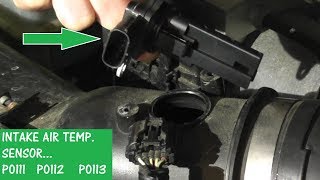

![How to Fix TOYOTA P0113 Engine Code in 3 Minutes [2 DIY Methods / Only $7.76]](https://img.youtube.com/vi/SuUPiPKf8FA/mqdefault.jpg)
We Have This Part in Stock
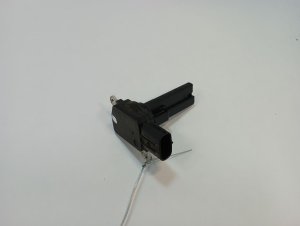
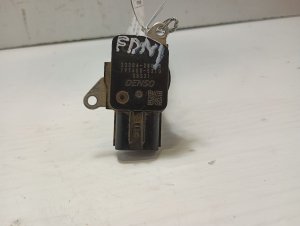

The information in this article is provided for general reference and educational purposes only. Vehicle specifications, procedures, and part compatibility can vary by production date, trim level, and region. Always consult your vehicle's factory service manual and verify part numbers before purchasing or performing repairs. Safety-critical components such as airbags, seat belts, and braking systems should be installed by a qualified professional.
- Toyota Corolla:
- 🧭 Diagnostic Flowchart
- 🎬 Helpful Videos
- 🛍️ Shop This Part
- What's Unique About the 2009-2013 Toyota Corolla
- Symptoms You May Notice
- Most Likely Causes
- Rare But Worth Checking
- Diagnosis Steps
- Parts You'll Likely Need
- Related Codes That Often Appear With This One
- Platform-Specific Known Issues
- Mechanic-Grade Diagnostic Values
- Scan Tool Commands That Help
- Wiring & Ground Locations
- Real Owner Repair Stories
- OEM Part Supersession History
- Model Year Variations Within This Range
- Other Known Issues on This Vehicle
- Used vs. New Parts: Buying Guide for This Vehicle
- Real Owner Stories
- 2013 Toyota Corolla LE
- 2009 Toyota Corolla base model, 1.8L — 170000 miles
- 2009 Pontiac Vibe 1.8L
- Related OBD-II Codes
- Frequently Asked Questions
- 🎟️ Get 5% Off