

P0113 on 2014-2019 Toyota Highlander 3.5L V6: IAT Circuit High Causes and Fixes
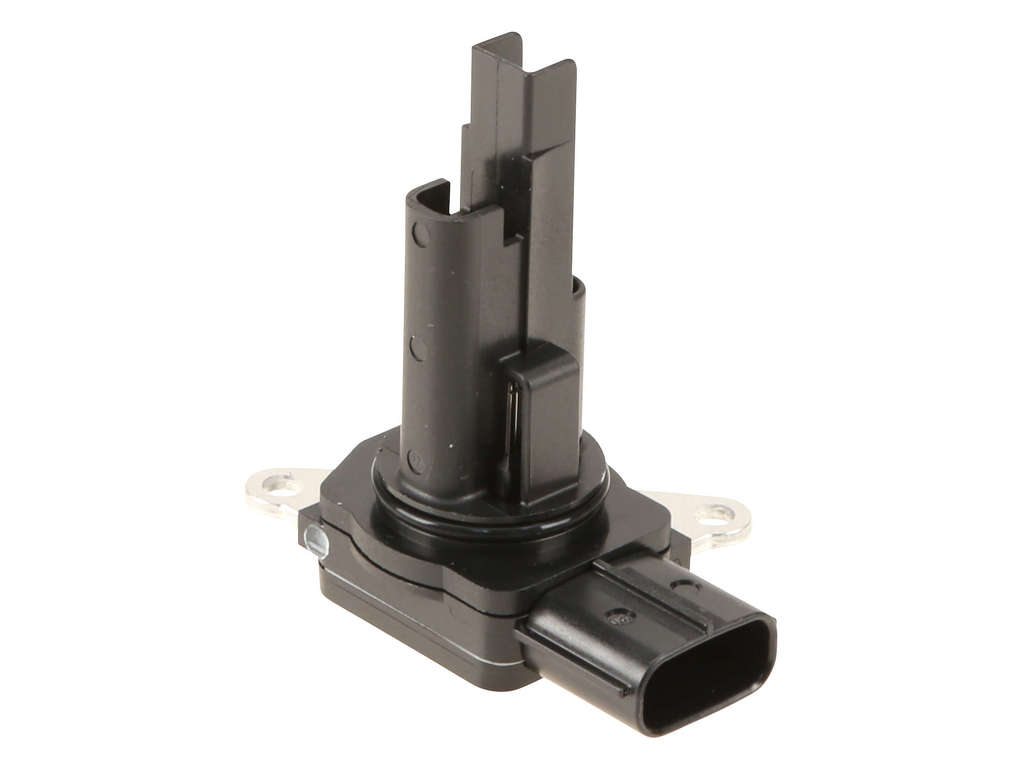
P0113 on a 2014-2019 Highlander almost always points to a problem with the Mass Airflow (MAF) sensor or its wiring. The most common fix is replacing the MAF sensor assembly, which includes the IAT sensor. Expect to pay $100-$180 for an aftermarket part (Denso is OEM) or $160-$220 for a genuine Toyota part. It's a very easy 10-minute DIY job. Before replacing parts, always inspect the wiring harness near the sensor for rodent damage, a known issue on this platform.
- P0113 means the computer sees an open circuit for the Intake Air Temperature sensor, not that the air is actually cold.
- On your Highlander, the IAT sensor is part of the MAF sensor. You cannot replace it separately.
- Before buying any parts, carefully inspect the wiring harness leading to the MAF sensor for any signs of damage, especially from chewing.
- If the wiring is good, the most likely fix is replacing the MAF sensor assembly, which is a simple DIY task that takes less than 15 minutes.
- For best results, use a Denso-branded replacement sensor, as Denso is the original equipment manufacturer for Toyota.
What's Unique About the 2014-2019 Toyota Highlander
On the 3.5L V6 engines used in this generation of Highlander, the Intake Air Temperature (IAT) sensor is not a standalone part. It is integrated into the Mass Airflow (MAF) sensor assembly located on the air filter box. While the sensor itself can fail, this specific platform is susceptible to wiring damage from rodents. Toyota's use of soy-based wiring insulation in this era can attract animals that chew through the harness leading to the MAF sensor, causing an open circuit and triggering the P0113 code. Always inspect the wiring harness carefully before replacing the sensor, as this is a very common point of failure. A key variation is the engine update for the 2017 model year; 2014-2016 models use the 2GR-FE engine, while 2017-2019 models use the updated 2GR-FKS engine which features a different fuel injection system.
Symptoms You May Notice
- Check Engine Light is on
- Reduced fuel economy
- Rough or erratic idle
- Hesitation during acceleration
- Hard starting, especially when the engine is cold
- Engine may crank but fail to start
- Replacing the oxygen (O2) sensors. A bad IAT reading causes a rich fuel mixture, which can affect O2 sensor readings, but the root cause is the IAT circuit, not the O2 sensors themselves.
Most Likely Causes
- Damaged MAF/IAT Sensor Wiring or Connector 🔴 High Probability The wiring harness in the engine bay can be a target for rodents, which chew the soy-based wires and cause an open circuit. This has been documented on this specific Highlander model, with owners finding chewed wires right at the connector.
How to confirm: Visually inspect the entire wiring harness leading to the MAF sensor connector for any signs of chewing, fraying, or breaks. Look for animal tracks or droppings on the engine cover. Check that the connector is securely plugged in and free of corrosion.
Typical fix: If the damage is minimal, the wires can be repaired using solder and heat shrink. If the damage is close to the connector, the connector pigtail must be replaced. 🎬 Watch: How to repair the MAF connector and wiring pins One owner was quoted $750 by a dealer for a full harness replacement, but a pigtail repair is a much more affordable and common solution.
Est. part cost: $15-$40 for a new pigtail connector - Failed Mass Airflow (MAF) / IAT Sensor 🔴 High Probability The IAT sensor is integrated into the MAF sensor assembly. An internal failure of the IAT thermistor will require replacement of the entire MAF unit.
How to confirm: Using an OBD-II scanner, check the live data for the IAT sensor. A P0113 code will almost always show a static, extremely low temperature (like -40°F). If the wiring is confirmed to be intact, the sensor itself has failed.
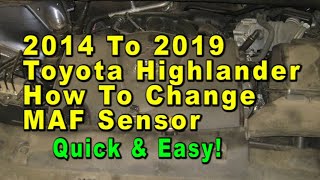
Typical fix: Replace the entire MAF sensor assembly. It is held in by two Phillips-head screws and is easily accessible on the airbox. 🎬 Watch: Quick and easy MAF sensor replacement walkthrough
Est. part cost: $100-$220 - Dirty MAF/IAT Sensor Element ⚪ Low Probability Oil from aftermarket reusable air filters or fine dust bypassing a poorly sealed or old engine air filter can coat the sensor elements.
How to confirm: Remove the sensor and visually inspect the small wires or thermistor inside the sensor's housing. If they are coated in dirt or oil, they require cleaning.
Typical fix: Carefully spray the sensor elements with a dedicated Mass Airflow Sensor cleaner. Do not touch the elements. Allow it to dry completely before reinstalling.
Est. part cost: $10-$15 for a can of MAF cleaner
Rare But Worth Checking
- Faulty Engine Control Module (ECM): → Shop Engine Control Module (ECM) This is extremely rare. The ECM should only be considered after all other possibilities, including the sensor and the entire wiring circuit, have been thoroughly tested and ruled out.
Documented NHTSA Reports
While specific to the Toyota family, these reports highlight how the P0113 code manifests in real-world conditions. NHTSA ODI #11296751 describes a situation where P0113 and P0102 codes appeared alongside warning messages for the check engine light and ICS malfunction upon starting a garaged vehicle. Furthermore, NHTSA ODI #11139909 notes a case where a vehicle stalled while driving, subsequently throwing the P0113 code along with several other diagnostic trouble codes.
Diagnosis Steps
- Connect an OBD-II scanner and confirm the P0113 code is present.
- View the live data stream on the scanner. Check the value for "Intake Air Temp". If it reads -40°F or a similarly impossible cold temperature, it confirms the circuit fault.
- Turn off the engine and open the hood. Locate the MAF sensor on the engine's air cleaner box, right after the air filter.
- Thoroughly inspect the wiring harness leading to the MAF sensor. Look for any signs of rodent damage, chafing, or broken wires. This is a known issue, and evidence like squirrel footprints on the engine cover has been seen.
- Inspect the electrical connector. Ensure it is plugged in tightly and check for any corrosion on the pins.
- If wiring appears undamaged, try cleaning the sensor. Disconnect the connector, remove the two screws holding the sensor, and gently pull it out. Spray the internal wires with dedicated MAF sensor cleaner and let it dry completely. 🎬 See how to properly clean and test your MAF sensor
- Reinstall the sensor, clear the codes, and start the engine. If the code returns, the sensor itself has likely failed internally.
- If the wiring is visibly damaged, repair the wires or replace the connector pigtail.
- If both wiring and a new sensor do not resolve the issue, perform advanced circuit testing with a multimeter to check for the 5V reference and ground at the connector before suspecting a rare ECM fault.
Parts You'll Likely Need
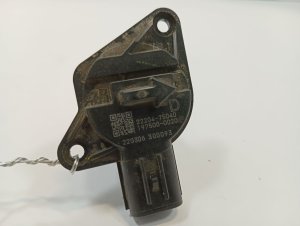
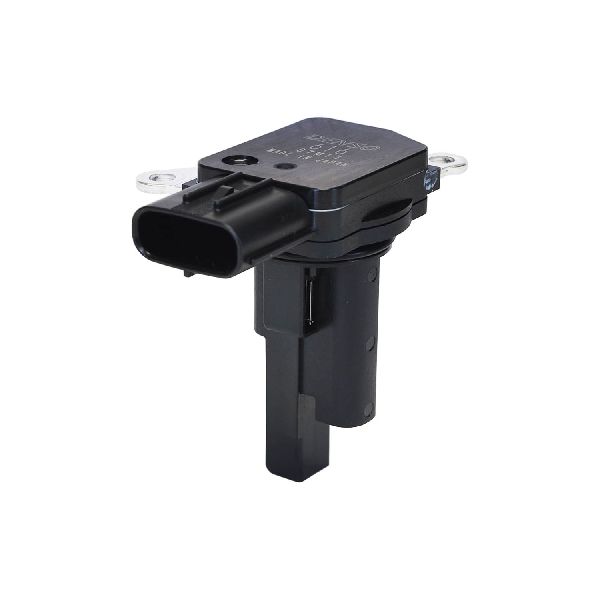
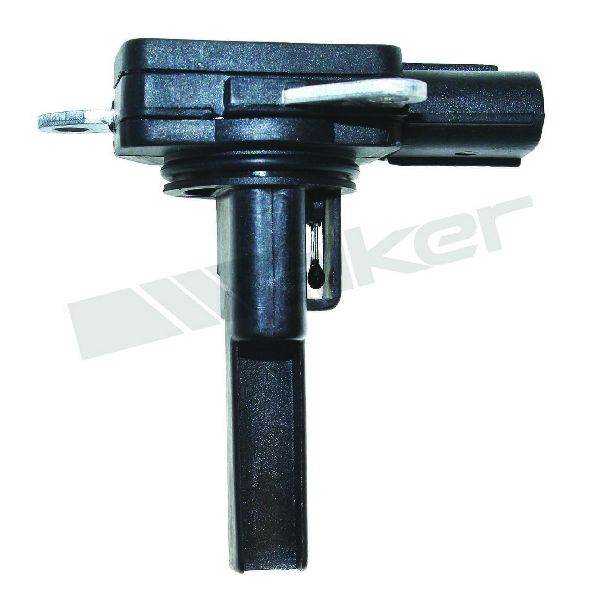
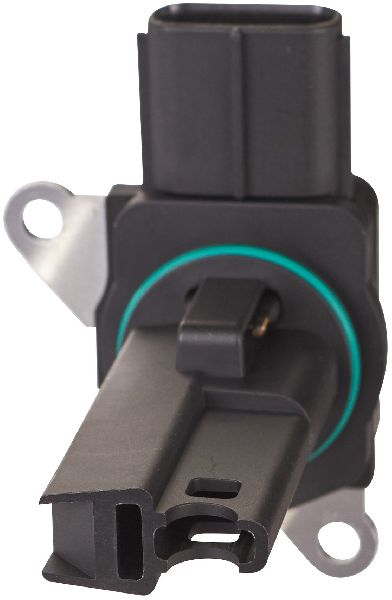
- Mass Airflow (MAF) Sensor
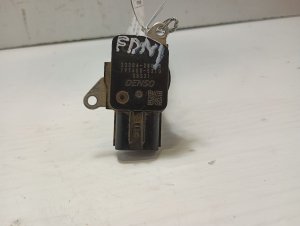
(OEM #22204-0V020 (replaces 22204-0V010, 22204-0T020))— This assembly contains the IAT sensor. An internal failure of the IAT thermistor is a primary cause of P0113 and requires replacing the whole unit.
Trusted brands: Genuine Toyota, Denso, Delphi, Walker Products
OEM price range: $160-$220
Aftermarket price range: $100-$180 - MAF Sensor Connector Pigtail — Needed if the wiring is damaged by rodents or corrosion right at the connector, making a simple wire repair impossible.
Trusted brands: Dorman, Standard Motor Products, ACDelco
OEM price range: $25-$50
Aftermarket price range: $15-$40
Related Codes That Often Appear With This One
- P0101 — Mass Airflow (MAF) Circuit Range/Performance. Since the IAT is part of the MAF sensor, a fault in the shared component or its wiring can trigger both codes.
- P0172 — System Too Rich (Bank 1). The ECM defaults to injecting more fuel because it thinks the air is extremely cold and dense, leading to a rich running condition.
- P0175 — System Too Rich (Bank 2). Same reason as P0172, but for the second bank of cylinders on the V6 engine.
Platform-Specific Known Issues
- Rodent damage to the MAF sensor wiring harness has been observed on this platform, leading directly to a P0113 code.
- The use of soy-based materials in the wiring insulation during this manufacturing period is believed to attract rodents, increasing the likelihood of this specific type of damage.
Mechanic-Grade Diagnostic Values
- IAT Sensor Resistance (unplugged) — expected: Resistance changes with temperature. Approximately 2.2kΩ - 2.7kΩ at 20°C (68°F), or ~3.75kΩ at 68°F and ~2.4kΩ at 86°F.. Failure: Infinite resistance (Open circuit/OL) or zero resistance (short). A reading that doesn't change when the sensor is warmed (e.g., with a hairdryer) also indicates failure.
- IAT Sensor Live Data (Scan Tool) — expected: Should display a temperature close to the ambient air temperature when the engine is cold.. Failure: A static reading of -40°C or -40°F indicates an open circuit (P0113). A reading of 140°C (284°F) or higher indicates a short circuit (P0112).
- Voltage at IAT sensor harness connector (Key On, Engine Off, Sensor Unplugged) — expected: Approximately 5V between the THA (signal) and E2 (sensor ground) terminals.. Failure: 0V may indicate a break in the wiring from the ECM or a faulty ECM. Voltage significantly different from 5V could also indicate a wiring issue.
Scan Tool Commands That Help
- Toyota Techstream: Data List (Powertrain -> Engine and ECT -> Data List) — This is the primary function for diagnosing P0113. It allows the technician to view the live "Intake Air" temperature value as seen by the ECM. Confirming the -40° reading is the first step after pulling the code.
- Toyota Techstream: Trouble Codes (DTCs) — Used to confirm P0113 is the active code and to check for any other related codes (e.g., P0101, P0172, P0175) that can provide additional diagnostic context.
Wiring & Ground Locations
- MAF Sensor Connector (5-wire) — On the MAF sensor, which is mounted on the engine air cleaner box.. This connector carries the IAT sensor signal and ground. P0113 is caused by an open circuit, which often occurs at this connector or in its pigtail due to rodent damage or corrosion. The two relevant wires for the IAT sensor are the signal (THA) and sensor ground (E2).
- IAT Sensor Wires (within MAF harness) — Inside the 5-wire harness leading to the MAF sensor.. The IAT sensor uses two of the five wires. Pin functions are typically: +B (12V Power for MAF), E2G (MAF Ground), VG (MAF Signal), THA (IAT Signal), and E2 (IAT Sensor Ground). P0113 is a fault on the THA or E2 circuit. A technician must test for continuity and the 5V reference on these specific wires. NOTE: Toyota has used different pin arrangements; always verify with a multimeter instead of relying solely on wire color.
- Engine Grounds (General) — Key grounds for the 2GR-FE are located on the valve covers, attached to the chassis/strut tower, and on the side of the cylinder head.. While not a direct cause of P0113, poor engine grounding can cause a host of spurious electrical issues and incorrect sensor readings. Ensuring all main ground straps are clean and secure is a best practice when diagnosing any electrical fault.
Real Owner Repair Stories
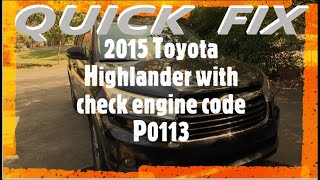
- YouTube video '2015 Toyota Highlander code P0113 MAF quick repair' (2015 Toyota Highlander 3.5L V6) — Check Engine Light with code P0113.
❌ Tried (didn't work) The technician immediately suspected wiring upon seeing squirrel tracks on the engine cover.
✅ What actually fixed it The wiring harness right at the MAF sensor connector had been chewed by a squirrel, severing the wires. The final fix is to replace the connector pigtail. A temporary fix was made by splicing in new wire sections to re-establish the connection.
OEM Part Supersession History
22204-0T020, 22204-0V010, 22204-0T040→22204-0V020— Standard part revision and consolidation by Toyota.
Heads up: The latest part number, 22204-0V020, is the correct service replacement for the entire 2014-2019 generation. Using older stock or incorrect superseded numbers is not advised.
Model Year Variations Within This Range
- 2017-2019: For the 2017 model year refresh, Toyota replaced the 2GR-FE engine with the 2GR-FKS. This updated engine features the D-4S fuel injection system (both direct and port injection) and VVT-iW, allowing it to run in an Atkinson cycle for better efficiency. While the MAF/IAT sensor part number appears to be the same, the ECM and engine management strategy are different.
Diagnostic Flowchart
Other Known Issues on This Vehicle
Issues unrelated to this code that are worth knowing about as an owner of this generation:
- Leaking Water Pump 🔴 High — Considered the 'Achilles heel' of the 2GR-FE engine. Leaks often develop between 60,000 and 120,000 miles, sometimes sooner. Failure can lead to overheating.
- 8-Speed Automatic Transmission (UA80E) Problems (2017-2019) 🔴 High — Common on 2017 and early 2018 models. Owners report shuddering between 25-50 mph, harsh shifting, hesitation, and sometimes premature failure. A class-action lawsuit was filed regarding these issues. (Ref: T-SB-0008-21 (for later models, but indicates ongoing issues with the UA80 family))
- Front Timing Cover Oil Leak 🟠 Medium — A notorious and very common leak on the 2GR-FE engine. The sealant fails over time. It is very expensive to repair as it often requires removing the engine.
- Rodent Damage to Soy-Based Wiring 🟠 Medium — A general issue for many Toyota models from this era. The soy-based wire insulation can attract rodents, which chew through harnesses, causing various electrical faults, including P0113.
- History of VVT-i Oil Line Rupture 🔴 High — Primarily affected pre-2010 2GR-FE engines, which used a rubber hose section that could burst and cause catastrophic oil loss and engine seizure. 2014+ models have an all-metal line, but the engine family has this critical history. (Ref: LSC 90K (Limited Service Campaign for older models))
Used vs. New Parts: Buying Guide for This Vehicle
When a used part is the smart pick: A used OEM MAF sensor from a low-mileage, rear-end collision vehicle can be a cost-effective option, as the part is electronic and not a typical wear item. It is generally preferable to a new, non-OEM aftermarket part.
Donor-vehicle mileage cap: roughly under 60000 miles for the part to have meaningful remaining life.
What to inspect on the donor part:
- Check for a clean donor vehicle; avoid parts from flood or fire-damaged cars.
- Inspect the sensor housing for physical cracks or damage.
- Ensure the connector pins are straight and free of corrosion.
- Ask for the VIN of the donor car to verify its year and mileage.
OEM-only on this vehicle (don't cheap out):
- While not strictly 'OEM-only', it is highly recommended to use either a Genuine Toyota part or the OEM equivalent from Denso. Cheap aftermarket MAF sensors are known to cause performance and fuel trim issues on Toyota vehicles.
Aftermarket brands forum-validated for this vehicle:
- Denso (Denso is the original equipment manufacturer for Toyota, so this part is identical to the dealer part, just in a different box).
Brands owners have reported issues with on this vehicle:
- Generic, unbranded, or 'white-box' MAF sensors from online marketplaces. These often use lower-quality thermistors and electronics that do not meet Toyota's precise specifications, leading to persistent issues even after replacing the part.
Real Owner Stories
Aggregated from forums and TSBs cited above. Mileages and costs reflect what owners reported in those sources.
2015 Toyota Highlander 3.5L V6
Symptoms: Check engine light on with code P0113; evidence of squirrel footprints found on the engine cover.
What fixed it: Repair of the MAF sensor wires that were damaged by a squirrel. A temporary repair was made to the wiring, avoiding a full harness replacement.
Cost: $15-$750
Source hint: YouTube: 2015 Toyota Highlander code P0113 MAF quick repair with pinout color-code
2014-2019 Toyota Highlander
Symptoms: Rats chewed through the wiring harness, leading to electrical faults.
What fixed it: Splicing and repairing the damaged wires rather than replacing the entire harness.
Source hint: Reddit r/ToyotaHighlander: Rats chewed wiring harness, really $14k ?
Related OBD-II Codes
Frequently Asked Questions
Is it true that rodents are attracted to the wiring in my 2014-2019 Highlander?
Can I just clean the sensor on my 2GR-FE V6 instead of replacing it?
Do I need to replace the whole engine wiring harness if a rodent chewed the MAF wires?
Why does my Highlander show -40°F on the scanner when it's warm outside?
Is the IAT sensor a separate part I can buy for my 3.5L V6?
Helpful Videos
Used OEM Parts in Stock
New Aftermarket Parts Available


The information in this article is provided for general reference and educational purposes only. Vehicle specifications, procedures, and part compatibility can vary by production date, trim level, and region. Always consult your vehicle's factory service manual and verify part numbers before purchasing or performing repairs. Safety-critical components such as airbags, seat belts, and braking systems should be installed by a qualified professional.
- Toyota Highlander:
- 🧭 Diagnostic Flowchart
- 🎬 Helpful Videos
- 🛍️ Shop This Part
- What's Unique About the 2014-2019 Toyota Highlander
- Symptoms You May Notice
- Most Likely Causes
- Rare But Worth Checking
- Documented NHTSA Reports
- Diagnosis Steps
- Parts You'll Likely Need
- Related Codes That Often Appear With This One
- Platform-Specific Known Issues
- Mechanic-Grade Diagnostic Values
- Scan Tool Commands That Help
- Wiring & Ground Locations
- Real Owner Repair Stories
- OEM Part Supersession History
- Model Year Variations Within This Range
- Other Known Issues on This Vehicle
- Used vs. New Parts: Buying Guide for This Vehicle
- Real Owner Stories
- 2015 Toyota Highlander 3.5L V6
- 2014-2019 Toyota Highlander
- Related OBD-II Codes
- Frequently Asked Questions
- 🎟️ Get 5% Off