

P0113 on 2004-2009 Toyota Prius: Intake Air Temp Circuit High Fixes
On a 2004-2009 Prius, code P0113 is most often caused by a failed Intake Air Temperature (IAT) sensor, which is integrated into the Mass Airflow (MAF) sensor assembly. The second most common cause is damaged wiring near the sensor, often from rodents chewing on the soy-based wire insulation. Replacing the entire MAF sensor assembly is the typical fix after inspecting the wiring.
- P0113 on a 2004-2009 Prius means the computer sees an open circuit for the Intake Air Temperature sensor, resulting in a default reading of -40°F.
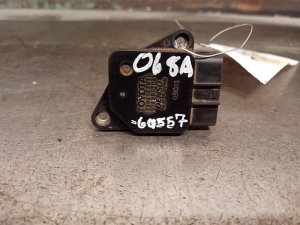
- The IAT sensor is built into the Mass Airflow (MAF) sensor. If the sensor is bad, you must replace the entire MAF assembly (OEM part # 22204-22010).
- Before buying parts, always perform a close visual inspection of the wiring harness near the MAF sensor for signs of rodent damage, as this is a common issue on the Prius due to its soy-based wire insulation.
- This is a very simple DIY repair, typically requiring only a screwdriver or a 10mm socket to replace the sensor, which is held by two screws on the air filter box.
What's Unique About the 2004-2009 Toyota Prius
On the 1NZ-FXE engine in the second-generation Prius, the Intake Air Temperature (IAT) sensor is not a separate part; it is integrated into the Mass Airflow (MAF) sensor assembly located on the air filter housing. This means you cannot replace just the IAT sensor; the entire MAF unit must be replaced if the sensor fails. Additionally, the engine bay of the Prius is a known haven for rodents, and Toyota's use of soy-based wire insulation during this period makes the harness leading to the MAF/IAT sensor particularly attractive for chewing, a surprisingly common cause for a P0113 code.
Symptoms You May Notice
- Check Engine Light is on.
- Reduced fuel economy.
- Difficulty starting the engine in very cold weather.
- Rough idle or hesitation (less common).
- No-start condition with a fuel smell (rare).
- Replacing only the engine air filter without checking the sensor or wiring.
- Replacing the throttle body. While throttle body issues can cause other codes (like P2111, which is sometimes seen after a crash), they do not directly cause P0113.
Most Likely Causes
- Failed Mass Airflow (MAF) / Intake Air Temperature (IAT) Sensor Assembly 🔴 High Probability → Shop Fuel Injection Air Flow Meter The IAT sensor is an integrated thermistor within the MAF assembly. Internal failure of this thermistor is a common wear item, creating an open circuit.
How to confirm: With a scan tool, observe the IAT reading. If it shows a static, extremely low temperature (like -40°F/-40°C), the sensor has failed. You can also test the resistance between pins 4 and 5 of the disconnected sensor connector. At room temperature (68°F/20°C), the resistance should be approximately 2-3kΩ. An open circuit (infinite resistance) confirms failure.
Typical fix: Replace the entire Mass Airflow (MAF) sensor assembly. It is held on by two 10mm bolts or Phillips head screws.
Est. part cost: $60-$180 - Damaged Wiring or Connector 🟡 Medium Probability Rodents are known to build nests in the Prius engine bay and chew on wires. The soy-based insulation used in the wiring harness for this generation is a known attractant, making the MAF sensor harness a frequent target.
How to confirm: Visually inspect the wires leading to the MAF sensor connector for any signs of chewing, breaks, or corrosion. Check for a secure connection at the sensor; an unplugged or loose connector will cause this code and often P0102 as well.
Typical fix: Repair the damaged section of the wiring harness using butt connectors or by soldering and sealing with heat shrink tubing. Replace the connector pigtail if it is corroded or damaged.
Est. part cost: $5-$25
Rare But Worth Checking
- Dirty or Clogged Engine Air Filter: While very rare to be the sole cause, a severely clogged air filter can restrict airflow and allow debris to contaminate the sensor element, contributing to faulty readings. It's a simple and inexpensive check worth performing first.
- Faulty Engine Control Module (ECM): → Shop Engine Control Module (ECM) This is extremely unlikely. The ECM should only be considered a potential cause after all other possibilities, including the sensor and wiring, have been exhaustively tested and ruled out. A cross-manufacturer report, NHTSA ODI #11139909, notes a case where P0113 appeared alongside stalling and several other DTCs (P0013, P1603, P1605), which may indicate broader electrical or ECM-related issues in rare instances.
Diagnosis Steps
- Connect an OBD-II scanner and confirm the presence of P0113. Note any other codes, especially P0102.
- Using the scanner's live data function, view the Intake Air Temperature (IAT). If it reads a fixed, extremely low value (e.g., -40°F/-40°C), this strongly points to an open circuit.
- Turn the vehicle off. Open the hood and locate the Mass Airflow (MAF) sensor on the engine air filter housing, right after the air filter box.
- Carefully inspect the wiring harness leading to the MAF sensor. Look for any signs of rodent damage (chewed insulation), frayed wires, or breaks. This is a very common failure point on the Prius.
- Inspect the 5-pin connector itself. Ensure it is fully seated and clicked into place. Disconnect it and check for any corroded, bent, or pushed-out pins.
- If wiring appears intact, test the IAT sensor. Disconnect the MAF sensor and measure the resistance between pins 4 and 5. It should be around 2-3kΩ at room temperature. Infinite resistance means the sensor is bad.
- If the sensor and wiring test good, the issue could be with the ECM, but this is highly improbable. Further advanced diagnostics would be needed.
- After replacing the part or repairing the wiring, clear the codes with the scanner and perform a drive cycle to ensure the Check Engine Light does not return.
Parts You'll Likely Need
- Mass Airflow (MAF) Sensor
(OEM #22204-22010)— The Intake Air Temperature (IAT) sensor is integrated into this assembly. When the IAT sensor fails, the entire MAF unit must be replaced. Denso is the original equipment manufacturer (OEM).
Trusted brands: Denso (OEM), Hitachi, Walker
OEM price range: $120-$180
Aftermarket price range: $60-$110
Related Codes That Often Appear With This One
- P0102 — Mass or Volume Air Flow Circuit Low Input. Since the IAT and MAF sensors are in the same housing and share the same connector and wiring harness, a problem like a loose connector or chewed wires will often trigger both codes simultaneously.
Mechanic-Grade Diagnostic Values
- IAT Sensor Resistance vs. Temperature — expected: Approx. 30kΩ at -20°C (-4°F), ~2-3kΩ at 20°C (68°F), and ~0.3kΩ at 100°C (212°F).. Failure: Infinite resistance (open circuit) or a reading that is drastically different from the expected value at a known temperature.
- IAT Sensor Circuit Voltage at ECM — expected: The ECM applies 5V to the circuit. Voltage at terminal THA should vary based on temperature (lower voltage = hotter air).. Failure: A sustained reading of more than 4.91V for 0.5 seconds indicates an open circuit and will trigger P0113.
- Reference Voltage at MAF/IAT Connector (Key On, Engine Off) — expected: Approximately 4.6-5.0 volts between the signal wire (THA, pin 4) and ground wire (E2, pin 5) on the harness side of the disconnected connector.. Failure: 0 volts indicates a problem with the ECM or the wiring providing the reference voltage.
Scan Tool Commands That Help
- Toyota Techstream: Data List > Powertrain / Engine / Data List / INTAKE AIR — This is the primary function to view the live IAT temperature as seen by the ECM. A reading of -40°C/-40°F immediately points to an open circuit fault (P0113).
- Toyota Techstream: Utility / All Readiness — After a repair, this function can be used to run the system's internal monitor to confirm the fault is gone without needing a full drive cycle. It will show if the P0113 monitor has completed successfully.
Wiring & Ground Locations
- M1 Connector (MAF Sensor) — On the Mass Airflow sensor assembly, attached to the engine air filter housing.. This is the 5-pin connector for the MAF/IAT sensor. P0113 is caused by an open circuit at Pin 4 (THA - IAT Signal) or Pin 5 (E2 - Sensor Ground).
- E4 Connector (ECM) — The main Engine Control Module connector, located in the engine compartment.. The wires from the IAT sensor terminate here. Specifically, MAF Pin 4 (THA) connects to ECM Pin THA, and MAF Pin 5 (E2) connects to ECM Pin E2. This allows for end-to-end continuity testing of the harness.
- Ground Point EA / EB — On the engine block, near the radiator fan and main engine wire harness.. These are the primary grounding points for the engine harness. While a failure here would likely cause multiple codes, a corroded or loose ground at these locations can cause intermittent and strange sensor readings, including P0113.
Real Owner Repair Stories
- PriusChat user 'danlatu' (2010 Toyota Prius (Gen 3, but same engine wiring principles and rodent issue apply)) — Check Engine Light with codes P0102 (MAF), P0113 (IAT), and P0401 (EGR). Knocking sound on startup.
❌ Tried (didn't work) Initially suspected a blown head gasket due to the knocking sound.
✅ What actually fixed it A visual inspection revealed that rodents had chewed through the wiring for the MAF sensor and fuel injectors. The user repaired the chewed wires by soldering, applying heat shrink, and wrapping the harness in Honda's capsaicin-infused 'mouse blocker' tape. The repair cost under $50 and took 2 hours, resolving all codes. - YouTube channel 'Mr. B's Automotive Essentials' (2012 Toyota Prius) — Check Engine Light with codes P0113 and P0102. Scan tool showed IAT at a static -40°C.
❌ Tried (didn't work) Diagnosis went straight to visual inspection, no parts were replaced unnecessarily.
✅ What actually fixed it A visual inspection immediately revealed that mice had chewed through the wires at the MAF sensor connector. The wires were repaired using heat-shrink butt connectors and electrical tape, which restored the sensor readings to normal and cleared the codes. - NHTSA ODI #11296751 — An owner reported that error codes P0113 and P0102, along with check engine and ICS malfunction warning messages, appeared suddenly when starting their garaged vehicle.
OEM Part Supersession History
22204-22010→This part number is widely used and has several other numbers that it replaces or that are listed as compatible, including 22204-0C020 and 22204-0D030.— Standard part consolidation and minor updates across many Toyota models.
Heads up: The 22204-22010 sensor is used across a vast range of Toyota vehicles from the early 2000s to the late 2010s. For the 2004-2009 Prius, this specific part number is correct. Be cautious of cheap, unbranded aftermarket sensors as they are known to fail prematurely or provide inaccurate readings.
Diagnostic Flowchart
Other Known Issues on This Vehicle
Issues unrelated to this code that are worth knowing about as an owner of this generation:
- Brake Actuator Failure 🔴 High — Common on high-mileage vehicles. Symptoms include a loud, frequent buzzing/pumping noise from the engine bay even when not braking, and illumination of ABS, VSC, and Brake warning lights. Codes C1256 and C1391 are common. (Ref: A warranty enhancement program existed but has since expired for most vehicles.)
- Combination Meter (Speedometer) Failure 🟠 Medium — Widespread issue where the dashboard display goes blank, especially in cold weather. Can also cause issues with the power button and backup camera. Caused by a failed capacitor on the circuit board. (Ref: TSB-0172-09 Rev2 addressed this, and a warranty enhancement program (ZTV) was issued, but has likely expired.)
- Inverter Coolant Pump Failure 🔴 High — A very common failure leading to overheating of the hybrid system, triggering the master warning light ('red triangle') and code P0A93. The pump motor fails internally. (Ref: Subject to Safety Recall (NHTSA ID 12V536000) and Limited Service Campaign (LSC-90D).)
- Excessive Oil Consumption 🟠 Medium — Many 1NZ-FXE engines begin to consume oil at higher mileage (150k+ miles). This is often attributed to piston ring design and carbon buildup. A clogged PCV valve can also be a contributing factor and is an easy, inexpensive part to replace.
- HID Headlight Failure 🟡 Low — The original HID bulbs or ballasts can fail, causing flickering or complete loss of one or both headlights. This is a common age-related issue.
- Hybrid Battery (HV) Degradation 🔴 High — As with all hybrids, the high-voltage battery will eventually degrade, leading to reduced fuel economy and the P0A80 trouble code. Failure is dependent on age, mileage, and climate.
Used vs. New Parts: Buying Guide for This Vehicle
When a used part is the smart pick: A used OEM Denso MAF sensor from a reputable salvage yard is a very reasonable choice for this repair. The part is not a high-wear item (unless contaminated), and failure is often electrical. A used OEM part is often more reliable than a new, cheap aftermarket alternative.
Donor-vehicle mileage cap: roughly under 150000 miles for the part to have meaningful remaining life.
What to inspect on the donor part:
- Ensure the donor vehicle was not in a front-end collision that could have damaged the sensor.
- Inspect the sensor elements inside the housing. They should be clean and free of oil or debris.
- Check the connector pins on the used sensor to ensure they are straight and free of corrosion.
- Ask for a short warranty (e.g., 30 days) from the salvage yard.
Aftermarket brands forum-validated for this vehicle:
- Denso (OEM)
- Hitachi
- Delphi
Brands owners have reported issues with on this vehicle:
- Unbranded, 'white-box' sensors from online marketplaces are frequently reported by owners to be inaccurate out of the box or fail within a short period.
Real Owner Stories
Aggregated from forums and TSBs cited above. Mileages and costs reflect what owners reported in those sources.
2008 Prius 1.5L — 78000 miles
Symptoms: Check engine light came on. The ICE (Internal Combustion Engine) was a bit rough when starting and stopping. Codes P0102 and P0113 were present.
What fixed it: The diagnosis pointed to an open circuit in the MAF/IAT sensor assembly; forum members noted it is often caused by the sensor being unplugged during service.
Source hint: PriusChat (priuschat.com) - Thread '2008 Prius Fuel Injector(s) Failure | PriusChat'
2004-2009 Toyota Prius 1.5L
Symptoms: The check engine light appeared immediately after the owner cleaned the MAF sensor and the throttle body.
What fixed it: Ensuring the 5-pin connector is properly seated and clicked into place, as P0113 and P0102 often appear together if the connector is loose after maintenance.
Source hint: PriusChat (priuschat.com) - Thread 'Help w/ Codes P0113 & P0102'
Related OBD-II Codes
Frequently Asked Questions
Why did my 2004-2009 Prius trigger P0113 and P0102 immediately after I cleaned the throttle body?
Is there a specific part of the wiring harness I should check for rodent damage on my Prius?
Can I replace just the Intake Air Temperature (IAT) sensor on my 1.5L 1NZ-FXE engine?
My Prius shows -40°F for intake air temperature on my scanner; does this mean the sensor is frozen?
What resistance should I see when testing the IAT sensor pins on a 2005 Prius?
Is the P0113 code related to the Inverter Coolant Pump recall on my Prius?
Helpful Videos
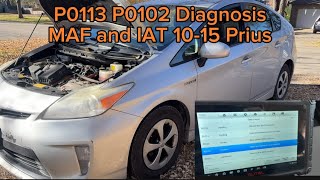
![How to Fix TOYOTA P0113 Engine Code in 3 Minutes [2 DIY Methods / Only $7.76]](https://img.youtube.com/vi/SuUPiPKf8FA/mqdefault.jpg)


We Have This Part in Stock

The information in this article is provided for general reference and educational purposes only. Vehicle specifications, procedures, and part compatibility can vary by production date, trim level, and region. Always consult your vehicle's factory service manual and verify part numbers before purchasing or performing repairs. Safety-critical components such as airbags, seat belts, and braking systems should be installed by a qualified professional.
- Toyota Prius:
- 🧭 Diagnostic Flowchart
- 🎬 Helpful Videos
- 🛍️ Shop This Part
- What's Unique About the 2004-2009 Toyota Prius
- Symptoms You May Notice
- Most Likely Causes
- Rare But Worth Checking
- Diagnosis Steps
- Parts You'll Likely Need
- Related Codes That Often Appear With This One
- Mechanic-Grade Diagnostic Values
- Scan Tool Commands That Help
- Wiring & Ground Locations
- Real Owner Repair Stories
- OEM Part Supersession History
- Other Known Issues on This Vehicle
- Used vs. New Parts: Buying Guide for This Vehicle
- Real Owner Stories
- 2008 Prius 1.5L — 78000 miles
- 2004-2009 Toyota Prius 1.5L
- Related OBD-II Codes
- Frequently Asked Questions
- 🎟️ Get 5% Off