

P0113 on 2013-2018 Toyota RAV4 2.5L: IAT Sensor Circuit High Causes and Fixes
This code almost always means the Intake Air Temperature (IAT) sensor has failed. On this RAV4, the IAT is part of the Mass Airflow (MAF) sensor, so you'll need to replace the whole MAF assembly. The OEM part is Denso 197-6160. Expect to pay $60-$90 for an aftermarket part or $120-$200 for the OEM Denso sensor. It's a simple 10-minute DIY fix requiring only a Phillips head screwdriver.
- P0113 on your RAV4 points to a problem with the Intake Air Temperature sensor circuit.
- The most likely fix is replacing the entire Mass Airflow (MAF) sensor, as the IAT sensor is built into it. The OEM part is Denso 197-6160.
- You can confirm a bad sensor using a basic OBD-II scanner that reads live data; look for a temperature reading of -40°.
- This is a very simple DIY repair that requires only a Phillips head screwdriver and takes less than 15 minutes.
- Always verify the part number with your vehicle's VIN before purchasing, but Denso is the original equipment manufacturer.
What's Unique About the 2013-2018 Toyota RAV4
For the 2013-2018 RAV4 with the 2.5L 2AR-FE engine, the Intake Air Temperature (IAT) sensor is not a separate, standalone part. It is integrated into the Mass Airflow (MAF) sensor assembly located on the air filter housing. This is important for DIY repair, as you cannot buy just the IAT sensor; you must purchase and replace the entire MAF sensor unit to fix the problem.
Symptoms You May Notice
- Check Engine Light is on
- Reduced fuel economy
- Rough idle
- Engine hesitation or stumbling on acceleration
- Hard starting, especially in cold weather
- Fouled spark plugs with a gasoline smell
- Replacing only a standalone IAT sensor, not realizing it's integrated into the MAF on this vehicle.
- Assuming the PCM is faulty before thoroughly testing the sensor and wiring.
Most Likely Causes
- Failed Intake Air Temperature (IAT) Sensor (Integrated into MAF Sensor) 🔴 High Probability → Shop Fuel Injection Air Flow Meter The thermistor inside the sensor can fail over time, creating an internal open circuit. This is the most common point of failure for this code. Contamination from dirt or oil can also coat the sensing element and cause it to fail.
How to confirm: Use an OBD-II scanner to check live data for the IAT sensor. A reading of -40°F or -40°C is a definitive sign of an open circuit, strongly pointing to a failed sensor. You can also test the sensor with a multimeter; at room temperature (around 68°F/20°C), the resistance between the IAT pins should be approximately 2,000-3,000 ohms. A more detailed resistance chart is available in the 'Specific Diagnostic Values' section.
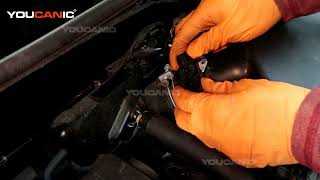
Typical fix: Replace the entire Mass Airflow (MAF) sensor assembly. It is held in place by two Phillips head screws and an electrical connector. 🎬 Watch: A quick walkthrough on replacing the MAF sensor assembly. Cleaning the sensor with MAF cleaner is a possible first step but replacement is often necessary.
Est. part cost: $60-$200 - Damaged Wiring or Connector 🟡 Medium Probability Wires can become brittle and break, or the connector pins can corrode or become loose, especially on higher-mileage vehicles. The wiring harness near the sensor can be subject to engine vibration and heat.
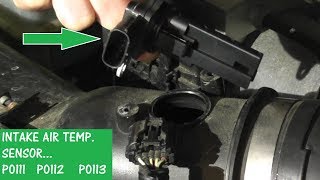
How to confirm: Visually inspect the MAF sensor connector and its wiring harness for any signs of damage, fraying, or corrosion. With the sensor unplugged, you can use a paperclip to jump the IAT signal and ground wires in the connector; 🎬 Watch: How to test and replace the IAT sensor. if the scan tool temperature reading jumps to a very high value (e.g., 250°F or more), the wiring is good. The IAT sensor uses the two outermost pins on the 5-pin connector.
Typical fix: Repair the broken wire or replace the damaged connector pigtail.
Est. part cost: $10-$30
Rare But Worth Checking
- Faulty Powertrain Control Module (PCM): → Shop Engine Control Module (ECM) This is extremely rare. Before condemning the PCM, all other possibilities, including the sensor and wiring, must be exhaustively tested and ruled out. A faulty PCM will usually present with multiple other trouble codes.
- Dirty Air Filter: A severely clogged air filter can restrict airflow and potentially contribute to sensor contamination or skewed readings, though it is unlikely to be the direct cause of a circuit high code.
Diagnosis Steps
- Connect an OBD-II scanner and confirm the P0113 code is present. Clear the code and see if it returns immediately.
- View the live data stream for the Intake Air Temperature (IAT). If it reads -40°F or -40°C, this confirms an open circuit and is the classic symptom of this code.
- Locate the Mass Airflow (MAF) sensor on the engine's air intake tube, right after the air filter box.
- Visually inspect the MAF sensor's electrical connector and wiring harness. Look for any broken wires, loose pins, or signs of corrosion. Ensure the connector is fully seated.
- If the visual inspection looks good, unplug the sensor. The reading on the scan tool should not change from -40°F. This is expected.
- To test the wiring, identify the two IAT sensor pins on the harness-side connector (typically the two outermost pins, THA and E2). Carefully use a small paperclip or jumper wire to connect these two terminals. The scan tool's temperature reading should now jump to a very high value (e.g., 284°F / 140°C or more).
- If the temperature reading jumps as described in step 6, the wiring and PCM are good. The MAF/IAT sensor assembly is faulty and must be replaced.
- If the temperature reading does not change, there is a break in the wiring between the connector and the PCM, or a very rare PCM fault.
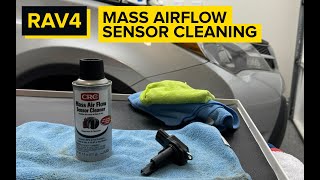
- (Optional) Before replacing, you can try cleaning the sensor element with a dedicated MAF sensor cleaner spray. Let it dry completely before reinstalling. Sometimes this can resolve 🎬 See how to properly clean the sensor element yourself. the issue if it's caused by contamination.
Parts You'll Likely Need
- Mass Airflow (MAF) Sensor
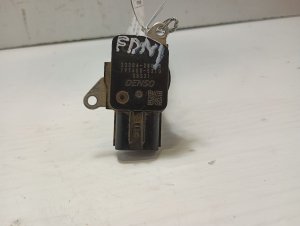
(OEM #Denso 197-6160 (replaces Toyota 22204-0V020, 22204-28010))— The IAT sensor is integrated into this component, and its internal failure is the most common cause of P0113. Denso is the Original Equipment supplier.
Trusted brands: Denso (OEM), Delphi, Spectra Premium, Walker, NGK
OEM price range: $120-$200
Aftermarket price range: $60-$90
Related Codes That Often Appear With This One
- P0101 — This code relates to the Mass Air Flow (MAF) sensor performance. Since the IAT is in the same housing, a fault in the unit or its wiring can trigger both codes.
- P0171 or P0174 — These codes indicate a lean fuel condition. An incorrect (very cold) air temperature reading from a faulty IAT sensor can cause the ECM to calculate the fuel mixture incorrectly, leading to a lean condition.
Platform-Specific Known Issues
- Aftermarket Sensor Reliability: While cheaper, some owners on forums report that aftermarket MAF sensors can be less reliable or cause other subtle driveability issues. Many recommend sticking with the OEM Denso part (197-6160) for best results and longevity.
Mechanic-Grade Diagnostic Values
- IAT Sensor Resistance (Thermistor Check) — expected: 2.0 - 3.0 kΩ at 20°C (68°F); 0.9 - 1.3 kΩ at 40°C (104°F); 0.4 - 0.7 kΩ at 60°C (140°F). Resistance decreases as temperature increases.. Failure: Infinite resistance (open circuit) or a reading that does not change with temperature.
- IAT Sensor Connector Voltage (KOEO, sensor disconnected) — expected: Approximately 4.6 - 5.0 volts on the signal wire (THA) relative to ground.. Failure: No voltage indicates a wiring problem or PCM fault.
- Scan Tool Live Data (KOEO, sensor disconnected) — expected: -40°C (-40°F).. Failure: Any other reading suggests a wiring short or unexpected circuit behavior.
- Scan Tool Live Data (KOEO, IAT signal and ground pins jumped) — expected: Approximately 140°C (284°F) or higher.. Failure: No change from -40°F indicates an open in the wiring harness or a PCM issue.
Scan Tool Commands That Help
- Toyota Techstream: Data List / All Data / MAF and Intake Air — This is the standard function to view the live IAT temperature reading as seen by the ECM. It is the primary first step in diagnosis to confirm the -40° reading.
Wiring & Ground Locations
- MAF Connector Pin THA — On the 5-pin connector for the Mass Airflow sensor assembly.. This is the IAT signal wire that sends the temperature-dependent voltage back to the ECM. An open on this wire will cause P0113.
- MAF Connector Pin E2 — On the 5-pin connector for the Mass Airflow sensor assembly.. This is the sensor ground circuit provided by the ECM. An open on this wire will also cause P0113.
Real Owner Repair Stories
- 2CarPros Forum User (Vehicle year/model not specified, but behavior is identical to RAV4) — Check Engine Light with code P0113.
❌ Tried (didn't work) Replacing the Mass Airflow sensor.
✅ What actually fixed it The user was advised that if a new sensor doesn't fix the issue, the next step is to perform electrical diagnostics on the wiring harness between the sensor and the ECM, as an open or short in the wiring would produce the same code. The thread did not conclude with a final fix, but highlights that blind parts replacement is not always the solution.
Documented NHTSA Reports
- NHTSA ODI #11296751: An owner of a similar Toyota model reported that error codes P0113 and P0102, along with warning messages for the check engine light and ICS malfunction, appeared suddenly when starting the vehicle in a garage.
- NHTSA ODI #11139909: A report for a related Toyota vehicle noted that the car stalled while driving, generating several diagnostic trouble codes including P0113, P0013, P1603, and P1605.
OEM Part Supersession History
22204-0V010, 22204-0T020, 22204-37010→22204-28010— Standard part consolidation and revision by Toyota over time.
Heads up: The latest part number, 22204-28010, is the correct service replacement for the earlier numbers on this platform.
Model Year Variations Within This Range
- 2016-2018: A significant facelift occurred in early 2016, which brought updated styling and the Toyota Safety Sense package to higher trims. However, the core powertrain, including the 2.5L 2AR-FE engine and the integrated MAF/IAT sensor (Denso 197-6160), remained the same. There are no known variations in the cause or fix for P0113 across the 2013-2018 model years.
Diagnostic Flowchart
Other Known Issues on This Vehicle
Issues unrelated to this code that are worth knowing about as an owner of this generation:
- Torque Converter Shudder 🟠 Medium — Common on 2013-2015 models, typically occurs between 25-50 mph under light throttle. (Ref: TSB T-SB-0023-15 Rev2 (updated March 2021) and Warranty Enhancement Program ZG1.)
- VVT-i Cam Gear Rattle on Cold Start 🟡 Low — A brief rattle (1-2 seconds) upon cold startup is common across the 2AR-FE engine line. It is often considered a nuisance rather than a critical failure. (Ref: S-SB-0010-13 (for Scion tC, but describes the same issue))
- Melting / Sticky Dashboard 🟡 Low — Affects vehicles in high heat/humidity climates. The dashboard surface can become sticky, shiny, and create glare. (Ref: Warranty Enhancement Program ZE6 (primarily for older models like Camry/Sienna, but the issue is known on other Toyotas of the era).)
- Transmission Fluid Level Check Procedure 🟡 Low — Not a failure, but a common point of frustration. The U760E transmission lacks a dipstick, requiring a complex procedure involving specific temperatures (95-113°F) and an overflow plug to check or change the fluid. (Ref: T-SB-0130-16)
Used vs. New Parts: Buying Guide for This Vehicle
When a used part is the smart pick: A used MAF sensor is generally not recommended. It is a sensitive electronic component critical for fuel economy and engine performance. The risk of getting a part that is already failing, contaminated, or has a reduced lifespan is high. Given the relatively low cost of a new aftermarket or even OEM Denso part, buying new is the smarter financial choice to avoid repeat labor and diagnosis.
Donor-vehicle mileage cap: roughly under 50000 miles for the part to have meaningful remaining life.
What to inspect on the donor part:
- Ensure the donor vehicle was not in a front-end collision.
- Inspect the sensor element for any physical damage, oil contamination, or dirt.
- Check the connector pins for corrosion or damage.
- If possible, get the part from a reputable recycler that offers a warranty or return policy.
OEM-only on this vehicle (don't cheap out):
- While not strictly 'OEM-only', the MAF/IAT sensor is a part where sticking to the original equipment supplier (Denso) is highly recommended for this vehicle.
Aftermarket brands forum-validated for this vehicle:
- Denso (OEM supplier)
- Delphi
- NGK/NTK
- Walker
Brands owners have reported issues with on this vehicle:
- Unbranded, 'white-box' parts from online marketplaces should be avoided, as their calibration and longevity are often poor and can cause other driveability issues.
Real Owner Stories
Aggregated from forums and TSBs cited above. Mileages and costs reflect what owners reported in those sources.
2013-2018 Toyota RAV4
Symptoms: The Check Engine Light was on with codes P0102 and P0113. The car started fine, but the idle was a little rougher than usual. When revving the engine, the idle would drop to 1,500 RPM and fluctuate.
What fixed it: Replacing the Mass Air Flow (MAF) sensor assembly, which also contains the Intake Air Temperature (IAT) sensor.
Source hint: YouTube comment from 'Mechanic For A Day' regarding 2013-2018 Toyota Rav4 - Fault Code P0102 Mass Air Flow Sensor Replacement
Related OBD-II Codes
Frequently Asked Questions
Which specific replacement part is recommended for the 2013-2018 Toyota RAV4 to fix P0113?
Where is the IAT sensor located on my 2.5L 2AR-FE engine?
My RAV4 is also shuddering between 25-50 mph; is this related to P0113?
Can I just clean the sensor on my RAV4 instead of replacing it?
What does a reading of -40°F on my scan tool mean for my Toyota?
Is there a TSB for the rattling sound I hear on cold start in my RAV4?
Helpful Videos

![How to Fix P0113 Engine Code in 3 Minutes [2 DIY Methods / Only $7.76]](https://img.youtube.com/vi/G2TGoI6ozA8/mqdefault.jpg)
We Have This Part in Stock

The information in this article is provided for general reference and educational purposes only. Vehicle specifications, procedures, and part compatibility can vary by production date, trim level, and region. Always consult your vehicle's factory service manual and verify part numbers before purchasing or performing repairs. Safety-critical components such as airbags, seat belts, and braking systems should be installed by a qualified professional.
- Toyota RAV4:
- 🧭 Diagnostic Flowchart
- 🎬 Helpful Videos
- 🛍️ Shop This Part
- What's Unique About the 2013-2018 Toyota RAV4
- Symptoms You May Notice
- Most Likely Causes
- Rare But Worth Checking
- Diagnosis Steps
- Parts You'll Likely Need
- Related Codes That Often Appear With This One
- Platform-Specific Known Issues
- Mechanic-Grade Diagnostic Values
- Scan Tool Commands That Help
- Wiring & Ground Locations
- Real Owner Repair Stories
- Documented NHTSA Reports
- OEM Part Supersession History
- Model Year Variations Within This Range
- Other Known Issues on This Vehicle
- Used vs. New Parts: Buying Guide for This Vehicle
- Real Owner Stories
- 2013-2018 Toyota RAV4
- Related OBD-II Codes
- Frequently Asked Questions
- 🎟️ Get 5% Off