

P0116 on 2013-2020 Audi A3 1.8L/2.0L: Thermostat and Water Pump Causes
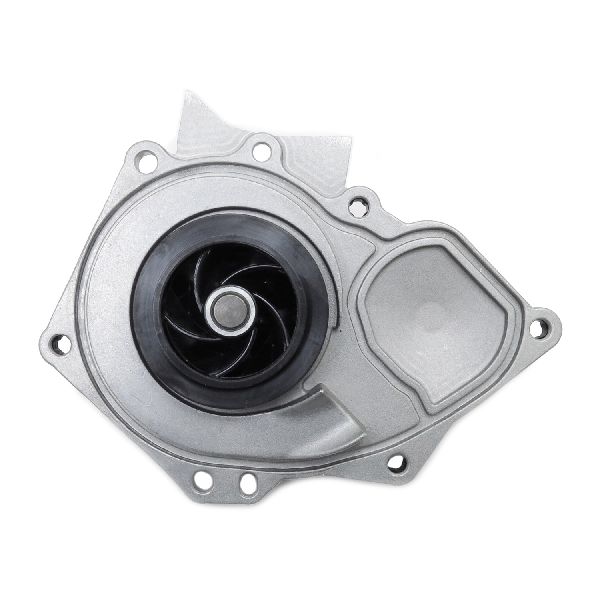
On the Audi A3 with the EA888 engine, P0116 is almost always caused by a failing thermostat, which is part of the integrated water pump and thermostat housing assembly. This is a very common failure. Expect to replace the entire assembly for around $250-$450 in parts, using the latest revised OEM part number.
- P0116 on this Audi is a strong indicator that the integrated thermostat and water pump housing is failing.
- Before buying parts or attempting a repair, call an Audi dealer with your VIN to check if you are covered by the extended warranty for this specific issue.
- The correct fix is to replace the entire thermostat and water pump assembly, not just the temperature sensor.
- Always use the correct G13 or G12evo coolant when refilling the system to prevent future problems.
- Look for companion code P2181 ('Cooling System Performance'), as its presence makes the diagnosis of a failed thermostat almost certain.
What's Unique About the 2013-2020 Audi A3
On the EA888 Gen 3 engine found in the 8V generation Audi A3, this code is exceptionally common and rarely points to a simple sensor failure. The root cause is typically the integrated water pump and thermostat housing assembly. This complex component is made from a polymer that is prone to cracking and leaking after repeated heat cycles. The thermostat inside can also fail, usually sticking open. This widespread issue led to a class-action lawsuit and a subsequent warranty extension from Audi/VW for this specific part on many vehicles. The P0116 code is triggered because the stuck-open thermostat allows coolant to circulate continuously, preventing the engine from warming up properly, or because a coolant leak has introduced air into the system, causing the G62 sensor to send erratic readings.
Symptoms You May Notice
- Check Engine Light is on
- Temperature gauge on the dashboard behaves erratically (e.g., drops to C or zero, or falls during highway cruising)
- Engine takes an unusually long time to warm up
- Heater blows lukewarm or cool air
- Cooling fans run constantly at high speed, even when the engine is cold
- Reduced fuel economy
- A 'low coolant' warning light may be illuminated
- Start/Stop system is disabled 🎬 Watch: Understanding the P0116 code and its common causes
- Replacing only the Engine Coolant Temperature (ECT) sensor without addressing the underlying thermostat or housing leak. The new sensor will continue to provide illogical readings if the thermostat is stuck open or if there are air pockets in the system.
- Replacing the incorrect temperature sensor. The EA888.3 engine has two ECT sensors: the G62 on the thermostat housing (primary) and the G83 on the lower radiator hose. P0116 specifically relates to the G62 sensor.
Most Likely Causes
- Failing Integrated Thermostat & Water Pump Housing 🔴 High Probability → Shop Integrated Thermostat Housing Assembly The EA888 Gen 3 engine uses a complex polymer housing for the thermostat and water pump. This material becomes brittle from engine heat cycles, leading to hairline cracks that leak coolant or internal failure of the thermostat mechanism, which often gets stuck open. This is a widely documented failure point across all vehicles with this engine. 🎬 See why the EA888 thermostat and water pump housing fails
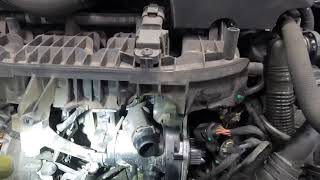
How to confirm: With a scan tool, monitor the live engine coolant temperature data (ECT Sensor 1 / G62). If the engine warms up but the temperature drops significantly when driving at a steady speed (e.g., on the highway), the thermostat is stuck open. Visually inspect the area under the intake manifold on the passenger side of the engine for signs of pink/purple dried coolant crust, indicating a leak from the housing. A pressure test of the cooling system will confirm a leak if it is not immediately visible.
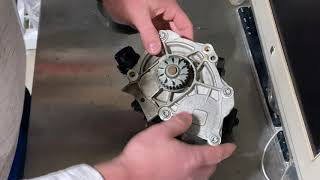
Typical fix: Replace the entire water pump and thermostat housing assembly with the latest revised part. It is also recommended to replace the small drive belt for the water pump and the coolant union pipe at the same time. The system must be properly bled of air after the repair. 🎬 Watch: Step-by-step water pump replacement on an Audi A3
Est. part cost: $250-$450 - Low Engine Coolant 🟡 Medium Probability → Shop Engine Coolant / Antifreeze This is usually a direct result of the first cause (leaking thermostat housing). Air pockets created by low coolant can pass over the ECT sensor, causing erratic and implausible temperature readings that trigger P0116.
How to confirm: Check the coolant level in the expansion tank when the engine is cold. If it is below the 'MIN' line, the system is low on coolant. The 'Low Coolant' warning may also be present on the dashboard.
Typical fix: Top off the system with the correct Audi-specified coolant (G13 or G12evo). However, you must find and repair the source of the leak, which is most likely the thermostat housing.
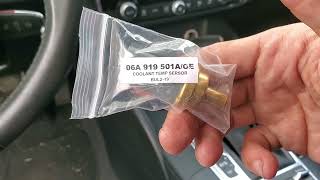
Est. part cost: $20-$30 for coolant - Faulty Engine Coolant Temperature (ECT) Sensor (G62) ⚪ Low Probability → Shop Engine Coolant Temperature Sensor While the sensor itself can fail, it is a much less common cause for P0116 on this engine than the housing it sits in. The code is more often a result of the conditions created by a bad thermostat or low coolant, not a faulty sensor. The sensor is integrated into the new thermostat housing assembly, so it gets replaced anyway during the common repair.
How to confirm: With a scan tool on a cold engine, compare the ECT reading (G62) to the Intake Air Temperature (IAT) reading. They should be within a few degrees of each other. If the ECT reading is wildly different (e.g., reading 95°C on a 15°C day), the sensor is likely bad. Also compare the G62 (engine outlet) reading to the G83 (radiator outlet) sensor reading; a large discrepancy can indicate a sensor or flow problem.
Typical fix: Replace the ECT sensor (G62). However, since this sensor is part of the thermostat housing assembly, and the housing is the likely root cause, the entire assembly is typically replaced.
Est. part cost: $20-$50
Rare But Worth Checking
- Wiring Harness Damage: Leaking coolant from the thermostat housing can drip onto the ECT sensor connector and wiring, causing corrosion or short circuits over time. This can mimic a sensor failure and may persist even after replacing the housing if the connector is not cleaned or repaired.
Diagnosis Steps
- Check for a warranty extension. Before any diagnosis, contact an Audi dealer with your VIN to see if your vehicle is covered by the class-action lawsuit settlement warranty extension for the water pump and thermostat (typically 8 years/80,000 miles).
- Check the coolant level in the expansion tank (when the engine is cold). If it's low, you have a leak.
- Visually inspect for leaks. Using a flashlight and mirror, check the area under the intake manifold and around the water pump/thermostat housing for signs of pink or purple coolant residue. Check the top of the transmission bell housing, as this is where coolant often pools.
- Scan for other codes. Use an OBD-II scanner to check for codes like P2181, which strongly points towards a thermostat issue.
- Analyze live data. With a scan tool, monitor the Engine Coolant Temperature (G62). Watch the temperature as you drive. If it reaches operating temperature (around 90-105°C) and then drops significantly at cruising speed, the thermostat is stuck open.
- If no leaks are found and the thermostat appears to be working correctly, test the ECT sensor by comparing its cold reading to the IAT sensor reading. They should be within a few degrees of each other.
Parts You'll Likely Need
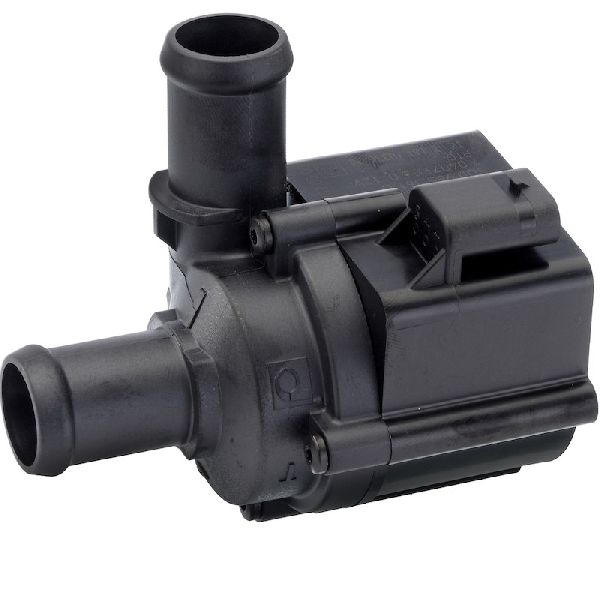
- Water Pump and Thermostat Housing Assembly
(OEM #06L121111P (latest revision superseding H, J, K, L, M))— This is the primary failure point on the EA888 engine that causes code P0116. The plastic housing cracks or the integrated thermostat fails. Using the latest revision is critical for a lasting repair.
Trusted brands: Volkswagen/Audi Genuine, INA, Pierburg, Febi Bilstein
OEM price range: $300-$450
Aftermarket price range: $150-$300 - Engine Coolant / Antifreeze
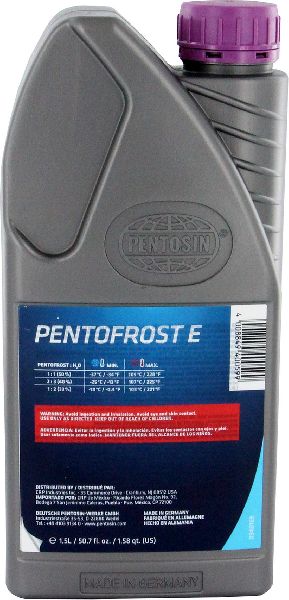
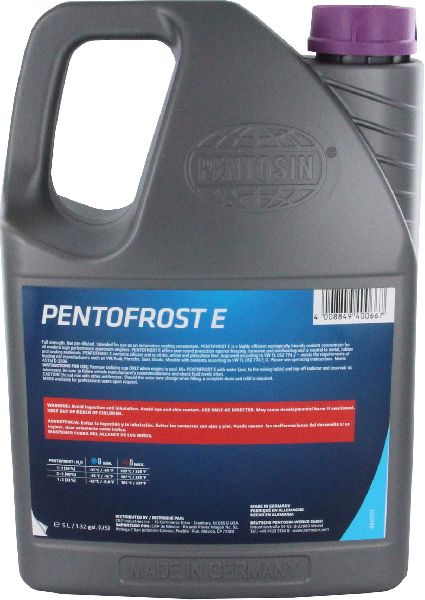
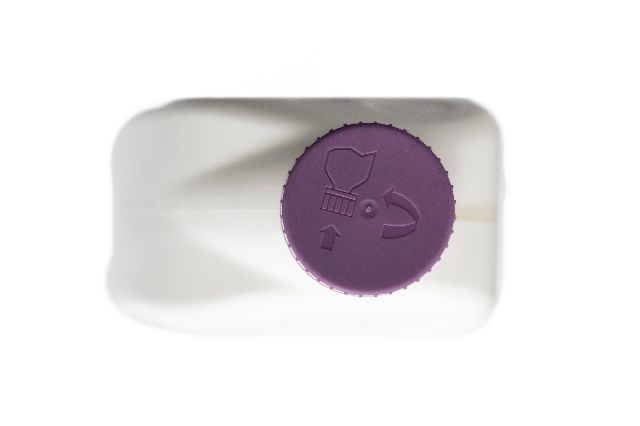
(OEM #G013A8J1G (G13) or G12E050A2 (G12evo))— The cooling system must be drained to replace the thermostat housing and refilled with the correct specification fluid to prevent corrosion. G12evo is the latest compatible spec.
Trusted brands: Volkswagen/Audi Genuine, Pentosin, Rowe
OEM price range: $25-$35 per gallon
Aftermarket price range: $20-$30 per gallon - Water Pump Drive Belt
(OEM #06K121605)— This small toothed belt drives the water pump. It is inexpensive and highly recommended to replace while performing the water pump replacement to avoid near-future failure.
Trusted brands: Continental, Gates
OEM price range: $15-$25
Aftermarket price range: $10-$20
Related Codes That Often Appear With This One
- P2181 — Stands for 'Cooling System Performance'. This code is set when the engine fails to reach its target operating temperature within a specified time, which is a classic symptom of a thermostat stuck open. It very frequently appears with P0116.
- P0118 — Stands for 'Engine Coolant Temperature Sensor 1 Circuit High'. This can be triggered if leaking coolant damages the sensor's wiring or connector, causing an open circuit.
Technical Service Bulletins (TSBs) & Recalls
- VWP-22-06 / U55: Not a traditional TSB, but the dealer communication regarding the warranty extension for the water pump/thermostat housing resulting from the class-action lawsuit settlement.
- Audi TSB 2044703/15: Addresses coolant leaks and overheating issues related to the thermostat housing on EA888 engines, often leading to codes P0116 and P2181.
Platform-Specific Known Issues
- A class-action lawsuit was settled regarding the high failure rate of the plastic water pump and thermostat housing on EA888 Gen 3 engines. This resulted in an extended warranty (VWP-22-06) for many owners, covering the replacement of this part up to 8 years or 80,000 miles.
Mechanic-Grade Diagnostic Values
- Engine Coolant Temperature (ECT) Sensor G62 Resistance — expected: Approximately 2000-3000 Ohms at 20°C (68°F). Resistance should be between 275-375 Ohms at 80°C (176°F).. Failure: A resistance reading that is infinite (open circuit) or significantly outside the expected range for a given temperature indicates a faulty sensor.
- VCDS Live Data - MVB Group 004, Field 3 — expected: On a cold engine, the temperature should be close to ambient and rise steadily without sudden drops as the engine warms up.. Failure: If the temperature reading suddenly drops at cruising speed (e.g., from 90°C to 70°C), it confirms the thermostat is stuck open. If the reading is illogical from a cold start (e.g., -40°C or 130°C), the sensor or its wiring is faulty.
Scan Tool Commands That Help
- VCDS or OBDeleven: Engine (01) -> Basic Settings -> 'Test - Bleed cooling circuit' (IDE08087) — This function is essential after replacing the thermostat/water pump assembly. It cycles the electronically controlled valves and pumps to properly purge air from the complex cooling system, which cannot be bled effectively by traditional methods.
- VCDS or OBDeleven: Engine (01) -> Output Tests -> 'Fan number 1' — To verify if the cooling fans are functional. If the ECU is putting the fans on full time as a failsafe for P0116, this test confirms the fan control module and fan motors are working, helping to isolate the fault to the temperature sensing circuit.
- VCDS: Engine (01) -> Adaptation -> 'Bleed cooling circuit' (IDE08287) -> Set to 'Active' — This is a prerequisite step before running the Basic Settings bleed procedure. It enables the bleed test function in the ECU.
Wiring & Ground Locations
- G62 Sensor Connector — On the thermostat housing, under the intake manifold on the passenger side of the engine.. This is the primary connector for the sensor that triggers P0116. It is susceptible to corrosion from coolant leaks originating from the housing above it. A visual inspection for green/crusty terminals is critical.
- Ground Point 640 — Earth point 2, located in the left side of the engine compartment.. This is a primary engine bay ground point. A loose or corroded connection here can cause a variety of sensor issues, including erratic readings from the G62 sensor, by creating an unstable ground reference for the ECU.
- Ground Point - Left A-Pillar — Behind the kick panel near the passenger's left foot (on LHD models) or driver's right foot (on RHD models), near the door hinge.. This is a major interior grounding bus. While less likely to be the cause than an engine bay ground, a fault here can cause strange electrical issues that could potentially affect ECU operation and sensor readings.
Real Owner Repair Stories
- YouTube user 'Mr Fix It' (2015 Audi A3) — Check engine light on, temperature gauge going up and down randomly, cooling fans kicking on.
❌ Tried (didn't work) The user directly diagnosed the issue without mentioning failed attempts.
✅ What actually fixed it The user reported that the issue started with a P0116 code and was followed by P2181 and P0118. The fix was to replace the coolant temperature sensor itself, which resolved the codes and symptoms. This represents an edge case where the sensor failed before the common housing leak occurred.
OEM Part Supersession History
06L121111F, 06L121111G→06L121111H— Initial revisions were highly prone to cracking and leaking. The 'H' revision featured material and design improvements to increase durability.06L121111H, 06L121111J, 06L121111K, 06L121111L, 06L121111M, 06L121111N→06L121111P— Continuous iterative improvements to the polymer composition and housing design to combat heat-cycle fatigue and cracking. The 'P' revision is the latest and most robust version recommended for all repairs.
Heads up: All previous versions are superseded by 06L121111P. Do not install any of the older part numbers, even if sold as new old stock.
Model Year Variations Within This Range
- 2017-2020 (Facelift models): The 2017 facelift introduced a new 2.0L TFSI engine with a Miller-cycle-inspired combustion process. While it still uses the EA888 Gen 3 architecture and the same problematic thermostat housing, the engine calibration and some auxiliary components may differ slightly from the pre-facelift 1.8L and 2.0L engines. However, the root cause and fix for P0116 remain identical.
- 2013-2020: The specified coolant changed over the production run. Early models specified G13 coolant, which was associated with the silicate bag issue in the expansion tank. Later recommendations shifted to G12evo. While compatible, it is best practice to flush the system when changing coolant types.
Diagnostic Flowchart
Other Known Issues on This Vehicle
Issues unrelated to this code that are worth knowing about as an owner of this generation:
- PCV Valve Failure 🟠 Medium — Commonly occurs after 60,000-80,000 miles. Can cause rough idle, increased oil consumption, and a whistling noise.
- Intake Valve Carbon Buildup 🟠 Medium — A natural consequence of direct injection engines. Performance degradation is noticeable around 80,000-100,000 miles, requiring manual (walnut blasting) cleaning. North American models without dual injection are more susceptible.
- Turbocharger Wastegate Rattle 🟡 Low — More common on earlier or tuned engines. Caused by wear in the wastegate actuator arm, leading to a distinct rattling noise on deceleration. Often fixed with a clip or requires turbo replacement in severe cases.
- DSG/S-Tronic Mechatronics Issues 🔴 High — Can occur at various mileages, sometimes prematurely. Symptoms include jerky shifting, delayed gear engagement, or complete transmission failure warnings. Repair is very expensive.
- Front Suspension Creaks and Rattles 🟡 Low — Often reported even at low mileage. Usually caused by control arm bushings or strut mounts. Annoying but not typically a safety-critical failure.
Used vs. New Parts: Buying Guide for This Vehicle
When a used part is the smart pick: For this specific repair (P0116), using a used part from a junkyard is NEVER a smart choice. The primary cause is a plastic component (thermostat housing) that fails due to heat cycles and age. A used part has already been subjected to these stresses and is highly likely to fail again in a short period.
What to inspect on the donor part:
- Do not purchase this part used under any circumstances.
OEM-only on this vehicle (don't cheap out):
- Water Pump and Thermostat Housing Assembly
Aftermarket brands forum-validated for this vehicle:
- INA (often the OE supplier for this part)
- Pierburg
- Febi Bilstein
Brands owners have reported issues with on this vehicle:
- Unnamed, no-brand, or white-box parts from online marketplaces. These often use inferior plastics and seals that can fail catastrophically and much faster than even the original problematic part. Stick to reputable OE or OEM supplier brands.
Real Owner Stories
Aggregated from forums and TSBs cited above. Mileages and costs reflect what owners reported in those sources.
2015 Audi A3
Symptoms: Owner reported P0116 and P2181 codes appearing together.
What fixed it: Replacement of the thermostat housing assembly.
Source hint: Audizine.com thread titled 'P0116 and P2181 - Thermostat Housing?'
2015 VW GTI EA888 Gen 3
Symptoms: Owner struggled to locate the correct sensor for P0116, noting the risk of replacing the wrong (G83) sensor on the radiator hose instead of the G62 sensor.
What fixed it: Identifying the G62 sensor integrated into the main thermostat housing.
Source hint: Golfmk7.com forum thread '2015 GTI Code P0116 Coolant Temperature Sensor'
Audi A3 1.8 TFSI
Symptoms: Temperature gauge dropping, cooling fans running at full speed, and the start/stop system being disabled.
What fixed it: Replacement of the G62 sensor/thermostat housing assembly.
Source hint: Audipassion.com forum thread 'Problème Sensor (G62) - P0116 - 15318'
Related OBD-II Codes
Frequently Asked Questions
Is there a warranty extension for the water pump and thermostat housing on my 2013-2020 Audi A3?
Why are my cooling fans running at high speed even when the engine is cold?
My temperature gauge drops while I'm driving on the highway. Is this a sensor or a thermostat issue?
Does Audi TSB 2044703/15 apply to the P0116 code?
Can I just replace the G62 coolant temperature sensor to fix P0116?
Why is my Start/Stop system disabled along with the Check Engine Light?
Helpful Videos

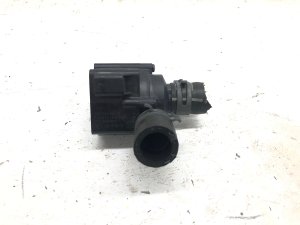
Used OEM Parts in Stock
New Aftermarket Parts Available


The information in this article is provided for general reference and educational purposes only. Vehicle specifications, procedures, and part compatibility can vary by production date, trim level, and region. Always consult your vehicle's factory service manual and verify part numbers before purchasing or performing repairs. Safety-critical components such as airbags, seat belts, and braking systems should be installed by a qualified professional.
- Audi A3:
- 🧭 Diagnostic Flowchart
- 🎬 Helpful Videos
- 🛍️ Shop This Part
- What's Unique About the 2013-2020 Audi A3
- Symptoms You May Notice
- Most Likely Causes
- Rare But Worth Checking
- Diagnosis Steps
- Parts You'll Likely Need
- Related Codes That Often Appear With This One
- Technical Service Bulletins (TSBs) & Recalls
- Platform-Specific Known Issues
- Mechanic-Grade Diagnostic Values
- Scan Tool Commands That Help
- Wiring & Ground Locations
- Real Owner Repair Stories
- OEM Part Supersession History
- Model Year Variations Within This Range
- Other Known Issues on This Vehicle
- Used vs. New Parts: Buying Guide for This Vehicle
- Real Owner Stories
- 2015 Audi A3
- 2015 VW GTI EA888 Gen 3
- Audi A3 1.8 TFSI
- Related OBD-II Codes
- Frequently Asked Questions
- 🎟️ Get 5% Off