

P0116 on 2000-2006 Audi A4 1.8T: Engine Coolant Temperature Sensor Causes and Fixes
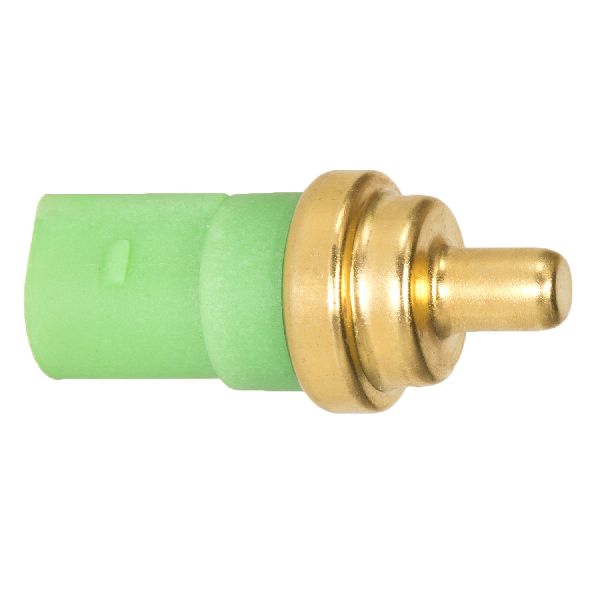
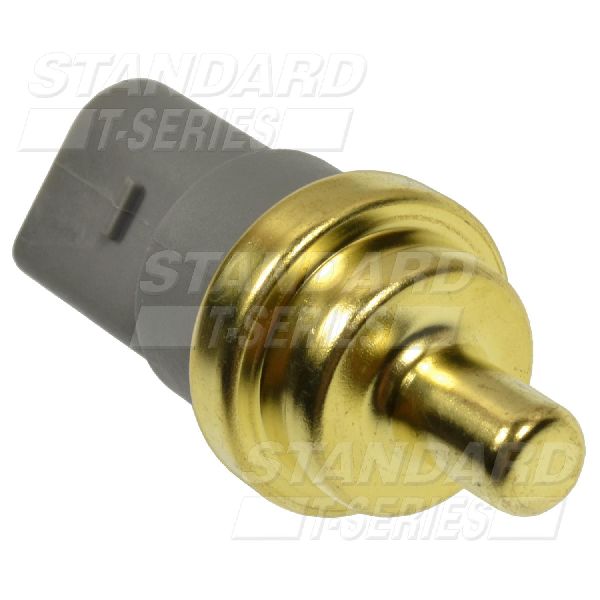
On a 2000-2006 Audi A4 1.8T, code P0116 almost always points to a failed Engine Coolant Temperature (ECT) sensor, also known as the G62 sensor. Replacing this sensor, ideally with the updated green-top version (OEM P/N: 059919501A), is the most likely fix. The part is inexpensive (~$10-$40), but access at the rear of the engine is notoriously difficult. A stuck-open thermostat is the second most common cause.
- P0116 on the Audi A4 1.8T is most often caused by a failed Engine Coolant Temperature (ECT) sensor.
- Always replace the old sensor with the updated green-top version (part number 059919501A or similar) to prevent future issues.
- While the part is cheap, the replacement is difficult due to the sensor's location at the back of the engine.
- A stuck-open thermostat is the second most likely cause and should be tested if a new sensor doesn't fix the code.
- Before buying parts, use a scan tool on a cold engine to see if the ECT and IAT readings match. A significant difference points directly to a bad sensor.
What's Unique About the 2000-2006 Audi A4
The 1.8T engine used in this era of Audi and VW vehicles is notorious for ECT sensor failures. The original factory-installed sensors were often black plastic and had a high failure rate. The issue became so common that an updated, more reliable sensor with a green top was released. For many owners of a B5 or B6 generation A4, encountering a P0116 code and replacing this G62 sensor is a rite of passage. The sensor itself is a 4-pin thermistor; two pins report to the ECM and two report to the instrument cluster's temperature gauge. This can lead to confusing situations where the dashboard gauge appears to work correctly while the ECM receives faulty data, triggering the Check Engine Light. The sensor can fail electronically by sending bad data, or mechanically by developing a coolant leak at its O-ring seal.
Generation note: The 2000-2006 model years span two Audi A4 generations: the B5 (until 2001) and the B6 (2002-2006). The 1.8T engine was a primary option for both. The P0116 fault, its causes, and the repair procedure involving the rear-mounted ECT sensor are nearly identical and extremely common across both generations.
Symptoms You May Notice
- Check Engine Light is on
- Temperature gauge on the dashboard is erratic, stuck on cold, or reads inaccurately.
- Cooling fans run constantly at full speed, even when the engine is cold.
- Decreased fuel economy.
- Engine is hard to start, especially when cold. 🎬 Watch: Troubleshooting an Audi A4 no-start caused by the sensor.
- Noticeable coolant leak or smell from the back of the engine, often dripping onto the heater hoses.
- Black smoke from the exhaust pipe, indicating a rich fuel mixture.
- Replacing the thermostat when the ECT sensor is the actual problem.
- Replacing the ECT sensor when the thermostat is actually stuck open. It's wise to test both components using scan tool live data before replacing parts.
Most Likely Causes
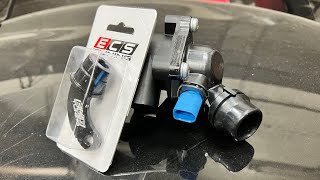
- Faulty Engine Coolant Temperature (ECT) Sensor (G62) 🔴 High Probability → Shop Engine Coolant Temperature Sensor The original black-top sensors used by Audi are known to have a high failure rate. The sensor is a thermistor that degrades over time with thousands of heat cycles. The updated green-top sensor is considered the standard replacement.
How to confirm: On a completely cold engine, use a scan tool to compare the Intake Air Temp (IAT) and Engine Coolant Temp (ECT) readings. They should be within a few degrees of each other. If the ECT reading is significantly different (e.g., shows -40°F or 250°F on a cold engine), the sensor is bad. You can also watch the ECT data as the engine warms up; it should climb steadily, not jump or drop out.
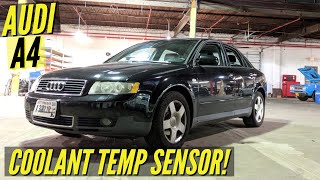
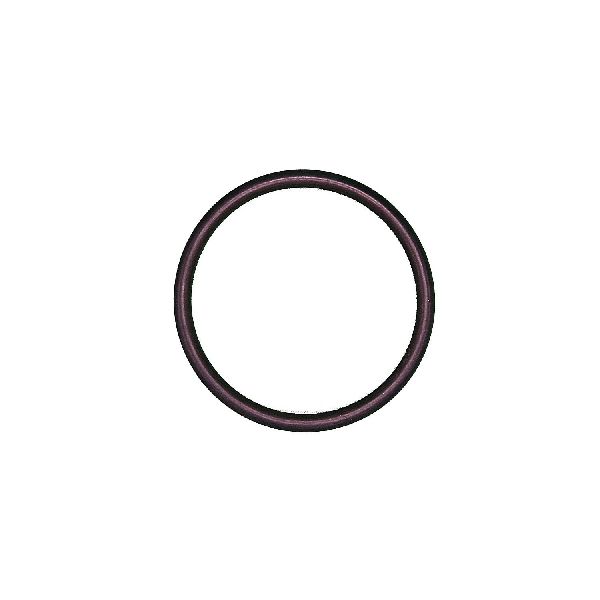
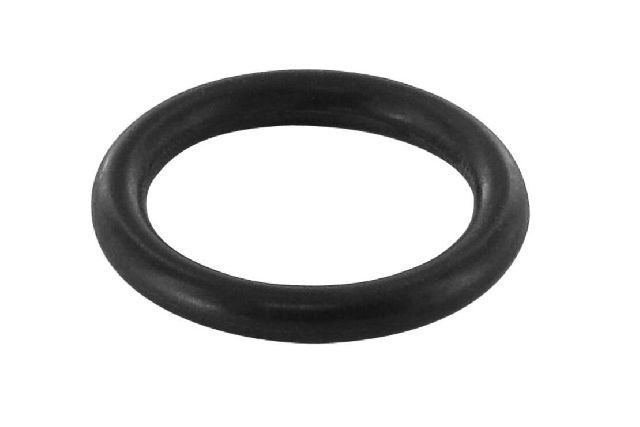
Typical fix: Replace the ECT sensor, its O-ring, and the retaining clip. 🎬 See this walkthrough for replacing the 1.8T coolant temperature sensor. It is highly recommended to use the updated green-top sensor (P/N 059919501A). Be sure to remove the old O-ring from the housing if it doesn't come out with the sensor.
Est. part cost: $10-$40 - Stuck-Open Thermostat 🟡 Medium Probability → Shop Integrated Thermostat Housing Assembly Like any vehicle, the thermostat can fail with age. If it sticks open, the engine will take too long to warm up, which the ECU interprets as an irrational reading from the ECT sensor, triggering P0116. On the 1.8T, the thermostat is part of a plastic housing and is not sold separately by the OEM.
How to confirm: Monitor the ECT sensor data on a scan tool while driving. If the engine temperature fails to reach and maintain its normal operating temperature (typically 85-95°C) or drops significantly while driving at highway speeds (especially in cold weather), the thermostat is likely stuck open.
Typical fix: Replace the engine coolant thermostat assembly. The OEM part number is typically 06B121111K. This is a more involved job than the ECT sensor, often requiring the alternator to be moved 🎬 Watch: Step-by-step guide to installing a new thermostat kit. for access.
Est. part cost: $30-$80 - Low Engine Coolant or Air in the System ⚪ Low Probability → Shop Engine Coolant / Antifreeze Coolant leaks can develop from various places on an aging vehicle, including the ECT sensor O-ring itself, the rear coolant flange, or various plastic fittings. If the level drops too low, the sensor can be exposed to an air pocket, causing erratic readings and triggering the code.
How to confirm: Visually inspect the coolant level in the expansion tank. If it is low, top it off and perform a cooling system pressure test to find the leak source. After a repair, the system must be properly bled to remove all air pockets.
Typical fix: Find and repair the source of the coolant leak. Top off with the correct G12/G13 coolant and properly bleed the cooling system.
Est. part cost: $5-$30 for coolant - Damaged Wiring or Connector ⚪ Low Probability The wiring harness is located at the back of a hot engine, and over time the plastic connector and insulation can become brittle and crack, leading to poor contact or short circuits. The connector lock tab is especially prone to breaking.
How to confirm: Visually inspect the ECT sensor connector and nearby wiring for any signs of corrosion, damage, or loose pins. Wiggle the connector while monitoring live data on a scan tool; if the temperature reading jumps, the connection is faulty. Using a multimeter, check for a 5V reference at the connector and test continuity back to the ECM.
Typical fix: Repair the damaged section of wiring or replace the connector pigtail. The connector itself is often available as a repair kit.
Est. part cost: $15-$50
Rare But Worth Checking
- Faulty Engine Control Module (ECM): This is extremely rare. Before suspecting the ECM, all other possibilities (sensor, thermostat, wiring, coolant level) must be exhaustively ruled out.
Diagnosis Steps
- Check for other DTCs. Address any other coolant-related codes first, especially P0117, P0118, or P0128.
- With the engine cold (off for several hours), connect a scan tool. Compare the Engine Coolant Temperature (ECT) reading with the Intake Air Temperature (IAT) reading. They should be within 2-3°C (5°F) of each other and ambient temperature. If there's a large difference, the ECT sensor is almost certainly faulty.
- Visually inspect the coolant level in the expansion tank. If low, top it off with the correct G12/G13 coolant and inspect for leaks. A pressure test is recommended.
- Start the engine and monitor the ECT reading on the scan tool. The temperature should rise steadily and smoothly as the engine warms up. Erratic jumps or dropouts point to a bad sensor or wiring connection.
- If the temperature fails to reach ~90°C (194°F) after 10-15 minutes of driving, or drops significantly during highway driving, the thermostat is likely stuck open.
- Inspect the ECT sensor's electrical connector and wiring for corrosion, damage, or loose connections. The sensor is located on a coolant flange at the back of the cylinder head, against the firewall, below the intake manifold. Access is very tight.
- If the sensor and thermostat test good, ensure the cooling system is properly bled of air. An air pocket trapped at the sensor can cause implausible readings.
Parts You'll Likely Need
- Engine Coolant Temperature Sensor (G62)
(OEM #059919501A)— This is the most common failure point for this code on this engine. The original black sensor was faulty and this green-top, 4-pin sensor is the updated replacement.
Trusted brands: Genuine VW/Audi, Bosch, Hella, Meyle
OEM price range: $25-$50
Aftermarket price range: $10-$30 - Engine Coolant Thermostat Assembly
(OEM #06B121111K)— This is the second most likely cause, especially if the engine is slow to warm up. It is often replaced as a preventative measure when doing other cooling system work. The thermostat is integrated into the housing.
Trusted brands: Genuine VW/Audi, Mahle, Behr, Wahler
OEM price range: $50-$90
Aftermarket price range: $30-$60
Related Codes That Often Appear With This One
- P0128 — Coolant Thermostat (Coolant Temperature Below Thermostat Regulating Temperature) - This code often appears with P0116 if a stuck-open thermostat is the root cause, as the engine is not warming up in the time expected by the ECU.
- P0117 — Engine Coolant Temperature Sensor 1 Circuit Low - This can appear if the sensor or wiring has a short to ground.
- P0118 — Engine Coolant Temperature Sensor 1 Circuit High - This can appear if the sensor circuit is open or the connector is unplugged.
- P0171 — System Too Lean (Bank 1) - While not directly related, this can sometimes appear due to vacuum leaks in the PCV system, which is often disturbed during repairs at the back of the engine.
Platform-Specific Known Issues
- The location of the ECT sensor at the rear of the cylinder head makes it very difficult to access. The space is extremely tight, and many plastic hoses and vacuum lines in the area can become brittle with age and break during the repair.
- Some DIYers find it easier to gain access by removing the intake manifold snorkel or other components, while others will slightly tilt the engine forward by supporting the transmission and lowering the subframe slightly to create more room to work.
- Using a 90-degree pick tool and an inspection mirror is highly recommended to see and remove the retaining clip and old O-ring.
Mechanic-Grade Diagnostic Values
- G62 ECT Sensor Resistance — expected: Approximately 2000-3000 Ω at 20°C (68°F), dropping to 275-375 Ω at 80°C (176°F).. Failure: An open circuit (infinite resistance), a short circuit (near 0 Ω), or readings that do not decrease smoothly as temperature rises.
- G62 ECT Sensor Signal Voltage (at sensor connector) — expected: Key on, engine cold: Approx. 2.0V - 3.0V. Engine at operating temp: Approx. 0.5V.. Failure: Voltage stuck near 5V (open circuit) or near 0V (short to ground), or voltage that does not change as the engine warms up.
- G62 ECT Sensor Reference Voltage (at connector, unplugged) — expected: 5V between the reference voltage pin and chassis ground with the key on.. Failure: No voltage or significantly lower voltage suggests a problem with the ECM or the wiring from the ECM.
- G62 ECT Sensor Wiring Continuity — expected: Less than 3 Ω of resistance on the signal and ground wires between the sensor connector and the ECM connector.. Failure: High resistance or an 'Over Limit' (OL) reading indicates a broken wire or poor connection.
Hidden / Shadow Codes Worth Checking
- 16500: This is the VAG-specific fault code that directly corresponds to the generic OBD-II code P0116, often with the description 'Engine Coolant Temp. Sensor (G62): Implausible Signal'. (see via This code is visible using VW/Audi specific scan tools like VCDS (VAG-COM) or OBDeleven. Standard OBD-II readers will only show P0116.)
Scan Tool Commands That Help
- VCDS (VAG-COM): 01-Engine -> Output Tests - 03 -> Coolant Fan Control — Use this test with the key on and engine off to verify if the ECM can command the cooling fans to operate. The fans should ramp up from 0% to 100% and back down. This helps rule out a faulty fan control module (J293) or fan motors when diagnosing overheating or fan-related symptoms that accompany a P0116 code.
- VCDS (VAG-COM): 01-Engine -> Meas. Blocks - 08 -> Group 004 — Use this to monitor the live coolant temperature reading from the G62 sensor as seen by the ECM. This is essential for comparing the sensor's reading to the instrument cluster gauge and the intake air temperature to confirm an irrational signal.
Wiring & Ground Locations
- Engine to Chassis Ground Strap — On the B6 A4, the main engine ground strap connects from the passenger side front frame rail (near the secondary air pump) to the engine mount bracket.. The G62 sensor circuit relies on a solid engine ground reference. A corroded or loose main ground strap can create voltage offsets and electrical noise, leading to implausible sensor readings and triggering a P0116 code even with a good sensor.
- G62 Sensor Connector — A 4-pin D-shaped connector that plugs into the G62 sensor, located on the rear coolant flange on the back of the cylinder head, against the firewall.. This connector and its wiring are exposed to extreme heat, making them brittle. The locking tab often breaks, and the pins can lose tension or corrode. Wiggling this connector while watching live data is a key diagnostic step. Coolant can also leak through a failed sensor and contaminate the connector pins.
- Ground Point 12 — A common ground point located in the engine compartment on the left (driver's side) frame rail/fender area.. Multiple engine management components share this ground point. While not a direct ground for the G62 sensor itself (which grounds through the harness), a poor connection here can affect the overall stability of the sensor reference system in the ECM.
Real Owner Repair Stories
- Go-Parts article citing a golfmk7.com forum thread (2015 VW GTI 1.8T (EA888 engine, similar cooling system design)) — P0116 code present.
❌ Tried (didn't work) Replaced a different temperature sensor located on a radiator hose.
✅ What actually fixed it The issue was resolved by replacing the correct G62 Engine Coolant Temperature sensor, which was located in the thermostat housing. - YouTube user 'Get Job Done' (Audi A4 B8.5 1.8T (EA888 engine, different generation but relevant failure mode)) — Intermittent fault code P268100 'Engine Coolant Bypass Valve Control Circuit Open', functionally related to P0116.
❌ Tried (didn't work) Owner was about to replace the entire water pump and thermostat assembly.
✅ What actually fixed it Upon close inspection, the electrical connector on the thermostat housing was found to be full of coolant that had wicked into it from a very small, otherwise unnoticed leak. Cleaning the coolant out of the connector and fixing the leak resolved the fault.
OEM Part Supersession History
078919501C (and similar black sensors)→059919501A (Green top)— The original black plastic sensors had a very high failure rate, leading to incorrect temperature readings and coolant leaks. The green-top sensor is an updated, more durable design.
Heads up: The parts are physically interchangeable (4-pin D-shape connector). It is strongly advised to replace any remaining black sensors with the green version proactively, even if they have not failed yet.
Diagnostic Flowchart
Other Known Issues on This Vehicle
Issues unrelated to this code that are worth knowing about as an owner of this generation:
- Engine Oil Sludge 🔴 High — Very common, especially on engines where conventional oil was used or oil change intervals were extended. Can lead to blocked oil pickup tube and catastrophic engine failure. (Ref: Audi issued TSB C17-04-03 and a warranty extension for sludge-related repairs, though it has long since expired.)
- Premature Timing Belt / Tensioner Failure 🔴 High — The original recommended interval of 105k miles was found to be too optimistic. Failure is common between 60k-90k miles. Failure is catastrophic as it is an interference engine.
- PCV System and Vacuum Leaks 🟠 Medium — The complex network of plastic PCV hoses and check valves becomes brittle with heat and age, leading to cracks, vacuum leaks, oil consumption, and lean fault codes (P0171).
- Ignition Coil Pack Failure 🟠 Medium — Ignition coil packs have a high failure rate, causing misfires (P0300, P0301, etc.). This was subject to a recall. (Ref: Yes, multiple recalls were issued for ignition coil packs.)
- Turbocharger Failure 🟠 Medium — The stock K03 turbo can fail, often due to oiling issues (related to sludge) or simply from age and wear. Symptoms include loss of power, smoke, and whining noises.
Used vs. New Parts: Buying Guide for This Vehicle
When a used part is the smart pick: For this specific repair, using used parts is generally not recommended. The primary failure components are inexpensive wear items.
Donor-vehicle mileage cap: roughly under 80000 miles for the part to have meaningful remaining life.
What to inspect on the donor part:
- For a thermostat housing, inspect carefully for any hairline cracks, especially around the hose connections and mounting flanges.
- Ensure all electrical connector pins on any used component are clean, straight, and free of corrosion.
- Avoid any plastic parts that appear brittle, discolored, or chalky from excessive heat cycles.
OEM-only on this vehicle (don't cheap out):
- Engine Coolant Temperature Sensor (G62): Given the low cost of a new OEM or quality aftermarket sensor ($10-$40) and the high failure rate of the original design, installing a used sensor is a poor investment of time and labor.
- Thermostat Housing: The plastic housing is known to become brittle and crack over time. Installing a used one carries a high risk of premature failure and leaking, making a new part a much safer choice.
Aftermarket brands forum-validated for this vehicle:
- ECT Sensor: Hella, Bosch, Meyle, Genuine VW/Audi.
- Thermostat Assembly: Mahle, Behr, Wahler, Genuine VW/Audi.
Brands owners have reported issues with on this vehicle:
- Unnamed, no-brand 'white box' sensors and thermostat housings from online marketplaces should be avoided. The quality of the plastic and the accuracy of the thermistor are often poor, leading to repeat failures.
Real Owner Stories
Aggregated from forums and TSBs cited above. Mileages and costs reflect what owners reported in those sources.
2002-2005 Audi A4 (B6) 1.8T
Symptoms: The temperature gauge was dropping to cold unexpectedly and the cooling fans were running constantly.
What fixed it: Replacement of the faulty sensor with the updated green-top ECT sensor.
Source hint: Audizine Forums - Extensive discussion on the common failure of the G62 sensor
2002-2005 Audi A4 (B6) 1.8T
Symptoms: Fault code 16500 (P0116) was present, indicating an implausible signal from the G62 engine coolant temp sensor.
What fixed it: Replacing the G62 ECT sensor; if that fails, the next logical step is the thermostat.
Source hint: AudiWorld Forums - Multiple threads confirm P0116 (VAG code 16500) points to the G62 ECT sensor
2002-2005 Audi A4 (B6) 1.8T
Symptoms: Difficulty accessing the sensor due to the tight space at the rear of the cylinder head and brittle PCV hoses.
What fixed it: Used a 90-degree pick tool and inspection mirror to replace the sensor, O-ring, and clip; some owners found it easier by removing the intake manifold snorkel or tilting the engine forward.
Source hint: FCP Euro DIY Video - A detailed video tutorial shows two methods for replacement on a B6 A4 1.8T
Related OBD-II Codes
Frequently Asked Questions
Which Engine Coolant Temperature (ECT) sensor should I buy for my Audi A4 1.8T to fix P0116?
Why are my cooling fans running at full speed even when my Audi engine is cold?
Is there a TSB for engine issues on the 2000-2006 Audi A4 1.8T?
Can I just replace the thermostat itself on my B6 A4 1.8T?
Why is my A4 hard to start when it's cold outside?
Where is the G62 sensor located on the 1.8T engine?
Helpful Videos
We Have This Part in Stock


The information in this article is provided for general reference and educational purposes only. Vehicle specifications, procedures, and part compatibility can vary by production date, trim level, and region. Always consult your vehicle's factory service manual and verify part numbers before purchasing or performing repairs. Safety-critical components such as airbags, seat belts, and braking systems should be installed by a qualified professional.
- Audi A4:
- 🧭 Diagnostic Flowchart
- 🎬 Helpful Videos
- 🛍️ Shop This Part
- What's Unique About the 2000-2006 Audi A4
- Symptoms You May Notice
- Most Likely Causes
- Rare But Worth Checking
- Diagnosis Steps
- Parts You'll Likely Need
- Related Codes That Often Appear With This One
- Platform-Specific Known Issues
- Mechanic-Grade Diagnostic Values
- Hidden / Shadow Codes Worth Checking
- Scan Tool Commands That Help
- Wiring & Ground Locations
- Real Owner Repair Stories
- OEM Part Supersession History
- Other Known Issues on This Vehicle
- Used vs. New Parts: Buying Guide for This Vehicle
- Real Owner Stories
- 2002-2005 Audi A4 (B6) 1.8T
- 2002-2005 Audi A4 (B6) 1.8T
- 2002-2005 Audi A4 (B6) 1.8T
- Related OBD-II Codes
- Frequently Asked Questions
- 🎟️ Get 5% Off