

P0116 on 2009-2017 Audi Q5 2.0T: Coolant Sensor, Thermostat, and Water Pump Fixes
On the Audi Q5 2.0T, code P0116 is most often caused by a failing thermostat or a faulty engine coolant temperature (ECT) sensor. However, both of these components are part of the integrated water pump and thermostat assembly, which is a notorious failure point due to its plastic construction. Check for coolant leaks first; if you see pink residue on top of the transmission, you'll likely need to replace the entire water pump assembly for around $200-$450 in parts.
- For a P0116 code on a 2.0T Audi Q5, immediately check your coolant level. If it's low, you almost certainly have a leak from the common failure point: the water pump/thermostat housing.
- This code is more often a symptom of a mechanical cooling problem (stuck thermostat, leak) than a simple electrical sensor failure.
- The most reliable, long-term fix is often to replace the entire water pump and thermostat assembly, which includes a new thermostat and ECT sensor.
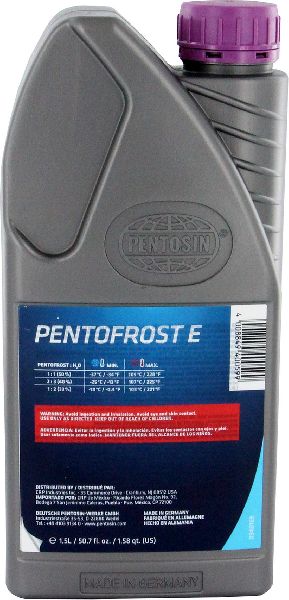
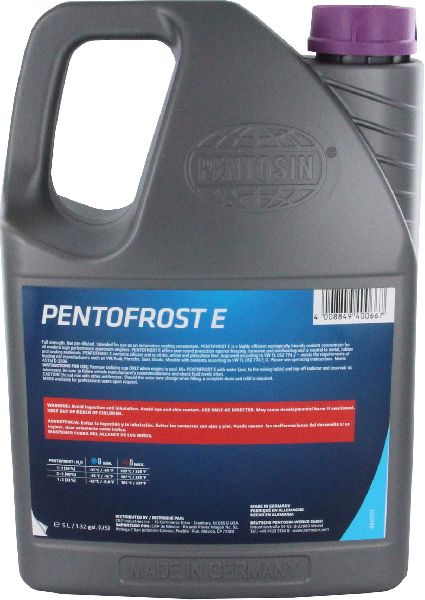
- Always use the correct Audi-spec G13 (violet) coolant when refilling the system to prevent damage.
- Check with an Audi dealer to see if your vehicle is covered by an extended warranty for the water pump assembly before paying for the repair yourself.
What's Unique About the 2009-2017 Audi Q5
The 2.0T EA888 engine in this generation of Audi Q5 uses a plastic water pump and thermostat housing assembly that is a well-documented weak point. This assembly is prone to developing hairline cracks or warping from thousands of heat cycles, leading to coolant leaks. Oil leaks from components above, like the valve cover or cam cradle, can also drip onto the plastic, accelerating its degradation. Therefore, a P0116 code on this vehicle is frequently a *symptom* of a failing water pump assembly causing low coolant or air pockets, rather than just a simple sensor failure. The main engine coolant temperature sensor (G62) is integrated into this assembly, so the entire unit is often replaced to fix the root cause. Many owners opt for an aftermarket replacement with an aluminum housing for improved durability.
Symptoms You May Notice
- Check Engine Light is on
- Temperature gauge on the dashboard behaves erratically (stays on cold, drops during highway driving, or jumps to hot)
- Cooling fans run constantly at high speed, even when the engine is cold
- Engine takes an unusually long time to warm up
- Reduced fuel economy
- Heater may not blow warm air consistently
- A sweet smell of coolant from the engine bay, indicating a leak
- Pink or white crusty residue (dried coolant) on top of the transmission bell housing.
- Low coolant warning light on the dashboard
- Replacing only the ECT sensor when the root cause is a stuck thermostat or a hairline crack in the water pump housing. The code will often return until the entire assembly is addressed.
Most Likely Causes
- Failing Water Pump / Thermostat Housing Assembly 🔴 High Probability → Shop Integrated Thermostat Housing Assembly The EA888 engine uses a plastic water pump and thermostat housing that is known to crack and leak over time. This is the most common root cause for cooling system issues on this platform. Multiple part revisions exist, indicating the manufacturer's attempts to correct the flaw.
How to confirm: Visually inspect the area under the intake manifold. The leak often drips down onto the top of the transmission case, leaving a tell-tale pink or white crusty residue. Check the coolant reservoir level; if it's consistently low without an obvious puddle on the ground, this is the likely culprit.
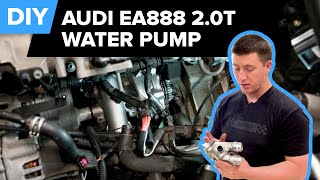
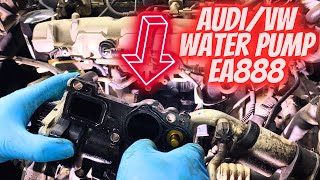
Typical fix: Replace the entire water pump and thermostat housing assembly. 🎬 Watch: Step-by-step guide to replacing the EA888 water pump This is an involved job but addresses the sensor, thermostat, and leak-prone housing all at once. Refill with Audi-specific G12 or G13 coolant.
Est. part cost: $200 - $450 - Stuck-Open Thermostat 🟡 Medium Probability → Shop Integrated Thermostat Housing Assembly If the thermostat fails and sticks open, the engine will take too long to reach operating temperature, which the ECM flags as a performance fault. This is often seen with code P2181 as well. Since the thermostat is integrated into the main housing, this often points back to the same assembly.
How to confirm: Use a scan tool to monitor live coolant temperature data. If the temperature rises very slowly, barely reaches operating temperature (approx. 90°C), or drops significantly during highway cruising, the thermostat is likely stuck open.
Typical fix: The thermostat is part of the larger water pump assembly. While some attempt to replace just the thermostat, the common and recommended repair is to replace the entire housing.
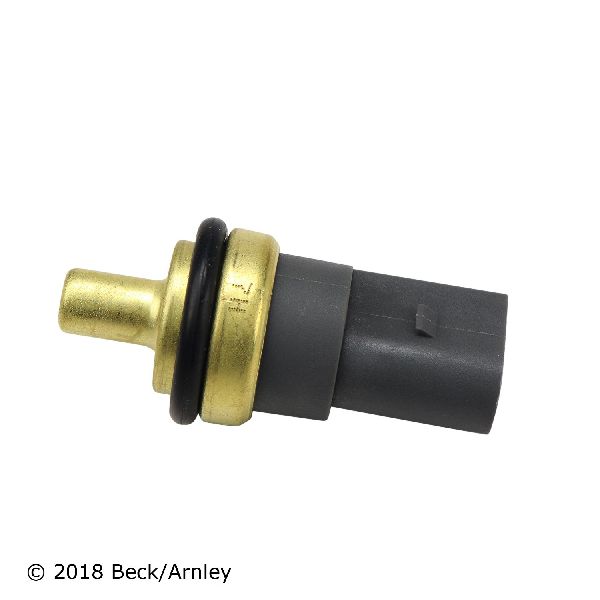
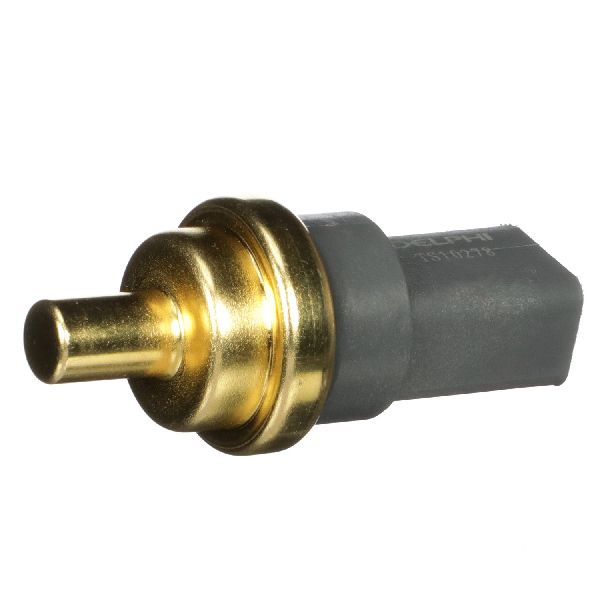
Est. part cost: $200 - $450 - Faulty Engine Coolant Temperature (ECT) Sensor (G62) 🟡 Medium Probability → Shop Engine Coolant Temperature Sensor The sensor itself can fail, sending erratic or incorrect signals. However, because it is located in the failure-prone water pump housing, its failure is often addressed during the replacement of the larger assembly. It's less common for the sensor to fail on its own than for the housing to leak.
How to confirm: With a scan tool on a cold engine, compare the ECT reading to the Intake Air Temperature (IAT). They should be within a few degrees of each other. If the ECT reading is illogical (e.g., -40°F or 250°F on a cold start) or jumps erratically as the engine warms, the sensor is bad.
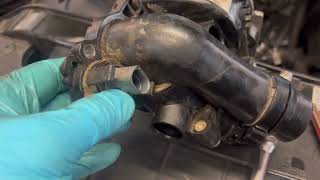
Typical fix: Replace the ECT sensor. This involves removing a retaining clip, pulling the old sensor, and installing the new one with a new O-ring. Be prepared for some coolant loss. The sensor is located on the water pump housing under the intake manifold. 🎬 See how to replace the housing and temperature sensor
Est. part cost: $20 - $60 - Low Engine Coolant Level ⚪ Low Probability → Shop Engine Coolant / Antifreeze This is usually a symptom of a leak from the water pump housing. If the level is low enough for the sensor to be exposed to air, it will send irrational signals.
How to confirm: Check the coolant level in the expansion tank when the engine is cold. If it is below the 'MIN' line, top it off and investigate the source of the leak.
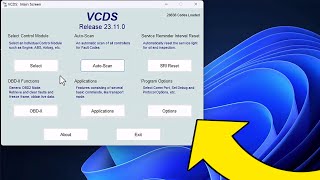
Typical fix: Find and repair the source of the coolant leak, which is most likely the water pump assembly. Then, properly bleed the cooling system to remove all air pockets. 🎬 Watch: How to use VCDS to bleed your cooling system
Est. part cost: $5 - $500+ depending on the source of the leak
Rare But Worth Checking
- Wiring or Connector Issue: A damaged wire or corroded connector pins for the ECT sensor can mimic a sensor failure. Wiggle the connector while watching live data on a scan tool; if the temperature reading jumps, you've found the problem.
- Faulty Engine Control Module (ECM): This is extremely rare. Before suspecting the ECM, all other possibilities (sensor, thermostat, wiring, leaks) must be exhaustively ruled out. A software update may be available per TSB 2077593_2.
Diagnosis Steps
- Check for other stored DTCs. A code like P2181 is a strong clue pointing towards a mechanical fault.
- Inspect the coolant level in the expansion tank (when the engine is cold). If low, suspect a leak.
- Visually inspect the water pump/thermostat assembly (under the intake manifold) and specifically the top of the transmission for pink/white crusty residue, indicating a dried coolant leak.
- Connect an OBD-II scanner and view live data for the Engine Coolant Temperature sensor.
- With a cold engine, verify the ECT reading is close to the Intake Air Temperature (IAT) and ambient air temperature.
- Start the engine and monitor the ECT reading as it warms up. It should rise smoothly and steadily to around 90-105°C.
- If the temperature rises very slowly or drops on the highway, the thermostat is likely stuck open.
- If the temperature reading is erratic, jumping between values, the ECT sensor is likely faulty.
- If no leaks are visible but the coolant level is dropping, a pressure test of the cooling system can help locate a hidden leak.
- If sensor and thermostat seem okay, inspect the sensor's wiring harness and connector for any signs of damage, corrosion, or loose connections.
Parts You'll Likely Need
- Water Pump and Thermostat Assembly
(OEM #06H121026DD (or superseding revisions like 06H121026ED))— This is the most common point of failure on the 2.0T EA888 engine. Replacing the entire assembly addresses the failure-prone plastic housing, the thermostat, and the ECT sensor in one repair.
Trusted brands: INA, Continental, Pierburg, Vaico, Graf (often with metal housing)
OEM price range: $300-$450
Aftermarket price range: $180-$300 - Engine Coolant Temperature Sensor (G62)
(OEM #06A919501A)— If diagnosing a sensor-only failure, this part is needed. It's inexpensive and sometimes replaced as a standalone diagnostic step before committing to the full water pump job.
Trusted brands: Bosch, Febi, Hella
OEM price range: $25-$50
Aftermarket price range: $15-$30 - G13 or G12evo Coolant
(OEM #G12E050A3)— The cooling system must be drained and refilled for this repair. Using the correct VAG-specific coolant is critical. G13 has been superseded by G12evo, but they are compatible.
Trusted brands: Audi OEM, Pentosin, Febi
OEM price range: $25-$40 per gallon concentrate
Aftermarket price range: $20-$35 per gallon concentrate
Related Codes That Often Appear With This One
- P2181 — Stands for 'Cooling System Performance'. This code is very common alongside P0116 and strongly indicates a mechanical cooling system problem, like a stuck thermostat or failing water pump, rather than just an electrical sensor fault.
Technical Service Bulletins (TSBs) & Recalls
- TSB 2077593_2: Mentions that DTCs related to the ECT sensor, including P0116, may in some cases be resolved with an engine control module (ECM) software update, though mechanical failure is more common.
- Class Action Settlement / Warranty Extension TSBs (e.g., VWP-22-06 for VW): While specific to settlements, these internal documents acknowledge the widespread nature of the water pump/thermostat failure and extended warranty coverage for the issue.
Platform-Specific Known Issues
- The plastic water pump/thermostat housing is a widely recognized failure point on the EA888 engine, leading to coolant leaks that can cause a variety of cooling system DTCs, including P0116.
- Due to the prevalence of this issue, several class-action lawsuits have been filed, resulting in extended warranties for this specific component on many VW and Audi vehicles. Owners should check with an Audi dealer to see if their vehicle's VIN is covered.
Mechanic-Grade Diagnostic Values
- Engine Coolant Temperature Sensor (G62) Resistance — expected: 2000-3000 Ω at 20°C (68°F); 275-375 Ω at 80°C (176°F).. Failure: Readings significantly outside the expected range for a given temperature, or an open circuit (OL), indicate a faulty sensor.
- Engine Coolant Temperature Sensor (G62) Signal Voltage — expected: Approximately 2.0V - 3.5V at the signal wire with key-on, engine-off (cold). Voltage drops as the engine warms, typically to around 0.5V when fully hot.. Failure: Voltage stuck at 0V (short to ground), 5V (open circuit/bad ground), or a value that doesn't change with temperature points to a sensor or wiring issue.
- ECT Sensor Circuit Sanity Check (Scan Tool) — expected: With the sensor unplugged, a scan tool should read approx. -40°F (-40°C). With the two terminals in the harness connector shorted with a jumper wire, the scan tool should read approx. 285°F (140°C).. Failure: If these expected values are not seen, it indicates a problem in the wiring harness or the ECM, not the sensor itself.
- Wiring Harness Resistance (G62 sensor to ECM) — expected: Maximum of 1.5 Ω.. Failure: Resistance higher than 1.5 Ω indicates corrosion or damage in the wiring harness that can alter the temperature reading.
Hidden / Shadow Codes Worth Checking
- 16500 (VAG-specific fault code): This is the manufacturer-specific equivalent to the generic P0116 code, often displayed by VCDS or other VAG-specific scan tools. It means 'Engine Coolant Temp. Sensor (G62): Implausible Signal'. (see via VCDS, ODIS, or other advanced scan tools capable of reading Audi-specific fault codes.)
Scan Tool Commands That Help
- VCDS / ODIS: Basic Settings - Bleed Cooling Circuit (e.g., IDE08087) — After replacing the water pump, thermostat, or draining the coolant, this function must be run to properly purge air from the complex EA888 cooling system. It cyclically runs pumps and opens valves to evacuate trapped air that cannot be removed by simply idling the engine.
- VCDS / ODIS: Adaptation - Bleed Cooling System (e.g., IDE08287) — This adaptation channel is used to activate the bleeding mode before running the Basic Settings procedure. A security access code (e.g., 27971) may be required to access these functions.
Wiring & Ground Locations
- G62 Sensor Connector — On the water pump/thermostat housing assembly, which is located under the intake manifold on the driver's side of the engine.. This is the direct connection point for the sensor. The connector or its wiring can become brittle from heat and cause an intermittent or failed signal, mimicking a bad sensor.
- Engine Block Ground — There are several ground points on the engine block and in the engine compartment. A key ground strap runs from the engine to the body. A specific ground point is often found on the engine block near the starter or on the left side of the engine compartment near the firewall.. A poor engine ground can cause floating or incorrect readings for various sensors, including the G62, which relies on a stable ground reference.
- Ground Connection 132 — A specific ground connection point within the engine compartment wiring harness.. The G62 sensor circuit grounds through the engine harness, and a fault at this internal connection point can cause an implausible signal.
Real Owner Repair Stories
- AudiWorld Forums (Audi Q5 2.0T (Year not specified, but within range)) — P2181 code, which is commonly associated with P0116.
❌ Tried (didn't work) Initial diagnosis pointed towards the coolant temperature sensor.
✅ What actually fixed it The actual cause was a stuck thermostat. The user noted that the correct fix is to replace the entire water pump and thermostat assembly, as the thermostat is integrated and there are two different types, making it difficult to replace just the thermostat.
OEM Part Supersession History
06H121026N, AB, AF, AG, BA, BE, BF, CC, CF, CP, CQ, CS→06H121026DD, DE, DR, DT, ED— Continuous revisions by the manufacturer to address the high failure rate of the plastic housing and thermostat. Later versions are intended to be more durable.
Heads up: While most revisions are interchangeable for the Gen 2 EA888, it is critical to verify the correct part number for the specific vehicle's VIN. Some early and late designs have minor differences. The most current revision is always recommended.
Model Year Variations Within This Range
- 2013-2017 (Facelift models): The 2013 facelift introduced a refreshed interior with updated MMI controls and some exterior styling changes. While the core 2.0T EA888 Gen 2 engine and its cooling system remained fundamentally the same, there was a recall for an auxiliary electric coolant pump on some 2013-2017 models that could short circuit, though this is a separate issue from the main water pump assembly failure that typically causes P0116.
Diagnostic Flowchart
Other Known Issues on This Vehicle
Issues unrelated to this code that are worth knowing about as an owner of this generation:
- Excessive Oil Consumption 🔴 High — Very common, especially in 2009-2011 models with the CAEB engine code. Often requires adding 1 quart of oil every 1,000 miles or less. Subject of a class-action lawsuit. (Ref: Multiple TSBs exist for a two-stage repair process: Stage 1 involves a new PCV, crank seal, and software update. Stage 2 (if consumption persists) involves replacing pistons and rings.)
- Timing Chain Tensioner Failure 🔴 High — Common on EA888 engines built before ~2013. The original tensioner's ratchet mechanism can fail, allowing the chain to jump, causing catastrophic engine damage. Failure can occur without warning. (Ref: Audi released an updated tensioner (part number 06K109467K) to fix the design flaw. There is a small inspection port to visually check which version of the tensioner is installed.)
- PCV Valve Failure 🟠 Medium — The diaphragm inside the PCV / oil separator unit is prone to tearing. This is a very common failure. (Ref: No recall, but it's a widely recognized issue. Symptoms include a whistling noise from the engine bay, rough idle, lean fault codes (like P0171), and a strong vacuum when trying to remove the oil cap with the engine running.)
- Turbocharger Wastegate Rattle / P0299 Underboost 🟠 Medium — The wastegate actuator rod and its bushing wear over time, causing a metallic rattle, especially when letting off the throttle. Eventually, this leads to a loss of boost pressure and a P0299 code. (Ref: No recall. The common fix is to install an aftermarket wastegate actuator clip or replace the turbocharger.)
- Intake Valve Carbon Buildup 🟡 Low — As a direct-injection engine, fuel doesn't wash over the intake valves. Over 50,000-80,000 miles, carbon deposits build up, restricting airflow and causing misfires, rough idle, and reduced performance. (Ref: This is considered a maintenance item. The fix is a manual cleaning of the valves (walnut blasting is the preferred method).)
Used vs. New Parts: Buying Guide for This Vehicle
When a used part is the smart pick: For this specific repair, using a used part is almost never a smart choice. The primary failure component, the water pump/thermostat assembly, is a known high-failure item due to its plastic construction. A used part from a donor vehicle is likely to have similar wear and fatigue and may fail soon after installation.
Donor-vehicle mileage cap: roughly under 10000 miles for the part to have meaningful remaining life.
What to inspect on the donor part:
- If forced to use a used part, look for one that is a very recent OEM revision (e.g., 'DD' or newer).
- Inspect meticulously for any hairline cracks, especially around seams and hose connections.
- Avoid any parts with signs of coolant residue (pink crust) or oil contamination.
Aftermarket brands forum-validated for this vehicle:
- INA (often the OEM supplier)
- Continental
- Pierburg
- Graf (offers a version with a metal/aluminum housing, which is a popular upgrade to prevent future plastic-related failures)
Brands owners have reported issues with on this vehicle:
- Unbranded, no-name parts from online marketplaces should be avoided. While the price is tempting, they often have poor quality control, use inferior plastics, and can fail prematurely, leading to a repeat of a very labor-intensive job.
Real Owner Stories
Aggregated from forums and TSBs cited above. Mileages and costs reflect what owners reported in those sources.
2018 Audi Q5 2.0T
Symptoms: General water pump and thermostat failure issues consistent with the EA888 platform's history of plastic housing leaks.
What fixed it: Replacement of the water pump and thermostat assembly.
Source hint: AudiWorld forum thread titled 'Water pump / thermostat 2018 Q5'
2012 Audi A4 (B8) 2.0T
Symptoms: The vehicle experienced a water pump failure, which is a shared issue with the Q5 due to the identical EA888 Gen 2 engine and plastic housing design.
What fixed it: Replacement of the plastic water pump and thermostat assembly.
Source hint: Vehicle-specific issues and platform-mates section citing shared EA888 Gen 2 components
Related OBD-II Codes
Frequently Asked Questions
Is there an extended warranty for the water pump failure on my Audi Q5?
Can a software update fix the P0116 code on my Q5?
I see pink crusty residue on top of my transmission; is this related to P0116?
Why are my cooling fans running at high speed when the engine is still cold?
Should I just replace the ECT sensor (G62) to fix P0116?
Helpful Videos
We Have This Part in Stock


The information in this article is provided for general reference and educational purposes only. Vehicle specifications, procedures, and part compatibility can vary by production date, trim level, and region. Always consult your vehicle's factory service manual and verify part numbers before purchasing or performing repairs. Safety-critical components such as airbags, seat belts, and braking systems should be installed by a qualified professional.
- Audi Q5:
- 🧭 Diagnostic Flowchart
- 🎬 Helpful Videos
- 🛍️ Shop This Part
- What's Unique About the 2009-2017 Audi Q5
- Symptoms You May Notice
- Most Likely Causes
- Rare But Worth Checking
- Diagnosis Steps
- Parts You'll Likely Need
- Related Codes That Often Appear With This One
- Technical Service Bulletins (TSBs) & Recalls
- Platform-Specific Known Issues
- Mechanic-Grade Diagnostic Values
- Hidden / Shadow Codes Worth Checking
- Scan Tool Commands That Help
- Wiring & Ground Locations
- Real Owner Repair Stories
- OEM Part Supersession History
- Model Year Variations Within This Range
- Other Known Issues on This Vehicle
- Used vs. New Parts: Buying Guide for This Vehicle
- Real Owner Stories
- 2018 Audi Q5 2.0T
- 2012 Audi A4 (B8) 2.0T
- Related OBD-II Codes
- Frequently Asked Questions
- 🎟️ Get 5% Off