

P0116 on 2007-2013 BMW M3 S65: Engine Coolant Temp Sensor and Thermostat Fixes
On the E9x M3, code P0116 is most often caused by a faulty Engine Coolant Temperature (ECT) sensor or its connector, a known issue covered by BMW TSB SI B12 07 12. The official fix requires replacing the sensor (P/N 13621433076) and installing a wiring repair kit (P/N 12517847971). The second most likely cause is a thermostat stuck in the open position. Expect to spend $75-$150 for the sensor and harness, or $150-$250 for a new thermostat.
- For the 2007-2013 BMW M3, P0116 is most likely caused by a faulty ECT sensor/connector or a stuck-open thermostat.
- Check for BMW-specific codes 2AF9 (sensor) or 2B59 (thermostat) for a more precise diagnosis.
- A BMW TSB (SI B12 07 12) exists for this engine, pointing to a known issue with the ECT sensor connector. The official fix is to replace both the sensor and the wiring pigtail.
- The best way to diagnose the problem is to monitor the live coolant temperature data with a scan tool during a cold start.
- Accessing these parts requires removing the intake plenum, so if you replace one, it is highly recommended to replace the other at the same time to save on future labor.
What's Unique About the 2007-2013 BMW M3
The S65 V8 engine has a known weakness with the engine coolant temperature sensor and its electrical connector. BMW issued Technical Service Bulletin (TSB) SI B12 07 12 specifically for the S65, noting that engine vibration can cause a 'sporadic connection problem' at the sensor, leading to faults like 2AF9 and P0116. The official fix involves replacing both the sensor and the wiring pigtail with a dedicated repair kit. While a stuck thermostat is a common cause for P0116 on many BMWs, this TSB makes the sensor and its connector the primary suspect for the E9x M3.
Symptoms You May Notice
- Check Engine Light is illuminated
- "Increased Emissions" warning on the iDrive screen
- Engine oil temperature gauge takes a very long time to reach the middle 🎬 Watch: See what a failing thermostat looks like while driving. (210°F) or normal operating temp
- Reduced fuel economy
- Heater may not blow hot air or is inconsistent
- Cooling fan may run at high speed constantly, even when the engine is cold
- Car may enter a reduced power "limp mode"
- Replacing the thermostat when the actual issue is the less expensive ECT sensor or its connector. Given the TSB for the S65 engine, the sensor/connector should be the primary suspect, especially if BMW code 2AF9 is present.
- Replacing only the ECT sensor without also installing the updated wiring harness repair kit (P/N 12517847971). The TSB indicates the connector itself is a key part of the failure mode due to vibration.
Most Likely Causes
- Faulty Engine Coolant Temperature (ECT) Sensor and/or Connector 🔴 High Probability → Shop Engine Coolant Temperature Sensor BMW released TSB SI B12 07 12 for the S65 engine, identifying that vibration can cause a poor connection at the ECT sensor, leading to faults. This makes it a documented weak point and the most common cause.
How to confirm: Inspect the ECT sensor's electrical connector for looseness, corrosion, or damage. With a scan tool, monitor the live coolant temperature data with the engine cold; it should match the ambient air temperature. If the reading is erratic, nonsensical (e.g., -40°F, or even absolute zero as reported by some owners), or doesn't change as the engine warms, the sensor or its wiring is likely faulty. The TSB specifically addresses BMW fault code 2AF9, which is the manufacturer-specific equivalent of P0116.
Typical fix: Replace the ECT sensor and install the updated wiring harness repair kit as per TSB SI B12 07 12. The sensor is located in the thermostat housing, which requires removing the intake plenum for access. The repair harness involves cutting the old connector off and crimping the new pigtail onto the existing engine harness.
Est. part cost: $75-$150 - Thermostat Stuck Open 🔴 High Probability → Shop Integrated Thermostat Housing Assembly Thermostats are a common failure item on many BMW models, often failing in the open position as a failsafe to prevent overheating. This causes the engine to take too long to reach operating temperature, triggering the 'range/performance' aspect of P0116.
How to confirm: Use a scan tool to monitor live coolant temperature data while driving from a cold start. If the temperature rises very slowly and struggles to reach or maintain the target operating temperature (approx. 79°C or 174°F for the stock thermostat), the thermostat is likely stuck open. This may be accompanied by BMW-specific fault code 2B59 (Coolant Thermostat Monitoring).
Typical fix: Replace the thermostat assembly. It is located in a housing at the front of the engine, under the intake plenum. Since accessing the thermostat requires the same labor as accessing the ECT sensor, it is highly recommended to replace both at the same time.
Est. part cost: $150-$250 - Low Engine Coolant or Air in the Cooling System ⚪ Low Probability → Shop Engine Coolant / Antifreeze This can occur on any vehicle, but is often a result of recent cooling system service where the system was not bled properly, or a small, undetected coolant leak. An air pocket trapped at the sensor can cause erratic readings.
How to confirm: When the engine is cold, check the coolant level in the expansion tank. If it is low, the sensor may be exposed to air instead of coolant. If the system was recently serviced, air pockets are a strong possibility.
Typical fix: Top off the coolant with BMW-approved G48 (blue) or HT-12 (green) coolant, depending on what is in the system. Perform the proper cooling system bleeding procedure to remove all trapped air. The S65 requires a specific bleeding procedure, often initiated with a diagnostic tool, to run the electric water pump and purge air. 🎬 Watch: A complete DIY guide for the water pump and thermostat.
Est. part cost: $20-$40
Rare But Worth Checking
- Wiring Harness Damage: Beyond the connector pigtail, the wiring running back to the DME could be damaged, though this is uncommon without other signs of engine work or rodent damage.
- Failing Battery: → Shop Vehicle Battery A weak or old battery can cause a myriad of random electrical faults on modern BMWs. Some owners have reported that replacing an aging battery resolved intermittent P0116 and related codes, though it's not a primary cause.
- DME (ECU) Fault: This is extremely rare. The DME is the last component to suspect after all other possibilities, including wiring, have been exhaustively checked.
Diagnosis Steps
- Connect an OBD-II scanner and check for any other fault codes, particularly BMW-specific codes like 2AF9 or 2B59.
- With the engine cold, access the live data stream on the scanner. Compare the Engine Coolant Temperature reading with the Intake Air Temperature and Ambient Air Temperature. They should all be within a few degrees of each other.
- Visually inspect the ECT sensor connector, located on the thermostat housing under the intake plenum. Check for any signs of corrosion, damage, or a loose fit. Wiggle the connector with the engine running and live data streaming to see if the temperature reading fluctuates wildly.
- Start the engine and monitor the coolant temperature on the scan tool as the car warms up. Also, observe the oil temperature gauge on the dashboard.
- If the temperature rises extremely slowly and fails to reach the normal operating range (approx. 79°C / 174°F), the thermostat is likely stuck open.
- If the temperature reading is erratic, jumps to extreme highs or lows (e.g., -40°F), or doesn't change at all, the ECT sensor or its wiring is the most likely culprit, as per TSB SI B12 07 12.
- If the coolant level is low, top it off and perform the specific S65 bleed procedure before re-testing. Check for leaks.
- Based on the findings, prioritize replacing the ECT sensor/harness (due to the TSB) or the thermostat. Given the labor overlap, replacing both is a common and recommended strategy.
Parts You'll Likely Need
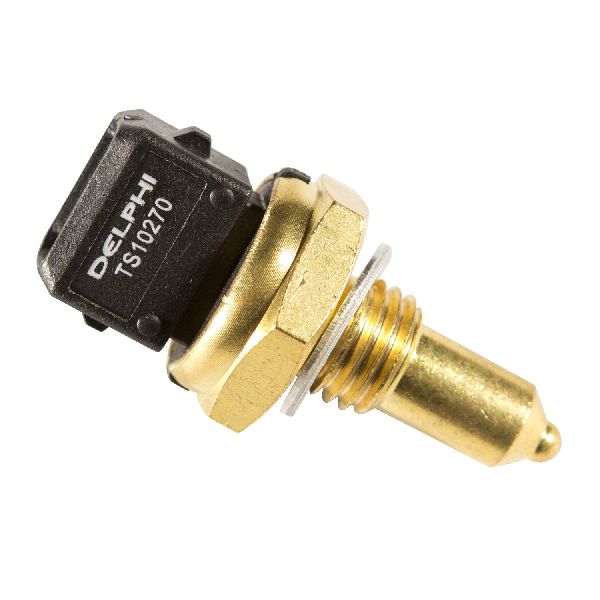
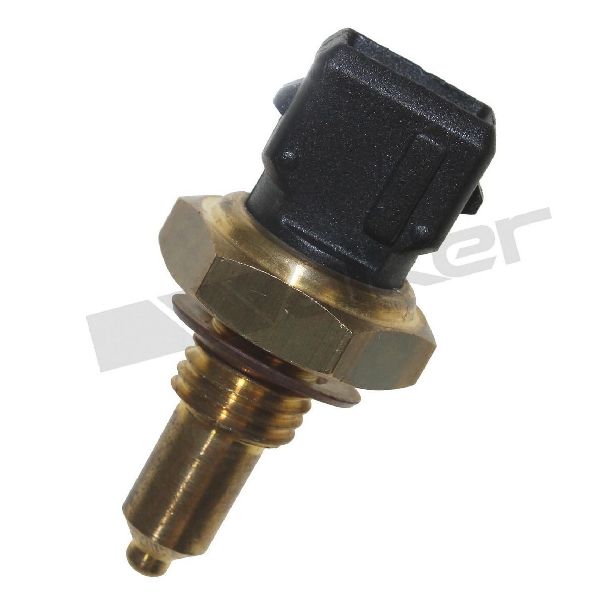
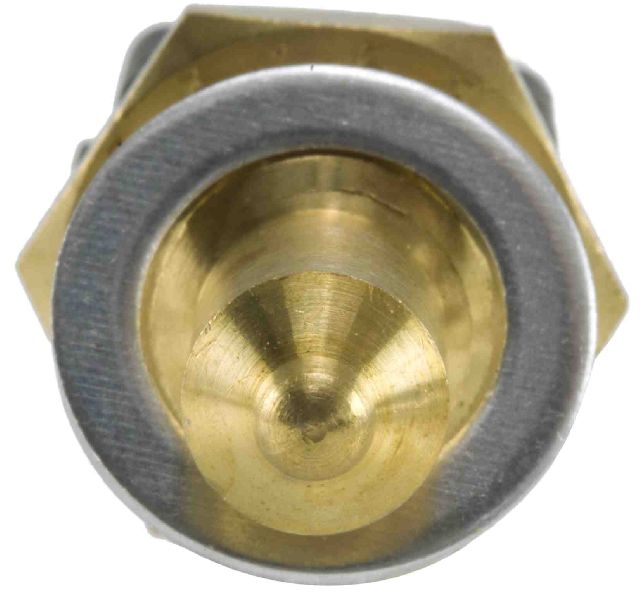
- Engine Coolant Temperature Sensor
(OEM #13621433076)— This sensor is a known failure point on the S65 engine, as documented by BMW TSB SI B12 07 12.
Trusted brands: BMW (Genuine), Bosch, Hella, Vemo
OEM price range: $40-$60
Aftermarket price range: $20-$40 - ECT Sensor Repair Kit (Wiring Harness)
(OEM #12517847971)— Required by BMW TSB SI B12 07 12 to fix the poor connection issue caused by vibration on the S65 engine. Skipping this part may lead to a repeat failure.
Trusted brands: BMW (Genuine)
OEM price range: $40-$50
Aftermarket price range: N/A - Thermostat
(OEM #11537836155)— A common failure item on BMWs that causes the engine to warm up too slowly, triggering a P0116 code. Often replaced preventatively with the ECT sensor due to labor overlap.
Trusted brands: BMW (Genuine), Behr, Mahle
OEM price range: $200-$250
Aftermarket price range: $150-$200
Related Codes That Often Appear With This One
- 2AF9 — This is the BMW-specific fault code for 'Coolant temperature sensor'. TSB SI B12 07 12 directly addresses this code and recommends replacing the sensor and its harness. It is the direct manufacturer equivalent to P0116.
- 2B59 — This BMW fault code is for 'Coolant Thermostat Monitoring'. If the thermostat is the root cause of the slow warm-up, this code will often appear alongside P0116/2AF9.
- P0128 — This code means 'Coolant Thermostat (Coolant Temperature Below Thermostat Regulating Temperature)'. It is functionally very similar to 2B59 and points directly to a thermostat that is stuck open or opening too early.
Technical Service Bulletins (TSBs) & Recalls
- SI B12 07 12: Addresses faulty Engine Coolant Temperature Sensor and poor connections on the S65 engine, recommending replacement of the sensor (13621433076) and installation of a wiring harness repair kit (12517847971) to resolve fault code 2AF9.
Platform-Specific Known Issues
- BMW Technical Service Bulletin SI B12 07 12 was issued for the S65 engine, addressing fault code 2AF9 (Coolant temperature sensor) and performance issues. It points to a sporadic connection problem at the sensor and recommends replacing both the sensor and installing a harness repair kit.
Mechanic-Grade Diagnostic Values
- Engine Coolant Temperature Sensor Resistance — expected: At 20°C (68°F): 2.5 - 3.0 kΩ. At 50°C (122°F): 0.7 - 0.9 kΩ. At 80°C (176°F): ~300 Ω. At 100°C (212°F): 0.12 - 0.17 kΩ.. Failure: Readings significantly outside these ranges, or an open/infinite resistance reading, indicates a failed sensor.
- ECT Sensor Signal Voltage at DME — expected: The DME provides a 5V reference. The signal wire voltage should decrease as the engine warms up. Cold engine (~20°C): ~3.0-3.5V. Warm engine (~80°C): ~1.0-1.3V.. Failure: Voltage that is stuck high (near 5V), stuck low (near 0V), or does not change smoothly as the engine warms up points to a sensor or wiring fault.
Scan Tool Commands That Help
- ISTA (Rheingold/ISTA-D): Clear adaptations (DME) — After replacing the thermostat or coolant temperature sensor, it is best practice to reset the engine's learned adaptations. This forces the DME to relearn values based on the new, correctly functioning components. The path is typically: Vehicle Management > Service Functions > Powertrain > Engine Electronics > Adjustment functions > Delete adaptations.
- ISTA or compatible high-level scanner: Coolant System Bleed Procedure — After replacing any cooling system component (thermostat, sensor, water pump, hoses) and refilling with coolant. This service function activates the electric water pump in a specific sequence to purge air from the S65 cooling system, which is critical for preventing air pockets that can cause erratic sensor readings and overheating.
Wiring & Ground Locations
- ECT Sensor Connector (to DME) — The ECT sensor signal and ground wires run to the MSS60 DME. On some similar BMW DMEs (MSV80), the ECT sensor ground is Pin 17 and the signal is Pin 19 of the X60002 connector. This may vary slightly for the MSS60 but provides a starting point for diagnosis.. A damaged wire or corroded pin at the DME connector can cause the same symptoms as a failed sensor or pigtail connector. Probing for continuity and voltage at these specific DME pins can confirm the integrity of the wiring harness from end to end.
- Main Engine Ground Strap — On the E9x chassis, a primary engine-to-chassis ground strap is located on the driver's side, connecting the engine mount bracket or engine block to the chassis frame, often near the footwell area.. A corroded or loose main engine ground can create electrical noise and voltage offsets, causing sensitive components like the ECT sensor to provide erratic readings to the DME. While not a primary cause, checking the condition of this strap is a valid step in advanced electrical diagnosis.
Real Owner Repair Stories
- M3Post forum user 'L4ces' (E9x M3 S65) — Engine fan runs at high speed constantly and fault code 2AF9 (P0116 equivalent) is present.
❌ Tried (didn't work) Replaced thermostat, Replaced ECT sensor, Replaced leaking water pump, Replaced contaminated belts, Replaced upper and lower radiator hoses
✅ What actually fixed it The user's problem persisted after replacing all common cooling system components. The thread ends with the user suspecting an issue related to the evaporator or blower motor area, as they smelled coolant inside the cabin, but a final resolution was not posted. This highlights a scenario where the standard fixes do not resolve the issue, pointing towards a more complex wiring or system fault. - M3Post forum user 'dreamspeed' (E9x M3 S65) — Intermittent codes 2B59 (thermostat), 2AF9 (coolant sensor), and 2B5A (intake air temp sensor).
❌ Tried (didn't work) Replaced thermostat, Replaced intake air temperature sensor, Replaced coolant temperature sensor, Performed electrical tests on wiring
✅ What actually fixed it The user replaced the 6-7 year old battery as a last resort, even though the car started fine. The codes disappeared for approximately 1200 miles before an intake air temperature code returned, suggesting the battery may have temporarily resolved a voltage-related issue but wasn't the sole root cause. This demonstrates how a weak battery can contribute to sensor plausibility faults.
When the Usual Fixes Don't Work
- In some forum discussions, owners have replaced the thermostat, water pump, and ECT sensor yet the P0116/2AF9 code persisted. In one case, the issue temporarily resolved after replacing an aging battery, suggesting that low or unstable system voltage can trigger plausibility faults even when the primary components are functional. In another unresolved case, after replacing all common parts, the owner began investigating a possible coolant leak from the heater core/evaporator area, indicating a complex issue beyond the usual suspects. These stories show that while the TSB and thermostat are the most common fixes, they are not guaranteed solutions, and underlying electrical issues or obscure faults can be the true root cause.
OEM Part Supersession History
23017838935→13621433076— Part number consolidation and revision for the Engine Coolant Temperature Sensor.→11537836155— This is the current and long-standing part number for the S65 thermostat assembly. No major supersessions are noted during the production run.
Diagnostic Flowchart
Other Known Issues on This Vehicle
Issues unrelated to this code that are worth knowing about as an owner of this generation:
- Rod Bearing Failure 🔴 High — Widespread concern. Failure can occur at any mileage, but risk increases after 60,000 miles. Often replaced preventatively. (Ref: No official TSB or recall, but subject of a class-action lawsuit. The issue is attributed to tight clearances and the spec'd 10W-60 oil viscosity.)
- Throttle Body Actuator Failure 🔴 High — Very common failure item, often occurring between 50,000 and 100,000 miles. Both actuators (one for each bank) are known to fail. (Ref: No TSB, but a well-documented failure. Failure of plastic internal gears or the electronic circuit board causes limp mode.)
- Idle Control Valve (ICV) Failure 🟠 Medium — Common on higher-mileage cars, leading to rough/hunting idle and potential limp mode. (Ref: No TSB, but a known wear item.)
- Valve Cover Gasket Leaks 🟡 Low — Common oil leak point as the vehicle ages, typically after 60,000-80,000 miles. Causes oil smell and drips onto exhaust manifolds.
Used vs. New Parts: Buying Guide for This Vehicle
When a used part is the smart pick: For the repairs associated with P0116, using used parts is strongly discouraged. The primary components—ECT sensor, wiring pigtail, and thermostat—are either inexpensive electronics or critical wear items.
What to inspect on the donor part:
- Not applicable as used parts are not recommended.
OEM-only on this vehicle (don't cheap out):
- ECT Sensor Repair Kit (Wiring Harness) P/N 12517847971: This is a specific fix from a BMW TSB, and using the genuine part is the only way to ensure the intended correction for the vibration-induced connection issue.
Aftermarket brands forum-validated for this vehicle:
- Thermostat: Behr and Mahle are often the original equipment manufacturers (OEM) for BMW and are considered reliable alternatives to Genuine BMW parts.
- ECT Sensor: Bosch and Hella are reputable OEM suppliers for BMW electronics and are considered safe aftermarket choices.
Brands owners have reported issues with on this vehicle:
- Avoid unbranded or generic 'white-box' electronic sensors and thermostats. Forum reports frequently link recurring issues to the use of low-quality, non-OEM-spec parts, as seen in one case where a user suspected a non-OEM thermostat failed prematurely.
Real Owner Stories
Aggregated from forums and TSBs cited above. Mileages and costs reflect what owners reported in those sources.
2008-2013 BMW M3 S65
Symptoms: The scan tool showed a coolant temperature reading of absolute zero (-273.20°C).
What fixed it: The issue was discussed as a clear sign of a sensor or wiring fault, often resolved by replacing the thermostat or sensor as they are common failure points.
Source hint: M3Post Thread 'Coolant temerature sensor' (https://www.m3post.com/forums/showthread.php?t=1237819)
2008-2013 BMW M3 S65
Symptoms: Owner experienced an intermittent P0116 at the track while running at high RPM with coolant temperatures at 170°F.
What fixed it: Identified as a range/performance fault occurring under high-stress driving conditions.
Source hint: M3Post Thread 'Check engine light at the track - codes are P0116 and P3006' (https://www.m3post.com/forums/showthread.php?t=1211105)
2008-2013 BMW M3 S65
Symptoms: P0116 and P0128 codes persisted even after the owner replaced the thermostat and the water pump.
What fixed it: Installation of the wiring harness repair kit (P/N 12517847971) as specified in the TSB to fix the sporadic connection at the sensor.
Source hint: M3Post Thread 'Coolant Temp Harness' (https://www.m3post.com/forums/showthread.php?t=2026131)
Related OBD-II Codes
Frequently Asked Questions
My iDrive is showing an 'Increased Emissions' warning and my oil temp gauge is barely moving. Is this related to P0116?
Does BMW have a Technical Service Bulletin for the S65 engine regarding coolant sensor faults?
What parts are required for the TSB SI B12 07 12 repair?
Why is my cooling fan running at high speed even when the engine is cold?
Can I just replace the sensor, or do I need to remove the intake plenum?
Is there a specific coolant I should use when refilling the system after a thermostat swap?
Helpful Videos

We Have This Part in Stock



The information in this article is provided for general reference and educational purposes only. Vehicle specifications, procedures, and part compatibility can vary by production date, trim level, and region. Always consult your vehicle's factory service manual and verify part numbers before purchasing or performing repairs. Safety-critical components such as airbags, seat belts, and braking systems should be installed by a qualified professional.
- BMW M3:
- 🧭 Diagnostic Flowchart
- 🎬 Helpful Videos
- 🛍️ Shop This Part
- What's Unique About the 2007-2013 BMW M3
- Symptoms You May Notice
- Most Likely Causes
- Rare But Worth Checking
- Diagnosis Steps
- Parts You'll Likely Need
- Related Codes That Often Appear With This One
- Technical Service Bulletins (TSBs) & Recalls
- Platform-Specific Known Issues
- Mechanic-Grade Diagnostic Values
- Scan Tool Commands That Help
- Wiring & Ground Locations
- Real Owner Repair Stories
- When the Usual Fixes Don't Work
- OEM Part Supersession History
- Other Known Issues on This Vehicle
- Used vs. New Parts: Buying Guide for This Vehicle
- Real Owner Stories
- 2008-2013 BMW M3 S65
- 2008-2013 BMW M3 S65
- 2008-2013 BMW M3 S65
- Related OBD-II Codes
- Frequently Asked Questions
- 🎟️ Get 5% Off