

P0116 on 2005-2010 Chevrolet Cobalt 2.2L: Thermostat vs. Sensor Guide
On a 2.2L Ecotec Cobalt, code P0116 is almost always caused by a faulty thermostat that is stuck open. The rubber seal on the original thermostat is a known weak point that degrades and jams the valve. Replacing the thermostat assembly is the most likely fix, costing about $35-$70 for an OEM part. Before suspecting the sensor, check if the engine reaches operating temperature (~180-195°F); if not, the thermostat is the culprit.
- For a P0116 on a 2005-2010 Cobalt, the thermostat is the most likely culprit, not the sensor.
- Diagnose the issue by using a scan tool to watch the live coolant temperature; if it doesn't reach ~180-195°F, the thermostat is bad.
- Always use the OEM ACDelco thermostat (part #131-158) for this repair, as aftermarket units are known to fail quickly.
- This is a common and relatively easy DIY repair that can be completed with basic hand tools.
- Always check the coolant level first, as a low level can cause incorrect sensor readings.
What's Unique About the 2005-2010 Chevrolet Cobalt
On the 2.2L Ecotec engine used in the Cobalt, P0116 is very frequently caused by a mechanical failure rather than an electrical one. The factory thermostat's integrated rubber seal is a well-documented weak point; it often degrades, breaks, and jams the thermostat in the open position. This causes the engine to warm up too slowly, which the ECM interprets as a performance problem with the ECT sensor, triggering P0116 even if the sensor itself is perfectly functional. This issue is so common that P0116 is often set with, or instead of, the more specific P0128 code (Coolant Temperature Below Thermostat Regulating Temperature).
Symptoms You May Notice
- Check Engine Light is on
- Temperature gauge reading is lower than normal, doesn't move, or displays dashes ("---")
- Cooling fans run constantly
- Reduced fuel economy
- Poor heater performance in the cabin
- In some cases, a 'Steering Assist Reduced' message may appear, as the power steering module uses coolant temperature data.
- Replacing the ECT sensor when the thermostat is actually the problem. Because a stuck-open thermostat is so common on this engine, it should be the primary suspect. Diagnosing by watching live temperature data is key to avoiding this.
Most Likely Causes
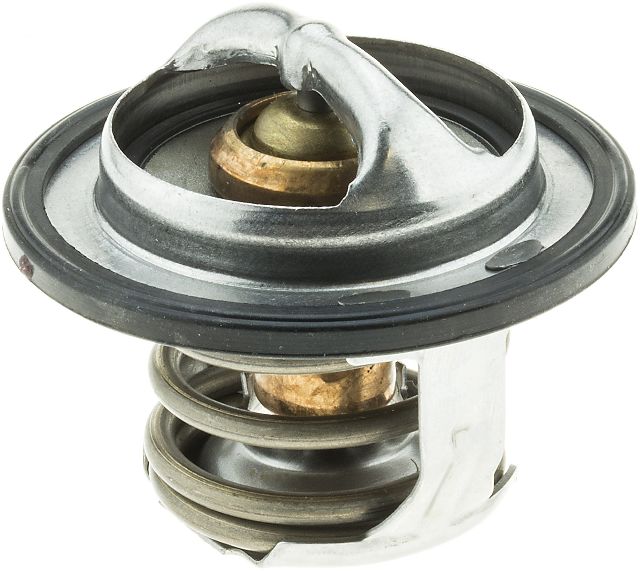
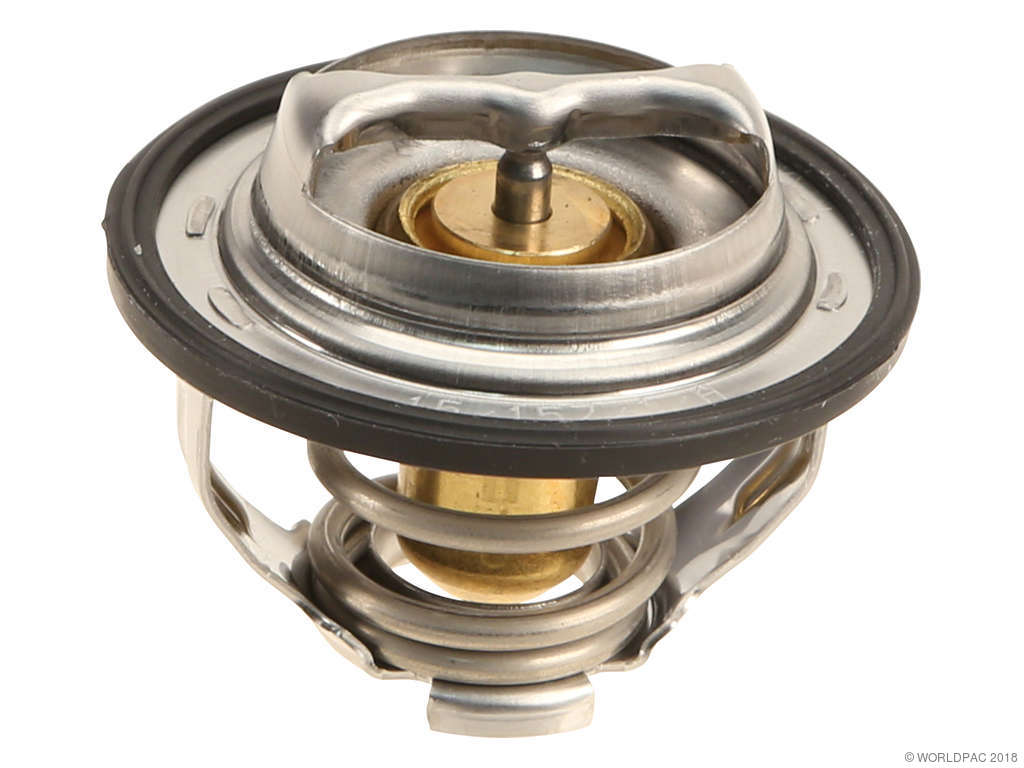
- Thermostat Stuck Open 🔴 High Probability → Shop Integrated Thermostat Housing Assembly The rubber seal on the original thermostat in the 2.2L Ecotec engine is a well-documented failure point. It breaks apart and lodges the thermostat valve in the open position, preventing the engine from reaching operating temperature.
How to confirm: Use a scan tool to monitor live coolant temperature data. If the engine fails to reach normal operating temperature (approx. 180-195°F or 82°C) after 10-15 minutes of driving, the thermostat is almost certainly stuck open. Another test is to feel the upper radiator hose after a cold start; it should stay cool for several minutes. If it warms up gradually with the engine, coolant is flowing prematurely, indicating a stuck-open thermostat.
Typical fix: Replace the thermostat and housing assembly. It is highly recommended to use the OEM ACDelco part for longevity, as aftermarket versions are known for premature failure.
Est. part cost: $35-$70 - Faulty Engine Coolant Temperature (ECT) Sensor 🟡 Medium Probability → Shop Engine Coolant Temperature Sensor
How to confirm: With a scan tool on a cold engine, compare the ECT reading to the Intake Air Temperature (IAT). They should be nearly identical. If the ECT reading is illogical (e.g., -40°F or 250°F) or jumps erratically as the engine warms, the sensor or its wiring is faulty.
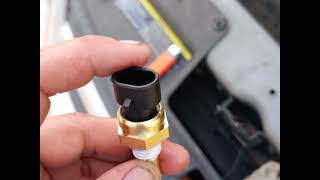
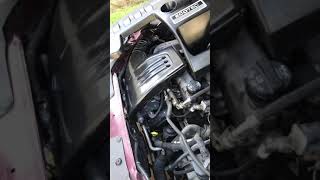
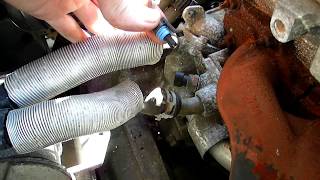
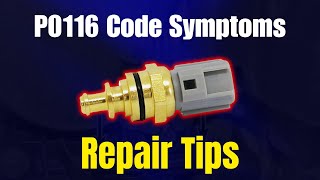
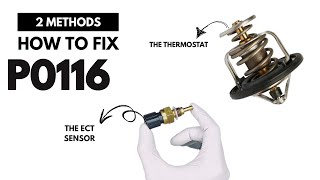
Typical fix: Replace the ECT sensor. 🎬 See this walkthrough for replacing the coolant temperature sensor. It is a small, inexpensive part typically threaded into the thermostat housing.
Est. part cost: $20-$40 - Low Engine Coolant Level ⚪ Low Probability → Shop Engine Coolant / Antifreeze
How to confirm: Visually inspect the coolant reservoir. If the level is below the 'cold fill' line, the system is low. The sensor may be exposed to air pockets, giving false readings.
Typical fix: Top off the cooling system with the correct type of coolant (GM DEX-COOL) and bleed any air from the system. Investigate and fix the source of the coolant loss.
Est. part cost: $15-$25 for coolant
Rare But Worth Checking
- Wiring or Connector Issue: The wiring harness or connector for the ECT sensor can become damaged, corroded, or loose, causing an intermittent or lost signal. Visually inspect the harness from the sensor back as far as possible. In one documented case, rodent damage to the ECT wiring was the root cause.
- Air Pockets in Cooling System: If the cooling system was recently serviced and not bled properly, trapped air can cause erratic readings at the ECT sensor.
- Software Calibration: While less common on the Cobalt, other Chevrolet models have required software updates to address this code. For example, Bulletin #24-NA-064 for the Trailblazer advises technicians to re-program the ECM to correct concerns where the MIL is illuminated with DTC P0116 set.
Diagnosis Steps
- Check the engine coolant level in the reservoir and top off if necessary with a 50/50 mix of DEX-COOL approved coolant and distilled water.
- Connect an OBD-II scan tool and check for any other stored codes, particularly P0128.
- With the engine cold, view live data on the scan tool. Compare the Engine Coolant Temperature (ECT) reading with the Intake Air Temperature (IAT) reading. They should be within a few degrees of each other.
- If the ECT reading is nonsensical (e.g., -40°F or 250°F), the sensor or its wiring is the likely problem. Inspect the sensor connector for corrosion or damage.
- Start the engine and monitor the ECT reading as it warms up. The temperature should rise steadily.
- If the temperature rises very slowly or fails to reach the normal operating range of ~180-195°F (82°C) after 10-15 minutes of driving, the thermostat is stuck open and must be replaced.
- If the temperature reading jumps around erratically while warming up, the ECT sensor is faulty and should be replaced.
- After replacing any parts, clear the codes and perform a drive cycle to confirm the repair. Some owners have reported needing to reset the PCM after the repair to restore normal temperature gauge function.
Parts You'll Likely Need
- Engine Coolant Thermostat with Housing
(OEM #12622410)— This is the most common cause of P0116 on the 2.2L Ecotec engine due to the high failure rate of the integrated rubber seal. The thermostat is designed to open at 180°F (82.2°C).
Trusted brands: ACDelco (GM Original Equipment, part #131-158)
OEM price range: $35-$70
Aftermarket price range: $25-$50 - Engine Coolant Temperature (ECT) Sensor
(OEM #19236568)— This is the second most likely cause, failing and sending irrational data to the ECM. It is often replaced during thermostat service due to its location in the thermostat housing.
Trusted brands: ACDelco (part #213-4514 or #213-953), Delphi
OEM price range: $25-$45
Aftermarket price range: $15-$30 - Engine Coolant / Antifreeze (DEX-COOL) — Coolant will be lost when replacing the thermostat and must be replenished with the correct type to avoid system damage.
Trusted brands: ACDelco, Peak, Prestone
OEM price range: $20-$25 per gallon
Aftermarket price range: $18-$22 per gallon
Related Codes That Often Appear With This One
- P0128 — This code specifically means 'Coolant Temperature Below Thermostat Regulating Temperature.' It is often set for the exact same reason as P0116 on this car: a thermostat that is stuck open. It is extremely common to see these codes together.
- U0401:71 — This code, 'Invalid Data Received From ECM/PCM', may be set in the Power Steering Control Module (PSCM). The PSCM uses coolant temperature to adjust steering effort. When a P0116/P0128 fault occurs, the invalid temperature signal can cause the PSCM to log this code and display a 'Steering Assist Reduced' message.
Technical Service Bulletins (TSBs) & Recalls
- 17-NA-158: While not directly for P0116, this TSB notes that a 'Steering Assist Reduced' message can be caused by an invalid coolant temp signal from a P0128 fault (which has the same root cause as P0116), advising diagnosis of the cooling system before replacing steering parts.
Platform-Specific Known Issues
- { "title": "Owner Experience: Sensor Replaced First", "description": "A 2009 Cobalt LT owner on Reddit with code P0128 (a related code) first replaced the ECT sensor, which did not solve the problem. The check engine light, lack of temperature reading on the dash, and disabled A/C returned. The community consensus pointed to the thermostat as the actual culprit, which is the common fix." }
- { "title": "Owner Experience: Thermostat Fixed It", "description": "A user on the Chevy Talk forum with a 2007 Cobalt and code P0128 replaced the sensor first with no luck. A tech on the forum correctly advised that P0128 with symptoms of fans running constantly and a blank temperature gauge points directly to a failed thermostat." }
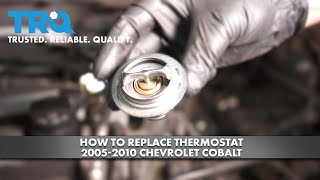
- { "title": "Repair Video Confirmation", "description": "A YouTube video by '1A Auto' demonstrates the thermostat replacement on a 2006 Cobalt, confirming the location and procedure. Another video specifically for code P0128 on a Cobalt shows the dislodged rubber gasket from the old thermostat, visually confirming the common failure mode." }
Mechanic-Grade Diagnostic Values
- ECT Sensor Resistance vs. Temperature — expected: ~3,500 Ohms at 68°F (20°C); ~1,700 Ohms at 104°F (40°C); ~250 Ohms at 212°F (100°C). Resistance is high when cold and drops as temperature increases.. Failure: A reading far outside the expected range for a given temperature, or an open/infinite resistance reading, indicates a faulty sensor.
- ECT Sensor Connector Voltage (Key On, Engine Off) — expected: Approximately 5.0 Volts on the reference wire (Yellow wire) and a good ground (near 0 Ohms) on the low-reference wire (Tan wire).. Failure: Significantly less than 5.0V on the reference wire points to an ECM or wiring issue. High resistance on the ground wire indicates a bad ground connection.
- ECT Sensor Signal Voltage (Live Data) — expected: Should start high (approx. 3.5V at ~68°F) and decrease smoothly as the engine warms up, staying within a 0.5V to 4.5V window.. Failure: Voltage that is stuck, jumps erratically, is below 0.2V, or is outside the expected range indicates a faulty sensor or wiring issue.
Wiring & Ground Locations
- ECT Sensor Connector — On the ECT sensor, which is located in the thermostat housing on the driver's side of the 2.2L engine.. This is the primary connection point for the sensor. Corrosion, damage, or a loose fit on the 2-pin connector (Yellow and Tan wires) will directly cause erratic or failed signals.
- G105 / G107 — G105 is on the lower left front of the transmission case. G107 is on the right rear of the cylinder head.. These are critical ground points for the Engine Control Module (ECM). A poor connection at these grounds can cause a host of erratic sensor readings, including the ECT sensor, leading to a P0116 code even if the sensor and its direct wiring are good.
- G101 — Located in the left side of the engine compartment, under the coolant reservoir.. This is another important ground that serves the ECM and other engine compartment components. Verifying it is clean and tight is a crucial step when diagnosing electrical faults.
- ECM Connector Pins — At the main Engine Control Module (ECM), located in the engine compartment in front of the underhood fuse block.. The ECT signal is sent via a Yellow wire and the low reference (ground) is a Tan wire. On some Ecotec platforms, these correspond to pins like 50 (signal) and 61 (low ref). Verifying continuity and checking for corrosion at these specific pins can isolate a problem between the sensor and the ECM.
Real Owner Repair Stories
- Cobalt SS Network forum user (Chevrolet Cobalt (engine not specified, but symptoms match 2.2L issue)) — Coolant temperature would shoot up to max or blank out ("---"). The problem was worse when wet.
❌ Tried (didn't work) Replacing the ECT sensor
✅ What actually fixed it A friend found a wire in the ECT sensor harness had worn through and was shorting out against the intake manifold. They zip-tied a piece of hose around the harness at the chafe point to insulate it, which permanently solved the problem. - Chevy HHR Network forum user (platform mate with same engine) (Chevrolet HHR with 2.2L Ecotec) — P0116/P0128 code.
❌ Tried (didn't work) Using a cheaper, aftermarket 'professional' grade thermostat.
✅ What actually fixed it The user noted a common sentiment that there are two grades of ACDelco thermostats available and that for a lasting repair, one must use the specific GM Original Equipment part (131-158). The user stated, "believe it or not, the car knows the difference. This I know," strongly implying the cheaper part failed quickly and only the OEM part provided a permanent fix.
Model Year Variations Within This Range
- 2005-2008 vs 2009-2010: Models from 2005-2008 generally used the L61 2.2L Ecotec, while 2009-2010 models used the updated LAP 2.2L Ecotec, which added Variable Valve Timing (VVT). However, for the purposes of diagnosing P0116, this distinction is not critical. The fundamental cooling system design, the failure-prone thermostat, and the recommended OEM replacement part (ACDelco 131-158) are identical for both engine versions within this vehicle range.
Diagnostic Flowchart
Other Known Issues on This Vehicle
Issues unrelated to this code that are worth knowing about as an owner of this generation:
- Electric Power Steering (EPS) Motor Failure 🔴 High — Extremely common, can occur at any mileage. Leads to a sudden loss of power steering assist, making the wheel very hard to turn at low speeds. (Ref: NHTSA Recall #10V073000 (GM Recall #10023))
- Ignition Switch Failure / Key Stuck 🔴 High — Very common, typically around 84,000 miles. Part of the major GM ignition switch recall; the switch can move out of 'Run', shutting off the engine and airbags. A separate issue can cause the key to become stuck in the ignition. (Ref: NHTSA Recall #14V047000 (Ignition Switch); Recall #14113 (Key Stuck))
- Timing Chain Tensioner Failure 🔴 High — Common, often occurs around 100,000 miles. A faulty tensioner can cause a rattling noise on cold starts. If not addressed, the chain can skip or break, causing severe engine damage.
- Shifter Cable Failure 🟠 Medium — Moderately common. The cable or its adjustment clip can fail, leading to a mismatch between the gear selected and the actual gear, or preventing the key from being removed from the ignition. (Ref: NHTSA Recall #09V073000)
- EVAP System Faults (Gas Cap) 🟡 Low — Common. A worn or faulty gas cap seal is a frequent cause of a Check Engine Light with EVAP system codes.
- Ignition Coil Failure 🟠 Medium — Common, often occurs around 107,000 miles. Leads to engine misfires, rough running, and a flashing Check Engine Light.
Used vs. New Parts: Buying Guide for This Vehicle
When a used part is the smart pick: For this specific repair, using used parts is generally not recommended. The primary failure items, the thermostat and ECT sensor, are inexpensive wear items. A used thermostat carries the same risk of seal failure as the original part, and a used sensor's remaining lifespan is unknown.
What to inspect on the donor part:
- Not applicable as used parts are not advised for this repair.
OEM-only on this vehicle (don't cheap out):
- Engine Coolant Thermostat: Forum consensus strongly indicates that the ACDelco GM Original Equipment thermostat (part #131-158) is the only reliable long-term fix. Aftermarket thermostats and even lower-tier ACDelco 'professional' parts are reported to fail prematurely, causing the code to return.
Aftermarket brands forum-validated for this vehicle:
- ECT Sensor: Delphi is a reputable OEM supplier and a trusted alternative to ACDelco for the ECT sensor.
Brands owners have reported issues with on this vehicle:
- Thermostat: Any brand other than ACDelco GM Original Equipment part #131-158 should be avoided. Many owners report repeat failures with store-brand or budget aftermarket thermostats.
Real Owner Stories
Aggregated from forums and TSBs cited above. Mileages and costs reflect what owners reported in those sources.
2009 Chevrolet Cobalt LT 2.2L
Symptoms: Check engine light for P0128, lack of temperature reading on the dash, and disabled A/C.
What fixed it: Replacing the thermostat (replacing the ECT sensor first did not solve the problem).
Source hint: Reddit - r/ChevyCobalt: Thread titled 'P0128 even after replacing coolant temp sensor'
2007 Chevrolet Cobalt 2.2L
Symptoms: Check engine light, cooling fans running constantly, and a blank temperature gauge.
What fixed it: Replacing the thermostat after a sensor replacement failed to fix the issue.
Source hint: Chevy Talk Forum: Thread titled '07-Cobalt, check engine lit'
2006 Chevrolet Cobalt 2.2L
Symptoms: Code P0128 and a dislodged rubber gasket found inside the thermostat housing.
What fixed it: Replacement of the thermostat and housing assembly.
Source hint: YouTube video by '1A Auto' and related repair videos
Related OBD-II Codes
Frequently Asked Questions
Why is my 2005-2010 Chevrolet Cobalt displaying a 'Steering Assist Reduced' message along with the check engine light?
My temperature gauge shows dashes ('---') and the cooling fans are running constantly. Is this a sensor failure?
Which replacement thermostat should I use for my 2.2L Ecotec engine?
Can a low coolant level cause the P0116 code on my Cobalt?
Is there a recall for the cooling system issues causing P0116?
How can I tell if my thermostat is stuck open without removing it?
Helpful Videos

We Have This Part in Stock


The information in this article is provided for general reference and educational purposes only. Vehicle specifications, procedures, and part compatibility can vary by production date, trim level, and region. Always consult your vehicle's factory service manual and verify part numbers before purchasing or performing repairs. Safety-critical components such as airbags, seat belts, and braking systems should be installed by a qualified professional.
- Chevrolet Cobalt:
- 🧭 Diagnostic Flowchart
- 🎬 Helpful Videos
- 🛍️ Shop This Part
- What's Unique About the 2005-2010 Chevrolet Cobalt
- Symptoms You May Notice
- Most Likely Causes
- Rare But Worth Checking
- Diagnosis Steps
- Parts You'll Likely Need
- Related Codes That Often Appear With This One
- Technical Service Bulletins (TSBs) & Recalls
- Platform-Specific Known Issues
- Mechanic-Grade Diagnostic Values
- Wiring & Ground Locations
- Real Owner Repair Stories
- Model Year Variations Within This Range
- Other Known Issues on This Vehicle
- Used vs. New Parts: Buying Guide for This Vehicle
- Real Owner Stories
- 2009 Chevrolet Cobalt LT 2.2L
- 2007 Chevrolet Cobalt 2.2L
- 2006 Chevrolet Cobalt 2.2L
- Related OBD-II Codes
- Frequently Asked Questions
- 🎟️ Get 5% Off