

P0116 on 2015-2022 Chevrolet Colorado 3.6L V6: ECT Sensor and Thermostat Guide
On the 3.6L V6 Colorado, code P0116 is almost always caused by a faulty thermostat or a bad Engine Coolant Temperature (ECT) sensor. Due to their difficult-to-access location in the engine valley, both parts should be replaced together. Expect a shop cost of $800-$1,500 due to high labor, or a difficult (4/5) DIY repair that requires removing the intake manifold.
- P0116 on your 3.6L Colorado is a cooling system performance issue, most likely a bad thermostat or ECT sensor.
- Due to the parts being buried in the engine valley, the repair is labor-intensive and expensive at a shop.
- ALWAYS replace the thermostat and ECT sensor together to avoid a repeat repair and save on future labor costs.
- Symptoms to watch for include a low-reading temp gauge and cooling fans that won't turn off.
- While this is a very difficult DIY repair, it can save you over $1,000 in labor costs if you have the right tools and experience.
What's Unique About the 2015-2022 Chevrolet Colorado
The key issue for the 3.6L V6 in the second-generation Colorado is the location of the cooling system components. Both the thermostat and the ECT sensor are buried in the valley between the engine's cylinder heads, underneath the intake manifold. This design makes what is a simple repair on many vehicles a significant, labor-intensive job on this specific truck. As a result, mechanics and owners strongly recommend replacing both the thermostat and the ECT sensor simultaneously to avoid paying for the same high-cost labor twice. Some resourceful DIY-ers have fabricated special tools to replace the ECT sensor without removing the intake, but this 🎬 See how to replace the ECT sensor the easy way. is not the standard procedure.
Generation note: The 2015-2022 Chevrolet Colorado is all part of the second generation. This guide applies to models equipped with the 3.6L V6 engine, which includes the LFX (2015-2016) and the updated LGZ (2017-2022). The location of the thermostat and ECT sensor, and the associated repair challenges, are similar 🎬 Watch: Complete thermostat and sensor replacement walkthrough for 2017-2022 models. for both engine versions. There are minor differences in the required intake manifold gaskets between the LFX and LGZ engines.
Symptoms You May Notice
- Check Engine Light is on
- Engine temperature gauge reads low, at zero, or fluctuates wildly
- Cooling fans run constantly, even after shutting the engine off
- Reduced fuel economy
- Heater may not blow hot air
- Engine may idle roughly or perform poorly
- A/C compressor may be disabled by the ECM
- Replacing only the ECT sensor when the thermostat is also bad (or vice-versa). Because of the extreme labor cost to access these parts, replacing only one is a common and expensive mistake if the other part fails shortly after.
- Replacing the thermostat or sensor without properly bleeding the cooling system, which can leave air pockets that cause similar symptoms.
Most Likely Causes
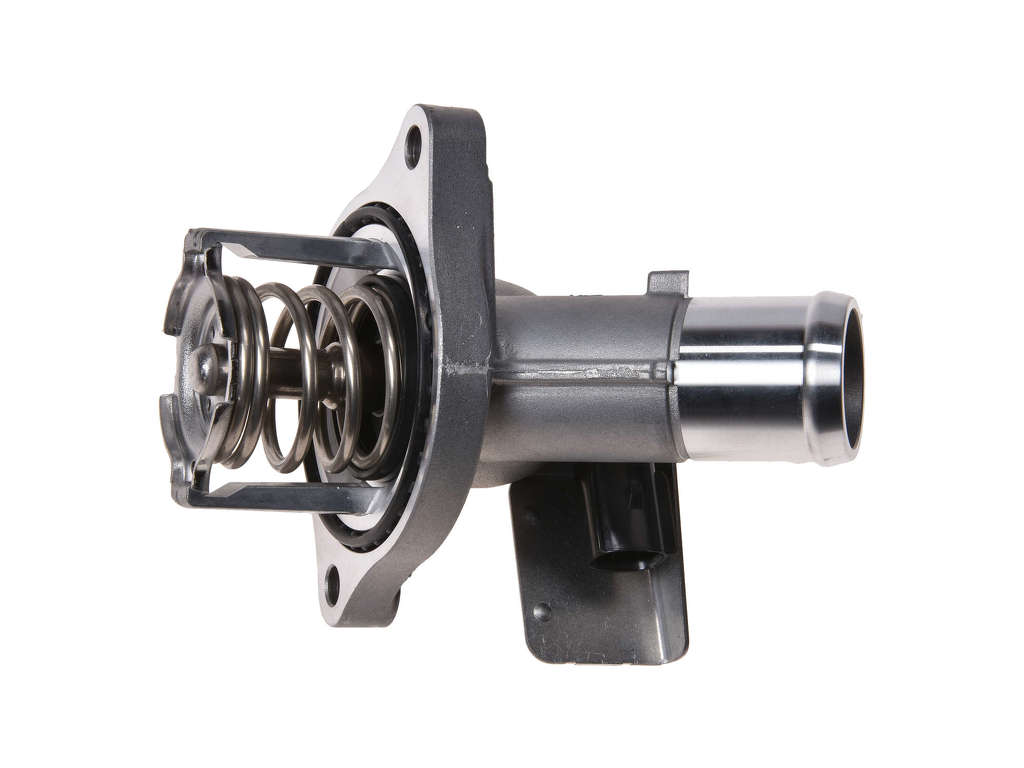
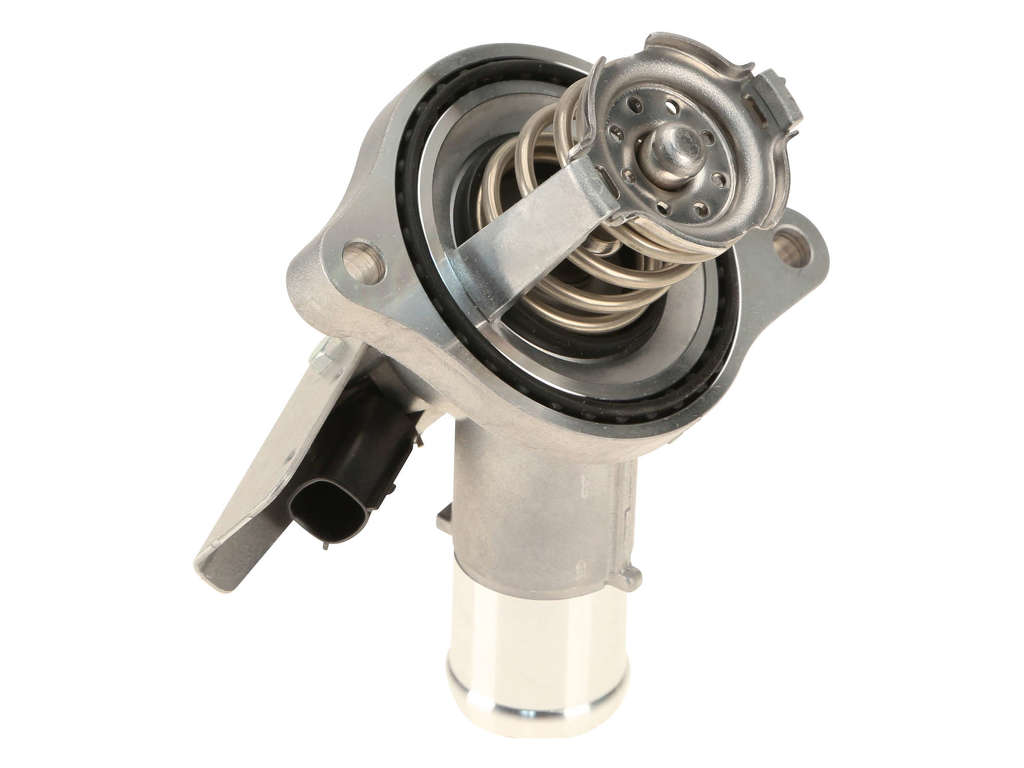
- Failing Thermostat 🔴 High Probability → Shop Integrated Thermostat Housing Assembly The OEM thermostat is a known high-failure item, often getting stuck open. This prevents the engine from reaching operating temperature (~200-210°F) within the timeframe the ECM expects, triggering a rationality fault. This is the most common cause for P0116 and the related P0128 code.
How to confirm: Use a scan tool to monitor coolant temperature while driving. If the temperature struggles to reach and maintain ~200°F, especially at highway speeds, the thermostat is likely stuck open.
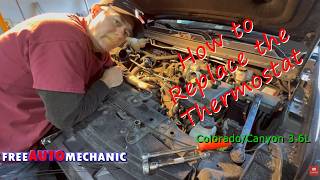
Typical fix: Replace the thermostat and its housing. It is highly recommended to replace the ECT sensor at the same time. The intake manifold must be removed 🎬 Watch: Step-by-step guide to replacing the thermostat housing assembly. for access.
Est. part cost: $50-$120 - Faulty Engine Coolant Temperature (ECT) Sensor 🔴 High Probability → Shop Engine Coolant Temperature Sensor The sensor is located in a high-heat area in the engine valley and can fail over time, sending incorrect or erratic signals. Its plastic components can become brittle.
How to confirm: On a cold engine (after sitting overnight), use a scan tool to compare the ECT and Intake Air Temperature (IAT) readings. They should be within 5°F of each other. If the ECT reading is nonsensical (e.g., -40°F or 250°F), the sensor is bad. You can also test the sensor's resistance; at 68°F (20°C), it should be around 3,520 ohms.
Typical fix: Replace the ECT sensor. Due to the labor involved, it is almost always replaced along with the thermostat.
Est. part cost: $20-$50 - Low Engine Coolant 🟡 Medium Probability → Shop Engine Coolant / Antifreeze Any vehicle can develop coolant leaks over time. On the 3.6L, common leak points include the water pump, radiator, and various hose connections. An air pocket in the system from a previous repair can also cause this code.
How to confirm: Visually inspect the coolant reservoir and radiator (only when the engine is cold). If the level is low, there is a leak in the system that needs to be found and repaired. A cooling system pressure test is the definitive way to find leaks.
Typical fix: Find and repair the source of the leak, then top off and bleed the cooling system properly to remove any air pockets.
Est. part cost: $10-$500+ depending on the leak source
Rare But Worth Checking
- Wiring Harness or Connector Damage: The wiring to the ECT sensor runs through the hot engine valley and can become brittle, corroded, or damaged over time. Check the connector and visible wiring for signs of melting or breaks before replacing parts. On some GM vehicles, harness chafing on the transmission case has been noted in TSBs.
- Powertrain Control Module (PCM) Issue: This is extremely rare, but a faulty PCM could misinterpret a correct sensor reading. This should only be considered after all other possibilities have been exhaustively ruled out. In some related GM models, TSB Bulletin #24-NA-064 notes that a technician may need to re-program the ECM to correct a concern where the MIL is illuminated with DTC P0116 set.
Diagnosis Steps
- Check for other stored DTCs to see if other codes are present, especially P0128.
- With a cold engine (ideally sat overnight), use a scan tool to compare the Engine Coolant Temperature (ECT) and Intake Air Temperature (IAT) values. They should be within 5°F (3°C) of each other. If not, suspect a faulty ECT sensor or wiring.
- Check the coolant level in the reservoir and radiator (when cool) to ensure it is full. Low coolant can cause erratic readings.
- Start the engine and use the scan tool to monitor the ECT reading as it warms up. The temperature should rise steadily to about 200-210°F and then stabilize as the thermostat opens and closes.
- If the temperature rises very slowly, never reaches full operating temperature on the highway, or drops significantly at speed, the thermostat is likely stuck open.
- If the temperature gauge on the scan tool jumps erratically, drops out, or shows an impossible value (like -40°F), suspect a faulty ECT sensor or a wiring issue.
- Inspect the wiring and connector at the ECT sensor for any signs of damage, corrosion, or looseness. This is difficult due to the sensor's location in the engine valley, but may be possible with a borescope camera.
- If a leak is suspected, perform a cooling system pressure test to identify the source.
Parts You'll Likely Need
- Thermostat and Housing Assembly
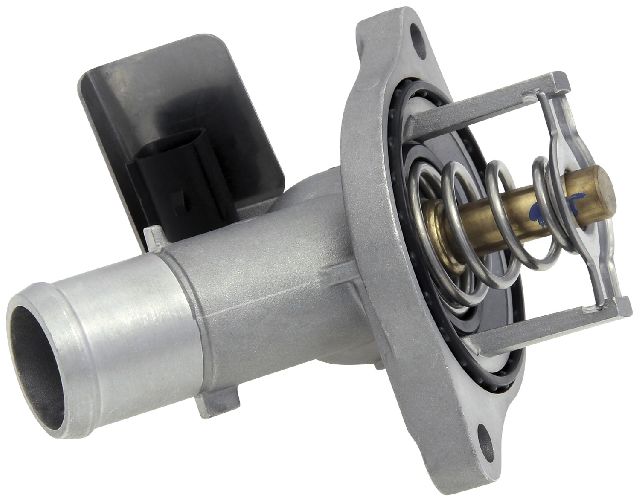
(OEM #12678784 (Supersedes 12658155))— This is the most common failure point leading to P0116 and P0128 codes on this engine. The thermostat sticks open, preventing the engine from warming up correctly.
Trusted brands: ACDelco (OEM), Motorad, Gates
OEM price range: $80-$120
Aftermarket price range: $50-$90 - Engine Coolant Temperature (ECT) Sensor
(OEM #12673398)— This sensor provides the temperature reading to the ECM. It is always replaced with the thermostat as a 'while you're in there' job to prevent future failure and avoid paying for the high labor cost twice.
Trusted brands: ACDelco (OEM), Delphi, NTK
OEM price range: $25-$40
Aftermarket price range: $15-$30 - Intake Manifold Gaskets
(OEM #12632521 (Upper LFX), 12657422 (Lower LFX/LGZ), 12659235 (Upper LGZ))— These are required for the job because the intake manifold must be removed to access the thermostat and ECT sensor. They are single-use and must be replaced. Note the different upper gasket for LFX vs LGZ engines.
Trusted brands: ACDelco (OEM), Fel-Pro, Mahle
OEM price range: $40-$60
Aftermarket price range: $20-$40
Related Codes That Often Appear With This One
- P0128 — P0128 (Coolant Temperature Below Thermostat Regulating Temperature) is extremely common on this truck and is caused by the same issue: a thermostat stuck open. P0116 may appear alongside it or instead of it, depending on the exact failure mode and how the ECM interprets the data.
Technical Service Bulletins (TSBs) & Recalls
- PIP5593A: This TSB addresses P0128, P0116, and other cooling issues on various GM 3.6L engines. It guides technicians to check for stuck-open thermostats and ensure proper system bleeding after repairs, confirming this is a known issue to GM.
- TSB Bulletin #24-NA-064: While specifically referencing the Trailblazer, this manufacturer bulletin advises technicians to re-program the ECM to correct customer concerns of the MIL illuminated with DTC P0116 set.
Platform-Specific Known Issues
- The primary vehicle-specific issue is the high labor cost associated with replacing the thermostat and ECT sensor due to their location in the engine valley, which requires removing the intake manifold for access.
- A user on YouTube demonstrated a homemade tool to replace only the ECT sensor without removing the intake manifold, but this is a non-standard, high-difficulty approach.
Mechanic-Grade Diagnostic Values
- ECT Sensor Resistance — expected: Approximately 3,520 Ω at 20°C (68°F), decreasing to ~177 Ω at 100°C (212°F).. Failure: Infinite resistance (open), near-zero resistance (short), or values that don't correspond smoothly with temperature changes.
- ECT Sensor Signal Voltage (Key On, Engine Off) — expected: High voltage when cold (e.g., ~3.0-3.8V at ~68°F/20°C), low voltage when hot (e.g., ~0.5V at ~210°F/99°C). The ECM supplies a 5V reference.. Failure: Voltage near 5V suggests an open circuit or bad ground. Voltage near 0V suggests a short to ground.
- ECT vs. IAT Sensor Comparison (Cold Soak) — expected: Readings should be within 5°F (3°C) of each other after the vehicle has sat overnight.. Failure: A significant difference between the two sensor readings points to a faulty ECT sensor or its circuit.
Scan Tool Commands That Help
- GM GDS2 (Global Diagnostic System 2): Module Diagnostics -> Engine Control Module -> Data Display — Use this to graph the Engine Coolant Temp, Intake Air Temp, and calculated/target coolant temp during a warm-up cycle. This is the primary method to visually confirm a slow-to-warm-up condition caused by a stuck-open thermostat.
- GM GDS2 (Global Diagnostic System 2): Control Functions -> Cooling Fan Control — This bidirectional control allows the technician to command the cooling fans on and off manually. This is useful to verify the fan control circuit is working correctly, ruling it out as a cause if fans are running constantly.
Wiring & Ground Locations
- ECT Sensor Connector (X117) — In the engine valley, on the thermostat housing, underneath the intake manifold.. This is the direct connection to the sensor. The two pins are typically Pin A (Low Reference/Ground from ECM, often Black wire) and Pin B (5V Signal to ECM, often Yellow wire). A poor connection here will cause the code.
- G103 — Typically located on the front of the passenger side (Bank 2) cylinder head.. This is a primary engine and ECM ground point. While the ECT sensor grounds through the ECM, the ECM itself relies on clean chassis grounds like G103. A loose or corroded G103 can cause a host of erratic sensor readings, including for the ECT.
Real Owner Repair Stories
- YouTube video by 'Rust Belt Auto' (2019 Chevrolet Colorado 3.6L) — Temperature gauge was always reading cold, check engine light on (P0128), and the cooling fan was always running, even with a cold engine.
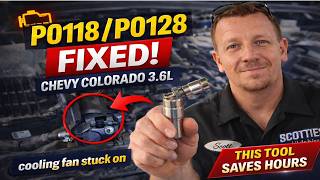
✅ What actually fixed it The problem was resolved by replacing the entire thermostat housing assembly and the engine coolant temperature sensor. The video details the difficult process of removing the intake manifold to gain access. - YouTube video by 'Scotties Hobbies' (2017-2022 Chevrolet Colorado 3.6L) — Cooling fan stuck on, check engine light with codes P0118 and P0128, hard cold starts, and temperature gauge issues.
❌ Tried (didn't work) Attempting to remove the sensor with standard tools proved extremely difficult.
✅ What actually fixed it The creator fabricated a custom bent wrench to access and replace only the ECT sensor without removing the intake manifold. This fixed the codes and symptoms, but is noted as a high-difficulty, non-standard repair.
OEM Part Supersession History
12658155→12678784— The original thermostat assembly was a high-failure part. The updated part number represents a revised design intended to improve reliability and prevent the common 'stuck open' failure mode.
Model Year Variations Within This Range
- 2015-2016 (LFX Engine): Requires Upper Intake Manifold Gasket PN 12632521. The lower intake gaskets (12657422) are shared with the later LGZ engine.
- 2017-2022 (LGZ Engine): Requires a different Upper Intake Manifold Gasket, PN 12659235, due to a revised intake manifold design.
Diagnostic Flowchart
Other Known Issues on This Vehicle
Issues unrelated to this code that are worth knowing about as an owner of this generation:
- 8-Speed (8L45) Transmission Shudder 🔴 High — Very common on 2017-2019 models. Less common on 2020+ after a fluid change from the factory. (Ref: TSB 18-NA-355 (and subsequent revisions) recommends a fluid flush with Mobil 1 Synthetic LV ATF HP.)
- Timing Chain Stretch (LFX Engine) 🔴 High — More prevalent on earlier 3.6L engines (pre-LFX), but can still occur on LFX if oil change intervals are extended or oil levels are low. (Ref: Previous generation engines had extended warranties, but for the LFX, diligent 5,000-mile oil changes are the primary preventative measure.)
- Loss of Power Steering Assist 🔴 High — Common on 2015 models. (Ref: NHTSA Campaign ID: 16V054000. A recall was issued to fix a poor electrical connection in the power steering system.)
- Noisy Water Pump 🟠 Medium → Shop Engine Water Pump — Some 2017-2019 models with the V6 are prone to premature water pump failure, causing noise or leaks.
- Random Misfires (P0300) 🟠 Medium — Can be caused by a range of issues from spark plugs to more complex problems like faulty camshaft actuator solenoids or carbon buildup on intake valves. (Ref: Special Coverage N232430470 for some 2020 models with faulty camshaft actuators.)
Used vs. New Parts: Buying Guide for This Vehicle
When a used part is the smart pick: For this specific repair, using used parts is strongly discouraged. The primary cost is the significant labor to access the components. The risk of a used thermostat or sensor failing prematurely far outweighs the small cost savings on the part itself.
What to inspect on the donor part:
- Not applicable as used parts are not recommended.
OEM-only on this vehicle (don't cheap out):
- Thermostat and Housing Assembly
- Engine Coolant Temperature (ECT) Sensor
Aftermarket brands forum-validated for this vehicle:
- ACDelco (OEM for thermostat/sensor)
- Fel-Pro (for intake manifold gaskets)
Brands owners have reported issues with on this vehicle:
- Unbranded or 'white-box' thermostats and sensors from online marketplaces. The quality control is often poor, and failure rates are high, making them a significant risk for a high-labor job.
Real Owner Stories
Aggregated from forums and TSBs cited above. Mileages and costs reflect what owners reported in those sources.
2017-2022 Chevrolet Colorado 3.6L LGZ — ~100000 miles
Symptoms: Owner performed replacement as preventative maintenance and to resolve codes related to the common failure point of the cooling system.
What fixed it: Replaced the thermostat and temperature sensor.
Source hint: Reddit r/chevycolorado - Thermostat replacement at 100k miles
2012-2015 Chevrolet Camaro 3.6L LFX — ~85000 miles
Symptoms: Intermittent P0116 code.
What fixed it: Replacing the thermostat, which was sticking.
Source hint: Camaro5 Forum - Intermittent P0116
Related OBD-II Codes
Frequently Asked Questions
Does TSB PIP5593A apply to my Chevrolet Colorado with the 3.6L engine?
Why is the labor cost so high for a simple thermostat or ECT sensor replacement on the Colorado 3.6L?
Can I replace just the ECT sensor to fix the P0116 code without removing the intake manifold?
What temperature should my 3.6L LFX engine be reaching to avoid triggering P0116?
Is there a recall for the power steering issues on my 2015 Colorado?
My A/C stopped working and the cooling fans are running constantly; is this related to P0116?
Helpful Videos

We Have This Part in Stock


The information in this article is provided for general reference and educational purposes only. Vehicle specifications, procedures, and part compatibility can vary by production date, trim level, and region. Always consult your vehicle's factory service manual and verify part numbers before purchasing or performing repairs. Safety-critical components such as airbags, seat belts, and braking systems should be installed by a qualified professional.
- Chevrolet Colorado:
- 🧭 Diagnostic Flowchart
- 🎬 Helpful Videos
- 🛍️ Shop This Part
- What's Unique About the 2015-2022 Chevrolet Colorado
- Symptoms You May Notice
- Most Likely Causes
- Rare But Worth Checking
- Diagnosis Steps
- Parts You'll Likely Need
- Related Codes That Often Appear With This One
- Technical Service Bulletins (TSBs) & Recalls
- Platform-Specific Known Issues
- Mechanic-Grade Diagnostic Values
- Scan Tool Commands That Help
- Wiring & Ground Locations
- Real Owner Repair Stories
- OEM Part Supersession History
- Model Year Variations Within This Range
- Other Known Issues on This Vehicle
- Used vs. New Parts: Buying Guide for This Vehicle
- Real Owner Stories
- 2017-2022 Chevrolet Colorado 3.6L LGZ — ~100000 miles
- 2012-2015 Chevrolet Camaro 3.6L LFX — ~85000 miles
- Related OBD-II Codes
- Frequently Asked Questions
- 🎟️ Get 5% Off