

P0116 on 2008-2012 Chevrolet Malibu 2.4L: Causes and Fixes for ECT Sensor Issues
On a 2008-2012 Malibu with the 2.4L engine, code P0116 is most often caused by a faulty thermostat that is stuck open or a bad Engine Coolant Temperature (ECT) sensor. The OEM thermostat is designed to open at 180°F, and if a scan tool shows the engine failing to reach this temperature, the thermostat is the prime suspect. Replacing the thermostat is a very common fix, costing around $25-$60 for the part.
- P0116 means the engine isn't warming up as the computer expects.
- The most likely cause on your Malibu is a thermostat stuck open, followed by a bad ECT sensor.
- Before buying parts, use a scan tool to watch the live coolant temperature. If it doesn't reach ~180°F, the thermostat is the problem.
- Always check the coolant level first; a low level can trigger this code.
- This is a common and relatively easy DIY repair with a difficulty of 2 out of 5.
What's Unique About the 2008-2012 Chevrolet Malibu
For the 2.4L Ecotec engine in this generation of Malibu and its platform mates (like the Chevy HHR, Pontiac G6, and Saturn Aura), the P0116 code is a very common issue. While the code directly names the ECT sensor, a stuck-open thermostat is an extremely frequent root cause. Owners and technicians often find that the engine is not reaching its proper operating temperature (around 180°F) because the thermostat is allowing coolant to circulate to the radiator prematurely. Due to engine heat, the ECT sensor's plastic connector can also become brittle and fail, leading to poor contact and setting this code. On some GM vehicles, using an engine block heater can even cause a false P0116 because the PCM sees a warm coolant temp but a cold intake air temp on startup, flagging it as an irrational reading. Additionally, manufacturer service bulletins for other models in the lineup, such as TSB Bulletin #24-NA-064, have noted that the MIL may illuminate with DTC P0116 and may require an ECM re-program to correct the concern.
Symptoms You May Notice
- Check Engine Light is on
- Temperature gauge is erratic, stuck on cold, or not working at all
- Engine cooling fans run continuously, even after the engine is turned off
- Reduced fuel economy
- Heater may not blow warm air, or only blows lukewarm air
- A/C system may be disabled by the computer
- Engine may be hard to start when cold
- Engine may stall after warming up
- Replacing the ECT sensor when the thermostat is actually the faulty component. Because the code names the sensor, many people replace it first, only for the code to return. Diagnosing with a scan tool to watch the warm-up curve is key to avoiding this.
Most Likely Causes
- Faulty Thermostat 🔴 High Probability → Shop Integrated Thermostat Housing Assembly The thermostat is a very common failure item on the 2.4L Ecotec. If it sticks open, the engine will not warm up correctly, causing the ECT sensor's readings to be outside the expected range over time, triggering P0116 or the related P0128 code.
How to confirm: With a scan tool, monitor the live ECT data. If the engine temperature struggles to reach or stay at the target operating temperature (the OEM thermostat is rated for 180°F), the thermostat is likely stuck open. You can also feel the upper radiator hose; it should remain cool until the engine is warm and then get hot quickly. If it warms up gradually from a cold start, the thermostat is open.
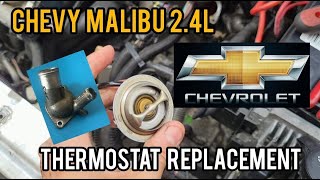
Typical fix: Replace the engine coolant thermostat and gasket. 🎬 Watch this step-by-step guide to replacing your Malibu's thermostat. It is often sold as a kit with the housing. Using the OEM ACDelco part is highly recommended, as some aftermarket thermostats are known to cause issues on this platform.
Est. part cost: $25-$60 - Faulty Engine Coolant Temperature (ECT) Sensor 🔴 High Probability → Shop Engine Coolant Temperature Sensor The sensor is a small electronic component that can fail with age and heat cycles, leading it to send incorrect or no data to the computer.
How to confirm: Use a scan tool to view live data from the ECT sensor. When the engine is cold, the ECT reading should be very close to the Ambient Air Temperature (AAT) reading. If it's significantly different, the sensor is bad. You can also test the sensor's resistance with a multimeter; at 68°F (20°C), it should be between 2000-3000 ohms. If the reading is nonsensical (e.g., -40°F), the sensor or its wiring has failed.
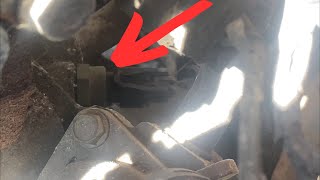
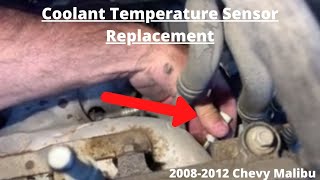
Typical fix: Replace the ECT sensor. It is located on the cylinder head, 🎬 See exactly where the ECT sensor is located and how to swap it. near the thermostat housing.
Est. part cost: $15-$40 - Low Engine Coolant Level 🟡 Medium Probability → Shop Engine Coolant / Antifreeze Leaks from the water pump, radiator, or hoses are not uncommon. If the level is low enough to expose the ECT sensor to an air pocket, it cannot read the temperature accurately and will give erratic readings.
How to confirm: Visually inspect the coolant level in the overflow reservoir when the engine is cold. If it is below the 'COLD' line, the system is low. Check for visible signs of coolant leaks (puddles under the car, sweet smell, white or colored crusty residue on hoses or engine components).
Typical fix: Top off the coolant with the correct type (DEX-COOL for this vehicle) and bleed any air from the system. Find and repair the source of any leaks, such as a failing water pump or cracked hose.
Est. part cost: $15-$25 for coolant - ECT Sensor Wiring or Connector Issue ⚪ Low Probability → Shop Engine Coolant Temperature Sensor The wiring harness and connector are exposed to significant engine heat, which can make the plastic brittle and cause wires to corrode or break over time. GM has issued TSBs for wiring harness chafing issues on this platform for other components, indicating a general vulnerability.
How to confirm: Visually inspect the ECT sensor's connector for cracks, corrosion on the pins, or loose wires. Wiggle the connector with the engine running while watching live data on a scan tool to see if the reading fluctuates wildly. Check for a 5-volt reference signal at the connector with the key on, engine off.
Typical fix: Clean corroded terminals with electrical contact cleaner. If the connector is broken or wires are damaged, replace the connector pigtail.
Est. part cost: $10-$25 for a new connector pigtail
Rare But Worth Checking
- Air Pockets in Cooling System: If the cooling system was recently serviced (e.g., radiator or hose replacement) and not properly bled, trapped air can cause erratic readings at the ECT sensor. The jiggle valve on the thermostat should be oriented in the 12 o'clock position during installation to help with bleeding.
- Faulty Powertrain Control Module (PCM): This is extremely rare. All other possibilities, especially the thermostat, sensor, and wiring, should be exhaustively ruled out before considering a PCM failure.
Diagnosis Steps
- Check for other Diagnostic Trouble Codes (DTCs) to see if other issues are present.
- Visually inspect the engine coolant level in the reservoir when the engine is cold. Ensure it is at the proper level.
- Connect an OBD-II scanner and view live data for the Engine Coolant Temperature (ECT) sensor.
- With a cold engine (left overnight), compare the ECT reading to the Intake Air Temperature (IAT) or Ambient Air Temperature (AAT) reading. They should be within a few degrees of each other. If not, the ECT sensor is likely faulty.
- Start the engine and monitor the ECT reading as it warms up. It should climb steadily and smoothly. If it jumps around erratically, suspect a wiring issue or a faulty sensor.
- Watch the temperature until the engine is fully warm. On this vehicle, it should stabilize around the thermostat's opening temperature of 180°F and then cycle slightly above it (e.g., 180-195°F). If it fails to reach 180°F and hovers at a lower temperature (e.g., 150-170°F), the thermostat is almost certainly stuck open.
- If the readings are erratic, inspect the ECT sensor connector and nearby wiring for signs of corrosion, damage, or loose connections. Wiggle the harness to see if it induces a change in the reading.
- If a wiring issue is suspected, check for a 5V reference signal at the connector and test for continuity back to the PCM.
Parts You'll Likely Need
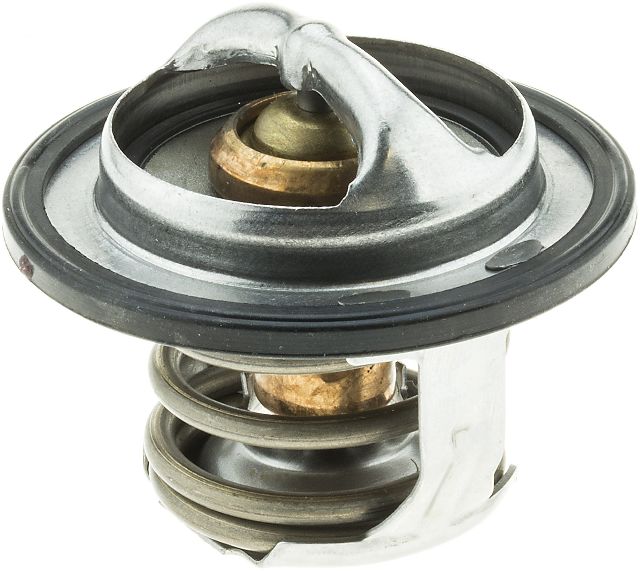
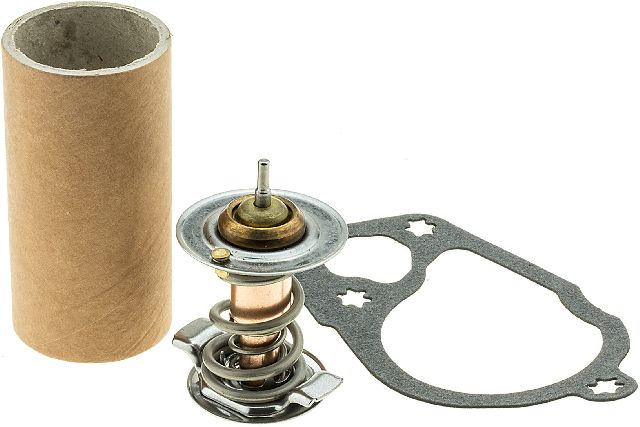
- Engine Coolant Thermostat Kit
(OEM #12622410)— This is the most common cause of P0116 on this platform, as a stuck-open thermostat prevents the engine from warming up correctly. The OEM part is rated to open at 180°F.
Trusted brands: ACDelco (OEM), Motorad, Stant
OEM price range: $40-$60
Aftermarket price range: $25-$45 - Engine Coolant Temperature (ECT) Sensor
(OEM #19236568)— The sensor itself can fail, providing incorrect readings to the computer. It is the second most likely part to fail. This part number supersedes previous versions like 19236563.
Trusted brands: ACDelco (OEM), Delphi, NTK
OEM price range: $25-$40
Aftermarket price range: $15-$30
Related Codes That Often Appear With This One
- P0128 — P0128 (Coolant Thermostat (Coolant Temperature Below Thermostat Regulating Temperature)) is very similar and often caused by the same issue: a thermostat that is stuck open, preventing the engine from reaching operating temperature. 🎬 Check out this video for a permanent fix for the P0128 code.
- P0117 — P0117 (Engine Coolant Temperature Sensor 1 Circuit Low) can occur if the sensor or wiring shorts to ground, which is one of the failure modes that can also trigger a P0116 range/performance code.
- P0118 — P0118 (Engine Coolant Temperature Sensor 1 Circuit High) can occur if the sensor circuit has an open, causing a maximum temperature reading, which can also trigger a P0116 range/performance code.
Mechanic-Grade Diagnostic Values
- ECT Sensor Resistance vs. Temperature — expected: Approximately 2000-3000 Ω at 68°F (20°C), ~241 Ω at 194°F (90°C), and ~177 Ω at 212°F (100°C).. Failure: A reading that is infinite (open circuit), near zero (short circuit), or significantly deviates from the expected resistance at a known temperature.
- ECT Sensor Circuit Voltage (Live Data) — expected: Voltage should sweep smoothly from a high value (e.g., >3.5V) on a cold engine to a low value (e.g., <1.0V) as the engine warms up, staying within a 0.5V to 4.5V window.. Failure: Voltage that is stuck high (near 5V), stuck low (near 0V), or jumps erratically indicates a sensor or wiring fault.
- ECT vs. IAT Cold Soak Comparison — expected: On an engine that has been off for 8+ hours, the Engine Coolant Temperature (ECT) and Intake Air Temperature (IAT) readings should be within 5-10°F of each other.. Failure: A difference greater than 10°F points to a faulty ECT sensor or a wiring issue.
Wiring & Ground Locations
- ECT Sensor Connector — On the cylinder head, near the thermostat housing, at the back of the engine on the passenger side.. This 2-pin connector is the direct interface for the sensor. The pins are for the 5V reference from the ECM and the signal return. The plastic can become brittle from heat, leading to a poor connection, corrosion, or broken locking tab, causing erratic signals.
- G107 — On the engine block, specific to the 2.4L engine.. This is a primary ground point for the Engine Control Module (ECM). While the ECT sensor uses a low-reference circuit within the ECM rather than a direct chassis ground, a poor ECM ground at G107 can cause floating voltages and introduce noise, leading to incorrect readings from multiple sensors, including the ECT.
Real Owner Repair Stories
- Common narrative synthesized from multiple forum threads on chevymalibuforum.com and chevyhhr.net (2009 Chevrolet Malibu 2.4L) — Check Engine Light with code P0116. Temperature gauge on dash stays on cold or takes a very long time to move. Heater blows lukewarm air.
❌ Tried (didn't work) Replaced the Engine Coolant Temperature (ECT) sensor because the code specifically mentions the sensor. The code was cleared but returned within a day or two of driving.
✅ What actually fixed it Replacing the engine thermostat (ACDelco 12622410). The old thermostat was stuck partially open, preventing the engine from reaching its 180°F operating temperature within the time limit expected by the PCM.
OEM Part Supersession History
19236563→19236568— Standard part revision and consolidation by GM.
Heads up: The parts are interchangeable; 19236568 is the correct current replacement.12615097, 21018811, 55350941, 90537453→12622410— Part consolidation and design updates across multiple GM platforms using the Ecotec engine family.
Heads up: The parts are interchangeable; 12622410 is the correct current OEM thermostat assembly for this application.
Model Year Variations Within This Range
- 2009-2012: The 2.4L Ecotec engine was available in two main variants for this vehicle: the LE5 and the LE9. The LE9, introduced for the 2009 model year, is the E85 Flex Fuel-capable version of the LE5. While the LE9 has specific components like different valve seats to handle ethanol's corrosive properties, the causes, diagnostic procedures, and replacement parts (ECT sensor, thermostat) for a P0116 code are identical between the two engine types.
Diagnostic Flowchart
Other Known Issues on This Vehicle
Issues unrelated to this code that are worth knowing about as an owner of this generation:
- Excessive Oil Consumption 🔴 High — Very common, especially on 2010-2012 models. Can start as early as 60,000 miles. Caused by a faulty piston ring design. (Ref: GM acknowledged the issue and it was the subject of class-action lawsuits. Special Coverage Adjustments like #14882 were issued for platform mates (e.g., Equinox) with the same engine.)
- Premature Timing Chain Failure 🔴 High — Common after 100,000 miles. Symptoms include a rattling noise on startup. Often exacerbated by the oil consumption issue starving the hydraulic tensioner. (Ref: No specific recall, but a widely documented failure. Often presents with codes P0016 or P0017.)
- Cracked Exhaust Manifold / Flex Pipe 🟠 Medium — The cast iron exhaust manifold is prone to cracking, and the flex pipe in the exhaust system often rusts out, causing a loud exhaust leak.
- Failed Camshaft Position Actuator Solenoids (VVT) 🟠 Medium — Very common failure item, often caused by dirty or low oil. Leads to rough idle, stalling, and codes like P0010, P0011, P0013, P0014. Easy to replace.
- 4T45-E / 6T40 Transmission Problems 🟠 Medium — The 4-speed (early models) and 6-speed (later models) automatic transmissions can have issues. The 6-speed can have a broken 3-5-R wave plate causing loss of those gears. The 4-speed had a TSB (#08-07-30-034) for a no-reverse condition. (Ref: TSB #08-07-30-034)
- Electric Power Steering (EPS) Failure 🔴 High — Common on 2008-2009 models, leading to a sudden loss of power assist. Can be caused by a faulty torque sensor within the steering column. (Ref: A recall was issued for some 2008-2009 models to address the torque sensor.)
Used vs. New Parts: Buying Guide for This Vehicle
When a used part is the smart pick: For this specific repair, using used parts is not recommended. The primary failure components (thermostat, ECT sensor) are low-cost wear items. The risk of getting a used part that is near the end of its service life outweighs the minimal cost savings.
What to inspect on the donor part:
- Not applicable as used parts are not advised for this repair.
OEM-only on this vehicle (don't cheap out):
- Engine Coolant Thermostat: While not strictly 'OEM-only', it is highly recommended to use the OEM ACDelco thermostat (PN 12622410). Forum and technician consensus indicates that many aftermarket thermostats for this platform have incorrect temperature ratings or fail prematurely, causing the P0116 or P0128 code to return.
Aftermarket brands forum-validated for this vehicle:
- ECT Sensor: Delphi, NTK (These are often the original equipment manufacturers for GM and provide equivalent quality to the ACDelco branded part).
Brands owners have reported issues with on this vehicle:
- Generic, no-name, or 'white-box' thermostats and sensors. Sticking to OEM or top-tier aftermarket brands is crucial for a lasting repair.
Real Owner Stories
Aggregated from forums and TSBs cited above. Mileages and costs reflect what owners reported in those sources.
2007 Chevrolet HHR 2.4L LE5
Symptoms: Engine limited power and check engine light on.
What fixed it: The issue was related to a low coolant level causing erratic sensor readings.
Source hint: chevyhhr.net - '07 HHR Engine limited power check engine light on'
Related OBD-II Codes
Frequently Asked Questions
Why are my cooling fans running continuously even after I turn off my 2.4L Malibu?
Is there a specific thermostat brand recommended for the 2008-2012 Malibu 2.4L?
My temperature gauge is stuck on cold and my A/C stopped working. Are these related?
Could a low coolant level cause the P0116 code on my Ecotec engine?
Does the 2.4L Ecotec have a known issue with the ECT sensor wiring?
Helpful Videos
We Have This Part in Stock


The information in this article is provided for general reference and educational purposes only. Vehicle specifications, procedures, and part compatibility can vary by production date, trim level, and region. Always consult your vehicle's factory service manual and verify part numbers before purchasing or performing repairs. Safety-critical components such as airbags, seat belts, and braking systems should be installed by a qualified professional.
- Chevrolet Malibu:
- 🧭 Diagnostic Flowchart
- 🎬 Helpful Videos
- 🛍️ Shop This Part
- What's Unique About the 2008-2012 Chevrolet Malibu
- Symptoms You May Notice
- Most Likely Causes
- Rare But Worth Checking
- Diagnosis Steps
- Parts You'll Likely Need
- Related Codes That Often Appear With This One
- Mechanic-Grade Diagnostic Values
- Wiring & Ground Locations
- Real Owner Repair Stories
- OEM Part Supersession History
- Model Year Variations Within This Range
- Other Known Issues on This Vehicle
- Used vs. New Parts: Buying Guide for This Vehicle
- Real Owner Stories
- 2007 Chevrolet HHR 2.4L LE5
- Related OBD-II Codes
- Frequently Asked Questions
- 🎟️ Get 5% Off