

P0116 on 2013-2015 Dodge Dart: Engine Coolant Sensor Performance Fixes
P0116 on a Dodge Dart most often means a faulty thermostat or a bad engine coolant temperature (ECT) sensor. However, a critical first step is to check for a powertrain software update, as specified in manufacturer bulletins. Replacing the thermostat assembly, which often includes a new sensor, is the most common physical repair.
- For a 2013-2015 Dodge Dart with code P0116, first check if your vehicle needs a PCM software update as per TSB #18-022-17 REV. A, especially if you have the 2.4L engine.
- The most common mechanical faults are a stuck-open thermostat or a bad Engine Coolant Temperature (ECT) sensor.
- Replacing the entire thermostat housing assembly is often the best repair, as it includes the thermostat, housing, and a new sensor, preventing future problems.
- A simple diagnostic check is to compare the coolant temp to the air intake temp on a cold engine using a scan tool; they should be nearly identical.
What's Unique About the 2013-2015 Dodge DART
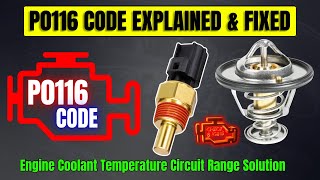
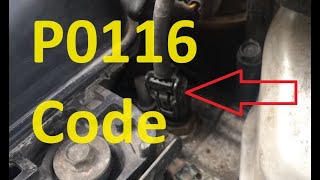
For the 2013-2015 Dodge Dart, particularly those with the 2.4L engine, a P0116 code doesn't always point to a bad part. Chrysler issued Technical Service Bulletins (TSBs) indicating that the PCM's software logic could be too sensitive, causing it to set this code erroneously. An available software update can often resolve the issue without replacing any parts. This makes checking for a PCM update a crucial and unique first step for Dart owners facing this code. 🎬 Watch: Step-by-step diagnostic and solution for the P0116 code. [Bulletin #18-022-17 REV. A, Bulletin #18-023-16]
Diagnostic Flowchart
Tap your situation to follow the diagnostic path that matches what you're seeing on this vehicle.
Symptoms You May Notice
- Check Engine Light is on
- Temperature gauge dropping to its lowest possible reading (e.g., -40°F) while cooling fans run constantly at high speed.
- Erratic or non-functional temperature gauge
- Engine cooling fans running constantly or not turning on
- Difficulty starting the engine, especially when cold
- Reduced fuel economy
- Rough running or hesitation, particularly before the engine is fully warm
- Replacing only the ECT sensor when the thermostat is the actual cause.
- Replacing cooling system parts when the issue is actually solved by a PCM software update.
- Assuming the thermostat is bad when low coolant/air pockets are the real issue.
Most Likely Causes
- Faulty Engine Coolant Thermostat 🔴 High Probability → Shop Integrated Thermostat Housing Assembly The thermostat can fail by sticking open, which prevents the engine from reaching its proper operating temperature. This slow warm-up time is detected by the PCM as a performance fault. The original plastic thermostat housing also becomes brittle with heat cycles and can crack, causing leaks.
How to confirm: Monitor the live coolant temperature data on a scan tool. If the engine takes an excessively long time to warm up (e.g., doesn't reach ~190°F after 10-15 minutes of driving), the thermostat is likely stuck open. This often sets code P0128 alongside P0116.
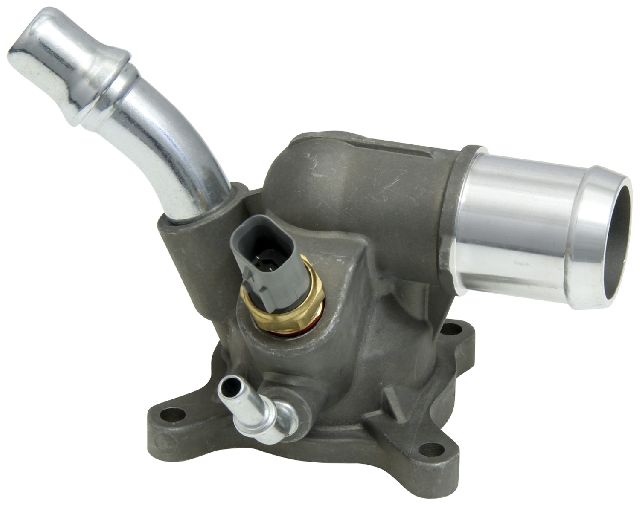
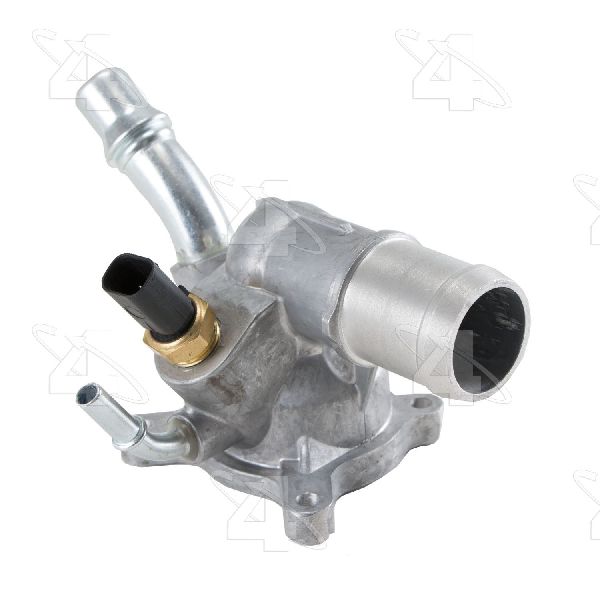
Typical fix: Replace the thermostat and housing assembly. On the Dart, the thermostat, housing, and sometimes the ECT sensor are sold as a single unit. It is highly recommended to replace the entire assembly to prevent future leaks from the old housing.
Est. part cost: $45-$150 - Faulty Engine Coolant Temperature (ECT) Sensor 🔴 High Probability → Shop Engine Coolant Temperature Sensor The sensor itself can fail, sending erratic, incorrect, or no signal to the PCM. A common failure symptom is the temperature gauge reading -40° and the cooling fans running continuously as a failsafe.
How to confirm: With a cold engine, use a scan tool to compare the ECT reading with the Intake Air Temperature (IAT) reading. They should be within a few degrees of each other. If they differ significantly, or if the ECT reads an impossible value like -40°F, the sensor is bad. You can also test the sensor's resistance; it should be around 2,000-3,000 ohms at 68°F (20°C).
Typical fix: Replace the ECT sensor. On many Dart models, it's cost-effective to replace the entire thermostat housing assembly which includes a new sensor.
Est. part cost: $20-$70 for the sensor alone - Powertrain Control Module (PCM) Software Update Needed 🟡 Medium Probability Chrysler released TSBs #18-022-17 REV. A and #18-023-16 for the 2.4L engine (sales codes ED6, ED8), which address incorrect setting of the P0116 code. The fix is a software reflash that adjusts the sensitivity of the monitor. [Bulletin #18-022-17 REV. A, Bulletin #18-023-16]
How to confirm: A Dodge dealership or a well-equipped independent shop can check your vehicle's VIN against the TSBs to see if the update is available and has not already been performed.
Typical fix: Reprogram the PCM with the latest available software. This must be done by a dealer or qualified shop with a wiTECH tool.
Est. part cost: $0-$200 (depending on dealer labor rates) - Low Engine Coolant Level ⚪ Low Probability → Shop Engine Coolant / Antifreeze If the coolant level is low due to a leak (potentially from a cracked thermostat housing), air pockets can form in the system. When an air pocket passes over the ECT sensor, it can cause a sudden, illogical temperature reading, triggering P0116.
How to confirm: Visually inspect the coolant reservoir and radiator (when the engine is cold) to ensure the coolant is at the proper level.
Typical fix: Top off the cooling system with the correct type of coolant (Mopar OAT meeting Chrysler specification MS-12106) and inspect for leaks.
Est. part cost: $20-$30 for a gallon of coolant - Wiring or Connector Issue ⚪ Low Probability
How to confirm: Visually inspect the ECT sensor's wiring harness and connector for any signs of damage, corrosion, or loose connections. Pay attention to the red locking tab on the connector. A multimeter can be used to check for continuity from the PCM to the sensor connector; the reading should be near 0 Ω.
Typical fix: Repair the damaged wiring or clean/replace the connector.
Est. part cost: $5-$50
Diagnosis Steps
- Check for any Technical Service Bulletins (TSBs) related to your VIN and P0116. A PCM update may be the required fix, especially on 2.4L models. [Bulletin #18-022-17 REV. A, Bulletin #18-023-16]
- Check the engine coolant level in the reservoir and radiator (only when the engine is completely cold). Ensure the correct OAT coolant meeting spec MS-12106 is used.
- Using an OBD-II scanner, check if other codes are present. Codes like P0128 strongly suggest a thermostat issue.
- With the engine cold, compare the live data from the Engine Coolant Temperature (ECT) sensor and the Intake Air Temperature (IAT) sensor. They should be within a few degrees of each other. An ECT reading of -40°F immediately points to a sensor or circuit fault.
- Start the engine and monitor the ECT reading as it warms up. The temperature should rise smoothly and steadily. If it jumps around erratically, the sensor or its wiring is likely faulty.
- If the temperature rises very slowly and struggles to reach normal operating temperature (around 195°F), the thermostat is most likely stuck open.
- Visually inspect the ECT sensor's connector and wiring for any signs of corrosion, damage, or loose pins. Use a multimeter to check for proper voltage and ground at the connector, and check for continuity in the harness back to the PCM.
Parts You'll Likely Need
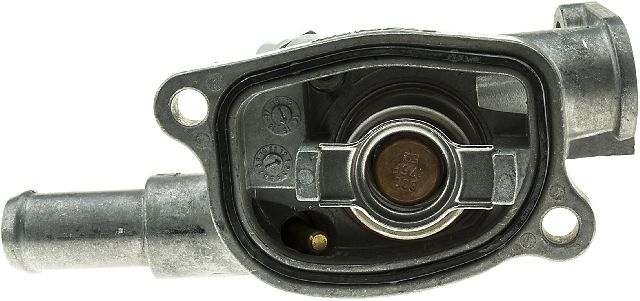
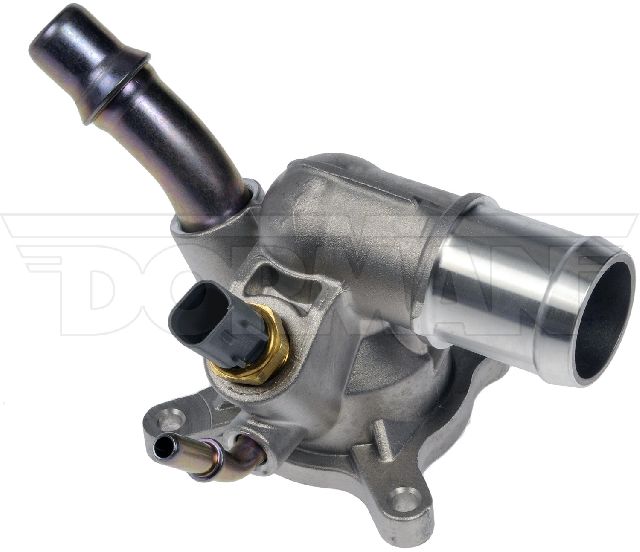
- Engine Coolant Thermostat Housing Assembly — This is the most common fix, as it addresses a failing thermostat and often includes a new ECT sensor and housing, preventing future leaks from the original brittle plastic housing.
Trusted brands: Mopar, Dorman, Gates
OEM price range: $70-$150
Aftermarket price range: $45-$100 - Engine Coolant Temperature (ECT) Sensor — If the thermostat is confirmed to be working correctly, the sensor itself may be the sole cause of the erratic readings. However, it is often included in the thermostat assembly.
Trusted brands: Mopar, Bosch, NTK
OEM price range: $40-$70
Aftermarket price range: $20-$50 - OAT Engine Coolant (MS-12106) — The system must be refilled with the correct coolant type after replacing the thermostat or sensor to prevent corrosion and system damage.
Trusted brands: Mopar, Valvoline Zerex, Peak
OEM price range: $25-$40
Aftermarket price range: $20-$30
Related Codes That Often Appear With This One
- P0128 — Thermostat Rationality. This code is very similar to P0116 and is often caused by a thermostat that is stuck open, preventing the engine from warming up correctly. It is frequently seen with P0116.
- P1D73 — AGS Performance. This code, along with U0140 and P0441, is mentioned in the same TSB as P0116, indicating they can be resolved by the same PCM software update. [Bulletin #18-022-17 REV. A]
- U0140 — Lost Communication With Body Control Module. This code is also mentioned in the TSB for the PCM update. [Bulletin #18-022-17 REV. A]
- P0441 — Evap Purge System Performance. This code is also mentioned in the TSB for the PCM update. [Bulletin #18-022-17 REV. A]
Technical Service Bulletins (TSBs) & Recalls
- 18-022-17 REV. A: Addresses P0116 and other codes via a PCM software update for 2013-2015 Darts with the 2.4L engine (Sales Codes ED6 or ED8).
- 18-023-16: Also mentions a PCM software update to address P0116 among other codes for 2013-2015 Darts and 2015 Chrysler 200s with the 2.4L engine.
Platform-Specific Known Issues
- A Powertrain Control Module (PCM) software update is available under TSB #18-022-17 REV. A and #18-023-16 to correct the logic that triggers code P0116, particularly on 2.4L models with sales codes ED6 or ED8. This should be investigated before replacing parts. [Bulletin #18-022-17 REV. A, Bulletin #18-023-16]
- The plastic thermostat housing is a known weak point. It can become brittle from heat cycles and crack, leading to coolant leaks which can cause P0116 due to air pockets in the system.
Mechanic-Grade Diagnostic Values
- ECT Sensor Resistance (Cold) — expected: 2,000 - 3,000 Ω at 20°C (68°F). Failure: A reading significantly outside this range, or an open/infinite resistance, indicates a faulty sensor.
- ECT Sensor Resistance (Hot) — expected: 200 - 300 Ω at 90°C (194°F). Failure: Resistance does not drop into this range as the engine warms up.
- ECT Sensor Signal Voltage (Key On, Engine Off, Cold) — expected: 2.0V to 3.0V. Failure: Voltage significantly higher (approaching 5V) or lower suggests a circuit or sensor fault.
- ECT Sensor Signal Voltage (Engine at Operating Temp) — expected: ~0.5V. Failure: Voltage does not drop to this level, or fluctuates erratically.
- ECT Sensor Reference Voltage — expected: 5V DC from the PCM on one wire of the connector.. Failure: No voltage or fluctuating voltage indicates a PCM or wiring issue.
- Thermostat Housing Bolt Torque — expected: 15 lb-ft. Failure: N/A
- ECT Sensor Installation Torque — expected: 15 ft-lb. Failure: N/A
Wiring & Ground Locations
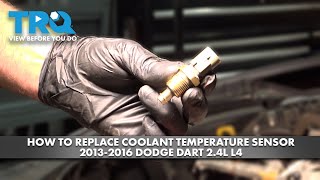
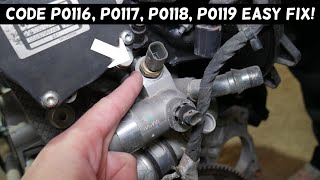
- ECT Sensor (2.4L Engine) — On the driver's side of the engine, located on top of the thermostat housing, just above where the main radiator hose connects. The connector is often red.. This is the primary sensor for this code. Its location makes it susceptible to heat and vibration, and access can be tight, sometimes requiring removal of the battery tray for replacement.
- ECT Sensor (2.0L Engine) — Similar to the 2.4L, it is located on the thermostat housing. Following the upper radiator hose to the engine block will lead to the housing where the sensor is installed.. Correctly locating the sensor is the first step in diagnosis. On the 2.0L, it is also in a high-heat area near the cylinder head.
- ECT Sensor Connector — A 2-pin plug connecting directly to the ECT sensor.. The connector and its wiring are common failure points. One pin is the 5V reference from the PCM, and the other is the signal return/ground. A poor connection, corrosion, or damaged wire here will directly cause a P0116 code.
Real Owner Repair Stories
- YouTube user comment section (2014 Dodge Dart) — Check engine light with code P0116.
❌ Tried (didn't work) Replacing only the ECT sensor.
✅ What actually fixed it The problem was finally resolved by replacing the entire thermostat housing assembly. The user noted that even though the old thermostat didn't appear to be stuck, replacing the complete unit fixed the issue, suggesting an intermittent failure or a problem with the housing itself.
OEM Part Supersession History
5047861AA, 5047861AB, 5047861AC→5047861AD— Part revision and improvement by the manufacturer.
Heads up: Part number 5047861AC is specified for 2013-2016 Dodge Dart with the 2.0L and 2.4L engines. The latest revision is 5047861AD. Ensure the part matches the specific engine, as other similar housings exist for different Chrysler/Dodge models.
Model Year Variations Within This Range
- 2013-2016: The location of the ECT sensor varies slightly between the 1.4L, 2.0L, and 2.4L engines, though all are located on or near the thermostat housing. The TSB for the software update specifically applies to the 2.4L engine with sales codes ED6 or ED8. [2, Bulletin #18-022-17 REV. A]
Helpful Videos

We Have This Part in Stock


The information in this article is provided for general reference and educational purposes only. Vehicle specifications, procedures, and part compatibility can vary by production date, trim level, and region. Always consult your vehicle's factory service manual and verify part numbers before purchasing or performing repairs. Safety-critical components such as airbags, seat belts, and braking systems should be installed by a qualified professional.
- Dodge DART:
- 🧭 Diagnostic Flowchart
- 🎬 Helpful Videos
- 🛍️ Shop This Part
- What's Unique About the 2013-2015 Dodge DART
- Symptoms You May Notice
- Most Likely Causes
- Diagnosis Steps
- Parts You'll Likely Need
- Related Codes That Often Appear With This One
- Technical Service Bulletins (TSBs) & Recalls
- Platform-Specific Known Issues
- Mechanic-Grade Diagnostic Values
- Wiring & Ground Locations
- Real Owner Repair Stories
- OEM Part Supersession History
- Model Year Variations Within This Range
- 🎟️ Get 5% Off