

P0116 on 2011-2019 Ford Explorer 3.5L: Engine Coolant Temperature Sensor Issues and Fixes
This code usually means the Engine Coolant Temperature (ECT) sensor is failing or the thermostat is stuck open. The most common fix is replacing the thermostat. While the ECT sensor can also be the cause, it is located under the intake manifold on the 3.5L V6, making its replacement a much more labor-intensive and expensive job.
- P0116 means the engine temperature reading is not what the car's computer expects.
- The most common causes are a bad Engine Coolant Temperature (ECT) sensor or a stuck-open thermostat.
- Start your diagnosis by checking the live coolant temperature data with an OBD-II scanner.
- This is a DIY-friendly repair with a difficulty of 2 out of 5.
- Always ensure the coolant is at the proper level and use the Ford-specified type when refilling.
What's Unique About the 2011-2019 Ford Explorer
On the 3.5L Cyclone V6, the most critical vehicle-specific context for P0116 is the location of the Engine Coolant Temperature (ECT) sensor. It is buried deep in the engine valley, underneath the upper and lower intake manifolds. This makes what is a simple, inexpensive repair on many cars a significant, multi-hour job on this platform. Therefore, diagnosing a stuck-open thermostat first is crucial to avoid unnecessary labor. Additionally, TSBs for platform mates with the same engine point to the wiring harness connector C1064 as a potential chafe point that can cause ECT-related codes.
Symptoms You May Notice
- Check Engine Light is on
- Temperature gauge behaving erratically (e.g., dropping to cold during operation, or not moving at all)
- Engine takes a very long time to warm up to operating temperature
- Heater is not blowing hot air, or is only lukewarm
- Reduced fuel economy
- Cooling fans running constantly or not at all
- Engine running rough or hesitating
- In some cases, no noticeable symptoms other than the Check Engine Light
- Engine Coolant Over Temperature warning (as noted in manufacturer service bulletins)
- Replacing the difficult-to-access ECT sensor when the much easier and more common failure is the thermostat.
- Assuming the ECT sensor is an easy fix based on experience with other vehicles.
- Replacing the radiator or water pump when the issue is electronic (sensor/wiring) or a simple thermostat failure.
Most Likely Causes
- Stuck-Open Thermostat 🔴 High Probability → Shop Integrated Thermostat Housing Assembly Thermostats are mechanical parts that fail over time, often sticking open. This is the most common and most hoped-for cause of P0116 on this engine due to the high cost of replacing the alternative, the ECT sensor.
How to confirm: Monitor the ECT data on a scanner while driving from a cold start. If the engine takes an excessively long time to warm up (e.g., doesn't reach ~195°F within 10-15 minutes of driving), the thermostat is likely stuck open. You can also feel the upper radiator hose; it should remain cool until the engine is warm and then get hot suddenly. If it warms up gradually from the start, the thermostat is open.
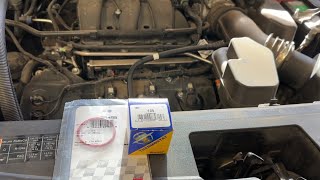
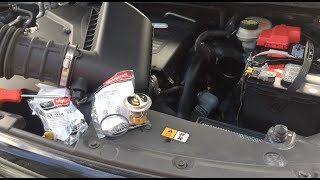
Typical fix: Replace the thermostat and its housing assembly. 🎬 Watch: This DIY walkthrough shows how to replace the thermostat housing. It's recommended to drain and refill the coolant at the same time, upgrading to the newer Motorcraft Yellow coolant.
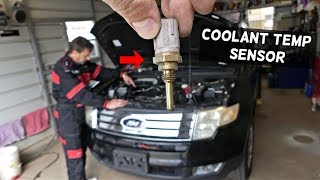
Est. part cost: $40-$90 for an OEM Motorcraft housing assembly - Faulty Engine Coolant Temperature (ECT) Sensor 🟡 Medium Probability → Shop Engine Coolant Temperature Sensor The sensor itself is a standard wear item. However, its location on this engine is what makes it a notable issue. It is located under the intake manifold, a high-heat area 🎬 See this video for the exact location of the ECT sensor. prone to causing electronic failure over time. Manufacturer Bulletin #SSM 49407 notes that P0116 can be caused by the ECT sensor itself or its associated wiring.
How to confirm: Use an OBD-II scanner to monitor the live ECT data stream. When the engine is cold, the reading should be close to the ambient air temperature. If the sensor gives an illogical reading (e.g., -40°F or 250°F on a cold engine) or fluctuates wildly while the thermostat test passes, the sensor is bad. Confirming this requires ruling out the thermostat first due to the extreme difficulty of accessing the sensor for direct testing.
Typical fix: Replace the Engine Coolant Temperature sensor. This is a 3-5 hour job that requires removing the upper and lower intake manifolds.
Est. part cost: $20-$50 - Low Engine Coolant Level or Air in System ⚪ Low Probability → Shop Engine Coolant / Antifreeze Leaks can develop in any cooling system. On this platform, a leak from the internal water pump's weep hole (near the A/C compressor) is a critical warning sign that must be investigated immediately.
How to confirm: Visually inspect the coolant reservoir to ensure the level is between the MIN and MAX marks when the engine is cold. If low, top off and check for leaks, paying special attention to the area around the passenger side of the engine for signs of a water pump leak.
Typical fix: Top off the coolant with Ford-specified Motorcraft Yellow Coolant (VC-13-G) and inspect for leaks. If the system was recently serviced, it may need to be 'burped' to remove trapped air pockets.
Est. part cost: $25-$35 for coolant - Damaged Wiring or Connector (C1064) ⚪ Low Probability Engine bay heat and vibrations can damage wiring. TSBs on platform mates (e.g., Ford Edge) specifically mention that the harness near connector C1064, which involves the ECT circuit, can get damaged. Bulletin #SSM 47791 indicates that P0116 may be due to an ECT sensor connector that is not fully seated.
How to confirm: Visually inspect the wiring harness and connector for the ECT sensor. This is very difficult as the sensor and connector are under the intake manifold. Wiggling the harness while monitoring live data is not feasible without disassembly. This is typically diagnosed after a new sensor fails to fix the issue.
Typical fix: Repair the damaged section of wire or replace the connector pigtail. This requires the same labor-intensive disassembly as replacing the sensor itself.
Est. part cost: $15-$30 for a pigtail connector
Rare But Worth Checking
- Faulty Powertrain Control Module (PCM): This is extremely rare. All other possibilities, especially the thermostat, sensor, and wiring, should be exhaustively ruled out before considering the PCM as the cause.
Diagnosis Steps
- Check for other DTCs. The presence of P0128 strongly suggests a thermostat issue.
- With a cold engine, check the engine coolant level in the expansion tank. Ensure it is at the 'COLD FILL' line.
- Connect an OBD-II scanner and view live data for the Engine Coolant Temperature (ECT). The cold reading should be very close to the ambient air temperature.
- Start the engine and monitor the ECT reading as it warms up. The temperature should rise steadily.
- Thermostat Test: If the temperature rises very slowly and struggles to reach normal operating temperature (~195-210°F) after 10-15 minutes of driving, the thermostat is almost certainly stuck open. Stop here and replace the thermostat housing assembly.
- Sensor Test: If the thermostat test passes but the temperature jumps around erratically or drops suddenly during operation, the ECT sensor is the likely culprit.
- If the sensor reading is illogical from the start (e.g., -40°F), this points directly to a sensor or wiring fault. Due to the labor involved, it is still wise to ensure the thermostat is not also faulty before proceeding with an intake manifold removal.
- Based on the findings, replace the most likely component. Always start with the thermostat unless the data points unequivocally to a bad sensor from a cold start.
Parts You'll Likely Need
- Thermostat Housing Assembly
(OEM #Motorcraft RT-1233 (BR3Z-8575-A))— A thermostat stuck open is the most common cause of P0116. It is replaced as a complete housing assembly on this engine.
Trusted brands: Motorcraft, Stant, Gates
OEM price range: $40-$90
Aftermarket price range: $25-$50 - Engine Coolant Temperature (ECT) Sensor
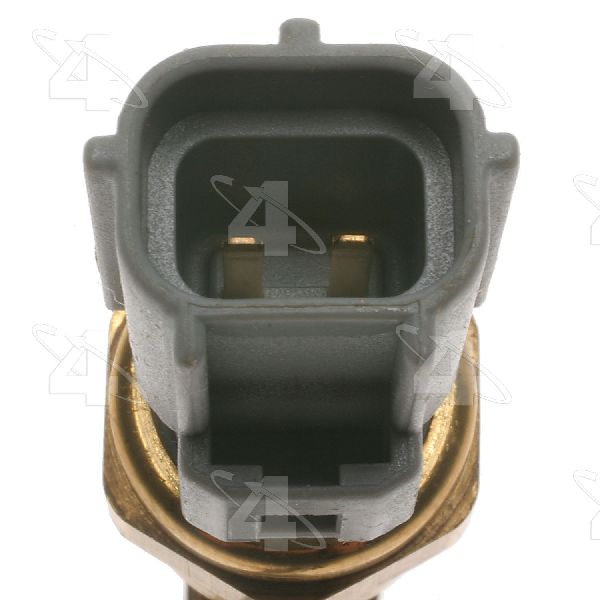
(OEM #Motorcraft DY-1145 (9U2Z-12A648-A))— This sensor is the secondary cause for P0116. Its replacement is very labor-intensive as it is located under the intake manifold.
Trusted brands: Motorcraft, Bosch, NTK
OEM price range: $30-$50
Aftermarket price range: $15-$35 - Engine Coolant
(OEM #Motorcraft VC-13-G (Yellow))— Coolant will be lost during the repair and must be replaced. Ford has superseded the original Orange coolant with Yellow P-OAT coolant, which is recommended for this engine. Do not mix with other types.
Trusted brands: Motorcraft, Peak, Valvoline
OEM price range: $25-$35 per gallon
Aftermarket price range: $20-$30 per gallon - Intake Manifold Gaskets — Required if replacing the ECT sensor, as the upper and lower intake manifolds must be removed. 🎬 Watch: A mechanic's guide to removing the manifolds for sensor access. They should not be reused.
Trusted brands: Fel-Pro, Mahle, Motorcraft
OEM price range: $40-$60 for a set
Aftermarket price range: $20-$40 for a set
Related Codes That Often Appear With This One
- P0128 — Coolant Thermostat (Coolant Temperature Below Thermostat Regulating Temperature). This code is very similar to P0116 and strongly points to a stuck-open thermostat. It is often the first code to appear.
- P0117 — ECT Sensor 1 Circuit Low Input. This indicates a short in the circuit, which could be related to the same wiring (at connector C1064) or sensor fault causing the P0116.
- P0118 — ECT Sensor 1 Circuit High Input. This indicates an open circuit, often caused by a disconnected or failed sensor, which can also trigger a P0116.
- P1299 — Cylinder Head Over Temperature Protection Active. This code often accompanies P0116 during overheating events, as noted in NHTSA ODI #11526316.
Technical Service Bulletins (TSBs) & Recalls
- SSM 47791 - Mentions P0116, P0117, P0118, P0119 in relation to wiring issues on some Ford vehicles, specifically noting that the ECT sensor connector may not be fully seated.
- SSM 49407 - States that the engine may exhibit an illuminated MIL and/or Engine Coolant Over Temperature warning with DTC P0116, which may be due to the ECT sensor or its wiring.
- SSM 48991 - A cross-model bulletin for Ford engines exhibiting P0116 and related codes, attributing the fault to the ECT sensor or knock sensor circuits.
Mechanic-Grade Diagnostic Values
- ECT Sensor Resistance vs. Temperature — expected: Approximately 37,000 Ω at 68°F (20°C), 9,500 Ω at 122°F (50°C), and 2,000-3,000 Ω at 176°F (80°C). Resistance is inversely proportional to temperature.. Failure: A reading near zero ohms suggests a short (P0117), while an open circuit/infinite resistance suggests an internal sensor failure (P0118).
- ECT Sensor Signal Voltage (Key On, Engine Off) — expected: The reference voltage (VREF) from the PCM should be ~5V. With the sensor connected on a cold engine (e.g., 68°F), the signal wire should read around 3.0V-3.5V. This voltage will decrease as the engine warms up.. Failure: A reading near 5.0V indicates an open circuit or disconnected sensor (P0118). A reading below ~0.2V indicates a short to ground (P0117).
- Scan Tool Live Data: ECT vs. IAT on Cold Soak — expected: After the vehicle has sat overnight (8+ hours), the Engine Coolant Temperature (ECT) and Intake Air Temperature (IAT) PIDs on a scan tool should read within 5-10°F of each other.. Failure: A significant difference between the ECT and IAT readings on a cold engine points to a faulty ECT sensor before the engine is even started.
Scan Tool Commands That Help
- Ford IDS (or equivalent high-end scanner): Parameter Reset (Keep Alive Memory Reset) — After replacing a faulty ECT sensor or repairing its wiring, this function should be used to clear the PCM's learned adaptive values. This forces the computer to re-learn sensor inputs immediately and can prevent the code from returning due to old, stored irrational data.
Wiring & Ground Locations
- ECT Sensor Connector (C1064) — In the engine valley, between the cylinder banks, underneath the upper and lower intake manifolds.. This is the connector for the ECT sensor itself. Its inaccessible location makes testing for damage or corrosion extremely difficult and labor-intensive. TSBs for platform-mates point to this connector and its harness as a potential chafe/damage point.
- G104 / G105 — G104 is typically on the right side of the engine compartment, near the strut tower. G105 is on the top right side of the engine itself.. These are primary engine and PCM ground points. A loose or corroded ground at these locations can cause electrical noise and voltage drops across all engine sensors, including the ECT, leading to erratic readings and codes like P0116.
- ECT Sensor Pinout (Typical 2-wire) — At the ECT sensor connector (C1064).. Pin 1 is typically the Signal wire (goes to PCM) and Pin 2 is the Signal Return/Ground (goes to PCM). Knowing the pinout allows for testing of the 5V reference signal from the PCM and checking for continuity or shorts in the harness once the intake is removed.
Real Owner Repair Stories
- Explorerforum.com and various mechanic forums (Multiple 2011-2019 Ford Explorers and platform-mates (Edge, Taurus) with 3.5L V6) — P0116 code returns immediately or intermittently after replacing both the thermostat and the ECT sensor.
❌ Tried (didn't work) Replacing the thermostat, Replacing the ECT sensor (the difficult job)
✅ What actually fixed it In several documented cases, the root cause was a damaged wire in the harness leading to the ECT sensor connector (C1064). The wires become brittle from heat cycles in the engine valley and can break internally or chafe against the engine block, causing an intermittent open or short that mimics a sensor failure. The fix was to repair the broken wire or replace the pigtail connector, which required the same intake manifold removal as the sensor replacement. - NHTSA ODI #11526316 — An owner reported that their vehicle displayed multiple codes including P0116 and P1299, which were understood to be related to temperature and overheating issues.
Diagnostic Flowchart
Other Known Issues on This Vehicle
Issues unrelated to this code that are worth knowing about as an owner of this generation:
- Internal Water Pump Failure 🔴 High → Shop Engine Water Pump — Commonly occurs between 80,000 and 120,000 miles. Failure can be catastrophic, leaking coolant into the engine oil and destroying the engine.
- AWD Power Transfer Unit (PTU) Failure 🔴 High — Common failure due to fluid overheating from proximity to exhaust. 'Lifetime' fluid breaks down, leading to bearing failure. Recommended fluid change every 30,000 miles. (Ref: TSB 19-2017 addresses fluid leaks from the PTU seal.)
- Exhaust Odor / CO in Cabin 🟠 Medium — Widespread reports of exhaust smell entering the cabin, particularly under hard acceleration or with HVAC on recirculate. (Ref: TSB 12-12-4 and TSB 14-0130 were issued to address the problem by sealing body seams and reprogramming HVAC logic.)
- Throttle Body Malfunction 🟠 Medium — More common on earlier 2011-2015 models, causing sudden entry into 'limp mode' with loss of power. (Ref: Ford had extended warranty programs for this part on some models.)
Used vs. New Parts: Buying Guide for This Vehicle
When a used part is the smart pick: For this specific repair, using used parts is generally not recommended. The cost of new parts (thermostat, sensor) is low, and the labor is high, especially for the sensor. It is not worth risking a premature failure with a used part.
Donor-vehicle mileage cap: roughly under 80000 miles for the part to have meaningful remaining life.
What to inspect on the donor part:
- For a thermostat housing, ensure there are no cracks or signs of warping.
- Verify the donor vehicle was not in a front-end collision that could have stressed the cooling system components.
OEM-only on this vehicle (don't cheap out):
- Engine Coolant Temperature (ECT) Sensor: Given the extreme labor involved in replacement, using a new OEM Motorcraft sensor is the only way to ensure reliability and avoid a repeat repair.
- Thermostat Assembly: While some aftermarket brands are acceptable, the cost difference is minimal, and an OEM Motorcraft part guarantees correct fit and temperature rating.
Aftermarket brands forum-validated for this vehicle:
- Gates (for thermostat assemblies)
- NTK (for sensors, if OEM is unavailable)
Brands owners have reported issues with on this vehicle:
- No-name, white-box brands from online marketplaces. The quality control is often poor, and failure rates are high for critical sensors and cooling components.
Real Owner Stories
Aggregated from forums and TSBs cited above. Mileages and costs reflect what owners reported in those sources.
2011-2019 Ford Explorer 3.5L V6
Symptoms: The engine coolant thermostat was stuck open, causing poor gas mileage and a lack of cabin heat.
What fixed it: Replacement of the coolant thermostat.
Source hint: Ford Truck Enthusiasts: coolant thermostat stuck open. have to repair it?
2011-2019 Ford Explorer 3.5L V6
Symptoms: Internal water pump failure leading to critical cooling system issues.
What fixed it: Water pump replacement.
Cost: $1,500-$3,500
Source hint: Reddit: Cautionary tale re: water pump
Ford 3.5L Cyclone V6
Symptoms: Illogical temperature readings or erratic sensor data requiring deep engine disassembly.
What fixed it: Replacement of the Engine Coolant Temperature (ECT) sensor located under the intake manifolds.
Source hint: YouTube: Ford 3.5 Liter Cylinder Temp Sensor Replacement
Ford Temperature Fault
Symptoms: An owner reported that the mechanic found 7 codes including P0116 and P1299, all related to temperature and overheating.
What fixed it: Diagnostic investigation into overheating symptoms.
Source hint: NHTSA ODI #11526316
Related OBD-II Codes
Frequently Asked Questions
My 2011-2019 Ford Explorer is throwing P0116; is there a TSB for wiring issues?
What type of coolant should I use when fixing a P0116 code on my 3.5L Cyclone engine?
Why is the ECT sensor repair so expensive on the Explorer 3.5L V6?
I see a leak near my A/C compressor while diagnosing P0116. Is this related?
Can I just replace the thermostat to fix P0116, or do I need the whole housing?
Helpful Videos
We Have This Part in Stock


The information in this article is provided for general reference and educational purposes only. Vehicle specifications, procedures, and part compatibility can vary by production date, trim level, and region. Always consult your vehicle's factory service manual and verify part numbers before purchasing or performing repairs. Safety-critical components such as airbags, seat belts, and braking systems should be installed by a qualified professional.
- Ford Explorer:
- 🧭 Diagnostic Flowchart
- 🎬 Helpful Videos
- 🛍️ Shop This Part
- What's Unique About the 2011-2019 Ford Explorer
- Symptoms You May Notice
- Most Likely Causes
- Rare But Worth Checking
- Diagnosis Steps
- Parts You'll Likely Need
- Related Codes That Often Appear With This One
- Technical Service Bulletins (TSBs) & Recalls
- Mechanic-Grade Diagnostic Values
- Scan Tool Commands That Help
- Wiring & Ground Locations
- Real Owner Repair Stories
- Other Known Issues on This Vehicle
- Used vs. New Parts: Buying Guide for This Vehicle
- Real Owner Stories
- 2011-2019 Ford Explorer 3.5L V6
- 2011-2019 Ford Explorer 3.5L V6
- Ford 3.5L Cyclone V6
- Ford Temperature Fault
- Related OBD-II Codes
- Frequently Asked Questions
- 🎟️ Get 5% Off