

P0116 on 2020-2024 Ford Explorer 3.0L: Engine Coolant Temperature Sensor Causes and Fixes
On a 2020-2024 Ford Explorer with the 3.0L EcoBoost engine, code P0116 is most often caused by a faulty Engine Coolant Temperature (ECT) sensor, a known issue corroborated by Ford's Special Service Message (SSM) 49004. This can cause a false overheat warning. A stuck-open thermostat is the second most likely cause. Replacing the ECT sensor (and sometimes a related wiring harness) is a common and effective fix.
- P0116 means the engine coolant temperature reading is illogical, not necessarily that the engine is overheating.
- The most likely cause on your Explorer is a faulty Engine Coolant Temperature (ECT) sensor.
- Before buying parts, use a scan tool on a cold engine to compare the ECT and Intake Air Temperature (IAT) readings. If they don't match closely, the ECT sensor is bad.
- A stuck-open thermostat is the second most common cause. Watch the temperature on a scan tool during warm-up to diagnose this.
- Check for Ford TSB SSM 49004, as a false overheating warning is a known issue for some 2020 models with the 3.0L engine.
What's Unique About the 2020-2024 Ford Explorer
On the 3.0L EcoBoost engine in the sixth-generation Explorer, a false "Engine Coolant Over Temperature" warning can sometimes trigger codes like P0116. Ford issued a Special Service Message (SSM 49004) for some 2020 models indicating this could be caused by a faulty ECT sensor or its wiring, rather than an actual overheating problem or a bad thermostat. The TSB specifically notes that to correct the condition, technicians should replace both the ECT and knock sensor harness. This makes it crucial to diagnose the sensor and wiring before assuming a more complex cooling system failure, as the PCM may be receiving bad data.
Symptoms You May Notice
- Check Engine Light is on
- Engine temperature gauge behaves erratically or reads incorrectly
- "Engine Coolant Over Temperature" warning message, even on a cold engine
- Reduced fuel economy
- Engine is hard to start, especially when cold
- Rough idling
- Engine running too hot or too cool
- Cooling fans running constantly or not turning on when needed
- Replacing the thermostat when the ECT sensor is actually at fault. It's critical to use a scan tool to check the sensor's live data before replacing parts, especially given the known sensor issues on this platform.
Most Likely Causes
- Faulty Engine Coolant Temperature (ECT) Sensor 🔴 High Probability → Shop Engine Coolant Temperature Sensor Ford has issued service bulletins (SSM 49004) for 2020 Explorer and Aviator models with the 3.0L engine specifically for this issue, pointing to a faulty ECT sensor or its wiring harness. This suggests a higher-than-average failure rate for this component on this platform. The sensor provides irrational data, causing the PCM to set the P0116 code.
How to confirm: With the engine cold (after sitting overnight), use a scan tool to compare the ECT reading with the Intake Air Temperature (IAT) reading. They should be within a few degrees of each other. If the ECT reading is significantly different (e.g., shows 250°F on a cold engine), the sensor is likely bad.
Typical fix: Replace the Engine Coolant Temperature sensor. On the 3.0L EcoBoost, this sensor is located in the engine valley, which requires removing the intake manifold for access. TSB SSM 49004 recommends replacing both the ECT sensor and the knock sensor harness at the same time.
Est. part cost: $20-$70 - Stuck or Faulty Thermostat 🟡 Medium Probability → Shop Integrated Thermostat Housing Assembly
How to confirm: Monitor the ECT data on a scan tool as the engine warms up. The temperature should rise steadily to about 195-215°F and then stabilize. If it warms up very slowly and never reaches full temperature, the thermostat is likely stuck open. If it gets excessively hot, it may be stuck closed. Feeling the upper and lower radiator hoses can also help; the upper hose should get hot first, with the lower hose warming up significantly only after the thermostat opens.
Typical fix: Replace the thermostat and housing assembly. On modern engines like the 3.0L EcoBoost, the thermostat is typically integrated into the housing and replaced as one unit.
Est. part cost: $40-$150 - Low Engine Coolant Level or Air in System ⚪ Low Probability → Shop Engine Coolant / Antifreeze
How to confirm: Visually check the coolant reservoir when the engine is cold. If the level is below the 'MIN' line, you have a leak. Air pockets, often introduced during a coolant service, can also cause erratic sensor readings if they get trapped around the sensor.
Typical fix: Top off the coolant with the correct Ford-specified type (Motorcraft Yellow P-OAT) and bleed the cooling system to remove any trapped air. Find and repair any leaks.
Est. part cost: $20-$40 for coolant - Wiring or Connector Issue ⚪ Low Probability Ford TSB SSM 49004 explicitly mentions the ECT sensor wiring harness as a potential cause alongside the sensor itself. The location in the engine valley can expose the wiring to heat and potential damage, leading to intermittent or incorrect signals. The harness for the ECT is often bundled with the knock sensor harness (base P/N 12A699), which is the recommended replacement.
How to confirm: Visually inspect the ECT sensor's electrical connector (C1016/C1064) and wiring harness for any signs of damage, corrosion, or looseness. Wiggle the connector while monitoring live data on a scan tool to see if the reading fluctuates. The TSB advises technicians not to disconnect the wiring from the old sensor during removal to aid in engineering analysis, highlighting the focus on this area.
Typical fix: Repair the damaged wiring or replace the connector pigtail. Per the TSB, it is advisable to replace the associated knock sensor harness which is bundled with the ECT wiring. Ensure the connector is clean and securely fastened.
Est. part cost: $15-$50
Rare But Worth Checking
- Faulty Powertrain Control Module (PCM): This is extremely rare. All other possibilities, including wiring, should be exhaustively checked before considering PCM failure.
Diagnosis Steps
- Check the engine coolant level in the reservoir (when the engine is cold) and top off if necessary with Motorcraft Yellow P-OAT coolant.
- Connect an OBD-II scanner and check for any other stored trouble codes, paying special attention to P0117, P0118, P0128, and P1299.
- View live data on the scanner. With a cold engine (ideally left overnight), compare the Engine Coolant Temperature (ECT) and Intake Air Temperature (IAT) readings. They should be within 5-10°F of each other. If the ECT is significantly off, the sensor or its circuit is faulty.
- Start the engine and monitor the ECT reading as it warms up. It should climb steadily. If it fails to reach operating temperature (approx. 195°F+) or takes an excessively long time, the thermostat is likely stuck open.
- Inspect the ECT sensor's wiring and connector for any visible damage, corrosion, or loose connections. The sensor is in the engine valley, so this may require some disassembly.
- If the sensor signal is erratic or incorrect but the wiring appears fine, the ECT sensor is the most likely culprit and should be replaced. Per TSB SSM 49004, consider replacing the related harness as well.
- If the sensor and wiring test good, but temperature regulation is still an issue, the thermostat is the next most likely component to fail.
Parts You'll Likely Need
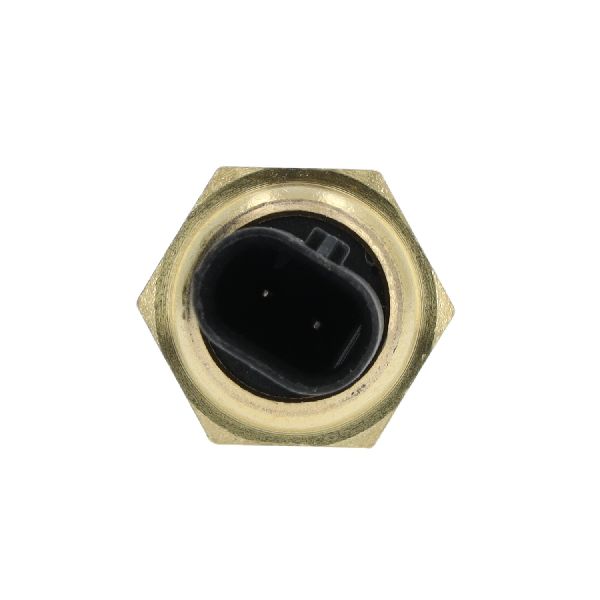
- Engine Coolant Temperature Sensor
(OEM #ME2Z-12A648-A)— This sensor is the most frequent cause of the P0116 code on this platform, often failing and providing irrational data to the PCM, as documented in Ford's own service messages.
Trusted brands: Motorcraft, Bosch, NTK, Standard Motor Products
OEM price range: $40-$70
Aftermarket price range: $20-$50 - Thermostat Housing Assembly
(OEM #JT4Z-8575-A)— A thermostat that is stuck open is the second most common cause, preventing the engine from reaching its proper operating temperature and failing the PCM's rationality check.
Trusted brands: Motorcraft
OEM price range: $70-$150
Aftermarket price range: $40-$100 - Knock Sensor and ECT Sensor Harness
(OEM #12A699 (Base Part Number))— Ford TSB SSM 49004 recommends replacing the harness along with the ECT sensor to fully resolve the issue, indicating the wiring is a common point of failure.
Trusted brands: Motorcraft
OEM price range: $50-$100
Related Codes That Often Appear With This One
- P0128 — Coolant Temperature Below Thermostat Regulating Temperature. This code often appears if the thermostat is stuck open, preventing the engine from reaching operating temperature, which is a direct cause of a P0116 rationality check failure. It is also listed as a possible related code in SSM 49004.
- P1299 — Cylinder Head Overtemperature Protection Active. A faulty ECT sensor can send an erroneously high temperature reading, causing the PCM to trigger this protective mode, even if the engine isn't actually overheating. This is a common companion code according to TSB SSM 49004.
- P0117 — ECT Sensor Circuit Low Input. This indicates the signal voltage is below the specified range, pointing more directly to a short in the wiring or a failed sensor. It is listed as a related code in SSM 49004.
- P0118 — ECT Sensor Circuit High Input. This indicates the signal voltage is above the specified range, often caused by an open circuit or a failed sensor. It is also listed as a related code in SSM 49004.
Technical Service Bulletins (TSBs) & Recalls
- SSM 49004 - Addresses false engine coolant overheat warnings on some 2020 3.0L EcoBoost models, pointing towards the ECT sensor or related wiring. Lists P0116, P0117, P0118, P0119, P0128, P0217, P0330, P1026, P1299, and/or P130D as possible codes.
Platform-Specific Known Issues
- SSM 49004: Some 2020 Explorer/Aviator vehicles with 3.0L EcoBoost engines may exhibit a false 'Engine Coolant Over Temperature' warning along with DTC P0116 (and others). Ford identifies the cause as a faulty ECT sensor or its associated wiring harness and recommends replacing both the sensor and the knock sensor harness.
Mechanic-Grade Diagnostic Values
- ECT Sensor Resistance — expected: Approx. 2,000-3,000 Ω at 20°C (68°F), decreasing to approx. 200-300 Ω at 90°C (194°F).. Failure: An open circuit (infinite resistance), short circuit (zero resistance), or a value that does not change with temperature.
- ECT Sensor Signal Voltage (Key On, Engine Off, Cold) — expected: Approx. 2.0V to 3.0V.. Failure: A reading significantly outside this range, such as near 5V (open circuit) or near 0V (short circuit). A reading of 1.5V on a cold engine could indicate a skewed sensor.
- ECT Sensor Signal Voltage (Engine at Operating Temp) — expected: Approx. 0.5V.. Failure: A voltage that remains high (e.g., over 1.0V) when the engine is fully warmed up indicates a problem with the sensor or thermostat.
- Voltage Drop on Ground Circuit — expected: Less than 0.5V.. Failure: Voltage drop greater than 0.5V between the battery negative terminal and the engine block indicates a poor ground connection, which can affect all sensor readings.
Hidden / Shadow Codes Worth Checking
- P0117, P0118, P0119, P0128, P0217, P0330, P1026, P1299, P130D: This family of codes, when appearing with P0116, is a strong indicator of the specific issue described in Ford's SSM 49004. A basic scanner might only show one or two, but a dealer-level tool will often reveal this pattern, pointing directly to the known ECT sensor/harness fault rather than a simple thermostat issue. (see via Ford IDS (Integrated Diagnostic System) or a high-end professional scan tool capable of reading manufacturer-specific codes.)
Scan Tool Commands That Help
- Ford IDS (or equivalent professional scanner): Datalogger / Live Data — This is the most critical function for diagnosing P0116. Use it to compare ECT and IAT on a cold soak, and to graph the ECT reading as the engine warms up to check for smooth operation versus erratic jumps or a failure to reach temperature.
- Ford IDS: Self-Test (KOEO/KOER) — Run a Key-On-Engine-Off and Key-On-Engine-Running self-test to command all modules to report any and all stored faults, including codes that may not have illuminated the MIL but are related to the P0116 fault.
Wiring & Ground Locations
- C1016 / C1064 — The 2-pin electrical connector that plugs directly into the Engine Coolant Temperature (ECT) sensor, located in the engine valley under the intake manifold.. This is the primary connection point for the sensor. Ford TSBs for similar engines have identified this connector as a common point of failure due to not being fully seated, leading to intermittent signals and false codes.
- 12A699 (Base Harness P/N) — This is the engine sub-harness that runs in the engine valley and includes the wiring for both the ECT sensor and the knock sensor.. TSB SSM 49004 recommends replacing this harness along with the sensor, indicating that the wiring within this harness is a known failure point, likely due to heat exposure in the engine valley.
- Engine Block Ground Strap — A braided metal strap connecting the engine block to the vehicle's chassis/frame. Exact location varies but is typically visible from underneath.. A corroded or loose main engine ground can create a floating ground, causing voltage offsets that affect the accuracy of all engine sensors, including the ECT. While not a specific cause in the TSB, it's a fundamental check for any erratic sensor code.
Real Owner Repair Stories
- Technician Report on YouTube (2020 Ford Explorer ST 3.0L EcoBoost) — Customer reported an 'Engine Coolant Overheat' warning on the dash and the temperature gauge pegged high, but the engine was not physically overheating. The coolant reservoir was full and not boiling.
❌ Tried (didn't work) The technician immediately suspected a sensor issue rather than a mechanical cooling system problem due to the false symptoms.
✅ What actually fixed it The problem was identified via Ford's SSM 49004. The prescribed fix was to replace both the ECT sensor and the associated knock sensor wiring harness located in the engine valley. The technician noted that the parts were on backorder at the time, indicating a common and newly discovered issue. - Explorer ST Forum User Experience (Pattern) (2020-2021 Ford Explorer) — While not for P0116 specifically, users reported various electrical issues with the AWD module.
❌ Tried (didn't work) Replacing the module often resulted in the problem returning.
✅ What actually fixed it The root cause was a poor ground for the module due to paint on the grounding studs under the driver's seat. The permanent fix was to create a new, dedicated ground wire for the module. This highlights a potential pattern of grounding issues from the factory during this model year range that could affect various electronic systems.
OEM Part Supersession History
ME2Z-12A648-A→No official supersession found.— This appears to be the current, correct part number for this application.
Model Year Variations Within This Range
- 2020-2021: Forum discussions suggest that grounding issues due to painted surfaces or loose connections were more common on early-build sixth-generation Explorers. While the P0116 TSB is for 2020, it's plausible that similar build quality issues could affect the ECT circuit on 2021 models as well.
Diagnostic Flowchart
Other Known Issues on This Vehicle
Issues unrelated to this code that are worth knowing about as an owner of this generation:
- Rear Axle Mounting Bolt Fracture 🔴 High — Common enough to trigger multiple recalls (NHTSA 22V255, 23S55) affecting over 250,000 2020-2022 models. (Ref: Recall 22S27 / 23S55)
- Erratic Shifting / Transmission Fluid Venting (10R60/10R80) 🟠 Medium — Widespread enough to warrant a TSB (SSM 50748) for 2020-2022 Explorer/Aviator models. (Ref: TSB SSM 50748)
- 360-Degree Camera System Failure 🟡 Low — A common complaint involving a blue or black screen, leading to multiple recalls (e.g., 20C19) and software updates. (Ref: Recall 20C19 and others)
- Transmission Cooler Failure / Coolant Contamination 🔴 High → Shop Engine Coolant / Antifreeze — A known issue on 2020-2022 models where the transmission cooler can fail, allowing ATF to mix with engine coolant, potentially destroying the transmission. Covered by TSB SSM 51032. (Ref: TSB SSM 51032)
- Momentary Neutral-Out Condition 🟠 Medium — Affects 2020-2021 models with the 10R60/10R80 transmission, causing a temporary loss of drive. Addressed by TSB 23-2120. (Ref: TSB 23-2120)
Used vs. New Parts: Buying Guide for This Vehicle
When a used part is the smart pick: A used wiring harness (the knock/ECT sensor harness) from a low-mileage, collision-damaged vehicle could be a viable option if a new one is unavailable or cost-prohibitive. The thermostat housing could also be sourced used, but requires careful inspection.
Donor-vehicle mileage cap: roughly under 40000 miles for the part to have meaningful remaining life.
What to inspect on the donor part:
- For a wiring harness, inspect for any signs of brittleness, cracking in the insulation, or corrosion on the connector pins. Ensure all locking tabs are intact.
- For a thermostat housing, check for hairline cracks, warping on the mating surfaces, and signs of excessive corrosion or pitting.
- Verify the donor vehicle was not in a front-end collision that could have stressed the cooling system components.
OEM-only on this vehicle (don't cheap out):
- Engine Coolant Temperature (ECT) Sensor: Given that this is a known failure point and a critical sensor for engine management, using a new OEM (Motorcraft) part is strongly recommended to avoid repeat failures. The cost is low enough that the risk of a used or cheap aftermarket part is not worthwhile.
Aftermarket brands forum-validated for this vehicle:
- For sensors: Bosch, NTK/NGK, Standard Motor Products (SMP) are generally considered reliable alternatives to OEM.
- For thermostat assemblies: Gates, Stant.
Brands owners have reported issues with on this vehicle:
- Avoid unbranded, 'white-box' sensors from online marketplaces. Their thermistor accuracy can be poor, leading to persistent performance issues even if they don't trigger a code immediately.
Real Owner Stories
Aggregated from forums and TSBs cited above. Mileages and costs reflect what owners reported in those sources.
2020 Ford Explorer ST 3.0L EcoBoost
Symptoms: The vehicle displayed a false 'Engine Coolant Overheat' warning. A technician confirmed the issue was related to SSM 49004.
What fixed it: Replacement of the Engine Coolant Temperature (ECT) sensor and the knock sensor harness located in the engine valley.
Source hint: YouTube video titled '2020 Ford Explorer ST Engine Coolant Overheat - SSM 49004, Knock Senor and ECT Sensor'
Related OBD-II Codes
Frequently Asked Questions
My 2020 Explorer ST is showing a 'Engine Coolant Over Temperature' warning even though I just started it. Does SSM 49004 apply to me?
Where is the ECT sensor located on the 3.0L EcoBoost V6, and can I replace it myself?
What specific coolant should I use if I need to top off my 2021 Explorer 3.0L?
Is it true that I need to replace a wiring harness along with the sensor for a P0116 code?
Could a P0116 code on my Explorer be related to the transmission cooler issues I've heard about?
Helpful Videos
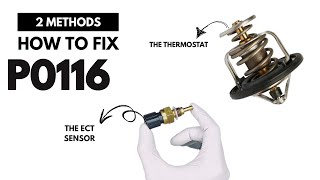
![How to Fix FORD P0116 Engine Code in 3 Minutes [2 DIY Methods / Only $7.31]](https://img.youtube.com/vi/2qFbXSeKGqU/mqdefault.jpg)
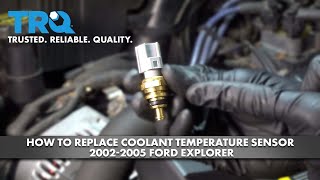
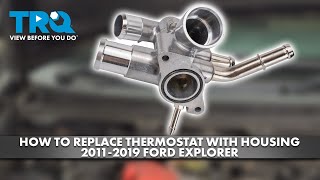
We Have This Part in Stock


The information in this article is provided for general reference and educational purposes only. Vehicle specifications, procedures, and part compatibility can vary by production date, trim level, and region. Always consult your vehicle's factory service manual and verify part numbers before purchasing or performing repairs. Safety-critical components such as airbags, seat belts, and braking systems should be installed by a qualified professional.
- Ford Explorer:
- 🧭 Diagnostic Flowchart
- 🎬 Helpful Videos
- 🛍️ Shop This Part
- What's Unique About the 2020-2024 Ford Explorer
- Symptoms You May Notice
- Most Likely Causes
- Rare But Worth Checking
- Diagnosis Steps
- Parts You'll Likely Need
- Related Codes That Often Appear With This One
- Technical Service Bulletins (TSBs) & Recalls
- Platform-Specific Known Issues
- Mechanic-Grade Diagnostic Values
- Hidden / Shadow Codes Worth Checking
- Scan Tool Commands That Help
- Wiring & Ground Locations
- Real Owner Repair Stories
- OEM Part Supersession History
- Model Year Variations Within This Range
- Other Known Issues on This Vehicle
- Used vs. New Parts: Buying Guide for This Vehicle
- Real Owner Stories
- 2020 Ford Explorer ST 3.0L EcoBoost
- Related OBD-II Codes
- Frequently Asked Questions
- 🎟️ Get 5% Off