

P0116 on 2018-2023 Ford Mustang 2.3L EcoBoost: ECT Sensor and Thermostat Guide
Code P0116 on a 2.3L EcoBoost Mustang most often points to a faulty Engine Coolant Temperature (ECT) sensor or a stuck thermostat. The ECT sensor is the most common culprit. Replacing the sensor is a common, affordable fix, with the OEM part costing around $25-$35.
- P0116 means the engine's computer is getting an illogical temperature reading, not necessarily that the engine is overheating.
- The most likely causes are a bad ECT sensor or a stuck-open thermostat.
- Before buying parts, use a scanner to watch the coolant temperature as the engine warms up. A slow rise points to the thermostat; erratic readings point to the sensor or wiring.
- The correct Motorcraft ECT sensor is part number DY-1144.
- Check your coolant level first. Low coolant can introduce air pockets and cause this code.
What's Unique About the 2018-2023 Ford Mustang
The 2.3L EcoBoost engine, while generally robust, has some known cooling system sensitivities. The ECT sensor is located on a water outlet housing near the back of the engine, making access more difficult than on other vehicles. This location, just above the turbocharger, subjects the sensor and its wiring to significant heat. Additionally, while not directly causing P0116, it's notable that this engine family has been the subject of a class-action lawsuit concerning internal coolant leaks, which can lead to various cooling system problems.
Symptoms You May Notice
- Check Engine Light is on
- Temperature gauge behaving erratically (swinging from cold to hot or staying on high)
- Engine is hard to start, especially when cold
- Reduced fuel economy
- Cooling fans running constantly or not at all
- Rough running or hesitation, particularly before the engine is fully warm
- Engine coolant over-temperature warning on the dash, even when the engine is cold.
- Replacing the ECT sensor when the actual problem is a thermostat that is stuck open.
- Replacing the thermostat when the issue is simply low coolant or an air pocket in the system.
- Assuming an overheating message is accurate without checking live data, leading to unnecessary replacement of parts like the water pump or radiator.
Most Likely Causes
- Faulty Engine Coolant Temperature (ECT) Sensor 🔴 High Probability → Shop Engine Coolant Temperature Sensor Sensors are wear items and can fail over time due to thermal stress and corrosion. Its location above the turbo on the 2.3L EcoBoost exposes it to high heat. TSBs on similar EcoBoost engines point to issues with this circuit. Manufacturer service bulletin SSM 48991 notes that an illuminated MIL or Engine Coolant Over Temperature warning with DTC P0116 may be due to the engine coolant temperature (ECT) sensor or knock sensor.
How to confirm: With a scan tool, compare the ECT reading to the Intake Air Temp (IAT) on a cold engine; they should be within a few degrees of each other. Monitor the ECT data as the engine warms up; it should rise smoothly without sudden drops or spikes. A faulty sensor may also read an impossibly high or low temperature immediately on startup.
Typical fix: Replace the Engine Coolant Temperature sensor. Given the low cost of the part, this is often done as a primary diagnostic step.
Est. part cost: $20-$40 - Stuck or Faulty Thermostat 🟡 Medium Probability → Shop Integrated Thermostat Housing Assembly If the thermostat sticks open, the engine will warm up too slowly, causing the PCM to flag a performance error against the ECT sensor's reading. This is a common failure mode for thermostats in general. TSB 21-2168 indicates that an intermittent drop in engine coolant temperature can trigger P0116 along with P0128.
How to confirm: Monitor the ECT data on a scan tool. If the engine takes an excessively long time to reach operating temperature (typically ~190-200°F) or the temperature drops significantly while driving at highway speeds, the thermostat is likely stuck open.
Typical fix: Replace the thermostat and housing assembly. It is recommended to replace the entire assembly, not just the thermostat itself. 🎬 See this walkthrough on how to install a new thermostat.
Est. part cost: $40-$100 - Low Engine Coolant or Air in the System 🟡 Medium Probability → Shop Engine Coolant / Antifreeze The 2.3L EcoBoost platform has documented issues with coolant loss in some applications, including the 'coolant intrusion' problem covered by TSB 21-2350. An air pocket in the cooling system can cause the ECT sensor to give erratic readings as it becomes exposed to air instead of coolant.
How to confirm: Check the coolant reservoir to ensure the level is between the MIN and MAX marks. Inspect for any visible signs of coolant leaks from hoses, the radiator, or the water pump. If the system has been recently serviced, it may need to be properly bled to remove trapped air. 🎬 Watch: A pro tip for purging air from Ford cooling systems.
Typical fix: Top off the coolant with the correct Ford specification (Motorcraft VC-13-G Yellow) and bleed the system. If a leak is present, identify and repair it.
Est. part cost: $15-$30 (for coolant) - Wiring or Connector Issue ⚪ Low Probability The wiring harness to the ECT sensor is located in a high-heat area near the back of the engine and turbocharger, which can make it susceptible to heat damage and brittleness over time. Manufacturer bulletin SSM 47791 notes that P0116 may be due to an engine coolant temperature (ECT) sensor connector which is not fully seated.
How to confirm: Visually inspect the ECT sensor's connector and wiring harness for any signs of damage, corrosion, melted plastic, or loose pins. Use a multimeter to check for the correct reference voltage (typically 5V) and ground at the connector.
Typical fix: Repair the damaged wiring or replace the sensor pigtail connector.
Est. part cost: $15-$50
Rare But Worth Checking
- Powertrain Control Module (PCM) Fault: This is extremely rare. All other possibilities, especially sensor, thermostat, and wiring, should be exhaustively ruled out before considering a PCM issue.
Diagnosis Steps
- Check for other DTCs. Codes like P0117, P0118, or P0128 can help pinpoint the issue faster.
- Visually inspect the cooling system. Check the coolant level in the reservoir and look for any obvious leaks around hoses, the radiator, and the water pump.
- Use an OBD-II scanner with live data. With a cold engine (off for several hours), compare the Engine Coolant Temperature (ECT) and Intake Air Temperature (IAT) readings. They should be within 5°F (3°C) of each other and ambient temperature.
- Start the engine and monitor the ECT data. The temperature should rise steadily and smoothly. If it jumps around, drops suddenly, or fails to rise, suspect the sensor or wiring.
- If the temperature rises very slowly or fails to reach the normal operating range (around 195-205°F) and drops at cruising speed, the thermostat is likely stuck open.
- If the sensor readings are suspect, inspect the sensor's electrical connector and wiring for damage or corrosion. The sensor is located on a water outlet housing at the rear of the engine, above the turbocharger.
- If wiring is okay, test the sensor. You can test its resistance with a multimeter (resistance should change predictably with temperature, typically between 2000-3000 ohms at 68°F/20°C), but given the low cost, replacement is often a more practical diagnostic step.
- If the cause is still not found, ensure the cooling system is properly bled of any air pockets, especially if it was recently serviced. A vacuum-style coolant filler is highly recommended for the EcoBoost engine to prevent air locks. 🎬 Watch: Three effective ways to bleed air from your cooling system.
Parts You'll Likely Need
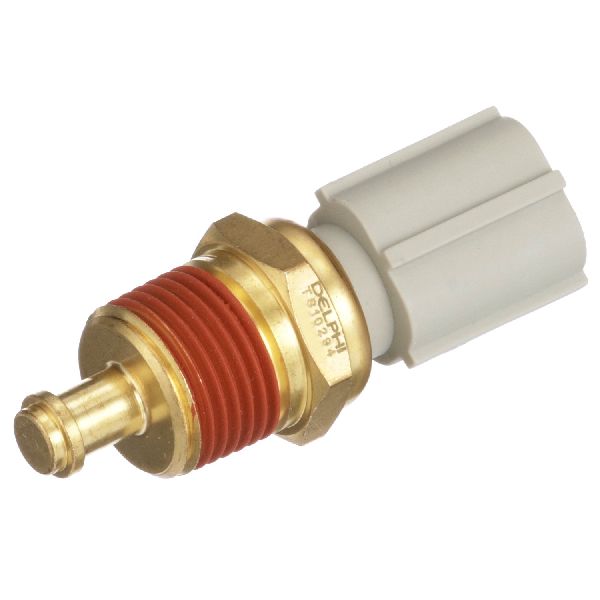
- Engine Coolant Temperature (ECT) Sensor
(OEM #3F1Z-12A648-A (Motorcraft Service P/N: DY-1144))— This is the most common failure point for a P0116 code, as the sensor's performance degrades over time.
Trusted brands: Motorcraft
OEM price range: $25-$35
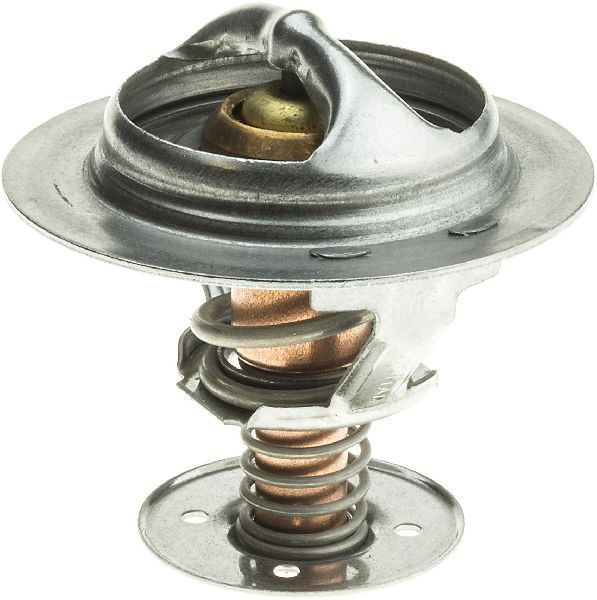
Aftermarket price range: $15-$30 - Engine Coolant Thermostat Housing Assembly
(OEM #FR3Z-8592-D)— A thermostat stuck open will prevent the engine from warming up correctly, triggering a range/performance code for the ECT circuit. The part is a complete housing assembly.
Trusted brands: Motorcraft, Dorman
OEM price range: $50-$90
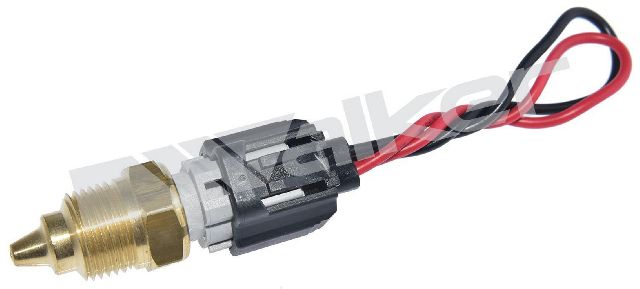
Aftermarket price range: $40-$70 - Engine Coolant Temperature Sensor Connector — If the connector is damaged or corroded, it will cause an unreliable signal from the sensor. Damage can occur from the high heat environment near the turbo.
Trusted brands: Motorcraft, Dorman, Walker
OEM price range: $40-$50
Aftermarket price range: $15-$25
Related Codes That Often Appear With This One
- P0117 — Indicates ECT Sensor Circuit Low Input, which can occur if the sensor or wiring shorts to ground.
- P0118 — Indicates ECT Sensor Circuit High Input, which can happen if the sensor circuit has an open or the sensor fails internally.
- P0128 — Indicates Coolant Thermostat (Coolant Temperature Below Thermostat Regulating Temperature), which directly points to a thermostat that is likely stuck open, a common cause for P0116.
Technical Service Bulletins (TSBs) & Recalls
- SSM 49004 - For some 2020 Explorer/Aviator vehicles with 3.0L EcoBoost engines, addresses MIL illumination with DTCs P0116, P0117, and/or P0118 by replacing the ECT and knock sensor.
- TSB 21-2350 - Addresses coolant leaking into the cylinder on certain 2.3L EcoBoost engines, which can cause a variety of symptoms including coolant loss that could indirectly lead to a P0116 code.
- TSB 21-2168 - Notes that engines may exhibit an illuminated MIL and/or Engine Coolant Over Temperature warning with DTCs P0116, P0117, P0118, P0119, P0128, P0217, P0330, P1026, and/or P1299 due to an intermittent drop in the engine coolant temperature.
- SSM 48991 - Describes a condition where EcoBoost engines may exhibit an illuminated MIL and/or Engine Coolant Over Temperature warning with DTC P0116, potentially caused by the engine coolant temperature (ECT) sensor or knock sensor.
- SSM 47791 - Indicates that DTC P0116 may be due to an engine coolant temperature (ECT) sensor connector which is not fully seated.
Platform-Specific Known Issues
- A Ford Service Bulletin (SSM 49004) was issued for 2020 Explorer/Aviator models with the 3.0L EcoBoost engines for P0116, P0117, and P0118, indicating a known issue with the ECT circuit on this engine family. The fix involves replacing both the ECT and knock sensor.
- The 2.3L EcoBoost engine platform has been part of a class-action lawsuit related to internal coolant leaks ('coolant intrusion'). While a separate issue, any coolant loss can lead to air pockets and trigger temperature-related codes like P0116.
Mechanic-Grade Diagnostic Values
- ECT Sensor Resistance — expected: Approximately 2,000-3,000 Ohms at 68°F (20°C). Resistance should decrease as temperature increases.. Failure: An open circuit (infinite resistance) or a short (near zero resistance), or a value that does not change with temperature.
- ECT Sensor Resistance (Ford Specific) — expected: Between 31,700 and 42,900 ohms at ~68°F (20°C) for a typical Ford sensor.. Failure: A reading outside this range, or one that is an open circuit or zero, indicates a bad sensor.
- ECT Sensor Circuit Voltage (Key On, Engine Off) — expected: The PCM provides a 5-volt reference signal. The return signal voltage should be high when cold (e.g., 3.0-4.5V) and decrease as the engine warms (e.g., 0.5-1.0V).. Failure: A voltage stuck at 5V suggests an open circuit; a voltage near 0V on a cold engine suggests a short to ground.
- ECT vs IAT Live Data (Cold Soak) — expected: After the engine has been off for several hours, the ECT and IAT sensor readings should be within 5-10°F (3-5°C) of each other.. Failure: A difference greater than 10°F strongly suggests a faulty ECT sensor or circuit issue.
Scan Tool Commands That Help
- Ford IDS (Integrated Diagnostic System): Live Data Graphing — To visually monitor the ECT sensor reading as the engine warms up. This allows a technician to spot irrational jumps, drops, or a flatline reading that indicates a sensor or wiring fault.
- Ford IDS (Integrated Diagnostic System): Component Actuation / Bi-Directional Control — To command the cooling fans on and off. This helps verify if the PCM can control the fan circuit, which is a related function of the ECT data. If the fans don't respond, it could point to a broader circuit issue.
- Ford IDS / ForScan: Clear DTCs — After a repair, such as replacing a thermostat or sensor, the code may not clear immediately. Using a dealer-level tool or advanced scanner like ForScan to manually clear the code is necessary to confirm the fix and turn off the Check Engine Light.
Wiring & Ground Locations
- G104 — Commonly located on the front of the engine compartment, on the fender apron or bulkhead, often near the battery.. This is a primary engine compartment and chassis ground. A poor connection here can cause incorrect reference voltages for the PCM and its sensors, including the ECT, leading to erratic readings and false codes.
- G105 — Often located on the right side of the engine, serving as a major ground point for the engine block itself.. The PCM and its sensors rely on a solid engine ground. Corrosion or looseness at this point can introduce electrical noise and interfere with the proper operation of the ECT sensor.
- ECT Sensor Connector — On the water outlet housing at the rear of the 2.3L EcoBoost engine, above the turbocharger.. This is the direct connection point for the sensor. The high-heat environment makes the connector and its pigtail wiring susceptible to brittleness, melting, or corrosion, which can cause an intermittent or failed signal.
Real Owner Repair Stories
- Mustang6G.com forum user (S550 Mustang (specific year not stated, but applies to platform)) — Check Engine Light with codes P0116 and P0128.
❌ Tried (didn't work) The user first tried changing the thermostat, which is a common cause for P0128.
✅ What actually fixed it The user reported that after changing the thermostat, the codes persisted. The final resolution was not clearly stated in the initial post, but the combination of P0116 and P0128 strongly points to a thermostat stuck open, and a follow-up action would be to verify the new thermostat is functioning or check for air pockets introduced during the repair.
OEM Part Supersession History
FR3Z-8592-B→FR3Z-8592-D— Part revision by manufacturer. Reasons are not typically public but often involve improvements in material, design, or manufacturing process.
Model Year Variations Within This Range
- 2018-2023: The 2018 model year marked a significant refresh for the S550 Mustang. The 2.3L EcoBoost engine's torque increased to 350 lb-ft, and the optional automatic transmission was upgraded from a 6-speed to the 10-speed 10R80. While the fundamental causes of P0116 remain the same, software logic in the PCM for detecting the fault may differ slightly between the 6-speed and 10-speed equipped models.
- 2020+: Starting in 2020, a High Performance Package became available for the 2.3L EcoBoost, which increased horsepower to 330. While this doesn't directly change the standard ECT sensor or thermostat, vehicles with this package may be driven more aggressively, potentially leading to higher heat stress on cooling system components over time.
Diagnostic Flowchart
Other Known Issues on This Vehicle
Issues unrelated to this code that are worth knowing about as an owner of this generation:
- Engine Coolant Intrusion 🔴 High → Shop Engine Coolant / Antifreeze — More common on pre-2020 models, but can affect all years. Caused by a flaw in the engine block/head gasket design. (Ref: TSB 21-2350)
- 10R80 Automatic Transmission Harsh/Erratic Shifting 🟠 Medium — Common complaint across many Ford models with this transmission. Can sometimes be improved with a PCM software update, but may indicate internal valve body or clutch drum issues. (Ref: Various software updates and TSBs exist.)
- Carbon Buildup on Intake Valves 🟡 Low — An inherent issue with all direct-injection engines. Becomes more noticeable at higher mileage (60,000+ miles) and can cause rough idle and reduced performance.
- AC System Failures (Evaporator/Compressor) 🟠 Medium — A noted complaint, particularly on earlier S550 models, where the evaporator or compressor may fail, leading to loss of air conditioning.
Used vs. New Parts: Buying Guide for This Vehicle
When a used part is the smart pick: For this specific repair, using used parts is generally not recommended. The primary failure items (ECT sensor, thermostat) are low-cost wear items. A used thermostat housing assembly from a low-mileage donor could be considered if on a strict budget, but the risk of it having a worn thermostat or brittle plastic may outweigh the savings.
Donor-vehicle mileage cap: roughly under 30000 miles for the part to have meaningful remaining life.
What to inspect on the donor part:
- For a thermostat housing, inspect for any hairline cracks, especially around the hose connections and mounting points.
- Check for signs of heavy corrosion or coolant staining, which could indicate a past leak.
- Ensure the electrical connector socket on the housing (if applicable) is clean and free of bent pins or corrosion.
OEM-only on this vehicle (don't cheap out):
- Engine Coolant Temperature (ECT) Sensor
Aftermarket brands forum-validated for this vehicle:
- For the ECT Sensor: Motorcraft (OEM), Delphi, Bosch, Standard Motor Products (SMP).
- For the Thermostat Assembly: Motorcraft (OEM), Dorman (often offers design improvements).
Brands owners have reported issues with on this vehicle:
- Unnamed, 'white-box' sensors from online marketplaces should be avoided. The sensor's accuracy is critical for engine performance and fuel economy, and cheap, unverified sensors often have poor accuracy and a short lifespan.
Real Owner Stories
Aggregated from forums and TSBs cited above. Mileages and costs reflect what owners reported in those sources.
2018-2023 Ford Mustang 2.3L EcoBoost
Symptoms: P0116 and P0128 codes appeared immediately after a thermostat change.
What fixed it: Properly bleeding the cooling system to remove trapped air pockets.
Source hint: https://www.mustang6g.com/forums/threads/p0116-and-p0128-after-thermostat-change.171059/
2019-2024 Ford Ranger 2.3L EcoBoost
Symptoms: The vehicle experienced P0116 along with hesitation and entering a limp mode state.
What fixed it: Diagnosis and repair of the ECT sensor circuit/sensor (shared 2.3L platform issue).
Source hint: https://www.ranger-forums.com/2-3l-2-5l-i4-tech-31/lost-need-help-157954/
Documented NHTSA Reports
An owner reported in NHTSA ODI #11526316 that their vehicle had several codes pop up, including P0116, P050A, P050B, P050E, and P1299, all of which relate to temperature and overheating.
Related OBD-II Codes
Frequently Asked Questions
Does TSB 21-2350 apply to my 2.3L EcoBoost Mustang if I have a P0116 code?
I see SSM 49004 mentioned for EcoBoost engines; does this apply to my Mustang?
Where is the ECT sensor located on the 2.3L EcoBoost Mustang?
What specific coolant should I use to top off my 2018-2023 Mustang to avoid sensor issues?
Can a faulty thermostat cause a P0116 code on this vehicle?
Why is my Mustang's temperature gauge swinging wildly from cold to hot?
Helpful Videos
We Have This Part in Stock


The information in this article is provided for general reference and educational purposes only. Vehicle specifications, procedures, and part compatibility can vary by production date, trim level, and region. Always consult your vehicle's factory service manual and verify part numbers before purchasing or performing repairs. Safety-critical components such as airbags, seat belts, and braking systems should be installed by a qualified professional.
- Ford Mustang:
- 🧭 Diagnostic Flowchart
- 🎬 Helpful Videos
- 🛍️ Shop This Part
- What's Unique About the 2018-2023 Ford Mustang
- Symptoms You May Notice
- Most Likely Causes
- Rare But Worth Checking
- Diagnosis Steps
- Parts You'll Likely Need
- Related Codes That Often Appear With This One
- Technical Service Bulletins (TSBs) & Recalls
- Platform-Specific Known Issues
- Mechanic-Grade Diagnostic Values
- Scan Tool Commands That Help
- Wiring & Ground Locations
- Real Owner Repair Stories
- OEM Part Supersession History
- Model Year Variations Within This Range
- Other Known Issues on This Vehicle
- Used vs. New Parts: Buying Guide for This Vehicle
- Real Owner Stories
- 2018-2023 Ford Mustang 2.3L EcoBoost
- 2019-2024 Ford Ranger 2.3L EcoBoost
- Documented NHTSA Reports
- Related OBD-II Codes
- Frequently Asked Questions
- 🎟️ Get 5% Off