

P0116 on 2008-2019 Ford Taurus 3.5L: CHT Sensor, Thermostat, and Fixes
On the 3.5L V6 Taurus, P0116 usually points to a failing Cylinder Head Temperature (CHT) sensor or a thermostat stuck open. The CHT sensor is a difficult DIY job as it's located under the intake manifold. A stuck thermostat is a more common and easier fix. Always investigate the thermostat first before attempting the more complex CHT sensor replacement.
- P0116 means the engine temperature reading is illogical, not necessarily that the sensor is dead.
- The most likely causes are a stuck-open thermostat or a faulty Cylinder Head Temperature (CHT) sensor.
- Before replacing any parts, use a scan tool on a cold engine to compare the CHT and Intake Air Temperature (IAT) readings. If they are close, the thermostat is the more likely culprit. If they are far apart, suspect the CHT sensor.
- Be aware that replacing the CHT sensor on this engine is a major job requiring removal of the intake manifold.
- Always check your coolant level first. Any coolant loss on this engine needs immediate attention due to the design of the internal water pump.
What's Unique About the 2008-2019 Ford Taurus
Unlike most vehicles that use a simple screw-in Engine Coolant Temperature (ECT) sensor, the Ford 3.5L Cyclone V6 uses a Cylinder Head Temperature (CHT) sensor to infer coolant temperature. This sensor is buried under the lower intake manifold, making replacement a much more labor-intensive job involving significant disassembly. Additionally, any cooling system fault on this engine warrants checking for the infamous internal water pump failure, where coolant can leak directly into the engine oil, leading to catastrophic engine damage.
Generation note: This guide covers the fifth (2008-2009) and sixth (2010-2019) generations of the Ford Taurus with the 3.5L V6. No significant differences regarding the causes or fixes for P0116 have been noted between these generations. The underlying engine architecture and sensor locations are consistent.
Symptoms You May Notice
- Check Engine Light is on
- Temperature gauge behaving erratically (e.g., dropping to cold during driving, or not moving at all)
- Reduced fuel economy
- Engine running rough or hesitating before it's fully warmed up
- Cooling fans running at incorrect times (either too much or not enough)
- Difficulty starting the engine in some cases
- AC may not work correctly as the system may not be able to determine if the engine is overheating
- An "Engine Coolant Over Temperature" warning may appear on the dash, as noted in manufacturer service records like TSB 21-2168.
- Replacing the CHT sensor when the thermostat is actually the problem. Always diagnose the thermostat's performance by monitoring engine warm-up time before committing to the difficult CHT sensor replacement.
- Replacing a sensor when the actual issue is low coolant or an air pocket in the system, which causes the sensor to read air temperature instead of coolant temperature.
Most Likely Causes
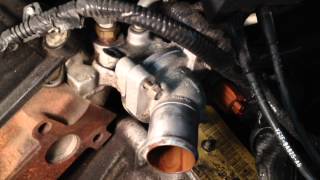
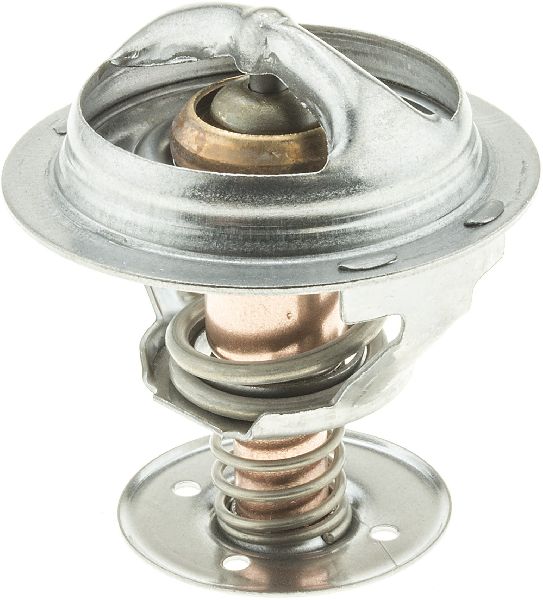
- Thermostat stuck open 🔴 High Probability → Shop Integrated Thermostat Housing Assembly Thermostats are a common wear item on all vehicles. A failure in the open position is a frequent cause for range/performance codes because the engine warms up slower than the PCM expects.
How to confirm: Monitor the coolant temperature on a scan tool while driving. If the engine takes an excessively long time to reach operating temperature (approx. 190-210°F) or the temperature drops significantly while driving at highway speeds, the thermostat is likely stuck open. The temperature gauge on the dash may also drop to 'C' while cruising and then rise back up in stop-and-go traffic.
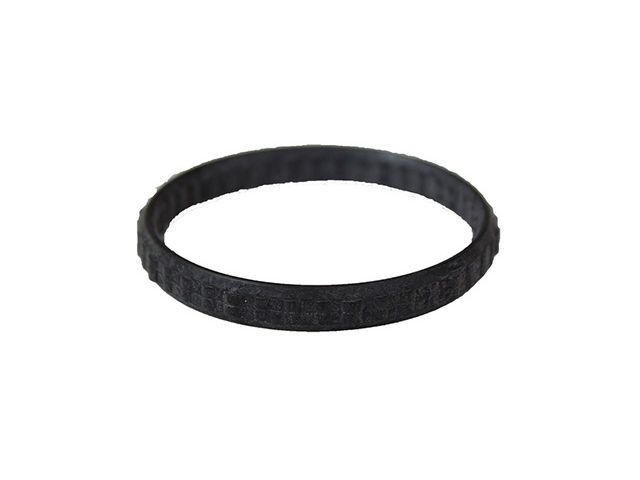
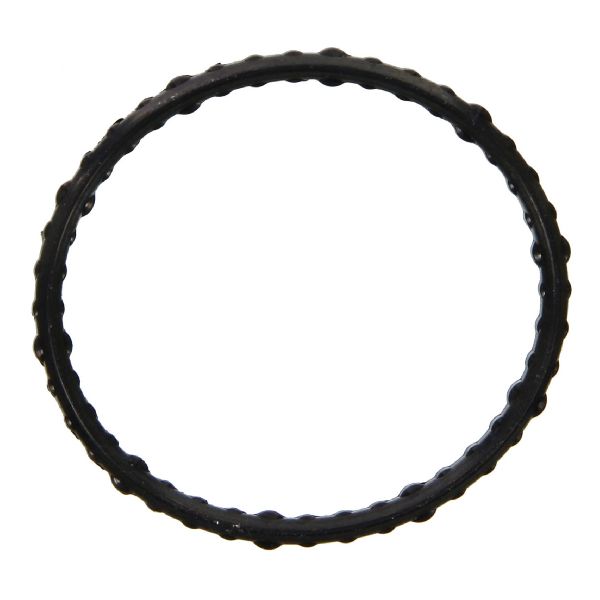
Typical fix: Replace the thermostat and gasket/O-ring. It's recommended to drain and refill the coolant at the same time using Ford-specific coolant.
Est. part cost: $30-$60 - Faulty Cylinder Head Temperature (CHT) Sensor 🟡 Medium Probability The sensor operates in a high-heat environment under the intake manifold and can fail over time, leading to inaccurate or erratic readings. Its location makes it susceptible to heat soak and harness damage. Manufacturer bulletin SSM 48991 notes that P0116 can be caused by the engine coolant temperature (ECT) sensor or knock sensor.
How to confirm: With the engine cold for several hours (a 'cold soak'), use a scan tool to compare the CHT reading with the Intake Air Temperature (IAT) reading. They should be within 5°F (3°C) of each other. If the CHT is significantly different, the sensor is likely faulty. You can also test the sensor's resistance with a multimeter; it should change smoothly as the engine warms up.
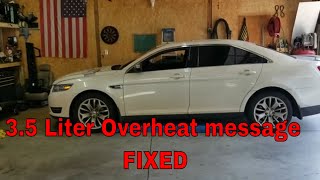
Typical fix: Replace the CHT sensor. This is a labor-intensive job as the upper and lower intake manifolds must be removed to access it. 🎬 See this walkthrough for accessing and replacing the CHT sensor. New intake gaskets are required.
Est. part cost: $25-$50 for the sensor, plus $50-$100 for intake gaskets. - Low Engine Coolant or Air in System 🟡 Medium Probability → Shop Engine Coolant / Antifreeze This engine's internal water pump is a known potential failure point that can cause coolant loss. Leaks can also occur from hoses, the radiator, or the thermostat housing. If air pockets get trapped near the CHT sensor, it can cause erratic readings and trigger P0116.
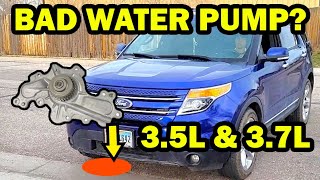
How to confirm: Visually inspect the coolant level in the reservoir. Check for any visible leaks around the engine, particularly near the alternator, which is the exit path 🎬 Watch: How to identify a failing internal water pump. for the water pump weep hole. Check the oil dipstick and oil cap for a milky, 'milkshake' appearance, which indicates a severe internal water pump leak. If the system has been recently serviced, it may need to be 'burped' to remove trapped air.
Typical fix: Top off the coolant and properly bleed the system. If a leak is present, identify the source and repair it. A cooling system pressure test is the best way to find leaks. If the water pump has failed internally, it requires a major repair that includes replacing the timing chain and related components.
Est. part cost: $20-$30 for a bottle of Ford-specific coolant. - CHT Sensor Wiring or Connector Issue ⚪ Low Probability
How to confirm: With the intake manifold removed for sensor access, visually inspect the wiring harness and connector for any signs of corrosion, damage, or loose pins. Manufacturer bulletin SSM 47791 indicates that these codes may be due to a sensor connector which is not fully seated.
Typical fix: Repair the damaged section of the harness or replace the connector pigtail.
Est. part cost: $15-$40
Rare But Worth Checking
- Powertrain Control Module (PCM) Fault: This is very rare. All other possibilities, especially the CHT sensor, thermostat, and wiring, should be exhaustively ruled out before considering PCM replacement. A faulty PCM driver can misinterpret a perfectly good sensor signal.
Diagnosis Steps
- Check for other Diagnostic Trouble Codes (DTCs) to see if other faults are present, especially P0128, P0117, P0118, or P1299. Bulletin #TSB 21-2168 notes that P0116 often appears alongside P0117, P0118, and P0128 due to intermittent drops in coolant temperature.
- Visually inspect the engine coolant level and condition. Ensure it is full and not contaminated. A milky appearance in the oil is a sign of catastrophic water pump failure. Top off coolant if necessary.
- With a cold engine (left overnight), use a scan tool to compare the CHT and IAT sensor readings. They should be within a few degrees of each other. A large discrepancy points to a bad CHT sensor or wiring.
- If the readings match, start the engine and monitor the CHT reading on the scan tool's live data.
- The temperature should rise steadily to about 190-210°F and stabilize. If it rises very slowly, or if it rises and then falls dramatically at cruising speed, the thermostat is likely stuck open.
- If the temperature reading is erratic, jumping around illogically, or stays fixed at one temperature (e.g., -40°F or 250°F), suspect a faulty CHT sensor or a wiring issue.
- If a leak is suspected, perform a cooling system pressure test to identify the source. Pay close attention to the area around the alternator/timing cover for signs of an internal water pump leak.
- If the CHT sensor is suspected, you must remove the intake manifold to access it for testing or replacement. Inspect the wiring and connector for heat damage or corrosion at this time.
Parts You'll Likely Need
- Engine Coolant Thermostat
(OEM #BR3Z-8575-E)— Often gets stuck open, causing the engine to warm up too slowly and triggering a P0116. This is the most common fix.
Trusted brands: Motorcraft, Gates
OEM price range: $40-$60
Aftermarket price range: $25-$45 - Cylinder Head Temperature (CHT) Sensor
(OEM #9L8Z-6G004-F)— Can fail and provide inaccurate or erratic readings to the PCM. Note: This is NOT a traditional ECT sensor.
Trusted brands: Motorcraft, Bosch, NTK, Dorman
OEM price range: $30-$50
Aftermarket price range: $20-$40 - Upper and Lower Intake Manifold Gaskets — Required for replacing the CHT sensor, which is located under the intake manifold. These are single-use gaskets and must be replaced.
Trusted brands: Motorcraft, Fel-Pro
OEM price range: $70-$120
Aftermarket price range: $40-$80 - Ford Motorcraft Orange Antifreeze/Coolant
(OEM #VC-3-D)— Required to refill the cooling system after replacing the thermostat or CHT sensor. Using the correct Ford-specific coolant is critical for system longevity.
Related Codes That Often Appear With This One
- P0128 — Coolant Temperature Below Thermostat Regulating Temperature. This code is very similar to P0116 and often points directly to a stuck-open thermostat.
- P0117 — Engine Coolant Temperature Sensor Circuit Low Input. This indicates the sensor signal voltage is below the expected range, often pointing to a short in the wiring or a failed sensor.
- P0118 — Engine Coolant Temperature Sensor Circuit High Input. This indicates the signal voltage is above the expected range, often due to an open circuit or a failed sensor.
- P1299 — Cylinder Head Over Temperature Protection Active. This code may appear if the CHT sensor detects a genuine overheating condition, which could be the root cause of the illogical readings seen in P0116.
Platform-Specific Known Issues
- The Cylinder Head Temperature (CHT) sensor is located under the intake manifold, making replacement a 3-5 hour job, unlike typical coolant sensors.
- The 3.5L Cyclone engine features an internal, timing-chain-driven water pump. Any coolant loss, a potential cause of P0116, should be investigated thoroughly to rule out a failing water pump, which is a catastrophic and expensive failure.
Mechanic-Grade Diagnostic Values
- CHT Sensor Resistance vs. Temperature — expected: Approximately 37,000Ω at 68°F (20°C), 9,500Ω at 122°F (50°C), and 1,800Ω at 212°F (100°C). Resistance decreases as temperature increases.. Failure: An open circuit (infinite resistance), a short (near-zero resistance), or a reading that does not correlate to the actual head temperature indicates a failed sensor.
- CHT Sensor Signal Voltage (Key On, Engine Off) — expected: Approximately 4.29V at 86°F (30°C). With the sensor unplugged, the reference voltage on the signal wire should be approximately 5V.. Failure: A voltage reading near 5V or near 0V when the sensor is connected on a cold engine points to a sensor or wiring fault.
- CHT Sensor Ground Circuit Voltage Drop — expected: Below 100mV (0.1V) between the ground pin on the CHT connector and the negative battery terminal.. Failure: Higher voltage indicates a poor ground connection, which can skew the sensor's reading.
Hidden / Shadow Codes Worth Checking
- P1289: Cylinder Head Temperature Sensor Circuit High Input. This is a related Ford-specific code that may be flagged during a self-test even if not setting a CEL. (see via This code may be revealed during a Key On, Engine Off (KOEO) or Key On, Engine Running (KOER) self-test using a professional scan tool like Ford's IDS or FORScan.)
Scan Tool Commands That Help
- Ford IDS (or FORScan): DataLogger - CHT PID — Use to graph the CHT sensor reading from a cold start. A smooth, steady rise indicates a good thermostat and sensor. Jumps, drops, or a flat line indicate a fault.
- Ford IDS (or FORScan): KOEO/KOER Self-Tests — These on-demand tests command the PCM to check all its sensor circuits. It can reveal underlying circuit faults (like an open or short) that may be the root cause of the P0116 performance code.
Wiring & Ground Locations
- Main Engine Ground Strap — Located on the transmission case, below the brake booster.. A poor main engine ground can cause floating voltages and erratic readings on various sensors, including the CHT sensor. This should be checked if multiple, seemingly unrelated electrical issues are present.
- CHT Sensor Connector — Under the lower intake manifold, connected to the CHT sensor which is threaded into the rear cylinder head.. This is a two-wire connector. One pin is the CHT Signal (typically provides a 5V reference from the PCM when disconnected) and the other is the Sensor Ground. Damage to this connector or its wiring from heat and oil is a possible cause of the code.
Real Owner Repair Stories
- Ford F150 Forum (2016 Ford F-150 3.5L (non-EcoBoost)) — Temperature gauge pinning to max, triggering limp mode.
❌ Tried (didn't work) Initial diagnosis was uncertain between a real overheat and a sensor failure.
✅ What actually fixed it The final repair was replacing the Cylinder Head Temperature (CHT) sensor. - Reddit r/AskMechanics (Unknown year/model, but behavior is universal.) — P0116 and P0128 codes appeared.
❌ Tried (didn't work) The owner had the thermostat housing replaced by a mechanic three months prior to fix a coolant leak.
✅ What actually fixed it The strong implication was that the new thermostat was faulty or installed incorrectly, or air was introduced and not bled properly during the previous repair, causing the new codes. The fix is to re-address the thermostat. - NHTSA ODI #11526316 — An owner reported that their vehicle exhibited codes P0116 and P1299, which they understood to be related to temperature and overheating.
OEM Part Supersession History
BR3Z-8575-E→BR3Z-8575-F— Standard part revision by the manufacturer.9L8Z-6G004-A, 9L8Z-6G004-D→9L8Z-6G004-F— Standard part revision by the manufacturer.
Model Year Variations Within This Range
- 2008-2019: No significant variations related to the P0116 code have been identified within this model year range for the 3.5L V6. The core design using a CHT sensor under the intake and the internal water pump remained consistent.
Diagnostic Flowchart
Other Known Issues on This Vehicle
Issues unrelated to this code that are worth knowing about as an owner of this generation:
- Internal Water Pump Failure 🔴 High → Shop Engine Water Pump — Widespread issue, can occur without warning, typically between 60,000 and 120,000 miles. Failure leads to coolant mixing with engine oil, causing catastrophic engine damage.
- Electronic Throttle Body (ETB) Failure 🟠 Medium — Very common across many Ford models of this era. Causes sudden 'limp mode' where the vehicle loses power. Often occurs after the warranty period. (Ref: Ford Customer Satisfaction Program 13N03 (expired))
- Power Transfer Unit (PTU) Leak (AWD Models) 🟠 Medium — Common on all-wheel-drive models. The PTU can overheat and its seals can fail, leading to gear oil leaks. If run dry, the PTU will be destroyed. (Ref: TSB 09-25-7, TSB 16-0043)
- Timing Chain Stretch/Rattle 🔴 High — Often a consequence of a leaking water pump contaminating the oil, but can also occur from extended oil change intervals. Leads to timing-related codes (like P0018) and eventually engine failure. (Ref: TSB 23-2143 (related to VCT units on EcoBoost, but chain wear is relevant))
Used vs. New Parts: Buying Guide for This Vehicle
When a used part is the smart pick: For this specific repair, using used parts is not recommended. The primary culprits are wear-and-tear items (thermostat) or a sensor buried deep in the engine (CHT). The labor cost, especially for the CHT sensor, is too high to risk using a part with an unknown lifespan.
What to inspect on the donor part:
- Not applicable as used parts are not advised.
OEM-only on this vehicle (don't cheap out):
- Cylinder Head Temperature (CHT) Sensor: Due to the high labor cost for replacement, using an OEM Motorcraft sensor is the safest choice to ensure longevity and accurate readings. A failed aftermarket sensor would require repeating the entire intake manifold removal.
- Engine Coolant Thermostat: While some aftermarket thermostats work, the OEM Motorcraft part is calibrated specifically for the PCM's expectations and is the most reliable way to prevent the code from returning.
Aftermarket brands forum-validated for this vehicle:
- Fel-Pro: Widely trusted for intake manifold gaskets, which are required for the CHT sensor replacement.
- Gates: A reputable brand for thermostats if an OEM part is unavailable.
Brands owners have reported issues with on this vehicle:
- Unknown or 'white-box' online brands for sensors and thermostats. The risk of poor calibration or premature failure is high and not worth the small cost savings.
Real Owner Stories
Aggregated from forums and TSBs cited above. Mileages and costs reflect what owners reported in those sources.
2008-2019 Ford Taurus 3.5L V6
Symptoms: Check engine light on and temperature gauge behaving erratically, specifically dropping to cold during driving or not moving at all.
What fixed it: Replacement of the thermostat and gasket/O-ring, followed by a drain and refill with Ford-specific coolant.
Source hint: TaurusClub.com Forums
2007-2018 Ford Edge 3.5L/3.7L V6
Symptoms: P0116 code present; owner confirmed the vehicle shares the same 3.5L Cyclone engine and cooling system design as the Taurus.
What fixed it: Replacing the thermostat, which is a common wear item that fails in the open position.
Source hint: Ford Edge platform mate description in article context
2008-2019 Ford Taurus 3.5L V6 — ~90000 miles
Symptoms: Coolant loss and erratic CHT sensor readings; owner checked the oil cap for a 'milkshake' appearance.
What fixed it: Major repair involving the internal timing-chain-driven water pump, timing chain, and related components.
Source hint: vehicle_specific_issues and known_issues (Internal Water Pump Failure)
Related OBD-II Codes
Frequently Asked Questions
Why is the temperature gauge on my Ford Taurus dropping to 'C' while I'm driving on the highway?
I've heard the 3.5L Cyclone engine has an internal water pump; could this cause my P0116 code?
How long does it take to replace the CHT sensor on a 2008-2019 Taurus 3.5L?
Can I just compare sensor readings to see if my CHT sensor is bad?
Why is my AC not working while the P0116 code is active?
What kind of coolant should I use when fixing a P0116 on my Taurus?
Helpful Videos

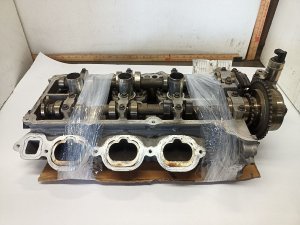
Used OEM Parts in Stock
New Aftermarket Parts Available


The information in this article is provided for general reference and educational purposes only. Vehicle specifications, procedures, and part compatibility can vary by production date, trim level, and region. Always consult your vehicle's factory service manual and verify part numbers before purchasing or performing repairs. Safety-critical components such as airbags, seat belts, and braking systems should be installed by a qualified professional.
- Ford Taurus:
- 🧭 Diagnostic Flowchart
- 🎬 Helpful Videos
- 🛍️ Shop This Part
- What's Unique About the 2008-2019 Ford Taurus
- Symptoms You May Notice
- Most Likely Causes
- Rare But Worth Checking
- Diagnosis Steps
- Parts You'll Likely Need
- Related Codes That Often Appear With This One
- Platform-Specific Known Issues
- Mechanic-Grade Diagnostic Values
- Hidden / Shadow Codes Worth Checking
- Scan Tool Commands That Help
- Wiring & Ground Locations
- Real Owner Repair Stories
- OEM Part Supersession History
- Model Year Variations Within This Range
- Other Known Issues on This Vehicle
- Used vs. New Parts: Buying Guide for This Vehicle
- Real Owner Stories
- 2008-2019 Ford Taurus 3.5L V6
- 2007-2018 Ford Edge 3.5L/3.7L V6
- 2008-2019 Ford Taurus 3.5L V6 — ~90000 miles
- Related OBD-II Codes
- Frequently Asked Questions
- 🎟️ Get 5% Off