

P0116 on 2014-2019 Kia Soul: Engine Coolant Temperature Sensor Causes and Fixes
On a 2014-2019 Kia Soul, code P0116 is most often caused by a faulty engine coolant temperature (ECT) sensor, a stuck-open thermostat, or simply low coolant. Before buying parts, check your coolant level, as a simple leak from a loose hose can also trigger this code. The most common engines are the 1.6L Gamma GDI and 2.0L Nu GDI.
- P0116 means the engine coolant temperature reading is illogical or not changing as expected.
- Always check your coolant level first; a simple leak can cause this code.
- The most common failed parts are the Engine Coolant Temperature (ECT) sensor and the thermostat.
- Use a scan tool's live data to watch the temperature as the engine warms up; this is the best way to diagnose the problem.
- This is a very DIY-friendly repair with affordable parts.
What's Unique About the 2014-2019 Kia Soul
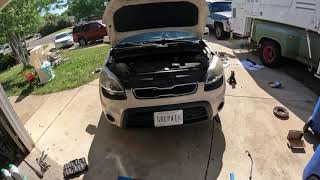
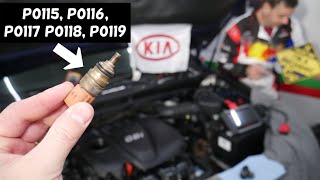
For the second-generation (2014-2019) Kia Soul, which primarily uses the 1.6L Gamma and 2.0L Nu engines, the P0116 code does not point to a unique, model-specific defect covered by recalls. The causes are typical for most modern vehicles and usually trace back to one of three things: a failed sensor, a stuck thermostat, or low coolant levels. One documented case on a 2015 Soul showed the code was triggered simply because the radiator was empty from a disconnected hose, highlighting the importance of checking the basics first. 🎬 Watch: Real-world diagnosis of P0116 on a 2015 Soul The ECT sensor on the 2.0L engine is located on the driver's side of the cylinder head, making it relatively accessible for diagnosis and replacement.
Symptoms You May Notice
- Check Engine Light is illuminated
- Temperature gauge on the dashboard behaves erratically, stays on cold, or doesn't move
- Engine is difficult to start, especially when cold
- Noticeable decrease in fuel economy
- Engine runs rough, hesitates, or stalls
- Cooling fans run constantly or not at all
- Heater may not blow hot air if the engine isn't reaching temperature
- Replacing the ECT sensor without first checking the coolant level or testing the thermostat. A simple coolant top-off or thermostat replacement might be the actual fix.
- Replacing the thermostat when the actual issue is a faulty ECT sensor providing erratic readings. Watching live data is key to differentiating the two.
Most Likely Causes
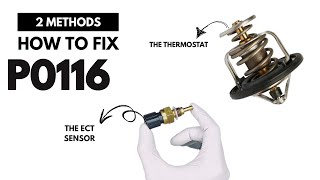
- Faulty Engine Coolant Temperature (ECT) Sensor 🔴 High Probability → Shop Engine Coolant Temperature Sensor The ECT sensor is a thermistor that can degrade over time, leading to inaccurate or erratic readings. It's a common failure point on many vehicles, including the Kia Soul, due to constant exposure to heat cycles.
How to confirm: Use a scan tool to monitor live data. On a cold engine, the ECT reading should be close to the Intake Air Temperature (IAT). As the engine warms up, the temperature should rise steadily. If it jumps erratically, reads an illogical value (e.g., -40°F), or doesn't move, the sensor is bad. On the 2.0L engine, the sensor is located on the driver's side of the cylinder head.
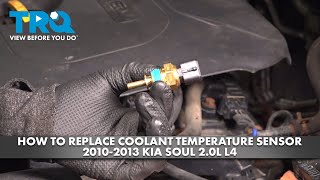
Typical fix: Replace the engine coolant temperature sensor. This is a straightforward job that requires a 19mm deep socket. 🎬 Watch: How to locate and replace the temperature sensor Some coolant will be lost, so be prepared to top it off.
Est. part cost: $25-$75 - Stuck or Faulty Thermostat 🟡 Medium Probability → Shop Integrated Thermostat Housing Assembly Thermostats can fail and get stuck in the open position. A thermostat stuck open is a frequent cause of P0116 (and more commonly, P0128) because it prevents the engine from reaching its proper operating temperature in the time the PCM expects.
How to confirm: Monitor the live ECT data on a scan tool while driving. If the engine takes an excessively long time to warm up or the temperature drops significantly at highway speeds, the thermostat is likely stuck open. You can also feel the upper radiator hose; it should remain cool until the engine warms up and the thermostat opens.
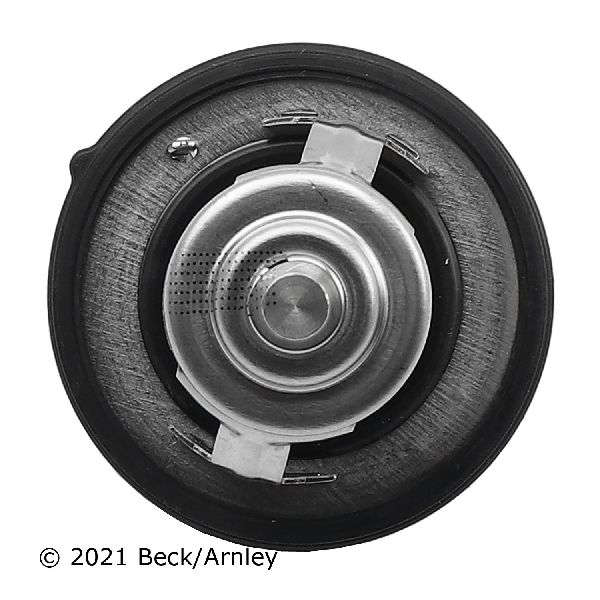
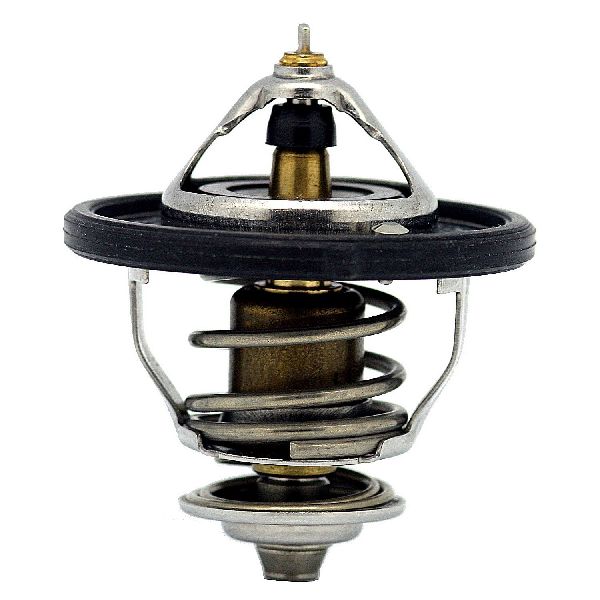
Typical fix: Replace the engine thermostat and gasket. It's often recommended to replace the thermostat and ECT sensor at the same time, especially on higher mileage vehicles. On many Kia models, the thermostat is located where the lower radiator hose meets the engine. 🎬 See this step-by-step guide to replacing the thermostat
Est. part cost: $20-$50 - Low Engine Coolant Level 🟡 Medium Probability → Shop Engine Coolant / Antifreeze Coolant leaks can occur from hoses, the radiator, or the water pump. If the level drops to where the ECT sensor is exposed to an air pocket instead of coolant, it will send erratic signals to the PCM, triggering a P0116 code.
How to confirm: Visually inspect the coolant level in the reservoir and radiator (only when the engine is cold). A YouTube video of a 2015 Soul with this exact code revealed an empty radiator due to a completely disconnected hose, which was the sole cause of the problem. Look for signs of coolant leaks (white or colored crusty residue) on engine components and under the vehicle.
Typical fix: Find and repair the source of the coolant leak, then refill and bleed the cooling system. A simple hose clamp replacement or tightening can sometimes be the fix.
Est. part cost: $15-$25 for coolant, plus parts for leak repair - Wiring or Connector Issue ⚪ Low Probability Vibration and heat can cause wires to break or insulation to fray over time. The connector pins can also corrode, leading to a poor signal. Rodents have also been known to chew on wiring harnesses.
How to confirm: Visually inspect the wiring harness and connector for the ECT sensor. Look for any signs of damage, corrosion, or loose pins. A 'wiggle test' on the harness while watching live data can sometimes reveal an intermittent connection. Check for continuity with a multimeter from the ECU to the sensor connector.
Typical fix: Repair the damaged section of wiring or replace the connector pigtail. Ensure the connection is clean and secure, possibly using dielectric grease to prevent future corrosion.
Est. part cost: $10-$30
Rare But Worth Checking
- Powertrain Control Module (PCM) Fault: This is very rare. Before condemning the PCM, all other possibilities (sensor, thermostat, wiring, coolant level) must be exhaustively ruled out. A PCM issue could be a software glitch or an internal hardware failure. Some manufacturers issue software updates to change the parameters for setting this code, so it's worth checking for TSBs.
Diagnosis Steps
- Check Coolant Level: Before anything else, ensure the engine is cold and check the coolant level in the reservoir and radiator. Top off if necessary and inspect for obvious leaks like loose hoses.
- Scan for Codes: Use an OBD-II scanner to read the codes. Note if P0116 appears with other related codes like P0117, P0118, or P0128, as this can help pinpoint the issue.
- Analyze Live Data (Cold Engine): With the engine off, view live data. The Engine Coolant Temperature (ECT) reading should be nearly identical to the Intake Air Temperature (IAT) reading. If it's drastically different (e.g., ECT reads -40°F on a 70°F day), the sensor or its circuit is faulty.
- Analyze Live Data (Warm-Up): Start the engine and watch the ECT reading. It should climb steadily to around 190-210°F. If it jumps around, stays cold for too long, or never reaches operating temperature, you likely have a bad sensor or a stuck-open thermostat.
- Inspect Wiring: Visually inspect the ECT sensor's connector and wiring for any signs of corrosion, damage, or loose connections. The sensor on the 2.0L engine is on the driver's side of the cylinder head.
- Test the Thermostat: If the engine warms up very slowly or the temperature drops on the highway, the thermostat is the primary suspect. Confirm by feeling the upper radiator hose; it should not get hot until the engine reaches operating temperature.
- Test the Sensor: If the wiring is good but the signal is erratic, the sensor itself is the most likely cause. It can be tested with a multimeter for resistance (typically ~2,000-3,000 ohms at 68°F/20°C), but replacement is often easier given the low cost of the part.
Parts You'll Likely Need
- Engine Coolant Temperature (ECT) Sensor
(OEM #39220-38030)— This sensor is the most common part to fail, causing the P0116 code by sending incorrect temperature readings to the engine computer. This part number is widely used across many Hyundai/Kia models.
Trusted brands: Kia/Hyundai (OEM), NTK, Delphi, Beck/Arnley
OEM price range: $40-$70
Aftermarket price range: $20-$45 - Engine Thermostat
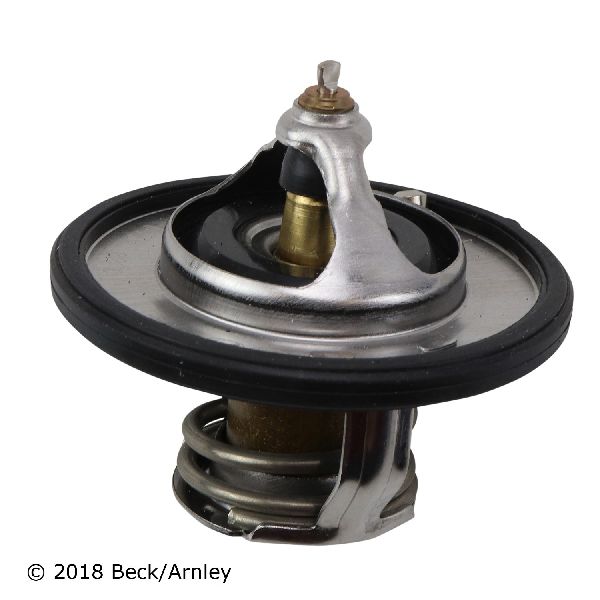
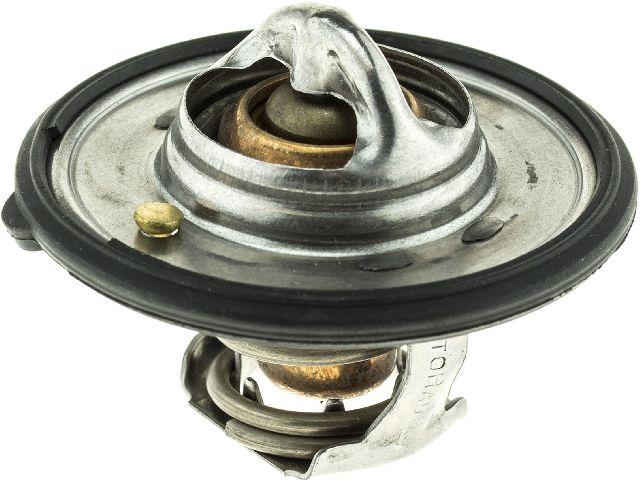
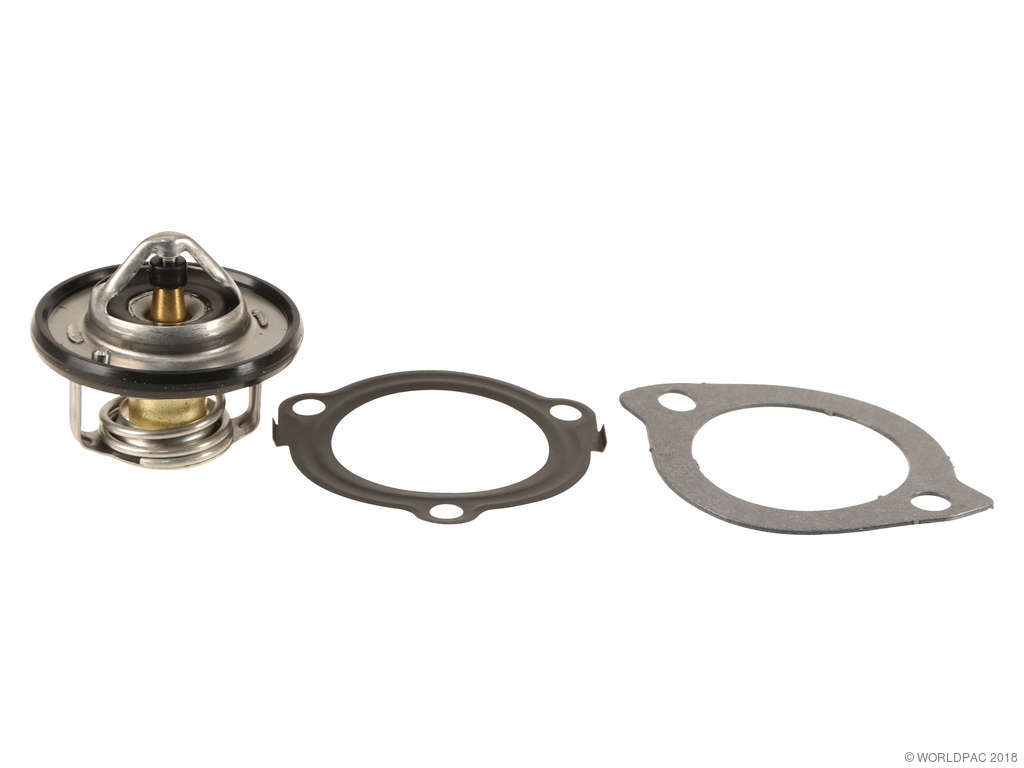
(OEM #25500-2E000 (For 2.0L Nu Engine))— A thermostat stuck open is the second most common cause, as it prevents the engine from warming up correctly, which the PCM flags as a performance issue. Often replaced as a complete housing assembly.
Trusted brands: Kia/Hyundai (OEM), MotoRad, Stant, Gates
OEM price range: $30-$50
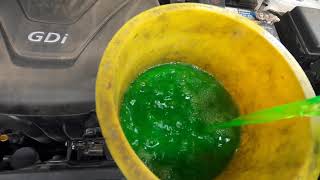
Aftermarket price range: $20-$40 - Engine Coolant / Antifreeze — Coolant must be replaced or topped off when replacing the sensor or thermostat. Using the correct type (typically a green or pink Asian P-HOAT) is critical.
Trusted brands: Kia/Hyundai (OEM), Zerex Asian Vehicle, Pentofrost A3
OEM price range: $25-$35 per gallon
Aftermarket price range: $20-$30 per gallon
Related Codes That Often Appear With This One
- P0117 — P0117 (ECT Circuit Low Input) indicates a short in the circuit. If you see both, it strongly points to an electrical problem with the sensor or wiring, rather than a mechanical issue like a thermostat.
- P0118 — P0118 (ECT Circuit High Input) indicates an open circuit. Like P0117, its presence with P0116 suggests an electrical fault is the root cause.
- P0128 — P0128 (Coolant Thermostat - Coolant Temperature Below Thermostat Regulating Temperature) is very commonly caused by a thermostat stuck open. If you have P0116 and P0128 together, the thermostat is almost certainly the culprit, as the engine is failing to reach operating temperature in the expected time.
Mechanic-Grade Diagnostic Values
- ECT Sensor Resistance (Cold Engine) — expected: 2,000 - 3,000 Ohms (Ω) at 20°C / 68°F. Failure: A reading significantly outside this range, or showing infinite resistance (open) or near-zero resistance (shorted), indicates a faulty sensor.
- ECT Sensor Resistance (Hot Engine) — expected: ~200 - 300 Ohms (Ω) at 90°C / 194°F. Failure: If the resistance does not drop into this range as the engine warms to operating temperature, the sensor is not responding correctly.
- ECT Sensor Signal Voltage (Key On, Engine Off, Cold) — expected: ~2.0V to 3.0V. Failure: A reading of ~5.0V suggests an open circuit (unplugged sensor or broken wire). A reading near 0V suggests a short to ground.
- ECT Sensor Signal Voltage (Engine at Operating Temp) — expected: ~0.5V to 1.0V. Failure: If the voltage fails to drop into this range as the engine warms up, it could indicate a stuck-open thermostat preventing the engine from reaching temperature, or a faulty sensor.
Wiring & Ground Locations
- Engine Ground Strap (1.6L Gamma) — This is a wiring assembly that connects the engine block to the vehicle's chassis/frame rail. A common attachment point is on the frame rail near the driver's side motor mount.. The ECT sensor relies on a clean ground reference to provide an accurate voltage signal to the PCM. A corroded or loose main engine ground can cause the sensor's ground reference to float, leading to erratic and incorrect readings that can trigger a P0116 code. The OEM part number for the assembly on the 1.6L engine is 91860-B2210.
- Battery to Chassis Ground — The main ground cable running from the negative battery terminal to a bolt on the chassis, often on the driver's side strut tower.. This is the primary ground for the entire vehicle electrical system. While less likely to cause an isolated P0116, a poor connection here can cause a wide range of bizarre electrical issues, including faulty sensor readings.
- ECT Sensor Ground (at PCM) — This is not a physical strap, but the dedicated sensor ground circuit within the wiring harness, terminating at a specific pin on the Powertrain Control Module (PCM). For some models, this is Pin 24 on the ECM connector.. A break or high resistance in this specific wire between the sensor and the PCM will cause an open circuit or incorrect reading, directly leading to codes P0116, P0117, or P0118.
Real Owner Repair Stories
- ClubLexus Forum User 'Hayk' (2011 Lexus RX450h (Note: Not a Kia Soul, but the diagnostic principle is identical and illustrative)) — P0116 code present. OBD-II scanner showed coolant temperature would not exceed 145°F after 30+ minutes of driving.
❌ Tried (didn't work) Initially suspected the ECT sensor itself but decided to diagnose further.
✅ What actually fixed it Replacing the engine thermostat resolved the issue. The old thermostat was likely stuck partially open, preventing the engine from reaching full operating temperature. This also allowed other emissions monitors to complete their cycles, which they had failed to do before the repair. - Reddit user 'blaire_with_an_e' (2015 Kia Soul) — Recurring P0116 Check Engine Light every two weeks, despite the car running perfectly and the temp gauge appearing normal.
❌ Tried (didn't work) ECT sensor was replaced by a body shop after a fender bender., When the code returned, the shop replaced the sensor again., When the code returned again, a Kia dealership replaced the spark plugs and performed an oil change, but the code came back.
✅ What actually fixed it The final fix was not posted, but a commenter suggested the root cause was likely a wiring or connector issue in the ECT sensor circuit that was damaged during the fender bender and not properly repaired. This highlights that when multiple new sensors don't fix a performance code, the problem is almost certainly in the wiring harness or connectors.
When the Usual Fixes Don't Work
- While the ECT sensor is a common failure point, it is frequently replaced unnecessarily. Multiple owner and technician accounts show that a P0116 code often persists after a sensor replacement. In these cases, the actual root cause is very often a faulty thermostat that is stuck open, preventing the engine from reaching its target temperature within the timeframe expected by the PCM. A diagnostic approach that tests the thermostat's function by observing live data during warm-up is critical to avoid replacing good parts. If the temperature rises very slowly or drops at highway speeds, the thermostat should be the primary suspect, not the sensor.
OEM Part Supersession History
39220-38020, 39230-26700→39220-38030— Part consolidation and potential design/material improvements by the manufacturer.
Heads up: The newer part number 39220-38030 is the correct direct replacement for the older numbers and is widely used across many Kia/Hyundai vehicles from 2001-2021+.
Model Year Variations Within This Range
- 2017-2019: For the 2017 model year refresh, Kia introduced a new optional engine: a 1.6L turbocharged four-cylinder producing 201 hp, paired with a seven-speed dual-clutch transmission. The existing 2.0L Nu engine was slightly downrated from 164 hp to 161 hp. While the P0116 diagnosis remains similar, technicians should be aware of which engine they are working on, as part locations and specifications could differ slightly.
Diagnostic Flowchart
Used vs. New Parts: Buying Guide for This Vehicle
When a used part is the smart pick: For this specific repair, using a used part is not recommended. The primary failure components, the ECT sensor and thermostat, are inexpensive wear-and-tear items. The risk of a used part failing shortly after installation outweighs the minimal cost savings.
What to inspect on the donor part:
- Not applicable as used parts are not advised.
OEM-only on this vehicle (don't cheap out):
- No parts for this job are strictly 'OEM-only', but using a genuine Kia/Hyundai thermostat is often recommended for best fit and correct temperature rating. Aftermarket sensors from reputable brands are generally reliable.
Aftermarket brands forum-validated for this vehicle:
- ECT Sensor: NTK, Delphi, Beck/Arnley
- Thermostat: Gates, Stant, MotoRad
- Coolant: Zerex Asian Vehicle, Pentofrost A3
Brands owners have reported issues with on this vehicle:
- Avoid unbranded, 'white-box' sensors and thermostats from online marketplaces. These often have high failure rates, incorrect resistance curves, or wrong temperature ratings, which can cause the code to return immediately.
Real Owner Stories
Aggregated from forums and TSBs cited above. Mileages and costs reflect what owners reported in those sources.
2015 Kia Soul
Symptoms: The check engine light would come on with code P0116 every two weeks, even though the temperature gauge was working fine and the car was running perfectly.
What fixed it: The owner reported that replacing the temperature sensor multiple times, as well as replacing the spark plugs and getting an oil change, did not resolve the recurring code.
Source hint: Reddit r/AskAMechanic
2015 Kia Soul
Symptoms: The vehicle had check engine light codes P0116 and P0117. Upon inspection, the radiator was found to be empty of coolant.
What fixed it: The root cause was a disconnected lower hose. The fix was simply to reconnect the hose securely and refill the cooling system.
Source hint: YouTube: Diagnosing codes P0116 and P0117 on a 2015 Kia Soul
Kia Soul
Symptoms: The engine was slow to warm up, which triggered a P0128 code, a common companion to P0116.
What fixed it: The issue was resolved by replacing the engine thermostat.
Source hint: YouTube: How To Replace The Thermostat On A Kia Soul or Forte Rio P0128
Related OBD-II Codes
Frequently Asked Questions
Where is the Engine Coolant Temperature (ECT) sensor located on my 2.0L Kia Soul?
My Kia Soul is taking a very long time to warm up. Is this related to the P0116 code?
What should the coolant temperature be on a scan tool for my Kia Soul?
I have a P0116 code but the car seems fine. What is the absolute first thing I should check?
If I need to replace the thermostat on my Soul, should I replace the ECT sensor too?
What tool do I need to replace the ECT sensor on my Kia Soul?
Helpful Videos
![How to Fix P0116 Engine Code in 3 Minutes [2 DIY Methods / Only $7.31]](https://img.youtube.com/vi/lEaB_7q1xKI/mqdefault.jpg)
We Have This Part in Stock


The information in this article is provided for general reference and educational purposes only. Vehicle specifications, procedures, and part compatibility can vary by production date, trim level, and region. Always consult your vehicle's factory service manual and verify part numbers before purchasing or performing repairs. Safety-critical components such as airbags, seat belts, and braking systems should be installed by a qualified professional.
- Kia Soul:
- 🧭 Diagnostic Flowchart
- 🎬 Helpful Videos
- 🛍️ Shop This Part
- What's Unique About the 2014-2019 Kia Soul
- Symptoms You May Notice
- Most Likely Causes
- Rare But Worth Checking
- Diagnosis Steps
- Parts You'll Likely Need
- Related Codes That Often Appear With This One
- Mechanic-Grade Diagnostic Values
- Wiring & Ground Locations
- Real Owner Repair Stories
- When the Usual Fixes Don't Work
- OEM Part Supersession History
- Model Year Variations Within This Range
- Used vs. New Parts: Buying Guide for This Vehicle
- Real Owner Stories
- 2015 Kia Soul
- 2015 Kia Soul
- Kia Soul
- Related OBD-II Codes
- Frequently Asked Questions
- 🎟️ Get 5% Off