

P0116 on 2017-2020 Lincoln Continental: ECT Sensor Range/Performance Issues and Fixes
On a 2017-2020 Lincoln Continental, especially with the 2.7L engine, code P0116 is most often caused by a faulty Engine Coolant Temperature (ECT) sensor or a poor connection at the sensor. TSBs confirm a loose connector is a common culprit. Replacing the sensor is a common, affordable fix, with the part costing around $30-$50.
- For a P0116 code on a 2017-2020 Continental, first check the ECT sensor's electrical connector to ensure it's securely plugged in, especially on 2.7L models.
- The most likely failed part is the Engine Coolant Temperature (ECT) sensor itself, which is an affordable and relatively easy part to replace for a DIYer.
- Always check your coolant level first; a low level can cause this code and indicates a leak that needs to be addressed.
- Driving with this code can lead to poor performance and risks engine overheating, so it should be addressed promptly.
What's Unique About the 2017-2020 Lincoln CONTINENTAL
For the 2017-2020 Lincoln Continental, particularly those with the 2.7L EcoBoost engine, this code is specifically called out in multiple manufacturer Technical Service Bulletins (TSBs). These bulletins highlight that the issue is frequently not just the sensor itself, but the electrical connector not being fully seated. This suggests a known vulnerability in the connection's security or wiring harness, making a connector inspection a critical first step. Furthermore, TSB SSM 48991 links this code to the knock sensor harness, sometimes requiring both to be addressed. While not specific to the Continental, the same 2.7L engine in the F-150 had such a problematic ECT sensor location that Ford issued a TSB (21-2168) and a relocation kit 🎬 Watch this breakdown of TSB 21-2168 and the relocation fix, underscoring the known issues with this sensor system in the engine family.
Diagnostic Flowchart
Tap your situation to follow the diagnostic path that matches what you're seeing on this vehicle.
Symptoms You May Notice
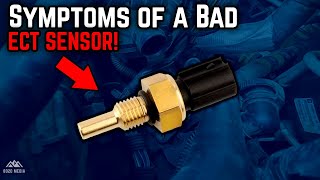
🎬 Watch: Common signs and symptoms of a failing ECT sensor- Check Engine Light (Malfunction Indicator Lamp or MIL) is on
- Wrench light may be illuminated
- Engine Coolant Over Temperature warning on the dash, even on a cold engine
- Engine temperature gauge behaving erratically, staying on cold, or pegged on hot
- Reduced fuel economy
- Engine running rough, hesitating, or hard starting
- Cooling fans running constantly at high speed, even after engine shutdown
- A/C system may not function correctly
- Vehicle may enter a limp mode, sometimes described as a 'rumble strip' feeling
- Replacing the thermostat when the ECT sensor is the actual problem.
- Replacing the radiator or water pump when the issue is a simple sensor or connector fault.
- Replacing only the ECT sensor on a 2.7L engine when TSB 48991 suggests the knock sensor harness is also a required part of the fix.
Most Likely Causes
- Faulty Engine Coolant Temperature (ECT) Sensor Connector 🔴 High Probability → Shop Engine Wiring Harness Specifically cited in TSBs #SSM 47791 and #SSM 46906 for the 2.7L engine across multiple platforms (Continental, F-150, Edge), stating the connector may not be fully seated from the factory or after service.
How to confirm: Visually inspect the ECT sensor connector for looseness, corrosion, or damage. Wiggle the connector with the engine running to see if the temperature reading on a scan tool fluctuates wildly.
Typical fix: Ensure the connector is fully seated and the locking tab is engaged. Clean the terminals with electrical contact cleaner and apply dielectric grease. Replace the connector pigtail if damaged.
Est. part cost: $15-$40 - Faulty Engine Coolant Temperature (ECT) Sensor 🔴 High Probability → Shop Engine Coolant Temperature Sensor Cited as a primary cause in TSB #SSM 48991. Sensors are common failure items due to constant exposure to heat and coolant. This TSB also implicates the associated wiring harness.
How to confirm: Use a scan tool to monitor the ECT reading; if it's irrational (e.g., -40°F on a warm engine) or doesn't change as the engine warms up, the sensor is likely bad. You can also test its resistance with a multimeter; it should be between 2,000 and 3,000 ohms at ~68°F (20°C).
Typical fix: Replace the ECT sensor. Per TSB 48991, on the 2.7L engine, it is recommended to also replace the knock sensor harness (part 12A699) at the same time as the ECT sensor.
Est. part cost: $25-$50 - Low Engine Coolant Level 🟡 Medium Probability → Shop Engine Coolant / Antifreeze Not platform-specific, but if the coolant level is below the sensor, it can't get an accurate reading, causing erratic signals and triggering the code.
How to confirm: Visually check the coolant level in the expansion tank when the engine is cold. If it's low, there is a leak in the system that must be found.
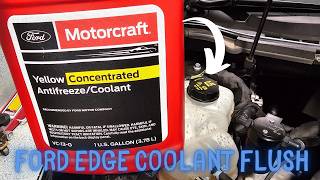
Typical fix: Top off the coolant with the correct type (Ford/Motorcraft Orange or Yellow 🎬 See how to flush and upgrade to Motorcraft Yellow coolant) and pressure test the system to find and repair the source of the leak.
Est. part cost: $20-$40 for coolant - Sticking Thermostat ⚪ Low Probability → Shop Integrated Thermostat Housing Assembly A thermostat stuck open can prevent the engine from reaching operating temperature within the time the PCM expects, triggering P0116. This is a general cause, not specific to this platform.
How to confirm: Monitor the coolant temperature on a scan tool. If it rises very slowly and never reaches the normal operating temp (around 195-215°F) during a drive, the thermostat is likely stuck open.
Typical fix: Replace the thermostat and gasket.
Est. part cost: $30-$70
Rare But Worth Checking
- Damaged Wiring Harness: TSB #SSM 48991 explicitly states that for the 2.7L engine, the P0116 code may be due to the knock sensor wiring harness, which is intertwined with the ECT circuit. It recommends replacing the harness along with the sensor. Damage from heat, oil, or rodents can cause shorts or open circuits.
- Powertrain Control Module (PCM) Issue: This is very rare, but a software glitch or internal failure in the PCM can cause it to misinterpret a good sensor signal. This should only be considered after all other possibilities, especially wiring, have been exhausted.
Diagnosis Steps
- Check for other Diagnostic Trouble Codes (DTCs) that may provide more context. P0117, P0118, and P0128 are common companions.
- With a cold engine, check the coolant level in the reservoir and top off if necessary.
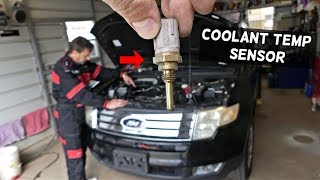
- Visually inspect the Engine Coolant Temperature (ECT) sensor and its electrical connector for any signs of damage, corrosion, or looseness. The sensor is typically located in the thermostat housing area.
- Ensure the connector is fully seated and clicks into place. Per TSBs SSM 47791 and 46906, this is a very common point of failure on the 2.7L engine.
- Using an OBD-II scan tool, observe the live data for ECT Sensor 1. With a cold engine, its reading should be close to the ambient air and intake air temperature readings.
- Start the engine and monitor the ECT reading as it warms up. The temperature should climb steadily and smoothly. If it jumps around, drops out, or doesn't move, the sensor or its circuit is faulty.
- If the sensor reading seems plausible but the code persists, test the thermostat by checking if the engine reaches and maintains its normal operating temperature (typically 195-215°F).
- If wiring is suspected (especially on a 2.7L), inspect the harness carefully. TSB 48991 points to the knock sensor harness which includes the ECT wiring. Disconnect the sensor and check for 5V reference and a good ground at the connector with the key on. Test for continuity between the PCM and the connector if needed.
Parts You'll Likely Need
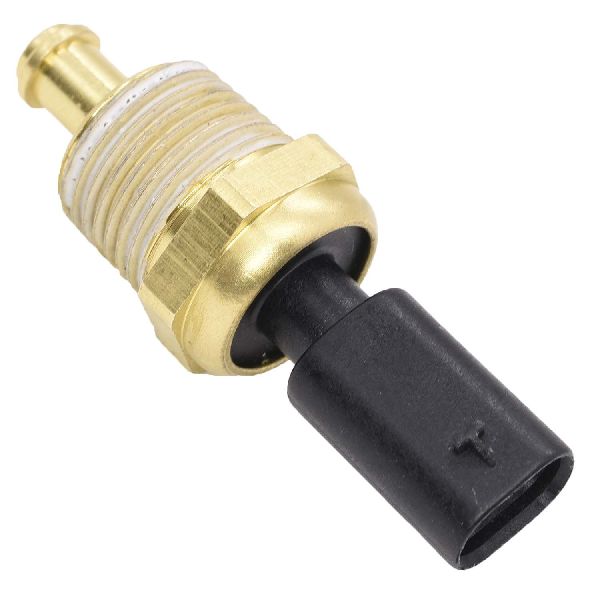
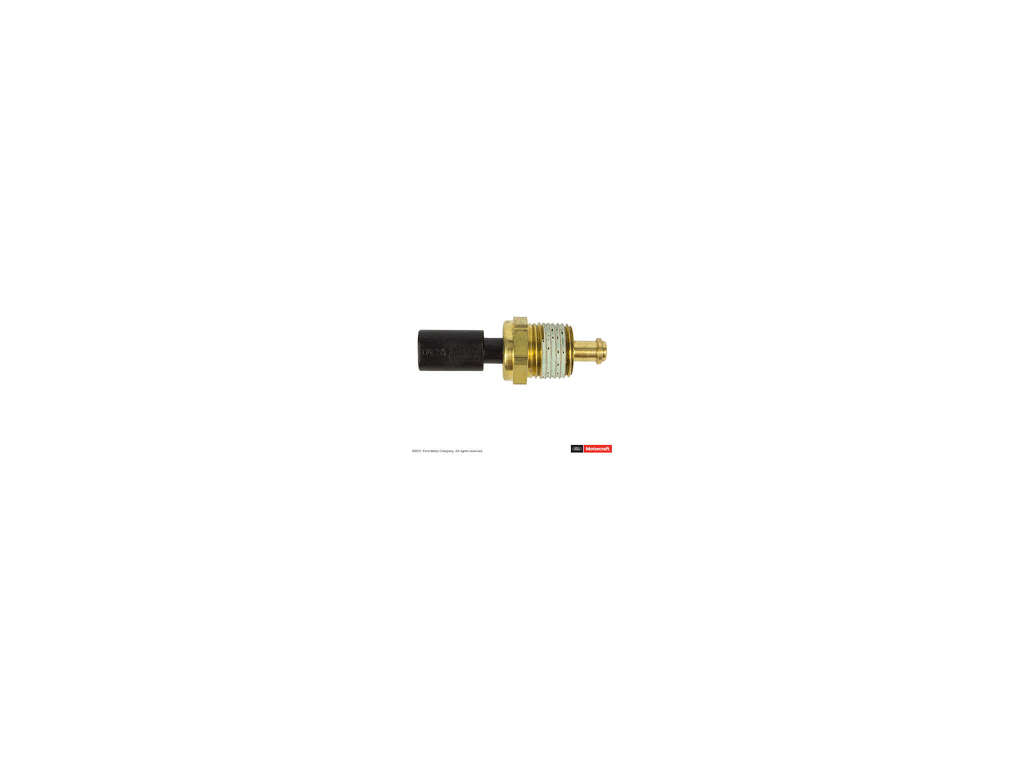
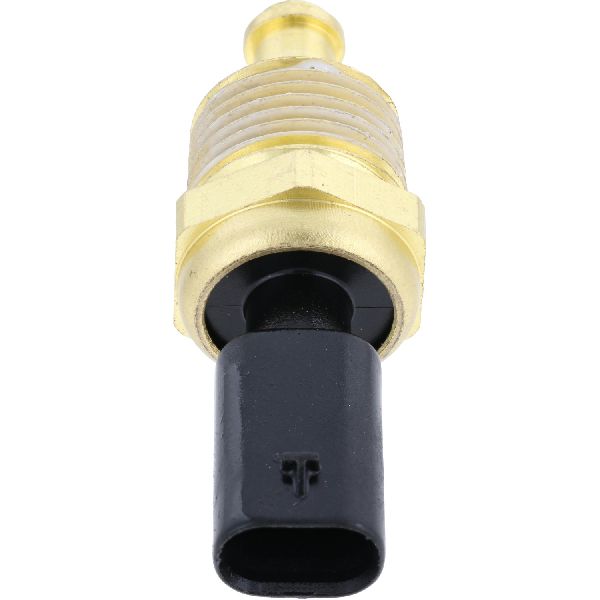
- Engine Coolant Temperature Sensor
(OEM #FT4Z-12A648-B)— This is the most common part to fail, as identified by multiple TSBs and general diagnostic principles for this code. It is used on the 2.7L and 3.0L engines in the Continental.
Trusted brands: Motorcraft, Standard Ignition (SMP), Walker Products
OEM price range: $27-$45
Aftermarket price range: $25-$45
Related Codes That Often Appear With This One
- P0117 — Indicates ECT Sensor Circuit Low Input, often appearing with P0116 as the sensor signal becomes erratic.
- P0118 — Indicates ECT Sensor Circuit High Input, the opposite of P0117, also commonly seen with a failing sensor or wiring.
- P0128 — Indicates Coolant Temperature is Below Thermostat Regulating Temperature. This can be triggered by a faulty ECT sensor providing a false low reading, or a thermostat that is stuck open.
- P0217 — Indicates Engine Overheat Condition. This code can appear alongside P0116 if the faulty sensor fails to trigger the cooling fans, leading to a genuine overheat event.
Technical Service Bulletins (TSBs) & Recalls
- SSM 48991: Notes that P0116 (and other codes) on 2.7L engines may be due to the ECT sensor or knock sensor wiring harness, requiring replacement of both.
- SSM 47791: States that P0116 on 2.7L engines may be due to an ECT sensor connector which is not fully seated.
- SSM 46906: An earlier bulletin with the same information as SSM 47791, pointing to an improperly seated ECT sensor connector.
Platform-Specific Known Issues
- TSB SSM 48991: For 2.7L EcoBoost engines, this TSB covers the 2017-2020 Continental (among other Ford/Lincoln models) and states that DTCs including P0116 may be due to the ECT sensor or its associated knock sensor wiring harness. The official fix is to replace both the ECT sensor (12A648) and the knock sensor harness (12A699).
- TSB SSM 47791 & SSM 46906: These bulletins specifically call out that on 2.7L engines, P0116 can be caused by an ECT sensor connector that is not fully seated. This is a critical first check before replacing parts.
- Context from a Platform Mate (F-150 TSB 21-2168): On 2018-2020 F-150s with the same 2.7L engine, the ECT sensor was moved to a location under the intake manifold that requires 8+ hours of labor to access. Ford issued a TSB with a kit (ML3Z-14A411-H) to relocate the sensor to a heater hose. While the Continental does not have this specific sensor location, this TSB proves a known weakness with the ECT system in this engine family.
Mechanic-Grade Diagnostic Values
- ECT Sensor Resistance (disconnected) — expected: Approx. 2000-3000 Ω at 20°C (68°F); Approx. 200-300 Ω at 90°C (194°F).. Failure: An open circuit (infinite resistance), a short (near-zero resistance), or values that do not correlate with temperature indicate a failed sensor.
- ECT Sensor Signal Voltage (at connector, key on) — expected: Approx. 2.0V - 3.0V on a cold engine; drops to approx. 0.5V on a fully warm engine.. Failure: Voltage stuck high (near 5V) or low (near 0V), or voltage that doesn't change as the engine warms up, points to a sensor or circuit fault.
- Scan Tool Cold Soak Sensor Correlation — expected: After sitting overnight, the Engine Coolant Temp (ECT), Intake Air Temp (IAT), and Transmission Fluid Temp (TFT) readings should all be within a few degrees of each other and the ambient air temperature.. Failure: If the ECT reading is significantly different from the IAT and TFT readings on a cold engine, the ECT sensor is very likely faulty.
Scan Tool Commands That Help
- High-End Scanners (e.g., iCarsoft, Ford IDS): Engine Correction Calibration / Adaptive Strategy Reset — After replacing the ECT sensor or repairing the circuit, resetting the engine's learned adaptations can help ensure the PCM correctly uses the data from the new sensor immediately.
Wiring & Ground Locations
- ECT Sensor (2.7L/3.0L EcoBoost) — Typically located in or near the thermostat housing.. This is the primary sensor providing temperature data to the PCM. Its connector and the wiring leading to it are common failure points.
- Cylinder Head Temperature (CHT) Sensor (3.7L V6) — Located on the cylinder head, as opposed to in a coolant passage.. On the 3.7L engine, this sensor serves the function of the ECT. It measures metal temperature instead of coolant temperature directly. A P0116 code on a 3.7L points to this sensor.
- Knock Sensor Harness (Part #12A699 on 2.7L) — Runs in the same area as the ECT sensor harness, with wiring intertwined.. TSB SSM 48991 explicitly identifies this harness as a cause for P0116 on the 2.7L engine. Damage to this harness can disrupt the ECT sensor signal, making it a critical inspection point if the sensor itself tests good.
- PCM Grounds — Various locations on the chassis and engine block (e.g., G101, G104 on other Ford platforms).. The ECT sensor circuit relies on a stable ground reference provided by the PCM. A corroded or loose PCM ground can cause erratic readings across multiple sensors, including the ECT.
Real Owner Repair Stories
- Ford TSB 21-2168 for F-150 (2018-2020 Ford F-150 with 2.7L EcoBoost engine) — Check Engine Light, cooling fan running on high, codes P0116, P0117, P0118, P0119, P1299.
❌ Tried (didn't work) Replacing the ECT sensor in its original location was often a temporary fix or did not resolve the issue due to the extreme difficulty of access and potential for harness damage during the repair.
✅ What actually fixed it Ford issued a relocation kit (Part #ML3Z-14A411-H) that includes a new heater hose with an integrated ECT sensor port and a jumper harness. This moves the sensor from an inaccessible location under the intake manifold to an easy-to-reach spot on the heater hose, providing a permanent and robust fix.
"I Checked Everything" — The Actual Cause
- The equivalent for this code is 'Sensor and Thermostat Test Good, But Code Persists.' In this scenario, especially on the 2.7L EcoBoost engine, the root cause is frequently the associated knock sensor wiring harness (Part #12A699). TSB SSM 48991 indicates that damage or faults within this intertwined harness can cause the ECT circuit to send irrational signals, even when the ECT sensor itself is functioning perfectly. The official repair is to replace both the sensor and the knock sensor harness together.
OEM Part Supersession History
DY-1298, FT4Z-12A648-A→FT4Z-12A648-B— Unspecified, but part revisions are typically made to improve reliability, durability, or accuracy.
Heads up: The newest part number, FT4Z-12A648-B, should be used for all repairs to ensure the most updated component is installed.
Model Year Variations Within This Range
- 2017-2020: The cause and specific TSBs are highly dependent on the engine. The 2.7L EcoBoost is prone to connector and knock-sensor-harness issues (TSB 48991). The 3.0L EcoBoost uses the same sensor but is not named in these specific TSBs. The 3.7L V6 uses a different CHT sensor and has a major known issue with its internal water pump, which can cause catastrophic engine failure if it leaks.
Helpful Videos

We Have This Part in Stock


The information in this article is provided for general reference and educational purposes only. Vehicle specifications, procedures, and part compatibility can vary by production date, trim level, and region. Always consult your vehicle's factory service manual and verify part numbers before purchasing or performing repairs. Safety-critical components such as airbags, seat belts, and braking systems should be installed by a qualified professional.
- Lincoln CONTINENTAL:
- 🧭 Diagnostic Flowchart
- 🎬 Helpful Videos
- 🛍️ Shop This Part
- What's Unique About the 2017-2020 Lincoln CONTINENTAL
- Symptoms You May Notice
- Most Likely Causes
- Rare But Worth Checking
- Diagnosis Steps
- Parts You'll Likely Need
- Related Codes That Often Appear With This One
- Technical Service Bulletins (TSBs) & Recalls
- Platform-Specific Known Issues
- Mechanic-Grade Diagnostic Values
- Scan Tool Commands That Help
- Wiring & Ground Locations
- Real Owner Repair Stories
- "I Checked Everything" — The Actual Cause
- OEM Part Supersession History
- Model Year Variations Within This Range
- 🎟️ Get 5% Off