

P0116 on 2016-2018 Lincoln MKX: Engine Coolant Temp Sensor Causes and Fixes
On the 2016-2018 Lincoln MKX, especially with the 2.7L EcoBoost engine, code P0116 is most often caused by a faulty Engine Coolant Temperature (ECT) sensor or a poor connection at the sensor's electrical plug. Checking the connector and replacing the sensor are the most common fixes. The issue is well-documented in Ford/Lincoln TSBs.
- For the 2.7L Lincoln MKX, your first step for P0116 should be to physically check if the ECT sensor connector is loose or disconnected.
- A faulty ECT sensor is the next most likely cause, followed by a stuck-open thermostat.
- Use a scan tool to watch the temperature data in real-time; this is the fastest way to determine if the sensor is behaving erratically or if the engine is simply not warming up properly.
- This is a very DIY-friendly repair, with the most common parts being affordable and accessible.
What's Unique About the 2016-2018 Lincoln MKX
The 2016-2018 Lincoln MKX, particularly models with the 2.7L EcoBoost engine, is subject to multiple Technical Service Bulletins (TSBs) for code P0116. These bulletins highlight a known issue where the Engine Coolant Temperature (ECT) sensor connector is not fully seated, leading to a poor connection and erratic signals. This makes checking the connector a critical first step on these vehicles before assuming the sensor itself has failed. The problem was common enough across several platforms that Ford issued multiple overlapping bulletins.
Diagnostic Flowchart
Tap your situation to follow the diagnostic path that matches what you're seeing on this vehicle.
Symptoms You May Notice
- Check Engine Light is on
- Engine temperature gauge behaves erratically (e.g., stays on cold, or jumps to hot)
- Engine overheating warning light may illuminate (even if not actually overheating)
- Cooling fans run constantly at high speed
- Reduced fuel economy
- Rough or hesitant engine performance
- Heater may not blow warm air
- Black smoke from exhaust due to rich fuel mixture
- Replacing the thermostat when the actual issue is a faulty ECT sensor or a loose connector.
- Replacing the ECT sensor when the thermostat is stuck open, preventing the engine from reaching operating temperature correctly.
- On a 2.7L, replacing only the ECT sensor when the underlying issue is a damaged shared harness as described in TSB 48991.
Most Likely Causes
- Poor connection at the ECT sensor 🔴 High Probability → Shop Engine Coolant Temperature Sensor Specifically cited in multiple TSBs (SSM 47791, SSM 46906) for the 2.7L engine as a common cause due to the connector not being fully seated. This is the number one check for this engine.
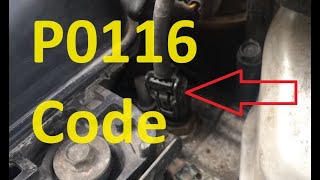
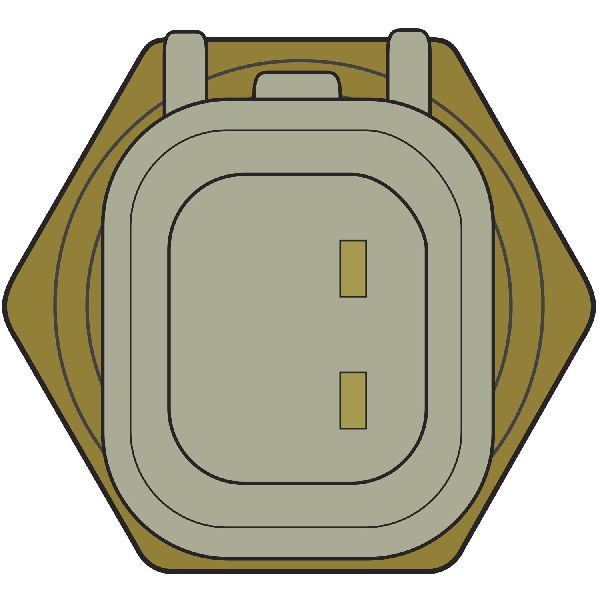
How to confirm: Visually inspect the ECT sensor connector. On the 2.7L, it's on the driver's side of the engine, near the top, sometimes requiring removal of the air intake tube for access. Unplug it, check for corrosion or damage, and plug it back in, ensuring it clicks and is fully seated.
Typical fix: Reseat the connector securely. If the connector or terminals are corroded, clean them. If the connector lock is broken or damaged, replace the pigtail (Motorcraft WPT-1296). Apply dielectric grease before reconnecting.
Est. part cost: $0-$25 (for pigtail if needed) - Faulty Engine Coolant Temperature (ECT) Sensor 🔴 High Probability → Shop Engine Coolant Temperature Sensor TSB SSM 48991 directly points to a faulty ECT sensor as a primary cause for this code on 2.7L engines. Sensors can fail over time from thermal stress. The 3.7L V6 is also prone to simple sensor failure without the specific connector issues of the 2.7L.
How to confirm: Use a scan tool to monitor the ECT data stream. If the temperature reading is erratic, nonsensical (e.g., -40°F on a warm day), or doesn't rise smoothly as the engine warms, the sensor is likely bad. Test resistance; it should be between 2,000 and 3,000 ohms at approximately 68°F (20°C).
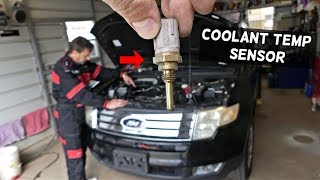
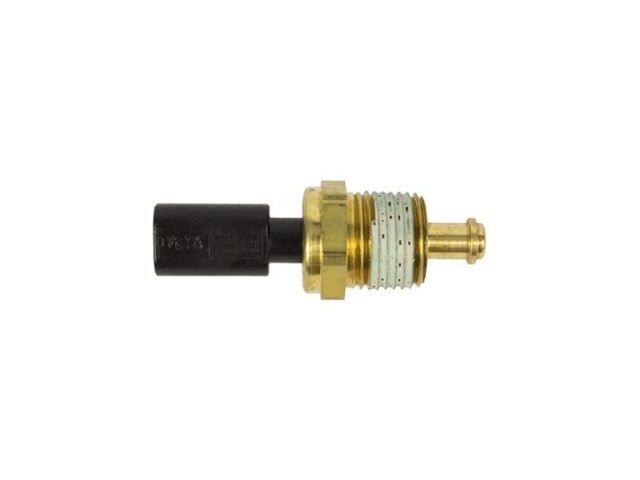
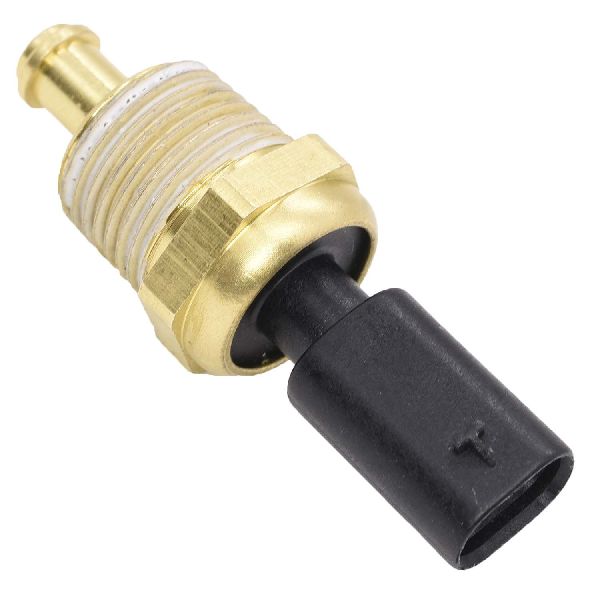
Typical fix: Replace the Engine Coolant Temperature sensor. Part number FT4Z-12A648-B is the common replacement. 🎬 Watch: How to locate and replace the ECT sensor
Est. part cost: $20-$45 - Stuck Thermostat 🟡 Medium Probability → Shop Integrated Thermostat Housing Assembly
How to confirm: Monitor the ECT sensor data on a scan tool. If the engine takes an excessively long time to reach operating temperature (e.g., stays below 180°F after 15-20 minutes of driving), the thermostat is likely stuck open. If it overheats quickly, it may be stuck closed.
Typical fix: Replace the engine thermostat and gasket.
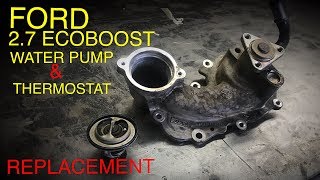
Est. part cost: $30-$60 (part only, thermostat housing can be more) 🎬 See this walkthrough for replacing the thermostat and water pump
- Low Engine Coolant Level 🟡 Medium Probability → Shop Engine Coolant / Antifreeze
How to confirm: Visually check the coolant reservoir when the engine is cold. If the level is below the 'MIN' line, it's low. An air pocket in the system caused by low coolant can prevent the sensor from reading correctly.
Typical fix: Top off the coolant with the correct type (Ford/Motorcraft Orange or Yellow, check owner's manual) and inspect the system for leaks.
Est. part cost: $20-$35 for a gallon of coolant - Damaged Wiring Harness ⚪ Low Probability TSB 48991 for the 2.7L engine explicitly mentions that the issue may be the knock sensor wiring harness, which is intertwined with the ECT sensor circuit. Damage to this harness can affect both sensors. A related TSB for the Ford Edge (SSM 46906) notes potential wiring damage between connectors C1016 and C1168 on 2.7L models.
How to confirm: Visually inspect the wiring harness leading to the ECT sensor for any signs of chafing, breaks, or corrosion, paying special attention to the shared harness with the knock sensor. Perform a continuity test with a multimeter from the sensor connector to the PCM.
Typical fix: Repair the damaged section of the wiring harness or replace the affected harness section.
Est. part cost: $15-$150 in wiring repair supplies or harness sections
Rare But Worth Checking
- Faulty Powertrain Control Module (PCM): This is extremely rare. All other possibilities, especially sensor, connector, and wiring issues, should be exhaustively ruled out before considering the PCM.
Diagnosis Steps
- Scan for Codes: Check for P0116 and any other related codes (P0117, P0118, P0128, P0330, etc.) to get a full picture.
- Inspect the ECT Connector (2.7L Engine Priority): Locate the ECT sensor on the driver's side of the engine, near the top. Carefully inspect the electrical connector. Ensure it is fully seated and clicks into place. Unplug and check for any green corrosion or damaged pins. This is the most common fix.
- Check Coolant Level: With the engine cold, verify the coolant in the reservoir is at the proper level. Low coolant can cause air pockets and false readings.
- Analyze Live Data: Use an OBD-II scanner to view live data. On a cold engine, the ECT reading should be very close to the Intake Air Temperature (IAT) and ambient air temperature. A significant difference points to a sensor or wiring issue.
- Monitor Sensor Performance: Start the engine and watch the ECT data. The temperature should rise steadily and smoothly to its operating range (typically 195-220°F). Erratic jumps, a reading stuck at -40°F, or a failure to warm up points to a problem.
- Test the Thermostat: If the engine warms up very slowly and never reaches full operating temperature on the live data feed, the thermostat is likely stuck open.
- Test the Sensor and Wiring: If the sensor reading is irrational, unplug it. With a multimeter, check for 5V reference voltage at the connector. You can also test the sensor's internal resistance; it should be 2000-3000 Ω at 68°F/20°C. If TSB 48991 applies, inspect the knock sensor harness as well. 🎬 Watch: How to fix related codes using Ford TSB procedures
Parts You'll Likely Need
- Engine Coolant Temperature (ECT) Sensor
(OEM #FT4Z-12A648-B)— This sensor is the most frequent point of failure and is directly cited in TSB SSM 48991. This part number supersedes previous versions like FT4Z-12A648-A.
Trusted brands: Motorcraft, Standard Motor Products, Bosch
OEM price range: $30-$45
Aftermarket price range: $20-$35 - ECT Sensor Connector Pigtail
(OEM #WPT-1296)— Needed if the original connector's locking tab is broken or the terminals are too corroded to clean. This is a common repair for high-vibration areas.
Trusted brands: Motorcraft
OEM price range: $20-$30
Aftermarket price range: $10-$20
Related Codes That Often Appear With This One
- P0117 — Indicates ECT Sensor Circuit Low Input, often triggered by the same fault.
- P0118 — Indicates ECT Sensor Circuit High Input, often triggered by the same fault.
- P0119 — Indicates ECT Sensor Circuit Intermittent, pointing to a wiring or connector issue.
- P0128 — Indicates Thermostat Rationality fault, meaning the engine isn't warming up as expected, often caused by a stuck-open thermostat which can also trigger P0116.
- P0217 — Indicates an Engine Overtemperature Condition, which can be a real event or perceived by the PCM due to a faulty sensor.
- P0330 — Knock Sensor 2 Circuit Malfunction. This code is specifically mentioned in TSB 48991 alongside P0116 for the 2.7L engine, indicating a possible shared wiring harness problem.
Technical Service Bulletins (TSBs) & Recalls
- SSM 48991: Points to a faulty ECT sensor or knock sensor harness on 2.7L engines.
- SSM 47791: Cites a not fully seated ECT sensor connector on 2.7L engines.
- SSM 46906: Also cites a not fully seated ECT sensor connector and potential wiring damage on the related Ford Edge platform.
Platform-Specific Known Issues
- TSB SSM 48991: For the 2.7L EcoBoost, this TSB is critical. It notes that P0116 and a host of other codes may be due to a faulty ECT sensor OR the knock sensor wiring harness. The prescribed fix is to replace both the ECT sensor (part of base 12A648) and the knock sensor (base 12A699), implying an issue with the shared harness that makes individual diagnosis difficult.
- TSB SSM 47791 & SSM 46906: Specifically for the 2.7L engine, these bulletins state that P0116 is often caused by an ECT sensor connector that is not fully seated. This highlights a quality control/design issue with the connection on this specific powertrain.
Mechanic-Grade Diagnostic Values
- ECT Sensor Resistance — expected: 2,000 - 3,000 Ω (Ohms) at 68°F (20°C). Failure: A reading of infinite resistance (open circuit) or a value significantly outside the expected range indicates a faulty sensor.
- ECT Sensor Circuit Voltage at PCM — expected: Typically 0.5V (hot) to 4.6V (cold). The sensor operates on a 5V reference circuit.. Failure: A voltage reading greater than ~4.9V suggests an open circuit (P0118), while a very low reading suggests a short (P0117). A P0116 is set when the voltage is irrational for the conditions.
Scan Tool Commands That Help
- Ford IDS (Integrated Diagnostic System): Datalogger - Monitor ECT PID — Use to watch the ECT sensor's temperature reading in real-time as the engine warms up. This helps identify if the reading is smooth and steady or if it jumps erratically, indicating a sensor or wiring fault.
- Ford IDS (Integrated Diagnostic System): Self-Test (KOEO/KOER) — Key On Engine Off or Key On Engine Running self-tests will command all modules, including the PCM, to report any stored or pending DTCs, providing a comprehensive view of system health.
Wiring & Ground Locations
- ECT Sensor Connector — On the 2.7L engine, located on the driver's side near the top rear of the engine, often obscured by the air intake tube.. TSBs SSM 47791 and 46906 identify this connector as frequently not being fully seated, causing a poor connection and triggering P0116.
- Connectors C1016 and C1168 (on Ford Edge) — These are inline harness connectors on the related Ford Edge platform with the 2.7L engine.. TSB SSM 46906 for the Ford Edge notes that wiring between these specific connectors can be damaged, causing P0116. While connector numbers may differ on the MKX, it points to a known harness chafe/damage point in the general engine bay area to inspect.
Real Owner Repair Stories
- Jaguar Forums user (2007 Jaguar XK (different vehicle, but relevant electronic behavior)) — After replacing the thermostat and ECT sensor for a P0128, immediately got a pending P0116 code and a dash warning.
❌ Tried (didn't work) Testing the new sensor's resistance, which showed it was functioning correctly.
✅ What actually fixed it Performing a hard reset by disconnecting the battery, touching the cables together to discharge residual power, and then reconnecting. The P0116 code and warning message were gone upon restart, suggesting the ECU needed to relearn/reset after the new sensor was installed.
OEM Part Supersession History
FT4Z-12A648-A, DY-1298→FT4Z-12A648-B— Standard part revision and consolidation.
Heads up: A manufacturer note for part FT4Z-12A648-B states it 'Connects To 12A699 Knock Sensor'. This is a critical detail that directly supports TSB 48991's claim of a shared issue between the ECT and Knock Sensor circuits, likely via a shared harness.
Model Year Variations Within This Range
- 2016-2018: There were no significant mechanical or powertrain changes affecting this code during the 2016-2018 model years for the Lincoln MKX. The 3.7L V6 and 2.7L EcoBoost V6 engines were consistent. The 2018 model year primarily added the Lincoln Connect telematics system, which is unrelated to this fault.
Helpful Videos

We Have This Part in Stock


The information in this article is provided for general reference and educational purposes only. Vehicle specifications, procedures, and part compatibility can vary by production date, trim level, and region. Always consult your vehicle's factory service manual and verify part numbers before purchasing or performing repairs. Safety-critical components such as airbags, seat belts, and braking systems should be installed by a qualified professional.
- Lincoln MKX:
- 🧭 Diagnostic Flowchart
- 🎬 Helpful Videos
- 🛍️ Shop This Part
- What's Unique About the 2016-2018 Lincoln MKX
- Symptoms You May Notice
- Most Likely Causes
- Rare But Worth Checking
- Diagnosis Steps
- Parts You'll Likely Need
- Related Codes That Often Appear With This One
- Technical Service Bulletins (TSBs) & Recalls
- Platform-Specific Known Issues
- Mechanic-Grade Diagnostic Values
- Scan Tool Commands That Help
- Wiring & Ground Locations
- Real Owner Repair Stories
- OEM Part Supersession History
- Model Year Variations Within This Range
- 🎟️ Get 5% Off