

P0116 on 2016-2018 Lincoln MKX 2.7L: Engine Coolant Temperature Sensor Causes and Fixes
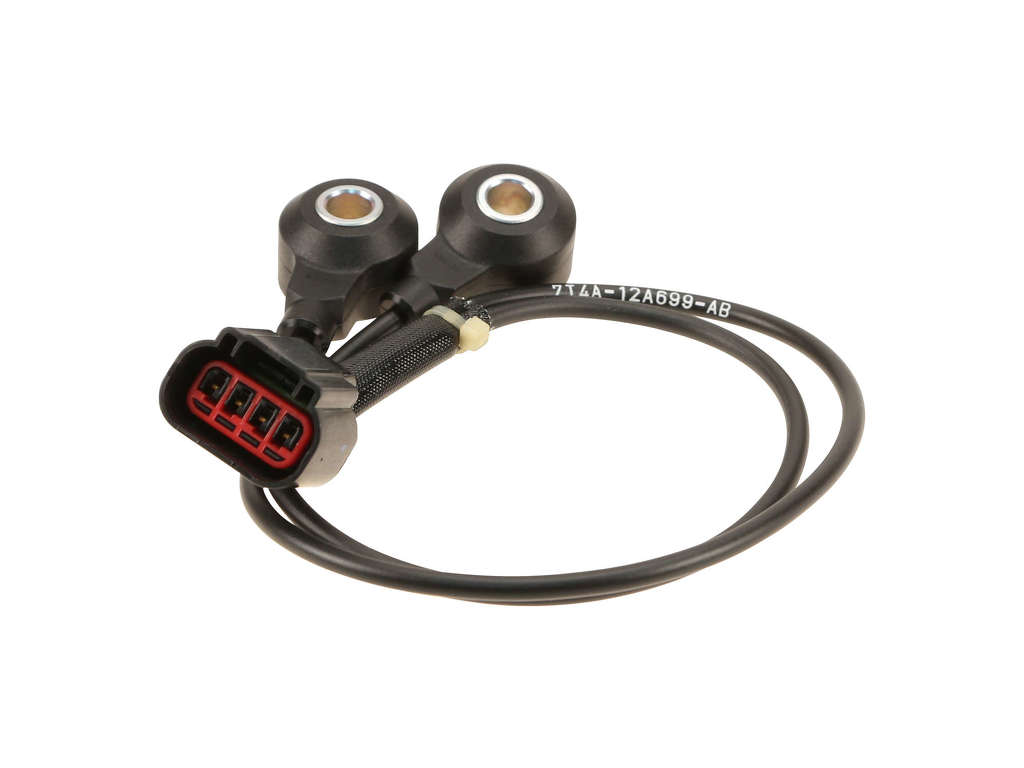
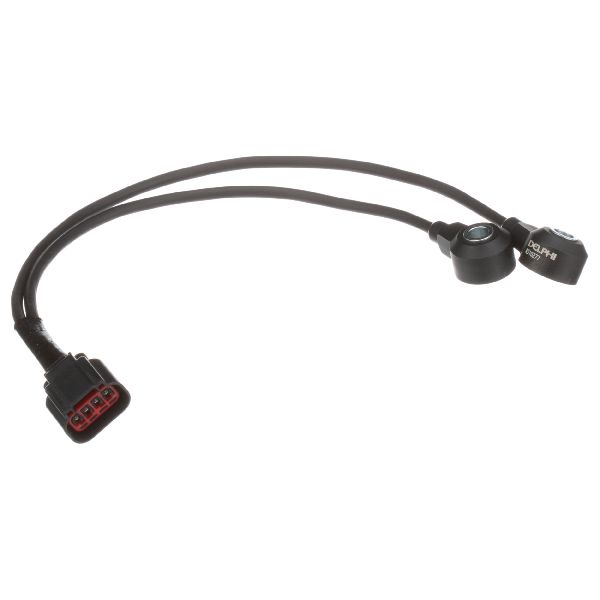
For a 2016-2018 Lincoln MKX with the 2.7L engine, code P0116 is most often caused by a loose electrical connector at the Engine Coolant Temperature (ECT) sensor, a known issue cited in Ford/Lincoln technical service bulletins (SSM 47791). If the connector is secure, the next most likely cause is a faulty ECT sensor (Motorcraft part FT4Z-12A648-B) or the associated wiring harness. TSB SSM 48991 even recommends replacing both the ECT sensor and the knock sensor harness (part 12A699) together to re
- Before buying any parts for a P0116 on this Lincoln, first locate the ECT sensor and firmly press on its electrical connector to ensure it's fully seated. This is a known issue and may fix the problem for free.
- If the connector is secure, the most likely culprit is the ECT sensor itself, which is an affordable and DIY-friendly replacement.
- Use a scan tool to watch the coolant temperature in real-time. This is the fastest way to determine if the sensor is behaving erratically or if the engine is simply not warming up properly (indicating a thermostat problem).
- Always check your coolant level first; low coolant can cause incorrect sensor readings.
What's Unique About the 2016-2018 Lincoln MKX
The 2.7L EcoBoost engine used in the 2016-2018 Lincoln MKX is subject to several Technical Service Bulletins (TSBs) for code P0116. These bulletins, specifically SSM 47791 and 46906, highlight a frequent issue where the ECT sensor's electrical connector is not fully seated from the factory. Furthermore, TSB SSM 48991 points to a more complex issue where the ECT sensor and the knock sensor wiring harness (part 12A699) are both at fault, recommending they be replaced together. TSB SSM 47791 also notes that wiring can be damaged between connectors C1016 (at the sensor) and C1168 (a harness-to-harness connector), making a wiring inspection critical on this platform.
Symptoms You May Notice
- Check Engine Light is on
- Temperature gauge reading is erratic, stays on cold, reads high, or fluctuates rapidly
- Engine cooling fans run continuously, even when the engine is cold
- Reduced fuel economy
- Heater may not blow warm air
- Vehicle may enter a limited power "limp mode"
- False 'Engine Coolant Over Temperature' warning on the dash
- Replacing the ECT sensor without first checking if its connector is fully seated. On this specific engine, the loose connector is a very common cause and checking it first can save time and money.
- Replacing only the ECT sensor when TSB SSM 48991 indicates the root cause is often the entire knock sensor/ECT wiring harness assembly, leading to a recurring code.
Most Likely Causes
- ECT Sensor Electrical Connector Not Fully Seated 🔴 High Probability → Shop Engine Coolant Temperature Sensor This is a well-documented issue in Ford/Lincoln Technical Service Bulletins (SSM 47791 & 46906) for the 2.7L EcoBoost engine, indicating a potential factory assembly or design flaw.
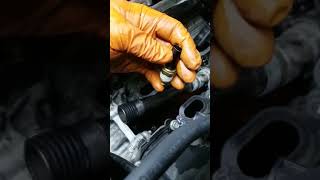
How to confirm: Locate the ECT sensor on the driver's side of the engine, near the top rear, under the intake manifold. Access may require removing the air intake tube. 🎬 See this walkthrough for locating the sensor on a 2.7L engine Physically inspect the electrical connector (C1016) and ensure it is pushed in all the way until it clicks and is secure.
Typical fix: Firmly seat the connector. If the retaining clip is broken, the connector pigtail (e.g., Motorcraft WPT-989) may need to be replaced.
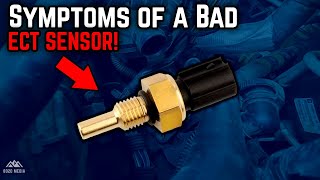
Est. part cost: $0-$40 - Faulty Engine Coolant Temperature (ECT) Sensor 🟡 Medium Probability → Shop Engine Coolant Temperature Sensor The sensor itself is a common failure point, and TSB SSM 48991 explicitly lists it as a primary cause along with its harness.
How to confirm: Use a scan tool to monitor live data. On a cold engine, the ECT reading should be very close to the Intake Air Temperature (IAT) and ambient air temperature. If it's significantly different, the sensor is likely bad. You can also test the sensor with a multimeter; at ~68°F (20°C), its resistance should be between 2,000-3,520 Ohms.
Typical fix: Replace the ECT sensor. On the 2.7L, this is a difficult job as the sensor is located under the intake manifold.
Est. part cost: $25-$50 - Thermostat Stuck Open ⚪ Low Probability → Shop Integrated Thermostat Housing Assembly
How to confirm: Monitor the ECT temperature on a scan tool while driving. If the engine temperature fails to reach and maintain its normal operating range (typically 195-215°F) and drops at highway speeds, the thermostat is likely stuck open. This can also trigger code P0128.
Typical fix: Replace the engine thermostat and gasket.
Est. part cost: $30-$80 - Low Engine Coolant Level ⚪ Low Probability → Shop Engine Coolant / Antifreeze
How to confirm: Visually inspect the coolant reservoir to ensure the level is between the 'MIN' and 'MAX' lines when the engine is cold. If low, the sensor may be reading air pockets instead of coolant, causing erratic signals.
Typical fix: Top off the coolant with the correct type specified for your vehicle (Motorcraft Orange or Yellow, check owner's manual) and inspect the system for leaks.
Est. part cost: $20-$40
Rare But Worth Checking
- Damaged Wiring Harness: TSB SSM 48991 is critical for the 2.7L EcoBoost. It notes that P0116 can be caused by an issue with the knock sensor wiring harness (part 12A699), which is intertwined with the ECT circuit. The official fix is to replace both the ECT sensor and the knock sensor harness. TSB SSM 47791 also points to potential chafing or damage on the harness between connectors C1016 and C1168.
- Faulty Powertrain Control Module (PCM): This is extremely rare. All other possibilities, including the sensor, the entire wiring harness (per TSBs), and thermostat, should be exhaustively ruled out before considering a PCM issue.
Diagnosis Steps
- Check the engine coolant level in the reservoir and top off if low. Ensure you use the correct coolant type specified in your owner's manual (e.g., Motorcraft Orange or Yellow).
- CRITICAL STEP FOR THIS VEHICLE: Locate the Engine Coolant Temperature (ECT) sensor connector (C1016) at the rear of the engine. It may be difficult to access. Push firmly to ensure it is fully seated and clicks into place. Clear the codes and drive to see if the code returns.
- If the code returns, connect an OBD-II scanner and view live data for the ECT sensor.
- With a cold engine (after sitting for several hours), compare the ECT reading to the Intake Air Temperature (IAT) reading. They should be within a few degrees of each other. If the ECT reading is drastically different (e.g., reads 180°F on a cold engine), the sensor or its circuit is faulty.
- Start the engine and monitor the ECT reading as it warms up. The temperature should rise steadily. If it jumps around erratically or doesn't change, the sensor or wiring is the likely culprit.
- If the sensor appears to be reading smoothly but the engine never reaches full operating temperature (approx. 195-215°F), especially at highway speeds, the thermostat is likely stuck open and needs to be replaced.
- If the sensor and thermostat seem okay, a wiring inspection is necessary. Per TSBs 47791 and 48991, carefully inspect the wiring harness between the ECT sensor (C1016) and connector C1168, as well as the entire knock sensor harness (part 12A699) for any signs of damage 🎬 Watch: How to fix related TSB codes and wiring issues, corrosion, or breaks.
Parts You'll Likely Need
- Engine Coolant Temperature (ECT) Sensor
(OEM #FT4Z-12A648-B (Motorcraft DY1339))— This sensor fails over time and is a primary part to replace if the electrical connector is secure. TSB SSM 48991 recommends its replacement along with the harness.
Trusted brands: Motorcraft, Standard Motor Products (SMP), NTK
OEM price range: $30-$50
Aftermarket price range: $15-$30 - Knock Sensor Wiring Harness
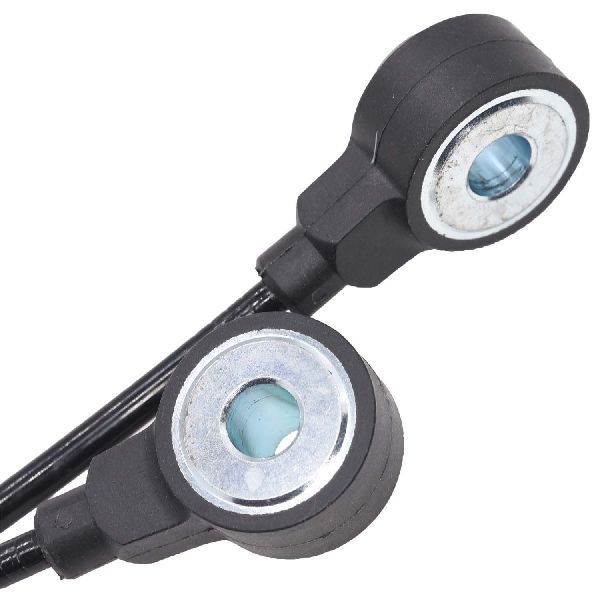
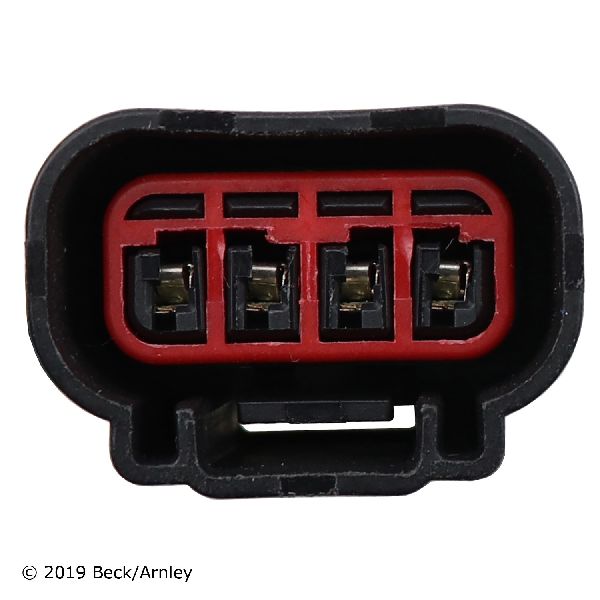
(OEM #12A699 (Ford Base Part Number))— TSB SSM 48991 explicitly identifies this harness as a common cause for P0116 on the 2.7L engine, as it contains the wiring for the ECT sensor. The official fix is to replace this harness and the ECT sensor together.
Trusted brands: Motorcraft
OEM price range: $50-$100
Related Codes That Often Appear With This One
- P0128 — P0128 (Coolant Thermostat Rationality) often appears with P0116 if the underlying cause is a thermostat that is stuck open, preventing the engine from warming up at the expected rate.
- P0117 — P0117 (ECT Circuit Low) indicates a short in the circuit, which the PCM interprets as an extremely high temperature. If you see both, it points strongly to an electrical fault (wiring or sensor) rather than a mechanical one like a thermostat.
- P0118 — P0118 (ECT Circuit High) indicates an open circuit, often from a disconnected sensor or broken wire. Seeing this with P0116 confirms an electrical problem.
- P1299 — P1299 (Cylinder Head Over-temperature Protection Active) is often triggered alongside P0116. The faulty, erratic signal from the ECT circuit causes the PCM to believe the engine is overheating, even when it is not.
Technical Service Bulletins (TSBs) & Recalls
- SSM 47791: States that P0116 on 2.7L engines may be due to an ECT sensor connector not being fully seated or due to damaged wiring between connectors C1016 and C1168.
- SSM 48991: Recommends replacing both the ECT sensor (12A648) and the knock sensor harness (12A699) to correct P0116 and other related DTCs on 2.7L EcoBoost engines.
- SSM 46906: An earlier TSB that also identifies a loose or poorly seated ECT sensor connector as a primary cause for P0116 on 2.7L engines.
- TSB 21-2168: While for the F-150 with the same 2.7L engine, this TSB provides a kit to relocate the problematic ECT sensor, highlighting the known design and reliability issues with the original sensor placement and circuit.
Platform-Specific Known Issues
- A known issue exists where the ECT sensor connector (C1016) is not fully seated from the factory, causing a poor connection and triggering code P0116. This is documented in Ford/Lincoln TSBs SSM 47791 and SSM 46906.
- TSB SSM 48991 indicates that a faulty knock sensor wiring harness (part 12A699) is a common cause, requiring replacement of both the harness and the ECT sensor to fully resolve the issue.
- The ECT sensor on the 2.7L EcoBoost is located in a very difficult-to-access position under the intake manifold, making diagnosis and replacement more labor-intensive than on other engines.
Mechanic-Grade Diagnostic Values
- ECT Sensor Resistance vs. Temperature — expected: Approx. 3520 Ω at 68°F (20°C), 973 Ω at 122°F (50°C), 241 Ω at 194°F (90°C).. Failure: A reading of infinite resistance (open) or near zero (short), or a value significantly outside the expected range for a known temperature.
- ECT Sensor Signal Voltage (at PCM) — expected: Decreases as engine warms, typically from ~3.5V (cold) to under 1.0V (hot).. Failure: Voltage is erratic, stuck high (over ~4.6V, indicating an open circuit/P0118), or stuck low (under ~0.14V, indicating a short/P0117).
- KOEO Live Data Comparison (Cold Engine) — expected: Engine Coolant Temperature (ECT) and Intake Air Temperature (IAT) should be within a few degrees of each other and ambient temperature.. Failure: ECT reads a significantly different temperature than the IAT (e.g., ECT shows 190°F on a 60°F day).
Hidden / Shadow Codes Worth Checking
- P0330: Knock Sensor 2 Circuit (Bank 2). On this platform, TSBs confirm that an intermittent fault in the ECT sensor circuit can cause the PCM to falsely set a P0330 code. The circuits are intertwined in the same harness. (see via Standard OBD-II scanner. If P0330 appears with any ECT-related codes (P0116-P0119, P1299), the root cause is almost certainly the ECT circuit, not the knock sensor itself.)
Wiring & Ground Locations
- C1016 — The 2-pin electrical connector directly at the Engine Coolant Temperature (ECT) sensor, located under the intake manifold on the 2.7L V6.. This connector is identified in TSBs as a primary failure point due to not being fully seated from the factory, causing an open or intermittent circuit.
- C1168 — An inline harness-to-harness connector located in the engine bay, between the ECT sensor (C1016) and the PCM.. TSB SSM 47791 specifically calls out the wiring *between* C1016 and C1168 as a known location for chafing and damage that can cause P0116.
- G104 — A major chassis ground point located on the left (driver's side) front of the engine compartment.. While not exclusive to the ECT circuit, a loose or corroded main engine ground can introduce electrical noise and unstable voltage references for multiple sensors, including the ECT, leading to erratic readings and performance codes like P0116.
Real Owner Repair Stories
- Ford F150 Forum user (2019 F-150 2.7L EcoBoost (mechanically similar platform)) — Rumbling noise, Check Engine Light, temperature gauge pegged to hot, and cooling fans running at full speed, even with a cold engine.
❌ Tried (didn't work) Initial visual inspection showed no obvious faults.
✅ What actually fixed it The owner had the vehicle towed to a dealer who performed the fix outlined in TSB 21-2168, which involves installing the ECT sensor relocation kit (Part No. ML3Z-14A411-H). This confirms the TSB is the definitive fix for these symptoms.
"I Checked Everything" — The Actual Cause
- The equivalent for this electronic code is 'Replaced ECT Sensor, But Code Returned'. In this scenario, the actual cause is almost always an electrical fault elsewhere in the circuit that was missed. Per TSBs for the 2.7L EcoBoost, this is most commonly the knock sensor/ECT wiring harness (part 12A699) or a chafe point in the wiring between connectors C1016 and C1168.
OEM Part Supersession History
FT4Z-12A648-A, DY-1298→FT4Z-12A648-B (Motorcraft DY1339)— Standard part revision and consolidation by Ford.
Heads up: A manufacturer's note for the current part (FT4Z-12A648-B) states it 'Connects To 12A699 Knock Sensor', which directly supports TSB 48991's finding that the two circuits are intertwined and often fail together.
Model Year Variations Within This Range
- 2016-2018: There were no significant mechanical changes to the 2.7L EcoBoost in the MKX during this period that affect the diagnosis of P0116. However, it is notable that for the same engine in the 2018-2020 F-150, Ford issued TSB 21-2168 with a kit to relocate the ECT sensor to a more accessible and reliable location, underscoring the problematic nature of the original design.
Diagnostic Flowchart
Used vs. New Parts: Buying Guide for This Vehicle
When a used part is the smart pick: For this specific repair, using used parts is not recommended. The primary failure points are electronic sensors and wiring harnesses that become brittle and unreliable after thousands of heat cycles. The cost savings are minimal compared to the high risk of the part failing again, requiring a repeat of the difficult labor.
What to inspect on the donor part:
- Not applicable, as used electronic parts for this repair are not advised.
OEM-only on this vehicle (don't cheap out):
- Knock Sensor Wiring Harness (12A699): Given that this is a TSB-identified failure point involving precise wiring, using the OEM Motorcraft harness is critical to ensure compatibility and prevent a repeat failure.
Aftermarket brands forum-validated for this vehicle:
- ECT Sensor: Besides OEM Motorcraft, brands like NTK and Standard Motor Products (SMP) are reputable alternatives.
Brands owners have reported issues with on this vehicle:
- No specific brands were identified as problematic in research, but ultra-low-cost, unbranded sensors from online marketplaces carry a higher risk of premature failure or inaccurate readings.
Real Owner Stories
Aggregated from forums and TSBs cited above. Mileages and costs reflect what owners reported in those sources.
2016 Ford Edge Sport (2.7L)
Symptoms: Owner experienced code P0116 with classic symptoms such as an erratic temperature gauge and check engine light.
What fixed it: The fix involved a detailed inspection of the wiring circuit, specifically focusing on connectors C1016 and C1168 as mentioned in the official TSBs.
Source hint: fordedgeforum.com
2018+ Ford F-150 (2.7L EcoBoost)
Symptoms: Owner reported a P0116 code and noted the difficulty in accessing the sensor in its original location.
What fixed it: As a permanent solution, the owner opted for the Ford ECT sensor relocation kit (covered by TSB 21-2168, part ML3Z-14A411-H), which moves the sensor to a much more accessible heater hose.
Source hint: f150forum.com
Related OBD-II Codes
Frequently Asked Questions
What is the very first thing I should check for a P0116 code on my 2017 Lincoln MKX 2.7L?
Is the ECT sensor difficult to replace on the 2.7L EcoBoost engine?
My mechanic mentioned TSB SSM 48991. What repair does it recommend for the P0116 code?
My temperature gauge is fluctuating wildly and the cooling fans are always on. Are these symptoms of P0116?
How can I test the ECT sensor myself before replacing it?
I saw an ECT sensor relocation kit for the 2.7L EcoBoost. Does this apply to my Lincoln MKX?
Helpful Videos

We Have This Part in Stock


The information in this article is provided for general reference and educational purposes only. Vehicle specifications, procedures, and part compatibility can vary by production date, trim level, and region. Always consult your vehicle's factory service manual and verify part numbers before purchasing or performing repairs. Safety-critical components such as airbags, seat belts, and braking systems should be installed by a qualified professional.
- Lincoln MKX:
- 🧭 Diagnostic Flowchart
- 🎬 Helpful Videos
- 🛍️ Shop This Part
- What's Unique About the 2016-2018 Lincoln MKX
- Symptoms You May Notice
- Most Likely Causes
- Rare But Worth Checking
- Diagnosis Steps
- Parts You'll Likely Need
- Related Codes That Often Appear With This One
- Technical Service Bulletins (TSBs) & Recalls
- Platform-Specific Known Issues
- Mechanic-Grade Diagnostic Values
- Hidden / Shadow Codes Worth Checking
- Wiring & Ground Locations
- Real Owner Repair Stories
- "I Checked Everything" — The Actual Cause
- OEM Part Supersession History
- Model Year Variations Within This Range
- Used vs. New Parts: Buying Guide for This Vehicle
- Real Owner Stories
- 2016 Ford Edge Sport (2.7L)
- 2018+ Ford F-150 (2.7L EcoBoost)
- Related OBD-II Codes
- Frequently Asked Questions
- 🎟️ Get 5% Off