

P0116 on 2007-2013 MINI Cooper: Causes and Fixes for ECT & Thermostat Faults
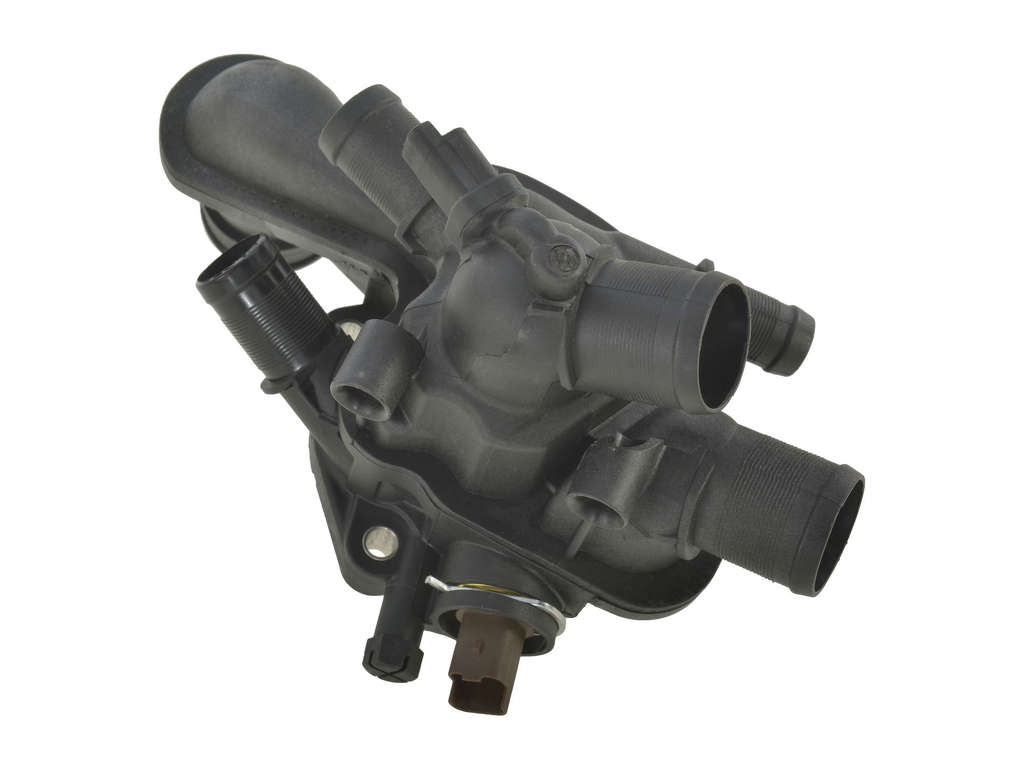
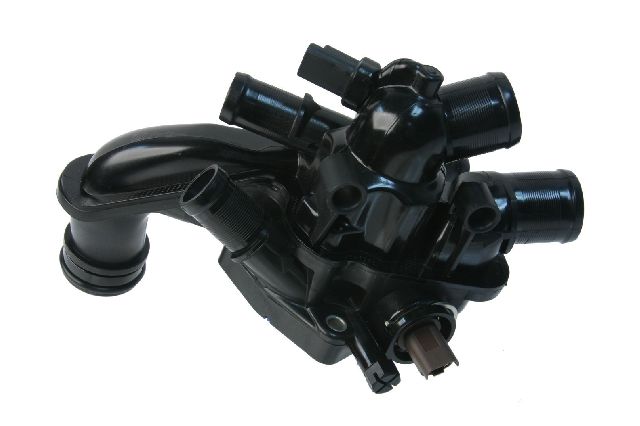
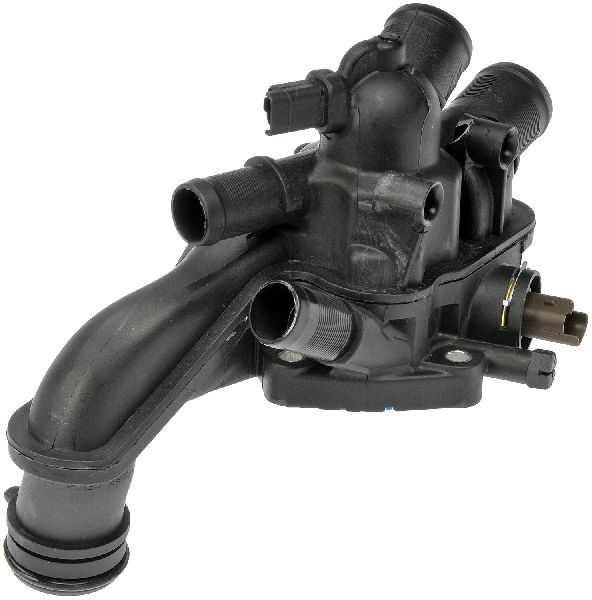
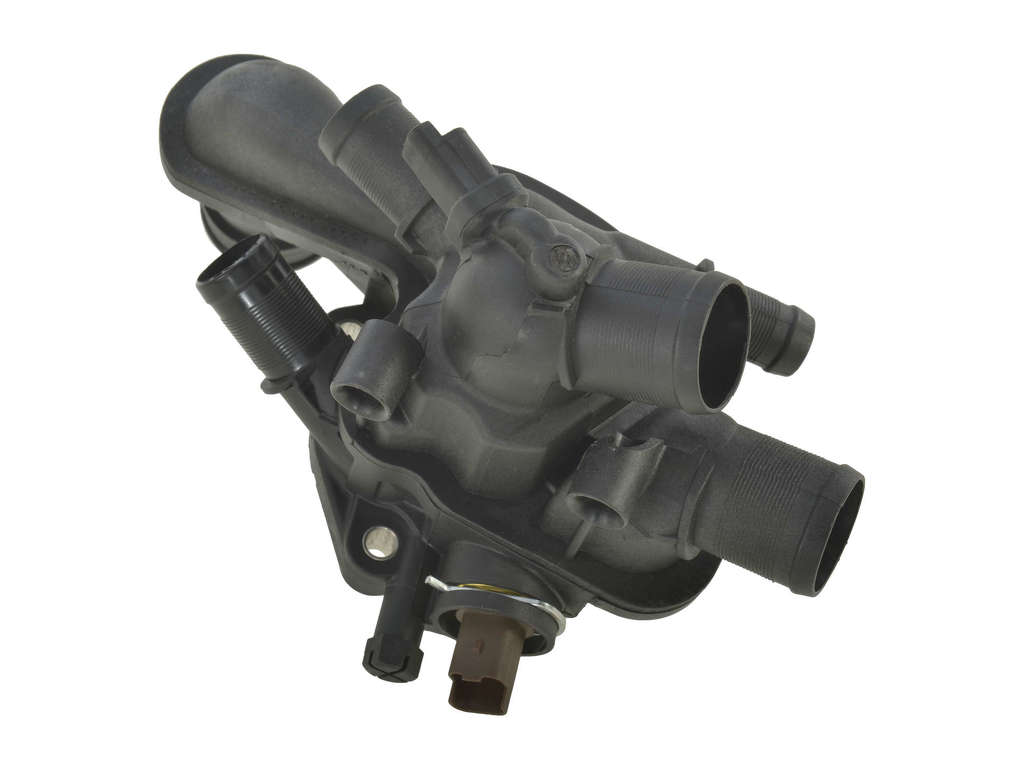
On a 2007-2013 MINI Cooper, code P0116 is almost always caused by a failed thermostat assembly. The temperature sensor is integrated into the plastic housing, which is a known weak point. Replacing the entire thermostat unit is the standard fix, costing between $100-$200 for the part. This is a well-documented issue across all vehicles using the 'Prince' engine.
- P0116 on a 2007-2013 MINI Cooper almost always means you need a new thermostat assembly, not just a sensor.
- A constantly running cooling fan is a primary symptom of this code, as the car enters a fail-safe mode.
- Before ordering a new thermostat, verify your engine type (N14 or N18) and production date to get the correct part and any necessary wiring adapters.
- While replacing the thermostat, it is wise to also inspect and consider replacing the plastic coolant pipe that connects to the water pump, as it is also prone to failure.
What's Unique About the 2007-2013 MINI Cooper
On the N14 and N18 engines used in the second-generation MINI Cooper, the engine coolant temperature (ECT) sensor is integrated directly into the plastic thermostat housing. This entire assembly is a notorious failure point; the plastic can become brittle and crack, causing leaks, and the electronically controlled thermostat inside can fail internally. Because of this integrated design, a P0116 code almost always points to a problem with the complete thermostat unit rather than just a simple sensor swap. This design and its associated failures are also common on platform-mate vehicles from Peugeot and Citroën that use the same engine.
Symptoms You May Notice
- Check Engine Light is on
- Radiator/cooling fan runs constantly at high speed, even when the engine is cold
- Erratic or non-functional engine temperature gauge
- Reduced engine performance and poor fuel economy
- Difficulty starting the engine, or extended cranking, as the ECU gets incorrect temperature data for fuel mixture calculations
- Heater may not blow hot air because the engine isn't reaching full operating temperature
- Visible coolant leak or blue/green residue on top of the transmission housing, below the thermostat.
- Replacing only the temperature sensor (it is integrated into the housing on most models)
- Replacing the radiator fan because it runs constantly (the fan is usually operating as commanded by the ECM in fail-safe mode)
- Attributing the problem to a faulty radiator when the issue is a stuck thermostat preventing proper circulation
Most Likely Causes
- Failed Thermostat Housing Assembly 🔴 High Probability → Shop Integrated Thermostat Housing Assembly The plastic housing becomes brittle with age and heat cycles, leading to cracks, leaks, and internal failure of the thermostat mechanism or the integrated temperature sensor. It is the most common fix for this code on this platform. Owners on forums frequently report this exact failure. One user on North American Motoring noted, 'After getting P0116 and the fan running non-stop, I replaced the thermostat housing... problem solved.'
How to confirm: Use a scan tool to monitor live ECT data. If the temperature reading is stuck (e.g., at -40°F), jumps erratically, or doesn't rise smoothly as the engine warms, the assembly is faulty. Visually inspect for coolant leaks around the housing; a pressure test of the cooling system will often reveal the leak.
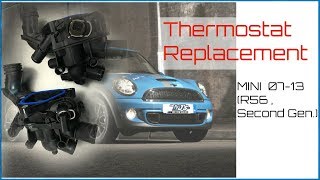
Typical fix: Replace the entire thermostat housing assembly. This is a common DIY job that requires draining some coolant and accessing the part on the left side of thecylinder head. 🎬 See this step-by-step thermostat replacement walkthrough for 2007-2013 models Many owners proactively replace the plastic coolant pipe running from the thermostat to the water pump at the same time, as it is also prone to breaking. Some aftermarket companies now offer upgraded aluminum thermostat housings to prevent future cracking.
Est. part cost: $100 - $250 - Low Engine Coolant 🟡 Medium Probability → Shop Engine Coolant / Antifreeze This is often a direct symptom of a leaking thermostat housing, but can also be from other common leak points like the water pump or a cracked expansion tank. If the coolant level is low, the sensor can be exposed to air pockets, causing erratic readings and triggering P0116.
How to confirm: Check the coolant level in the expansion tank when the engine is cold. If it is below the 'MIN' line, there is a leak in the system. The system should be pressure tested to find the source.
Typical fix: Top off the coolant with the correct type (typically a blue G48/HT-12 formula for MINIs) and bleed the system. Find and repair the source of the leak, which is very often the thermostat housing itself.
Est. part cost: $20 - $40 for coolant - Damaged Wiring or Connector ⚪ Low Probability The wiring harness connector can become brittle from heat. Also, depending on the model year and the specific replacement thermostat part used, a wiring adapter may be required, adding another point of potential failure.
How to confirm: Visually inspect the wiring harness and connector going to the thermostat housing for any signs of corrosion, damage, or loose pins. Wiggle the connector while monitoring live data to see if the reading fluctuates.
Typical fix: Repair the damaged section of wire or replace the connector pigtail. If installing an updated thermostat on an older N18 model, ensure the correct adapter harness is used.
Est. part cost: $20 - $50 for an adapter harness
Rare But Worth Checking
- Faulty Water Pump Friction Wheel: → Shop Engine Water Pump The water pump is driven by a friction wheel that engages with the crankshaft pulley. If the tensioning mechanism in this wheel fails, it may not apply enough pressure to spin the water pump effectively. This can lead to slow warm-up or overheating, potentially confusing the ECU and contributing to a P0116 code, though it would typically be accompanied by other symptoms like a squealing noise or visible overheating.
- Faulty Engine Control Module (ECM): This is extremely rare. The ECM should only be suspected after all other possibilities, including the thermostat, coolant level, and wiring, have been definitively ruled out.
Diagnosis Steps
- Check for other stored trouble codes to get a complete picture of the issue.
- Visually inspect the coolant level in the expansion tank (when cold). If low, top it off.
- Inspect the thermostat housing and surrounding area for any signs of coolant leaks. A common sign is blue or green crusty residue on the transmission case.
- Connect an OBD-II scanner and view the live data for the Engine Coolant Temperature (ECT) and Intake Air Temperature (IAT).
- With a cold engine (left overnight), the ECT and IAT readings should be within a few degrees of each other. If the ECT is wildly different (e.g., -40°F or 250°F), the sensor/circuit has failed.
- Start the engine and monitor the ECT reading. It should rise steadily and smoothly. If it jumps around, stays at a very low/high reading, or doesn't rise, the thermostat assembly is almost certainly the cause.
- If the reading is stable but the code persists, inspect the wiring and connector for damage. Wiggle the harness to check for intermittent connections.
- If all other components are verified to be good, only then should a faulty ECM be considered.
Parts You'll Likely Need
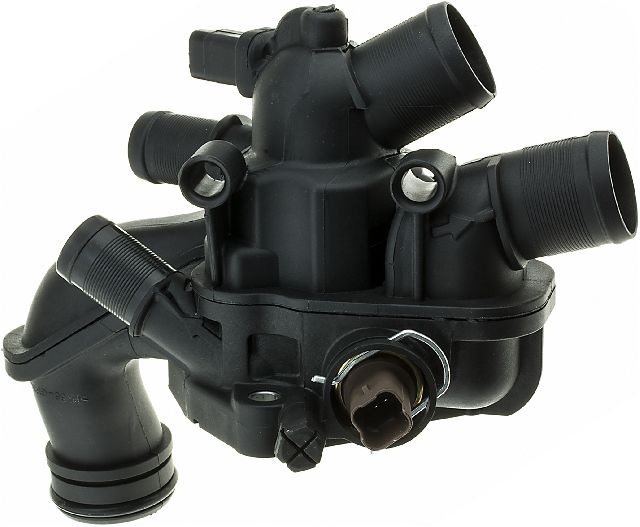
- Thermostat Housing Assembly (N14 Engine)
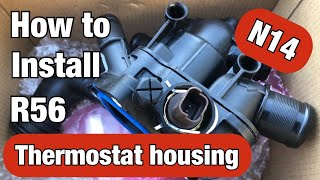
(OEM #11537534521)— This is the primary failure point for P0116 on 2007-2010 Cooper S models. 🎬 Watch: How to replace the thermostat housing on N14 engines It includes the thermostat, housing, and integrated sensor. This part number has superseded older versions.
Trusted brands: Genuine MINI, Mahle, Behr, URO Parts
OEM price range: $150-$200
Aftermarket price range: $80-$140 - Thermostat Housing Assembly (N18 Engine)
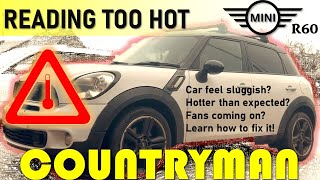
(OEM #11538674895 (supersedes 11537647751, 11538671513, and others))— This is the primary failure point for P0116 on 2011-2013 Cooper S models. 🎬 Watch: Fixing constant radiator fans and thermostat on N18 engines It includes the thermostat, housing, and integrated sensor.
Trusted brands: Genuine MINI, Mahle, Behr
OEM price range: $180-$250
Aftermarket price range: $100-$180 - Thermostat Wiring Adapter Harness
(OEM #12518611289 or 12518614952)— Required for N18 engines when replacing the original thermostat with an updated part (11538674895). Pre-07/2012 cars need 12518611289; 07/2012-02/2013 cars need 12518614952. Cars built after 02/2013 typically do not need an adapter.
Trusted brands: Genuine MINI
OEM price range: $40-$50 - Coolant Pipe (Water Pipe)
(OEM #11537589713)— This plastic pipe connects the thermostat housing to the water pump. It becomes extremely brittle and often breaks during thermostat replacement. It is highly recommended to replace it at the same time. Upgraded aluminum versions are available.
Trusted brands: Genuine MINI, Vaico, URO Parts (Aluminum)
OEM price range: $30-$50
Aftermarket price range: $20-$60
Related Codes That Often Appear With This One
- P0128 — Coolant Temperature Below Thermostat Regulating Temperature. This code often appears with P0116 because a thermostat stuck open will prevent the engine from reaching operating temperature in the expected time, which is a performance range fault the ECU can detect.
- P0597 — Thermostat Heater Control Circuit/Open. This code specifically points to an electrical failure in the thermostat's heater element, which the ECU uses to force the thermostat open under certain conditions. It often accompanies P0116, confirming the entire assembly is faulty.
Technical Service Bulletins (TSBs) & Recalls
- SI M17 07 12: A service action related to retrofitting the engine coolant temperature sensor on certain N18 models by adding a new sensor into the bleeder screw hole. This is not a direct fix for P0116 but shows a history of sensor-related issues.
- SI M12 06 12: Details a change in the engine wiring harness for N16 engines (post-3/2012) which separates the thermostat and ECT sensor connectors, requiring a new thermostat (P/N 11537534521) to be fitted if an older engine harness is replaced.
- SI B17 01 13: Service action to replace the coolant expansion tank on certain models due to issues with the level sensor connector, not directly related to P0116 but part of the overall cooling system.
Platform-Specific Known Issues
- The plastic water pipe connecting the thermostat housing to the water pump is also prone to becoming brittle and breaking during thermostat replacement. Many owners replace it proactively with a standard plastic or upgraded aluminum part.
- Bleeding the cooling system after the repair is critical. An airlock can cause overheating and mimic the original problem. The bleeder screw is located on the top of the thermostat housing.
- Accessing the thermostat housing is tight. It requires removing the intake ducting and can be frustrating. Some bolts are difficult to reach without the right combination of extensions and universal joints.
Mechanic-Grade Diagnostic Values
- Engine Coolant Temperature (ECT) Sensor Resistance — expected: Approximately 2.2kΩ - 3.0kΩ at 20°C (68°F) and 250Ω - 350Ω at 80°C (176°F).. Failure: An open circuit (infinite resistance) or a reading far outside the expected range for a given temperature indicates a failed sensor.
- Engine Coolant Temperature (ECT) Sensor Voltage (at sensor connector) — expected: On a cold engine (~20°C/68°F), signal voltage should be around 3.0V - 3.5V. At normal operating temperature (~90°C/194°F), voltage should drop to around 0.5V - 1.3V.. Failure: Voltage that is stuck high (near 5V) or low (near 0V), or does not change smoothly as the engine warms up, indicates a circuit or sensor fault.
- Normal Engine Operating Temperature (Scan Tool Live Data) — expected: A healthy N14/N18 engine should regulate its temperature to around 220°F (104-105°C).. Failure: If the temperature struggles to exceed 195-205°F (90-96°C), it's a strong indication that the thermostat is stuck open, which will trigger P0116 and the associated 2F07 shadow code.
Hidden / Shadow Codes Worth Checking
- 2F07: Also displayed as 0x2F07, this is a manufacturer-specific code for 'Map-controlled thermostat, mechanics' or 'Coolant Temperature Below Thermostat Regulating Temperature'. It specifically indicates the DME has detected the thermostat is mechanically stuck or not responding to commands, often stuck open. (see via This code is visible with BMW/MINI-specific diagnostic software like ISTA or higher-end scan tools (e.g., Autel, Foxwell, ThinkTool) that can read manufacturer codes. It may not show on a basic generic OBD-II reader.)
Scan Tool Commands That Help
- ISTA (or equivalent advanced scanner): Cooling System Bleed Procedure / Electric Coolant Pump Activation — After replacing the thermostat housing or any cooling system component, this service function must be run to properly bleed air from the system. It activates the electric water pump to circulate coolant with the engine off, purging air pockets that could cause erratic temperature readings and repeat fault codes.
- ISTA (or equivalent advanced scanner): DME Test Plan for Map-Controlled Thermostat — When diagnosing a persistent 2F07 or P0116 code, this guided function in the dealer software runs a check on the thermostat's heater element and its response to DME commands. It can help determine if the fault is with the thermostat itself or the wiring/DME, though in most cases it confirms a faulty thermostat.
Wiring & Ground Locations
- Main Engine Ground Strap — On the R56, the primary engine-to-chassis ground strap is typically bolted to the passenger side (right side) engine mount and the corresponding point on the chassis/frame rail.. While not a primary cause, a corroded or loose main engine ground can cause a host of electrical issues, including fluctuating sensor reference voltages. If sensor readings are erratic and the sensor/wiring test good, checking the condition of this main ground is a valid, though less common, diagnostic step.
- DME Ground (Valve Cover) — A crucial ground point for the ignition coil return path is located on the valve cover.. While primarily related to ignition and DME function, if this ground is left loose after service (e.g., valve cover gasket replacement), it can cause severe electrical noise and damage the DME, potentially leading to a variety of spurious sensor codes, including P0116, as a secondary symptom of a failing DME.
Real Owner Repair Stories
- Pelican Parts Forum user 'Dread Nought' (2008 MINI Clubman S (N14)) — Check engine light with code 2F07 after replacing a cracked original thermostat. Engine was very slow to warm up, only reaching a max of ~207-215°F.
❌ Tried (didn't work) Replaced the thermostat with a new aftermarket 'Rein' unit. The code returned., Replaced the Rein unit with a second, new Rein unit under warranty. The code still returned.
✅ What actually fixed it Replacing the aftermarket thermostat with a Genuine MINI (OEM) part finally allowed the car to reach the correct operating temperature and resolved the 2F07 code permanently. The user suspected a bad batch or incorrect calibration of the aftermarket parts. - North American Motoring forum user (2011 MINI Cooper S (N18)) — Check engine light with codes P0128 and the MINI-specific 2F07. Scan tool showed coolant temperature was only reaching 193-195°F.
❌ Tried (didn't work) Initial thoughts pointed towards a custom engine tune affecting temperature targets, but the issue persisted with the stock tune.
✅ What actually fixed it Replacing the entire thermostat housing and the integrated temperature sensor, followed by a cooling system flush. After the repair, the coolant temperature returned to the normal 220°F and the codes were resolved.
OEM Part Supersession History
Multiple older numbers including 11537588876, 11537647305→11538674895— Design updates to improve reliability and address failures in the electronic thermostat and plastic housing.
Heads up: Using the latest part 11538674895 on an N18 engine built before 07/2012 requires adapter harness 12518611289. For cars built between 07/2012 and 02/2013, adapter harness 12518614952 is required. Failure to use the correct adapter will result in a no-fit condition or electrical faults.N/A→N/A— N/A
Heads up: The N14 thermostat (e.g., 11537534521) and N18 thermostat (11538674895) are not interchangeable. They have different designs and connectors.
Model Year Variations Within This Range
- 2007-2010 (N14 Engine): Uses the N14-specific thermostat housing (PN 11537534521 or supersessions). This version generally does not have the complex wiring adapter issues seen with the N18.
- 2011-2013 (N18 Engine): Uses the N18-specific thermostat housing (latest PN 11538674895). This engine's production run had multiple wiring connector changes, making it critical to check the build date to determine if an adapter harness (12518611289 or 12518614952) is needed when installing the latest part.
Diagnostic Flowchart
Other Known Issues on This Vehicle
Issues unrelated to this code that are worth knowing about as an owner of this generation:
- N14 Timing Chain 'Death Rattle' 🔴 High — Very common on N14 engines (2007-2010 Cooper S). Caused by a faulty timing chain tensioner, leading to a rattling noise on cold starts. If ignored, can lead to chain stretch, broken guides, and catastrophic engine failure. (Ref: BMW issued a TSB in 2008 for premature wear, and a class-action lawsuit led to an extended warranty campaign in some regions.)
- High-Pressure Fuel Pump (HPFP) Failure 🔴 High — Common on both N14 and early N18 engines. Symptoms include long crank times, rough cold starts, stuttering under acceleration, and low fuel rail pressure codes. An extended warranty was offered for this part for 10 years/120,000 miles. (Ref: Yes, extended warranty program (not a formal recall) was issued by MINI/BMW.)
- Intake Valve Carbon Buildup 🟠 Medium — A consequence of the direct-injection engine design. Oil vapor from the PCV system bakes onto the back of the intake valves, as there is no fuel to wash them clean. Typically requires cleaning every 40,000-60,000 miles to prevent rough idle, misfires, and reduced performance.
- Water Pump & Friction Wheel Failure 🟠 Medium → Shop Engine Water Pump — The water pump is driven by a secondary 'friction wheel' pressed against the crankshaft pulley. This friction wheel's spring can weaken or its bearing can fail, causing a squealing noise and potential overheating if the water pump isn't driven properly. The water pump itself is also a known failure point.
Used vs. New Parts: Buying Guide for This Vehicle
When a used part is the smart pick: For this specific repair, a used thermostat housing is almost never a smart choice. The part is a known high-failure item due to the plastic becoming brittle from heat cycles. A used part has unknown remaining life and is very likely to fail again in a short time, wasting money on labor and coolant.
Donor-vehicle mileage cap: roughly under 20000 miles for the part to have meaningful remaining life.
What to inspect on the donor part:
- If forced to consider a used part, look for one from a very low-mileage, recent model year vehicle.
- Inspect for any hairline cracks, especially around the seams and sensor mounting points.
- Ensure the electrical connector pins are clean, straight, and free of corrosion.
- Avoid any part with chalky or discolored plastic, which indicates excessive heat exposure.
OEM-only on this vehicle (don't cheap out):
- Thermostat Housing Assembly: While good aftermarket options exist, some forum users have reported persistent codes with certain brands that were only resolved by fitting a Genuine MINI part. For guaranteed compatibility and correct temperature calibration, OEM is the safest choice.
Aftermarket brands forum-validated for this vehicle:
- Mahle / Behr: Mahle is an OEM supplier to MINI for thermal management components, and their parts are generally considered equivalent to Genuine MINI parts.
- Some companies offer full aluminum thermostat housings, which permanently solve the problem of the plastic cracking. This is a good upgrade for owners planning to keep the vehicle long-term.
Brands owners have reported issues with on this vehicle:
- Rein: At least one documented case showed two separate new Rein thermostats failed to allow the engine to reach the correct operating temperature, repeatedly causing a 2F07 code until an OEM part was installed.
- Unbranded, low-cost parts from online marketplaces should be avoided as their temperature calibration is highly suspect and can cause persistent codes.
Real Owner Stories
Aggregated from forums and TSBs cited above. Mileages and costs reflect what owners reported in those sources.
2011 MINI Cooper N18
Symptoms: The radiator fan was running non-stop and the car threw a P0116 code.
What fixed it: Replaced the thermostat housing assembly.
Source hint: North American Motoring user quoted in 'Failed Thermostat Housing Assembly' section
2011 MINI Cooper R56 N18
Symptoms: Confusion over a design change between the old and new thermostat housing during a DIY replacement.
What fixed it: Used an adapter harness to connect the updated thermostat housing design to the existing wiring.
Source hint: Reddit r/MINI - Thread 'Different thermostat housing?'
Related OBD-II Codes
Frequently Asked Questions
My 2011 MINI with the N18 engine has a different looking thermostat; do I need a special part?
Does the service action for the coolant temperature sensor (SI M17 07 12) fix the P0116 code?
Why is my radiator fan running at high speed even when I first start my MINI in the morning?
Can I just replace the sensor, or do I need the whole thermostat housing assembly?
Is there an upgraded part to prevent the thermostat housing from cracking again?
I see blue/green residue on top of my transmission; is this related to P0116?
Helpful Videos
We Have This Part in Stock

The information in this article is provided for general reference and educational purposes only. Vehicle specifications, procedures, and part compatibility can vary by production date, trim level, and region. Always consult your vehicle's factory service manual and verify part numbers before purchasing or performing repairs. Safety-critical components such as airbags, seat belts, and braking systems should be installed by a qualified professional.
- MINI Cooper:
- 🧭 Diagnostic Flowchart
- 🎬 Helpful Videos
- 🛍️ Shop This Part
- What's Unique About the 2007-2013 MINI Cooper
- Symptoms You May Notice
- Most Likely Causes
- Rare But Worth Checking
- Diagnosis Steps
- Parts You'll Likely Need
- Related Codes That Often Appear With This One
- Technical Service Bulletins (TSBs) & Recalls
- Platform-Specific Known Issues
- Mechanic-Grade Diagnostic Values
- Hidden / Shadow Codes Worth Checking
- Scan Tool Commands That Help
- Wiring & Ground Locations
- Real Owner Repair Stories
- OEM Part Supersession History
- Model Year Variations Within This Range
- Other Known Issues on This Vehicle
- Used vs. New Parts: Buying Guide for This Vehicle
- Real Owner Stories
- 2011 MINI Cooper N18
- 2011 MINI Cooper R56 N18
- Related OBD-II Codes
- Frequently Asked Questions
- 🎟️ Get 5% Off