

P0116 on 2013-2015 Nissan Pathfinder: ECT Sensor, Thermostat, and ECM Reprogram Fixes
On a 2013-2015 Pathfinder, code P0116 is most often caused by a faulty Engine Coolant Temperature (ECT) sensor or an ECM software issue addressed by Nissan TSB #NTB16-029. The primary fix is often replacing the sensor, but if the code returns, an ECM reprogram by a dealer is required to adjust the sensor's monitoring logic.
- P0116 on a 2013-2015 Pathfinder is very often related to the ECT sensor or ECM software, per Nissan TSB NTB16-029.
- The most common symptom is just the Check Engine Light, with no other performance issues.
- Diagnosis should start by checking coolant levels, then using a scan tool to watch the sensor's live data.
- Replacing the ECT sensor (Part #22630-JA10A) is a relatively simple and inexpensive DIY job that is a likely fix.
- If a new sensor doesn't solve the problem, the ECM must be reprogrammed by a Nissan dealer to update its monitoring logic, a procedure that typically costs $100-$200.
What's Unique About the 2013-2015 Nissan PATHFINDER
Nissan issued a specific Technical Service Bulletin (TSB), NTB16-029, for the 2013-2015 Pathfinder concerning the P0116 code. The bulletin notes that the check engine light may come on with this code stored, but with no other drivability issues present. This indicates a recognized problem where the ECM's sensitivity for the ECT sensor's performance is too narrow. The TSB advises that if the bulletin applies, the primary action is to reprogram the ECM, which adjusts the logic to be more forgiving of minor fluctuations that don't represent a true failure. This is a key distinction, as simply replacing the sensor may not resolve the issue if the underlying software logic is the root cause.
Diagnostic Flowchart
Tap your situation to follow the diagnostic path that matches what you're seeing on this vehicle.
Symptoms You May Notice
- Check Engine Light is on
- No noticeable drivability problems in many cases, as noted by the TSB
- Reduced fuel economy
- Engine cooling fans running constantly or not at all
- Erratic or incorrect temperature gauge readings
- Hard starting, especially in cold weather
- Black smoke from the exhaust
- Replacing the thermostat when the ECT sensor is the actual cause. Given the TSB for this vehicle, the sensor itself or the ECM software are more likely starting points if there are no obvious signs of a stuck thermostat.
- Replacing the ECT sensor and stopping diagnosis when the code returns. On this platform, a returning code strongly points to the need for the dealer ECM reprogram per TSB NTB16-029.
Most Likely Causes
- Faulty Engine Coolant Temperature (ECT) Sensor 🔴 High Probability → Shop Engine Coolant Temperature Sensor Nissan issued TSB NTB16-029 which points to issues with the ECT sensor or related software as a known problem for this specific vehicle and year range. The sensor itself is a common failure point due to internal corrosion or wear.
How to confirm: Use a scan tool to monitor the ECT data stream. On a cold engine, it should match the Intake Air Temperature within a few degrees. As the engine warms, the temperature should rise smoothly without sudden jumps or dropouts. You can also test the sensor's resistance with a multimeter; at 68°F (20°C), it should be between 2,000-3,000 ohms. A video from 1A Auto shows the sensor is located on the driver's side of the engine, near the transmission dipstick, making access tight but possible.
Typical fix: Replace the ECT sensor. A video guide by 1A Auto demonstrates the replacement process on a 2014 Pathfinder. 🎬 Watch: Step-by-step guide to replacing the ECT sensor If the code returns, the ECM must be reprogrammed by a dealer per TSB NTB16-029.
Est. part cost: $20-$50 - Stuck-Open Thermostat 🟡 Medium Probability → Shop Integrated Thermostat Housing Assembly
How to confirm: Monitor the engine temperature via the dashboard gauge or a scan tool. If the engine takes an unusually long time to reach operating temperature (e.g., more than 15-20 minutes of driving), or never reaches it, the thermostat is likely stuck open. The upper radiator hose will feel warm long before the engine is fully warmed up.
Typical fix: Replace the engine thermostat and gasket. When replacing, ensure the jiggle valve on the new thermostat is oriented correctly (usually at the 12 o'clock position) to allow air to bleed from the system. 🎬 See how to access and replace the thermostat
Est. part cost: $20-$60 - Low Engine Coolant Level 🟡 Medium Probability → Shop Engine Coolant / Antifreeze
How to confirm: Visually inspect the coolant level in the reservoir and radiator (when the engine is cool). If the level is low, air pockets can form in the system, causing the ECT sensor to read air temperature instead of coolant temperature, leading to erratic readings and the P0116 code.
Typical fix: Top off the coolant with the correct Nissan-specified blue long-life coolant and bleed the air from the cooling system. Investigate and repair the source of the coolant leak, as this is often a symptom of another problem like a cracked hose or failing water pump.
Est. part cost: $20-$40 for coolant - Damaged Wiring or Connector ⚪ Low Probability The ECT sensor is located in a tight space at the rear of the engine, and its wiring can be susceptible to damage during other engine repairs.
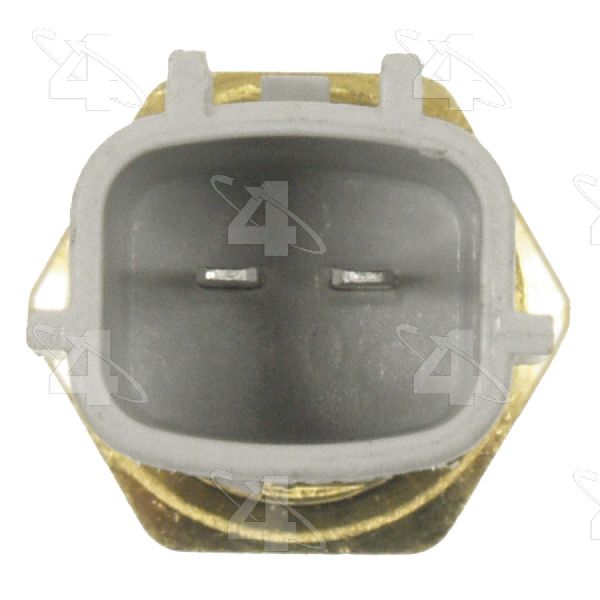
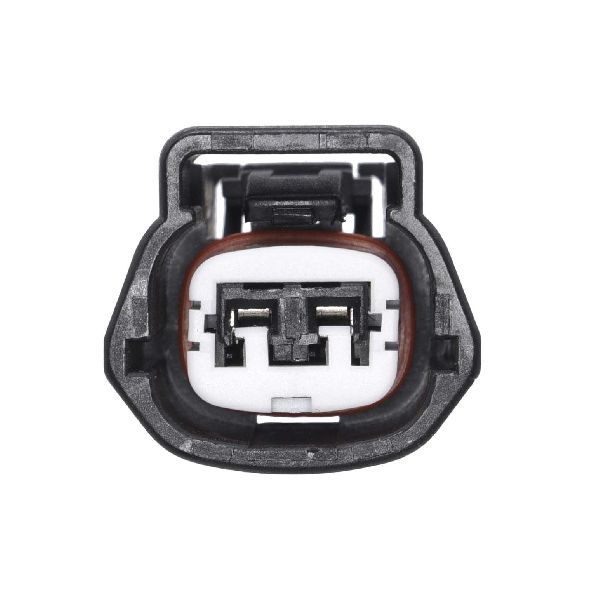
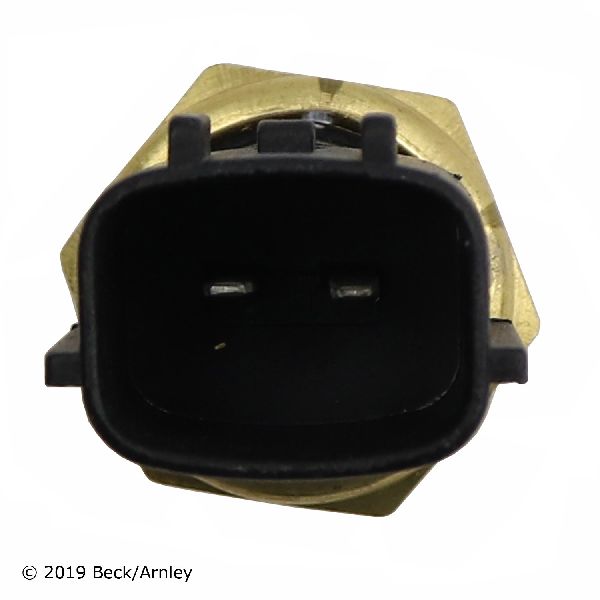
How to confirm: Visually inspect the ECT sensor's electrical connector and wiring for any signs of corrosion, damage, or loose connections. The connector is a 2-pin rounded rectangular style. Perform a continuity test on the wiring between the sensor and the ECM.
Typical fix: Repair the damaged wiring or replace the connector pigtail.
Est. part cost: $15-$30 for a pigtail
Rare But Worth Checking
- Faulty Engine Control Module (ECM): This is very rare. All other possibilities, especially the ECT sensor, thermostat, and wiring, should be thoroughly ruled out before considering ECM failure. The TSB-related issue is a software problem, not a hardware failure of the ECM itself.
Diagnosis Steps
- Check the engine coolant level in the reservoir and radiator (only when the engine is cool). Top off with Nissan blue long-life coolant if low and inspect for leaks.
- Connect an OBD-II scanner to view the live data for the Engine Coolant Temperature sensor (ECT).
- On a cold start, verify that the ECT reading is within 5 degrees of the Intake Air Temperature (IAT) sensor reading.
- Start the engine and monitor the ECT reading as it warms up. It should climb steadily and smoothly to around 180-200°F without erratic jumps or dropouts.
- If the temperature takes a very long time to rise, suspect a stuck-open thermostat.
- If the temperature reading is erratic, jumps, is stuck on a very high/low value, or doesn't rise at all, inspect the ECT sensor's wiring and connector for damage or corrosion. The sensor is located on the driver's side rear of the engine.
- If the wiring is good, the ECT sensor is the most likely culprit. Test its resistance or replace it. The OEM part number is 22630-JA10A.
- After replacement, clear the code. If it returns without any other symptoms, the vehicle requires the ECM reprogram specified in TSB NTB16-029. This must be done by a Nissan dealer or a qualified shop with Nissan's CONSULT software.
Parts You'll Likely Need
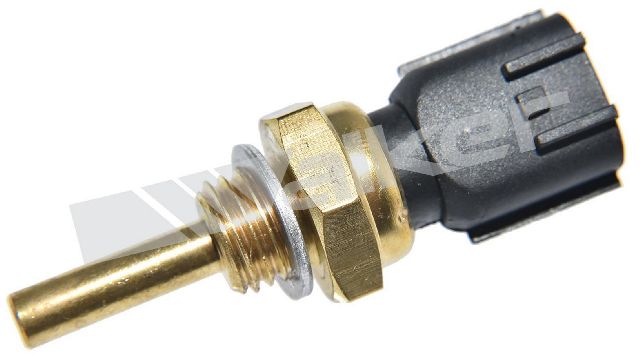
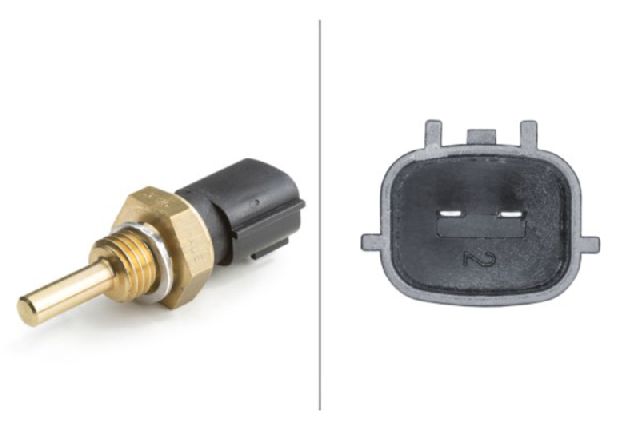
- Engine Coolant Temperature Sensor
(OEM #22630-JA10A)— This is the most common failure part for code P0116 on this vehicle, as highlighted by Nissan's own service bulletin and numerous owner forums.
Trusted brands: Nissan (OEM), Delphi, NTK, Bosch
OEM price range: $17-$30
Aftermarket price range: $15-$45
Technical Service Bulletins (TSBs) & Recalls
- NTB16-029: States that for a MIL ON with DTC P0116 and no drivability issues, the primary action is to reprogram the ECM. The TSB provides detailed instructions for technicians using the CONSULT-III plus tool and warns that battery voltage must be maintained between 12.0V and 15.5V during the procedure to avoid damaging the ECM.
Platform-Specific Known Issues
- A Technical Service Bulletin (NTB16-029) was issued by Nissan for 2013-2015 Pathfinders that experience a Check Engine Light with code P0116 stored, but no other drivability issues. The recommended action is to confirm the bulletin applies and then reprogram the ECM. This reprogram adjusts the acceptable performance range the computer expects from the sensor, making it less likely to set a false code. Owners report that dealers charge between $100-$200 for this service.
Mechanic-Grade Diagnostic Values
- ECT Sensor Resistance — expected: Approx. 2000-3000 Ω at 20°C (68°F), decreasing to approx. 200-300 Ω at 90°C (194°F).. Failure: Readings are far outside the expected range at a measured temperature, or show an open/short circuit.
- ECT Sensor Circuit Voltage (at sensor connector, KOEO) — expected: Approx. 5.0V reference signal from the ECM.. Failure: Voltage is significantly lower than 5.0V, indicating a wiring issue or a problem with the ECM's 5V reference circuit.
- ECT Sensor Signal Voltage (Live Data or back-probed) — expected: Approx. 2.0V - 3.0V on a cold engine, dropping smoothly to approx. 0.5V when the engine is at full operating temperature.. Failure: Voltage is stuck high or low, or jumps erratically as the engine warms up.
- ECT Sensor Harness Resistance — expected: Less than 3 Ω for both the signal and ground circuits.. Failure: Resistance higher than 3 Ω indicates corrosion or a break in the wire between the sensor and the ECM.
Scan Tool Commands That Help
- Nissan CONSULT-III plus: ECM Reprogramming — This is the primary fix specified by TSB NTB16-029 when a P0116 code is present without other drivability issues. It updates the ECM logic to prevent false positives from the ECT sensor.
- Nissan CONSULT-III plus: Idle Air Volume Learn (IAVL) — This procedure is required after performing the ECM reprogram. The CONSULT tool guides the technician through the process to reset and relearn the base idle.
- Nissan CONSULT-III plus: Throttle Valve Closed Position / Accelerator Closed Position — These are additional relearn procedures required by the TSB after an ECM reprogram to ensure proper throttle body and pedal calibration.
Wiring & Ground Locations
- E9, E15 — Located in the left rear of the engine compartment, near the IPDM (Intelligent Power Distribution Module) and ECM.. These are primary ground points for the Engine Control Module (ECM). A corroded or loose connection at these grounds can cause unstable sensor readings and trigger rationality codes like P0116, even if the sensor and its direct wiring are good.
OEM Part Supersession History
22630-JA10A→22630-51E02— Part update or consolidation.
Heads up: While one parts catalog suggests this supersession, most OEM suppliers still list 22630-JA10A as the correct part for the 2013-2015 Pathfinder. Verify with VIN before purchasing the superseded part number.
Model Year Variations Within This Range
- 2013-2015: TSB NTB16-029, which addresses the P0116 software issue, lists different ECM part numbers for the required reprogram based on the specific model year (2013, 2014, or 2015). A technician must select the correct file within the CONSULT-III plus software for the reflash to be successful.
Helpful Videos


We Have This Part in Stock


The information in this article is provided for general reference and educational purposes only. Vehicle specifications, procedures, and part compatibility can vary by production date, trim level, and region. Always consult your vehicle's factory service manual and verify part numbers before purchasing or performing repairs. Safety-critical components such as airbags, seat belts, and braking systems should be installed by a qualified professional.
- Nissan PATHFINDER:
- 🧭 Diagnostic Flowchart
- 🎬 Helpful Videos
- 🛍️ Shop This Part
- What's Unique About the 2013-2015 Nissan PATHFINDER
- Symptoms You May Notice
- Most Likely Causes
- Rare But Worth Checking
- Diagnosis Steps
- Parts You'll Likely Need
- Technical Service Bulletins (TSBs) & Recalls
- Platform-Specific Known Issues
- Mechanic-Grade Diagnostic Values
- Scan Tool Commands That Help
- Wiring & Ground Locations
- OEM Part Supersession History
- Model Year Variations Within This Range
- 🎟️ Get 5% Off