

P0116 on 2013-2020 Ram 1500: Engine Coolant Temperature Sensor Performance Fixes
P0116 on a 2013-2020 Ram 1500 usually means the Engine Coolant Temperature (ECT) sensor is failing or the thermostat is stuck open. Replacing the ECT sensor is a common, affordable fix, costing around $20-$60 for the part. Before replacing parts, always check the coolant level and for any available PCM software updates, as these can also cause the code.
- P0116 means the coolant temperature reading is illogical, not necessarily that the sensor is completely dead.
- The most common fixes are replacing the Engine Coolant Temperature (ECT) sensor or the thermostat.
- Before buying parts, check your coolant level. Low coolant can cause false readings.
- On this specific truck, the issue can be a software glitch. Check with a dealer for any available PCM updates, especially if other, unrelated codes are present.
What's Unique About the 2013-2020 Ram 1500
For the 2013-2020 Ram 1500, which spans the end of the 4th generation and the start of the 5th, P0116 can be more than just a bad sensor. Ram has issued Technical Service Bulletins (TSBs) indicating that this code can be triggered by software glitches, sometimes appearing with other unrelated codes. [Bulletin #18-044-26, Bulletin #18-103-16 REV. B] Specifically, TSB #18-103-16 REV. B for 2014-2015 models and #18-044-26 for 2019 models point to overly sensitive PCM logic. [Bulletin #18-044-26, Bulletin #18-103-16 REV. B] In these cases, a PCM software update at a dealership is the correct fix, not a part replacement. This makes it crucial to check for available updates before buying parts.
Diagnostic Flowchart
Tap your situation to follow the diagnostic path that matches what you're seeing on this vehicle.
Generation note: This range covers two generations: the Fourth Generation (2013-2018, and 'Classic' models 2019+) and the Fifth Generation (2019-2020). While the causes are similar, part locations and TSBs can differ. For example, TSB #18-103-16 REV. B specifically calls out 2014-2015 models with 3.6L, 4.7L, or 5.7L engines. [Bulletin #18-103-16 REV. B] The Ram 1500 'Classic' models sold from 2019 onward are mechanically identical to the 4th generation (2013-2018) trucks, so parts and procedures are interchangeable. The 5th generation (DT) models introduced in 2019 have different cooling system strategies, including more prevalent use of Active Grille Shutters, which can affect engine warm-up times if they malfunction.
Symptoms You May Notice
- Check Engine Light is on
- Temperature gauge is inaccurate (stuck on cold, hot, or fluctuates wildly).
- Engine may run rough, hesitate, or be hard to start, especially when cold.
- Cooling fans run constantly or do not turn on at all.
- Reduced fuel economy.
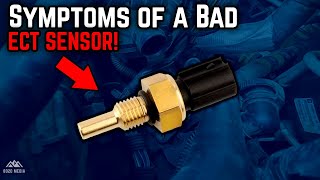
- Issues with the engine start-stop system (if equipped). 🎬 Watch this video to learn more about bad ECT sensor symptoms. [Bulletin #18-044-26]
- Heater may not blow warm air if the engine isn't reaching temperature.
- Replacing the thermostat when the ECT sensor is actually at fault.
- Replacing the ECT sensor when the thermostat is stuck open.
- Replacing parts without first checking for low coolant levels or air in the system.
- Confusing the Engine Coolant Temperature (ECT) sensor with the coolant level sensor in the reservoir.
Most Likely Causes
- Faulty Engine Coolant Temperature (ECT) Sensor 🔴 High Probability → Shop Engine Coolant Temperature Sensor The ECT sensor is a thermistor that can degrade over time, leading to inaccurate readings. It's the most common hardware failure for this code.
How to confirm: Use a scan tool to monitor live ECT data. On a cold engine, the ECT reading should be very close to the Intake Air Temperature (IAT) reading (within 18°F/10°C). As the engine warms up, the temperature should rise smoothly without sudden jumps or dropouts. You can also test the sensor with a multimeter; at room temperature (68°F/20°C), its resistance should be between 2,000 and 3,000 ohms.
Typical fix: Replace the ECT sensor. On the 5.7L Hemi, it is located near the thermostat housing at the front of the engine. 🎬 Watch this walkthrough for replacing the ECT sensor on a Hemi. On the 3.6L Pentastar, it is often tucked away and best accessed by removing the driver's side front wheel and fender liner.
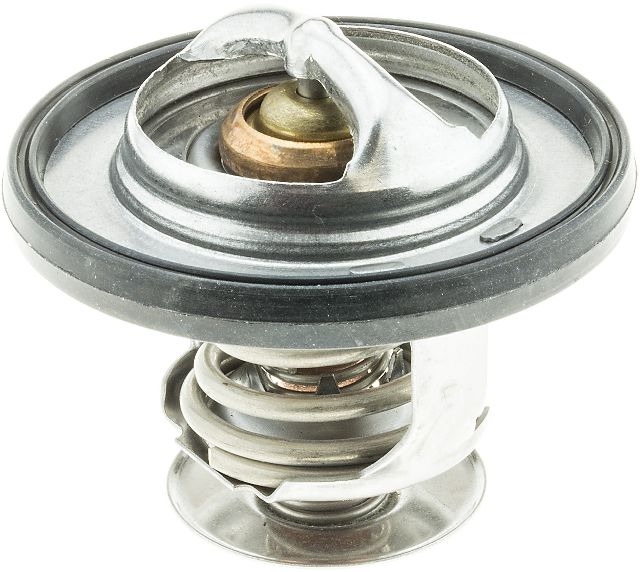
Est. part cost: $20-$60 - Stuck-Open Thermostat 🟡 Medium Probability → Shop Integrated Thermostat Housing Assembly If the thermostat is stuck open, the engine will not warm up to its proper operating temperature quickly enough. The PCM sees the slow warm-up time and flags it as a sensor performance issue.
How to confirm: Monitor the ECT temperature on a scan tool while driving. If the engine temperature struggles to reach and maintain the normal operating range (typically 195-205°F) or drops significantly at highway speeds, the thermostat is likely stuck open.
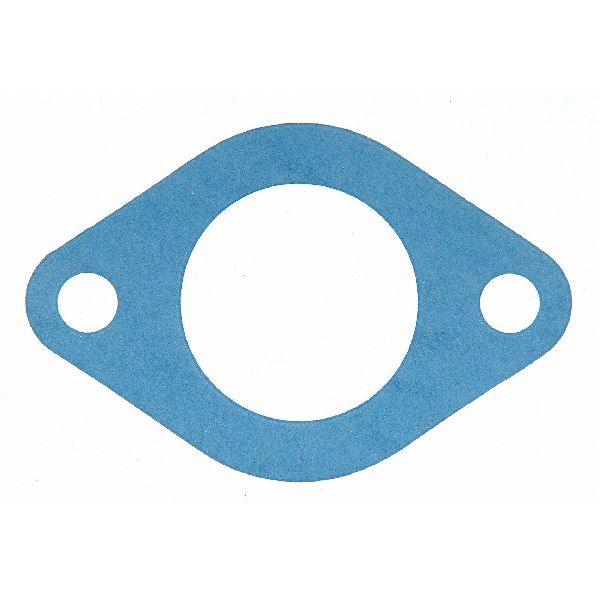
Typical fix: Replace the thermostat and gasket. It's often recommended to replace the thermostat whenever servicing the cooling system. Many owners recommend using an OEM Mopar thermostat to avoid premature failure, which is a common complaint with aftermarket units.
Est. part cost: $30-$150 - Low Engine Coolant Level / Air in System 🟡 Medium Probability → Shop Engine Coolant / Antifreeze If the coolant level is low due to a leak, the sensor may be exposed to air pockets instead of coolant, causing erratic and inaccurate readings that trigger P0116.
How to confirm: Visually inspect the coolant reservoir and radiator (when the engine is cold) to ensure the coolant is at the proper level. If it's low, there is a leak that must be found and repaired.
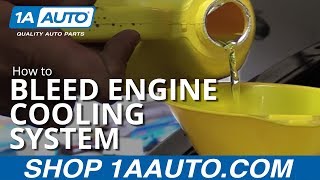
Typical fix: Top off the cooling system with the correct Mopar OAT coolant (P/N 68163848AB) and properly bleed any air from the system. To bleed, park the truck on an incline or use a spill-free funnel on the radiator, turn the cabin heater to max, and run the engine. Let it run until the thermostat opens (you'll see bubbles and the coolant level drop) and the cooling fans cycle on and off twice. Squeezing the upper radiator hose can help purge trapped air. 🎬 See a step-by-step guide on how to properly bleed your cooling system.
Est. part cost: $20-$40 (for coolant) - PCM Software Requires Update ⚪ Low Probability As noted in TSBs #18-044-26 and #18-103-16 REV. B, the logic for monitoring the ECT sensor can be overly sensitive, causing a false P0116 code, sometimes with other DTCs. [Bulletin #18-044-26, Bulletin #18-103-16 REV. B] This indicates the fault is with the diagnostic parameters, not the physical parts.
How to confirm: A Ram dealership or a qualified shop with access to OEM software (like wiTECH) can check if your vehicle's VIN has any open TSBs or available PCM updates.
Typical fix: The dealer performs a PCM software update (reflash).
Est. part cost: $0-$200 (depending on warranty/dealer policy)
Rare But Worth Checking
- Damaged Wiring or Connector: Check the wiring harness and connector going to the ECT sensor for any signs of corrosion, looseness, or damage. On the 5.7L Hemi, the signal wire is typically Violet/Orange (Pin 1) and the ground is Dark Blue/Dark Green (Pin 2). A poor connection on either wire can cause the code.
- Faulty Powertrain Control Module (PCM): This is extremely rare. Before condemning the PCM, all other possibilities (sensor, thermostat, wiring, software) must be exhaustively ruled out.
Diagnosis Steps
- Check the coolant level in the reservoir and radiator (when cold). Top off if necessary.
- Use a scan tool to check for any other DTCs. Address those first if they are present, especially P0128, which points strongly to the thermostat.
- With a scan tool, compare the Engine Coolant Temperature (ECT) and Intake Air Temperature (IAT) readings on a completely cold engine (after sitting for 8+ hours). They should be within a few degrees of each other.
- Start the engine and monitor the ECT reading. It should climb steadily without any sudden drops or spikes.
- If the temperature warms up very slowly, fails to reach ~195°F, or drops at highway speeds, suspect a stuck-open thermostat.
- If the temperature reading is erratic, stuck at a specific value (e.g., -40°F), or clearly incorrect, the ECT sensor is the primary suspect.
- Visually inspect the ECT sensor's connector and wiring for damage, corrosion, or loose pins.
- If no hardware issues are found, contact a dealer to check if a PCM software update is available for your vehicle's VIN, referencing TSBs #18-103-16 REV. B or #18-044-26 if applicable. [Bulletin #18-044-26, Bulletin #18-103-16 REV. B]
Parts You'll Likely Need
- Engine Coolant Temperature (ECT) Sensor
(OEM #5149077AB)— This sensor is the most common hardware component to fail and cause irrational readings. This part number is widely used across many Chrysler, Dodge, Jeep, and Ram vehicles.
Trusted brands: Mopar, NTK, Delphi
OEM price range: $40-$70
Aftermarket price range: $20-$50 - Thermostat
(OEM #52028898AJ (for 5.7L Hemi, 195 Degree))— A thermostat stuck open will prevent the engine from warming up correctly, which the PCM interprets as a sensor performance fault. Using an OEM part is highly recommended by owners to ensure longevity.
Trusted brands: Mopar, Motorad, Stant
OEM price range: $80-$150
Aftermarket price range: $30-$70
Related Codes That Often Appear With This One
- P0128 — P0128 (Coolant Temperature Below Thermostat Regulating Temperature) is often caused by a stuck-open thermostat, which can also trigger P0116. Seeing both codes together strongly suggests a faulty thermostat.
- P05BD-00 — TSB #18-044-26 lists P0116 with this code, related to the Stop-Start system, indicating a software update may be needed to fix both on certain 2019 models.
- P2299 — TSB #18-103-16 REV. B notes this code (Brake Pedal / Accelerator Pedal Incompatible) can appear with P0116 on 2014-2015 models, pointing to a potential software issue that requires a dealer reflash. [Bulletin #18-103-16 REV. B]
Technical Service Bulletins (TSBs) & Recalls
- 18-044-26: Mentions P0116 in a list of DTCs that can be resolved with a software update on 2019 models.
- 18-103-16 REV. B: Cites P0116 as a potential code set along with others on 2014-2015 models, which may require a software update.
Platform-Specific Known Issues
- TSB #18-044-26 Software Update: For some 2019 models, P0116 can appear with other codes like P05BD-00 (Stop-Start Mode Switch) and may be resolved with a PCM software update.
- TSB #18-103-16 REV. B Software Update: On 2014-2015 models with 3.6L, 4.7L, or 5.7L engines, P0116 may be set along with codes P2299 (Brake/Accelerator Pedal Incompatible) and P0335 (Crankshaft Position Sensor Circuit), potentially indicating a software issue that requires a dealer reflash. [Bulletin #18-103-16 REV. B]
Mechanic-Grade Diagnostic Values
- ECT Sensor Resistance — expected: ~2,000 - 3,000 Ohms at 68°F (20°C). Failure: A reading significantly outside this range, or near-zero (shorted) or infinite (open) resistance. Resistance should decrease smoothly as temperature increases, down to 200-300 Ohms at 194°F (90°C).
- ECT Sensor Reference Voltage (Key On, Engine Off, Sensor Unplugged) — expected: Approximately 5.0 Volts on the signal wire terminal in the harness connector.. Failure: Voltage significantly lower than 5.0V or no voltage indicates a problem with the PCM or the wiring between the PCM and the sensor.
- ECT Sensor Signal Voltage (Jumpered Connector) — expected: Approximately 0.0 Volts. Failure: If voltage does not drop to near zero when a jumper wire is connected between the signal and ground terminals of the harness connector, it indicates a fault in the ground circuit or wiring.
- ECT vs. IAT Rationality Check (Cold Soak) — expected: After the vehicle has sat for 8+ hours, the ECT and IAT sensor readings on a scan tool should be within 18°F (10°C) of each other.. Failure: A difference greater than 18°F (10°C) strongly suggests a faulty ECT sensor or circuit, as the PCM flags this as an irrational reading.
Scan Tool Commands That Help
- wiTECH or equivalent professional scan tool: Live Data Monitoring (ECT, IAT, AAT) — Essential for performing the cold soak rationality check by comparing Engine Coolant Temp (ECT), Intake Air Temp (IAT), and Ambient Air Temp (AAT) to see if the ECT reading is an outlier.
- wiTECH or equivalent professional scan tool: View DTCs / Freeze Frame Data — To check for other codes that may be present alongside P0116, which can point towards a software issue (per TSBs) or a related component failure (like P0128 for the thermostat). Freeze frame data shows the exact conditions when the fault was set.
Wiring & Ground Locations
- (K2) ECT Signal Circuit — This is the signal wire running from the ECT sensor connector to the Powertrain Control Module (PCM). On many 5.7L Hemi engines, this wire is Violet with an Orange stripe.. An open or short in this wire will cause the PCM to receive an incorrect voltage, leading directly to a P0116, P0117, or P0118 code.
- (K900) Sensor Ground Circuit — This is the ground reference wire shared by several sensors that runs from the ECT sensor connector back to the PCM. On many 5.7L Hemi engines, this wire is Dark Blue with a Dark Green stripe.. A poor connection or break in this ground wire will cause the sensor's reading to be unstable or incorrect, triggering a performance code like P0116.
- Main Engine/Chassis Ground Straps — Key ground points are located from the battery negative terminal to the chassis/fender and from the engine block to the chassis.. A loose or corroded main ground strap can introduce electrical noise and voltage fluctuations across the entire system, potentially causing false sensor performance codes like P0116.
Real Owner Repair Stories
- ramforum.com user (2014 Ram 1500 5.7L Hemi) — Check engine light with code P0116. Temperature gauge was reading low and the truck was taking a long time to warm up.
❌ Tried (didn't work) Initially suspected the ECT sensor but decided to investigate the thermostat first due to the slow warm-up symptom.
✅ What actually fixed it Replacing the thermostat resolved the P0116 code. The original thermostat was stuck partially open, preventing the engine from reaching operating temperature in the time expected by the PCM.
OEM Part Supersession History
5149096AB→5149077AB— This is a common supersession for this Mopar fluid temperature sensor.
Heads up: Part 5149077AB is the current and correct replacement for the older 5149096AB part number.
Model Year Variations Within This Range
- 2019-2020 (5th Gen 'DT' vs 4th Gen 'Classic'): The 5th Generation 'DT' Ram 1500 has a different cooling strategy and tune compared to the 4th Generation 'DS'/'Classic' models, often running slightly warmer. While the fundamental causes of P0116 are the same, the diagnostic logic and specific components like the Active Grille Shutter system are more integral to the DT models' thermal management.
- 2014-2015: These model years are specifically called out in TSB #18-103-16 REV. B, where P0116 can appear with unrelated codes like P2299 (Brake/Accelerator Pedal Incompatible), strongly pointing to a software glitch requiring a PCM reflash rather than a hardware replacement. [Bulletin #18-103-16 REV. B]
Helpful Videos

We Have This Part in Stock


The information in this article is provided for general reference and educational purposes only. Vehicle specifications, procedures, and part compatibility can vary by production date, trim level, and region. Always consult your vehicle's factory service manual and verify part numbers before purchasing or performing repairs. Safety-critical components such as airbags, seat belts, and braking systems should be installed by a qualified professional.
- Ram 1500:
- 🧭 Diagnostic Flowchart
- 🎬 Helpful Videos
- 🛍️ Shop This Part
- What's Unique About the 2013-2020 Ram 1500
- Symptoms You May Notice
- Most Likely Causes
- Rare But Worth Checking
- Diagnosis Steps
- Parts You'll Likely Need
- Related Codes That Often Appear With This One
- Technical Service Bulletins (TSBs) & Recalls
- Platform-Specific Known Issues
- Mechanic-Grade Diagnostic Values
- Scan Tool Commands That Help
- Wiring & Ground Locations
- Real Owner Repair Stories
- OEM Part Supersession History
- Model Year Variations Within This Range
- 🎟️ Get 5% Off